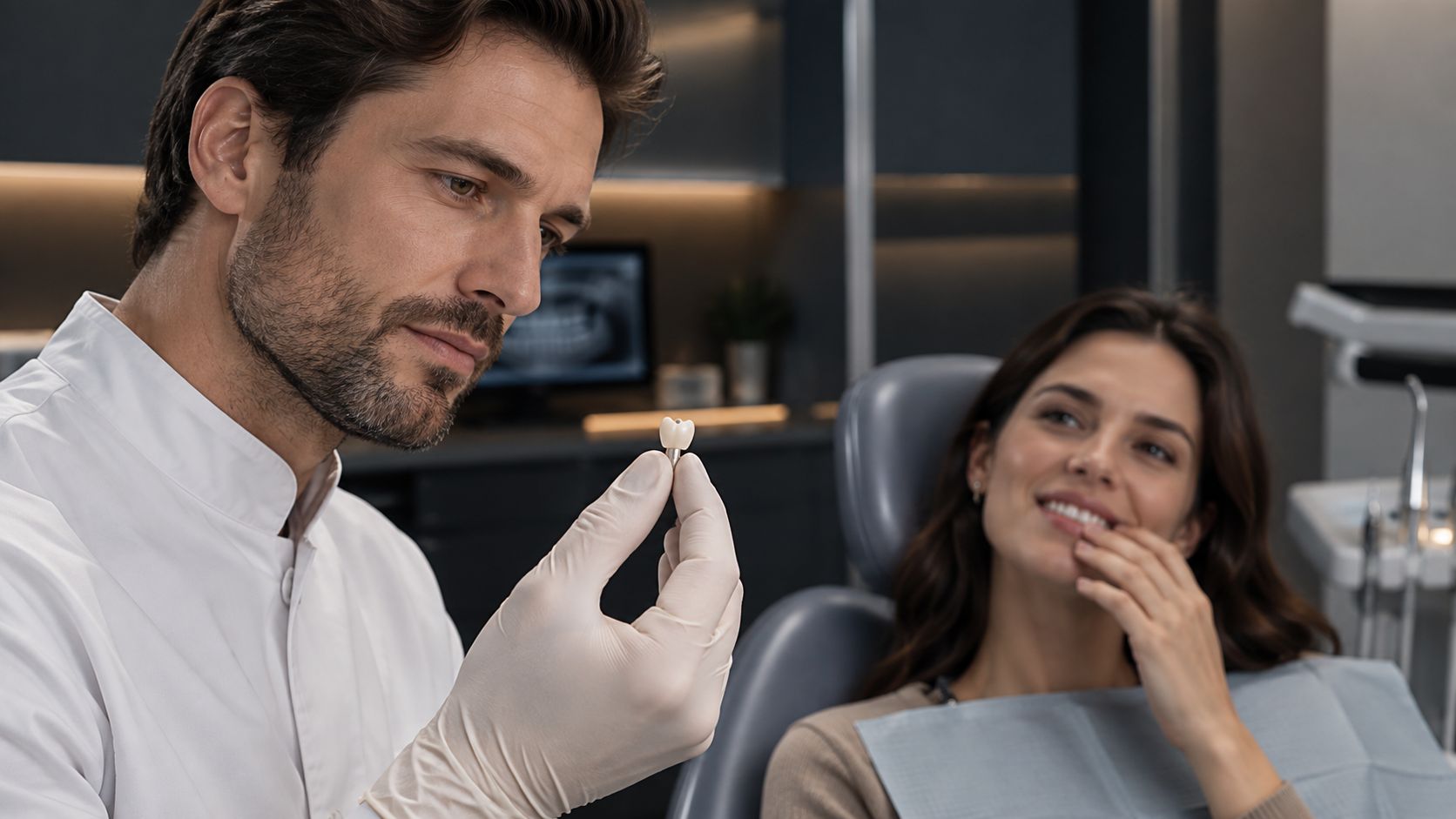
A chipped molar after dinner, a sharp edge on your tongue, a crown that just came loose on the drive home, these are the moments that send people searching for a teeth repair dentist in Cleveland or Chattanooga. You're usually not thinking about cosmetic dentistry or treatment plans at that point. You're thinking, Can this tooth be saved, will it hurt, and can someone fix it before it turns into a bigger problem?
That first wave of anxiety is normal. A broken tooth can make chewing awkward, cold drinks sting, and every mirror check feel a little worse than the last. If that's where you are right now, the next step is simple, get the tooth looked at, get the damage explained in plain language, and get a plan that makes sense for your mouth and your schedule. For urgent situations, this emergency tooth guide is a helpful place to start while you're getting ready to call.
When a Tooth Breaks and You Need Answers Fast
A patient usually doesn't walk in saying, “I need restorative dentistry.” They say, “I bit something hard and now my tooth feels wrong,” or “I woke up with a chip and I can't stop worrying about it.” That's the moment a teeth repair dentist steps in, because the job starts with figuring out whether the tooth is just chipped, cracked, decayed, or already infected.
The first questions matter most
The first questions are the ones you're already asking yourself. Is it urgent, or can it wait a day or two? Does the tooth need a simple repair, or is it headed toward a crown, root canal, or extraction? Will it look natural when it's fixed, or will you always notice it in photos?
At Winn Smiles in Cleveland and Chattanooga, these are the exact kinds of problems patients bring in every week. The goal is not to guess. It's to examine the tooth, explain what's happening, and match the repair to the damage instead of overdoing it or under-treating it.
Practical rule: if the tooth is painful, moving, bleeding, or sensitive to biting, don't wait and hope it settles down.
A broken tooth doesn't only affect appearance. It can change how you chew, trap food around rough edges, and open the door to deeper decay if the crack or chip exposes vulnerable tooth structure. If you're staring at a jagged edge in the mirror, the next step is not panic. It's triage, then treatment.
You may end up with a simple bonded repair, or you may need something more protective. Either way, the right visit starts with a clear look at the damage, not a rushed decision.
What a Teeth Repair Dentist Actually Does
A teeth repair dentist works in three overlapping lanes, and patients usually move between them more than they realize. One lane is cosmetic, one is restorative, and one is emergency care. The same broken tooth can touch all three if it changes how the tooth looks, functions, or hurts.
Cosmetic, restorative, and emergency care
Cosmetic repair is about what you can see in the mirror. That's the chipped front tooth, the uneven edge, the worn corner, or the color that doesn't match the surrounding teeth. Restorative care is about rebuilding lost structure after decay, fracture, or infection, which may mean fillings, crowns, root canal therapy, or tooth replacement when the tooth can't be saved. Emergency care handles the sudden stuff, a knocked-out tooth, a lost crown, an abscess, swelling, or a tooth that breaks at the worst possible time.
The distinction matters because a small chip and a cracked molar are not the same problem, even if both feel like “a broken tooth.” One may be repaired with a simple bonded material. The other may need internal treatment, full coverage, or replacement planning.
If you're looking for a local dentist in Cleveland or Chattanooga, the right practice should be able to move across these lanes without sending you somewhere else for every step. That's especially helpful when a tooth starts as a cosmetic concern but turns out to need restorative work after a proper exam.
The best plan is the one that preserves healthy tooth structure when the tooth is still serviceable.
That's why the choice of practice matters. You want someone who can explain the difference between smoothing, patching, rebuilding, and replacing, then tell you which one fits your tooth today. A good visit doesn't start with a product. It starts with a diagnosis.
Common Repair Options and When Each One Fits
Small damage and bigger structural problems call for different tools. A chipped edge on a front tooth is not treated the same way as a molar with deep decay, and a tooth that has already had root canal therapy needs a different kind of support than one with surface wear. The right restorative dentistry plan depends on how much tooth is left, where the tooth sits in the bite, and how much stress it takes every day.
Matching the repair to the damage
Bonded composite is the simplest place to start when the defect is small. It's often used for chips, minor decay, and shape changes because the material can be matched to the tooth and shaped chairside. For a visible front tooth, that can mean a natural-looking repair in one visit.
Veneers fit a different problem. They're for surface flaws that affect the visible smile, especially when the tooth is structurally sound but the shape or color needs improvement. Same-day crowns are used when the tooth needs full coverage and strength, but the patient doesn't want a temporary crown and a second visit. If you want the process explained in plain language, Winn Smiles has a detailed breakdown of what a dental crown procedure involves.
Inlays and onlays sit in the middle ground. They're more than a filling, but they don't cover the whole tooth like a crown. That makes them useful when the damage is too large for a simple filling and too conservative to justify full coverage.
Root canal therapy comes into play when the inner pulp is infected or inflamed. The diseased tissue is removed, the canal is cleaned and sealed, and the tooth is usually strengthened afterward with a crown. If the tooth is too far gone, dental implants or full-arch implant solutions become the replacement path.
A practical way to compare them:
| Option | Best for | Typical result |
|---|---|---|
| Bonded composite | Small chips, minor decay, edge repairs | Tooth-colored repair that blends with the natural tooth |
| Veneers | Visible surface flaws, smile-line changes | Improved shape and appearance on front teeth |
| Same-day crown | Teeth needing full coverage and strength | Full-coverage restoration completed in one visit |
| Inlay or onlay | Moderate damage that's bigger than a filling | Stronger partial coverage with a conservative fit |
| Root canal plus crown | Infected or badly inflamed tooth | Pain relief, tooth preserved, structure protected |
| Dental implant | Tooth that can't be saved | Replacement that stands in for the missing root and tooth |
Why Repair Often Beats Replacement
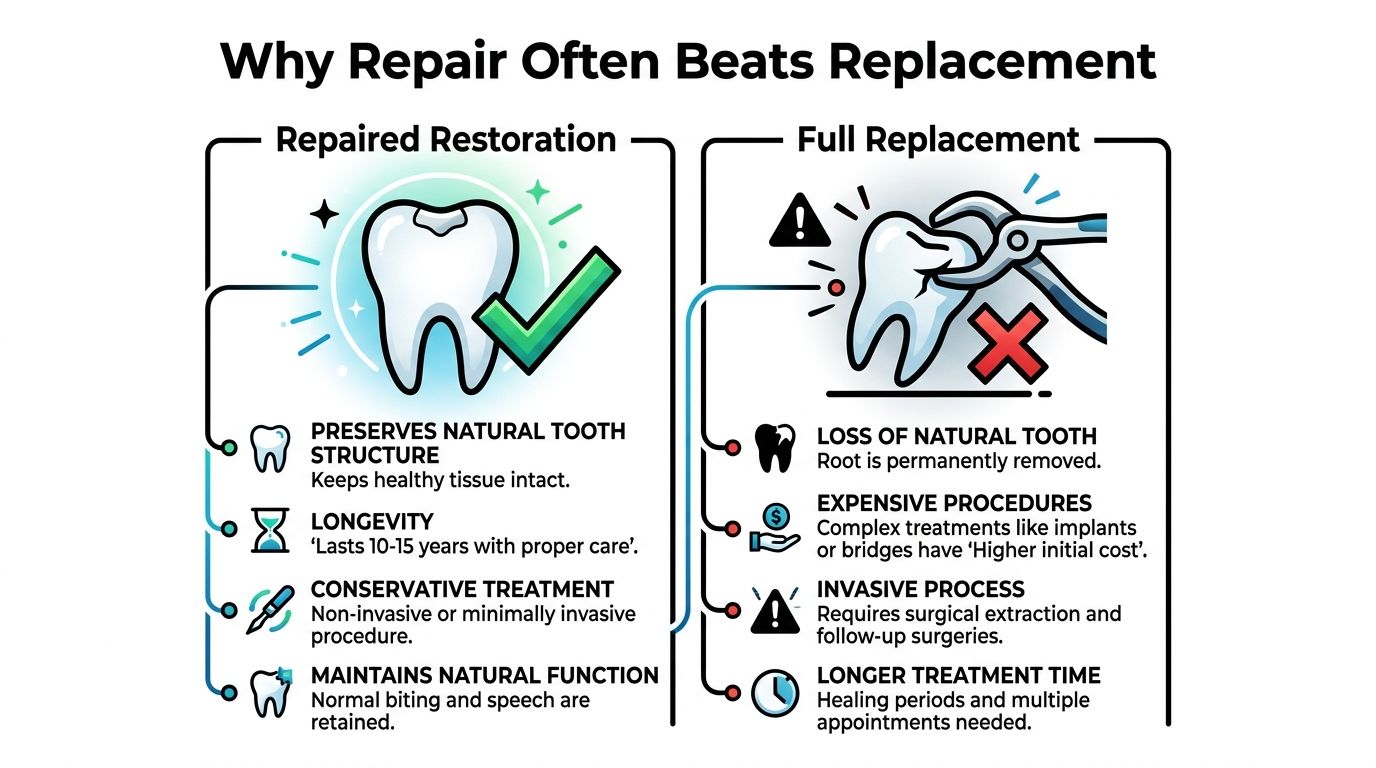
Patients sometimes worry that a repair-first plan means they're being offered the cheaper option instead of the better one. That's not how a good clinical decision works. When a tooth still has enough healthy structure, repair can preserve more of the original tooth and avoid a more aggressive path.
What the evidence means in plain English
A large prospective cohort study of 5,889 restorations recorded by 195 dentists found that only 378 restorations needed additional treatment during follow-up, and repaired restorations were less likely to progress to more aggressive care like root canal treatment or extraction over time. The same study reported that after one year, the chance of any additional treatment was slightly higher for repaired restorations, 7% versus 5% for replaced ones, but the repaired teeth were less likely to head toward root canal therapy or extraction. You can read that study in the PubMed record on restoration repair.
That fits with broader evidence that repair is a mainstream choice, not a shortcut. A systematic review found that 71.5% of dentists said they perform repairs, 83.3% of dental schools taught repair techniques, and yet only 31.3% of failed restorations were repaired in the studies reviewed. A separate ADA panel survey reported that about 4 out of 5 respondents repair defective restorations, and the ADA's material guidance notes that direct restorations are placed directly onto tooth structure without laboratory preparation. Those figures are summarized in the ADA direct restoration resource and the ADA panel report on repair practices.
Why that matters for your tooth
If the defect is limited, repair usually means less drilling, less removal of healthy enamel, and a more conservative bite. A 2019 review also found repaired restorations had similar survival outcomes to replaced restorations in low- to medium-caries-risk patients over follow-ups reaching 12 years, and a more recent meta-analysis reported better marginal adaptation and lower secondary caries in the repair group. That review is available through PMC's repair-versus-replacement analysis and the later systematic review and meta-analysis.
If the tooth is still serviceable, preserving it often gives you more options later.
Replacement is still the right call when the tooth can't be saved. But when it can, conservative repair often protects structure, keeps treatment simpler, and avoids turning a manageable problem into a bigger one.
What to Expect at a Winn Smiles Visit
The hardest part for many patients is the uncertainty. You're not only worried about the tooth, you're worried about the appointment, the sounds, the price, and whether anyone will push you into treatment before you understand it. A good visit should lower that stress from the moment you walk in.
From check-in to treatment plan
At Winn Smiles, the experience is designed around comfort. Patients are welcomed into light, airy offices with a comfort menu and a team that talks through what's happening as it happens. A new patient visit usually starts with a conversation about the tooth, a cleaning and exam, and dental x-rays when needed so the dentist can see what the eye can't.
If the tooth needs a crown, the same-day workflow is straightforward. The tooth is scanned, the restoration is designed, milled, and placed, so many patients can leave with the damaged tooth restored without wearing a temporary. That matters when the tooth is cracked, weak, or sensitive, because it cuts down on waiting and reduces the number of moving parts.
Comfort tools for nervous patients
Sedation is available for patients who need help staying relaxed, and laser dentistry can be useful when soft tissue is irritated or a gentler approach makes sense. Those aren't last-resort options. They're normal tools in a modern dental office, especially for people who've put off care because past experiences made dentistry feel overwhelming.
A transparent plan should come before irreversible treatment. You should know what's being done, why it's being done, and what the likely alternatives are before anyone starts. That's especially important when a broken tooth might be fixable with a straightforward repair, but could also need a crown or replacement depending on what the exam shows.
In practical terms, this is what patients often want to hear first, will it be comfortable, can it be done today, and will I know the cost before I commit. Those are fair questions, and they should get direct answers.

Handling a Dental Emergency in Cleveland or Chattanooga
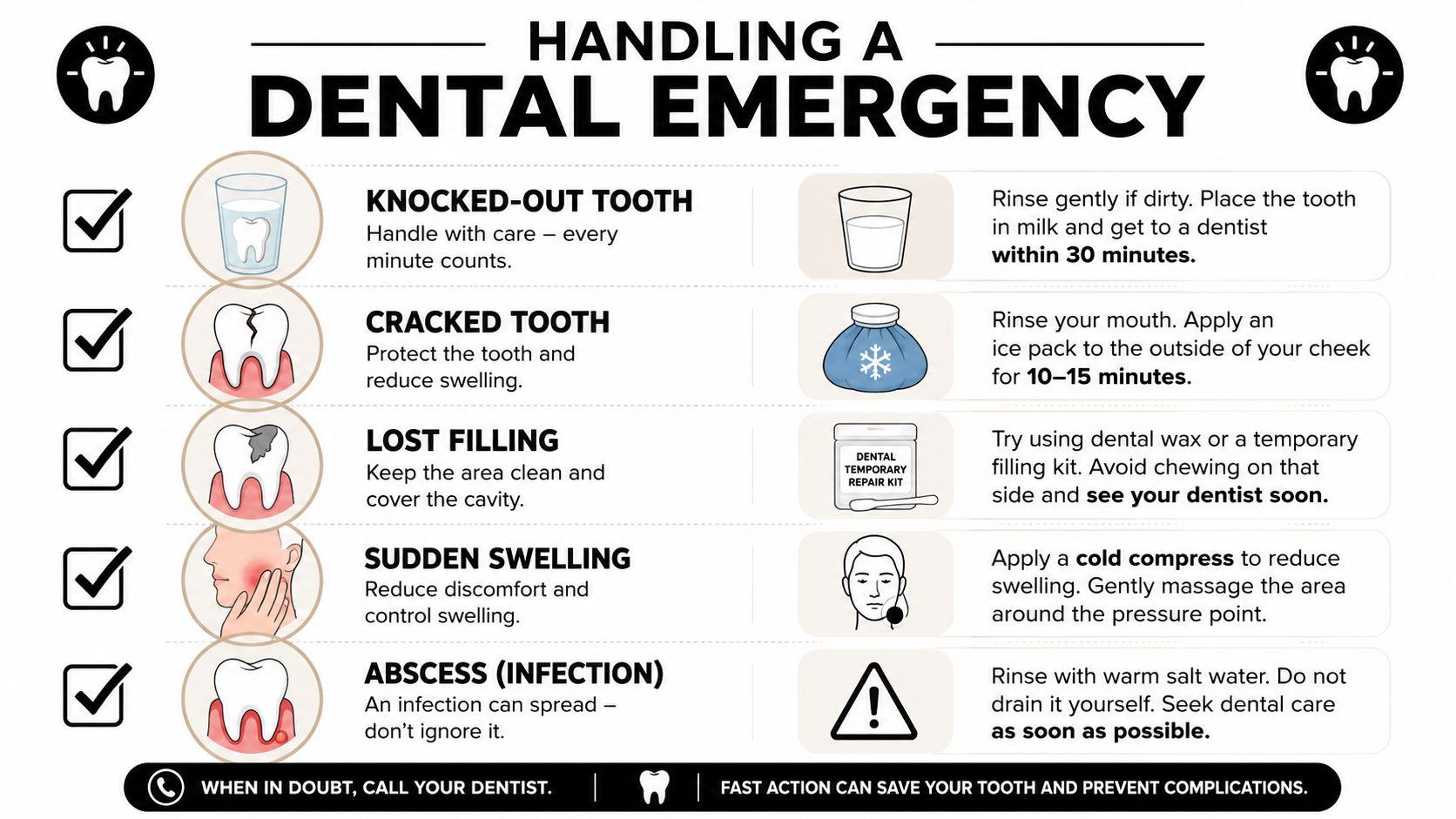
A dental emergency is one of those situations where calm steps make a real difference. A knocked-out tooth, a cracked tooth that suddenly hurts, a lost filling, or swelling that shows up out of nowhere all need quick attention. The goal at home is not to fix the tooth yourself. It's to protect what's left until you can get to the office.
What to do before you arrive
If a tooth is knocked out, handle it by the crown, not the root, and get moving fast. If it's dirty, rinse it gently with milk or clean water, then keep it moist in milk while you call for help. For a cracked tooth, avoid chewing on that side and use a cold compress on the outside of the face if there's swelling.
If a filling or crown falls out, keep the piece if you have it and don't stick aspirin on the gum. That can irritate the tissue and won't solve the problem. Sudden swelling, abscess, or pain that's spreading should be treated as urgent, especially if it's making it hard to chew or sleep.
A same-day emergency visit is often the fastest route to relief, because imaging can show whether the tooth is fractured, infected, or loose, and treatment can start right away. In some cases, sedation or laser techniques are used to make stabilization easier and more comfortable.
For patients trying to understand how offices show up in local search when they need help fast, a useful read is this guide to dental office Google Maps rankings. It's a reminder that when you're hurting, visibility and accessibility matter just as much as the treatment itself.
When to call right away
- Knocked-out tooth: Call immediately and keep the tooth moist.
- Severe pain with a crack: Don't test the bite, get seen.
- Lost crown or filling: Call the office before the tooth breaks further.
- Facial swelling: Get urgent help, especially if the swelling is spreading.
- Abscess signs: Don't wait for it to “go away” on its own.
If you're in Cleveland or Chattanooga, the right next move is simple, call, explain the problem, and get on the schedule for urgent care.
Cost, Insurance, and Free Second Opinions
The cost conversation should happen before treatment starts, not after the tooth is already numb and the handpiece is on the tray. Repair costs vary based on the size of the defect, the material used, and whether the case is straightforward or needs same-day crown technology or other advanced tools. A small bonded repair is not priced the same way as a full crown or implant plan, and patients deserve that explanation in plain language.
How the financial side usually works
Medically necessary restorative work, such as a crown after root canal therapy, is often treated differently from elective cosmetic work like veneers or whitening. Insurance may help with the restorative side depending on the plan, and that's why the front desk conversation matters so much. A good office will discuss coverage openly instead of leaving you to guess.
Winn Smiles accepts a range of insurance plans, and it also offers free consultations and free second opinions for select services. That's valuable if you've already been told you need a tooth removed or replaced and want a second clinical opinion before committing. A review from Pounds Health Insurance on family health coverage with dental and vision is a useful reminder that many patients are comparing more than one type of coverage at the same time.
The part people overlook
Delaying repair usually makes the tooth more expensive to save later, and it can also mean more tooth structure is lost along the way. That's true whether the problem starts as a chip, decay, or a failing old restoration. A clear estimate up front makes it easier to move before the damage spreads.
If you're comparing options, ask for the treatment path in writing. You should leave knowing what's covered, what isn't, and what happens if the tooth can be repaired instead of replaced.
Your Next Step Toward a Restored Smile
If your tooth is broken, chipped, painful, or just doesn't feel right, you don't need to solve the whole problem today. You need an exam, a clear answer, and a plan that protects the tooth if it can still be saved. In many cases, repair-first dentistry is the conservative, evidence-based move, and comfort options can take the fear out of getting started.
Winn Smiles in Cleveland and Chattanooga gives patients a practical path forward with repair, same-day crowns, sedation options, emergency care, and free consultations or second opinions for select services. If you've been putting off care because you're nervous about pain, cost, or what the tooth will look like afterward, it's time to get the conversation started.
If you're dealing with a broken or damaged tooth, call Winn Smiles and ask about repair, same-day crown options, or emergency care in Cleveland or Chattanooga. You can also visit Winn Smiles to request a consultation or second opinion and get a clear plan for your tooth before the problem gets bigger.