You start a new medication. A few weeks later, your gums look puffier when you brush, or your mouth feels dry all day, or flossing suddenly leaves blood in the sink. It's common not to know whether to call your doctor, your dentist, or just wait it out.
That uncertainty is common, and it's stressful. Gum changes can feel minor at first, but they can also make eating uncomfortable, make home care harder, and leave you wondering if something more serious is developing. If you've been searching for what medications cause gum problems, the better question is often, “What should I do next?”
A clear answer starts with a local dental exam that looks at the whole picture. In Chattanooga and Cleveland, patients need more than a list of possible side effects. They need someone to look at the gums, review medications, rule out plaque-driven disease, and explain whether the issue is direct gum enlargement, dry-mouth-related irritation, or something else entirely.
Your Trusted Dentist for Gum Health in Chattanooga & Cleveland TN
A patient might notice that their gums look fuller near the front teeth after starting a blood pressure medicine. Another person may not see swelling at all, but they keep waking up with a dry mouth and notice more tenderness along the gumline. Both situations can be medication-related, and both deserve a careful look.
That's where a local dentist near me search should lead to more than a quick cleaning. Good dental care for this issue means connecting symptoms, timing, health history, and the current medication list. It also means not blaming the patient for changes they didn't cause.
What patients are usually worried about
Those who come in with this concern are often thinking about one of these questions:
- Is this infection or a side effect Someone wants to know if swollen gums mean they've done something wrong, or if the change started after a new prescription.
- Can I stay on my medication Many patients rely on these medicines for seizures, transplant care, or blood pressure control and don't want dental advice that ignores that reality.
- Will this keep getting worse Patients often notice a small change first, then worry about pain, bleeding, chewing problems, or long-term gum damage.
Gum problems tied to medication are manageable, but the plan only works when the diagnosis is specific.
In Chattanooga and Cleveland, local practices also need to communicate clearly and make care feel accessible. Patients want a team that listens, explains the trade-offs, and coordinates with their physician when needed. If you're comparing how dental groups present patient experience online, these client results for dental groups give useful context on what strong communication and trust-building can look like in practice.
What a helpful first visit should do
For this kind of concern, the first goal isn't to rush into treatment. It's to answer three practical questions:
- What changed
- When did it start
- Is the medication the main driver, or is it making an existing gum issue harder to control
That kind of visit helps patients stop guessing. It also helps protect the smile before a mild problem turns into a painful one.
Medications That Can Cause Gum Problems
Some drugs affect the gums directly by causing tissue overgrowth. This is often called drug-induced gingival overgrowth or DIGO. According to StatPearls on gingival enlargement, medications overall are the most common cause of gingival enlargements, and the drug classes most often involved are anticonvulsants, immunosuppressants, and calcium channel blockers.
That matters because this isn't only a cosmetic issue. Extra gum tissue can make brushing more difficult, trap plaque, and make chewing uncomfortable.
Common medications linked to gum problems
| Medication Class | Common Use | Potential Gum Problem |
|---|---|---|
| Anticonvulsants | Seizure control | Gum overgrowth |
| Immunosuppressants | Transplant support and immune suppression | Gum overgrowth |
| Calcium channel blockers | Blood pressure and heart-related conditions | Gum overgrowth |
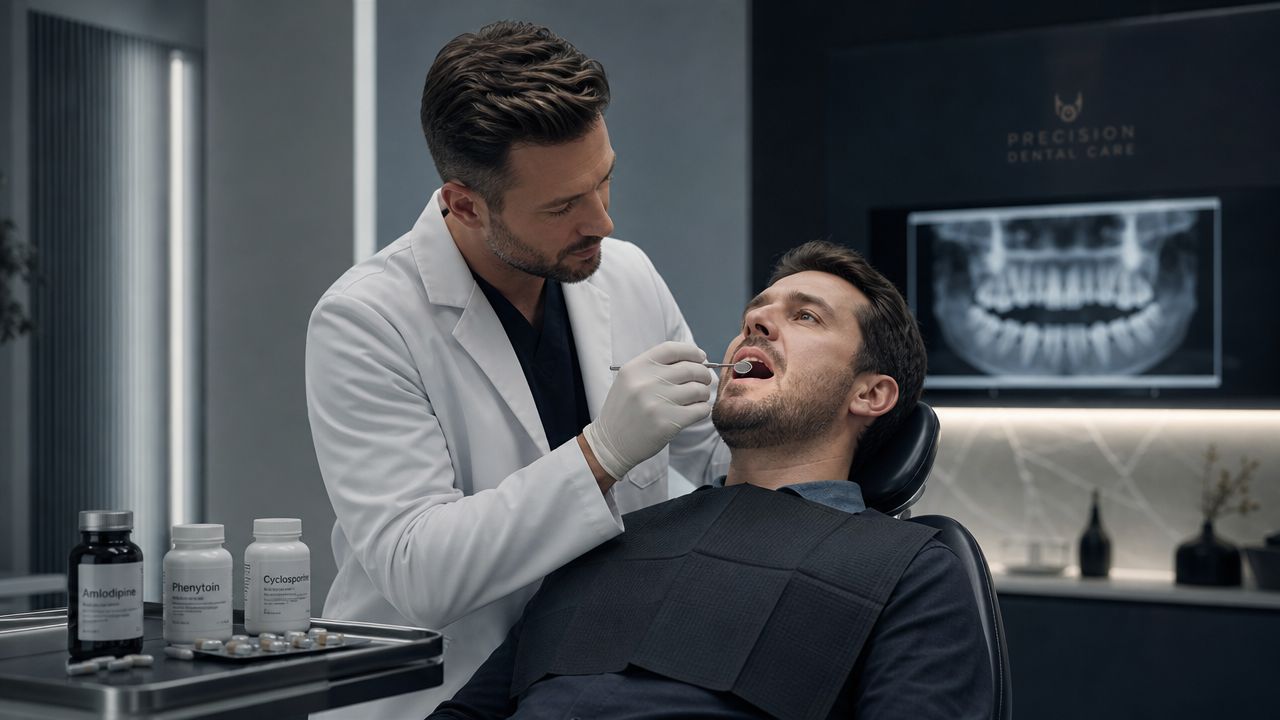
Some examples patients may hear about include phenytoin, cyclosporine, nifedipine, and amlodipine. These names matter because patients often recognize the brand or pill bottle before they recognize the drug class.
Which groups come up most often
The same StatPearls review of gingival enlargement notes that anticonvulsants account for about 50% of drug-induced gingival hyperplasia cases, while immunosuppressants cause over 70% of cases in children and 25% to 30% in adults.
Those numbers help explain why dentists ask medication questions so carefully. If you're taking one of these prescriptions and your gums have changed, the timing may be clinically meaningful.
Practical rule: Don't stop a prescribed medication on your own because of gum changes. Get the gums evaluated first, then let your dental and medical teams decide whether a change in care, hygiene, or medication is appropriate.
What this looks like in real life
Medication-related gum enlargement often shows up gradually. Patients may notice that floss doesn't slide the same way, the gums look thicker around certain teeth, or there's more plaque collecting near the gumline because cleaning has become harder.
It also doesn't mean the medication is “bad.” Many of these drugs are medically necessary. The primary goal is to protect oral health while respecting the reason the medication was prescribed in the first place.
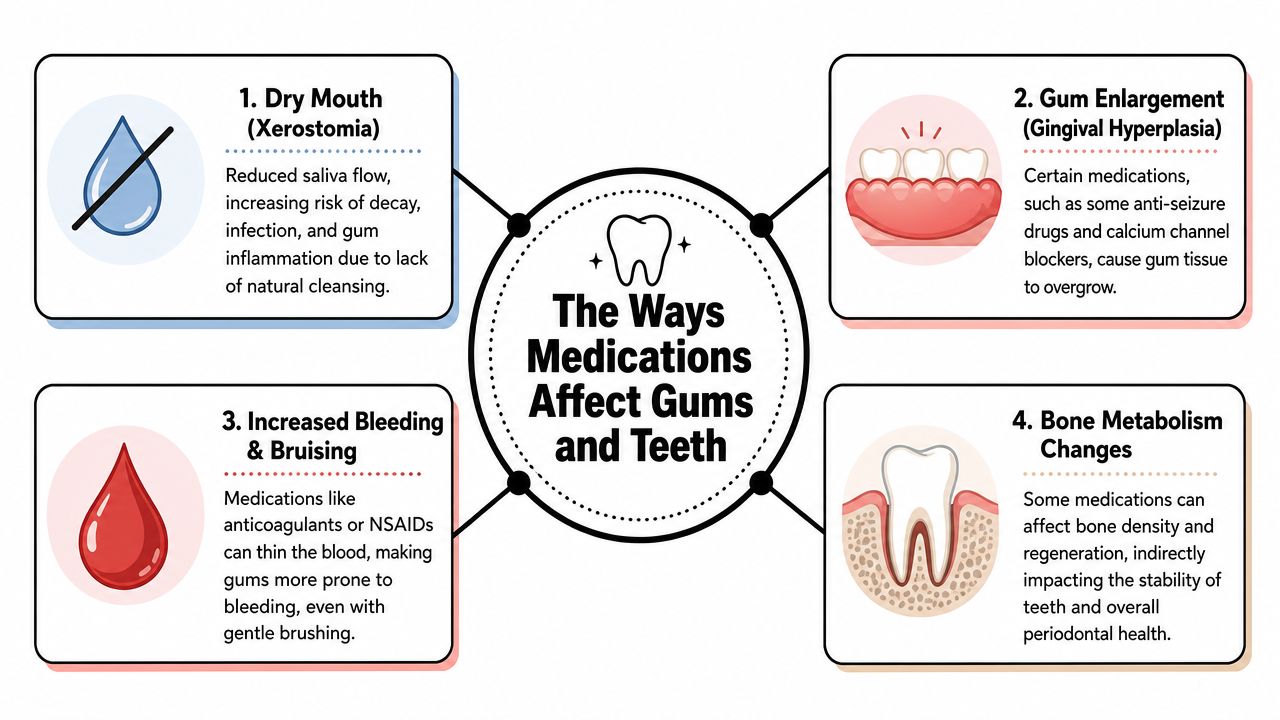
The Ways Medications Affect Gums and Teeth
Not every medication-related gum problem looks like obvious swelling. Some drugs affect the mouth in quieter ways, and those cases are easy to miss until plaque buildup, irritation, or tooth decay starts to follow.
Dry mouth is the most common pathway
A major one is dry mouth, also called xerostomia. According to the American Academy of Oral Medicine as cited in this review on medications and gum health, more than 1,110 medications have the potential to cause dry mouth.
That's a huge practical issue because saliva protects the mouth every day. When saliva drops, food debris sticks around longer, bacterial growth becomes easier, and patients face a higher risk of cavities, gum disease, bad breath, and fungal infections. Common medication groups linked to this effect include antihistamines, antidepressants, diuretics, muscle relaxants, blood pressure medicines, and some pain relievers.
Four common patterns dentists look for
Here are the main ways medications can affect gums and teeth:
- Gum enlargement Some drugs directly trigger overgrowth of gum tissue. The teeth can start to look shorter because the gums cover more of the visible surface.
- Dry mouth This is often the hidden driver. The mouth loses some of its natural cleansing and buffering action, so plaque control gets harder.
- Increased bleeding or bruising Certain medications can make gums bleed more easily, even when the underlying brushing technique hasn't changed.
- Bone-related effects Some medicines can affect bone metabolism, which may change how dental treatment is planned around long-term gum and tooth support.
If your main concern is bleeding when you brush, this guide on why gums bleed during brushing can help you understand when bleeding points to irritation, plaque, or a medication-related issue.
Some patients ask whether dry mouth can really be serious if the gums don't look swollen. It can. The problem is often slower, but it can still lead to persistent inflammation and harder-to-control plaque.
Why the diagnosis can be tricky
Two people can take the same medication and have very different symptoms. One may develop visible gum changes. Another may only notice sticky saliva, a sore mouth, or worse breath. A third may have no symptoms at all.
That's why a simple online list rarely settles the question. A dentist has to look at the gum tissue, the level of plaque, the areas involved, and the timeline of when the medication started.
How We Help You Manage Medication-Related Gum Issues
The good news is that most medication-related gum problems can be managed without guesswork once the cause is clear. The wrong approach is to treat every case like standard gingivitis. The right approach is to decide whether the main issue is tissue overgrowth, dry mouth, bleeding tendency, plaque retention, or a combination of them.
What actually helps
A useful plan usually includes several parts working together:
- A medication review AARP notes that hundreds of common medications, including those for blood pressure, allergies, and depression, can cause dry mouth and raise gum risk, which is why a thorough medication review with your dentist matters, especially for adults on long-term prescriptions, as explained in AARP's overview of medications and oral health.
- Targeted cleaning changes Patients often need technique adjustments, not just a reminder to brush more. Softer brushing, different flossing tools, or more frequent hygiene visits can make home care realistic again.
- Dry mouth support Water alone usually isn't enough for patients with persistent xerostomia. Some people benefit from saliva substitutes, alcohol-free rinses, xylitol products, and timing changes in daily habits.
- Coordination with the prescribing physician If gum changes are significant, the dental team may recommend a medical conversation about alternatives. That only happens when it's appropriate and medically safe.
Where treatment needs to be more advanced
Some cases improve once plaque is controlled and the mouth stays better hydrated. Others don't. When gum tissue has become bulky or hard to clean around, professional periodontal treatment may be needed.
At Winn Smiles, available options may include periodontal care, close monitoring, and laser dentistry when gum reshaping is part of the treatment decision. The key is choosing the least invasive step that effectively solves the problem.
Patients who want more day-to-day prevention guidance can also review these natural ways to improve gum health.
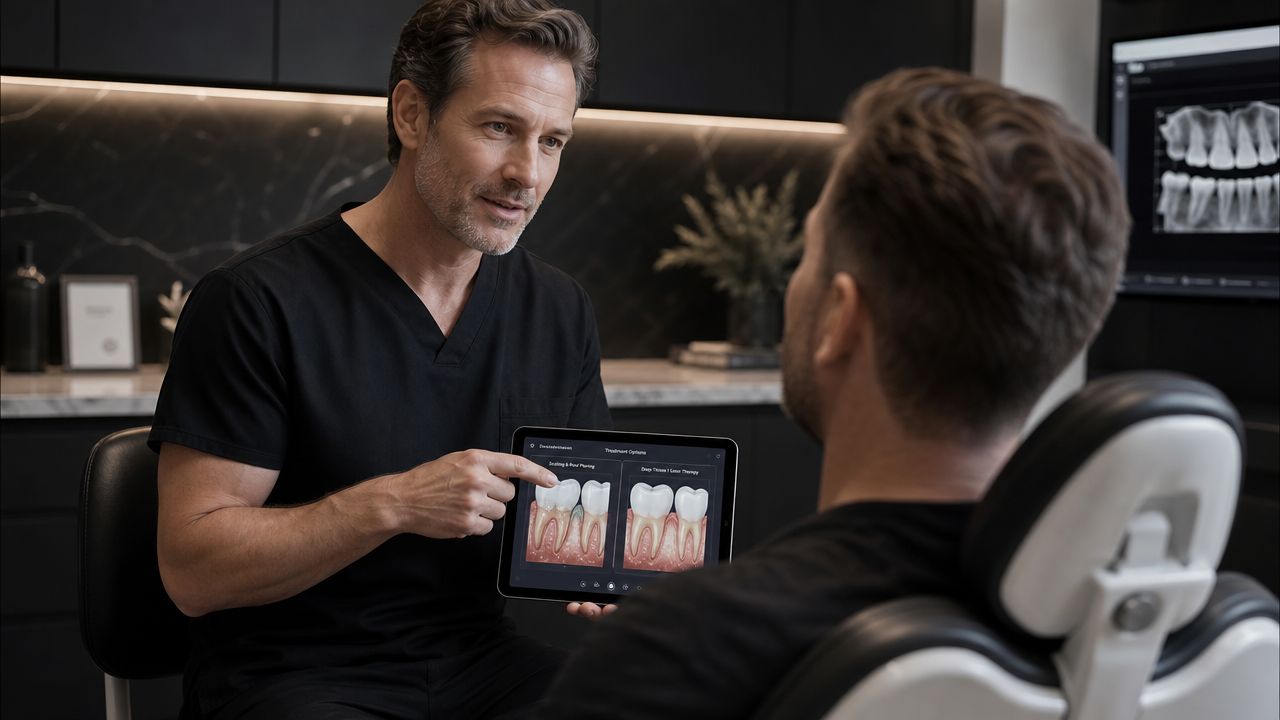
Here's a short look at how dentists think through treatment options in practice:
The most effective plan is usually collaborative. Protect the gums, improve daily cleaning, reduce dry mouth where possible, and involve the physician when the medication itself may be contributing.
What usually doesn't work
Patients often try to “wait and see” for too long, especially if the medication is helping another health problem. Others switch mouthwash repeatedly, brush harder, or stop flossing because the gums feel tender.
Those moves usually backfire. Tender gums need a better diagnosis and a gentler plan, not more force.
Your Comfort-Focused Dental Exam in Cleveland and Chattanooga
A visit for medication-related gum concerns should feel calm and straightforward. You shouldn't have to show up worried that you'll be rushed through a generic cleaning and sent home with vague advice.
When patients come in with this concern, the most helpful thing they can bring is a current medication list. That includes prescriptions, over-the-counter medicines, and dry mouth products they've already tried. Timing matters, so it also helps to know when the symptoms started and whether they changed after a new dose or a new prescription.
What your appointment may include

A comfort-focused exam in Cleveland or Chattanooga may involve:
- A conversation first You explain what changed, what medication you started, and what feels different when brushing, flossing, eating, or waking up.
- A close look at the gum tissues The dentist checks whether the pattern looks like inflammation, enlargement, recession, dry-mouth irritation, or another oral condition.
- Digital dental X-rays when needed Imaging can help rule out deeper periodontal damage or other causes of discomfort.
- A practical care plan You leave knowing what to do at home, what treatment is recommended in the office, and whether your physician should be looped in.
For anxious patients, comfort matters
Dental anxiety can make patients delay care, especially if the gums are already sore. A patient-first office environment helps. Comfort options, clear explanations, and sedation choices when appropriate can make it much easier to address the problem before it becomes more involved.
Bring the medication list, mention any new symptoms, and tell the team what's worrying you most. That information often speeds up the diagnosis more than patients expect.
This kind of appointment is also a good time to talk about related needs. If medication side effects have made home care harder and led to broader dental problems, patients may also need cleanings and exams, restorative care, cosmetic dentistry, or help planning for damaged or missing teeth later on.
Schedule Your Gum Health Consultation Today
Medication-related gum problems are common, but they aren't something you should ignore. Some drugs can cause direct gum enlargement. Others create a dry mouth that slowly raises the risk of plaque buildup, inflammation, cavities, and periodontal problems. The important part is getting a clear diagnosis instead of guessing.
If you've been wondering what medications cause gum problems, the answer may involve more than one prescription and more than one symptom. Swelling, bleeding, tenderness, bad breath, chewing discomfort, and dryness can all point in different directions. A good dental exam helps sort that out and gives you a plan you can follow.
For patients in Chattanooga, Cleveland, and nearby communities, local care should feel practical and reassuring. You deserve a dentist who will listen, review your medications carefully, explain the trade-offs, and help you protect your smile without losing sight of your overall health.
If you need routine care, a new patient exam, help with gum discomfort, or an emergency dentist visit because your symptoms have become painful, don't wait for the issue to get worse. Early treatment is usually simpler, gentler, and easier to manage.
If your gums have changed after starting a medication, Winn Smiles can help you get answers in Chattanooga or Cleveland, TN. Schedule a consultation to review your symptoms, bring your medication list, and get a personalized plan for healthier gums, more comfortable home care, and confident next steps.