You've just finished a cleaning and exam. Everything feels fresh, and then your dental team says, “A fluoride varnish application would be a good next step.” If you're hearing that for the first time, it's normal to wonder whether it's just for kids, whether it hurts, or whether you really need it.
Patients in Chattanooga and Cleveland ask those questions all the time. They're reasonable questions. Preventive dental care should feel understandable, not mysterious, especially when you're choosing a dentist near me, a dentist in Chattanooga, TN, or a dentist in Cleveland, TN for your family's long-term care.
Your Guide to Preventive Dental Care in Chattanooga TN
A common visit goes like this. A patient comes in for cleaning and exams, maybe after searching for a new dentist near me because a previous office never explained much. The appointment goes well, dental x-rays and a new patient exam are straightforward, and then fluoride comes up. The patient usually asks, “Is this the same thing kids get at school?” or “Do adults need this too?”
Those questions matter because preventive care works best when you understand why it's being recommended. A fluoride varnish application isn't a complicated treatment. It's a simple protective step that can help lower the chance of future dental problems before they turn into fillings, restorative dentistry, tooth extraction, or an emergency dentist visit.
In local communities like Chattanooga and nearby Cleveland, many people want the same thing from dental care. They want clear answers, comfort, and practical guidance they can trust. That's why patient education matters just as much as treatment itself.
Good preventive care should feel collaborative. You should know what's being done, why it helps, and what to expect afterward.
If you'd like a broader overview of how prevention fits into routine dental care, this explanation of preventive dental care is a helpful place to start. For dental practices and community health organizations thinking about boosting local search visibility in 2026, clear patient education like this also helps people find the right care faster.
Whether you're booking a routine checkup, looking into cosmetic dentist near me options, or trying to avoid future restorative work, fluoride varnish fits into the same bigger goal. Keep teeth stronger, reduce risk where possible, and make future care easier.
Understanding Fluoride Varnish and Who It Helps
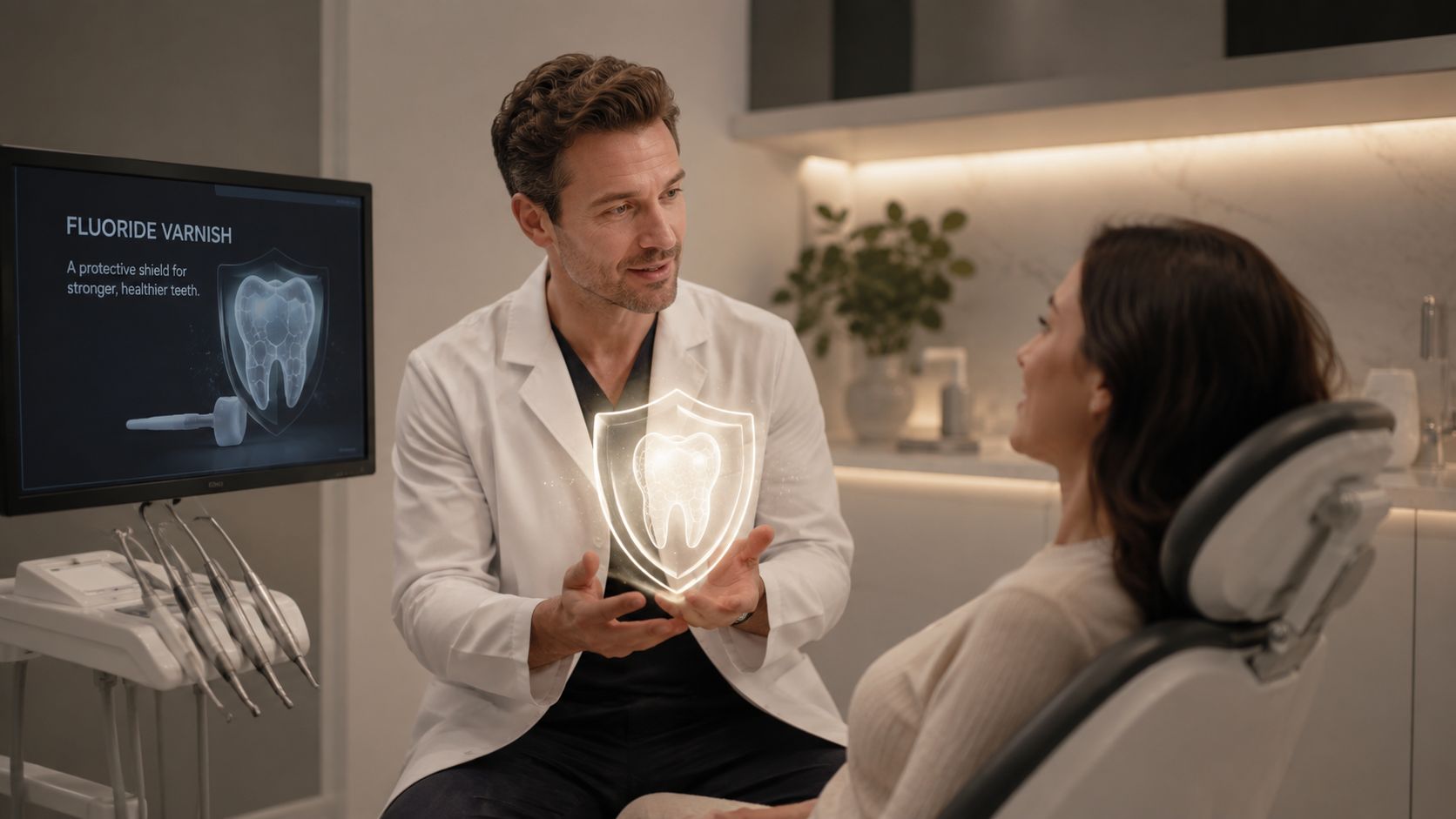
Fluoride varnish is a protective coating your dental team paints onto the teeth. It functions as a raincoat for enamel. It doesn't replace brushing, flossing, or regular visits, but it gives the tooth surface added support in places where daily life keeps challenging it, especially around plaque, acids, dry mouth, and early weak spots.
For many patients, the easiest way to understand it is this. Your enamel faces stress every day from food, drinks, and bacteria. A fluoride varnish application gives teeth an extra layer of defense.
Who tends to benefit most
Many people still assume fluoride varnish is only for children. Children often benefit greatly, but they aren't the only ones.
Patients who may benefit include:
- Children with cavity risk. For children with moderate-to-high caries risk, clinical guidelines recommend 2 to 4 applications per year every 3 to 6 months of 2.26% fluoride varnish 5% NaF, and large-scale prevention trials in young children in the United States identified zero fluoride varnish-related adverse events, supporting its safety profile (ASTDD research brief).
- Adults with frequent cavities. If decay has been an ongoing issue, added protection can make sense as part of a preventive plan.
- People with sensitive teeth. Some patients notice that fluoride treatments help calm areas that react to cold air, water, or sweets.
- Patients with dry mouth. Reduced saliva can make teeth more vulnerable.
- Adults with crowns, bridges, or fillings. The natural tooth structure around dental work still needs protection.
- Patients in active treatment plans. If you're getting restorative dentistry, cosmetic dentistry, or follow-up care after an emergency visit, prevention becomes even more important.
Why patients often get confused
People hear the word fluoride and think of toothpaste or tap water. Varnish is different because it's professionally applied and designed to stay in contact with the teeth after the appointment.
That's why your dentist might recommend it even if you brush well at home. Daily care is the foundation. Professional preventive care adds another layer.
The Fluoride Varnish Application Process at Winn Smiles
Most patients are surprised by how uneventful the appointment feels. That's a compliment. A fluoride varnish application should be quick, gentle, and easy to fit into a routine visit.
Here's the process in a simple visual format.
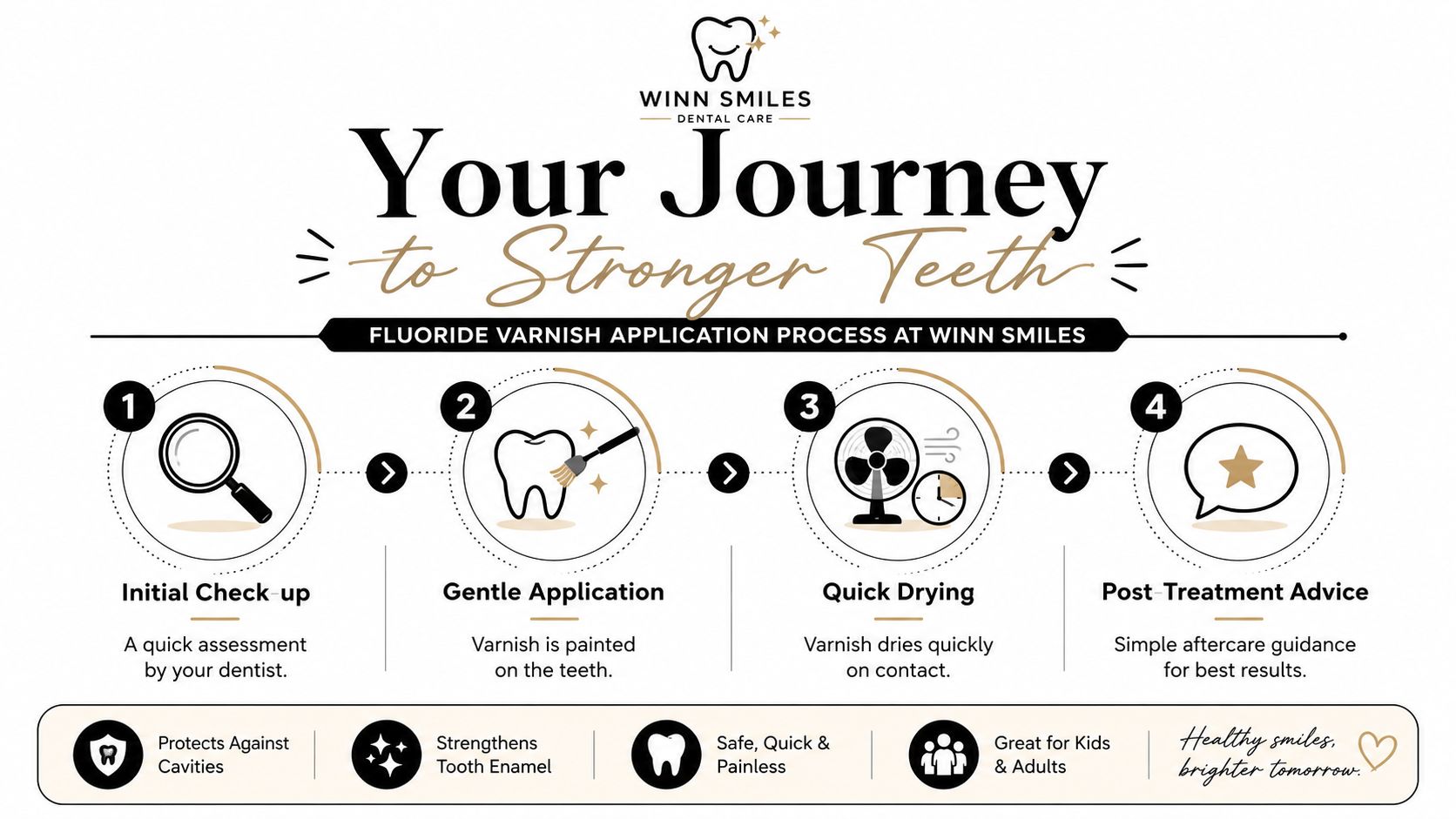
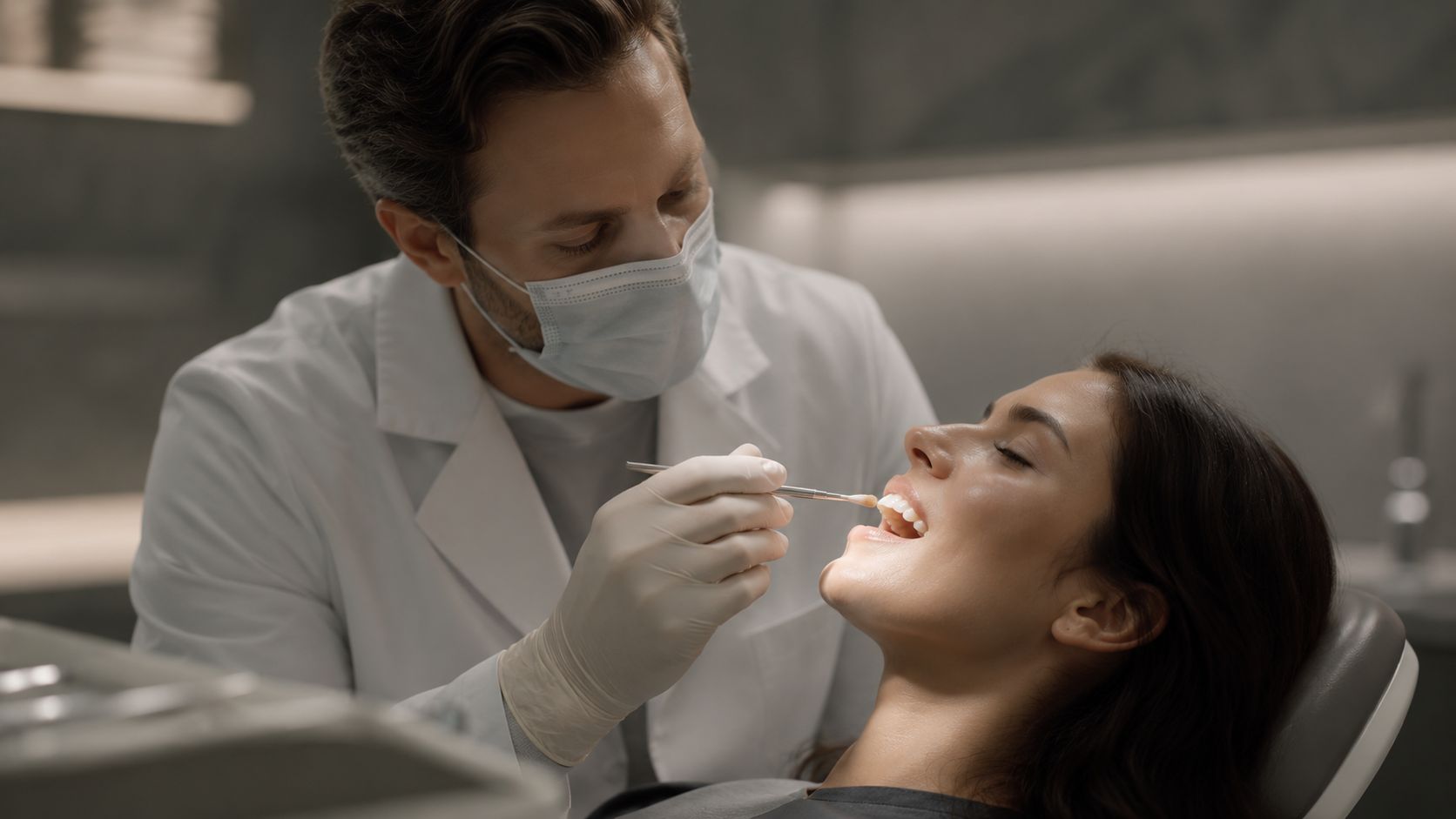
You're already in the chair after your cleaning, exam, or dental x-rays. A hygienist or dentist takes a quick look at the teeth and gums, then gets the surfaces ready. The teeth are dried with gauze, not with anything dramatic or uncomfortable.
Then the varnish is painted on in a thin layer with a small brush. It goes over the tooth surfaces, and the process is usually over before most patients have time to worry about it.
What it feels like during treatment
It doesn't involve drilling, injections, or scraping. There's no recovery period in the usual sense. The teeth may feel a little coated afterward, which is expected.
According to DC Health Check fluoride varnish guidance, the application process typically takes 3 to 4 minutes, the teeth are dried with a gauze sponge, a thin layer of varnish is applied to all tooth surfaces with a small brush, and the varnish sets rapidly in the presence of saliva so patients can resume most normal activities immediately after.
Practical rule: If you're nervous about dental visits, this is one of the easiest preventive treatments to receive because it's fast and painless.
For patients who tend to feel anxious, simple procedures like this can help build confidence. Many people who first come in looking for an emergency dentist, tooth extraction, or relief from discomfort eventually decide they want a long-term plan that keeps future treatment smaller and simpler.
A short video can make the process feel even more familiar before your visit.
What happens right after
Saliva helps the varnish harden. You don't have to sit with your mouth open waiting for it to dry. In most cases, you can leave the office and get back to your day with only a few temporary food and brushing instructions.
That's one reason dentists often recommend it during routine care. It adds protection without adding stress.
Key Benefits of Regular Fluoride Varnish Treatments
The biggest reason dentists recommend fluoride varnish is simple. It can help prevent cavities before they need treatment.
That matters for children, but it also matters for adults who want to avoid fillings, repeat dental work, or the chain reaction that can lead from a small cavity to larger restorative dentistry. Preventive care is usually less invasive than fixing problems after they grow.
What the evidence shows
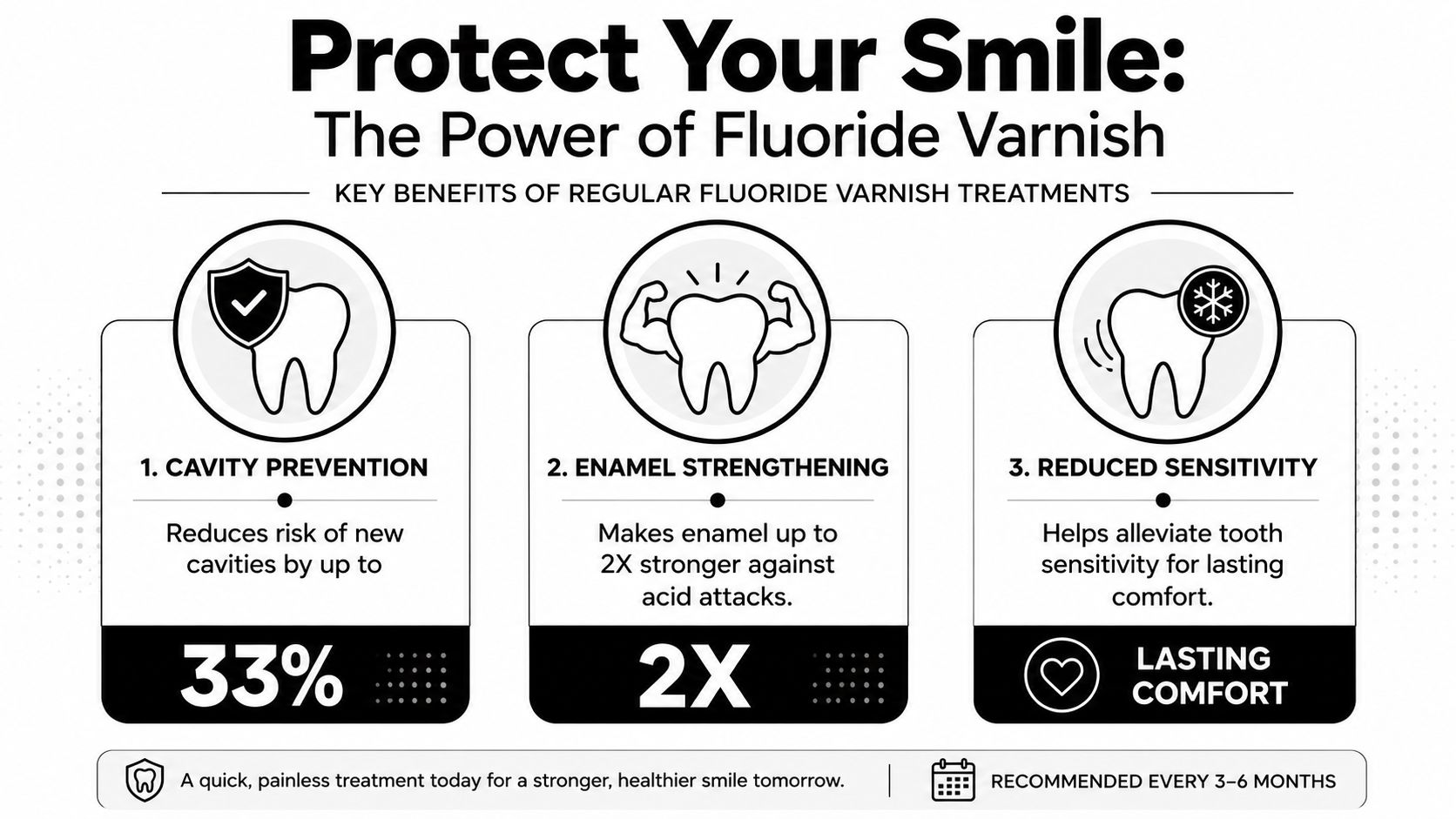
Systematic reviews confirm that fluoride varnish application has a major preventive effect, resulting in a 43% reduction in decayed, missing, and filled tooth surfaces in permanent teeth and a 37% reduction in primary baby teeth (NCBI evidence review).
For patients, that statistic translates into something more practical. Fewer problem areas can mean fewer fillings, fewer interruptions, and a healthier smile over time.
Benefits patients care about most
A fluoride varnish application often appeals to patients because the upside is easy to understand:
- Fewer future cavities. Lower cavity risk can mean less restorative treatment later.
- Support for long-term enamel health. Stronger enamel is better equipped to handle daily wear.
- Less worry for parents. Preventive care can be a relief when you're trying to keep a child out of the treatment chair for anything more involved.
- Help for sensitivity and vulnerable areas. Some adults appreciate the extra protection around exposed root surfaces or enamel that seems to weaken easily.
A small preventive step now can help you avoid a larger repair later.
If cavity prevention is already on your mind, these cavity prevention tips pair well with professional treatments and regular cleanings.
For patients comparing routine prevention with more involved care like tooth extraction, dental implants near me, or cosmetic dentist near me options, the message is straightforward. Keeping natural teeth healthy is always the easier path when possible.
Aftercare Frequency and Safety
Once the varnish is on, the next questions are usually practical. Can you eat? Can you drink? How often do you need it? And is it safe?
Those are the right questions to ask.
What to do after your appointment
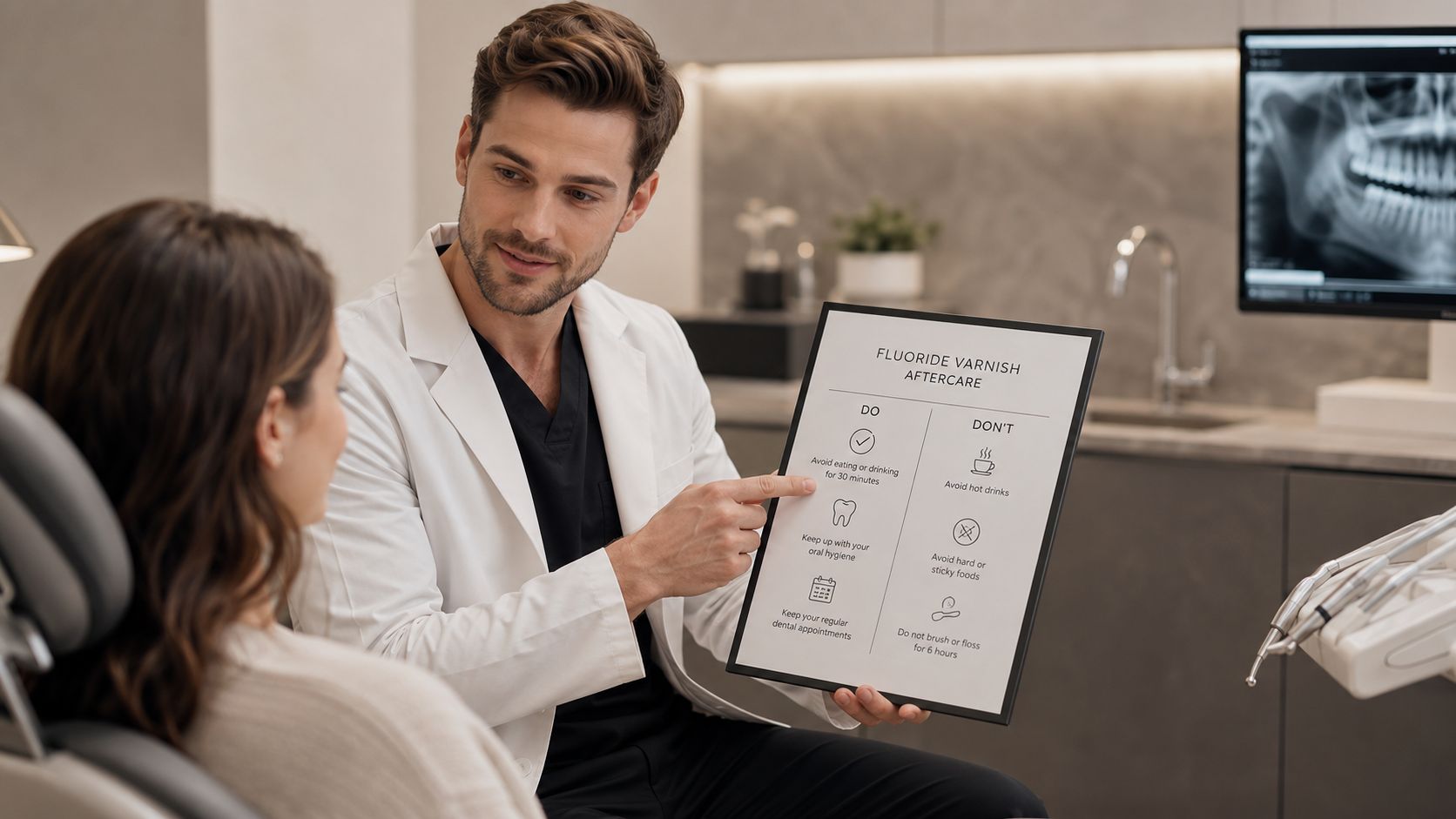
After a fluoride varnish application, follow the instructions your dental team gives you. In general, patients are commonly told to keep things gentle for a few hours.
A simple way to remember it:
- Choose softer foods. This helps the varnish stay in place.
- Skip hot, crunchy, or sticky foods for a while. Those can disturb the coating too soon.
- Wait on brushing and flossing for the recommended window. That gives the varnish time to do its job.
- Drink normally if your dental team says it's fine. Many patients can return to most normal activities right away.
The instructions are temporary. The goal is just to give the varnish enough time on the teeth.
How often most patients need it
Frequency depends on risk. Some patients receive it during regular cleaning and exam visits. Others, especially children or patients with higher cavity risk, may need it more often.
One key point is worth knowing because it clears up a common misunderstanding. While guidelines specify 3 to 6 month intervals for high-risk children, evidence indicates that applications more frequent than every 3 months offer no additional benefit (Dimensions of Dental Hygiene expert discussion).
That matters because patients sometimes assume more treatment must be better. In this case, the evidence suggests there's a point where extra frequency doesn't add value.
Is it safe
For most patients, fluoride varnish is considered a safe, routine preventive treatment when it's applied professionally. The amount used is small, and the coating is placed directly on the teeth.
If you're pregnant, have a medical condition, or have concerns about allergies or sensitivity to ingredients, mention that before treatment. Good dental care always includes a conversation, not just a procedure.
A quick summary
| Question | Short answer |
|---|---|
| Will it hurt? | No, it's typically painless. |
| Can I go back to my day after? | Usually yes, with a few temporary food and brushing limits. |
| Does everyone need the same schedule? | No, your dentist matches frequency to risk. |
| Is more frequent always better? | No. More often than every 3 months hasn't shown added benefit in the evidence noted above. |
Your Partner in Preventive Care in Chattanooga and Cleveland
Preventive dentistry works best when it becomes part of your normal routine, not something you only think about after pain starts. A fluoride varnish application fits that approach well because it's simple, fast, and aimed at protecting your teeth before bigger problems develop.
That's especially valuable if you're balancing a busy family schedule, trying to stay ahead of sensitivity, or hoping to avoid more involved treatment later. Regular cleanings, dental exams, new patient exams, dental x-rays when needed, and preventive services all support the same goal. Keep your smile healthy, comfortable, and easier to maintain.
In Chattanooga and Cleveland, many adults searching for a dentist in Chattanooga, TN or a dentist near me aren't just looking for someone to fix a tooth. They want a practice that explains options clearly, respects their comfort, and helps them make smart decisions for the long run. That same preventive mindset also supports cosmetic dentistry, restorative dentistry, same-day crowns, and even larger treatments like dental implants near me by protecting the health of the rest of the mouth.
Prevention doesn't replace treatment when treatment is needed. It helps you need less of it.
A good dental home makes room for both. Relief when something's wrong, and guidance that helps keep future visits simpler.
If you're ready to talk through preventive care, schedule a visit with Winn Smiles. Whether you're looking for a new patient exam, routine cleaning, help with sensitivity, emergency dentist care, or long-term options like cosmetic dentistry and dental implants, the team can help you build a care plan that fits your smile, your comfort, and your life in Chattanooga or Cleveland.