You take a sip of iced coffee in Chattanooga and feel a sudden electric jolt shoot through one tooth. Later, hot soup produces the same reaction, so you start chewing on the other side of your mouth. That sharp zing can make ordinary meals feel stressful, but tooth sensitivity usually has a manageable cause.
Learning how to prevent tooth sensitivity starts with separating everyday triggers from warning signs. Gentle brushing, fluoride toothpaste, thoughtful choices around acidic drinks, and care for grinding can protect exposed dentin. When pain is persistent, localized, spontaneous, or unusual, a dentist in Chattanooga, TN, or Cleveland, TN, can check whether decay, a crack, gum disease, or a damaged filling is involved.
That Sharp Zing When You Sip Something Cold
A patient may describe sensitivity as a quick flash of pain from iced coffee, cold water, lemonade, or ice cream. Someone else may avoid hot soup because heat causes a deeper ache. These reactions can appear during a busy week, after whitening, or gradually as brushing habits and diet affect the teeth.
Dentin hypersensitivity is common among adults, with a peer-reviewed epidemiology review finding that approximately 25–30% of adults report it, although published estimates vary because researchers use different methods and study different populations (peer-reviewed review of dentin hypersensitivity). That doesn't mean every sharp sensation is harmless. It means sensitivity deserves practical prevention and, when needed, a proper examination.
The good news is that prevention rarely begins with a dramatic change. It often starts with a softer toothbrush, lighter pressure, fluoride toothpaste, fewer repeated acid exposures, and better timing after meals. A person who sips soda or coffee over a long period may need to change the pattern, not necessarily eliminate every favorite drink.
A useful rule: Protect the tooth surface first, then address the pain. Masking symptoms without finding the trigger can allow a dental problem to continue.
A dentist near me search often begins when home care no longer feels sufficient. At Winn Smiles, patients in Chattanooga and Cleveland can discuss sensitivity alongside routine dental care, cleanings and exams, cosmetic dentistry, restorative dentistry, or emergency dental services. The right first step depends on whether the discomfort is brief and stimulus-related or whether it lingers and appears without a clear trigger.
What Actually Causes Sensitive Teeth
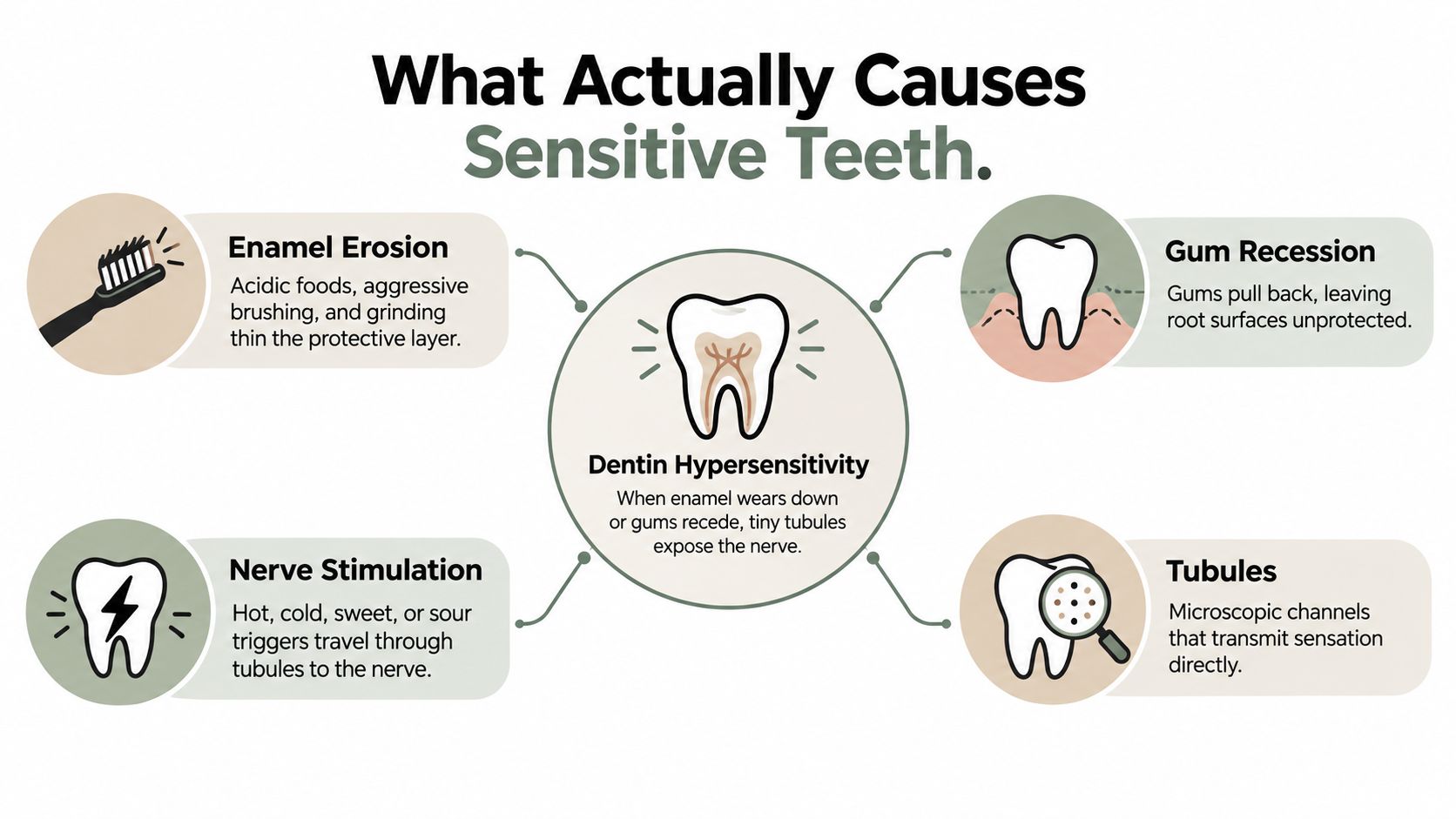
Your tooth has a hard outer shield called enamel. Beneath it sits dentin, a less protected layer containing microscopic channels called tubules. When enamel wears away or the gumline recedes, hot, cold, sweet, sour, or touch-related stimuli can travel through those channels and activate the nerve more easily.
This condition is called dentin hypersensitivity. Exposed dentin can result from enamel or cementum loss, gum recession, erosion, abrasive brushing, grinding, or periodontal inflammation. The aim of prevention is to limit further exposure and keep the gumline healthy, rather than searching for a stronger toothpaste.
Start with the likely trigger
- Aggressive brushing: Hard pressure and horizontal scrubbing can wear exposed root surfaces and irritate the gumline.
- Acid exposure: Soda, sports drinks, fruit juice, citrus, and sour candy can soften enamel and contribute to erosion.
- Grinding: Repeated force can wear tooth surfaces and make teeth more reactive.
- Bleaching: Whitening products can temporarily increase sensitivity, particularly when peroxide concentration is higher.
- Gum recession: Receding gums can leave root surfaces exposed because roots don't have the same enamel protection as the crown.
A brief twinge that stops when the cold drink is removed may fit ordinary sensitivity. Pain that lingers, occurs spontaneously, focuses on one tooth, or reacts strongly to heat deserves more attention. Decay, a cracked tooth, a defective restoration, pulpal disease, erosion, and periodontal disease can mimic sensitivity and require treatment, as explained in what causes tooth sensitivity to cold.
Don't stop brushing because brushing feels uncomfortable. Instead, use gentle plaque control and arrange an exam if the pattern persists. A dental evaluation can distinguish a preventable habit from a condition that may need fluoride, bonding, restorative dentistry, gum treatment, or another intervention.
Daily Habits That Protect Your Enamel
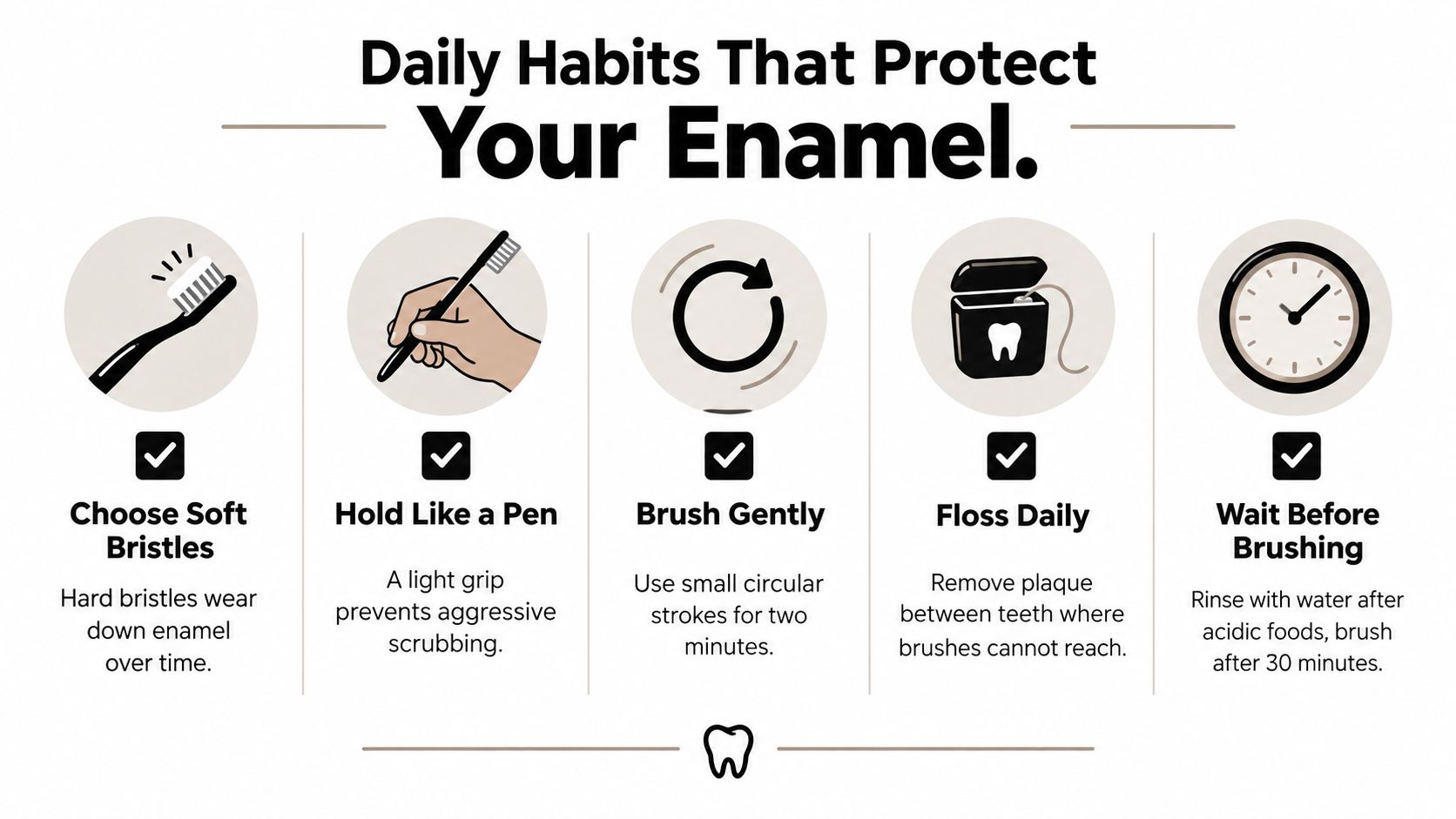
A good routine starts with a soft-bristled toothbrush and fluoride toothpaste. Hold the brush lightly, almost like a pen, and use small circular motions. If you press hard or scrub back and forth, you can irritate the gumline and wear on already sensitive areas.
Fluoride helps strengthen enamel, while flossing clears plaque from places the brush misses. If your dentist recommends fluoride mouthwash, use it as part of the routine, but do not treat it as a replacement for brushing or flossing. A steady routine matters more than force.
Timing matters after acidic foods
Acid can soften enamel for a while. If you brush right after soda, citrus, or another acidic food or drink, you may rub away softened mineral. Rinse with water first, then wait about one hour before brushing, in line with guidance from the American Dental Association on toothbrushing. Saliva uses that time to help neutralize acid and support remineralization.
A simple mirror checklist keeps the habit easy to follow:
- Use soft bristles: Replace pressure with patience.
- Lighten your grip: A tight grip often leads to aggressive brushing.
- Brush with fluoride toothpaste: Use small circular strokes.
- Clean between teeth: Floss once daily to support the gumline.
- Wait after acid: Rinse with water, then delay brushing after acidic food or drinks.
Spit after brushing rather than rinsing hard right away. That leaves more fluoride on the tooth surfaces. If sensitivity keeps showing up despite gentle care, or if one tooth reacts more than the others, a dental exam can sort out a simple habit issue from a problem that may need fluoride, bonding, restorative care, gum treatment, or another solution.
Choosing a Desensitizing Toothpaste That Works
The toothpaste aisle can make sensitivity prevention seem complicated. Look for a fluoride toothpaste made for sensitivity and check the active ingredients. Stannous fluoride, potassium-based ingredients, arginine, calcium sodium phosphosilicate, and strontium are among the ingredients used in desensitizing formulations, though products differ in how they work and how well an individual tolerates them.
A systematic review of 74 randomized clinical trials involving 5,366 patients and at least 9,167 teeth found substantial variation in the products and testing methods used for dentin hypersensitivity (systematic review of dentin-hypersensitivity interventions). That variation is one reason not to promise a universal winner.
Desensitizing toothpaste ingredients at a glance
| Active Ingredient | How It Helps | Evidence Level | Best For |
|---|---|---|---|
| Stannous fluoride | Provides fluoride protection and can help block pathways associated with sensitivity | High confidence in comparative evidence | Patients wanting sensitivity relief alongside cavity protection |
| Potassium-based formulations | Helps reduce nerve response with consistent use | Supported by evidence synthesis | People seeking a familiar daily sensitivity formula |
| Arginine | Helps support tubule occlusion at the exposed dentin surface | Evidence supports benefit, with lower confidence than stannous fluoride in the cited comparison | Patients who tolerate and prefer an arginine formula |
| Strontium or calcium sodium phosphosilicate | Helps reduce stimulus transmission by supporting surface blockage | Evidence of benefit in professional guidance | Patients choosing among available desensitizing options |
A network meta-analysis found clinically meaningful reductions in evaporative cold sensitivity compared with benchmark fluoride toothpaste for stannous fluoride, with a mean difference of −0.85 points, 95% CI −1.08 to −0.62, and arginine, with a mean difference of −0.78, 95% CI −1.02 to −0.54. The same evidence rated confidence as high for stannous fluoride and low for arginine (network meta-analysis of dentifrice formulations).
Use the selected toothpaste twice daily with a soft brush. Spit instead of rinsing forcefully, and give the product consistent use before deciding that it isn't helping. Switching tubes every week makes it difficult to judge any formula and doesn't address acid exposure, recession, or grinding.
Diet, Grinding, and Whitening Habits to Watch
A cold drink can sting even when it has no sugar. Soda, sports drinks, fruit juice, citrus, and sour candy can soften enamel, especially when they are sipped often or linger in the mouth. The American Dental Association's guidance on dental erosion explains that frequent soft-drink use is a common cause of erosive wear.

The fix is usually about lowering how often acid touches the teeth, not banning every acidic food. Have acidic drinks with meals instead of sipping them all day, use a straw behind the front teeth when it makes sense, avoid swishing, and follow with water. Sugar-free gum can help saliva do its job, and milk or calcium-containing foods may support neutralization and remineralization. For coffee drinkers, the Maximum Health Products coffee acidity advice gives practical ways to make the habit gentler on the mouth.
Pay attention to grinding
Morning jaw soreness, flattened tooth edges, facial fatigue, or sensitivity that does not improve with toothpaste can point to grinding. Stress often makes clenching more likely, and repeated pressure can wear or crack dental surfaces. A custom night guard from a dentist protects teeth more reliably than guessing at an over-the-counter appliance, especially when one tooth already hurts.
The short overview below walks through how acid frequency, grinding, and whitening habits combine to wear enamel, mirroring the triggers covered above.
Treat whitening as a planned procedure
Whitening can trigger sensitivity, especially with stronger at-home concentrations. The American Dental Association guidance on toothpastes and sensitivity notes that approximately 14–16% hydrogen peroxide or 20–22% carbamide peroxide can increase sensitivity risk compared with lower concentrations, although average symptoms are usually mild and the evidence quality is limited.
A sensitive patient should have a dental assessment before whitening and consider a lower-concentration or supervised plan. Using desensitizing toothpaste beforehand, shortening sessions, or taking breaks may help. For a fuller explanation, review why teeth whitening hurts before you start a whitening routine.
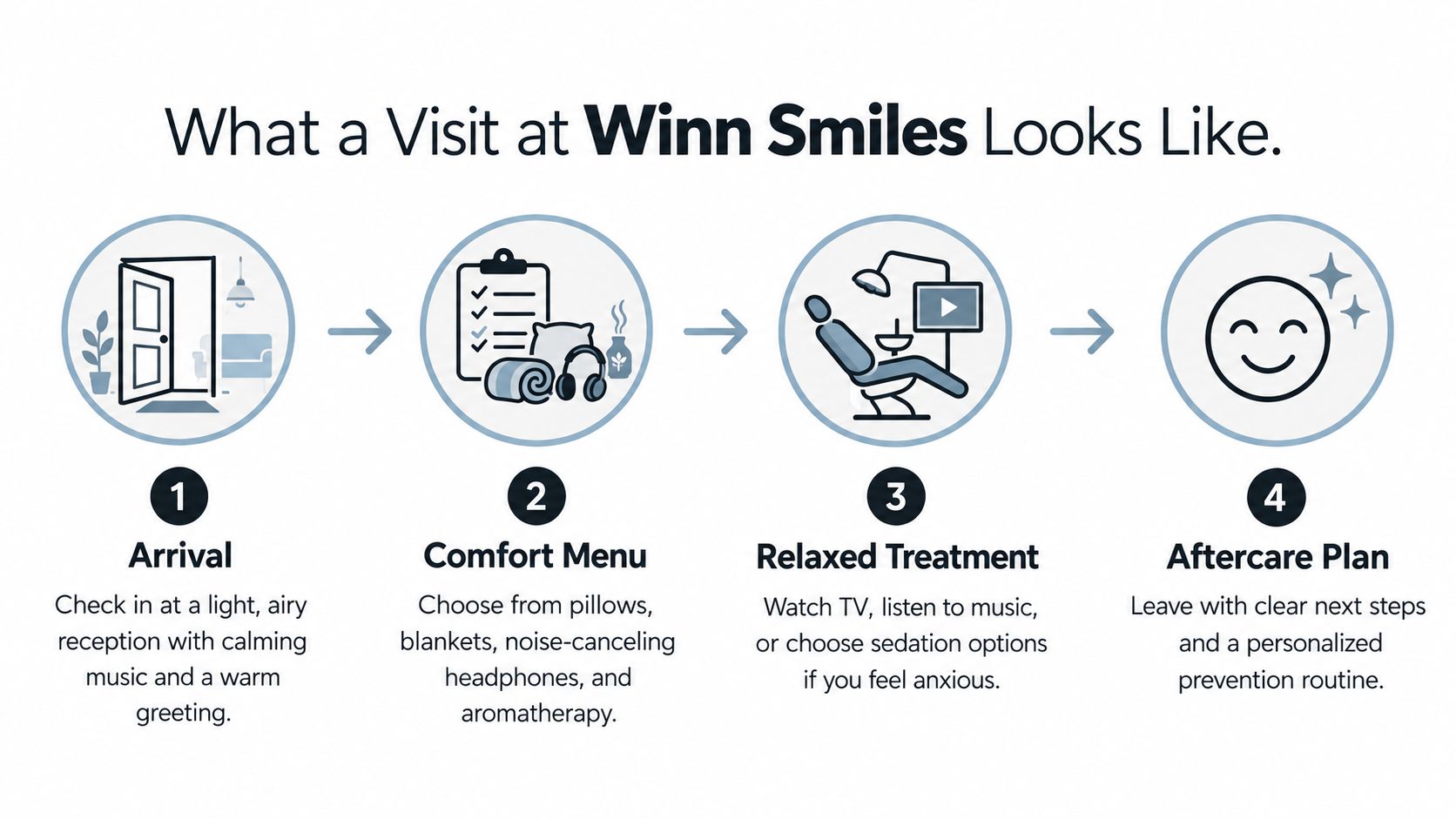
What a Visit at Winn Smiles Looks Like
You arrive with a clear concern: an iced drink hurts one upper tooth, or brushing stings along the gumline. The visit starts with listening to the pattern, checking the tooth, and considering your habits. A sharp sensation can come from exposed dentin, but it can also signal decay, a crack, or a problem beneath an existing filling.
An exam and dental x-rays, when appropriate, help the team look for decay, cracks, defective fillings, gum concerns, and other causes. If the discomfort is uncomplicated sensitivity, care may include fluoride varnish, brushing and diet guidance, or a professionally selected desensitizing treatment. An exposed root may benefit from bonding over the vulnerable area. Gum recession may need separate treatment when the gumline itself is contributing to the pain.
Care matched to the reason for pain
The treatment depends on what the examination finds. Grinding may call for a custom night guard. A damaged tooth may need restorative dentistry, including a same-day crown when appropriate. Laser dentistry can support selected procedures, while a root canal, extraction, or emergency dental service may be considered for infection, a fracture, or deeper damage.
Winn Smiles serves Chattanooga and Cleveland with general, cosmetic, periodontal, restorative, implant, and emergency dentistry. Comfort options include a comfort menu and sedation for patients who feel anxious. You can ask questions, review the findings, and compare options before choosing care.
Free consultations and second opinions are available for select services. They can help when sensitivity appears alongside a proposed crown, dental implants, cosmetic treatment, whitening, or extraction. The goal is to connect the symptom with its cause, then choose a practical response rather than treating every cold-sensitive tooth the same way.
Taking the Next Step Toward Comfortable Teeth
You don't need to wait until sensitivity changes every meal. A dentist in Chattanooga, TN, or Cleveland, TN, can help identify whether acid, brushing, grinding, recession, whitening, decay, or a cracked tooth is driving the discomfort.
Winn Smiles has two accessible locations serving Chattanooga and Cleveland, with comfort-focused care, same-day crowns, and laser options that may reduce repeat visits when clinically appropriate. You can schedule a free consultation, request a second opinion for select services, or call with questions before making a treatment decision.
Eating ice cream without flinching and sipping hot coffee without hesitation are realistic goals when the cause is identified and managed.
Winn Smiles provides personalized evaluations, preventive guidance, fluoride care, restorative treatment, and comfort options for patients dealing with tooth sensitivity in Chattanooga and Cleveland. Visit Winn Smiles to request a consultation or second opinion for select services, and take the first step toward more comfortable teeth.