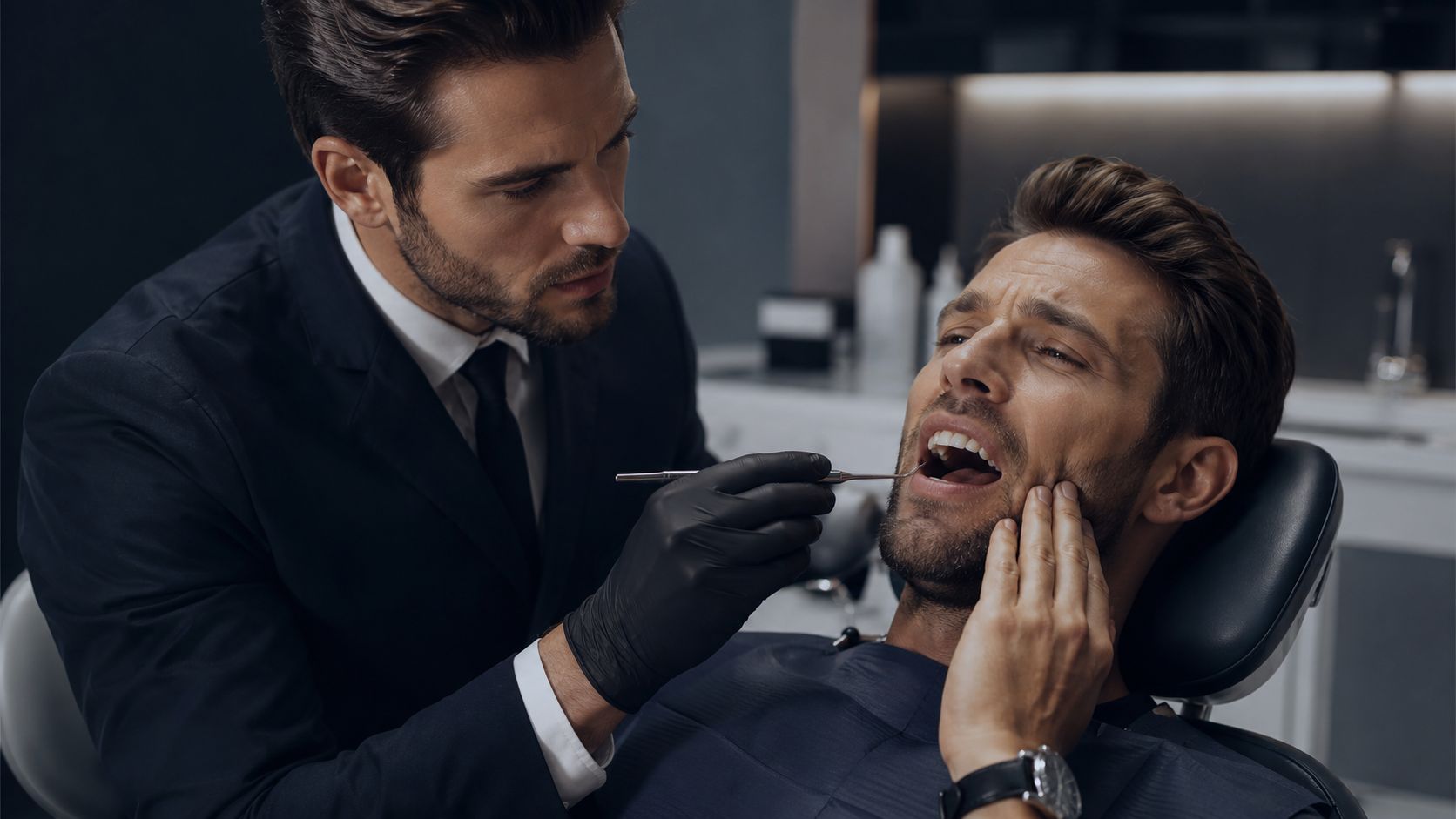
You finally decide to brighten your smile, apply the whitening gel, and take a sip of cold water. Instead of feeling excited about your result, you feel a sudden electric sting. If you're searching for “teeth whitening hurts” because this happened to you, you're not alone, and the discomfort doesn't automatically mean you've damaged your teeth.
Whitening sensitivity is a recognized side effect of bleaching. It's usually temporary, but the intensity depends on the peroxide concentration, treatment method, application time, and condition of your teeth and gums. For patients looking for a cosmetic dentist near me in Chattanooga or Cleveland, TN, a professional assessment can help identify a whitening approach that respects comfort as well as appearance.
Why Teeth Whitening Hurts and What You Can Do About It
A patient may begin whitening with a simple goal, a brighter smile for a wedding, a new job, family photographs, or everyday confidence. Then the first sharp twinge arrives while drinking coffee or brushing. The natural reaction is to stop and wonder whether whitening has caused permanent harm.
In most cases, whitening discomfort is temporary dentinal hypersensitivity, not structural damage. A 2016 meta-analysis estimated the risk of sensitivity at 51% for at-home bleaching and 62.9% for in-office bleaching, with the relevant confidence intervals reported in the clinical review available through PubMed's tooth-whitening evidence. That means discomfort isn't unusual, particularly when a stronger professional gel is used.
A practical rule: Whitening should never be treated as a test of endurance. If the pain is strong, pause the treatment and ask a dental professional to adjust the plan.
The discomfort may feel like a brief shock from cold air, water, sweets, or touch. Some people also notice irritated gums when gel reaches soft tissue. Historical regulatory reviews have documented tooth sensitivity and soft-tissue irritation as common whitening-related complaints, while another review described hypersensitivity as often mild but capable of affecting only a few teeth. You can read a patient-friendly teeth whitening side effects guide for additional context.
At Winn Smiles, patients in Chattanooga, Cleveland, and nearby communities can discuss sensitivity before choosing a cosmetic treatment. A consultation may include an examination, dental x-rays when indicated, and a review of existing fillings, gum recession, enamel wear, cavities, or cracks. Those details matter because whitening can make an untreated problem feel worse.
The right response isn't necessarily to abandon whitening. It's to choose a measured concentration, protect the gums, reduce exposure when appropriate, and make sure the teeth are healthy enough for bleaching.
The Science Behind Whitening Sensitivity
Enamel normally shields the more sensitive layers of a tooth. Beneath it, dentin contains microscopic channels called dentinal tubules. These channels lead toward the pulp, the living center that contains nerves and blood vessels.
During whitening, hydrogen peroxide passes through enamel and dentin. It can reach the pulp within about 15 minutes of exposure, where it is associated with temporary inflammation and fluid movement inside the dentinal tubules. Those fluid shifts stimulate the nerve, producing the familiar short, sharp pain. This mechanism is described in the clinical review available from PubMed on bleaching-related sensitivity.
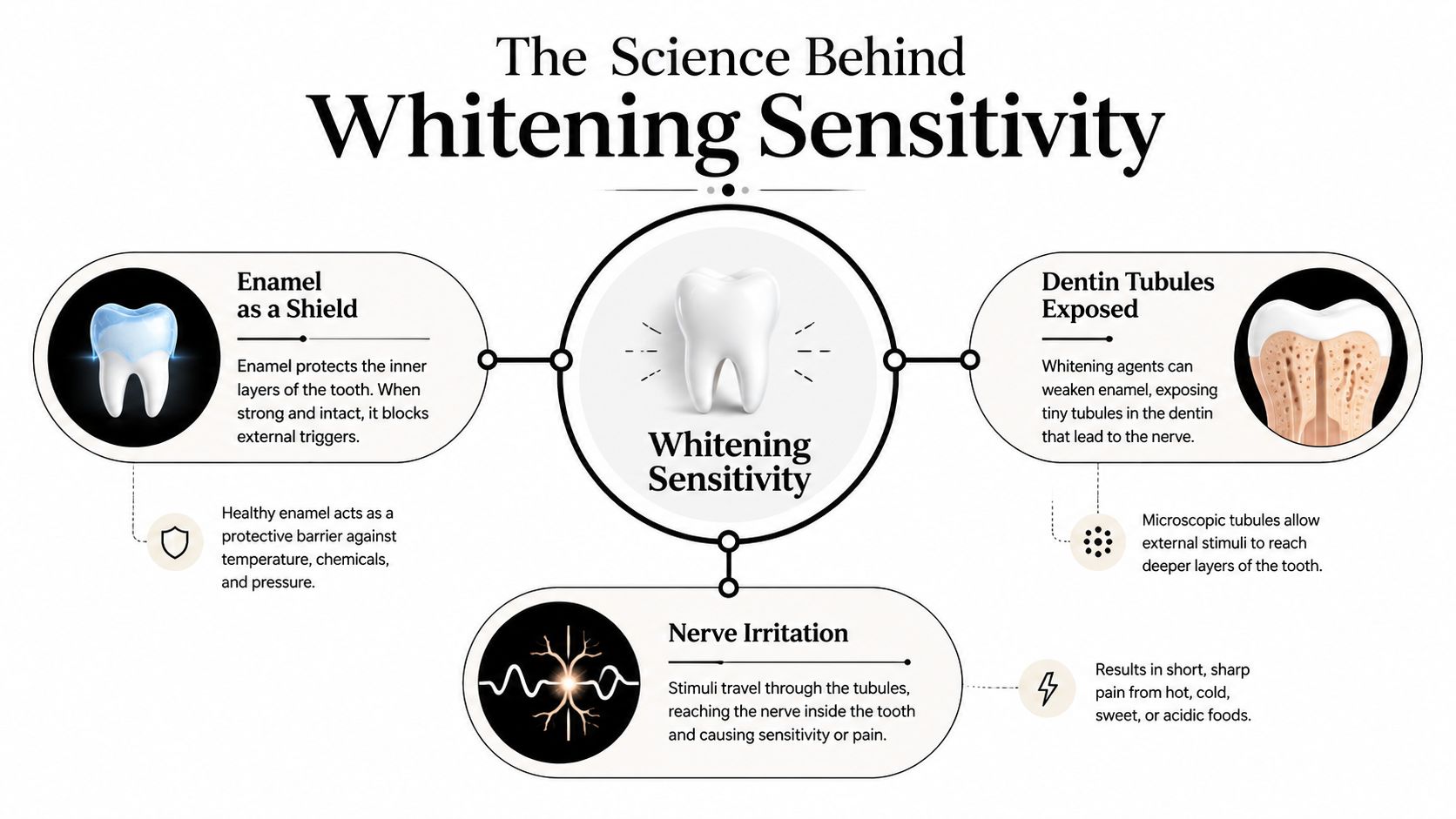
Sensitivity does not mean the gel has carved away the tooth or permanently weakened its internal structure. The American Dental Association notes that temporary sensitivity can occur with every form of bleaching, becomes more common as peroxide concentration rises, and usually settles within several days. Early sensitivity may affect up to two-thirds of users, according to the same review cited above.
Why concentration changes the experience
Peroxide concentration is one of the clearest drivers of discomfort. A 2021 clinical study found that mean sensitivity increased after every tested whitening protocol. The largest increase followed 40% hydrogen peroxide in-office whitening, with the mean score rising from 1.4 at baseline to 6.2 one day later. By comparison, the mean score rose from 1.9 to 3.0 with 16% carbamide peroxide and from 1.7 to 2.2 with 10% carbamide peroxide. The increases were statistically significant for each method tested, as reported in the study indexed by PubMed.
A separate triple-blind trial found greater sensitivity risk and intensity with 10% hydrogen peroxide used at home than with 4% hydrogen peroxide. Another randomized trial found similar sensitivity when 10% hydrogen peroxide was applied for 15 or 30 minutes within the tested regimen. Together, these findings support a practical decision rule: lowering concentration may affect comfort more than making a modest change to exposure time. The evidence is summarized in this clinical trial and meta-analysis review.
Your starting dental condition also affects the experience. Gum recession can expose roots, while worn enamel, existing sensitivity, cavities, or cracks may give gel easier access to sensitive areas. If cold drinks already cause pain, mention it before whitening. A dentist can assess whether bleaching is suitable and whether the discomfort is likely to come from whitening or an underlying problem.
For a plain-language explanation of other cold triggers, review Winn Smiles' guidance on what causes tooth sensitivity to cold.
Comparing Over-the-Counter and Professional Whitening Options
The fastest whitening option isn't automatically the most comfortable one. Patients should compare the concentration, fit, exposure pattern, supervision, and ability to modify treatment rather than judging a product only by how quickly it promises results.
Over-the-counter strips, trays, pens, professionally supervised take-home trays, and in-office whitening can all use peroxide, but they don't deliver it in the same way. A one-size-fits-all strip may contact the gumline unevenly. A custom tray can distribute gel more predictably and help limit soft-tissue contact. In-office treatment can use a stronger gel and finish more quickly, but the concentration can also increase sensitivity.
| Whitening Method | Peroxide Concentration | Sensitivity Risk | Comfort Level |
|---|---|---|---|
| Over-the-counter strips | Varies by product | Variable, especially with poor fit or overuse | Variable |
| Over-the-counter pens | Varies by product | Variable, with uneven application possible | Variable |
| Over-the-counter trays | Varies by product | Variable, depending on fit and instructions | Variable |
| Professional take-home trays | Dentist-selected concentration | Often more controllable because the plan can be adjusted | Gradual and generally more manageable |
| In-office whitening | Often higher concentration | Greater risk of temporary sensitivity than lower-concentration approaches | Fast, but may be less comfortable |
| Light-activated whitening | Peroxide-based, with light added | May increase sensitivity without improving efficacy | Not necessarily more comfortable |
The evidence favors moderation for patients who already struggle with sensitive teeth. Recent reviews report that lower hydrogen peroxide or carbamide peroxide approaches can produce similar whitening outcomes with less sensitivity than stronger formulations. A review of bleaching products found sensitivity rates ranging from 15% to 78%, while studies using 10% carbamide peroxide often fell between 15% and 65%. When hydrogen peroxide was used with heat, reported rates were 67% to 78%, as detailed in the review of tooth-whitening adverse effects.
Light activation deserves particular caution. An umbrella review found that LED, halogen, and laser activation generally didn't improve whitening efficacy and could increase sensitivity. In other words, adding a light doesn't guarantee a better result or a gentler appointment. The concentration and delivery method remain more important considerations, as discussed in the systematic review of whitening protocols.
A simple choice guide
Choose a professionally supervised, gradual approach if you have a history of sensitivity, gum recession, or discomfort with whitening strips. Consider in-office treatment if speed matters and your dentist believes your teeth and gums can tolerate the protocol. Avoid extending wear time or repeating applications because more exposure doesn't necessarily mean a better result, and it can make irritation more likely.
Immediate Relief and Prevention Strategies
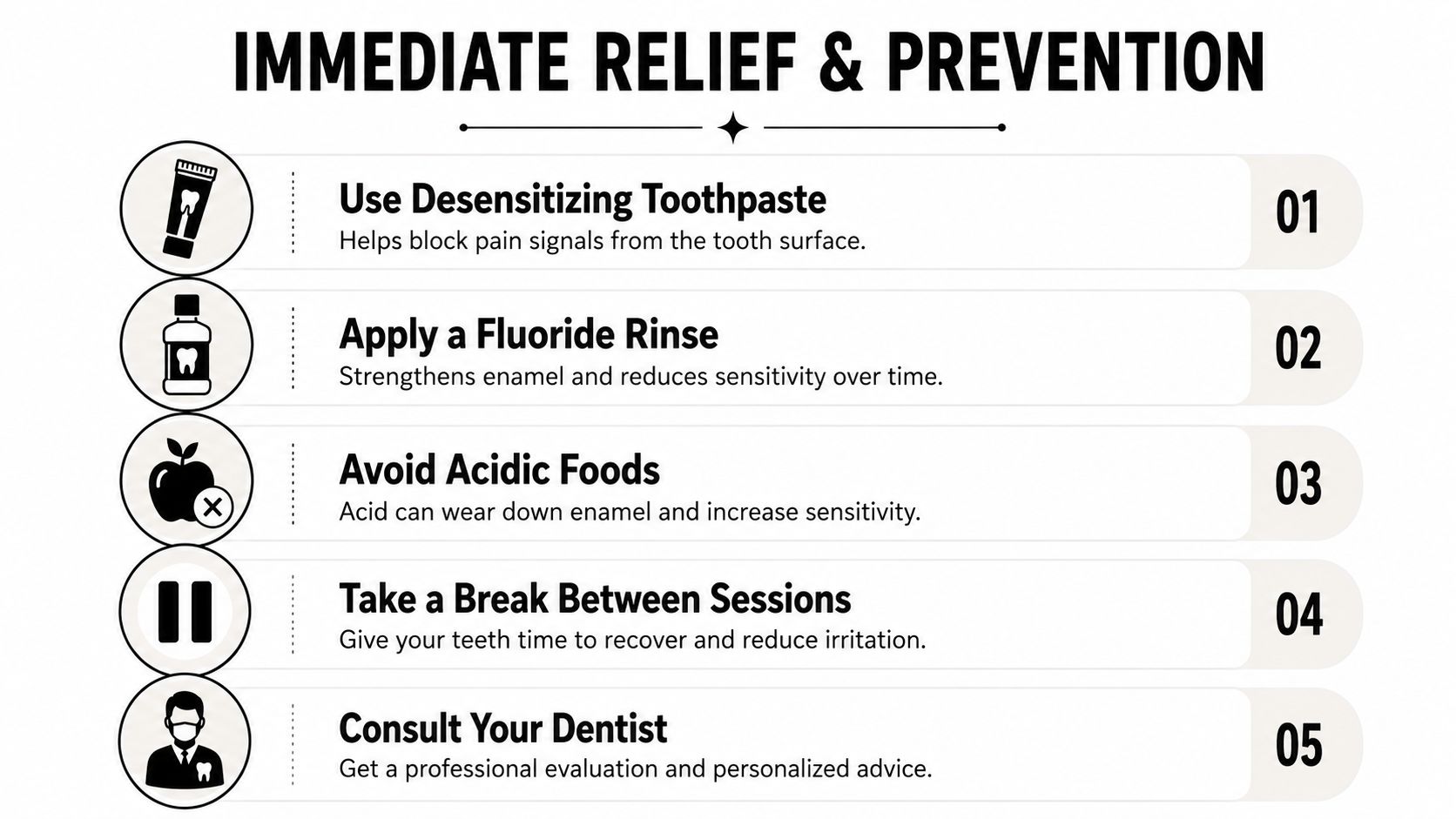
If whitening has already made your teeth sore, stop adding exposure until the sensitivity settles or your dentist advises you otherwise. Use lukewarm water, choose softer foods, and avoid sharp temperature changes that trigger the nerve. A soft-bristled toothbrush can reduce mechanical irritation while the teeth recover.
Start with simple comfort measures
Use a toothpaste formulated for sensitive teeth, ideally one containing potassium nitrate, because it can reduce the nerve's response to stimulation. A fluoride rinse or professionally recommended fluoride treatment may also support the tooth surface. Patients can find additional practical guidance in Winn Smiles' tooth sensitivity relief advice.
Avoid very hot, cold, or acidic foods and drinks during the active whitening period if they provoke pain. Don't scrub harder to remove stains. Gentle brushing and careful cleaning protect the gumline without adding unnecessary irritation.
Adjust the whitening plan
Spacing sessions gives sensitivity time to settle. A dentist may recommend a lower-concentration gel, shorter wear periods, fewer applications, or a desensitizing product before and after treatment. Custom trays can also help by keeping gel on the tooth surfaces and away from the gums.
A clinical study of home whitening found 54% of participants reported mild sensitivity, 10% reported moderate sensitivity, and 4% reported severe sensitivity. The authors concluded that mild sensitivity should be expected in about one-half of patients, while moderate or severe discomfort lasted one to two weeks, according to the home-whitening clinical study.
Don't rely on pre-treatment painkillers
Many patients ask whether taking an analgesic before whitening prevents the sting. A 2025 review found no significant improvement in pain or sensitivity scores compared with placebo, and the observed reduction wasn't clinically meaningful, as reported in the PubMed review of analgesics for whitening sensitivity. Medication may also be inappropriate for some people because of allergies, medical conditions, or interactions, so it shouldn't replace a dental plan.
Watch the soft tissues, too. Whitening discomfort can involve the gums, throat, or tongue, not just the teeth. If gel burns the gums, causes persistent soreness, or repeatedly touches the tongue or throat, stop treatment and contact your dental office for instructions.
How Winn Smiles Keeps Your Whitening Experience Comfortable
Patients in Chattanooga and Cleveland, TN, often want a brighter smile without committing to an uncomfortable, one-size-fits-all process. Professional care provides a practical advantage because the dentist can assess the teeth first and tailor the whitening plan to the patient's sensitivity history, gumline, and cosmetic goals.

A comfort-focused appointment may involve discussing the whitening gel strength, limiting exposure, using desensitizing support, and protecting the gums during application. Winn Smiles offers professional teeth whitening with customized gel strength and application techniques intended to reduce temporary sensitivity. The team also describes slower whitening, shorter wear times, desensitizing toothpaste, and desensitizing gel support as options for patients with sensitivity concerns.
That flexibility matters more than choosing the strongest product. Someone with gum recession may need a different plan from someone whose discomfort occurs only with cold drinks. Someone with a cavity, cracked tooth, or inflamed gum tissue may need restorative or periodontal care before cosmetic bleaching.
The offices in Chattanooga and Cleveland are designed with a light, airy atmosphere, a comfort menu, and sedation options for patients who feel anxious about dental care. Sedation doesn't eliminate the need to address whitening sensitivity, but comfort planning can make the visit easier for people who delay care because they're worried about pain.
After evaluating your smile, the team can also discuss broader cosmetic dentistry options. Veneers may suit certain discoloration patterns that peroxide won't change, while Invisalign can address alignment as part of a larger smile plan. If a tooth needs repair rather than whitening, restorative dentistry, same-day crowns, or other treatment may create a healthier foundation for cosmetic improvement.
A consultation also helps prevent patients from using repeated over-the-counter applications to chase a result that bleaching can't provide. The dentist can distinguish surface stains from deeper discoloration and explain whether whitening, veneers, cleaning and exams, or another service fits the goal.
For patients searching for a cosmetic dentist near me, dentist near me, or a dentist in Chattanooga or Cleveland, TN, that kind of individualized planning is the main comfort benefit. You're not left to guess which concentration, tray, or wear schedule your teeth can tolerate.
When to Seek Professional Dental Care for Sensitivity
Mild sensitivity after whitening can be expected, but severe, worsening, or unusually localized pain deserves attention. The home-whitening clinical study cited above reported moderate or severe discomfort lasting one to two weeks, while temporary whitening sensitivity commonly settles as treatment ends. Your own symptoms still matter more than a general timeline.
Stop whitening and contact a dentist if you notice:
- Persistent pain: Sensitivity doesn't improve after the expected recovery period.
- Severe or throbbing discomfort: Pain interferes with sleep, eating, drinking, or normal daily activities.
- One-tooth sensitivity: A single tooth reacts sharply, which may point to decay, a crack, or another localized concern.
- Soft-tissue problems: Gum irritation, tongue discomfort, or throat sensitivity continues or worsens.
- A visible concern: You notice swelling, a broken tooth, bleeding gums, or another new symptom.
A new patient exam can include cleaning and exams, dental x-rays, gum evaluation, and a review of your whitening history. If pain is urgent, Winn Smiles also provides emergency dentistry. Treatment may involve addressing decay, gum disease, exposed roots, or a cracked tooth before considering cosmetic care.
Patients in Chattanooga, Cleveland, and nearby service areas can schedule a consultation to discuss whitening goals and sensitivity concerns. Ask about available free consultations for select services, and don't delay an examination if whitening pain feels different from a brief, passing sting.
Winn Smiles offers professional teeth whitening, personalized sensitivity planning, exams, restorative dentistry, dental implants, and emergency dental services in Chattanooga and Cleveland, TN. Visit Winn Smiles to request a consultation and take the next step toward a brighter, more comfortable smile.