That first sip of iced tea should feel refreshing. If it sends a quick, sharp jolt through one tooth, or several, it can throw off your whole day. The same thing happens with hot coffee, cold air, sweets, or even brushing. Many people in Chattanooga and Cleveland put up with it for months because they assume sensitive teeth are just something they have to live with.
They don't.
Tooth sensitivity usually has a reason behind it, and once the cause is identified, there's often a clear path to relief. Sometimes that means changing a few home-care habits. Sometimes it means treating a cavity, protecting an exposed root, or repairing a damaged tooth. The important part is not guessing for too long.
For patients looking for a dentist near me in Chattanooga, TN, or Cleveland, TN, this is often one of the most common concerns that brings them in. The pain may be brief, but it can be stubborn, and it can make eating, drinking, and even routine dental care feel stressful. Good care starts with understanding what's causing the sensitivity and choosing the treatment that fits that specific problem.
Your Guide to Tooth Sensitivity Relief in Chattanooga and Cleveland
A common pattern goes like this. Someone notices a zing with cold water. Then they start avoiding ice cream on one side. A few weeks later, even brushing near the gumline feels uncomfortable. By the time they search for a dentist in Chattanooga, TN or dentist in Cleveland, TN, they're frustrated because the pain seems small to describe but hard to ignore.
That frustration makes sense. Tooth sensitivity is disruptive precisely because it shows up during ordinary moments. Meals, drinks, morning brushing, and even breathing through your mouth on a cool day can trigger it.
What sensitive teeth often feel like
Sensitive teeth don't always present the same way. Some people feel a quick flash of pain that disappears right away. Others feel a stronger, more localized reaction that keeps returning to the same tooth.
Common descriptions include:
- Cold triggers pain when drinking water, tea, soda, or smoothies.
- Heat causes discomfort with coffee, soup, or hot foods.
- Sweet or acidic foods sting more than they used to.
- Brushing near the gums hurts even when you're trying to be careful.
Sensitive teeth are a symptom, not a final diagnosis. Relief gets easier when the cause is clear.
Why local care matters
If you're looking for tooth sensitivity relief in this area, practical care matters more than generic advice. A local dental visit allows your dentist to check whether the issue is simple enamel wear, gum recession, a cavity, a cracked tooth, or another problem that needs more than toothpaste alone.
That's especially important if the pain is isolated to one tooth, if it started suddenly, or if it's getting worse. In those situations, what seems like routine sensitivity can overlap with issues that may need restorative care, an urgent evaluation, or treatment from an emergency dentist.
For patients in Chattanooga and Cleveland, the goal is straightforward. Find the source of the pain, calm the symptoms, and protect the tooth so the problem doesn't keep coming back. That's how tooth sensitivity relief becomes lasting relief, not just a temporary workaround.
Understanding the Causes of Sensitive Teeth
To understand tooth sensitivity, it helps to think of a tooth as having layers. The outer layer is enamel, which protects the crown of the tooth. Beneath that is dentin, which contains tiny pathways that connect external sensations to the nerve inside the tooth. When dentin becomes exposed, cold, heat, sweets, or touch can trigger that familiar sharp response.
An NIH review of dentin hypersensitivity reports that about 25–30% of adults experience it, and the same review notes that enamel loss and gum recession are key reasons the inner part of the tooth becomes exposed.
What opens the door to sensitivity
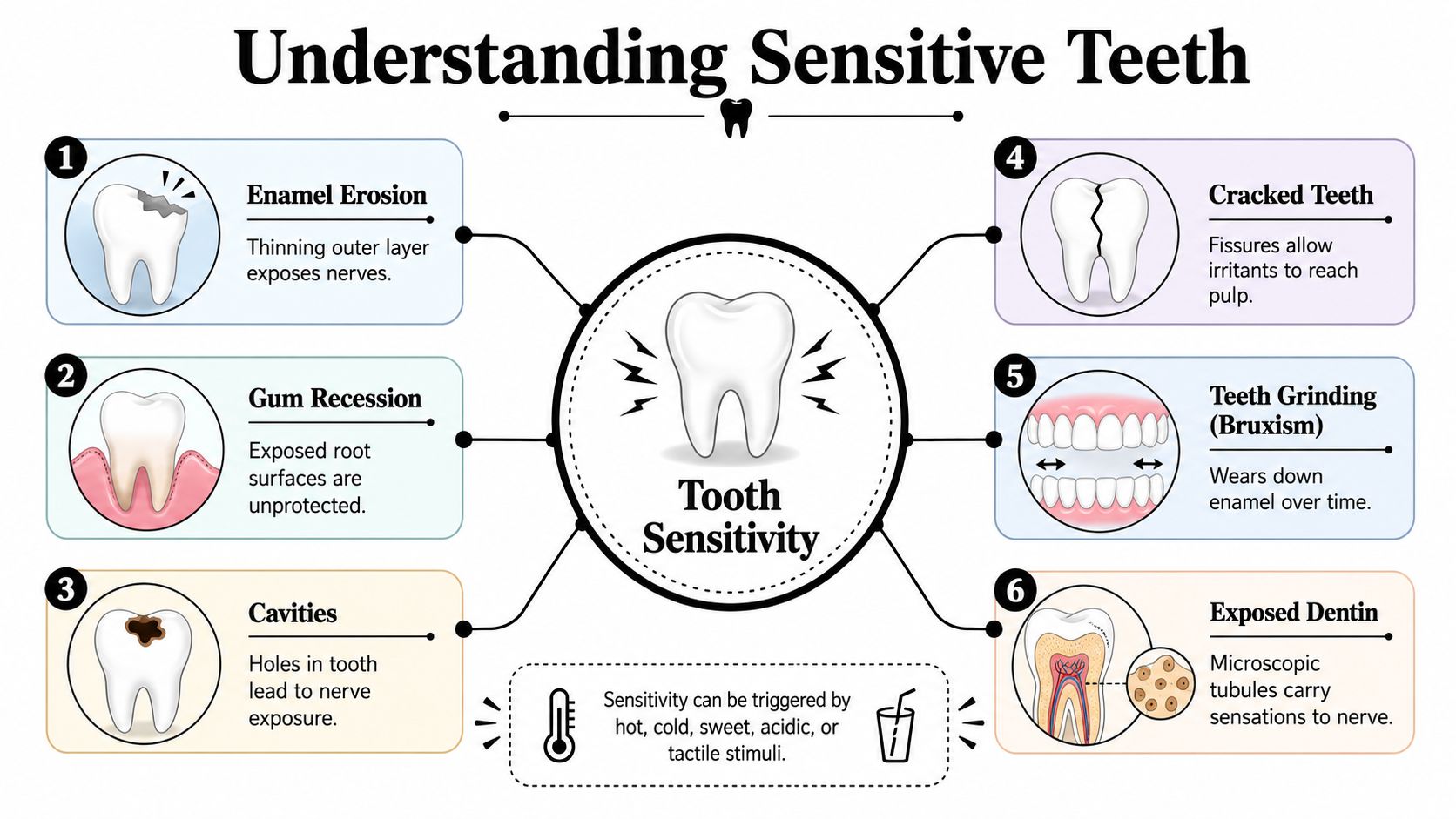
Several different problems can lead to the same symptom. That's why self-diagnosis can be tricky.
- Enamel erosion can happen over time from acidic foods and drinks.
- Gum recession exposes the root surface, which doesn't have the same protection as enamel.
- Aggressive brushing can wear away enamel and irritate the gumline.
- Cavities can create direct pathways for irritation.
- Cracked teeth can allow temperature changes and pressure to reach deeper structures.
- Grinding or clenching can wear teeth down gradually.
If you've noticed stronger pain with cold foods, this guide on what causes tooth sensitivity to cold can help you connect your symptoms to possible causes.
Why one person's fix may not work for another
The same symptom can come from very different issues. A person with mild enamel wear may improve with brushing changes and desensitizing toothpaste. A person with a crack or cavity may not improve until that tooth is repaired.
That's the main trade-off with internet advice. Home care can help, but it can also delay the right treatment if the source is structural.
When sensitivity keeps returning to one spot, the question isn't only how to numb it. The real question is what's exposing that tooth in the first place.
This is also why persistent sensitivity deserves a professional exam, dental x-rays if needed, and a careful look at the bite, gumline, and any existing restorations.
Immediate Relief Strategies You Can Use at Home
The fastest way to start improving sensitivity at home is to reduce the things that keep irritating the tooth while using products designed to calm the nerve response. Good home care won't repair every cause, but it often makes a real difference when the problem is related to exposed dentin, early enamel wear, or brushing habits.
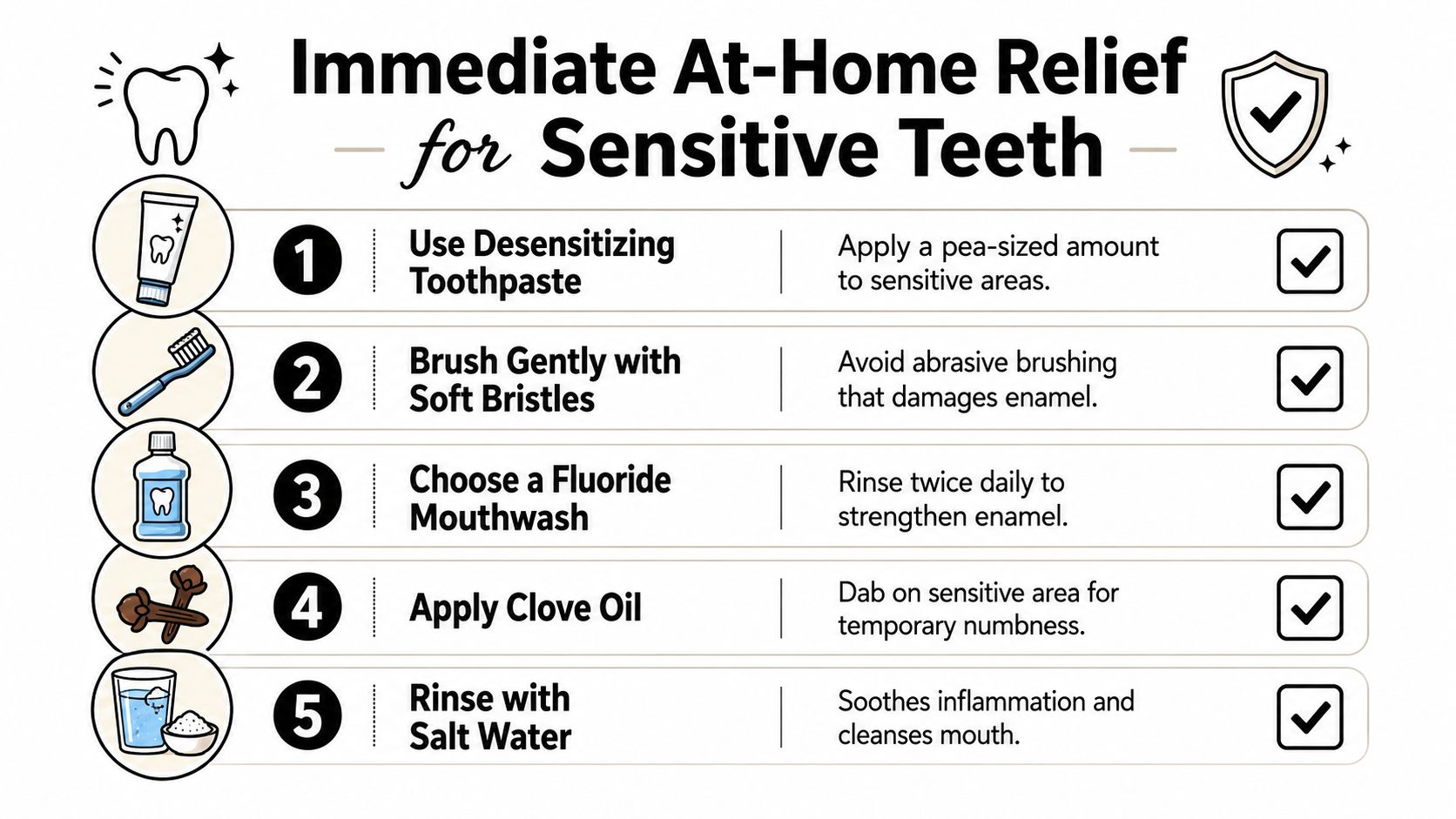
A peer-reviewed Canadian Dental Association review on managing dentin hypersensitivity recommends first-line care that includes correct brushing technique and desensitizing toothpaste with potassium salts or high fluoride content of at least 1450 ppm, with pain expected to decrease in about 2 to 4 weeks when used consistently.
Start with technique before products
Many people brush harder when a tooth feels “unclean” or tender. That usually backfires.
Use a soft-bristled toothbrush and lighter strokes, especially near the gumline. Think gentle polishing, not scrubbing. If your brush splays outward quickly, you're probably using too much pressure.
The at-home steps that tend to help most
Here's a practical order to follow:
- Switch to a desensitizing toothpaste and use it every day, not occasionally.
- Brush with a soft brush and avoid abrasive toothpaste.
- Use fluoride mouthwash if your dentist recommends it as part of your home routine.
- Avoid obvious triggers for now, especially very cold drinks and acidic snacks.
- Track whether the pain is improving or staying exactly the same.
A short visual explanation can help if you want to see these habits in action.
What helps, what doesn't
Some home measures can be soothing, but not all of them solve the underlying issue.
| Approach | What it can do | Limitation |
|---|---|---|
| Desensitizing toothpaste | Helps reduce sensitivity over time with consistent use | Needs daily use and patience |
| Soft-bristled brushing | Prevents more wear at the gumline | Won't fix a cavity or crack |
| Avoiding trigger foods | Lowers day-to-day pain | Doesn't address the root cause |
| Salt-water rinses | May feel soothing if tissues are irritated | Not a direct treatment for exposed dentin |
| Clove oil | May provide temporary comfort for some people | Short-term only and not a substitute for diagnosis |
Practical rule: If a home remedy helps only for a few hours but the same tooth keeps reacting, it's time to look deeper.
Long-Term Prevention Through Diet and Oral Hygiene
Quick relief matters, but prevention is what keeps sensitivity from becoming a repeating cycle. The habits that protect your enamel and gums every day usually matter more than any single product. Small changes, repeated consistently, are what lower irritation over time.
One of the biggest long-term issues is acid. The Mayo Clinic's guidance on sensitive teeth notes that acidic exposure can erode enamel and advises waiting to brush after acidic foods or drinks so you don't increase abrasion while the tooth surface is more vulnerable.
The daily habits that protect your teeth
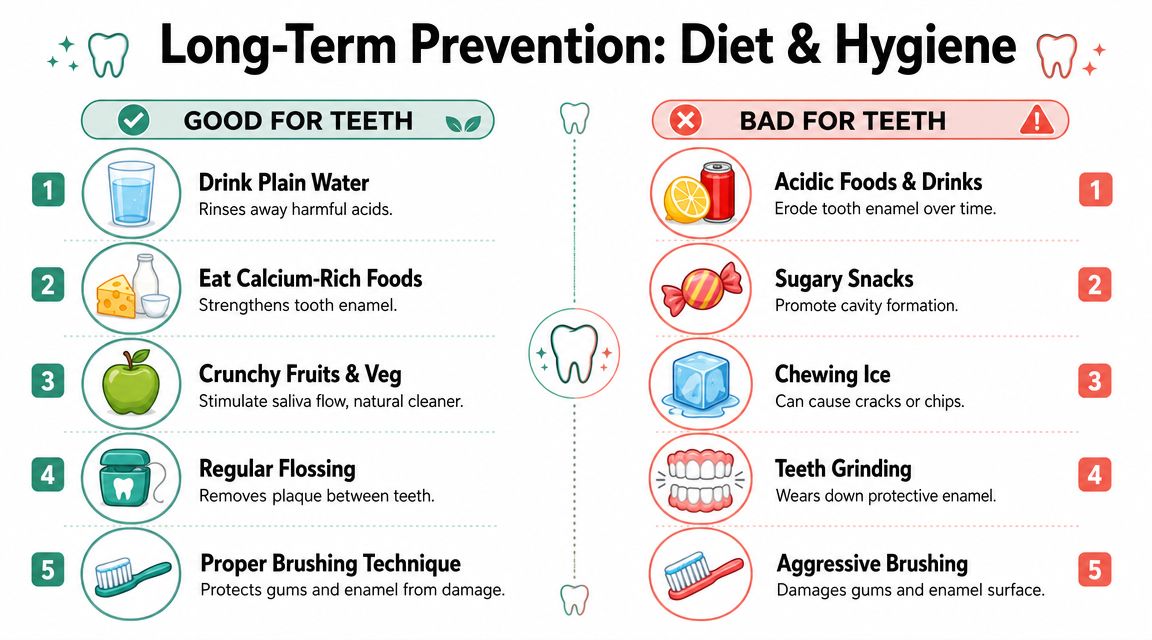
If sensitivity keeps coming back, look at your routine before assuming the toothpaste failed.
- Drink plain water often to rinse away acids and food residue.
- Use a straw for acidic drinks when practical, so less liquid contacts your teeth directly.
- Floss daily because irritated gums and plaque buildup can make the gumline more vulnerable.
- Choose a soft brush and gentler technique even when your teeth feel fine.
- Schedule regular cleaning and exams so early wear, recession, or decay can be caught sooner.
If you're comparing products, this guide to choosing the best toothpaste can help you think through ingredients and everyday use.
Habits that quietly make sensitivity worse
Not every damaging habit feels dramatic. Some are part of a normal routine.
Chewing ice can chip enamel. Frequent sipping of soda, citrus drinks, or sports drinks keeps acid around the teeth longer. Brushing right after those drinks can add friction to an already softened surface. Grinding at night can wear teeth down without you noticing until the sensitivity starts.
A healthier routine also supports other preventive services, including cleanings and exams, periodontal care, and custom recommendations for people who clench or grind.
Good prevention isn't complicated. It's usually gentler brushing, less acid exposure, better timing, and regular professional checks.
When to See Your Dentist in Chattanooga or Cleveland TN
Some sensitivity improves with better home care. Some doesn't. The key is knowing when the pattern points to something that needs treatment in the dental chair instead of more trial and error at home.
Johns Hopkins Medicine's overview of sensitive teeth describes tooth sensitivity as a common dental problem and notes that while behavior changes like soft-bristled brushing and avoiding abrasive toothpaste can help, persistent symptoms may need in-office treatment for more definite relief.
Signs it's time to schedule an exam

You should stop guessing and book a visit if any of these sound familiar:
- One tooth hurts more than the others and the pain is easy to pinpoint.
- Sensitivity is getting stronger, not fading.
- You feel pain when biting down, not just with temperature.
- There's visible damage, such as a chip, crack, or worn area near the gumline.
- The discomfort keeps returning even after changing toothpaste and brushing technique.
These are often the moments when patients search for an emergency dentist, a dentist near me, or help with a possible tooth extraction because they're worried the problem is becoming more serious.
What professional treatment may involve
Dental treatment depends on the cause. If the issue is exposed root surface, your dentist may recommend in-office fluoride or a protective coating or bonding material. If a cavity is the trigger, a filling may stop the pain. If a tooth is cracked or structurally weakened, restorative dentistry may include a crown to seal and protect it.
For teeth that are too damaged to save comfortably, tooth extraction can become the right next step. If a missing tooth needs replacement later, restorative options such as dental implants may be part of that conversation. Some patients also have gum-related causes, which is where periodontal treatment matters.
The important point is this. Persistent sensitivity is often treatable, but the treatment only works well when it matches the actual diagnosis.
Your Path to a Comfortable Smile at Winn Smiles
Patients often don't walk into a dental office saying, “I'm here for dentin hypersensitivity management.” They say, “Cold water hurts,” or “I can't chew on that side anymore.” That's the right place to start. Clear symptoms lead to a clear exam.
At a first visit, the process should feel straightforward. You describe when the pain happens, whether it's hot, cold, sweet, or pressure-related, and whether it's one tooth or several. Then the dentist checks the enamel, gumline, bite, restorations, and any signs of wear, decay, recession, or cracks. If needed, dental x-rays help confirm what can't be seen on the surface.
What patients can expect during care

For adults in Chattanooga and Cleveland who've been putting off care, comfort often matters as much as treatment. A calm explanation, modern imaging, and a plan that makes sense can lower a lot of anxiety before any procedure starts.
Depending on the cause, care may include preventive guidance, restorative dentistry, periodontal treatment, same-day crowns, root canal therapy, or emergency treatment when pain is severe. Winn Smiles also offers services such as laser dentistry, same-day crowns, new patient exams, emergency dentistry, cosmetic dentistry, and dental implants, which can be relevant when sensitivity overlaps with structural damage, gum concerns, or tooth replacement needs.
A good plan should feel specific
A useful dental recommendation should answer three simple questions:
- What's causing the pain
- What will calm it down
- What will keep it from returning
That kind of clarity matters whether you came in for sensitivity, a routine exam, cosmetic concerns, or a more urgent problem. It also helps if you're someone who has delayed care because of dental anxiety and wants a more comfortable, more communicative experience.
If your teeth have started changing what you eat, how you brush, or which side you chew on, that's enough reason to get checked. You don't need to wait for severe pain before booking a visit.
If you're ready to stop guessing and get clear answers, Winn Smiles serves patients in Chattanooga, TN, Cleveland, TN, and nearby communities with patient-focused dental care. Schedule a new patient exam or consultation to find the cause of your tooth sensitivity and get a treatment plan that helps you eat, drink, and smile more comfortably.