You may be reading this after another meal where chewing felt awkward, or after catching yourself smiling with your lips closed in a photo. A missing tooth changes daily life in small ways that add up. Food gets trapped in places it didn't before. Speech can feel different. Some people start avoiding crunchy foods. Others stop searching for “dentist near me” or “dental implants near me” because they assume the answer will be no.
That assumption is often the biggest obstacle.
For many adults in Chattanooga and Cleveland, TN, dental implant candidacy isn't a fixed label. It's a health picture that can change with the right treatment plan. Bone can sometimes be rebuilt. Gum disease can be treated. A careful exam can turn uncertainty into a clear next step.
Your First Step Toward a Confident Smile in Chattanooga
A lot of patients start in the same place. They've been living with a gap for months or years. They may have had a tooth extraction, worn a partial denture they never liked, or put treatment off because life got busy. Then one day, they're tired of working around the problem.
In Chattanooga and nearby Cleveland, that search often starts with practical questions. Can I chew normally again? Will an implant look natural? Am I too far along with bone loss? If you've had those thoughts, you're not alone.
At Winn Smiles, the conversation around dental implant candidacy should feel calm and useful, not judgmental. Missing teeth affect more than appearance. They can change bite balance, make neighboring teeth work harder, and create frustration every time you eat in public or laugh without thinking. Good restorative dentistry helps restore function, but it also gives people a sense of normalcy again.
What patients are usually feeling before they call
- Frustration at meals: Chewing on one side gets old fast.
- Self-consciousness in photos: Many people hide the side of their smile with the missing tooth.
- Worry about procedures: Surgery, healing time, and cost all feel bigger when you don't have clear answers.
- Confusion from online advice: One article says implants are ideal. Another makes it sound like only perfect candidates qualify.
The first implant visit shouldn't feel like a pass or fail test. It should tell you where you stand and what can improve.
That's also why clear health information matters online. Patients often make decisions long before they ever book a new patient exam. For practices trying to publish useful education, thoughtful resources such as AI SEO strategies for growth help explain how people search for treatment questions and local care.
If you're looking for a dentist in Chattanooga, TN, or a dental office serving Chattanooga and Cleveland that can evaluate tooth replacement options carefully, the right first step isn't guessing. It's getting a complete exam that shows what's possible.
What Exactly Are Dental Implants
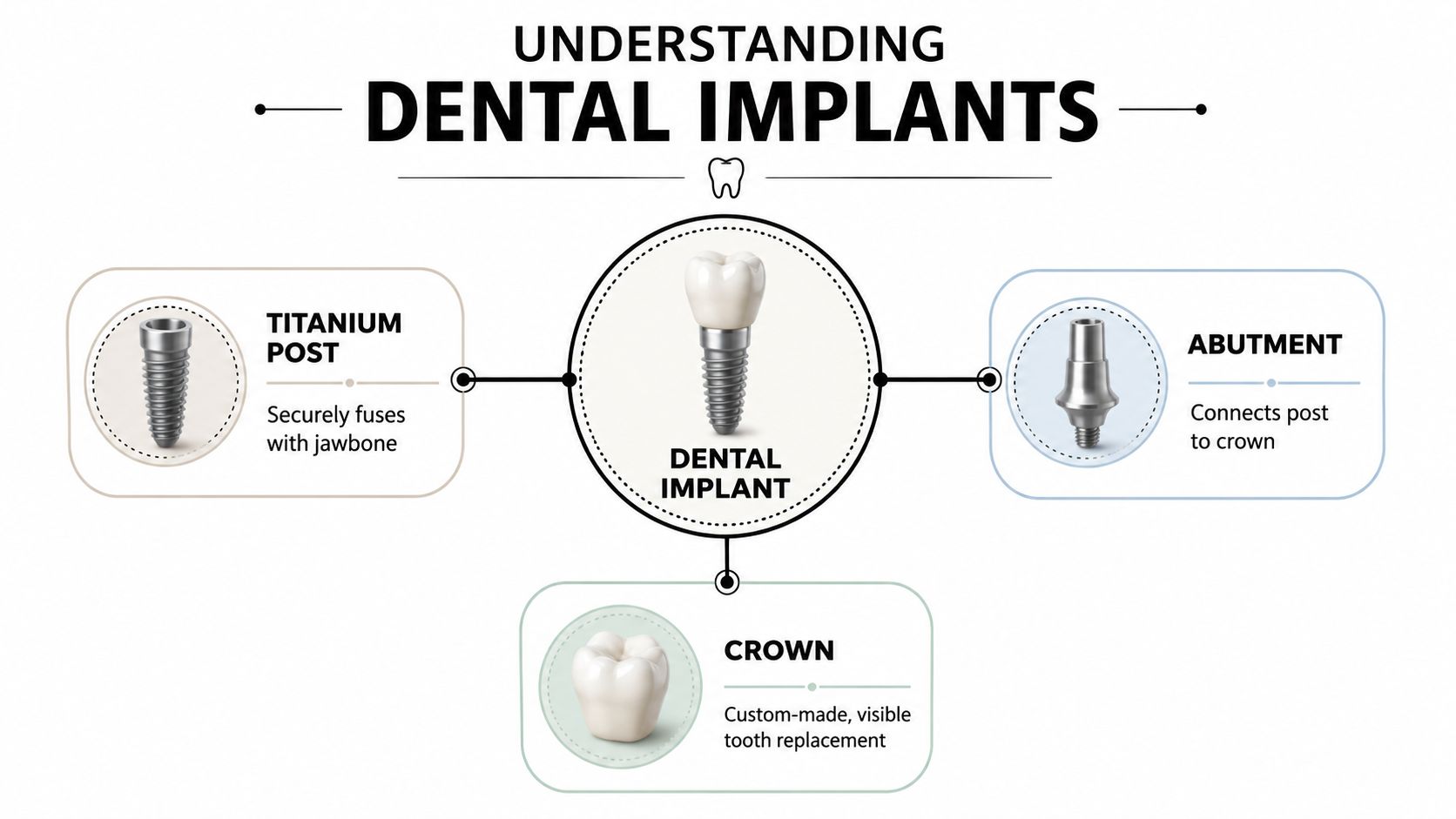
A dental implant is a replacement tooth built in three parts, and each part has a specific job. The implant post sits in the jawbone and replaces the root. The abutment connects that post to the restoration. The crown is the visible tooth that restores your smile and your bite.
That root replacement is the part patients usually do not see, but it is the reason implants function differently from a bridge or denture. After placement, the post heals into the bone through a process called osseointegration. The American Academy of Implant Dentistry explains that dental implants are designed to provide stable support for replacement teeth because they are anchored in the jaw, not just resting on the gums or attached to nearby teeth, as described in this overview of how dental implants work.
The three parts that matter
The implant post is most often made from titanium or zirconia. It is placed where the tooth root used to be, and it becomes the foundation for everything above it.
The abutment is the connector. It shapes how the final tooth sits and helps support the crown in a way that matches the space, bite, and gumline.
The crown is the part you chew with and the part people notice when you smile. It is custom-made to blend with your natural teeth in color, shape, and size.
Why implants feel different from other options
A bridge replaces the visible tooth, but it relies on neighboring teeth for support. A removable denture replaces teeth above the gums, but it does not replace the root structure underneath. An implant supports the replacement from within the jaw, which is why many patients describe it as feeling more secure and more natural once healing is complete.
That difference also affects the bone over time. After a tooth is lost, the jaw in that area can begin to shrink because it is no longer being stimulated by a root. If you want to understand that process better, this explanation of how bone loss develops after tooth loss can help.
Here's the practical comparison most patients want:
| Option | What it replaces | How it feels in daily life |
|---|---|---|
| Dental implant | Root and visible tooth | Stable and close to a natural tooth |
| Bridge | Visible tooth only | Fixed, but depends on neighboring teeth |
| Removable denture | Missing teeth above the gums | Can work well, but may feel less secure |
In day-to-day practice, the trade-off is straightforward. Implants usually ask more of the healing process up front, but they can offer stronger long-term support. Bridges and dentures can still be good choices for the right patient, especially when health history, timeline, or budget shape the decision.
The Core Criteria for Dental Implant Candidacy
Dental implant candidacy is really a question of readiness. During an evaluation, I'm not looking for a simple pass-or-fail answer. I'm looking at whether your mouth and your body can support healing now, or what needs to be improved first so treatment has a better chance of lasting.
Jawbone support comes first
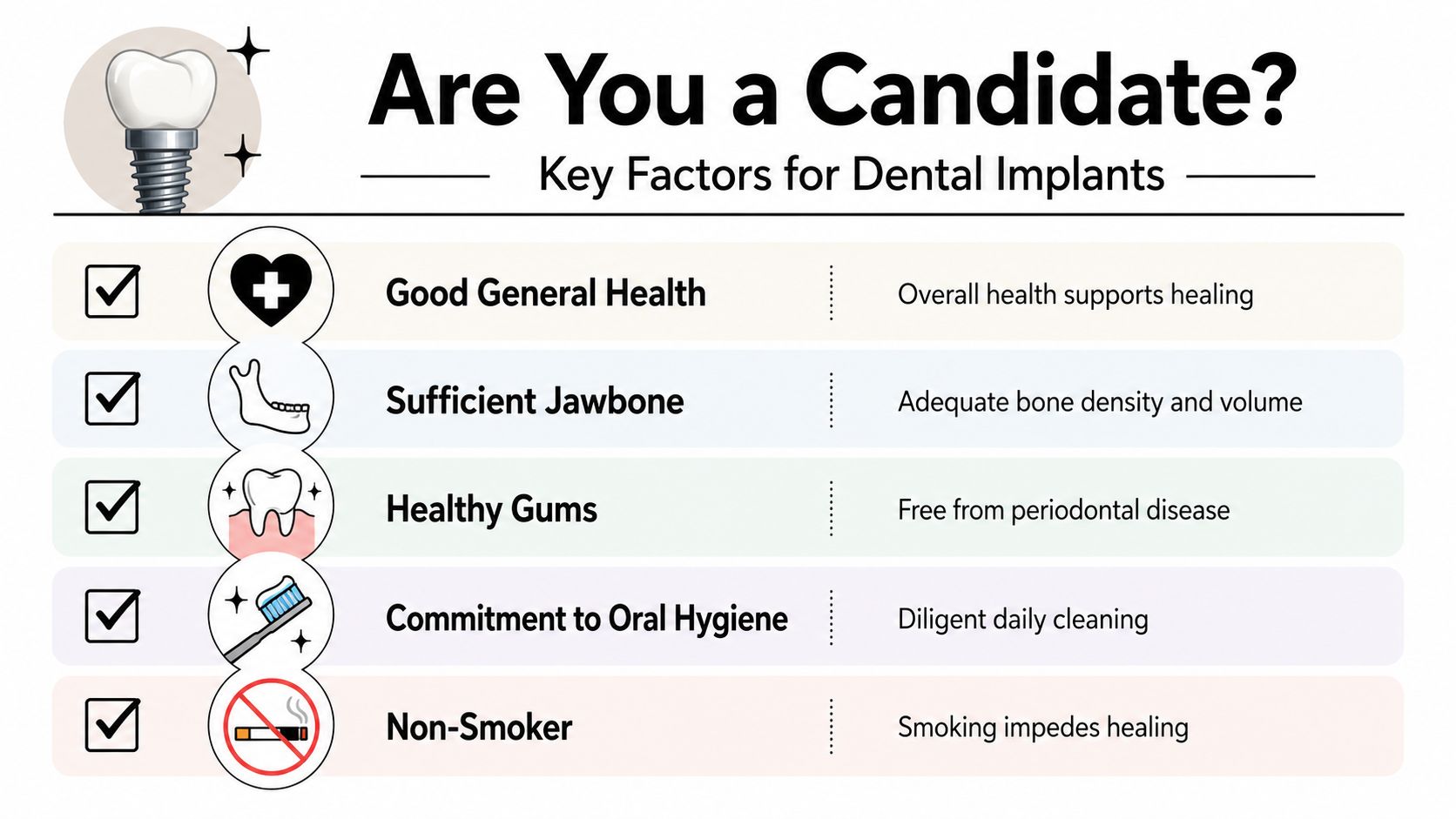
An implant needs enough bone to stay stable while it heals and fuses with the jaw. If the ridge is too thin or too shallow, the implant may not have the support it needs for predictable long-term function.
That is why imaging matters so much. An exam can suggest bone loss, but a scan shows the shape and volume of bone at the actual implant site, which is what treatment decisions depend on.
If you have been missing a tooth for a while, or if you were told the area has started to shrink, this guide to how bone loss develops after tooth loss explains why the jaw can change over time.
Low bone volume does not automatically close the door on implants. It usually means the plan needs another step first, such as grafting or a different placement approach.
Gum health has to be stable
Healthy gums give an implant a cleaner, more stable environment to heal in. Inflamed or infected tissue increases risk from the beginning, especially if periodontal disease is still active.
In practical terms, I look for three things:
- Healthy gum tissue around the future implant area
- Consistent home care so plaque and bacteria stay under control
- No active periodontal breakdown that could threaten the bone supporting the implant
If gum disease is present, treatment comes first. That can feel like a delay, but it is usually the step that makes implant treatment possible later.
Your overall healing picture matters
Implants heal in the mouth, but healing is shaped by the whole patient. Medical conditions, medications, smoking, dry mouth, and daily hygiene habits can all affect recovery and long-term success.
Age by itself is not the key issue here, and I would not use appearance as a shortcut either. The better question is whether healing is likely to be predictable and whether the area can be kept clean over time.
The assessment of candidacy often becomes a process instead of a label. If bone is limited, gums are inflamed, or a health factor needs closer management, the answer is often “not yet” rather than “no.”
A proper implant evaluation should leave you with a clear sequence. What is healthy now, what needs treatment first, and what path gives the implant the strongest foundation.
Common Misconceptions and Barriers to Eligibility
One of the most common myths is also one of the most discouraging. Many adults assume they're too old for implants, especially if they've already had years of dental work or are missing several teeth.
That isn't how implant candidacy works.
Age alone doesn't decide candidacy
Dental implant candidacy depends on biological readiness, not chronological age. There's no upper age limit, and many satisfied implant patients are in their 60s, 70s, and beyond, as explained in this implant age and candidacy discussion.
If an older patient has healthy gums, enough bone support or a realistic path to rebuilding it, and a body that can heal properly, age by itself doesn't block treatment.
That's an important shift in thinking. The right question isn't “Am I too old?” It's “What does my health picture look like right now?”
Real barriers that can slow treatment
Some concerns do affect eligibility, and they deserve a straightforward answer.
A patient may need more planning if they have:
- Significant bone loss: The implant site may need rebuilding before placement.
- Unstable oral hygiene: Plaque buildup and inconsistent care make long-term success harder.
- Smoking habits: Healing can be slower and less predictable.
- Medical factors that affect recovery: Some conditions require tighter coordination and timing.
None of those automatically mean treatment is off the table forever. They mean the treatment plan may need to happen in phases.
What doesn't work
The wrong approach is forcing an implant into an unhealthy site because the patient wants a quick fix. That can lead to failure, disappointment, and more treatment later.
The better approach is to identify what's preventing success, correct it, then move forward.
Some patients aren't immediate candidates. Many are still future candidates.
During this process, clear communication is essential. A good implant consultation should tell you whether the barrier is temporary, manageable, or serious enough to change direction. Patients in Chattanooga and Cleveland who are looking for restorative dentistry, cosmetic dentistry, or even an emergency dentist after a lost or broken tooth often feel relieved when they learn they still have options. The timeline may change, but the goal may still be achievable.
How Winn Smiles Helps You Become an Ideal Candidate
A lot of patients come in expecting a yes or no answer. In practice, implant candidacy is often a process. The main question is whether the mouth can be prepared to support an implant safely and predictably.
That shift matters. It turns a disappointing answer into a treatment plan.
When bone needs to be rebuilt
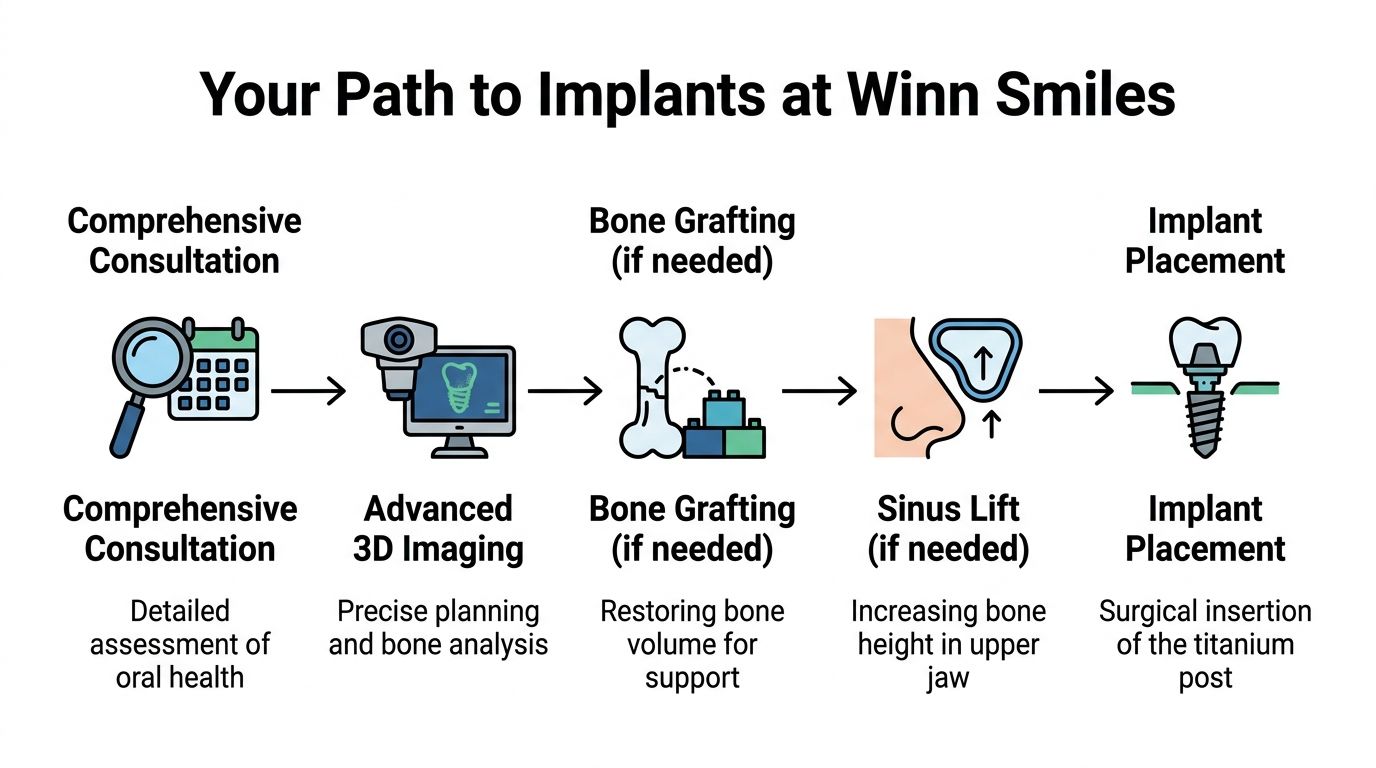
Bone loss is one of the most common reasons a patient is not ready for an implant yet. If a tooth has been missing for a while, the jaw can shrink in that area. An implant needs enough width and height to stay stable.
Bone grafting can rebuild that foundation. In some upper back cases, a sinus lift creates the space needed for future implant placement. These procedures add time, but they often make the difference between a risky shortcut and a site that can support a tooth for years.
I often explain it this way to patients. Needing grafting does not mean implants are out of reach. It usually means the treatment has to happen in the right order.
When the gums are the limiting factor
Healthy bone is only part of the picture. The gums and supporting tissues need to be under control before surgery.
If periodontal disease is active, the first job is reducing infection and inflammation. That may mean periodontal therapy, more frequent cleanings, and very honest conversations about brushing, flossing, and smoking. Patients do better when we address those issues before placing an implant, not after a problem starts.
How treatment is staged at Winn Smiles
At Winn Smiles, the goal is to identify the obstacle and correct it step by step. That may include imaging, gum treatment, grafting, healing time, implant placement, and the final crown. Each phase has a purpose.
A typical sequence may include:
- Detailed evaluation: Review of health history, x-rays, and bone conditions.
- Site preparation: Bone grafting, sinus lift, or gum therapy if needed.
- Healing time: Time for bone and tissue to mature before surgery.
- Implant placement: The implant is placed once the site is ready.
- Restoration: The final tooth is completed after integration.
Patients who want to review dental implant treatment options at Winn Smiles can see how those phases fit together in real care plans.
What improves your chances of success
Good implant outcomes usually come from patience, planning, and honest preparation. Rushing into surgery in an unhealthy site increases the chance of setback. Correcting the problem first improves the odds of long-term stability.
That same planning mindset matters in other parts of healthcare too, including securing PHI in payment workflows, where the right systems reduce preventable risk before problems occur.
The strongest candidates are not always the patients who start with perfect conditions. Many are the patients who are willing to rebuild bone, treat gum disease, and follow the sequence carefully. If you have been told you are not ready yet, that may be the beginning of the plan, not the end of it.
Your Consultation and Treatment Journey in Chattanooga
The first implant visit should answer questions, not create more stress. Patients usually arrive wondering whether they'll need a tooth extraction, whether they have enough bone, or whether the process will be more involved than they expected.
A consultation in Chattanooga or Cleveland starts with listening. Before any decision is made, the team needs to understand what happened, how long the tooth has been missing, what symptoms you've had, and what kind of result matters most to you.
What happens at the first visit
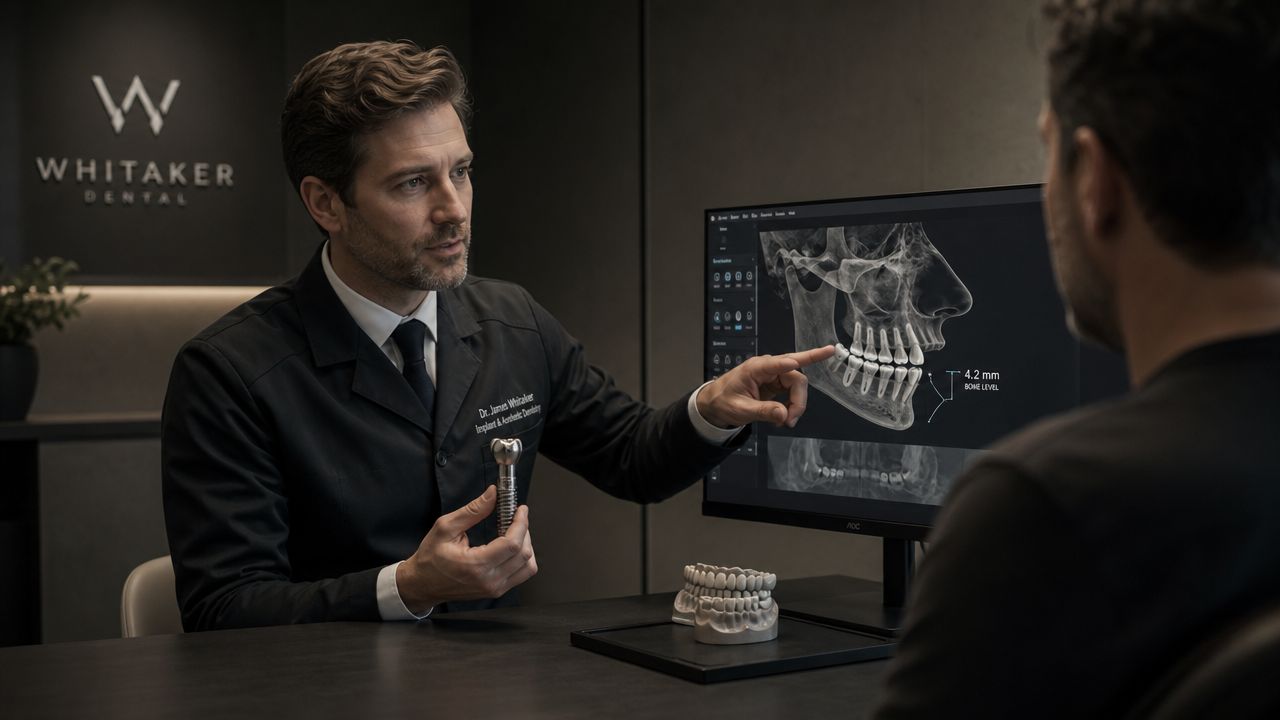
Expect a combination of conversation and diagnostics. The exam may include dental x-rays and 3D imaging so the dentist can evaluate the bone, nearby structures, and spacing for the final restoration. That planning stage matters because implant treatment is part surgical and part restorative.
Patients also want practical answers. How long will healing likely take? Will additional treatment be needed first? Is this the right time to move ahead, or should another problem be handled before implants?
- A thorough review: Medical and dental history help shape the treatment plan.
- Clear imaging: 3D scans support precise planning instead of guesswork.
- Transparent discussion: Timeline, sequencing, and next steps should be easy to understand.
For many people, privacy and communication matter as much as the treatment itself. Practices reviewing tools related to patient communication and billing may also find guidance on securing PHI in payment workflows useful when thinking about how protected health information moves through administrative systems.
How treatment planning becomes personal
One patient may be ready for implant placement after imaging and routine pre-op planning. Another may need gum therapy first. Another may be deciding between an implant and another restorative option because timing or budget is part of the decision.
That's why a personalized treatment roadmap matters more than a generic answer online. If you want to review the service itself before your visit, the dental implants service page gives a helpful overview of how implant care fits into broader restorative treatment.
A short video can also help make the process feel more familiar before you come in:
By the end of the consultation, the goal is simple. You should know whether you're ready now, what stands in the way if you're not, and what your next step should be.
Implant Alternatives and Taking Your Next Step
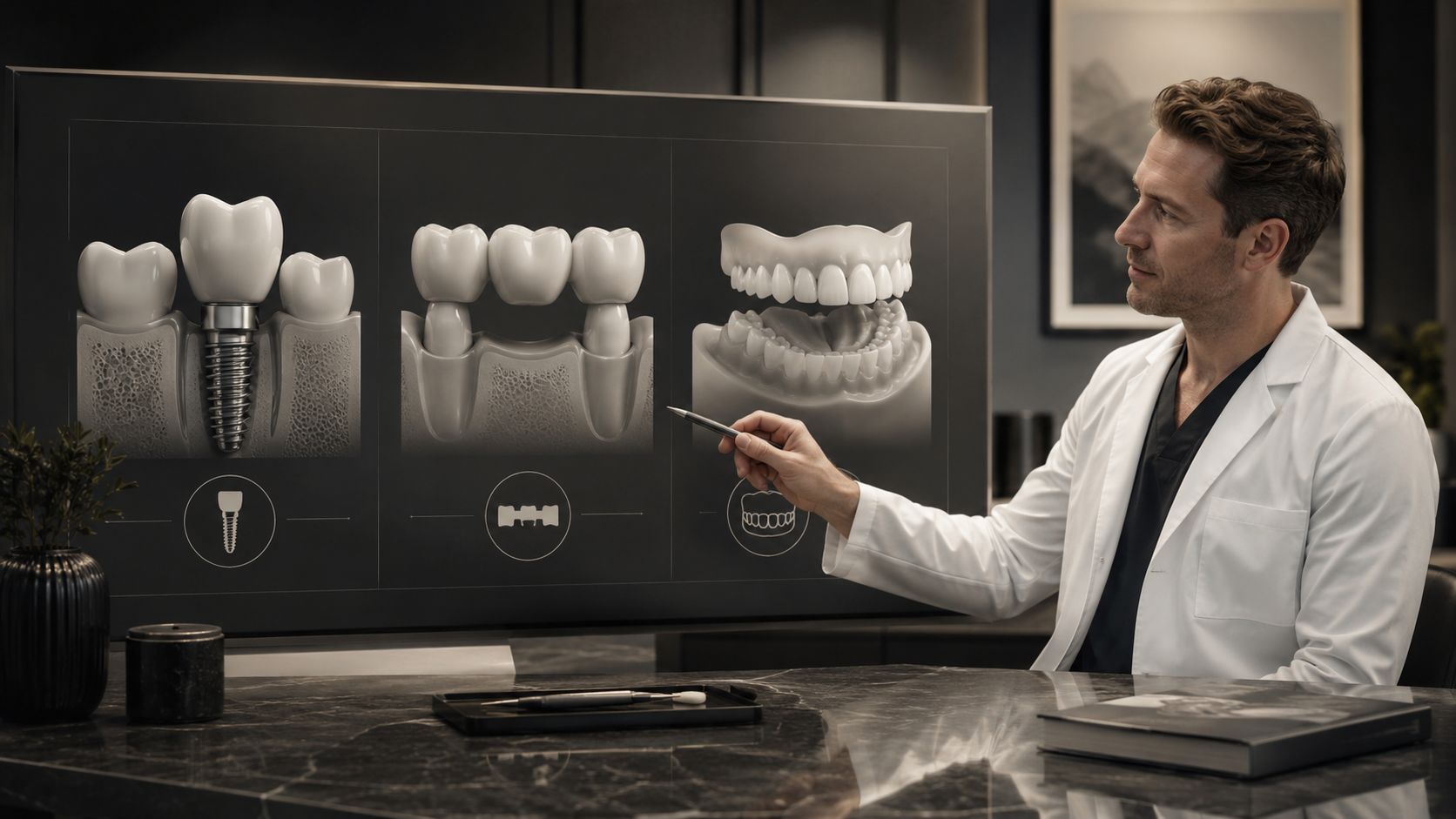
Dental implants are often the most complete tooth replacement option for the right patient, but they aren't the only one. Some patients are better served by a bridge or a removable option, especially if timing, healing concerns, or other priorities shape the decision.
A bridge can replace a missing tooth without surgery. The trade-off is that it relies on neighboring teeth for support. A removable denture can restore appearance and some chewing function, but many patients find it less stable in daily life than a fixed solution.
When alternatives make sense
Sometimes an implant isn't the first step. Adults with active gum disease are disqualified from dental implant candidacy until the infection is treated and hygiene is stabilized, because uncontrolled periodontal disease compromises osseointegration and implant survival, according to this gum disease and implant eligibility reference.
That's an important reminder that the right treatment isn't always the fastest one. It's the one your mouth can support.
A simple way to think about the options
- Bridge: Faster in some cases, but depends on nearby teeth.
- Denture or partial: Useful for some patients, though less fixed and secure.
- Implant: More involved upfront, but often the strongest long-term choice when the site is healthy enough.
If you've been searching for a dentist in Chattanooga, TN, a cosmetic dentist near me, help after tooth extraction, or guidance from an emergency dentist after losing a tooth, don't let uncertainty make the decision for you. The best next step is a direct evaluation with someone who can tell you what's realistic for your mouth right now.
If you're ready to stop guessing about dental implant candidacy, schedule a consultation with Winn Smiles. Patients in Chattanooga, Cleveland, and nearby communities can get clear answers about missing teeth, restorative dentistry, gum health, and whether implants, bridges, or another plan makes the most sense for their smile.