If you're reading this with a knot in your stomach, you're not alone. Many adults put off dental care for months or even years because they dread the sounds, the numb feeling, the loss of control, or the memory of a bad experience. Some are searching for a dentist near me in Chattanooga, TN, or Cleveland, TN because a tooth finally hurts. Others need a cleaning and exam, a tooth extraction, dental implants, or help from an emergency dentist, but anxiety keeps winning.
That fear is real. It doesn't mean you're weak, and it doesn't mean you're overreacting. It means you want to know something important before you book a visit. Is sedation dentistry safe?
The honest answer is yes, in the right hands, with the right screening, monitoring, and planning. Sedation isn't about ignoring risk. It's about controlling it carefully so you can get the dental care you need with less stress and more comfort.
Your Local Guide to Comfortable and Safe Dental Care
A common situation goes like this. Someone starts by searching for a dentist in Chattanooga, TN or dentist in Cleveland, TN because they're overdue for a new patient exam. Then they remember the last difficult visit, cancel the idea, and tell themselves they'll wait until the pain gets worse. Weeks later, they're now searching for an emergency dentist or tooth extraction instead.
Sedation dentistry can help break that cycle.
For anxious patients, sedation creates enough calm to make treatment feel manageable again. That matters whether you're coming in for cleaning and exams, dental x-rays, restorative dentistry, cosmetic dentistry, teeth whitening, or more involved care like multiple extractions or dental implants near me. Comfort isn't a luxury in dentistry. For many people, it's what makes care possible.
Practical rule: Safe sedation starts long before any medication is given. It starts with the right patient, the right setting, and a team that follows safety protocols every time.
People often get confused because the word "sedation" sounds bigger and scarier than what most dental patients experience. In many cases, you're not being "put under" in the way people imagine from a hospital setting. You may feel relaxed, less aware of time, and much less reactive to the sights and sounds that usually trigger anxiety.
That difference matters. When patients understand what sedation is, how it's chosen, and what safeguards surround it, the whole subject becomes less mysterious and much easier to trust.
Understanding Sedation Dentistry and Its Purpose
Sedation dentistry means using medication to help you stay calm and comfortable during dental care. Its purpose is simple. It helps patients who might otherwise avoid treatment receive care in a way that feels safer, gentler, and more doable.

Why patients choose sedation
People seek sedation for different reasons, and not all of them involve severe fear. Some patients have a strong gag reflex. Some have trouble getting numb comfortably. Others need lengthy treatment and don't want to break care into many smaller appointments.
Sedation is also helpful when someone needs care that feels emotionally heavy, such as a surgical extraction, implant planning, or restorative work after years of avoiding the dentist. A patient searching for a cosmetic dentist near me may want sedation for veneers or smile rehabilitation because they want the process to feel calm, not overwhelming.
Here are common reasons sedation becomes part of the plan:
- Dental anxiety: The patient feels tense before the visit even starts.
- Sensitive gag reflex: Routine treatment feels difficult to tolerate.
- Low tolerance for discomfort: Even simple procedures feel hard to sit through.
- Longer appointments: More complex treatment can feel easier in one calm visit.
- Difficulty staying still: Relaxation can improve comfort and efficiency.
What sedation makes possible
The best way to think about sedation is as an access tool. It helps people get care they need. That's important because untreated dental problems don't stay still. A small cavity can become a bigger restoration. Gum irritation can progress. A damaged tooth can eventually lead to a root canal or extraction.
One pediatric deep sedation study for complex dental work reported a 99.6% success rate, with complications described as rare and immediately managed by the prepared dental team, according to this report on deep sedation success in dental treatment. That doesn't mean sedation is casual. It means that when teams are trained and prepared, it can be highly effective.
Sedation doesn't replace local anesthetic or careful technique. It supports them by reducing fear, movement, and stress so treatment can happen more smoothly.
Patients often assume sedation is only for major procedures. It can also be appropriate for patients who struggle with ordinary visits and need a calmer path back to routine dental care.
The Different Levels of Sedation We Offer
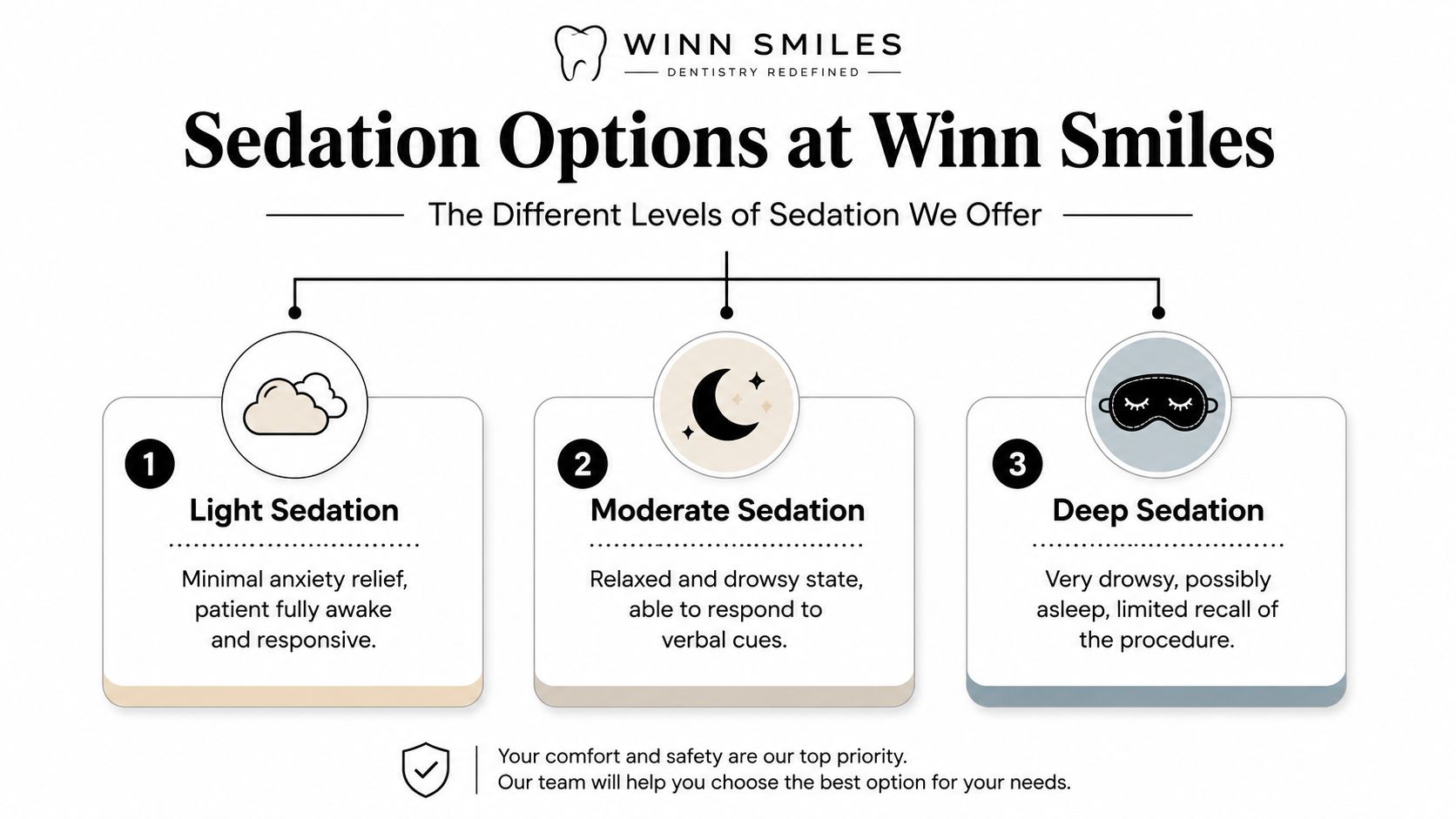
Not all sedation feels the same. The safest, most comfortable approach is to match the level of sedation to the patient, the procedure, and the patient's medical history.
Light sedation
Light sedation is the gentlest option. Patients usually remain fully awake and able to respond normally, but they feel noticeably more relaxed. This level can be a good fit for nervous cleanings, dental x-rays, new patient exams, or smaller restorative visits.
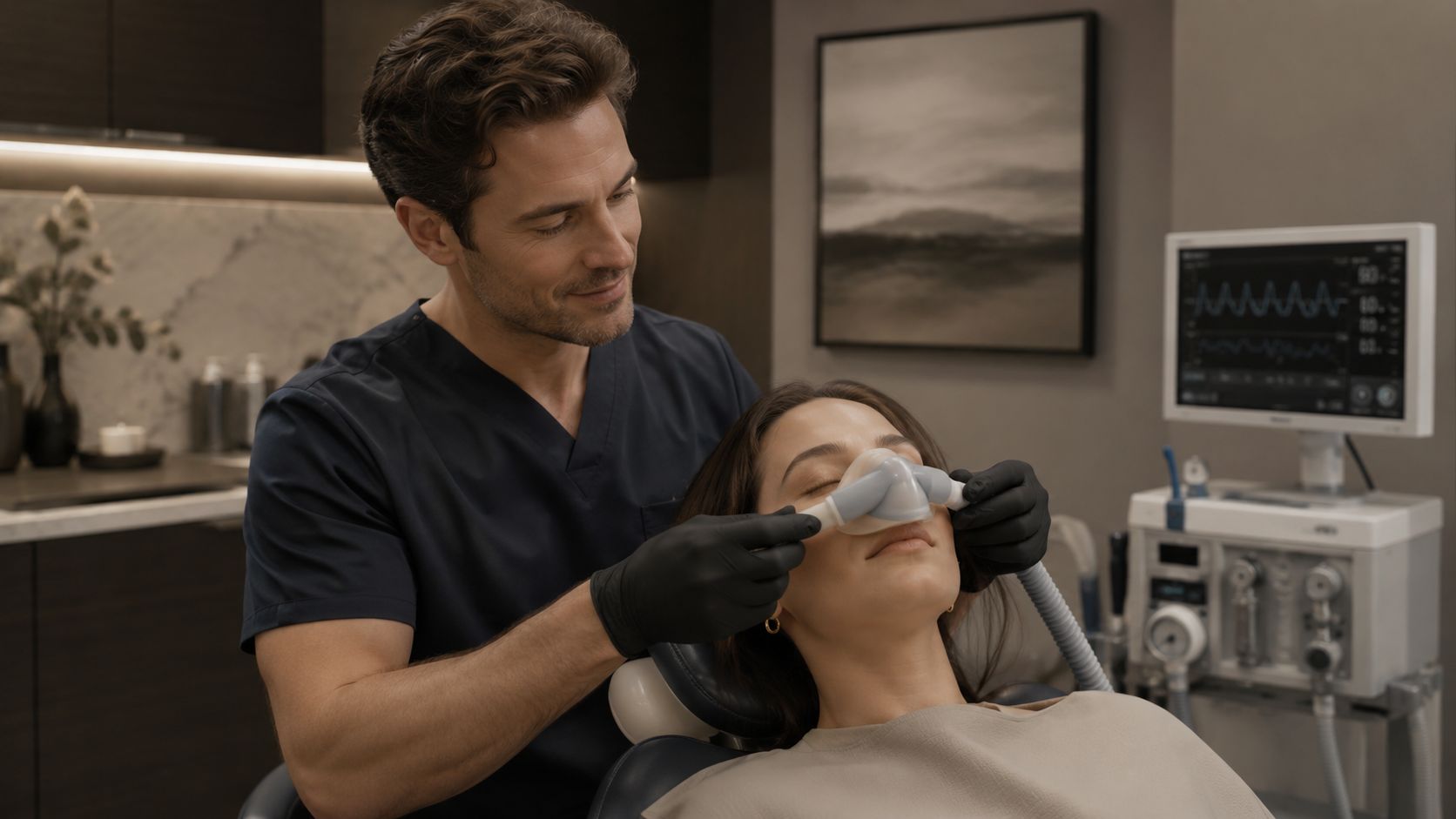
A classic example is nitrous oxide, often called laughing gas. Its safety record is strong. Clinical literature reports zero reported deaths, and most patients reach ideal sedation at a 30 to 40% concentration while staying conscious and responsive, as explained in this review of nitrous oxide inhalation sedation.
Patients often describe light sedation as taking the edge off. You're still aware, but the sounds and sensations don't bother you as much.
Moderate sedation
Moderate sedation creates a deeper state of relaxation. You're drowsier, time may seem to pass quickly, and you may remember little of the appointment afterward. You can still respond to verbal cues, but you feel much less engaged with what's happening around you.
This option often appeals to patients with stronger anxiety or those having longer procedures. It can make treatment like multiple fillings, a difficult extraction, or cosmetic work feel much easier to complete.
A simple comparison helps:
| Sedation level | How it feels | Best suited for |
|---|---|---|
| Light | Calm, awake, relaxed | Mild anxiety, shorter visits |
| Moderate | Drowsy, less aware, still responsive | Longer visits, stronger anxiety |
| Deep | Very sleepy, limited recall | Complex treatment, significant fear |
Deep sedation
Deep sedation is the strongest office-based comfort option discussed most often in dentistry. Patients are very drowsy and may seem asleep, with limited memory of the procedure afterward. This level may be appropriate for severe dental phobia or more complex treatment plans.
If you're trying to understand the patient experience in practical terms, this overview of what to expect with IV sedation gives a useful outside explanation of how deeper relaxation typically feels and why patients often remember very little.
For a closer look at the differences between common methods, this guide to types of sedation dentistry is also helpful.
The right question isn't "What's the strongest sedation?" It's "What level lets me get care comfortably while staying within the safest plan for me?"
Recovery differs by type, and that's one reason careful planning matters. A treatment that works well for one patient may not be the right fit for another.
A Transparent Look at Sedation Dentistry Safety and Risks
Sedation dentistry is broadly safe when trained professionals use careful patient selection, modern monitoring, and established protocols. That's the reassuring part. The transparent part is this. Safety doesn't mean zero risk.
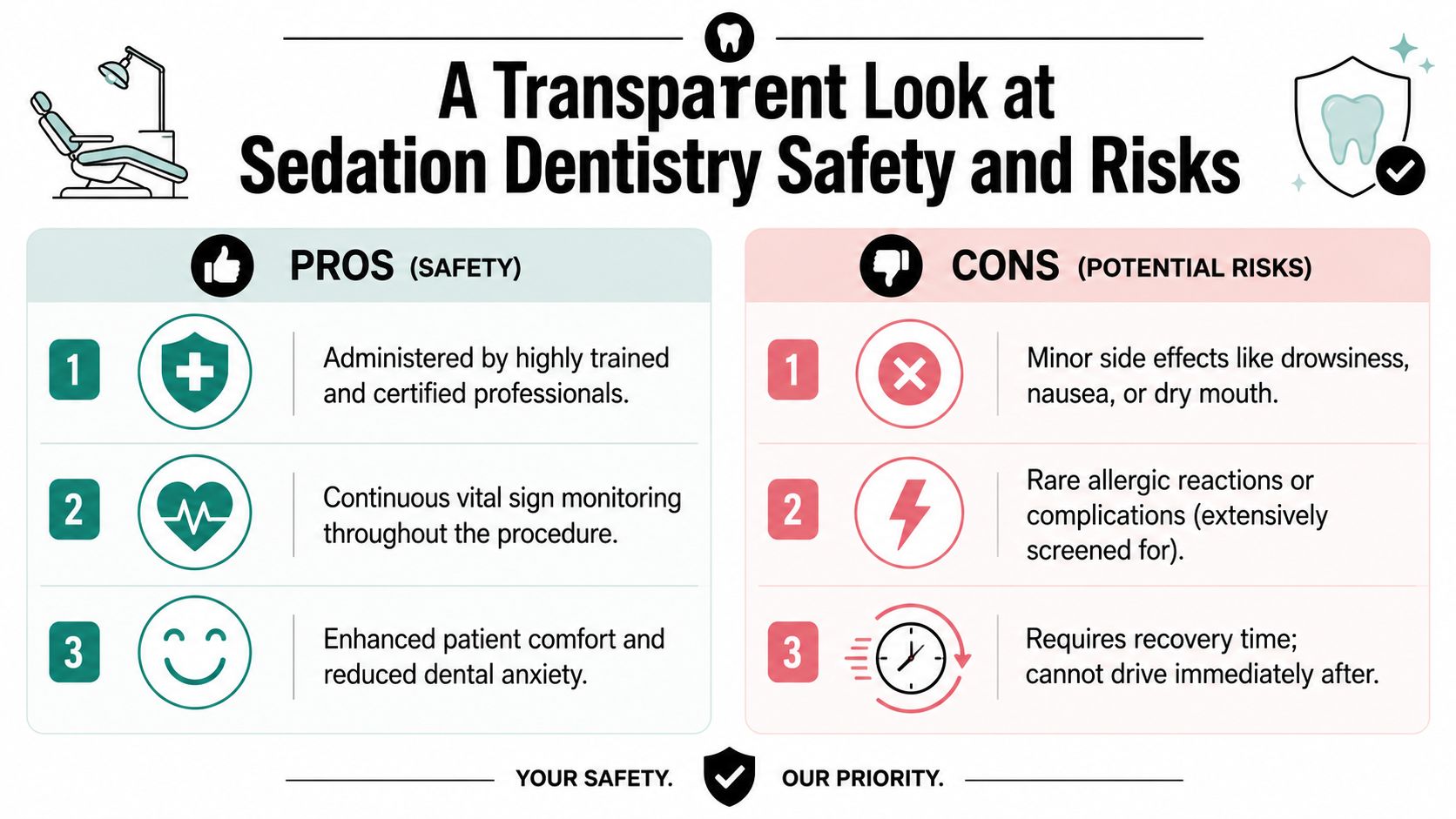
The strongest way to answer "is sedation dentistry safe" is with balance. Across all dentists, sedation that includes deep sedation and general anesthesia is considered safe when administered by highly trained teams with appropriate patient selection, monitoring, and anesthetic agents. At the same time, the incidence of death and brain injury associated with these procedures is estimated to exceed 1 per month, which is why rigorous protocols matter so much, according to this PubMed review on dental sedation safety.
What can go wrong
Most side effects are temporary and manageable. Depending on the type of sedation, patients may experience grogginess, nausea, dry mouth, or delayed alertness after treatment. Those effects are part of the reason post-visit instructions matter.
In pediatric outpatient deep sedation, adverse events occurred in about 1 in 12 sedations, with respiratory adverse events at 0.7%, cardiovascular adverse events at 0.6%, nausea at 19.6%, agitation at 47.5%, and oxygen desaturation reported from 1.8% to 13.7%, according to this review of pediatric dental sedation adverse events. The same review notes that potentially serious events were identified at a low incidence and were typically managed without complications.
That information can sound unsettling until you understand what it really means in practice. Teams that monitor patients continuously are looking for early changes precisely so they can respond before a minor issue becomes a serious one.
A helpful outside perspective is this article on understanding sedation dentistry safety, which breaks down why risk assessment and monitoring are central to safe care.
Here is a short video that helps patients visualize the topic more clearly:
Why protocols matter more than reassurance alone
Safety in sedation isn't built on confidence alone. It's built on preparation. A compliant, safety-focused dental office monitors vital signs, verifies the planned sedation level, reviews medical history carefully, and prepares for emergencies before treatment begins.
If you're concerned about side effects after the visit, this explanation of sedation dentistry side effects can help you understand what is common, what is temporary, and when to call the office.
Minor side effects are common enough that they should be discussed openly. Serious complications are rare enough that many patients never encounter them. Both facts can be true at the same time.
How Winn Smiles Guarantees Your Safety and Comfort
You can often tell whether a dental office takes sedation seriously before treatment even begins. The conversation is organized. The questions are specific. The team explains what they are checking and why. For anxious patients in Chattanooga and Cleveland, that kind of structure is reassuring because safety should feel visible, not hidden behind a promise.
Screening comes first
Safe sedation starts before anyone reaches for medication. The team reviews your medical history, current medications, allergies, past experiences with anesthesia or sedation, and any recent changes in your health. They also match the sedation plan to the procedure itself, because a short restorative visit and a longer surgical appointment place different demands on the body.
Some patients need even closer review. Breathing concerns, significant medical conditions, and certain recent surgeries can change which sedation options are appropriate. The ASA Physical Status Classification helps the team sort risk in a structured way, and some inhaled sedation plans may be avoided when a patient's health history suggests a poorer fit.
That process is not paperwork for its own sake. It works like a preflight checklist. A careful review helps the dentist choose the right level of sedation, identify problems early, and decide whether treatment should happen in the office or in a different setting.
Monitoring during the appointment
Once sedation begins, safety depends on constant observation and the right equipment. A well-prepared team tracks how your body is responding throughout the visit instead of relying on occasional visual checks.
One important tool is end-tidal carbon dioxide monitoring. The American Dental Association and other regulators recognize its role in office-based sedation, as explained in this review of capnography in dental sedation. A pulse oximeter tells the team about oxygen saturation, while end-tidal carbon dioxide monitoring can help identify breathing changes earlier.
Earlier awareness gives the team more time to respond calmly and appropriately.
Comfort supports safety
Comfort is part of the safety plan. A patient who knows what to expect usually breathes more evenly, moves less, and communicates more clearly than someone who feels overwhelmed. In practical terms, that makes treatment easier to carry out carefully.
At Winn Smiles, comfort should show up in specific actions:
- Clear explanations: You are told what the sedation is intended to do, what sensations are normal, and what the team will monitor.
- A personalized plan: Sedation is chosen for your health history, anxiety level, and procedure, not used as a one-size-fits-all shortcut.
- Check-ins before treatment: The team confirms questions, instructions, and readiness before proceeding.
- Recovery guidance: You leave with instructions that are clear enough to follow when you are tired and ready to rest.
A safe sedation visit often feels calm because the team has already prepared for the details. The goal is not just to get through the appointment. The goal is to care for you in a way that is organized, attentive, and appropriate from start to finish.
For patients in Chattanooga, Cleveland, and nearby communities searching for a dentist near me, emergency dentist, or cosmetic dentist near me, these are the practical signs of a practice that treats safety as a daily standard.
Preparing for and Recovering From Your Sedation Visit
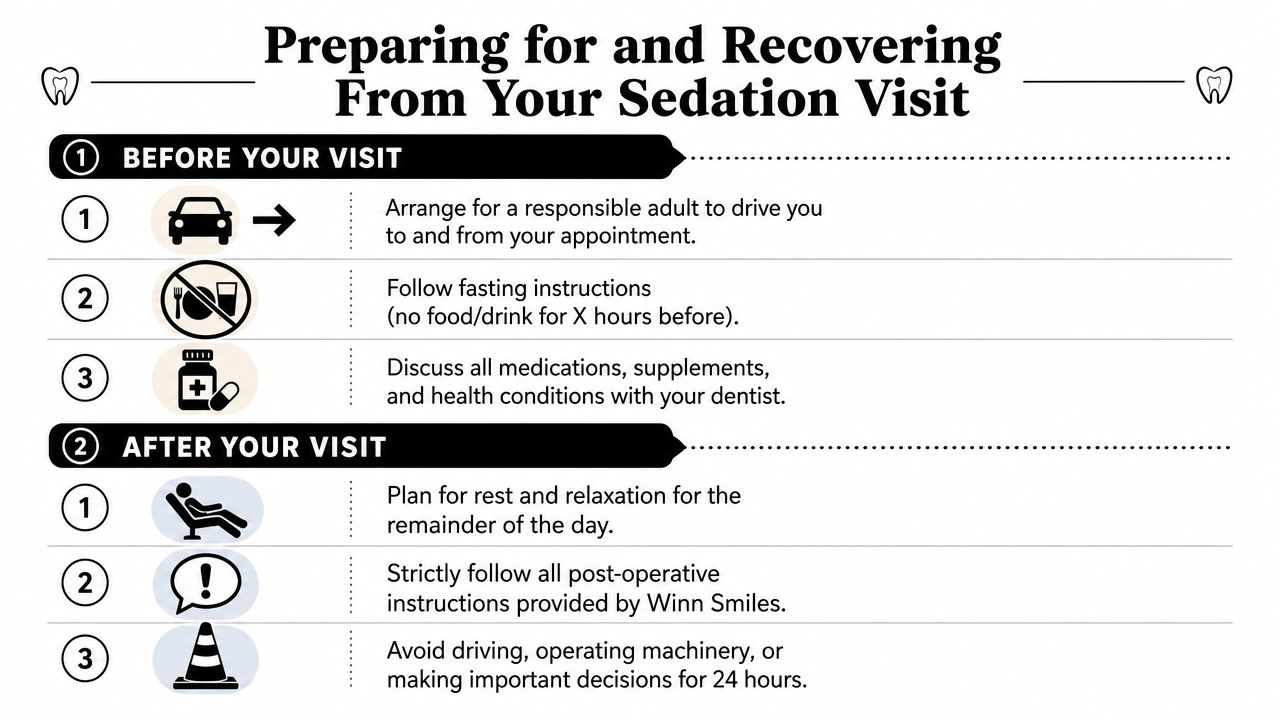
Good outcomes depend on what happens before and after the procedure, not only during it. Most sedation visits go smoothly because the patient follows instructions closely and plans the day well.
Before your appointment
Start with logistics. If your plan involves oral or IV sedation, arrange for a responsible adult to drive you to and from the visit and stay with you afterward if instructed. Wear comfortable clothing and review all medication directions with the office in advance.
The office may also give you eating and drinking instructions based on the type of sedation planned. Follow those directions exactly. They aren't routine paperwork. They're part of how sedation is kept safe.
A short checklist helps:
- Confirm your ride: Don't assume you'll "probably feel fine" afterward.
- Review medications: Tell the office about prescriptions, supplements, and recent health changes.
- Ask questions early: If you're unsure about fasting or timing, get answers before the day of treatment.
After your appointment
Recovery depends on the sedation type. For healthy adult patients using nitrous oxide, recovery typically occurs within 15 to 30 minutes, allowing patients to drive and return to normal activities. Oral or IV sedation requires a 24-hour period without driving, according to this Cleveland Clinic overview of sedation dentistry recovery.
Rest at home, drink fluids as directed, and follow all post-operative instructions. Don't make important decisions, operate machinery, or return to demanding tasks if you've had deeper sedation.
Here's how to approach it practically:
| Sedation type | Typical recovery pattern |
|---|---|
| Nitrous oxide | Short recovery, often back to normal quickly |
| Oral sedation | Slower recovery, needs transportation and rest |
| IV sedation | Longer recovery window, needs transportation and monitoring at home |
If you also had treatment such as an extraction, implant placement, or restorative work, the aftercare for the dental procedure itself matters just as much as the sedation aftercare.
Your Questions About Sedation Dentistry Answered
A lot of patients in Chattanooga and Cleveland ask the same thing in different words: "Will I still be me?" That is a fair question. Safe dental sedation is designed to lower fear and help you stay comfortable while the team continues to monitor how you are doing throughout the visit.
Will I be completely unconscious?
Usually, no. For many dental visits, sedation means you are calm, sleepy, and much less aware of the procedure, but still able to respond to simple instructions if needed.
That is why some patients say the appointment felt like a nap. They were very relaxed, time passed quickly, and they remember very little afterward.
Is sedation ever used for simple visits?
Yes. Sedation is not only for long or complex procedures. It can also help someone who has panic, a strong gag reflex, difficulty getting numb, sensitive teeth, or years of built-up fear about even a cleaning or exam.
In those cases, the goal is simple. Help you get through needed care without feeling trapped or overwhelmed.
What does being sedated feel like?
The feeling depends on the method used. Nitrous oxide often creates a light, floaty, less tense feeling. Oral or IV sedation can feel heavier, more drowsy, and more dreamlike.
A helpful comparison is dimming the volume in a noisy room. The sounds, sensations, and passing time often feel less intense, even though the dental team is still working carefully and attentively around you.
Is everyone a candidate for sedation?
No. Sedation always starts with a health review because the safest option depends on your medical history, current medications, allergies, and the type of treatment planned.
Some patients should avoid certain kinds of sedation or may need a different approach entirely. That is why a trusted local office does not treat sedation as a one-size-fits-all add-on. It is chosen carefully, with your health and comfort both in view.
Is sedation worth asking about if I've delayed care for years?
Yes. If anxiety has kept you away, sedation can make it possible to restart care in a way that feels manageable. For some people, that begins with a cleaning or exam. For others, it means finally addressing a broken tooth, planning restorative treatment, or discussing options like dental implants near me.
You do not need to walk in ready to choose a sedation type. You only need to start the conversation.
If you've been searching for a calmer way to get dental care in Chattanooga or Cleveland, Winn Smiles offers a thoughtful, comfort-focused approach to everything from cleanings and exams to cosmetic dentistry, restorative care, emergency dentistry, tooth extraction, and dental implants. If you're ready to talk through your concerns, ask about sedation options, or schedule a consultation, their team can help you take that next step with clarity and confidence.