You may be searching “dental implants near me” after losing a molar, or typing “cosmetic dentist near me” because a chipped, stained tooth is making you hide your smile. Those searches sound similar, but they point to two very different clinical decisions. The question I ask first at Winn Smiles is simple: is the tooth still present and restorable, or are you replacing a tooth that's gone?
For patients in Cleveland and Chattanooga, Tennessee, that distinction matters more than any advertised lifespan or “perfect smile” promise. Veneers improve a suitable natural tooth. Dental implants replace a missing tooth and support a crown, bridge, or denture. The right choice depends on your tooth structure, gums, bite, jawbone, health, and long-term goals.
Two Smiles, Two Very Different Decisions
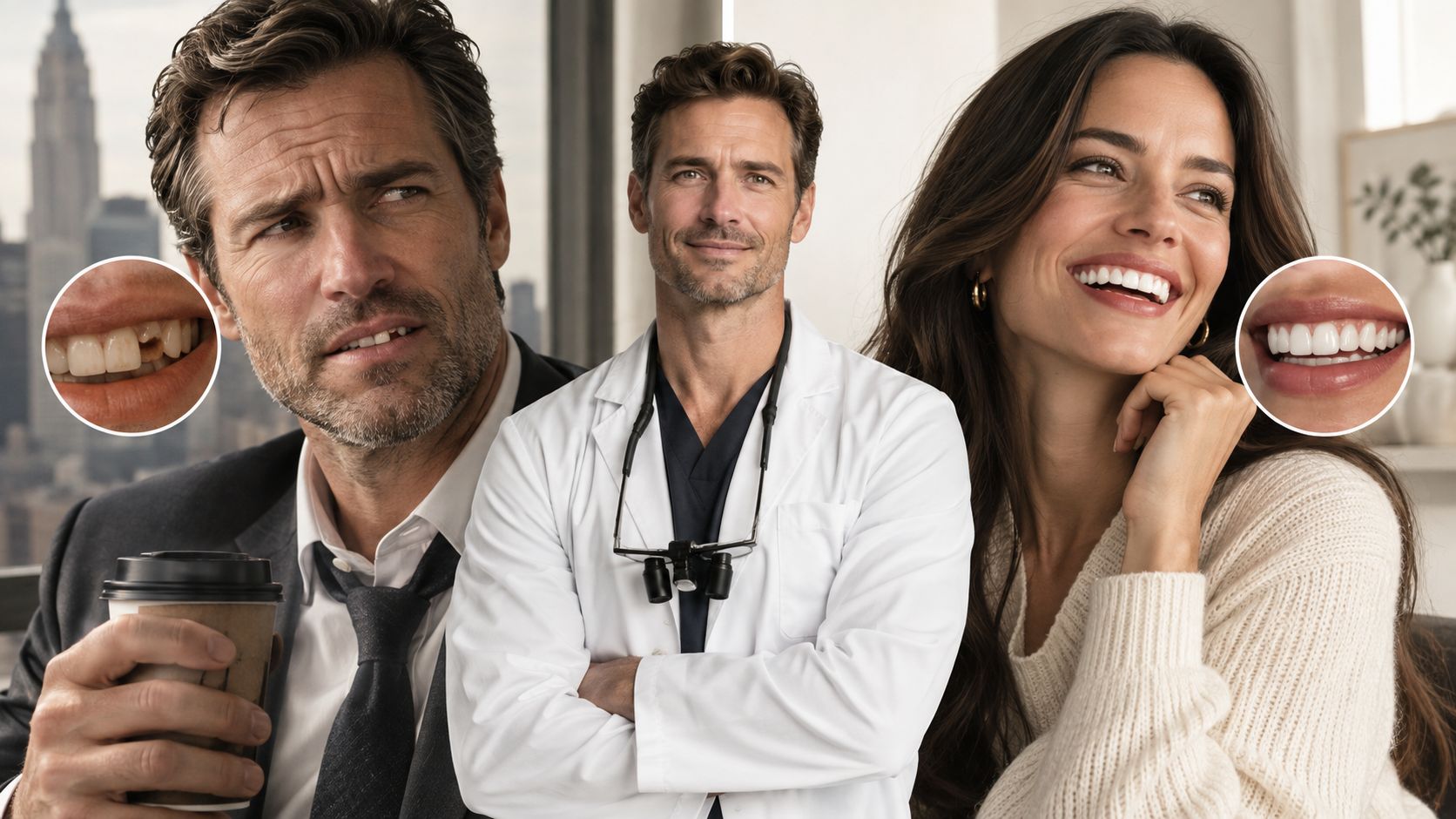
A professional from Cleveland comes in embarrassed by a front tooth that chipped around an old root canal. The tooth is discolored, but most of it remains. She can chew comfortably, her gums are healthy, and she wants the tooth to look natural in photographs and meetings. Her first thought is dental implants because she assumes implants are the most durable option.
A grandparent from Chattanooga presents a different problem. A back molar was lost years ago, and chewing on that side has become awkward. The neighboring teeth have shifted slightly, and food collects in the gap. A veneer cannot solve this problem because there's no natural tooth left to cover. This patient needs a tooth-replacement discussion, which may include an implant-supported crown, bridge, or another restorative option.
The question that determines the path
Ask yourself what is physically present in your mouth.
- A restorable natural tooth: Veneers, bonding, whitening, a crown, or another conservative treatment may be appropriate, depending on the damage.
- A missing tooth: Dental implants or an implant-supported bridge may restore the missing root and visible tooth.
- A damaged tooth with an uncertain prognosis: You may need an examination, dental X-rays, periodontal evaluation, and possibly a root canal or tooth extraction before choosing a restoration.
Veneers and implants aren't interchangeable upgrades. They solve different problems, and choosing the wrong one can mean unnecessary treatment. A veneer won't replace a missing molar, while an implant is usually an excessive approach for a healthy tooth that is stained or mildly chipped.
The practical rule: Preserve a suitable natural tooth when you can. Replace a missing or non-restorable tooth when preservation is no longer predictable.
At Winn Smiles, patients ask this question every week in Cleveland and Chattanooga. The most useful starting point isn't a price tag or a marketing phrase. It's an honest assessment of whether the tooth can support a lasting restoration.
What Dental Implants and Veneers Actually Do
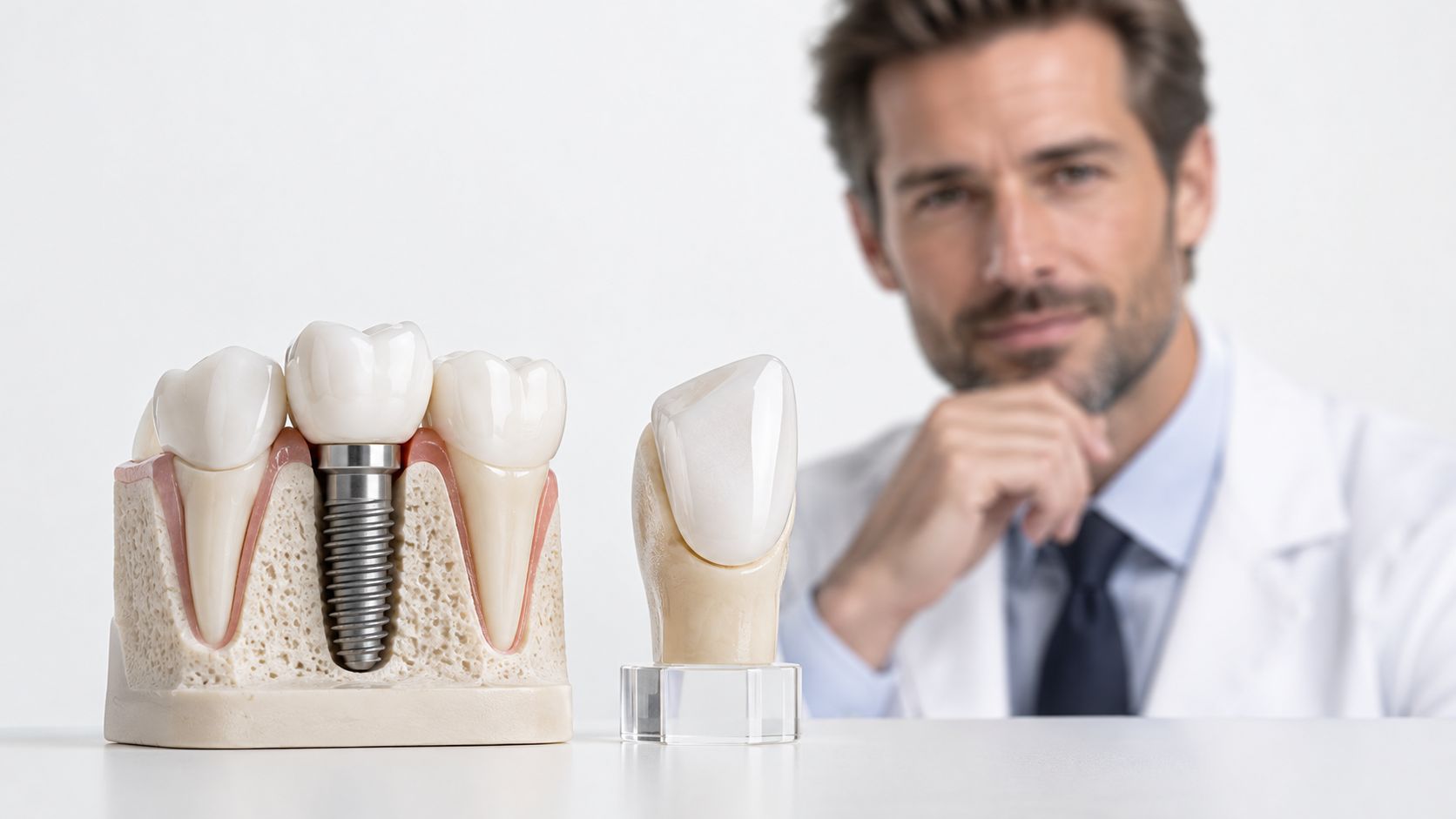
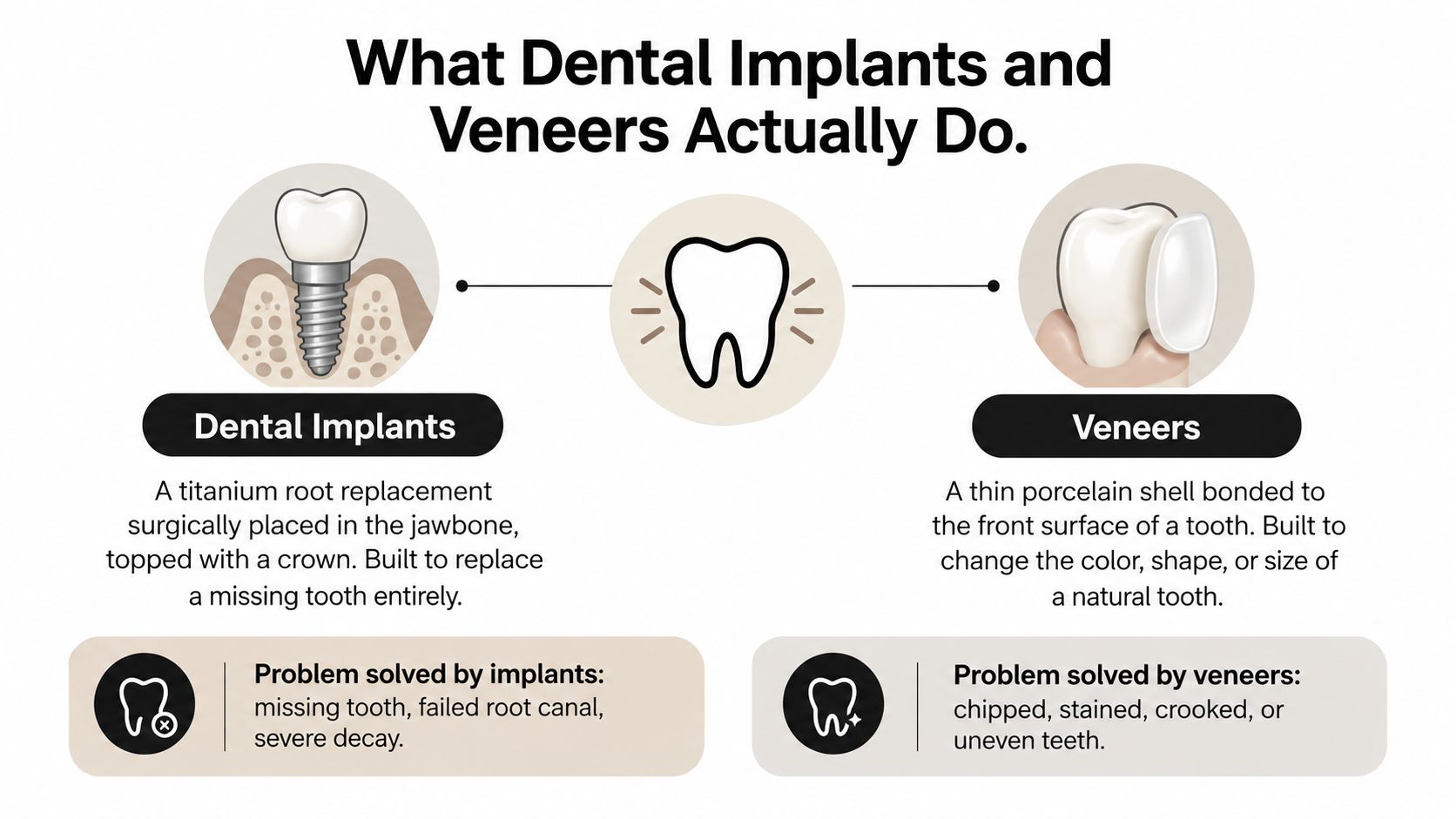
A dental implant replaces the root of a missing tooth. A titanium screw is placed in the jawbone, where it can support a crown, bridge, or denture. A custom crown then restores the visible portion of the tooth. This is restorative dentistry designed for tooth loss, not a cosmetic covering for an intact tooth. The NHS overview of dental treatments describes the same basic distinction between implants and veneers.
A porcelain veneer is a thin, tooth-colored facing bonded to the front of an existing tooth. It can improve discoloration, a small chip, uneven edges, limited shape concerns, or selected spacing and alignment issues. The tooth must still be structurally sound enough to hold the veneer, and the surrounding gums must be healthy enough to support a clean margin.
Match the treatment to the problem
Think of the two treatments as separate tools.
Implants are built for:
- Missing teeth
- Teeth that cannot be predictably restored
- Tooth replacement after appropriate tooth extraction
- Implant-supported bridges or full-arch solutions
Veneers are built for:
- Stained teeth that don't respond to whitening
- Small chips and worn edges
- Mild shape or size concerns
- Selected cosmetic changes on otherwise suitable teeth
A same-day crown may be a better option than either treatment when a tooth needs full coverage but can still be restored. Professional teeth whitening may address generalized discoloration without removing tooth structure. Invisalign may be more appropriate when tooth position, rather than tooth shape, is the main concern.
Patients also ask about daily hygiene after treatment. Brushing, flossing, professional cleaning and exams, and dental X-rays when clinically indicated remain important. Some people also explore natural mouth rinse alternatives with aloe, but an alternative rinse shouldn't replace the oral hygiene plan recommended for your teeth, gums, veneers, or implants.
The mental model is straightforward: veneers improve the teeth you still have, while implants replace teeth you no longer have. Everything else, including candidacy, appointments, maintenance, and cost, follows from that difference.
Side-by-Side Comparison of Implants and Veneers
The best comparison isn't “which treatment is better?” It's “which treatment fits the condition in front of me?” An implant might be appropriate for a missing molar but unnecessarily invasive for a sound, discolored front tooth. A veneer might be elegant for a chipped incisor but completely unsuitable where a tooth is absent.
Dental Implants vs Veneers at a Glance
| Criterion | Dental Implants | Porcelain Veneers |
|---|---|---|
| Problem solved | Replaces a missing or non-restorable tooth | Improves the appearance of an existing suitable tooth |
| Typical candidate | Patient with adequate health, manageable gum disease, and jawbone support | Patient with healthy teeth and gums, suitable enamel, and a cosmetic concern |
| Procedure | Imaging, possible extraction or grafting, implant placement, healing, abutment, and crown | Smile planning, conservative preparation, impressions or digital records, temporaries, and bonding |
| Timeline | Often takes months, especially when healing or grafting is needed | Usually involves several planned visits over a shorter period |
| Longevity | Strong long-term survival is possible, but the implant, abutment, and crown have separate maintenance needs | Strong survival is possible, especially when veneers are bonded mainly to enamel |
| Cost discussion | More involved treatment because surgery, restoration, imaging, and possible preparatory care may be included | Cost depends on the number of teeth, laboratory work, preparation, and complexity |
| Insurance and financing | Coverage varies, and cosmetic or implant components may be handled differently | Cosmetic treatment is often limited by dental insurance, so financing may matter |
The process is not identical to the outcome. An implant fixture can remain integrated while the visible crown later needs repair or replacement. In a systematic review of implant-supported single crowns, implant survival was 97.2% at 5 years and 95.2% at 10 years, while the crowns themselves had survival of 96.3% and 89.4% at those points. The review also reported complications such as screw loosening, soft-tissue problems, loss of retention, and veneering-material fracture. Those figures are reported in the systematic review of implant-supported single crowns.
Veneers also need a realistic explanation. A systematic review estimated 95.5% cumulative survival at 10 years for porcelain laminate veneers. Its reported 10-year rates included 96.3% for fracture, 99.2% for debonding, 99.3% for secondary caries, and 99.0% for the need for endodontic treatment. These are evidence-based outcomes across reviewed studies, not a promise that every veneer will remain flawless. See the systematic review of porcelain laminate veneers.
What cost really means
A quoted fee only makes sense when you know what it includes. Implant planning may involve a new patient exam, dental X-rays, 3D imaging, tooth extraction, bone grafting, surgery, the implant component, an abutment, and a crown. Veneer planning may include smile design, preparation, temporaries, laboratory fabrication, bonding, and future maintenance.
Ask whether a quoted lifespan refers to the implant fixture, the crown, or the complete restoration. For veneers, ask how much enamel will remain, what happens if a veneer chips, and whether a night guard is recommended. The least expensive initial option isn't automatically the least expensive long-term plan.
The right answer depends on one clinical fact first: is the tooth still there and restorable?
How the Dental Implant Process Works Step by Step
An implant consultation should reduce uncertainty, not pressure you into surgery. The first appointment starts with your health history, concerns, goals, and an examination of the missing or damaged tooth area.
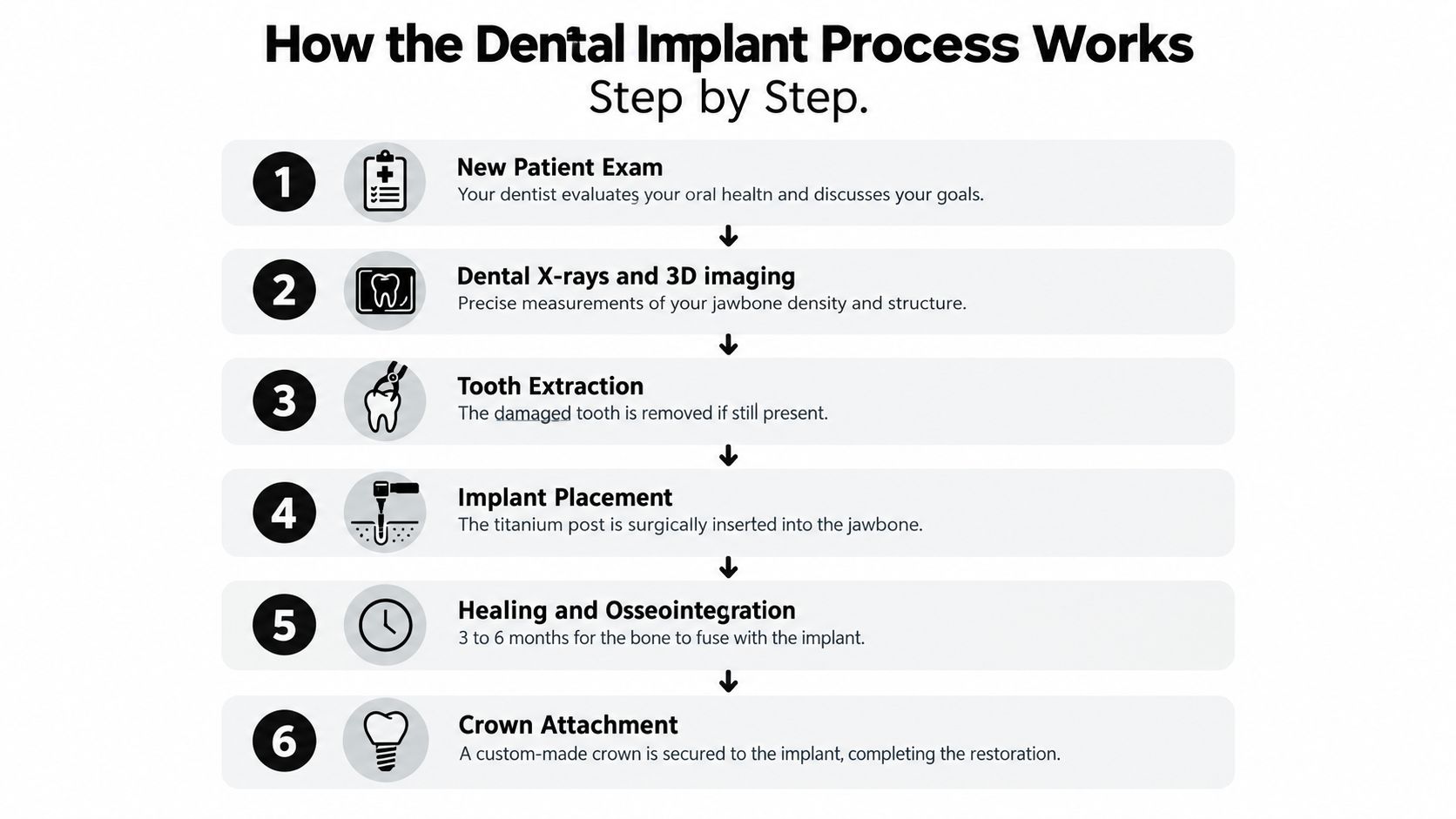
From diagnosis to placement
A typical sequence includes:
- New patient exam and imaging. Your dentist evaluates the gums, neighboring teeth, bite, and available bone. Dental X-rays and 3D imaging help determine whether the planned implant position supports a clean, functional restoration.
- Preparatory care. A tooth that cannot be saved may need extraction. Some patients need periodontal treatment or bone grafting before implant placement. Others can proceed without those steps.
- Surgical placement. Local anesthesia is used, and sedation options can be discussed if dental anxiety makes surgery difficult. The titanium implant is placed in the jawbone according to the restorative plan, not wherever there is open space.
- Healing and integration. During healing, bone grows around the implant. The length of this phase depends on the site, bone quality, health, and whether grafting was required.
- Abutment and crown. Once the implant is ready, the dentist connects the abutment and places a custom crown designed for your bite, appearance, and ability to clean around it.
A realistic timeline can range from a few months to several months when grafting or additional healing is needed. Same-day dentistry may shorten some restorative appointments, but it doesn't eliminate the biological healing that an implant may require.
Research helps explain why follow-up matters. A systematic review of 10,491 immediately loaded implants in 2,977 patients found an overall survival rate of 96.39%, with 97.1% of failures occurring during the first 12 months. The review of immediately loaded dental implants supports close monitoring during that first year, when healing, hygiene, bite forces, and mechanical concerns need attention.
Watch this short overview before your consultation:
You can also read Winn Smiles' explanation of the dental implant procedure. After the crown is placed, maintenance includes daily cleaning, professional monitoring, and prompt attention to bleeding, swelling, mobility, discomfort, or changes in how your teeth fit together.
How the Veneer Process Works Step by Step
Veneers aren't a quick cover-up placed without planning. A careful cosmetic consultation begins by identifying what bothers you, checking the health of each tooth and gum, evaluating your bite, and deciding whether the desired change is better addressed with whitening, bonding, orthodontics, a crown, or porcelain.
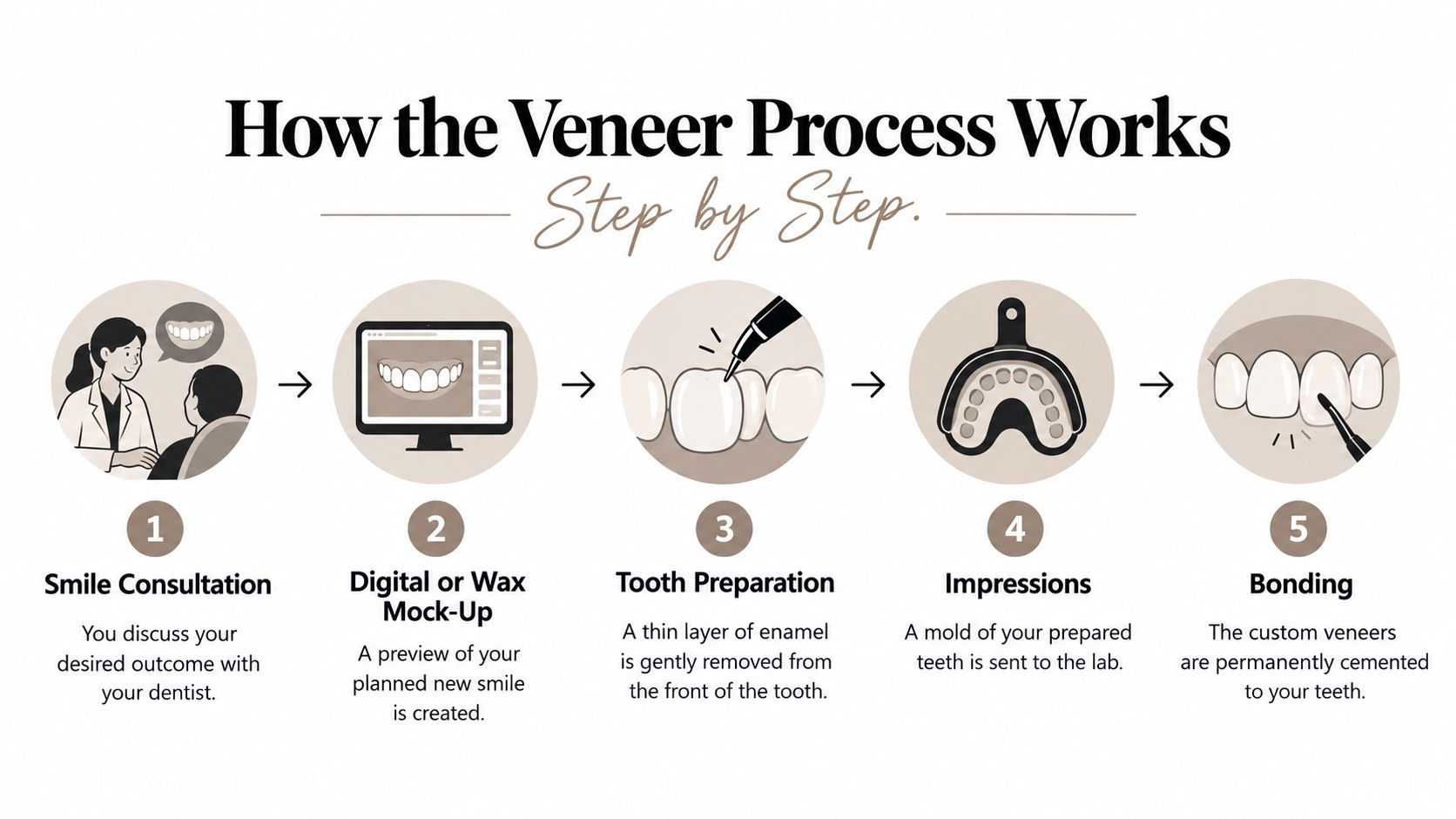
Planning before porcelain
The visit usually develops in stages:
- Smile consultation: You discuss color, tooth length, shape, spacing, and how much change you want.
- Preview: A digital or wax mock-up can help you assess the proposed proportions before preparation.
- Tooth preparation: The dentist removes only the amount needed for the planned result. Conservative enamel preservation is important because bonding to sound enamel generally provides a more favorable foundation.
- Records and temporaries: Impressions or digital scans guide laboratory fabrication. Temporary veneers may protect prepared teeth and let you evaluate the appearance and feel.
- Bonding appointment: The final veneers are tried in, adjusted, bonded, and polished. Your dentist checks the bite and cleans the margins so you can maintain them.
The key issue is what remains underneath the veneer. A “no-prep” label doesn't automatically mean reversible or conservative, because tooth position, existing fillings, thickness requirements, and the planned result still determine the actual treatment. Removing too much healthy enamel can make future replacement more involved.
A recent systematic review found approximately 99% survival and 99% success when ceramic veneers were bonded primarily to enamel, compared with about 74% success when severe dentin exposure was present. The review of enamel and dentin bonding for ceramic veneers is why I pay close attention to preparation depth rather than relying on a product label.
You can read a plain-language explanation of how veneers work. Once bonded, veneers require regular brushing, flossing, professional cleaning, and attention to bite forces. Patients who grind or clench may benefit from a night guard. Avoid using veneered teeth as tools to open packages or bite hard objects, and report a chip, rough edge, sensitivity, or gum irritation promptly.
Choosing Between Implants and Veneers for Your Situation
Start with four questions, and answer them truthfully.
Is the tooth present and restorable?
If the tooth is missing, a veneer isn't an option. If it remains but has severe decay, a fracture, an unsuccessful root canal, or too little sound structure, the discussion may involve tooth extraction and implant replacement rather than cosmetic coverage.
If the tooth is present, comfortable, and structurally sound, preserve it whenever the clinical outlook is favorable. A veneer may improve the appearance, but only after your dentist confirms that the tooth can support it.
Can the surrounding tissues support the plan?
Implants require a suitable site, healthy or manageable gums, and enough bone or a plan to address deficient bone. Veneers require healthy gums, clean margins, a stable bite, and enough suitable tooth structure for reliable bonding.
Smoking, uncontrolled health conditions, active periodontal disease, poor hygiene, and heavy grinding can affect either path. These issues don't always rule out treatment, but they must be addressed before promising a durable result.
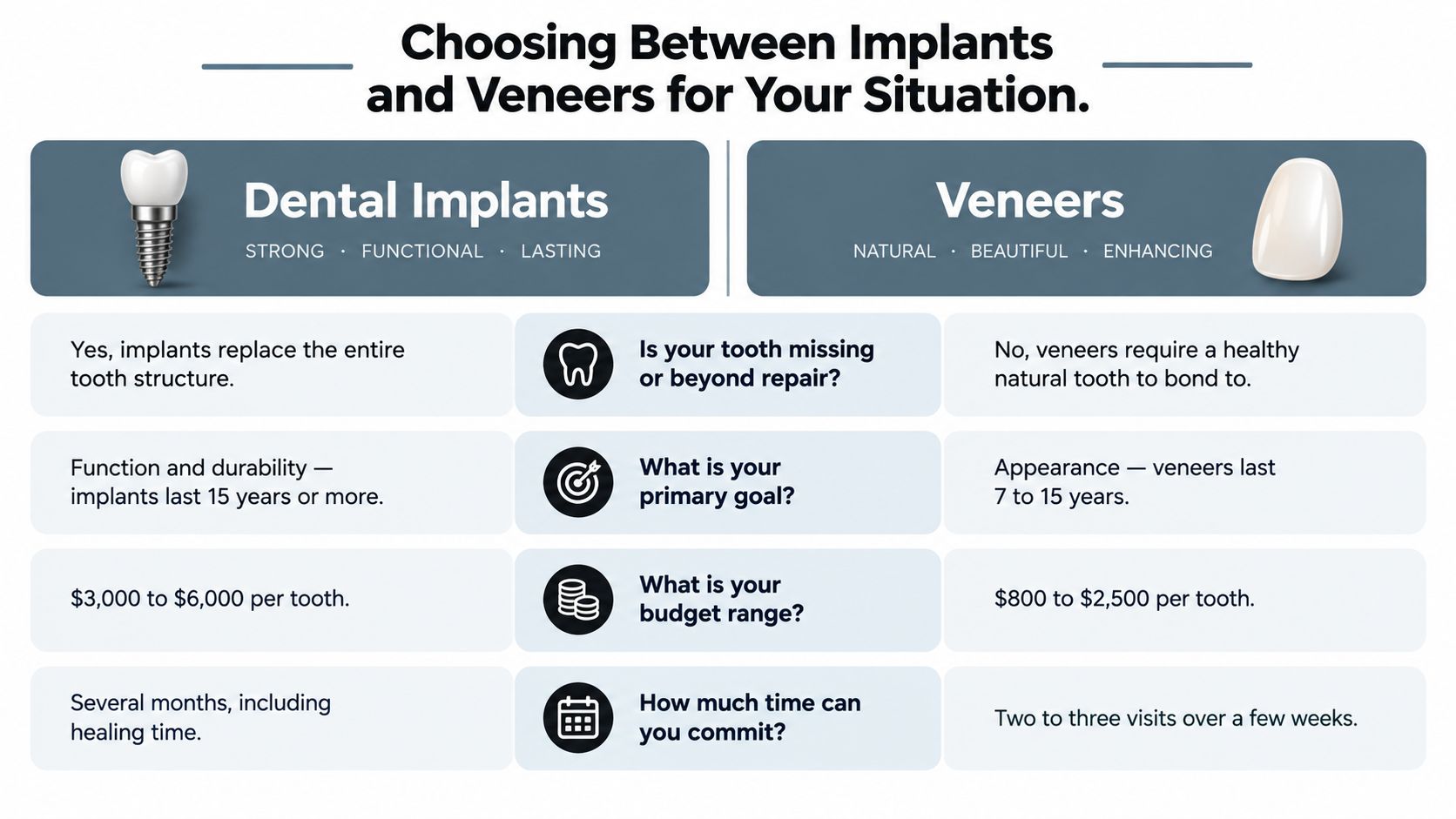
Which goal describes you?
A single missing molar usually points toward tooth replacement. A row of discolored but healthy front teeth may point toward veneers, whitening, or another cosmetic plan. A damaged tooth that might be saved deserves a restorative evaluation before extraction is chosen.
Some patients need a hybrid plan. An implant can replace a missing tooth while whitening or veneers improve neighboring teeth. The shade of the implant crown must be planned with the surrounding smile, especially if you're considering future cosmetic dentistry.
Long-term evidence reinforces why “permanent” is the wrong word for either treatment. A 20-year meta-analysis reported implant survival estimates ranging from 78% to 92%, depending on study design and analysis, while a review of ceramic veneers reported 89.3% survival after roughly 9 to 10 years, with complications among many surviving restorations. The long-term review of implant and veneer outcomes illustrates the important distinction between survival, appearance, comfort, gum health, and freedom from repairs.
For patients considering preventive care alongside cosmetic treatment, a discussion of what dentists get wrong about fluoride can provide another perspective. Bring questions to your dentist rather than changing your hygiene routine based on marketing.
My recommendation: Choose the least invasive treatment that solves the actual problem and remains biologically sensible over time.
Planning Your Visit to Winn Smiles in Cleveland or Chattanooga
A first visit should give you a diagnosis, a clear set of options, and enough information to decide without pressure. At Winn Smiles, patients in Cleveland and Chattanooga can discuss missing teeth, cosmetic concerns, tooth extraction, periodontal health, bite forces, and the condition of neighboring teeth in one treatment conversation.
The practice offers comfort-focused care, personalized sedation options for anxious patients, laser dentistry, and same-day crowns when those technologies fit the treatment. Related services include professional teeth whitening, Invisalign, periodontal care, root canals, emergency dentistry, and full-arch implant solutions. A patient searching for a dentist near me, dentist in Cleveland, TN, or dentist in Chattanooga, TN can begin with a new patient exam and determine whether the need is cosmetic, restorative, preventive, or urgent.
Cost discussions should be transparent. Ask what the proposed fee includes, whether preparatory treatment is necessary, how insurance may apply, and what financing options are available. Winn Smiles also offers free consultations and second opinions for select services, which can be useful when you're deciding between saving a tooth, extracting it, placing an implant, or choosing veneers.
Bring a list of medications, medical conditions, previous dental work, and the outcome you want. If pain, swelling, trauma, or a broken restoration is involved, contact an emergency dentist rather than waiting for a cosmetic consultation.
Winn Smiles can evaluate whether dental implants, porcelain veneers, a crown, or another treatment fits your teeth, gums, bite, and goals in Cleveland or Chattanooga. Schedule a consultation or request a second opinion through Winn Smiles and take the next step toward a healthy, confident smile.