You may be reading this because you’ve started doing something small but telling. You smile with your lips closed in photos. You cover your mouth when you laugh. You notice one chipped tooth, one dark spot, one uneven edge, and it suddenly feels like that’s all anyone else can see.
That’s a common reason people search for a cosmetic dentist near me or a dentist in Chattanooga, TN. They’re not always in pain. They just want to feel like their smile matches how they feel inside.
Veneers can be a good solution for that kind of concern, but many people hesitate because the process sounds mysterious. They wonder if veneers look fake, if they damage teeth, or how they stay on. Those are fair questions. The answer is that veneers are carefully planned, custom-made restorations that change the front surface of teeth in a controlled, precise way.
If you’re in Chattanooga or Cleveland and trying to decide whether veneers are worth exploring, it helps to understand the process step by step. Once people see how veneers work, the treatment usually feels much less intimidating.
Your Confident Smile Is Closer Than You Think
Some patients come in after years of putting this off. They’ve wanted a brighter, more even smile for a long time, but they kept telling themselves it wasn’t urgent enough to schedule. Then a wedding, job change, family photos, or just one look in the mirror pushes them to finally ask about cosmetic dentistry.
That moment matters. It’s often not about vanity. It’s about feeling comfortable when you talk, laugh, and meet people.
The smile concerns people mention most
In Chattanooga and Cleveland, many adults who ask about veneers describe the same frustrations:
- Dark or stained teeth that don’t respond the way they hoped to whitening
- Small chips or worn edges that draw the eye
- Gaps that make the smile feel uneven
- Slightly crooked or misshapen teeth that seem more noticeable over time
- Different tooth sizes that make the smile look unbalanced
Some of these problems can be treated with whitening, bonding, Invisalign, or restorative dentistry. Veneers are one option among several. What makes them unique is that they can improve color, shape, and proportion at the same time.
Why the process feels confusing at first
A lot of people ask the same basic question in different ways: how do veneers work if they’re so thin? That confusion makes sense. Veneers look simple from the outside, but they rely on careful planning, enamel preparation, custom design, and a very precise bonding process.
Veneers aren’t a cover-up in the casual sense. They’re custom restorations designed to fit your teeth closely and blend with your smile.
Another common concern is comfort. Patients with dental anxiety often worry more about the appointments than the result. They want to know if they’ll feel drilling, whether they’ll need shots, and if they’ll be stuck wearing something obvious while they wait for the final veneers.
Those worries are normal. A clear explanation usually helps more than vague reassurance. When you know what’s happening and why, the process stops feeling like a mystery and starts feeling manageable.
What Are Dental Veneers and What Can They Fix
You may be looking in the mirror and wondering how something as thin as a veneer can make such a visible difference without making your teeth look bulky or fake. That question is a good one. Veneers are designed to change what shows when you smile while still respecting the natural shape of the tooth underneath.
A dental veneer is a very thin layer of tooth-colored material that is custom made for the front surface of a tooth. It works like a custom-fitted cover for the part of the tooth people see most. Unlike a crown, which surrounds much more of the tooth, a veneer focuses on the visible front so the result can look refined and natural.
Porcelain veneers are often made very thin, sometimes around the thickness of a fingernail, and they are valued for the way they reflect light in a way that resembles enamel, as noted by the Cleveland Clinic’s overview of dental veneers. That light reflection is one reason a well-designed veneer can blend into a smile instead of standing out.

What veneers are meant to do
Veneers are a cosmetic treatment for teeth that are healthy enough to keep but do not look the way you want them to look. They can improve several details at the same time, including color, shape, length, surface texture, and how evenly the front teeth appear to line up.
That is often what makes veneers appealing to patients in Chattanooga and Cleveland. Instead of chasing one issue at a time, veneers can reshape the overall look of the smile in a controlled, planned way.
Problems veneers can often improve
- Stains or deep discoloration that may not improve enough with whitening
- Small chips or rough edges on front teeth
- Minor cracks that affect appearance
- Small spaces between teeth
- Slight crowding or minor unevenness when the goal is cosmetic improvement
- Teeth that appear too short, narrow, worn, or irregular
Veneers do have limits. They are not the right choice for every smile concern. Teeth whitening may be enough if color is the only issue. Orthodontic treatment may make more sense if tooth position or bite problems are more significant. A crown may be the better option if a tooth has lost too much structure.
What nervous patients usually want to know
For many anxious patients, the question is not only what veneers fix. It is what the appointments will feel like.
Some veneer cases involve removing a small amount of enamel so the final result sits flush and looks natural. That step matters because veneers are meant to look like part of your smile, not like something placed on top of it. If that idea makes you nervous, you are not overreacting. It is a common concern, and it deserves a clear explanation before any treatment begins.
Comfort should be part of the plan from the start. At Winn Smiles, nervous patients often feel better once they learn that options such as sedation and newer tools like laser dentistry may help make treatment gentler, quieter, and easier to tolerate in the chair. For many people, that changes veneers from something intimidating into something manageable.
A good veneer consultation should answer two questions clearly: what will improve, and how comfortable will the process feel for you.
Porcelain Veneers vs Composite Veneers
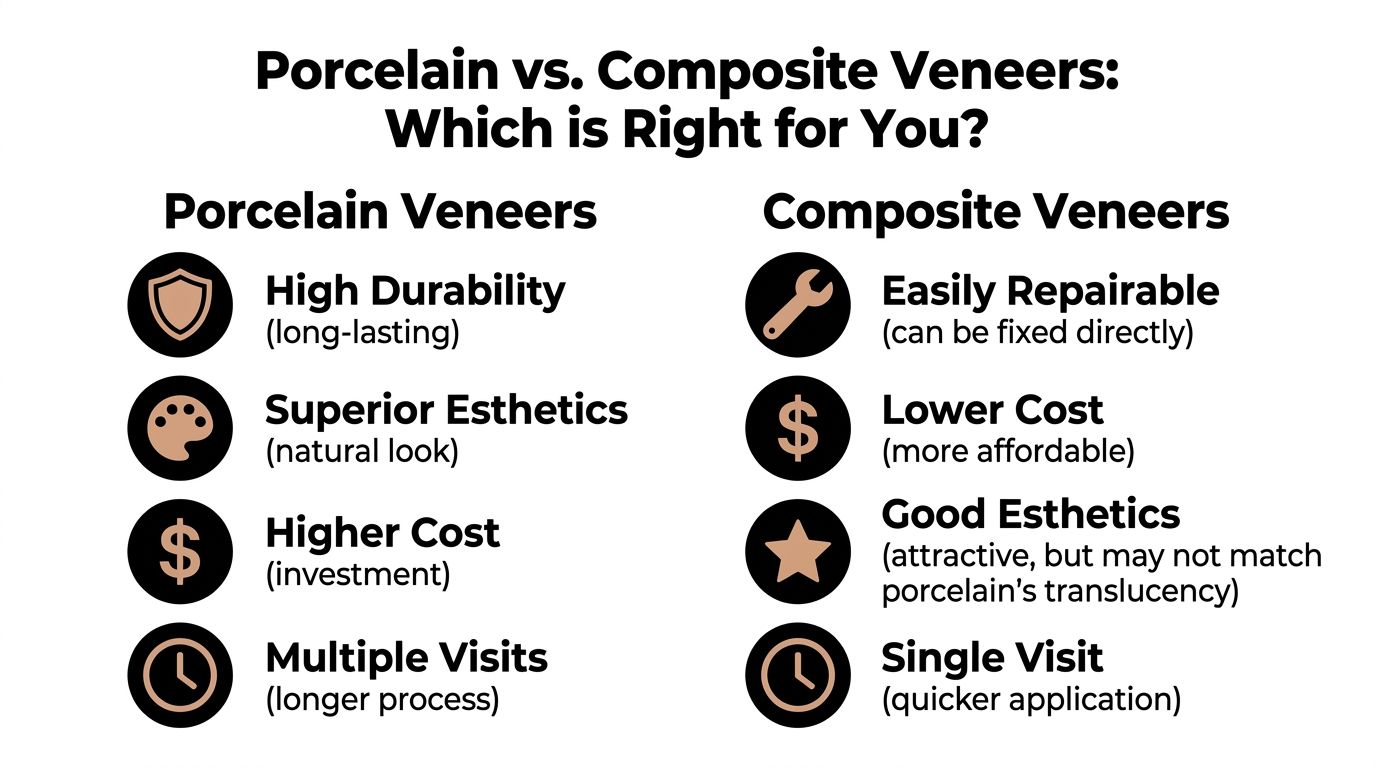
The two main veneer materials are porcelain and composite resin. Both can improve a smile, but they don’t behave the same way over time. The right choice depends on your priorities. Some people care most about the most natural look possible. Others want a quicker or more budget-conscious option.
The decision is easier when you compare them side by side.
How porcelain and composite differ
Porcelain veneers are made outside the mouth, then bonded to the teeth once they’re ready. Composite veneers are sculpted directly onto the tooth with tooth-colored resin.
Porcelain tends to be the choice for patients who want the most life-like translucency and stronger stain resistance. Composite tends to appeal to patients who want a simpler approach and the possibility of easier chairside repair.
Porcelain vs Composite Veneers at a Glance
| Feature | Porcelain Veneers | Composite Veneers |
|---|---|---|
| Appearance | More enamel-like translucency | Attractive, but usually less lifelike than porcelain |
| Stain resistance | Better resistance to staining | More likely to pick up stains over time |
| Treatment process | Usually completed over multiple visits | Often done in one visit |
| Repairability | Repair may be more involved | Easier to adjust or repair directly |
| Longevity | Longer-lasting | Shorter lifespan |
| Investment | Higher upfront investment | Lower initial cost |
What the long-term data shows
Clinical data shows a real difference between these materials. Porcelain veneers have a 93% to 96% problem-free survival rate after 5 years, can last 10 to 20+ years, and reach 93% patient satisfaction. Composite veneers typically last 5 to 7 years, according to this review of porcelain veneer success rates. The same source notes that porcelain holds 60% of the U.S. market.
Those numbers line up with what many patients care about most. They don’t want to redo cosmetic work sooner than necessary, especially if the visible front teeth are involved.
How to think about the choice
If your top goals are longevity, stain resistance, and the most refined cosmetic result, porcelain is often the stronger fit. If you want a more conservative financial starting point or you need a simpler cosmetic fix, composite may be worth discussing.
A helpful way to frame it is this:
- Choose porcelain if you want the smile upgrade to behave more like a long-term investment.
- Choose composite if you want flexibility, lower initial cost, or a more limited correction.
Some patients don’t need veneers at all. If a tooth just has one small chip, bonding may solve the problem without changing the whole smile.
That’s why a consultation matters. Good cosmetic planning isn’t about steering everyone toward the same procedure. It’s about matching the treatment to the person sitting in the chair.
How Veneers Are Securely Bonded to Your Teeth
A lot of patients in Chattanooga ask a very practical question before they commit to veneers. "How do these stay on if I’m eating, talking, and brushing every day?" That concern makes sense, especially if you already feel nervous about dental work and want to know the result will feel secure, not delicate.
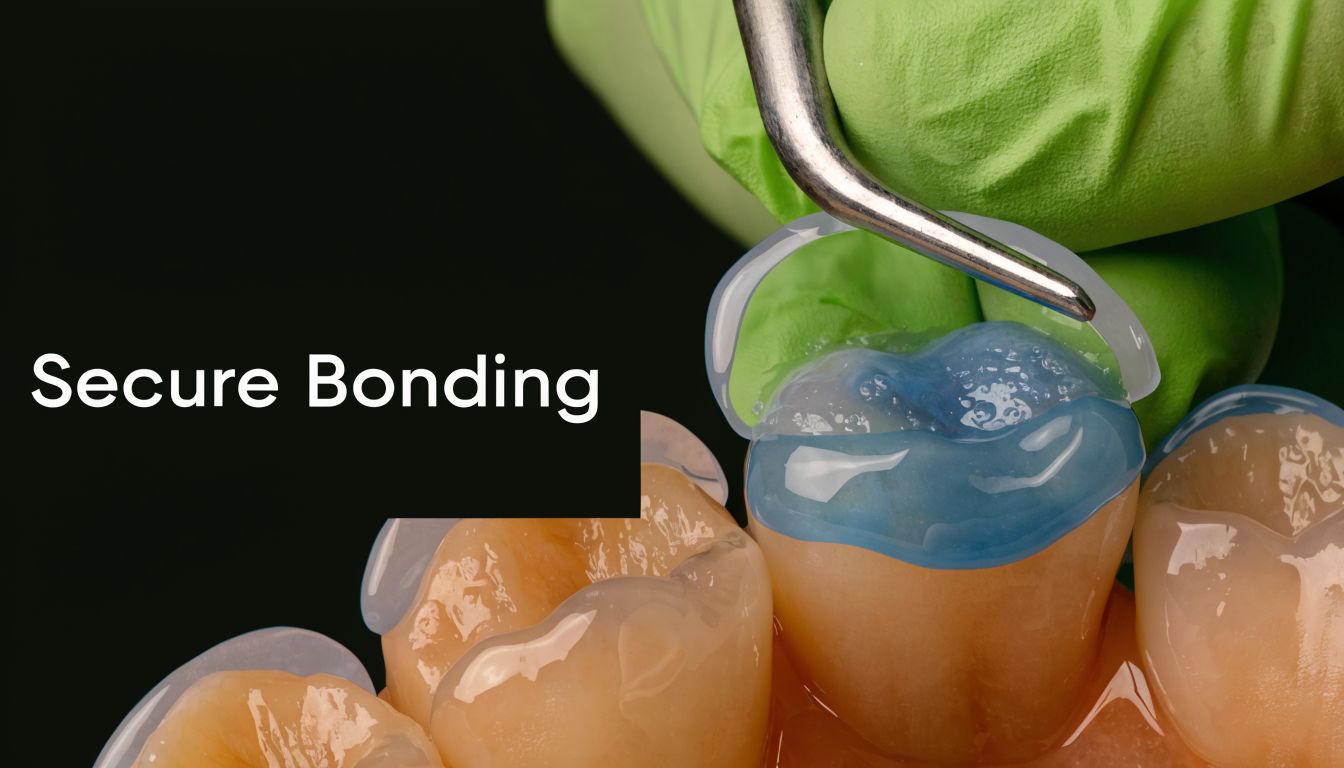
Veneers stay in place because bonding is a carefully controlled adhesive process. The front of the tooth and the inside of the veneer are both prepared so they can join tightly with a dental resin cement. It works a bit like setting two puzzle pieces together with a bonding layer designed for strength, fit, and long-term stability.
That bond is what lets veneers function like part of your smile, not like a cover sitting loosely on top.
Step one is creating a surface the veneer can hold onto
Before bonding happens, the tooth surface has to be prepared properly. A polished, untouched surface does not hold bonding material as predictably as one that has been conditioned for it. Paint adheres better to a wall that has been prepped first, and veneers follow a similar principle.
The inside of the porcelain veneer is also treated. That matters because the connection is happening across three parts at once: your natural tooth, the bonding cement, and the veneer itself. If any one of those surfaces is handled poorly, the whole system is weaker.
Patients who feel anxious are often relieved to learn that this stage is usually more precise than dramatic. At Winn Smiles, comfort matters throughout the process. Sedation options can help nervous patients relax, and modern tools such as laser dentistry can make related gum or soft-tissue care gentler when that is part of the treatment plan.
The bond combines fit, material science, and careful technique
Porcelain veneers are bonded with dental resin cements that harden under a curing light. The materials are designed to connect securely to both enamel and the treated porcelain surface. As noted earlier, the result is strong enough for normal everyday function when the veneer is planned and placed correctly.
That technical side can sound intimidating at first. What matters to you as a patient is simpler. The veneer is not just pressed onto the tooth and hoped for the best. Your dentist is creating a stable attachment in a dry, controlled setting, then checking the fit and bite before everything is finalized.
Small details matter here. Moisture control matters. The exact fit matters. Bite adjustments matter. A veneer that looks beautiful but hits too hard when you chew has to absorb stress it was never meant to carry.
Here’s a quick visual overview of the placement process:
Why precision matters so much
Bonding is one of the reasons cosmetic dentistry should never feel rushed. If the tooth is contaminated during placement, if the veneer does not seat fully, or if the bite is left uneven, the restoration has a harder job every single day.
A well-bonded veneer should feel calm and natural in the mouth.
It should also blend in visually. The goal is for your eye to notice the improved smile, not the edge of dental work. For nervous patients, that often brings a lot of peace of mind. You are not leaving with something fragile or temporary-feeling. You are leaving with a restoration designed to stay secure under normal use and made with your comfort in mind from start to finish.
Your Veneer Journey at Winn Smiles
The veneer process feels much easier when you know the order of events. Patients often find it helpful to visualize each visit before it happens. That’s especially true if dental anxiety has kept them from pursuing cosmetic dentistry in the past.
The experience usually starts with a conversation, not a drill.

Your consultation and smile planning
At the first appointment, the focus is on your goals. Some patients want a brighter smile but still want it to look understated. Others want to close spaces, soften worn edges, or make uneven teeth appear more balanced.
This is also where your dentist checks whether veneers are the right option at all. If you need a cleaning, gum treatment, or restorative work first, that should be handled before cosmetic treatment begins. If teeth whitening, bonding, or Invisalign would meet your goal with less tooth preparation, that should be part of the conversation too.
Digital records and preparation
Once a veneer plan is confirmed, records are taken so the veneers can be designed accurately. Many patients appreciate digital scanning because it avoids the old-style impression experience that some people find uncomfortable.
Then comes the preparation visit. This is the appointment that tends to worry anxious patients most, but it’s also the one where comfort planning makes the biggest difference. Local anesthetic may be used, and some patients also ask about sedation options so they can stay relaxed throughout the visit.
Laser dentistry can also help make preparation more controlled for appropriate cases. The goal is a veneer that fits naturally, not one that looks bulky or overbuilt.
Temporaries and the final fit
After the teeth are prepared and the design information is complete, temporary veneers may be placed while the final restorations are being made. These temporaries protect the prepared teeth and give you a preview of the direction your smile is taking.
When the final veneers return, the fit, shape, and color are checked before they’re bonded. This stage is detailed for a reason. A small change in edge length or contour can affect how natural the smile looks.
A strong result depends on precision during bonding. According to this clinical discussion of veneer bonding protocol, saliva can halve bond strength, so absolute moisture control matters. The same source explains that the resin cement is polymerized with a blue LED light for 20 to 40 seconds, and notes that ensuring at least 90% enamel coverage supports bonds over 25 MPa. It also connects this type of protocol to expected veneer longevity in the 15 to 20 year range when conditions are favorable.
What many nervous patients want to know
Will I be rushed
You shouldn’t be. Cosmetic dentistry works better when the dentist and patient can communicate clearly about shape, shade, and comfort.Will the veneers feel strange
They may feel new at first, but well-designed veneers should settle into a natural feel quickly.Will I leave with obvious temporary work
Temporary veneers are meant to protect the teeth and maintain appearance while the final restorations are being completed.
If you’ve delayed treatment because of anxiety, ask about comfort options first. Many people feel much better once they know the appointments can be adapted to their stress level.
Longevity and Protecting Your New Smile
Veneers are durable, but they’re not indestructible. The healthiest way to think about them is as long-term cosmetic restorations that still depend on good habits, a stable bite, and regular dental care.
That’s good news for patients who want a dependable result. There’s strong clinical support for porcelain veneers when they’re properly planned and maintained.
What lifespan looks like in real terms
The longevity of porcelain veneers is well documented. Clinical studies confirm 93% to 96% survival at 5 years, 93% to 95% at 10 years, and up to 83% at 20 years, according to this overview of veneers statistics and long-term performance. The same source notes that the global veneers market was valued at $1,816.71 million in 2026, with projections to exceed $3 billion by 2035.
Those numbers don’t mean every veneer lasts the same amount of time. They do show that porcelain veneers have a strong track record when bonded well and cared for properly.
For a practical patient-focused overview, this guide on how long veneers last is useful because it explains how habits and maintenance affect the lifespan of cosmetic work.
What helps veneers last
Daily care is straightforward, but it matters:
- Brush gently and consistently with a non-abrasive toothpaste and a soft-bristled brush
- Floss every day to protect the gums around the veneers
- Wear a night guard if you clench or grind your teeth
- Keep regular cleanings and exams so your dentist can monitor the veneers and the surrounding teeth
- Avoid using teeth as tools for opening packages or biting hard objects
What can shorten veneer life
Some problems come from force, not from the veneer material itself. Heavy grinding, biting fingernails, chewing ice, or hitting the front teeth with repeated pressure can increase the risk of chips or fractures.
Veneers do their job best when they’re used like teeth, not like tools.
If a patient has bite issues, signs of clenching, or uneven wear, that should be part of the treatment plan from the start. Protecting a new smile is easier than repairing one.
Veneer Costs and Alternative Cosmetic Options
Cost is one of the first questions patients ask, and that’s reasonable. Veneers are a cosmetic investment, so you should understand what shapes the total fee before you commit.
The final cost usually depends on the material selected, the number of teeth involved, and how much planning or preparation your case requires. A simple case with a small number of veneers won’t be priced the same way as a more extensive smile redesign.
What affects the total investment
Porcelain generally costs more than composite because of the material itself, the lab work involved, and the detailed customization. The overall fee may also change if your smile needs additional work before veneers can be placed, such as cleanings, gum treatment, or restorative care.
If you want a deeper breakdown of the factors involved, this page on how much veneers cost gives a helpful overview without oversimplifying the decision.
Veneers aren’t the only cosmetic option
Some patients come in asking for veneers when another treatment would serve them better. That’s a good thing to discover before starting.
Here are a few common alternatives:
- Professional teeth whitening if the main concern is color
- Dental bonding for a small chip or one localized shape issue
- Invisalign if the primary concern is alignment rather than tooth shape
- Crowns or other restorative dentistry when a tooth needs more structural protection
If your concern is mainly whitening, comparing the best teeth whitening options can help you understand what whitening can and can’t do before you jump to veneers.
The right treatment is the one that fits your goal
A patient who wants a bright, even smile may end up choosing veneers. Another may get the result they want with whitening and bonding alone. Another may need orthodontic movement first so the final cosmetic work stays conservative.
That’s why the most useful consultation isn’t one that starts with a sales pitch. It starts with your priorities, your tooth structure, and a realistic plan.
Begin Your Smile Transformation in Chattanooga or Cleveland
A lot of people wait on veneers because they think the process will be more uncomfortable, more artificial-looking, or more complicated than it really is. In most cases, the opposite is true. Once you understand how veneers work, the treatment becomes much easier to evaluate.
Veneers improve a smile by changing the front surface of teeth with custom-designed restorations. The process depends on thoughtful planning, careful enamel preparation, and precise bonding. When those steps are done well, veneers can look natural and feel stable in everyday life.
Why comfort matters as much as cosmetics
For many adults, the biggest barrier isn’t deciding whether they want a better smile. It’s deciding whether they can get through the appointments comfortably. That’s why it helps to choose a dental office that can talk openly about anxiety, timing, and what each visit will feel like.
If you’ve been searching for a dentist near me, a cosmetic dentist near me, or a dentist in Chattanooga, TN because you want a smile upgrade without feeling overwhelmed, clear communication matters. So does having access to a full range of care if you need more than cosmetic treatment alone, whether that’s cleanings and exams, restorative dentistry, Invisalign, or even services like dental implants and emergency dentist visits in the future.
A consultation should answer real questions
A useful veneer consultation should help you answer things like:
- Am I a good candidate for veneers, or would another treatment preserve more natural tooth structure?
- How many teeth need treatment to match my smile goals?
- Will porcelain or composite fit my priorities better?
- What will the process feel like at each step?
- How do I protect the result once treatment is complete?
If you want to review the treatment itself in more detail, the porcelain veneers information for Chattanooga patients is a practical next step.
A better smile should still feel like your smile
The strongest cosmetic results usually don’t look flashy. They look healthy, balanced, and believable. People notice that you look refreshed, not that you had obvious dental work.
That’s the main goal. Not a smile that looks manufactured, but one that helps you stop thinking about your teeth every time someone pulls out a camera.
If you’re in Chattanooga, Cleveland, or nearby communities and you’ve been considering cosmetic dentistry, it may be time to stop guessing and get clear answers. Veneers aren’t right for everyone, but for the right patient, they can change more than a smile. They can change how relaxed you feel using it.
If you’re ready to talk through your options, schedule a consultation with Winn Smiles. You can discuss your goals, ask honest questions about comfort and treatment steps, and find out whether veneers, whitening, bonding, Invisalign, or another approach fits your smile best.