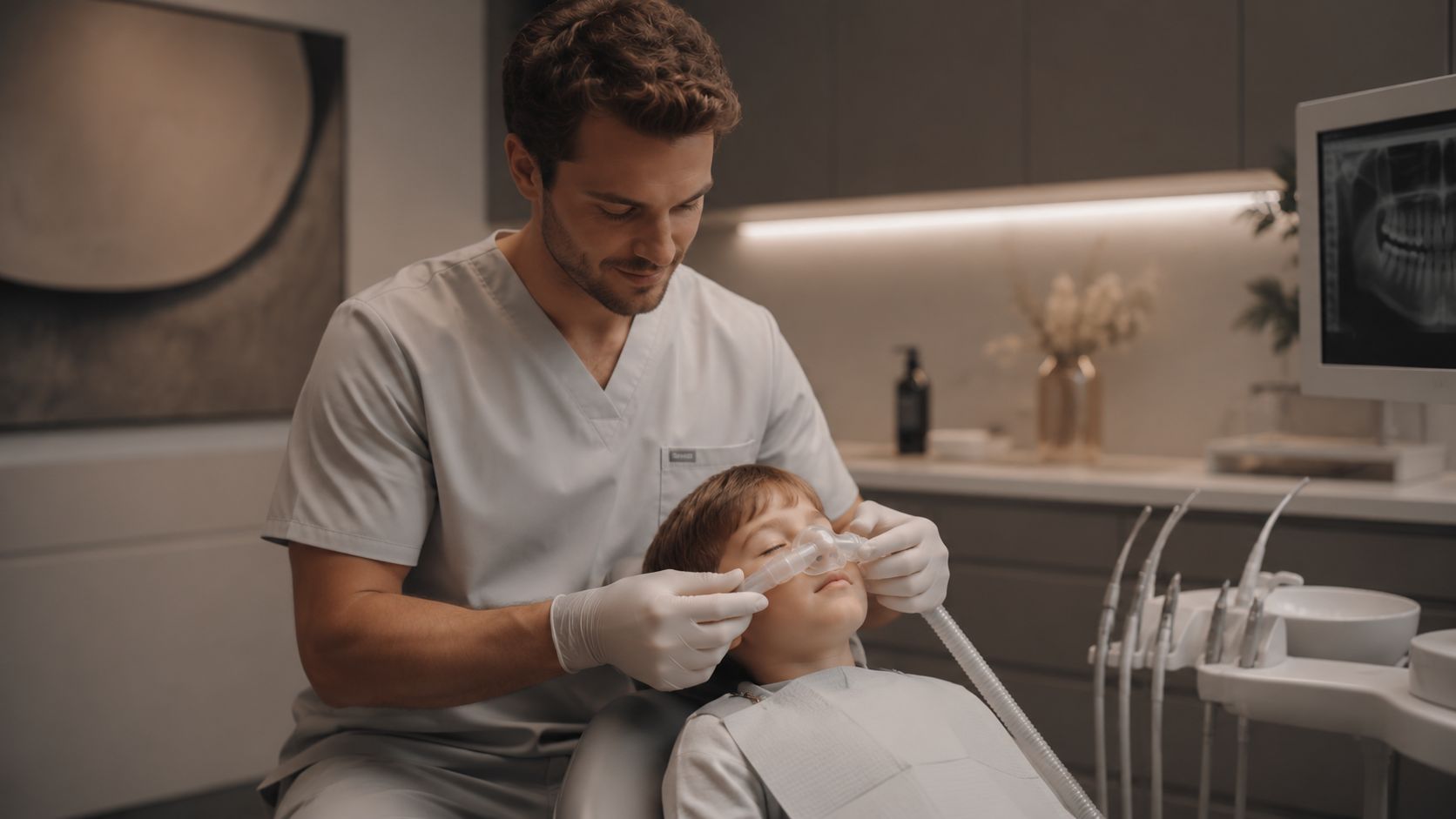
When your child needs dental work and already feels scared, it can make you feel helpless fast. Many parents in Chattanooga and Cleveland start in the same place. They search for a dentist near me, wonder whether their child will cry, and worry about whether sedation is safe.
Those worries are normal. A child who is very young, highly anxious, sensitive to sounds or touch, or facing a longer appointment may need more support than reassurance alone can provide. In pediatric dentistry, sedation isn't unusual or extreme. It's a carefully planned way to help children stay calm, comfortable, and able to receive the care they need.
A Parent's Guide to Gentle Dental Care in Chattanooga and Cleveland
One of the hardest moments for a parent is watching a child shut down in the dental chair. Sometimes it starts the night before. Your child asks if it will hurt. You try to stay calm, but you may already be wondering if there's a gentler way to get through the visit.
That's where many families begin learning about sedation dentistry for kids. It can help when a child is frightened, very young, has trouble sitting still, or needs treatment that would be difficult to complete while fully awake and stressed.
Sedation is more common than many parents realize
Some parents feel embarrassed even asking about sedation. They worry it means their child is unusually fearful or that they somehow failed to prepare them. That isn't the case.
A major review found that 98% of pediatric dentistry programs provide minimal to moderate sedation, and 98% also provide deep sedation or general anesthesia in specialty care settings, showing how established pediatric sedation has become in structured dental care (review of pediatric dentistry training programs). That matters because it places sedation in the category of standard clinical tools, not rare measures.
Sedation is not about forcing a child through treatment. It's about matching the dental experience to the child's developmental, emotional, and medical needs.
For families looking for a dentist in Chattanooga, TN or a dentist in Cleveland, TN, that perspective can be a relief. The goal is not just to finish a filling or tooth extraction. The goal is to protect your child's comfort, support their breathing and safety, and reduce the chance that dental care becomes a lasting fear.
Comfort-focused care matters
Parents often ask whether sedation is only used for major procedures. Sometimes yes, but not always. A child may need help even during a shorter visit if anxiety is intense enough to make treatment unsafe or impossible.
Local families also want practical care, not just explanations. They want a dental team that can talk clearly, answer questions without rushing, and help them understand whether sedation, routine care, or another approach makes the most sense. That same conversation often connects with other needs too, such as emergency dentist visits, restorative dental care, new patient exams, and planning for future cleanings and exams with less stress.
Why Sedation May Be Recommended for Your Child
A good sedation decision starts with one question. What is getting in the way of safe, comfortable treatment? The answer is often more than simple nerves.
Some children can understand directions but still become overwhelmed once the lights, sounds, and instruments are close to their face. Others are too young to stay still long enough for treatment, even when they're trying their best.
Common reasons a dentist may suggest sedation
Sedation may be appropriate when a child:
- Has strong dental anxiety that makes it hard to relax, open wide, or cooperate through treatment
- Is very young and can't safely sit still long enough for the needed procedure
- Has special healthcare needs that affect communication, movement, sensory regulation, or behavioral tolerance
- Needs extensive dental care in one appointment, such as multiple areas of restorative treatment
- Has a very sensitive gag reflex that makes routine treatment difficult
- Has had a difficult prior dental experience and now becomes distressed before treatment begins
Not every upset child needs sedation. Sometimes a slower pace, a shorter visit, or a non-sedation comfort strategy works well. But when a child's fear or developmental stage makes treatment unreliable, sedation can protect both the child and the quality of care.
Sedation is about fit, not convenience alone
Parents sometimes worry that sedation is offered because it's easier for the office. The right recommendation should never be about convenience by itself. It should be based on your child's ability to complete treatment safely.
Think about a child who needs several fillings but starts crying as soon as the chair moves back. If they jerk suddenly, close their mouth repeatedly, or can't tolerate suction or instruments, the issue isn't stubbornness. The issue is that treatment may no longer be safe or humane without additional support.
Practical rule: If a child's fear, movement, age, or medical complexity could interfere with safe treatment, sedation may be a thoughtful clinical choice, not an aggressive one.
When general anesthesia may be the better option
This is one area where parents often get incomplete information online. Sedation and general anesthesia are not interchangeable. In some situations, especially for very young children, children with certain medical or airway concerns, or children needing extensive treatment, a hospital or anesthesia-based setting may be the safer route.
That's why the decision should include questions like:
- How long is the procedure expected to take
- Can my child follow directions even when upset
- Does my child have any breathing, airway, or medical concerns
- Would an office-based sedation visit be enough, or is a deeper level of care more appropriate
Those questions don't make things scarier. They make the decision clearer.
Types of Pediatric Sedation Offered at Winn Smiles
Parents usually want to know one thing first. What will my child feel? That's the best way to understand the difference between sedation options.
At Winn Smiles' overview of IV sedation dentistry, families can learn more about how deeper sedation works in dental care generally. For children, the right option depends on age, health history, anxiety level, and how involved the treatment will be.
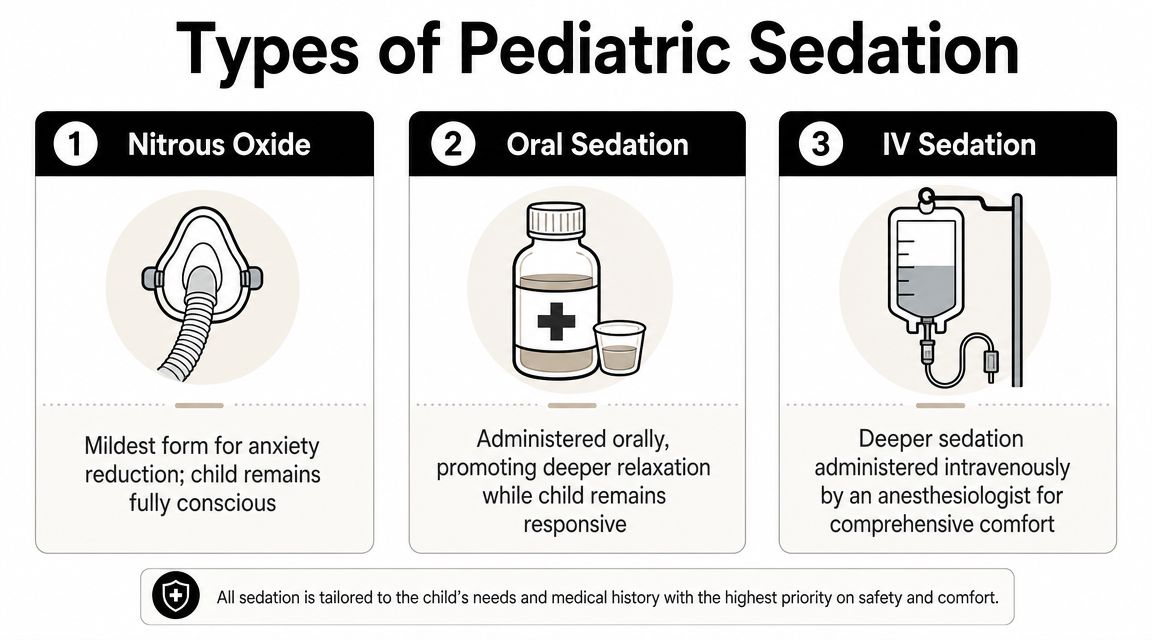
Nitrous oxide
Nitrous oxide is the lightest sedation option. It's commonly called laughing gas, though many children don't laugh at all. They usually just feel calmer.
Pediatric sources describe nitrous oxide as the most common minimal sedation option for children. It's delivered through a small nosepiece while the child remains awake, and recovery is typically rapid once the gas is stopped (overview of types of sedation for children).
This option is often useful for:
- Mild anxiety
- Short visits
- Children who can still follow directions
- Care that depends on cooperation but doesn't require deeper relaxation
Oral sedation
With oral sedation, the child takes medication by mouth before treatment. The goal is deeper relaxation than nitrous oxide alone. Your child may seem sleepy or less reactive, but this is not the same as full unconsciousness.
This approach may help when a child is more anxious, needs a longer appointment, or is unlikely to tolerate treatment with nitrous oxide alone. Parents are often surprised that a child may still respond to voices or gentle prompts even while very relaxed.
Deeper sedation
Some children need a deeper level of support. This may be considered when lighter methods are unlikely to work, when treatment is more extensive, or when the child's age or behavior makes office-based cooperation very difficult.
The key point is that deeper sedation changes the safety conversation. Breathing, airway management, staffing, and recovery become even more important. That's why the recommendation should be individualized rather than based on preference alone.
Comparing Sedation Options for Children
| Sedation Type | What It Is | Child's State | Best For |
|---|---|---|---|
| Nitrous Oxide | Inhaled calming gas through a small nosepiece | Awake and relaxed | Mild anxiety and shorter procedures |
| Oral Sedation | Medication taken by mouth before treatment | Drowsy, calm, still responsive | Moderate anxiety or longer visits |
| IV Sedation | Deeper sedation delivered intravenously | More deeply sedated | Extensive treatment or children who can't tolerate lighter options |
Some children do very well with the mildest option. Others need more support from the beginning. The safest choice is the one that matches the child, not the one that sounds easiest.
Ensuring Your Child's Safety Is Our Top Priority
Safety is the question behind every other question. Parents may ask about comfort first, but what they really want to know is whether their child will be protected at every stage of care.

What the safety data tells us
Pediatric dental sedation can be highly effective, but it isn't casual care. One review of pediatric IV sedation reported 271 successfully sedated patients out of 274, a 98.9% success rate, with no serious complications reported (four-year review of pediatric dental IV sedation outcomes).
That same body of literature also reports minor short-term side effects in outpatient settings, depending on the drug, depth of sedation, and the child involved. Reported events include nausea and vomiting, agitation, oxygen desaturation, and laryngospasm in some datasets. Those findings don't mean sedation is unsafe. They mean teams must prepare for real risks rather than pretending they don't exist.
Non-negotiable parts of a safe sedation process
A careful pediatric sedation workflow should include:
- A presedation health review so the dentist understands your child's medical history, medications, airway considerations, and whether the planned setting is appropriate
- Clear fasting instructions when the sedation type requires them, because food and liquids can affect airway safety
- Continuous monitoring during treatment so the team can track breathing, oxygen levels, heart rate, and overall responsiveness
- A recovery plan with observation after the procedure until the child is stable enough to go home
- Qualified personnel who know their exact role if a child's breathing or level of sedation changes
Here's a short video that helps parents think about comfort and safety during dental sedation:
Questions parents should feel comfortable asking
You never need to apologize for asking detailed questions. In fact, good pediatric sedation care should welcome them.
Consider asking:
- Who will be monitoring my child the entire time
- What type of sedation is being recommended and why
- What signs are monitored during the procedure
- How is recovery supervised
- If my child isn't a good fit for office sedation, how will you tell me
A safe sedation plan doesn't rely on reassurance alone. It relies on screening, monitoring, training, and a team that knows when to proceed and when not to.
How to Prepare Your Child for Their Sedation Visit
Preparation helps in two ways. It lowers stress, and it supports safety.
The most important step is following the instructions your dental team gives you exactly, especially about eating and drinking before the visit. Fasting rules aren't just formalities. They help reduce risk during sedation.
The night before and the morning of the visit
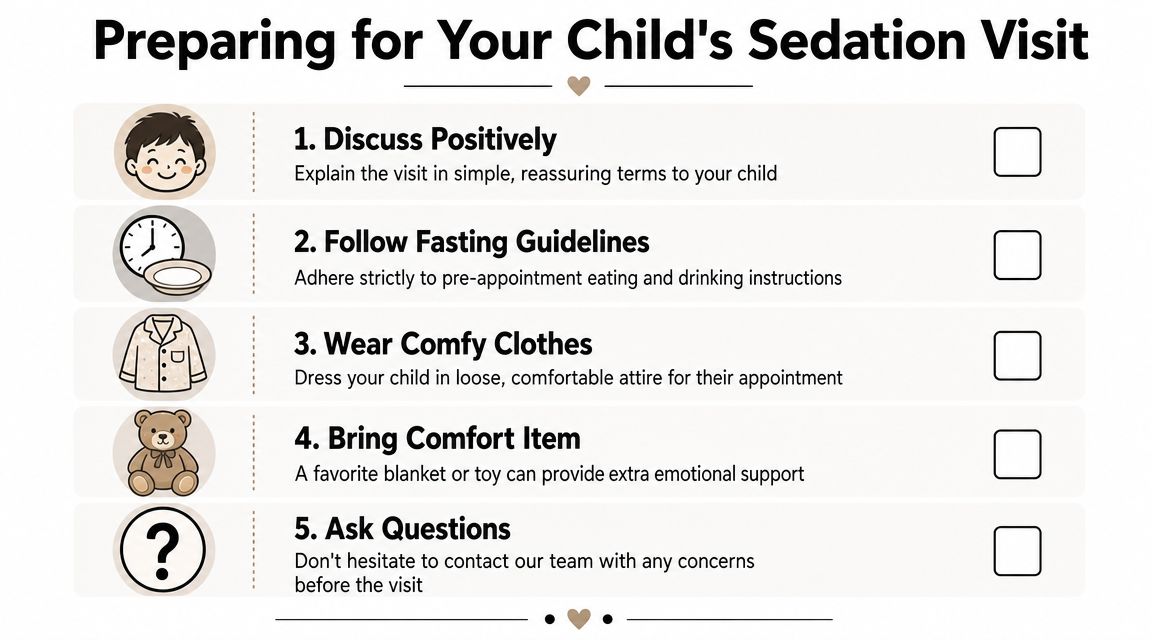
A few practical steps make the day smoother:
- Use simple language. Tell your child the dentist is going to help their teeth and help their body feel calm.
- Avoid alarming words. Many children do better when parents don't use words like shot, pain, drill, or put to sleep unless the office has specifically guided you on how to explain things.
- Choose comfortable clothing. Soft, loose clothes are easier for a child to rest in before and after the appointment.
- Bring a comfort item. A favorite blanket or stuffed animal can help your child feel anchored in an unfamiliar setting.
- Plan a quiet day afterward. Even if your child seems alert later, they may still need a restful routine.
Helping an anxious child feel more in control
Children often do better when they have one small coping tool to focus on. Before the appointment, you can practice slow belly breathing together. If your child likes visual activities, these breathing techniques for calm and focus give parents easy ways to rehearse at home.
Tell your child what they will do, not what they shouldn't do. “We'll take slow breaths and keep your body cozy in the chair” usually works better than “Don't be scared.”
If your child wakes up with a cough, congestion, fever, or seems unwell, call the office before leaving home. Sedation visits sometimes need to be rescheduled when a child isn't feeling well, because breathing comfort matters.
What to Expect at Your Child's Appointment
For many parents, uncertainty is the hardest part. Knowing how the day usually unfolds can make the whole experience feel more manageable.
When you arrive for your child's visit in Chattanooga or Cleveland, the appointment should begin with conversation, not speed. The team reviews your child's health information, confirms the sedation plan, and answers last-minute questions before treatment starts.
Before treatment begins

Parents often expect the procedure to begin immediately. In reality, careful setup is a good sign. Your child may have monitoring equipment placed and will be guided through the first steps in a calm room with familiar explanations.
This is also when the team confirms details that matter to your child's comfort:
- How your child is feeling that morning
- Whether fasting instructions were followed
- What treatment is being completed that day
- What recovery will likely look like once the procedure is finished
During the procedure
The American Academy of Pediatric Dentistry requires a structured monitoring process for pediatric sedation, including vital signs documented at least every 5 minutes during the procedure and then every 10 to 15 minutes during recovery until the child returns to their presedation level of consciousness (AAPD monitoring and sedation guidance).
That guideline matters because sedation isn't just about giving medication. It's about continuously watching how the child is responding. A trained team member monitors breathing, oxygenation, circulation, and recovery status throughout the visit.
Recovery and going home
After treatment, your child doesn't immediately stand up and leave. They recover under supervision first. Some children are sleepy. Others are a little emotional, quiet, or groggy for a while.
Before discharge, the team makes sure your child is awake enough, stable, and back to an appropriate level of responsiveness. Parents should receive instructions for drinking, eating, activity, and what changes are normal for the rest of the day.
A sedation visit can also fit into broader dental care planning. Some families first come in because they need an emergency dentist, a tooth extraction, or help catching up on restorative dentistry. Others are looking for a family dentist in Chattanooga, TN or Cleveland, TN who can make future cleanings, exams, and dental x-rays less stressful after one positive experience.
Discussing Costs, Insurance, and Your Next Steps
Cost matters, especially when you're already trying to make a careful decision for your child. Sedation fees can vary based on the type of sedation used, the length of the appointment, and the treatment being completed at the same visit.
A helpful first step is asking for a written treatment estimate that separates the dental procedure from the sedation-related charges. If you're sorting through coverage questions before you book, this guide to compare medical dental quotes may help you think through plan details and out-of-pocket differences in a more organized way.
If you want a clearer picture of common pricing factors, this page about how much dental sedation can cost gives general context for what may affect the total.
Parents shouldn't have to choose between getting answers and getting care. If your child is anxious, needs restorative dental treatment, or you're trying to decide whether sedation dentistry for kids is the right path, a consultation can clarify what level of support makes sense and whether office-based treatment is appropriate.
If you're looking for a caring Winn Smiles team in Chattanooga or Cleveland, the next step is simple. Schedule a consultation, bring your questions, and get a clear plan built around your child's comfort, safety, and dental needs.