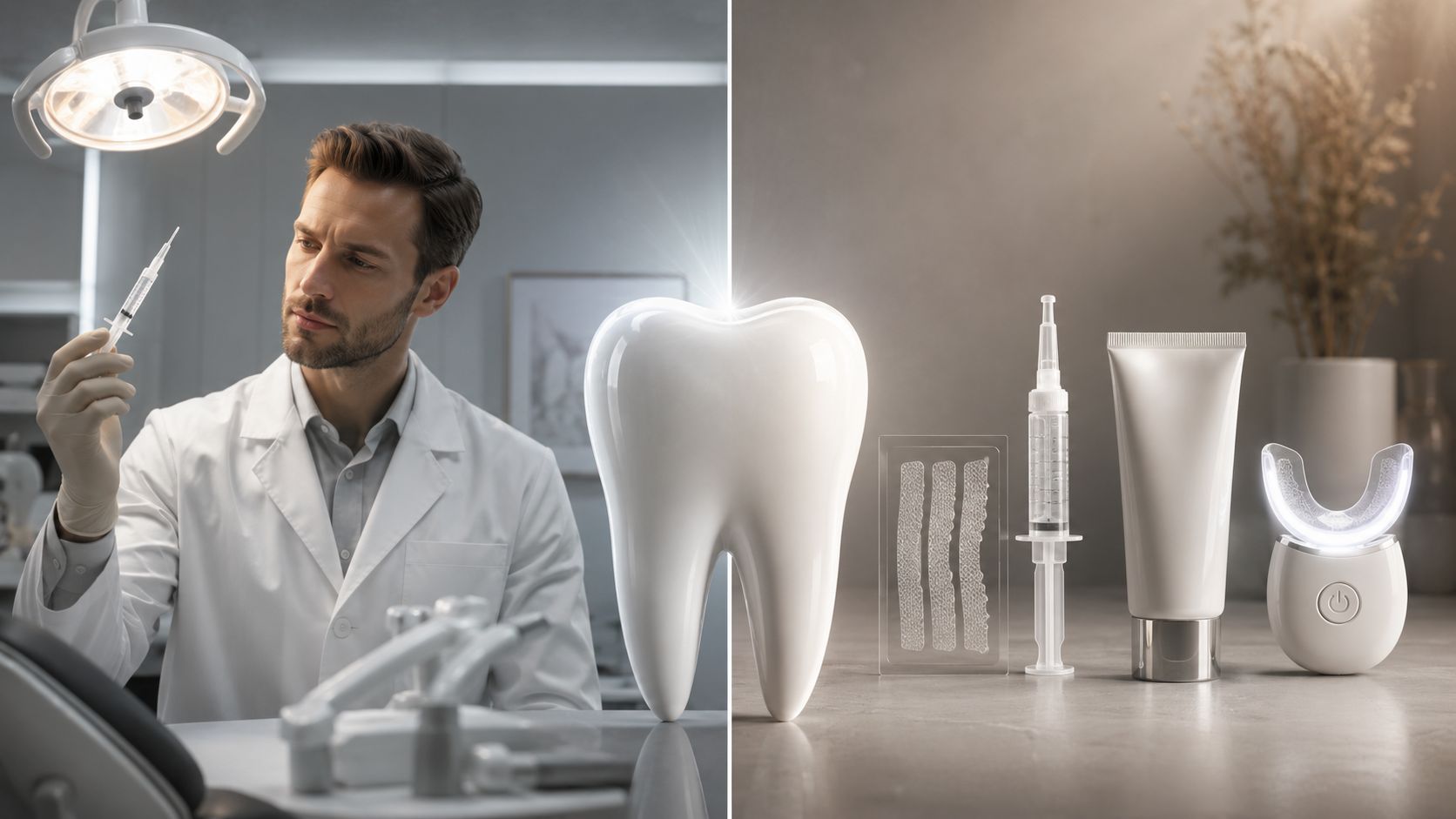
You're probably here because you've looked in the mirror before a wedding, a work event, family photos, or even a night out in Chattanooga and thought, “My teeth looked brighter a few years ago.” Then you start searching. Strips, pens, LED kits, whitening toothpaste, custom trays, in-office bleaching. The options pile up fast, and so does the confusion.
That uncertainty is reasonable. The global teeth whitening market was valued at USD 7.68 billion in 2023 and is projected to reach USD 12.03 billion by 2032, which shows how much consumer interest has grown in cosmetic dental solutions and how common whitening has become as an aesthetic treatment, according to SNS Insider's teeth whitening market report. More products usually means more marketing, and more marketing rarely means more clarity.
Patients in Chattanooga and Cleveland often ask the same practical questions. Which teeth whitening products work? Which ones are safe? Will whitening make sensitive teeth worse? And why do some people end up with uneven results even after spending time and money?
A Brighter Smile for Your Life in Chattanooga
A brighter smile usually starts with a real-life moment. Someone has engagement photos coming up. Someone else is preparing for interviews and wants to feel more confident. Another patient just had a dental cleaning and realized their teeth are healthy but still look darker than they'd like from coffee, tea, wine, or simple aging.

In a city like Chattanooga, where people balance work, family, and busy schedules, it's easy to hope for a simple box off the shelf that fixes the problem quickly. Sometimes an over-the-counter option can help a little. Sometimes it barely changes the shade. Sometimes it creates sensitivity without the result people expected.
That's why good cosmetic dentistry starts with honest guidance, not hype. A patient looking for a cosmetic dentist near me or a dentist in Chattanooga, TN usually doesn't just want a product recommendation. They want to know what fits their smile, their timeline, and their comfort level.
Why whitening feels more confusing than it should
Most packaging focuses on brightness and convenience. It rarely explains whether the stain is likely to respond, whether your teeth are naturally more yellow in a way that won't change dramatically, or whether old dental work could make whitening look patchy.
That last problem matters more than is generally understood.
Many disappointing whitening outcomes aren't caused by doing the treatment wrong. They happen because the wrong treatment was chosen for the type of tooth discoloration or the existing dental work.
A local dental visit can sort that out quickly. During a cosmetic consultation, a dentist can also spot issues that should be handled first, such as cavities, leaking fillings, gum irritation, or worn enamel. In some cases, whitening is the right first step. In others, restorative dentistry, veneers, or another cosmetic option makes more sense.
If you've been searching for dentist near me, cosmetic dentist near me, or even broader services like cleaning and exams, new patient exams, dental x-rays, or emergency dentist care in Chattanooga or Cleveland, whitening often fits into a larger conversation about smile health, not just smile color.
Understanding How Teeth Whitening Ingredients Work
Teeth whitening sounds simple, but the reason some products work better than others comes down to chemistry and stain type. If you understand those two pieces, the shelves make a lot more sense.
Surface stains and deeper stains
Some stains sit mostly on the outer surface of the tooth. These are often called extrinsic stains. Coffee, tea, red wine, tobacco, and strongly pigmented foods can all leave this type of discoloration over time.
Other discoloration sits deeper inside the tooth structure. These are often called intrinsic stains. Aging, certain medications, trauma, and natural tooth color can all play a role. Surface polishing may help a little, but deep color change usually needs a true whitening agent.
A useful way to think about it is a coffee mug. If the stain is fresh and light, a basic scrub may improve it. If the stain has soaked in over time, you need a stronger cleaner that can break apart what's embedded.
What peroxide actually does
Most effective teeth whitening products rely on hydrogen peroxide or carbamide peroxide. These ingredients break down the staining molecules, sometimes called chromogens, into smaller pieces that reflect less color. That's why bleaching products can change the tooth shade in a way that toothpaste alone usually can't.
Professional in-office whitening often uses 16% to 44% hydrogen peroxide, while OTC products use much lower concentrations, like 10% carbamide peroxide, which breaks down into about 3% hydrogen peroxide, according to this overview of professional teeth whitening formulations. Higher concentrations tend to work faster. Lower concentrations are used for home treatment because they're safer for unsupervised use.
Why concentration changes the experience
The ingredient strength affects more than speed. It also affects how closely the treatment should be monitored and how likely a patient is to notice temporary sensitivity.
Here's the practical takeaway:
- Hydrogen peroxide works fast because it's immediately active.
- Carbamide peroxide works more gradually because it breaks down over time.
- Lower-strength products can be reasonable for mild brightening if expectations are realistic.
- Deeper stains usually need stronger, better-planned treatment to create a visible change.
Practical rule: If you want a noticeable result for an important event on a short timeline, product strength and fit matter more than flashy packaging.
That's one reason a professional exam matters before buying multiple boxes of whitening products. A dentist can tell whether you're dealing with surface stain, deeper discoloration, or a color issue that whitening won't fix well at all.
Comparing Professional vs Over the Counter Whitening
Not all whitening methods belong in the same category. Some are bleaching systems. Some are mostly stain polishers. Some look impressive online but don't produce a meaningful change.

What tends to work best
The biggest divide is between professionally directed whitening and mass-market convenience products. Clinical trials show that many over-the-counter tray systems fail to produce a clinically detectable shade change and can relapse quickly, while in-office treatments using 40% hydrogen peroxide can create immediate, significant color shifts, as described in this clinical discussion of whitening efficacy.
That doesn't mean every OTC product is useless. It means expectations should match the method.
Teeth Whitening Options at a Glance
| Method | Effectiveness | Timeline | Best For |
|---|---|---|---|
| In-office professional whitening | High, with the most visible change | Fast, often same visit | People who want stronger results quickly |
| Custom take-home trays from a dentist | Moderate to high, depending on stain type and consistency | Gradual over days to weeks | People who want professional guidance at home |
| OTC strips | Mild to moderate for some natural teeth | Gradual over days to weeks | Mild staining and budget-conscious touch-ups |
| OTC paint-on gels or ready-to-use trays | Often limited and less stable | Short-term use, variable payoff | Convenience seekers with modest expectations |
| Whitening toothpaste | Mostly surface stain reduction | Ongoing daily use | Maintenance, not major whitening |
| LED kits sold direct to consumers | Highly variable, depends on gel more than the light | Variable | Shoppers attracted to at-home convenience |
Professional whitening in the office
In-office whitening is usually the most efficient option for adults who want a bigger shade change without weeks of trial and error. The appointment includes protection for the gums and a controlled application of stronger whitening gel.
This route often works well for patients searching for a cosmetic dentist near me because it combines speed, monitoring, and a clearer treatment plan. If someone has upcoming photos or wants a faster confidence boost, this is commonly the gold standard.
Pros include:
- Faster visible results
- Safer gum protection
- Better judgment about whether whitening is the right choice
The main trade-off is cost. The upfront investment is higher than a box from the store, but the treatment is also more predictable.
Dentist-supervised take-home trays
Custom take-home trays sit in a middle ground. They're more controlled than store-bought kits because the trays fit your teeth, the gel is chosen more thoughtfully, and the plan can be adjusted if sensitivity shows up.
This option often suits people who want flexibility and don't mind gradual improvement. It also works well for patients who prefer whitening at home but still want a real dental exam first.
One practical example is professional teeth whitening treatment options in Chattanooga, where in-office care and take-home approaches can be matched to the patient rather than forcing everyone into the same method.
OTC strips, gels, and whitening pens
Store-bought strips can help some people with mild staining on natural enamel. They're easy to find, and they usually cost less up front. The downside is fit. A flat strip can't perfectly adapt to every tooth shape, so some areas whiten more than others.
Paint-on gels and pen-style products tend to appeal because they look simple. In real life, they're often harder to apply evenly, and the contact time can be less reliable.
If a product is built around convenience alone, the result often reflects that convenience.
Whitening toothpaste and LED kits
Whitening toothpaste is often misunderstood. It can help remove superficial stain and maintain a brighter look after treatment, but it generally doesn't create the kind of bleaching effect people expect from professional cosmetic dentistry.
LED kits are even more confusing. The gel does the whitening. The light gets the attention. Some people like them, but they shouldn't be treated as equal to dentist-guided bleaching just because the kit includes a glowing mouthpiece.
If your priorities include major color change, better longevity, and lower risk of wasted effort, professional care usually outperforms over-the-counter teeth whitening products.
Is Teeth Whitening Safe and Will It Cause Sensitivity
The question I hear most often is simple. Will this hurt my teeth?
The honest answer is that whitening can cause temporary sensitivity, but that isn't the same thing as long-term damage. Transient tooth sensitivity is the most common side effect and has been reported in up to 70% of patients. It's typically mild and resolves on its own when instructions are followed or application time is reduced, as explained in GoodRx's review of whitening safety.
Why sensitivity happens
Peroxide moves through the tooth and can temporarily irritate the inner nerve area. That can produce zingers with cold air, cold drinks, or sweets for a short time. Gum irritation can also happen if whitening gel contacts the soft tissue for too long.
That sounds alarming when written out, but in most cases it's manageable and short-lived. The key is matching the product and schedule to the patient.
How to keep whitening comfortable
A few simple adjustments make a big difference:
- Shorten wear time if trays or strips make your teeth ache.
- Pause for a few days if sensitivity builds.
- Use a desensitizing toothpaste before and during whitening.
- Start with an exam if you already have sensitivity, exposed roots, cavities, or gum recession.
Patients with a history of dental anxiety often assume whitening will be miserable. Usually, it isn't. Problems show up more often when someone overuses a product, buys something poorly made online, or keeps pushing through discomfort instead of adjusting the plan.
Why professional oversight matters
The safety conversation changed when unregulated whitening products became easy to buy online. Some products have unclear instructions, uncertain ingredient quality, or stronger bleaching agents than people should use without supervision. That's where preventable irritation and disappointing results start to stack up.
For patients in Chattanooga or Cleveland looking for a dentist near me, emergency dentist, or a practice that also handles cosmetic dentistry, this is one of the biggest reasons to ask a dentist first. A quick evaluation can tell you whether whitening is appropriate now, whether another issue needs treatment first, or whether a lower-intensity approach makes more sense.
The safest whitening plan isn't the strongest one. It's the one your teeth can tolerate while still giving you a result you'll actually be happy with.
How to Choose the Right Whitening Product for You
Choosing between teeth whitening products gets easier when you stop asking, “What's the strongest?” and start asking, “What fits my mouth, my goals, and my dental history?”
Start with your goal
Some people want a dramatic improvement before a milestone event. Others just want to look less dull on video calls or in everyday conversation. Those are different goals, and they don't always need the same treatment.
Think through these questions:
- How fast do you want the change
- How noticeable do you want the final result to be
- Have you had sensitivity before
- Are your teeth naturally darker, or are they mostly surface stained
If you want a practical overview of home options before making a decision, this guide on the best at-home teeth whitening is a useful next read.
The restoration blind spot most people miss
This is the issue many patients never hear about until after they've whitened. Whitening products only work on natural tooth enamel. They do not alter the color of restorations like fillings, crowns, or veneers, which means whitening can leave you with a mismatched, two-toned smile if you have existing dental work, as noted in this review of bleaching and restorative materials.
That matters a lot in real practice. A patient may whiten successfully, then notice one front bonding area, one crown edge, or an older filling now stands out more than it did before. The whitening “worked,” but the smile looks less even.
A simple decision framework
Here's a practical way to narrow your choice:
- Choose in-office whitening if speed matters and you want closer supervision.
- Choose custom trays from a dentist if you want a home routine with better fit and more control.
- Choose OTC strips cautiously if your stains are mild, your teeth are natural, and you accept a less dramatic result.
- Skip blind online shopping if you already have crowns, veneers, bonding, or multiple fillings in visible areas.
For some adults, whitening is also part of a broader cosmetic refresh. If you're interested in smile appearance and facial brightness together, this article on integrating teeth whitening for anti-aging offers a helpful lifestyle perspective.
If you have visible dental work and want your smile to look brighter and uniform, a consultation isn't optional. It's the step that prevents expensive disappointment.
That same visit can also identify whether another service makes more sense first. In some smiles, the better route is restorative dentistry, bonding, veneers, or replacing older cosmetic work after whitening stabilizes.
Your Professional Whitening Journey at Winn Smiles
A whitening visit should feel calm, clear, and comfortable. Patients who come in for cosmetic dentistry in Chattanooga or Cleveland are usually relieved to find that the process starts with conversation, not pressure.

At Winn Smiles, the first step is figuring out what kind of discoloration you have and whether whitening is likely to help. That includes looking at existing crowns, fillings, veneers, gum health, and any sensitivity concerns. For some people, in-office whitening makes sense. For others, custom take-home trays are a better fit. If bleaching won't create the result you want, the conversation may shift toward veneers, same-day crowns, or other cosmetic and restorative options.
What a visit usually includes
A patient-focused whitening consultation often connects to the rest of your oral health, not just tooth color. That can include:
- A smile evaluation to check stain type, enamel condition, and visible restorations
- Routine dental care like cleaning and exams or dental x-rays if buildup or hidden issues are affecting appearance
- Treatment planning if you also need restorative dentistry, dental implants, or follow-up cosmetic work
- Comfort support for nervous patients who prefer a gentler, more relaxed experience
Patients searching for a dentist in Chattanooga, TN, emergency dentist, tooth extraction, or even dental implants near me often appreciate having all of those services available in one practice. Whitening may be the first concern that brings someone in, but complete dental care is what keeps the smile healthy.
A closer look at the office and treatment approach helps many patients feel more prepared:
What happens after whitening
The final shade isn't the only goal. Ultimately, the goal is a smile that looks natural, even, and healthy. Patients are usually given instructions for managing short-term sensitivity, choosing foods and drinks carefully right after treatment, and keeping results looking brighter with good home care.
If you've been waiting to book because you weren't sure whether whitening, cosmetic dentistry, or restorative work was the right move, the most useful next step is a consultation, not another random product purchase.
Common Questions About Teeth Whitening
Can whitening damage enamel
Used correctly, whitening doesn't have to damage your teeth. The bigger concern is unsupervised use of questionable products, especially items sold online with unclear instructions or overly strong gels. The history of whitening in the early 2020s included a rise in unregulated online products that raised safety concerns and led dental groups to warn about possible enamel damage from high-concentration gels used without professional oversight, according to this review of teeth whitening history and regulation.
How do I keep my teeth whiter longer
Brush well, keep up with cleanings and exams, and be mindful of heavy stain sources like coffee, tea, red wine, and tobacco. Many patients do well with occasional maintenance rather than repeating a full whitening process too often.
Can I whiten if I have braces or Invisalign
It depends on the appliance and timing. Whitening around brackets can leave uneven color, so many patients wait until braces are off. With clear aligners, some people can whiten more strategically, but it still helps to ask your dentist first so the result stays even.
What if whitening doesn't fix the color I want
That usually means the discoloration is deeper, the tooth has old restorations, or another cosmetic option may be more appropriate. In those cases, a dentist may discuss bonding, veneers, or replacing visible restorations after whitening.
If you're looking for a clearer answer than the whitening aisle can give you, Winn Smiles can help you sort through the options and choose a safe plan that fits your smile. Whether you need cosmetic dentistry, cleaning and exams, restorative care, or a second opinion in Chattanooga or Cleveland, scheduling a consultation is the easiest way to find out what will work for your teeth.