
IV sedation dentistry is a form of conscious sedation where medication goes directly into the bloodstream, so relaxation starts quickly and the dentist can adjust the level of sedation in real time. Common IV sedatives reach peak effect fast, with midazolam in about 2 to 3 minutes and propofol in about 90 to 100 seconds during IV use, which is why this option can help anxious patients feel more in control during longer or more involved dental care (basic facts about IV sedation dentistry).
If you're reading this, there's a good chance you aren't just curious. You may have been putting off a tooth extraction, dental implants, a crown, or even a basic exam because the idea of sitting in a dental chair makes your stomach drop. That reaction is more common than many people realize.
Patients in Cleveland, TN and Chattanooga, TN often ask the same question in different ways. Will I be awake? Will I feel trapped? Will I remember everything? The answer usually brings relief. IV sedation isn't the same as being fully put to sleep. It's a carefully controlled way to help you feel very relaxed so you can get the dental care you need with much less stress.
What Is IV Sedation Dentistry
What is IV sedation dentistry? In simple terms, it's a form of conscious sedation that uses an IV line to deliver sedative medication directly into your bloodstream. Because the medication doesn't have to go through your digestive system first, it works quickly and can be adjusted as your appointment continues.
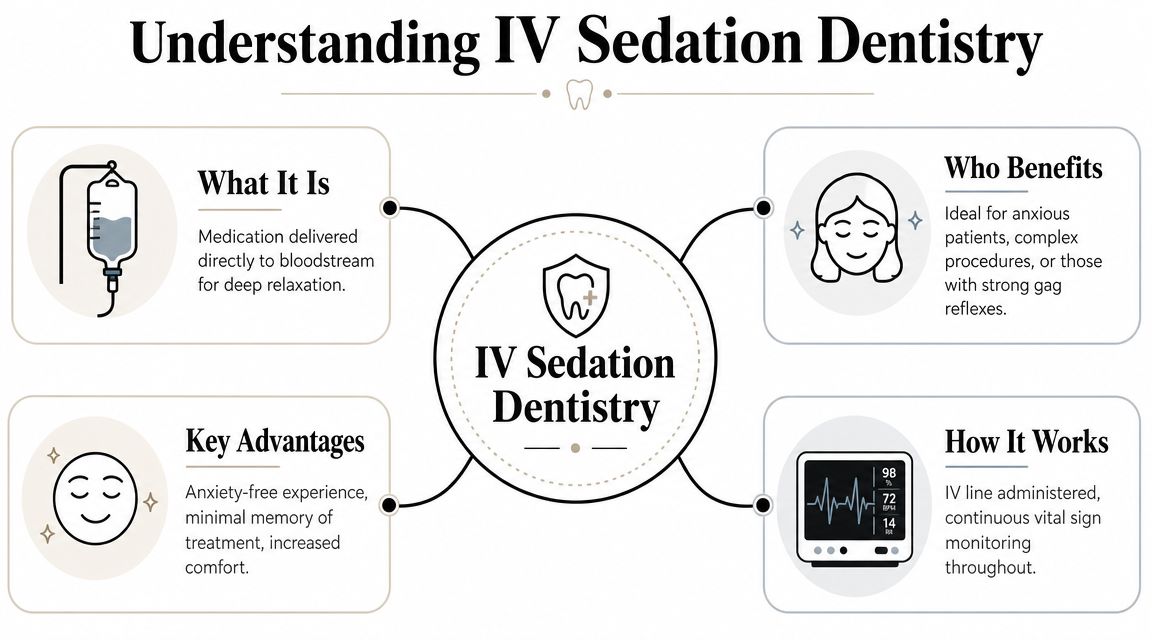
Conscious sedation, not general anesthesia
Many people find this confusing. IV sedation in a dental office is generally not general anesthesia. Patients are usually very relaxed, still able to respond to verbal commands, and often remember little or nothing afterward. A clinical overview from Pearl Dental Group's IV sedation guide describes IV sedation as conscious sedation with rapid onset, real-time dose adjustment, and the ability for patients to remain responsive while having limited memory of treatment.
That distinction matters. If you've been worried that sedation means complete unconsciousness, IV sedation usually feels more like a controlled twilight state than being fully asleep.
Many anxious patients are most relieved to learn that IV sedation is designed to reduce fear and awareness without turning the visit into full anesthesia.
Why dentists use it for certain procedures
IV sedation is often a practical choice when someone has severe dental anxiety, a strong gag reflex, or needs longer treatment. It can also help when multiple procedures are planned in one visit, such as combining restorative dentistry with a tooth extraction or implant work.
Historically, IV sedation became more practical as injectable sedative medications improved. Historical summaries note major development from the 1960s through the 1990s, including the introduction of methohexitone in the 1960s, the later use of diazepam, and the approvals of midazolam and flumazenil in the 1980s, which helped shape modern sedation practice (historical facts about sedation dentistry).
What it usually feels like
People often describe IV sedation as drifting into a very calm, detached state. You aren't typically knocked out. You may hear parts of the appointment or respond if spoken to, but the emotional edge is reduced dramatically, and the memory of the visit may be patchy or absent.
For adults searching for a dentist near me in Cleveland or Chattanooga because fear has kept them away, that difference can be the turning point. It can make treatment feel possible again.
The Transformative Benefits of Anxiety-Free Dentistry
The biggest benefit of IV sedation isn't just comfort during one visit. It's that people who have delayed care can finally move forward. That matters when a small problem has turned into pain, infection, broken teeth, or a more complicated treatment plan.
To see the idea at a glance, this visual helps summarize the patient experience.

Why patients choose this option
IV sedation can change the entire tone of dental care for the right person. Instead of bracing through every sound and sensation, you can stay relaxed while the team works methodically and efficiently.
Here are some of the most meaningful benefits:
- Less fear before treatment. Patients who dread cleanings, fillings, extractions, or implant visits often feel more willing to schedule care when they know sedation is available.
- Easier longer appointments. If you need extensive restorative dentistry, full-mouth treatment, or surgical care, sedation can make a longer visit feel much more manageable.
- Little or no memory of the procedure. For many patients, this is one of the most appealing parts. They don't want to relive every moment of treatment afterward.
- A better chance of finishing delayed treatment. When fear stops being the main obstacle, it's easier to address pain, broken teeth, missing teeth, and cosmetic concerns.
- A calmer experience for people with a strong gag reflex or high sensitivity. Sedation doesn't fix the underlying trigger, but it can make treatment easier to tolerate.
Practical examples
Someone searching for an emergency dentist in Chattanooga might come in with a painful broken tooth but also a long history of dental fear. Another patient in Cleveland may want dental implants near me but feel overwhelmed by the surgical part of the process. IV sedation can make those visits feel less intimidating and more doable.
It can also help adults who want cosmetic dentist near me services but have avoided treatment for years because every appointment feels emotionally exhausting.
This short video gives helpful patient-facing context about sedation dentistry and what a more relaxed visit can look like.
Practical rule: If fear has kept you from scheduling needed care, sedation isn't about convenience alone. It's about removing the barrier that has been standing between you and a healthier mouth.
Are You a Good Candidate for IV Sedation at Winn Smiles
Not every patient needs IV sedation, and not every patient is automatically a candidate for it. That's a good thing. Safe sedation starts with deciding whether it fits your health history, the type of procedure you're having, and the level of anxiety or difficulty expected during treatment.
People who often benefit most
IV sedation may make sense if dental visits feel unmanageable without extra support. That can include people who:
- Feel intense anxiety about dental sounds, instruments, or past experiences
- Need longer or more involved care, such as implant treatment, multiple procedures, or complex restorative dentistry
- Have a strong gag reflex that makes treatment difficult
- Struggle to stay comfortable in the chair for extended periods
- Have postponed care because fear has become the deciding factor
For many adults, the question isn't whether they can technically get through treatment without sedation. It's whether they can do it without panic, exhaustion, or another cycle of avoidance.
When extra caution matters
A thoughtful sedation evaluation also looks for reasons to pause, modify the plan, or choose another option. One patient education source notes that relative contraindications can include uncontrolled hypertension, certain respiratory disorders such as sleep apnea, and first-trimester pregnancy. The same source also notes that a full medical history review is essential and that patients should expect lingering grogginess and avoid alcohol for 24 hours after treatment (what IV sedation can feel like and who should use caution).
That means your consultation should cover more than dental symptoms. It should include current medications, past reactions to sedation, breathing issues, blood pressure history, and any medical conditions that could affect monitoring or recovery.
The conversation you should expect
If you're considering sedation for tooth extraction, restorative dentistry, same-day crowns, or implant care, ask direct questions:
- What level of awareness will I have during treatment?
- How will my medical history affect the plan?
- What kind of monitoring will be used during the appointment?
- What will recovery at home look like for me?
The safest sedation plan is personal. It isn't built from a generic checklist. It's built from your health history, your treatment needs, and a careful discussion of risks and expectations.
Your Step-by-Step Guide to an IV Sedation Visit
People usually feel less anxious when they know what the day will look like. IV sedation visits are structured, monitored, and very deliberate. Nothing about the process should feel mysterious.
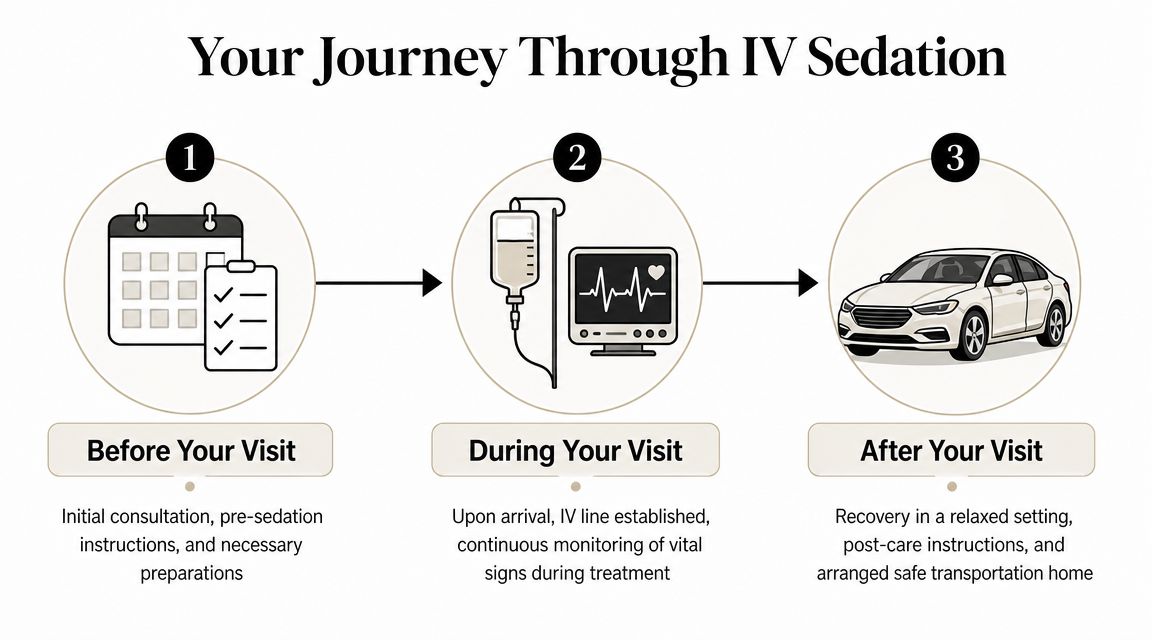
Before your appointment
Your visit starts before treatment day. You'll receive instructions that may include when to stop eating or drinking, what medications to discuss in advance, and how to prepare for the trip home. You'll also need to arrange a driver, because recovery generally means no driving afterward.
At this stage, patients often feel the most mental relief. Instead of worrying about whether they can endure a long appointment, they have a plan and know the team is preparing for comfort and safety.
During the procedure
When you arrive, the team gets you settled and places the IV. Sedation medication is then administered through that line. Cleveland Clinic explains that IV sedation is the deepest form of conscious sedation in a dental office, patients remain able to respond to verbal commands, providers monitor heart rate and blood pressure, and the dosage is adjusted in real time. Cleveland Clinic also notes that recovery typically includes avoiding driving for 24 hours (Cleveland Clinic's sedation dentistry overview).
That real-time adjustment is one reason many patients feel reassured by IV sedation. The level isn't fixed at the start and left alone. It can be modified as treatment progresses.
Here is the basic flow most patients experience:
- Check-in and review. Final questions are answered, instructions are confirmed, and your escort plan is verified.
- IV placement and relaxation. The medication begins working quickly, and most patients feel their body and mind soften into a calm state.
- Continuous monitoring throughout treatment. Vital signs are watched while the dental work is completed.
- Initial recovery in the office. You remain under observation until the team determines you're ready to go home with your driver.
After you go home
The rest of the day should stay quiet. Many people feel drowsy, fuzzy, or slower than usual for a while. That's expected. Plan to rest, drink fluids as instructed, and follow the post-op directions for your specific procedure, whether that was a simple extraction, implant placement, or another treatment.
A smooth recovery usually comes down to three things:
- Have your driver ready and keep the rest of your schedule clear.
- Follow medication and aftercare instructions carefully, especially if surgery or extractions were involved.
- Don't make important plans for the same day. Give yourself time to fully recover.
Comparing Dental Sedation Options in Chattanooga and Cleveland
IV sedation isn't the only way to make dental care easier. Some patients need only mild relaxation. Others need deeper support for anxiety, lengthy treatment, or more invasive procedures. Choosing the right option starts with understanding how the approaches differ.
A simple side-by-side comparison
| Dental Sedation Options at Winn Smiles | Level of Sedation | How It's Administered | Best For | Recovery Time |
|---|---|---|---|---|
| Nitrous oxide | Mild relaxation | Inhaled through a mask | Short visits, mild nervousness, routine dental care | Usually shorter and lighter recovery than deeper sedation |
| Oral conscious sedation | Mild to moderate relaxation | Medication taken by mouth before the visit | Patients who want more help than nitrous but don't need IV sedation | Requires planning for lingering drowsiness |
| IV sedation | Deeper conscious sedation | Medication delivered through an IV line | Strong anxiety, longer procedures, surgical dentistry, complex treatment | Requires a driver and a full recovery window afterward |
How to think about the choice
Nitrous oxide often fits patients who are tense but still comfortable staying fully aware during treatment. Oral sedation may help if you want a stronger calming effect without an IV. IV sedation is usually the option people ask about when the fear feels overwhelming or the procedure itself is more involved.
If you're comparing methods, this guide on what sedation dentists use gives a helpful overview of how different sedation types are used in dental care.
Matching the option to the procedure
A routine cleaning and exam usually call for a different approach than implant placement, full-mouth restorative treatment, or a difficult extraction. The same is true for the person, not just the procedure. One patient may breeze through care with nitrous oxide. Another may need IV sedation to make the same type of appointment feel manageable.
The right sedation choice depends on two things at once. How much dentistry you're having, and how your body and mind respond to dental treatment.
That personalized match matters for patients looking for a dentist in Cleveland, TN or dentist in Chattanooga, TN who can do more than offer one blanket solution.
Cost Insurance and Financial Considerations
The cost of IV sedation dentistry can vary because treatment plans vary. A shorter visit for one procedure isn't the same as a longer appointment that combines surgical and restorative care. The fee discussion should reflect the length and complexity of your appointment, along with the type of dental work being done.
What to ask before scheduling
Financial clarity matters just as much as clinical clarity. Before treatment, ask for details on:
- What the estimate includes. Separate the dental procedure itself from any sedation-related fees.
- How insurance applies. Coverage can differ depending on the procedure and your plan.
- What payment options exist. A good financial conversation should include practical paths forward, not just a total.
- Whether consultation fees apply. For larger treatment plans, this can help you prepare without surprises.
Why the conversation should happen early
Patients often delay needed dental care because they assume sedation or larger procedures will be out of reach. Sometimes the bigger problem is uncertainty, not the final number. When the office explains insurance, treatment phases, and payment options clearly, it's much easier to make a decision.
If you're trying to understand whether this kind of care may be covered, this article on sedation dentistry and insurance coverage can help you prepare for that discussion.
For adults considering dental implants, cosmetic dentistry, restorative dentistry, or an overdue tooth extraction in Chattanooga or Cleveland, the best next step is usually a consultation where clinical and financial planning happen together.
Frequently Asked Questions About Sedation Dentistry
Will I be fully asleep with IV sedation
Usually, no. A clinical patient guide explains that IV sedation in dentistry is aimed at moderate sedation, not general anesthesia, and that spontaneous breathing is generally preserved while oxygenation and heart rhythm require continuous monitoring. The same review notes that commonly used sedatives such as midazolam reach peak effect in about 2 to 3 minutes, which supports a controlled, adjustable state during treatment (what to expect with dental IV sedation).
Will I feel pain
Sedation and pain control are not exactly the same thing. Sedation helps you relax and reduces awareness. Your dentist still uses local anesthesia and procedure-specific techniques to control pain during treatment.
How long will I feel groggy
Plan for the rest of the day to be a recovery day. Even if you feel more alert after a few hours, you should still follow all discharge instructions and avoid driving until the full restriction period has passed.
Can I get IV sedation for a simple cleaning
Sometimes, but it depends on the patient and the reason for sedation. IV sedation is often most useful when anxiety is severe, the gag reflex is strong, or the planned treatment is longer or more complex.
Is IV sedation safe
It can be a safe option when the patient is properly screened, monitored, and treated by a trained team using a plan that fits the individual's health history. That's why the consultation matters so much.
What if I have sleep apnea or take medications
Bring that up early. Sleep apnea, certain medical conditions, and some medications can affect whether IV sedation is appropriate or whether another option may be better.
If dental fear has been keeping you from scheduling treatment, talking through your options can help. The team at Winn Smiles provides dental care for adults in Cleveland and Chattanooga, including sedation options, restorative treatment, cosmetic dentistry, emergency dental services, and dental implants. Reach out to request a consultation and get clear answers about comfort, safety, and the next steps for your smile.