
You may be putting off a tooth extraction, dental implants, or even a long-overdue cleaning because two worries are colliding at once. You want to be comfortable, but you also want to know what the bill will look like before you commit.
That's a very common place to be. Patients in Cleveland and Chattanooga often ask the same practical question in different ways: Is sedation dentistry covered by insurance, and if it is, what am I still going to owe?
The short answer is that coverage can happen, but it usually isn't simple. The more useful answer is understanding how sedation type, medical necessity, pre-authorization, and even medical insurance can affect your final cost. That's where clear planning makes a real difference.
Anxious About Dental Visits You Have Options in TN
A lot of adults don't avoid the dentist because they don't care about their teeth. They avoid care because they've had a rough experience before, they gag easily, they feel panicked in the chair, or they know a bigger procedure is coming and can't imagine getting through it comfortably.
That usually creates a second problem. The longer treatment gets delayed, the more questions build up around cost, insurance, and whether sedation will make the whole visit unaffordable. Someone needing an emergency dentist, a tooth extraction, or restorative dentistry in Cleveland or Chattanooga may already feel overwhelmed before they ever make the first call.

What patients are usually worried about
For many people, the fear isn't just pain. It's loss of control, embarrassment, or the worry that they'll agree to treatment and then get surprised by a separate sedation bill later.
Common concerns sound like this:
- I've delayed care too long: Patients often call only when a broken tooth, infection, or swelling forces the issue.
- I need more than a simple visit: Dental implants, multiple extractions, same-day crowns, and longer restorative appointments can raise anxiety fast.
- I can't tell what insurance means: “Covered” doesn't always mean the sedation itself is included.
- I need a local office that explains things clearly: People searching for a dentist near me or a dentist in Cleveland, TN or Chattanooga, TN usually want answers before they book.
Most people don't need a lecture about insurance. They need someone to explain, in plain language, what part is likely covered, what part may not be, and what to do next.
If you like to research before making a healthcare decision, the 2026 dental patient playbook is one example of the kind of patient experience guide that helps people think through comfort, communication, and choosing a practice that fits their needs.
Why comfort planning matters
Sedation can be part of making treatment possible, not just more pleasant. For some patients, it's what finally allows them to move forward with care instead of postponing it again.
That matters whether you're looking for routine dental care, cosmetic dentistry, or more advanced treatment in the Cleveland and Chattanooga area. The right plan starts by matching the sedation approach to the procedure, your health history, and your level of anxiety.
Understanding Your Sedation Options at Winn Smiles
Sedation isn't one thing. It's a range of options, and each one fits a different level of anxiety, treatment length, and recovery need.
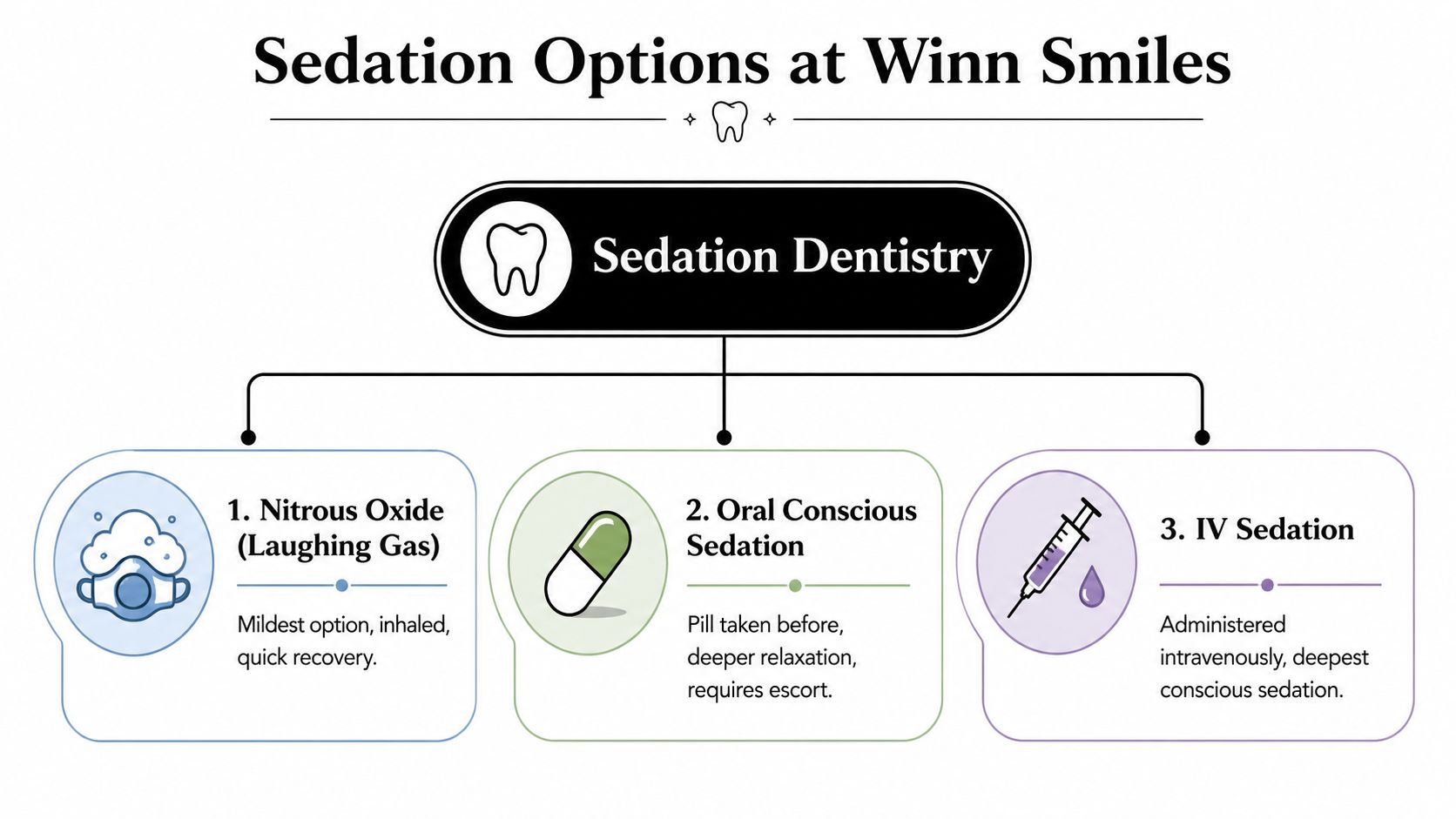
Nitrous oxide
Nitrous oxide, often called laughing gas, is the lightest option. You breathe it in through a small mask, and the effect is usually a calm, more relaxed feeling during treatment.
Patients often like nitrous oxide because recovery is typically quick. It can be a practical fit for cleanings, dental x-rays, fillings, new patient exams, or shorter visits where the main issue is nervousness rather than severe fear.
Oral conscious sedation
Oral sedation is stronger than nitrous oxide. It's usually taken before the visit, and it helps patients feel much more relaxed during the appointment.
This option can make sense for longer restorative dentistry visits, patients with stronger dental fear, or those who've struggled to complete treatment in the past. Because it can leave you drowsy, you should expect to arrange a ride and plan for a slower day afterward.
IV sedation
IV sedation offers a deeper level of conscious sedation. It's often considered for more involved care, such as multiple extractions, advanced treatment planning, or longer appointments where staying calm and still is important.
Some patients remember very little of the procedure afterward, which can be a major relief if fear has kept them out of the dental chair for years.
Practical rule: The “best” sedation option is the one that fits both the procedure and the patient. More sedation isn't automatically better if a lighter option will do the job safely and comfortably.
Where insurance usually enters the picture
A major source of confusion is assuming that if the dental procedure is covered, the sedation must be covered too. That often isn't how plans work.
Most dental insurance plans in the U.S. do not routinely cover sedation dentistry, because it's commonly classified as an elective or non-essential service rather than a core benefit. Coverage is more likely when the dentist documents medical necessity for anxiety, special needs, complex oral surgery, or multiple extractions, and even then coverage may be partial rather than full, as explained in this sedation insurance overview.
If you want a plain-language explanation of the patient experience itself, this guide on how sedation dentistry works is a helpful place to start before you talk through treatment details.
Navigating Dental Insurance for Sedation Services
A patient in Cleveland or Chattanooga may hear, “Your extraction is covered,” then get a separate bill for sedation a few weeks later. That surprise usually comes from how insurers divide the visit. They often evaluate the procedure and the sedation as two different benefits.
What insurers often look for
The deciding factor is usually the reason sedation is being used. Plans are more open to review when the chart shows a clear clinical need, such as complex oral surgery, multiple extractions, special needs, or a situation where treatment cannot be completed safely without sedation.
The details matter. A benefits summary rarely spells this out in plain language. Sedation may appear under exclusions, anesthesia clauses, oral surgery notes, or procedure-specific limitations, which is why a phone call alone is not enough. The written policy language and the billing code both matter.
A practical comparison
| Sedation Type | How It Works | Typical Cost | Common Insurance Coverage |
|---|---|---|---|
| Nitrous oxide | Inhaled through a mask during treatment | Often the lowest-cost sedation option. Fee ranges vary by office and visit length, as outlined by the American Dental Association's consumer guidance on sedation and anesthesia | Often limited. More likely to be denied when used for general anxiety alone |
| Oral sedation | Medication taken before the appointment | Usually higher than nitrous and lower than IV sedation, depending on the medication and monitoring involved, based on the same ADA sedation overview | May be considered when documentation supports medical necessity |
| IV sedation | Medication administered intravenously with closer monitoring | Commonly the highest-cost option because it involves additional monitoring, staff time, and case complexity, as described in the ADA sedation overview | More likely to receive close review and partial consideration in complex cases |
Why the line item matters
Sedation is often billed separately from the dental treatment itself. An insurer may approve the extraction, implant-related surgery, or restoration and still deny the sedation charge.
That split causes a lot of confusion. Patients understandably hear “covered” and assume it applies to the full appointment. In practice, the answer may be yes for the procedure, no for the sedation, or partial for both.
A review of the best dental insurance companies 2026 can help build a better question list before enrollment, especially around major services, exclusions, waiting periods, and anesthesia language.
Questions that usually save patients money
A short, specific list works better than a broad question about whether sedation is covered.
- Is sedation a separate benefit, a separate exclusion, or tied to the procedure code? Ask whether coverage changes for oral surgery, multiple extractions, or longer appointments.
- What documentation do you need to consider medical necessity? Some plans want chart notes, radiographs, or a narrative from the dentist.
- Do you require pre-treatment review or pre-authorization? Some carriers deny payment automatically if this step is skipped.
- Which part of the visit are you approving? Ask whether approval applies to the dental procedure, the sedation, or both.
- Could medical insurance apply instead of dental insurance in this case? That question can uncover benefits patients miss.
Patients avoid the biggest billing surprises when they ask the insurer to identify the exact service or code being reviewed, not just whether the visit is covered.
A Key Strategy Medical Insurance for Dental Sedation
Many patients never think to ask whether medical insurance has a role in dental treatment. That's understandable. Dental work feels like dental insurance territory.
But there's an important exception. In some situations, medical insurance may pay for sedation even if dental insurance does not.

When the medical side becomes relevant
This is most important when sedation is connected to a medically necessary situation rather than simple preference. The billing logic can change if sedation is tied to surgery, an underlying medical condition, or another documented need that affects how treatment is safely delivered.
That's why the most useful question often isn't “Is sedation dentistry covered by insurance?” It's “Which insurance is more likely to consider this part of the case?”
A detailed review from this medical and dental billing crossover guide points out that many articles skip the practical issue of who submits the claim, when benefits are split, and how coverage can differ depending on whether sedation is tied to surgery versus anxiety alone.
What patients should ask about crossover billing
If your procedure is more involved, ask these questions early:
- Could the sedation portion be reviewed by medical insurance: This is especially worth asking for surgery-related cases.
- Is the underlying procedure documented as medically necessary: That can affect which carrier reviews what.
- Who is submitting the claim first: The order matters when benefits may be split.
- What supporting documentation is being attached: Strong records help more than assumptions.
Don't overlook payment tools
Even when insurance is limited, tax-advantaged funds can make the out-of-pocket portion easier to handle. If you use a health savings account, this overview can help you understand HSA tax advantages before you schedule treatment.
Coverage decisions often depend less on the word “sedation” and more on the documented reason sedation is part of the treatment plan.
That distinction can make a meaningful difference for adults considering implants, extractions, or other advanced care in Cleveland and Chattanooga.
How to Get Pre-Authorization for Sedation Dentistry
Pre-authorization is one of the most practical steps you can take before scheduling treatment. It won't guarantee payment in every case, but it does reduce the chance of learning too late that the sedation fee was never approved.
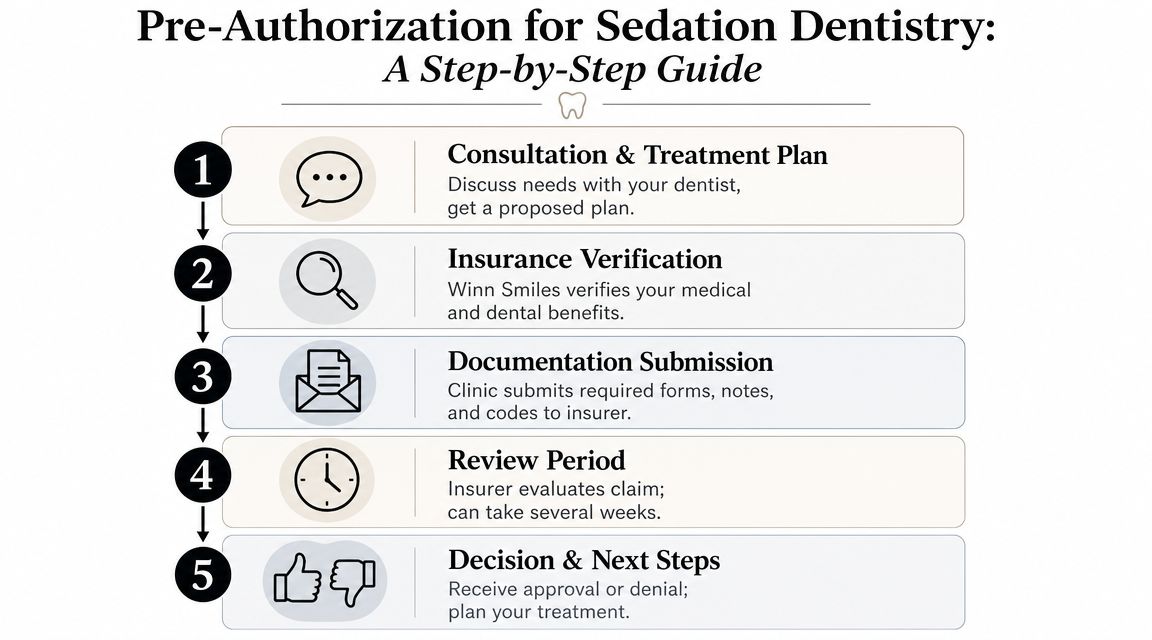
The basic process
When sedation isn't excluded outright, it's often treated as a separate fee added to the restorative or surgical procedure. Insurers may cover the dentistry itself but deny the sedation line unless preauthorization shows medical necessity, and some plans may partially cover sedation for lengthy or complex procedures, as explained in this pre-treatment estimate and sedation cost breakdown.
Here's the process patients should expect:
Start with a consultation
Get a written treatment plan. The insurer needs more than a verbal description of “dental work with sedation.”Ask for insurance verification
The office should review both dental and, when relevant, medical benefits before treatment is finalized.Submit documentation before the visit
Notes about anxiety, procedure complexity, surgical need, or other supporting details can matter.Wait for the insurer's response
Don't assume silence means approval. Get the determination in writing whenever possible.
A short visual can help if this process feels abstract:
Questions worth asking before treatment day
Insurance language can be vague. These questions make it clearer:
For the insurance company
- Is sedation a covered benefit for this procedure: Ask them to review the specific service, not just your plan in general.
- Do you require pre-authorization or a pre-treatment estimate: If yes, ask what forms are needed.
- Is medical necessity documentation required: If yes, ask exactly what they want included.
- Will the approval apply to the full fee or only part of it: That helps you estimate the remaining balance.
For the dental office
- Which sedation type is being recommended and why: The reason should be documented clearly.
- What code or description is being sent to the insurer: Patients should understand what is being submitted.
- What happens if the carrier denies the sedation line item: Ask for the fallback financial plan before scheduling.
Terms you may hear
Patients don't need to become billing experts, but it helps to know the language. You may hear references to sedation-related dental billing codes such as D9223, D9239, or D9248 during benefit checks and claim discussions.
Ask for the exact wording of the submission, not just reassurance that “we sent it in.” Specifics help when you call your insurer back.
Understanding Costs and Financing for Comfortable Care
A patient may get approval for the dental procedure, then learn the sedation fee is billed separately. That surprise is what often makes treatment feel harder than it needs to be.
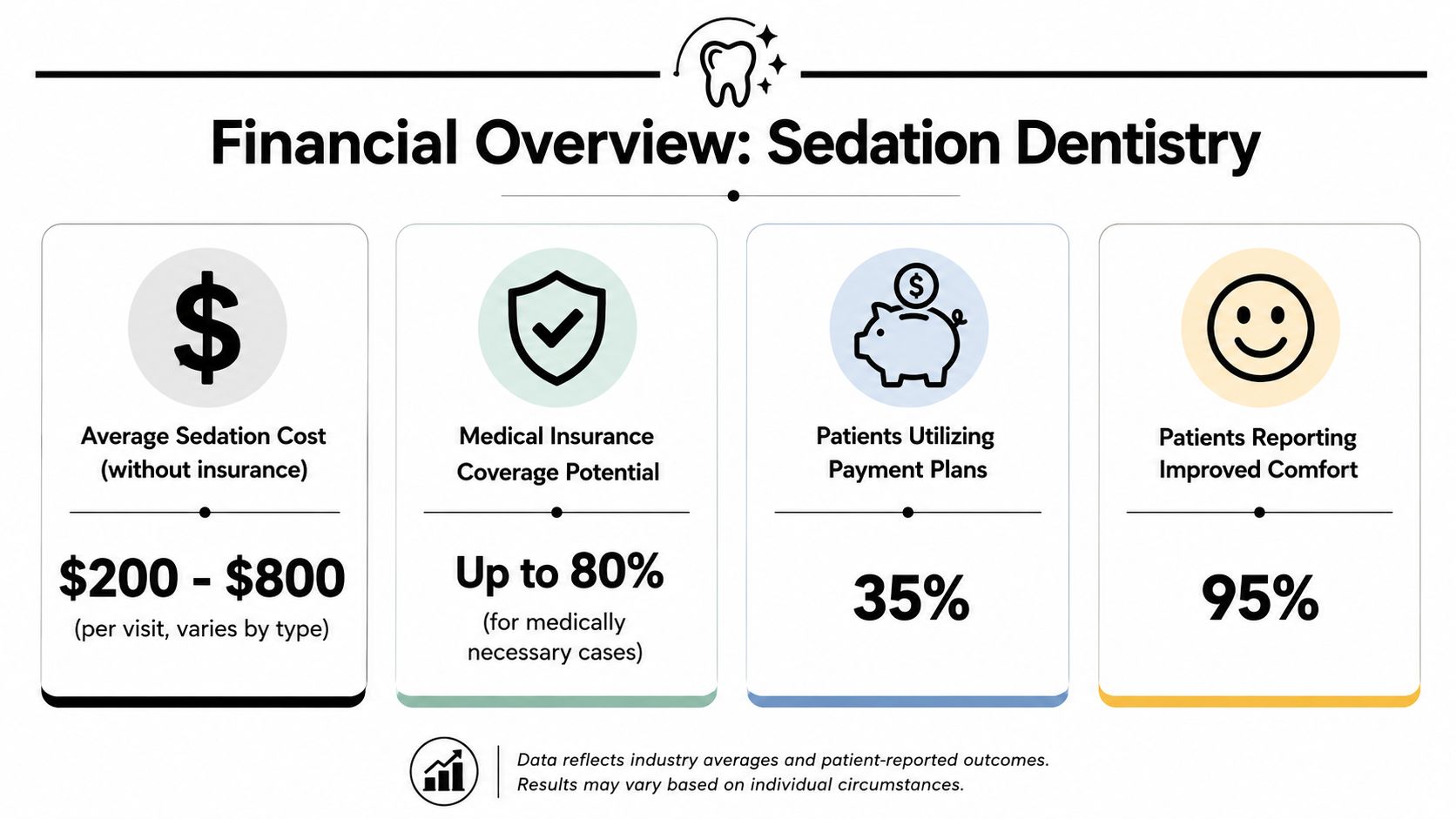
Insurance coverage is only one part of the cost. The amount you pay depends on the sedation method, the length of the appointment, whether monitoring is required, and whether your plan treats sedation as part of the procedure or as a separate service. In Cleveland and Chattanooga, I often find that patients do better when they ask for the estimated patient balance first, instead of asking only whether sedation is covered.
Sedation fees also vary in a practical way. Nitrous oxide is usually the lowest-cost option. Oral sedation often falls in the middle. IV sedation is commonly the highest because it involves more time, more monitoring, and a different level of clinical support. If you want a clearer side-by-side view, this breakdown of how much dental sedation costs explains how the type of sedation changes the financial picture.
The right financial question is simple. Which option lets you complete the care you need, comfortably, at a cost you can reasonably handle?
That answer is not the same for every patient. A short filling visit may only call for nitrous oxide. A longer extraction, implant procedure, or visit for someone with severe dental anxiety may justify a higher-cost option if it prevents treatment delays or incomplete care. Paying less upfront is not always the better value if the visit becomes too difficult to finish.
A useful way to compare options is to look at:
- The full treatment estimate: Procedure fee plus sedation fee, not just one line item
- Your expected patient portion: Deductible, coinsurance, and any non-covered sedation charges
- Whether medical insurance may help: This can matter when sedation is tied to documented anxiety, special needs, or a more involved medical history
- Timing: Splitting treatment into phases can reduce immediate out-of-pocket pressure in some cases
- Payment flexibility: Monthly financing or scheduled payments can make necessary care more manageable
Patients often use more than one payment source. Dental benefits may reduce part of the bill. HSA or FSA funds may apply to eligible expenses. Financing can help when treatment should not wait. Some patients prefer to pay directly once they have a written estimate and know the exact number.
Clarity matters here. Comfortable care should come with a clear cost plan, especially when dental and medical insurance may overlap and the sedation line item may be handled differently from the procedure itself.
Your Comfort Is Our Priority in Cleveland and Chattanooga
A good dental visit doesn't start in the chair. It starts when you feel informed enough to say yes to the care you need.
For adults looking for a dentist in Cleveland, TN or Chattanooga, TN, that often means finding a practice that can handle the full picture. Anxiety, insurance questions, restorative needs, emergency dentistry concerns, cosmetic goals, and long-term oral health all tend to show up together. A cracked tooth may need urgent treatment now, but it may also lead to questions about future crowns, implants, or ongoing dental care.
What a calmer visit should feel like
Patients usually feel more at ease when the visit includes a few basic things:
- Clear explanations before treatment: No confusing last-minute surprises.
- Comfort options matched to the procedure: Not every appointment needs the same approach.
- A supportive team: People relax faster when they don't feel rushed or judged.
- Real discussion about costs: Honest numbers build trust.
That's especially important for patients who have postponed cleanings and exams, need tooth extraction treatment, are considering dental implants near me searches, or are trying to find a cosmetic dentist near me who also understands dental anxiety.
Fear and finances stop a lot of people from getting care. A clear treatment plan can lower both barriers at the same time.
You don't need to sort out every insurance detail on your own before reaching out. The most productive next step is usually a consultation where the procedure, sedation options, and likely coverage path can be reviewed together in plain language.
If you've been delaying treatment because you're worried about anxiety, cost, or whether sedation dentistry is covered by insurance, contact Winn Smiles to schedule a consultation in Cleveland or Chattanooga. You can talk through your procedure, comfort options, and benefit questions clearly, with no pressure and no guesswork.