A child slips on the playground, bites down hard on a toy, or wakes up crying with a swollen cheek. In that moment, most parents aren't wondering about dentistry in the abstract. They want to know who to call, where to go, and what to do in the next five minutes.
That's where a calm plan matters. Dental emergencies in children feel urgent because they are urgent, but they aren't all the same. Some belong with an emergency dentist for kids. Some belong in the ER. Some can be stabilized safely at home for a short time while you head in for care in Cleveland or Chattanooga.
When Your Child Has a Dental Emergency in Cleveland or Chattanooga
Parents usually remember the exact moment it happened. A fall off the scooter. A collision at recess. A complaint that started as “my tooth hurts” and turned into tears by bedtime. Children often can't explain what hurts clearly, and that makes the situation feel even more unsettling.
What helps first is simple. Slow down, look for the big warning signs, and get the right kind of help. During the COVID-19 pandemic, dental office closures were associated with a 62% increase in the share of children's emergency room visits for non-traumatic dental issues, with the surge most pronounced among children up to age 9, according to ADEA's report on pandemic dental office closures and pediatric ER use. That matters because ERs can help with medical emergencies, but they often can't provide the same tooth-specific treatment a dental office can.

What parents usually need most
In a real dental emergency, parents need three things quickly:
- Clear triage: Is this a dentist problem or a hospital problem?
- Safe first aid: What can I do right now without making it worse?
- A child-friendly plan: What happens if my child is scared, very young, or won't open wide enough to be examined?
Practical rule: If your child is stable, breathing normally, and doesn't have major facial trauma, the next step is often dental care rather than a trip to the hospital.
Families looking for a dentist near me or an emergency dentist in Cleveland, TN or Chattanooga, TN usually aren't shopping around casually. They're in pain, they're worried, and they need someone who can sort the urgent from the dangerous without adding confusion. The right emergency dental visit should feel organized and calm, not chaotic.
Why specialized care matters
Children aren't just small adults with smaller teeth. They may have a mix of baby teeth and permanent teeth. They may be frightened, embarrassed, or too uncomfortable to cooperate. The treatment decision changes depending on the child's age, the type of tooth involved, and whether the injury affected only the tooth or also the lips, jaw, or head.
That's why the first question isn't always “How bad is the tooth?” Often it's “Is this only a dental injury, or is this part of a bigger medical emergency?”
First Aid for Common Pediatric Dental Emergencies
The first few minutes matter. Good first aid protects the tooth, reduces pain, and lowers the chance of making the injury worse. The goal isn't to do the dentist's job at home. The goal is to keep things stable until your child is seen.
Knocked-out permanent tooth
This is one of the few true dental situations where speed can make a major difference.
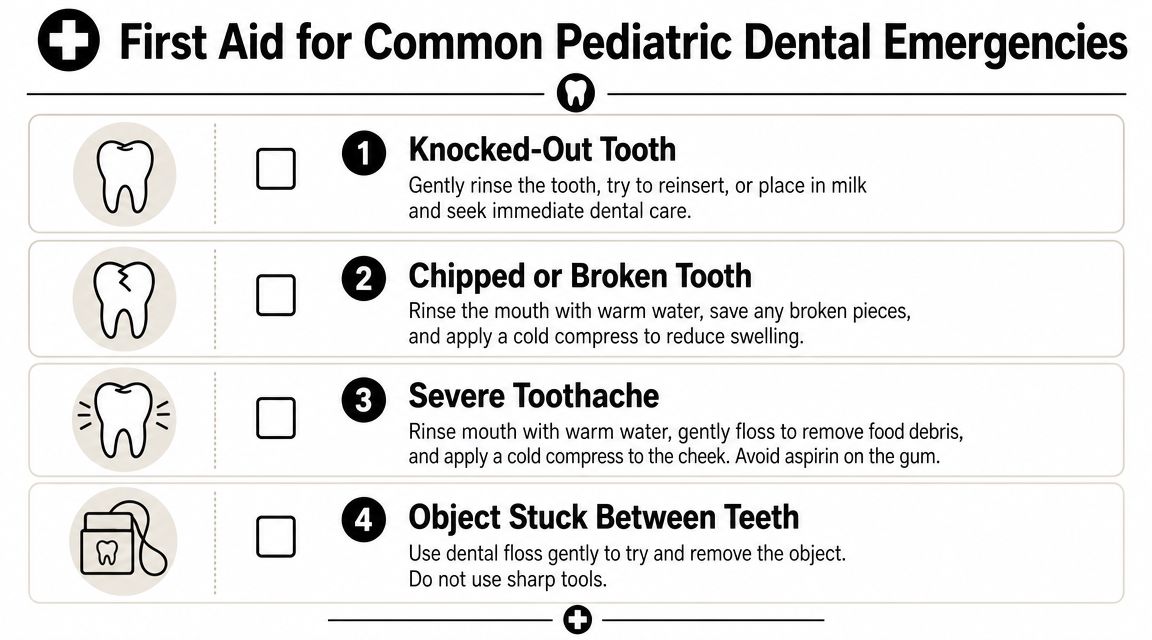
For a knocked-out permanent tooth, the evidence-based emergency sequence is to pick up the tooth by the crown only, rinse it gently without scrubbing, try to place it back in the socket if your child can cooperate, and if that isn't possible, store it in cold milk or saline while seeking urgent care. Milk is preferred over saliva and water for short-term preservation because it supports root cell viability better than dry storage or plain water, as explained in this pediatric dental emergency guide on saving a knocked-out tooth.
- Handle it correctly: Touch only the top part of the tooth, not the root.
- Rinse gently: Use water briefly if it's dirty, but don't scrub or wipe the root.
- Reinsert only if your child can cooperate: If they're panicked, gagging, or very young, don't force it.
- Store it properly: Cold milk is the practical home option if reinsertion isn't possible.
Don't wrap the tooth in a paper towel, leave it dry on the counter, or scrub it clean. Those are common mistakes that lower the chance of saving it.
A broken tooth can look less dramatic than a knocked-out one, but it still needs attention. If you're dealing with that situation, this guide on what to do for a broken tooth emergency can help you understand the next step.
To make the first steps easier to remember, this short video is useful for parents under stress.
Chipped or broken tooth
A chipped tooth may be minor, or it may expose a sensitive inner layer. A larger break can be painful, sharp, and frightening for a child.
Start with a gentle rinse using warm water. If you can find the broken piece, save it. Then place a cold compress on the outside of the cheek to limit swelling.
What doesn't help is poking at the area, testing the tooth repeatedly, or letting your child keep chewing on that side “to see if it still works.” Once a tooth is cracked, extra pressure can turn a manageable problem into a more complicated one.
Severe toothache
A severe toothache in a child often signals decay, infection, trapped food, or a loose tooth that isn't exfoliating normally. First, rinse with warm water. Then floss gently around the sore tooth to see whether food is wedged between the teeth.
- Use a cold compress on the cheek: This can reduce discomfort and swelling.
- Use oral pain medicine only as directed: Follow label directions or your doctor's guidance.
- Never place aspirin directly on the gum: That can irritate and injure the tissue.
Bitten lip, tongue, or cheek
Soft tissue injuries bleed more than parents expect. That alone doesn't always mean the injury is severe. Use clean gauze or a clean cloth to apply gentle pressure. A cold compress can help with swelling and comfort.
If bleeding keeps going, if the cut is deep, or if there's concern about the jaw or facial bones, your child needs medical evaluation rather than home care alone.
Emergency Dentist vs ER Knowing Where to Go
Parents lose time when they go to the wrong place first. The clearest way to think about this is to ask one question before anything else: Is my child's overall safety at risk, or is this an isolated dental injury?
Go to the ER first
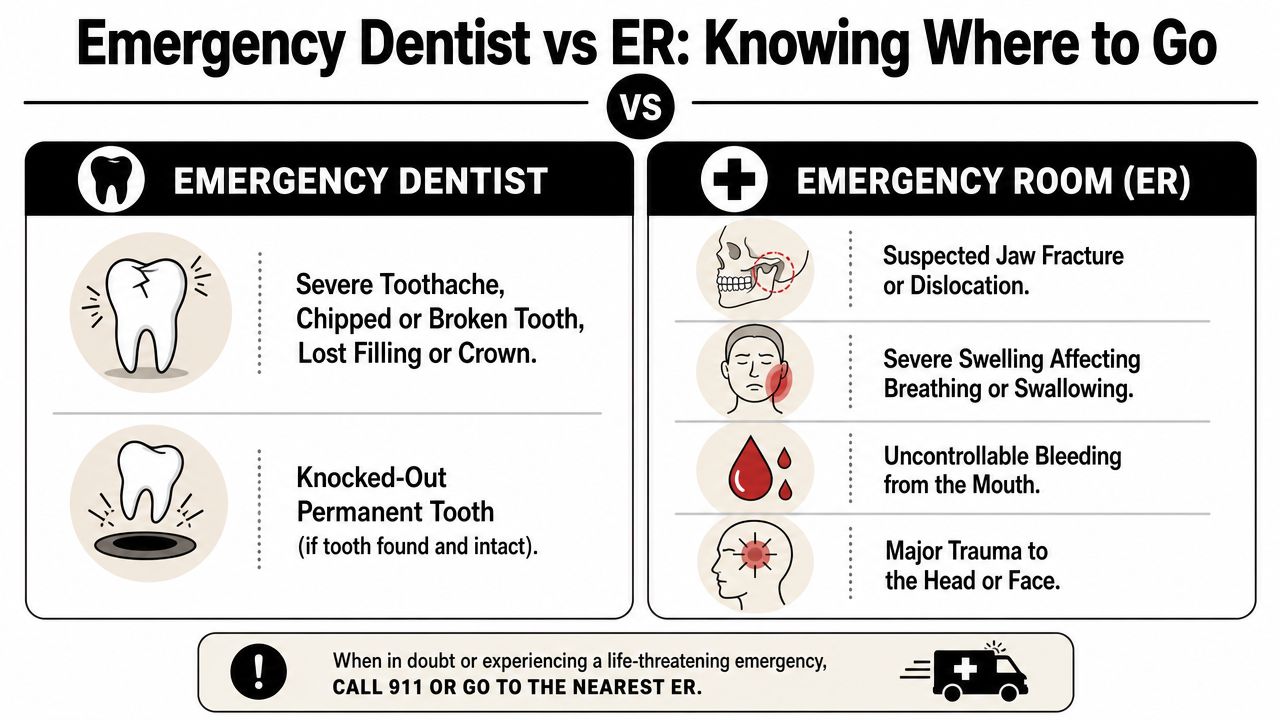
In pediatric dental trauma, the first decision point is whether there is severe bleeding, facial swelling, difficulty swallowing or breathing, or loss of consciousness. Those signs require medical emergency evaluation before dental first aid, according to Bupa's guidance on child dental emergencies and emergency warning signs.
If any of these are happening, don't wait for a dental appointment:
| Situation | Where to go |
|---|---|
| Trouble breathing or swallowing | ER immediately |
| Loss of consciousness after facial injury | ER immediately |
| Heavy bleeding that won't stop | ER immediately |
| Suspected jaw fracture or major head injury | ER immediately |
A tooth can wait a little longer than an airway can. If breathing, swallowing, bleeding control, or head injury is part of the picture, choose medical care first.
Call an emergency dentist for kids
If your child has a dental injury without those larger medical warning signs, a dental office is usually the right setting.
Common examples include:
- A knocked-out permanent tooth
- A cracked or broken tooth
- A painful toothache
- A loose or displaced tooth after a fall
- A lost filling or crown with pain
The ER can help stabilize pain and rule out serious injury, but they typically aren't set up to reimplant a tooth, smooth a fracture, adjust a bite, or create a restorative plan. A dental office can.
The baby tooth question parents ask all the time
One of the most confusing situations is a knocked-out baby tooth. Parents often assume the right move is to put it back in place. That's not recommended. A baby tooth should not be reinserted because doing so can damage the permanent tooth developing underneath.
That's one reason generic online advice often falls short. Children need triage that accounts for age, stage of development, and whether the injured tooth is baby or permanent.
What to Expect at Your Child's Emergency Visit at Winn Smiles
The hardest part for many families isn't only the injury. It's the fear that the visit will be rushed, upsetting, or overwhelming for a child who's already scared.
A good emergency appointment should lower stress as soon as you arrive. The front desk should know why you're there. The clinical team should move efficiently. Your child should feel that the adults in the room are in control.

What to bring with you
If possible, bring these items to the appointment:
- The tooth or broken fragment: Keep it in the storage medium you were told to use.
- Insurance and ID: This helps the check-in process move faster.
- A short timeline: When did it happen, what did your child eat or drink last, and what first aid have you already tried?
- A medication list: Especially if your child has allergies, medical conditions, or takes daily medicine.
Those details help the team decide what's safe and what needs to happen first.
How the visit usually unfolds
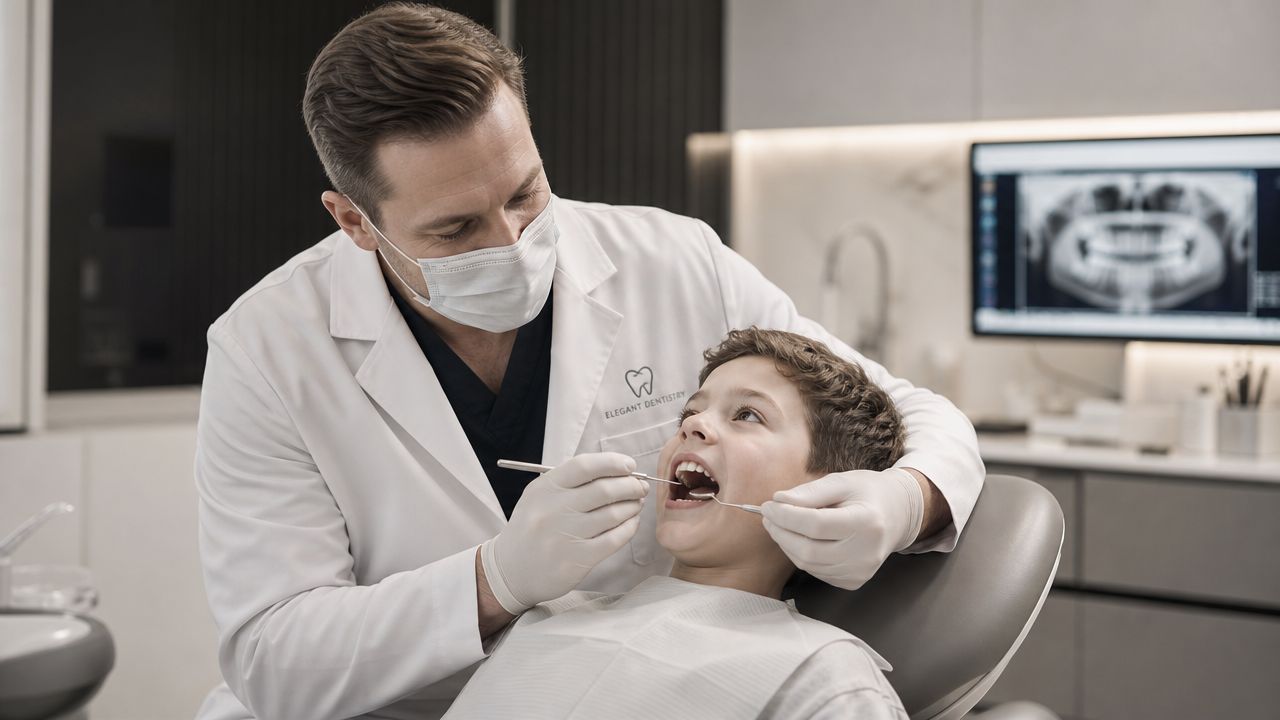
Most emergency pediatric dental visits follow a practical sequence. The team checks comfort, bleeding, and visible trauma first. Then they examine the teeth, gums, bite, and surrounding tissues. X-rays may be recommended if the injury could involve the root, bone, or developing teeth beneath the gums.
The goal at that first visit is straightforward. Relieve pain, protect the tooth if possible, and decide whether treatment should happen immediately or in stages.
Some children can handle everything in one visit. Others do better with treatment broken into smaller steps. The right plan is the one your child can tolerate safely.
A key concern for parents is how an emergency dentist handles a very young or anxious child. Public-facing pediatric emergency guidance notes that effective practices explain behavioral management techniques and sedation options, because a child's comfort and ability to accept care are central to safe treatment, as discussed in this overview of emergency pediatric dentistry for anxious children.
If your child is especially nervous, this page on sedation dentistry for kids offers a helpful overview of how comfort-focused care can support treatment.
What helps a frightened child cooperate
Parents often assume cooperation is about discipline. It usually isn't. It's about timing, pain, fear, age, and sensory overload.
A few things tend to work better than pressure:
- Simple language: “We're going to count teeth” lands better than a detailed clinical explanation.
- One parent staying calm: Children read your face before they hear your words.
- Comfort planning: Breaks, reassurance, and clear expectations matter.
- Realistic pacing: Some children can't tolerate a long emergency visit after an injury. That's okay.
Common Emergency Dental Treatments for Children
After the exam, parents usually want to know what happens next. The answer depends on whether the problem involves pain, infection, a fracture, tooth movement, or damage below the gumline. Emergency treatment is about stabilizing the problem first, then protecting long-term oral health.
Treatments that are often done right away
Some emergency procedures are relatively simple and can often happen the same day.
| Problem | Possible treatment |
|---|---|
| Small chip or edge fracture | Smoothing or bonding |
| Larger break with sensitivity | Protective restoration |
| Pain from deep decay or infection | Pulp treatment, medication planning, or extraction |
| Tooth pushed out of position | Repositioning and stabilization |
| Soft tissue irritation from a sharp tooth edge | Smoothing the area |
Bonding is commonly used when a front tooth chips and enough healthy structure remains. It restores shape, removes the sharp edge, and helps the child speak and smile more comfortably.
When extraction is the better choice
Parents sometimes feel discouraged when a damaged tooth can't be saved. But there are situations where removing the tooth is the safer option, especially if the tooth is severely broken, infected, or painful beyond predictable repair.
That decision is never just about “fix it if possible.” It's about balancing pain, development, cooperation, infection risk, and whether treatment would place too much burden on the child for too little benefit.
Technology can make care gentler
Modern emergency dentistry isn't limited to the old model of temporary fixes and long waits. In some cases, laser dentistry can help with precise, tissue-friendly treatment. For certain adult restorative needs, same-day crown technology can shorten the path from diagnosis to restoration.
For families already established with a general dentist, services such as emergency care, restorative treatment, and follow-up planning may all happen in one place. Winn Smiles provides emergency dentistry along with broader restorative care in Cleveland and Chattanooga, which can simplify follow-up when a child's urgent problem leads into longer-term treatment planning.
The best emergency treatment isn't always the biggest procedure. Often it's the one that stops pain quickly, protects the area, and gives the child a realistic path to recovery.
How to Prevent Future Dental Emergencies
Most dental emergencies in children aren't random. They usually trace back to one of a few patterns: falls, sports injuries, hard foods, untreated decay, or teeth that were already weakened before the accident.
Habits that lower the risk
A few prevention steps make a real difference:
- Use a sports mouthguard: If your child plays contact or collision sports, a mouthguard adds protection that teeth don't have on their own.
- Watch the hard foods: Ice, hard candy, and similar foods create problems for both baby teeth and permanent teeth.
- Don't use teeth as tools: Opening packages or biting non-food objects is a common way to chip teeth.
- Keep up with exams and x-rays: Regular visits help catch cavities, weak fillings, and bite issues before they become urgent.
Routine dental care matters because a tooth that's already compromised is more likely to fracture or become painful at the wrong time. Families searching for a dentist in Cleveland, TN, a dentist in Chattanooga, TN, or even a cosmetic dentist near me often start with a specific concern, but prevention is what keeps small concerns from turning into emergency visits.
For babies and toddlers
Very young children create a different kind of confusion for parents. Teething discomfort, drooling, chewing, and gum irritation can mimic a dental problem even when there isn't an emergency. If you're trying to tell normal teething from something that needs a closer look, Hiccapop's guide to baby teething is a useful starting point.
The larger point is simple. Children do better when they already have a dental home before something goes wrong. Familiarity makes emergency visits less scary, and regular preventive care gives parents a trusted place to call when the unexpected happens.
If your child has sudden dental pain, a broken tooth, swelling, or a dental injury, contact Winn Smiles for prompt guidance and care in Cleveland or Chattanooga.