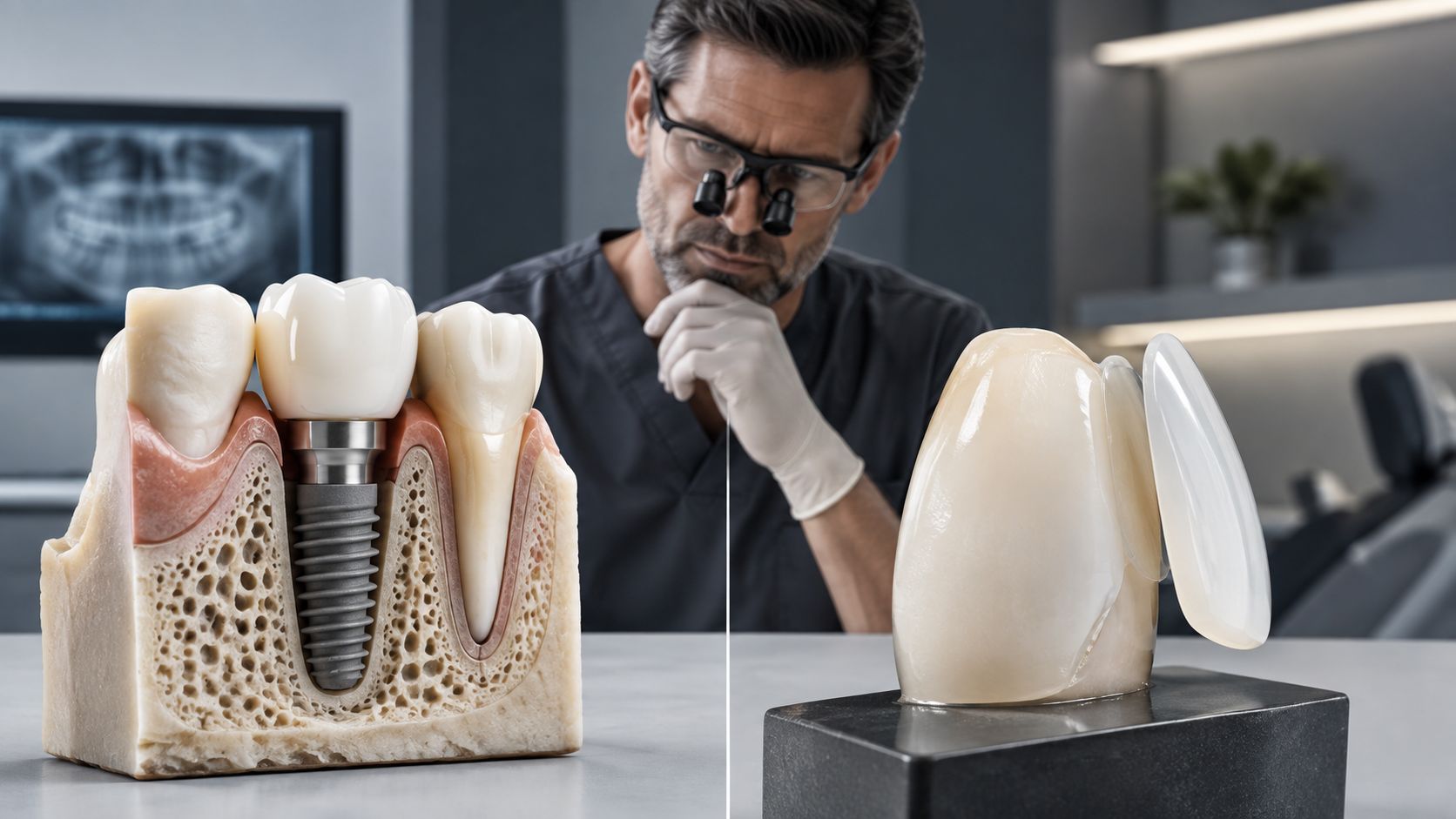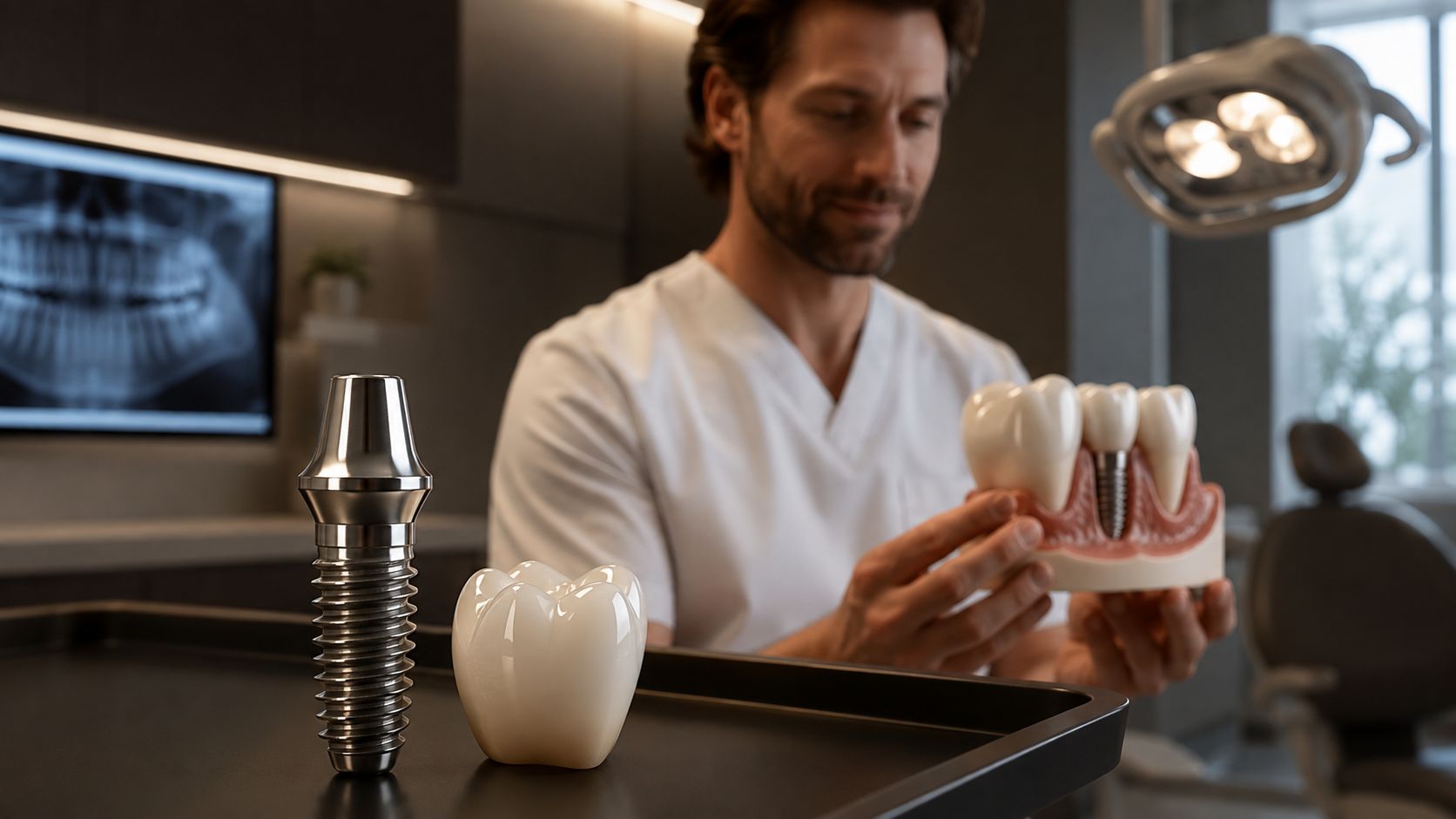
What Is Dental Implants Procedure? It's usually a staged treatment with 2 to 6 months of healing between the implant placement and the final tooth restoration, and the surgery you see is only one part of the full journey. In plain terms, the dentist removes the damaged tooth if needed, prepares or grafts the jawbone when support is lacking, places the implant, lets the bone fuse around it, and then attaches the connector and crown.
If you've been hiding a gap in photos, avoiding a favorite food, or feeling nervous about what comes next, you're not alone. Many patients in Chattanooga and Cleveland, TN start asking about dental implants when they want something that feels secure, looks natural, and doesn't keep reminding them of a missing tooth every time they smile. At Winn Smiles, that conversation usually starts with a calm exam, clear answers, and a plan that fits real life, not a rushed checklist.
Why Patients in Chattanooga Start Asking About Implants
A missing tooth changes more than your smile. It can make chewing awkward, make certain foods less enjoyable, and leave people covering their mouth when they laugh or talk. The emotional side matters just as much, because once someone starts hiding a gap, they often begin thinking about it all day.
For many people in Chattanooga and Cleveland, TN, the first question isn't technical. It's personal. They want to know whether they can get back to eating normally, smiling in family photos, and feeling like themselves again.
The worry usually grows before the appointment does
That hesitation is common. A lot of patients hear the words dental implant and picture a long, complicated process when they really want a simple answer to one thing, “What happens to me from start to finish?” The truth is that the visible surgery is only one part of a larger staged process, and the healing period often takes more patience than the appointment itself.
Practical rule: If a tooth has been missing for a while, don't wait until chewing becomes painful or the gap starts bothering your confidence every day. A consultation is the easiest way to see what kind of path makes sense.
There's also a practical reason people act sooner. When a tooth is gone, the jawbone in that area can lose the regular stimulation it used to get from the root. That's one reason dentists talk so much about replacing missing teeth before the problem snowballs into more complex treatment.
At Winn Smiles, patients are usually looking for straight answers, not pressure. They want a local dental team that can explain tooth extraction, restorative dentistry, and dental implants in plain language, then help them decide what fits their mouth, schedule, and comfort level. That's the mindset behind the rest of this guide.
What a Dental Implant Actually Is
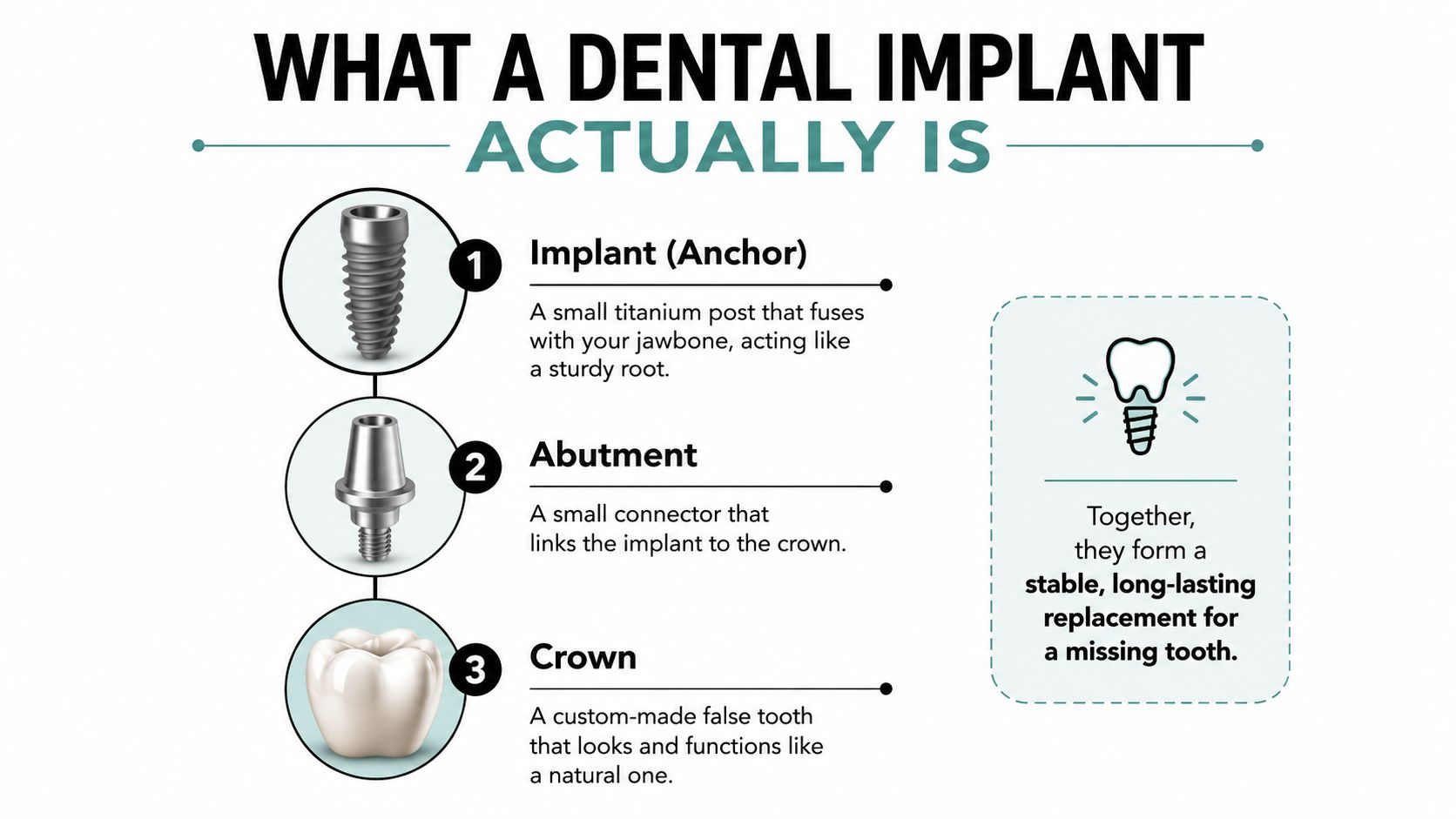
A dental implant works like an anchor. The implant fixture acts like a new root in the jawbone, the abutment connects the root to the visible tooth, and the crown becomes the part people see when you smile. Once everything is complete, the result feels much more like a natural tooth than a removable replacement.
The three parts work together
Think of it as a foundation, a connector, and a tooth on top. The implant fixture sits in the bone, the abutment acts as the middle piece, and the final restoration is the crown, bridge, or denture that restores appearance and function. That three-part structure is why implant treatment is more precise than just “putting in a fake tooth.”
The biological part matters too. After placement, the bone needs time to grow around the implant and lock it in place. That process is called osseointegration, and it's the reason implant treatment is built around healing, not speed.
The strongest implant result usually comes from patience, not from rushing the calendar.
A useful way to picture it is this. A bridge sits on nearby teeth, while an implant stands on its own foundation in the jaw. That difference is why many patients like implants for a long-term replacement, especially when they want something that isn't held in by clips or removed at night.
If the phrase what is dental implants procedure sounds technical, the structure becomes easier once you picture the sequence. One part goes into the bone, one part connects it, and one part restores the smile. That's the whole idea, even though the full clinical journey takes more steps behind the scenes.
The Treatment Journey From First Visit to Final Crown
A good implant plan starts before anyone touches the gum. At the first visit, the dentist looks at the tooth or gap, reviews the health of the surrounding tissues, and uses imaging to see how much support is available. When extra steps are needed, that may include tooth extraction or bone grafting before the implant can even be placed.
The point of a staged plan is simple. Each step gives the next one a better chance to succeed. The Mayo Clinic describes implant treatment as outpatient surgery done in stages with healing time between procedures, and that pacing is part of why the process can feel slower than patients expect. The European Federation of Periodontology reports that the bone-fusion interval commonly lasts 2 to 6 months.
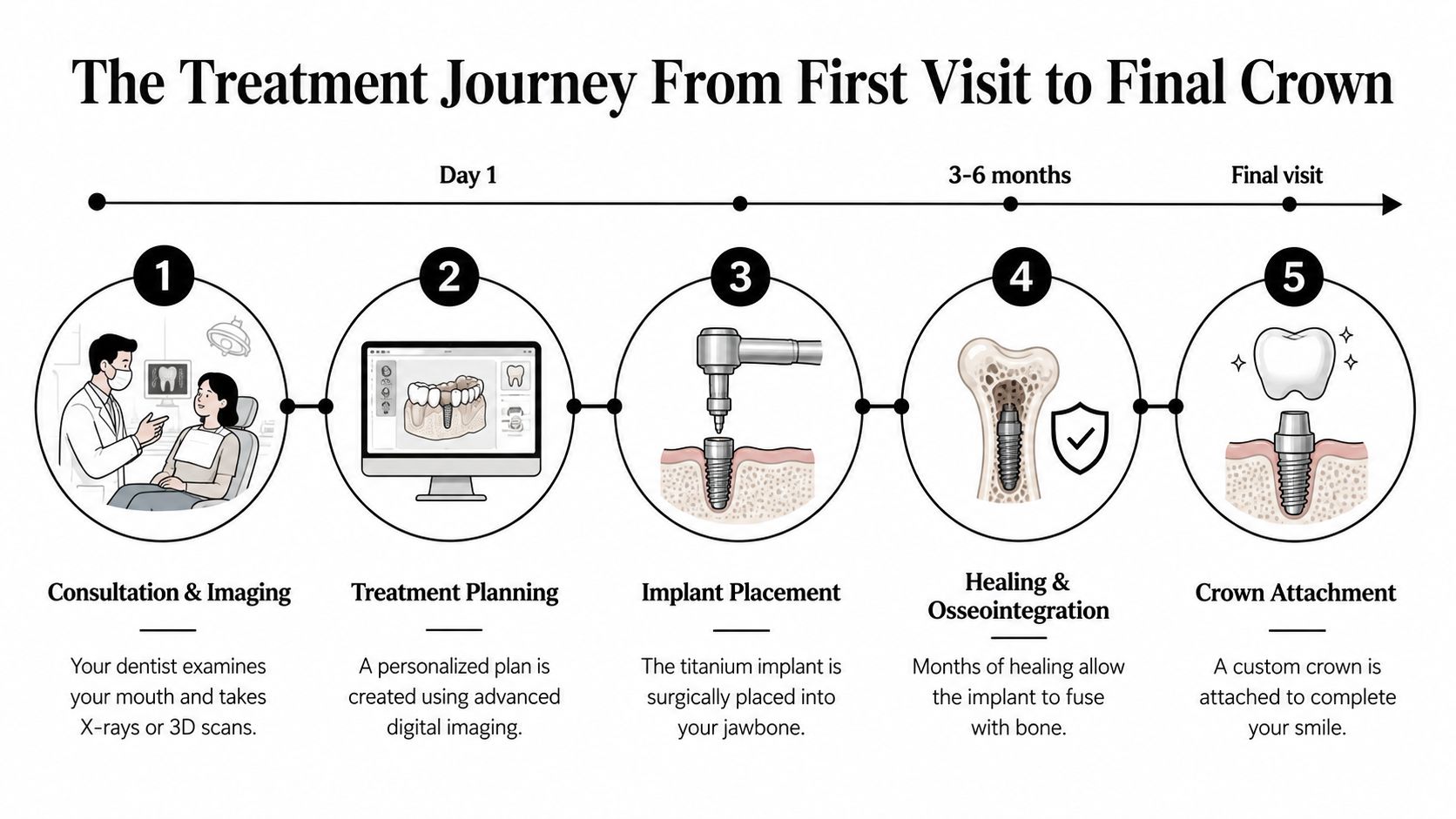
What usually happens in order
A typical path looks like this:
- Consultation and imaging, where the dentist studies the mouth and plans the approach.
- Treatment planning, where the exact location and sequence are mapped out.
- Implant placement, where the fixture is placed in the jawbone.
- Healing and osseointegration, where the bone bonds to the implant.
- Crown attachment, where the visible restoration is completed.
That staged structure is one reason many patients searching for dentist near me or dentist in Chattanooga, TN appreciate a clear plan before committing. If you want a simple planning resource to compare with your own treatment timeline, your health roadmap for 2026 gives a straightforward way to think about treatment sequencing.
The big takeaway is that the final crown comes last on purpose. The implant needs time to become part of the bone before it can handle normal chewing forces. That's why the “waiting” phase isn't a delay, it's part of the treatment.
What Happens During Implant Placement Surgery
The surgery itself is usually much calmer than people imagine. The area is numbed with anesthesia, and sedation can be added for patients who want extra comfort. Cleveland Clinic notes that patients should not feel pain during surgery, and that matters a lot for someone who's been anxious for weeks before the visit.
The dentist starts with a small incision in the gum and gently lifts the tissue to reach the bone. From there, the site is prepared with controlled drilling, often with cooling saline or water spray, so the bone doesn't overheat. The implant is then inserted with a torque-controlled wrench, which helps avoid overloading the surrounding bone.
Why the technical details matter to patients
This part of the procedure is about precision, not force. Excessive stress can harm the bone and threaten osseointegration, so every movement is designed to protect the healing site. A clinical overview describes the sequence as reflecting the soft tissue, drilling at high speed and enlarging the site at low speed, then placing the implant carefully so the bone isn't overloaded. That controlled approach is what lets the body heal around the implant properly.
Winn Smiles also uses laser dentistry and guided surgery technology to make treatment more precise and more comfortable for many patients in Chattanooga and Cleveland, TN. For anxious patients, that can make the appointment feel more manageable because the visit is planned, measured, and focused on tissue preservation.
Most people are surprised that the appointment feels more controlled than dramatic.
After placement, the site is closed with stitches. The practical part for the patient is usually straightforward, follow the home instructions, keep the area clean, and give the bone the quiet healing time it needs. That's the tradeoff for a result that's built to last.
Same-Day and Full-Arch Implant Options Explained
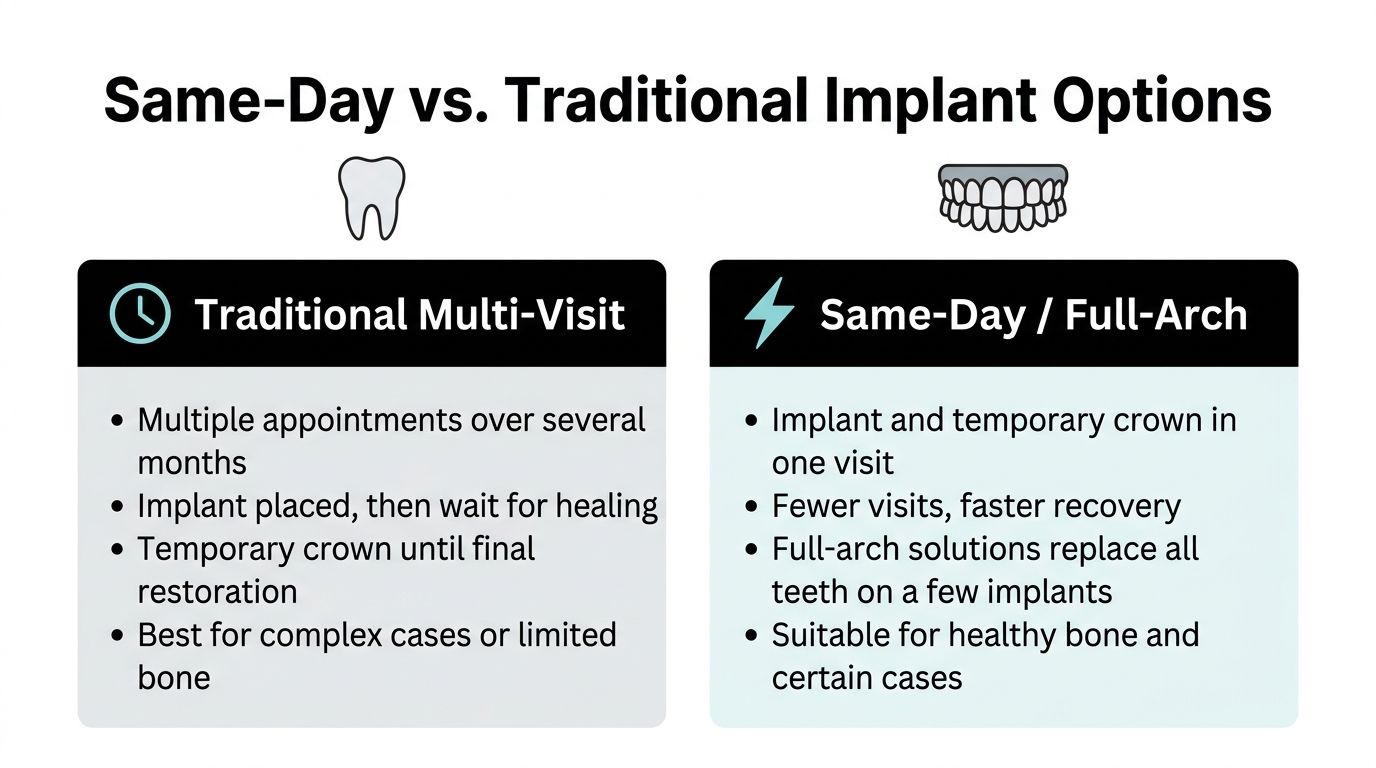
Not every patient follows the same route. Some people need a single implant for one missing tooth. Others need a temporary tooth the same day. And some patients need a full-arch solution that replaces an entire row of teeth with fewer implant posts.
Why the right option depends on the mouth, not the marketing
Traditional implant treatment is still the right choice for many cases because it gives the bone time to heal before the final crown is attached. That slower route can be a better fit when the case is complex or when the bone needs more support.
Same-day and full-arch options can shorten the number of visits, but they still depend on healthy bone, careful planning, and the right clinical conditions. A temporary crown placed the same day can help patients avoid a visible gap, while full-arch solutions can restore a whole upper or lower arch with a different surgical design.
At Winn Smiles, patients asking about same-day crown options or full-arch implant solutions often want to know what tradeoff they're accepting. The answer is usually about balance, faster visible results can be helpful, but they still need the right foundation underneath. If you're comparing pathways, the practice's full-arch implant solutions page at https://www.winnsmiles.com/post/all-on-4-dental-implants-near-me is a useful place to review the general concept before your consultation.
A practical way to think about it is this:
- Single implant treatment fits one missing tooth or a small number of missing teeth.
- Same-day temporary restorations reduce the time you spend with a gap.
- Full-arch options are designed for broader tooth loss and a different kind of support structure.
The best choice depends on bone, bite, and long-term goals, not on which option sounds fastest.
Are You a Good Candidate for Dental Implants
The candidacy checklist is more personal than many patients expect. A good implant plan depends on whether the jaw has enough bone, whether the gums are healthy, and whether the body can heal well after surgery. If any of those pieces are off, the plan may still work, it just may need extra steps.
What dentists look at first
Healthy bone is the starting point. If bone volume is limited, bone grafting may be needed before or during treatment so the implant has enough support. Gum health matters too, because active periodontal problems can interfere with healing and make the environment less stable.
The rest of the picture comes from the person, not just the mouth. General health, smoking habits, and how carefully someone can follow aftercare instructions all shape the final plan. Some patients are ready for implants right away, while others need prep work first.
A thorough implant consultation is less about passing or failing and more about choosing the safest path.
If you want a more detailed look at the decision-making side, the practice's guide on dental implant candidacy is a helpful companion to this topic. It fits especially well for patients who keep asking, “Can I get implants without extra procedures?”
The honest answer is that sometimes yes, and sometimes not yet. That's where individualized planning matters. A good dentist won't force a one-size-fits-all route, because the safest pathway is the one matched to your bone, gums, and healing needs.
What Dental Implants Really Cost
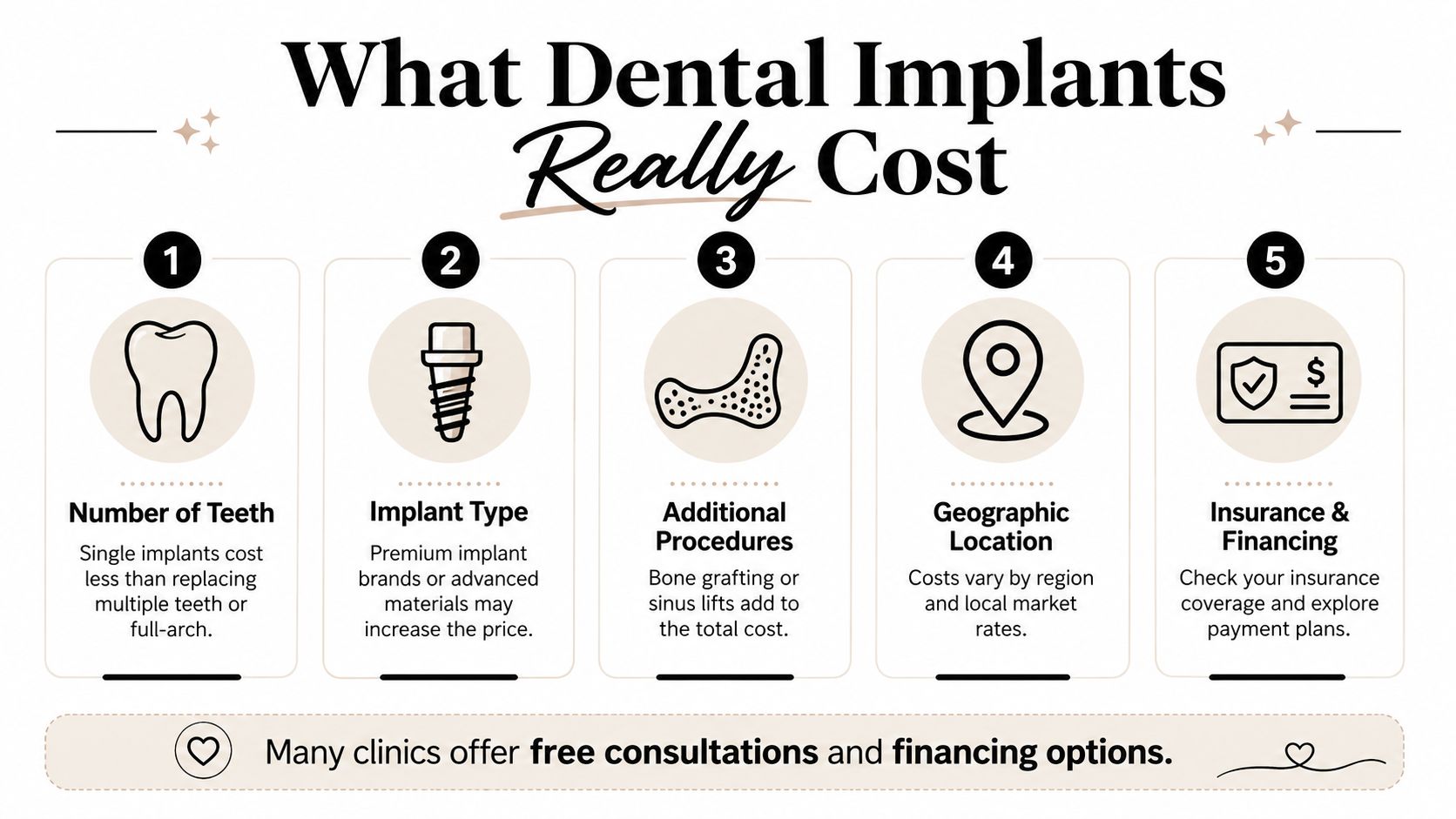
Cost is usually the part patients worry about longest, and for good reason. Dental implants can involve more than one appointment and more than one phase of care, so the final estimate depends on what your mouth needs. That's why two patients asking about dental implants near me can get very different plans.
What changes the estimate
The biggest drivers are usually straightforward. The number of teeth being replaced changes the size of the case, and extra procedures such as bone grafting or sinus preparation can add steps before the implant is placed. The type of restoration also matters, because a single crown is a different treatment than a bridge or full-arch solution.
Technology can influence planning too. Imaging, guided surgery, and the level of customization all affect how the treatment is built from start to finish. The experience of the surgical team matters as well, because an implant plan is not just hardware, it's also timing, coordination, and follow-through.
Another reason estimates vary is geography. Local market rates are part of the picture, and so are insurance benefits and payment options. Many clinics also offer consultations so patients can understand their treatment before they commit.
What patients should expect beyond the price tag
Implants are usually discussed as a long-term investment because they replace both function and appearance. They also reduce the cycle of patching and replacing that can happen with less stable solutions. That doesn't make them cheap, but it does make the comparison broader than a single line on an estimate.
After surgery, the first few days often include mild swelling, minor bruising, and tenderness. That's normal for many patients, especially right after the area has been worked on. Soft foods, gentle cleaning, and avoiding straws are common aftercare steps because they protect the healing site while the bone and gum settle.
Warning signs are different. Worsening pain, swelling that doesn't ease, or any sign that the area isn't improving should prompt a call to the office. The main goal is to catch problems early rather than guess at home.
A lot of anxiety comes from not knowing what's normal. Once patients understand that healing is expected to take time, the process feels less mysterious and a lot more manageable. Winn Smiles talks openly about treatment estimates and supports patients through recovery, which helps remove the biggest barrier for people who are ready but hesitant.
Dental Implant Questions Patients Ask Most Often
Patients usually ask the same four questions at the end of a consult, and they're all fair questions. The first one is about pain. The second is about how long the result lasts. The third is about insurance or financing. The fourth is whether implants are really worth it compared with bridges or dentures.
Is the surgery painful
Most patients are relieved to hear that the area is numbed before treatment, and sedation can be added when needed. Cleveland Clinic says patients should not feel pain during surgery. Afterward, soreness and swelling are more common than sharp pain, and those symptoms usually improve as healing moves along.
If you're anxious, say so before the appointment. A calm plan starts with honest communication.
How long do implants last
That depends on the health of the mouth and the care the patient gives it over time. Good brushing, flossing, regular cleanings, and keeping follow-up visits matter. So does protecting the implant from habits that strain healing or wear down oral health.
Can insurance or financing help
Sometimes, yes, depending on the policy and the kind of treatment being done. A consultation is the right place to review the estimate, ask what's covered, and talk through payment options before moving ahead.
Are implants worth it
For many patients, the answer comes down to stability and confidence. Implants are fixed in place, they don't come out at night, and they're designed to restore chewing and appearance in a way that feels more natural than many alternatives. That's why so many people who start out looking for a cosmetic dentist near me or an emergency dentist end up asking about implants once the full picture is clear.
Winn Smiles supports patients with comfort menu options, personalized sedation, laser dentistry, same-day crowns, and full-arch implant solutions across its Chattanooga and Cleveland locations. If you're ready to talk through your own tooth replacement options, schedule a visit with Winn Smiles and get a clear, no-pressure plan for your smile.