You're on your lunch break in Chattanooga, or scrolling in your car in Cleveland, and you've just noticed it again in a photo. A front tooth has drifted. A gap looks wider. You search for a dentist near me, then start comparing Clear Aligners vs Invisalign and find a dozen prices, promises, and before-and-after photos that all look the same.
My advice is simple. Don't start with the brand. Start with your mouth, your bite, and who will supervise the movement. That's what predicts whether you'll finish happy or finish frustrated.
Why Adults in Cleveland and Chattanooga Compare Clear Aligners and Invisalign
Most adults who sit in my chair asking about Clear Aligners vs Invisalign aren't chasing a perfect celebrity smile. They had braces as a teenager, lost a retainer in college, and now their lower front teeth are crowding again. Or they've always disliked a small gap and don't want metal brackets at work, in meetings, or in family photos.
That scenario is common across Cleveland, TN and Chattanooga, TN. You're busy, you want something discreet, and you want to know if a cheaper tray will do the same job as the name you've heard for years. It's a fair question. It's also the wrong first question.
The better question to ask first
Ask which supervised care pathway fits your case. Who checks your gums and bone before movement starts? Who designs the attachments? Who notices when a tooth stops tracking and orders a refinement? Who fits your retainer and manages relapse a year later?
If nobody can answer those four questions clearly, the brand name on the tray won't save the result.
That distinction becomes clearer when you read how another practice frames supervised treatment, such as Invisalign at The Dental Cafe, where the emphasis is on assessment and monitoring, not just handing over trays. Use that as a benchmark for any consultation you book locally.
If you're looking for a cosmetic dentist near me or a dentist in Cleveland, TN or dentist in Chattanooga, TN, judge the plan, not the advertisement. A good consultation should feel like a diagnosis first and a sales conversation second, or ideally not at all.
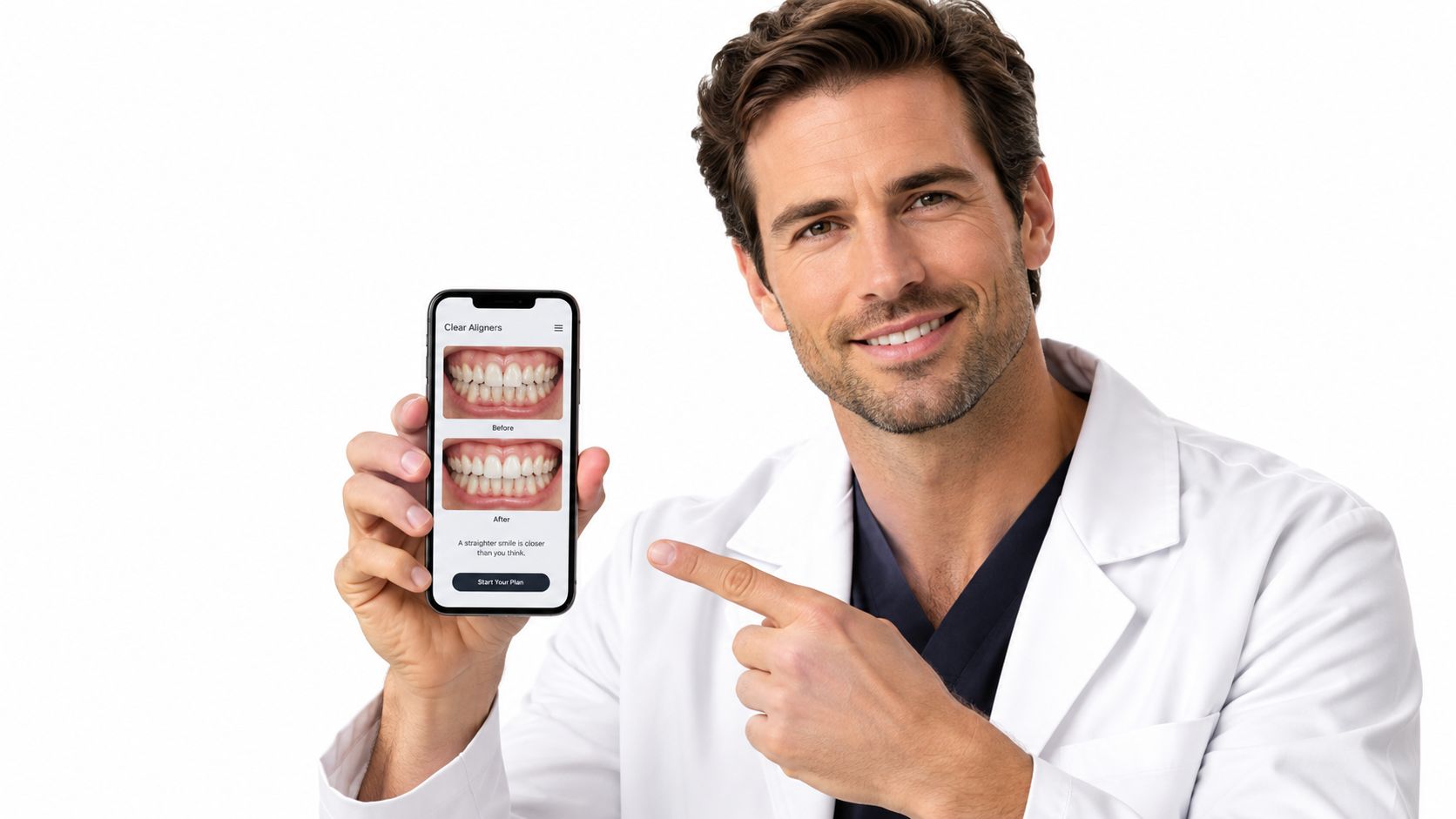
Bring your goal, but let the exam lead. Crowding, spacing, and bite problems can look similar in a selfie and behave very differently in bone.
What Counts as a Clear Aligner and Where Invisalign Fits
Clear aligners are a treatment category. Invisalign is one specific, branded system inside that category. Confusing the two is like comparing pickup trucks with one named model. The comparison only makes sense once you know which level you're talking about.
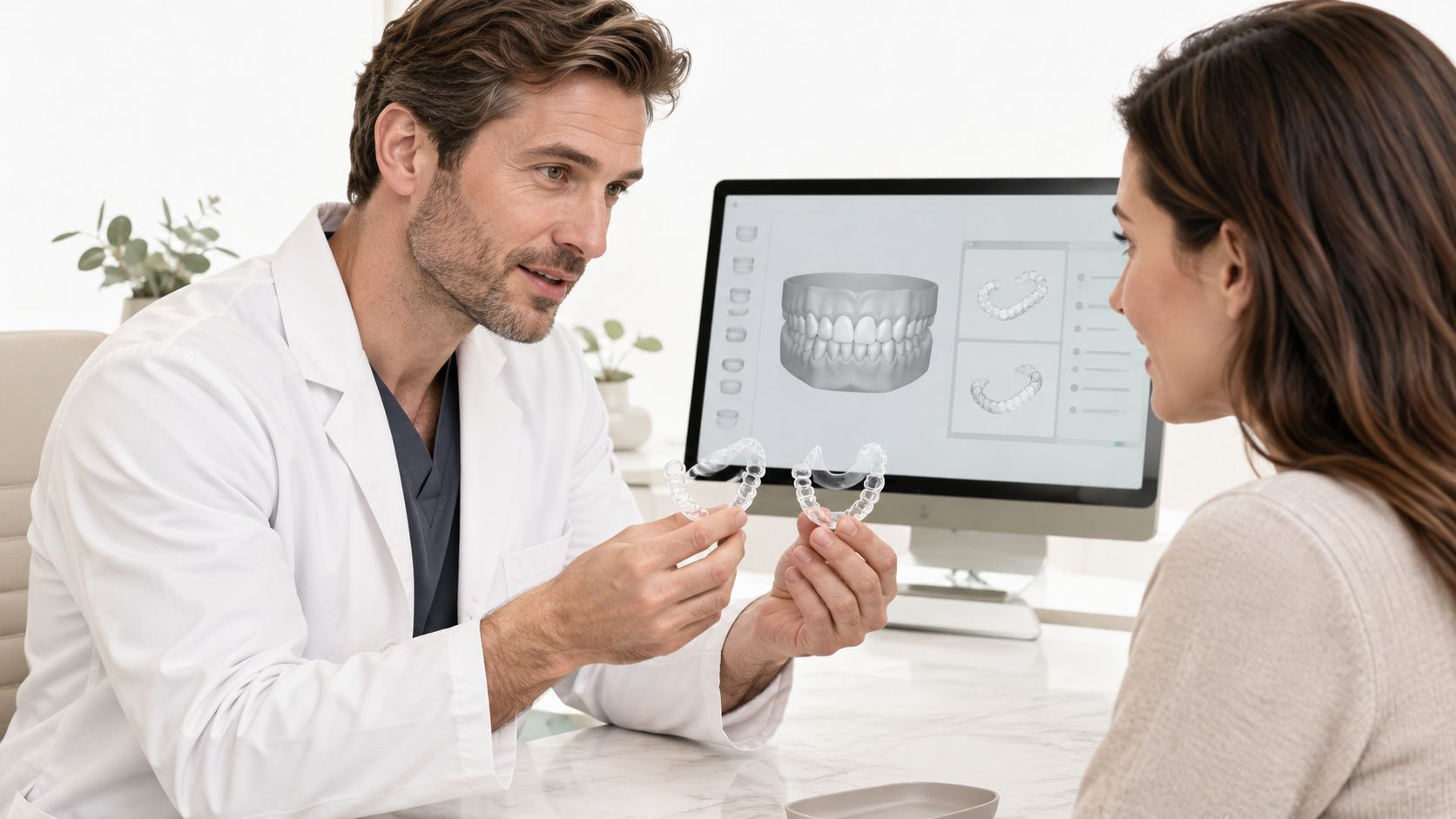
Any clear aligner system uses a series of removable, transparent trays. Each tray applies staged pressure, you wear it for a set period, then you move to the next tray. Different manufacturers use different materials, software, attachment designs, and refinement rules, even though the trays look alike in your hand.
Where Invisalign came from
The modern approach was developed commercially by Align Technology, founded in 1997, which introduced the Invisalign System in 1999, and by 2001 the company reported 1 million unique aligners manufactured and more than 10,000 doctors trained, according to Align Technology's company history. That history matters because Invisalign isn't just plastic. It's an ecosystem of scanning, digital planning, attachments, refinements, and retainers built over decades.
That doesn't make every other aligner inferior. It does mean evidence gathered on Invisalign doesn't automatically transfer to every other brand. A tray from one system, planned in one software, with one attachment protocol, isn't interchangeable with another just because both are clear.
- Category: Clear aligners describe removable tray therapy from many manufacturers.
- Brand: Invisalign describes Align Technology's specific products, planning software, and clinical protocols.
- Direct-to-consumer trays: Mail-order options sit in the same broad category but typically involve far less in-person supervision, which changes the risk profile.
My recommendation is direct. Don't ask a practice, "Do you do clear aligners?" Ask, "Which system would you use for my bite, why that system, and what movements in my case worry you?" A clinician who can answer that in plain language is worth listening to. A clinician who only talks about appearance and price hasn't diagnosed you yet.
How Treatment Actually Works from Scan to Retention
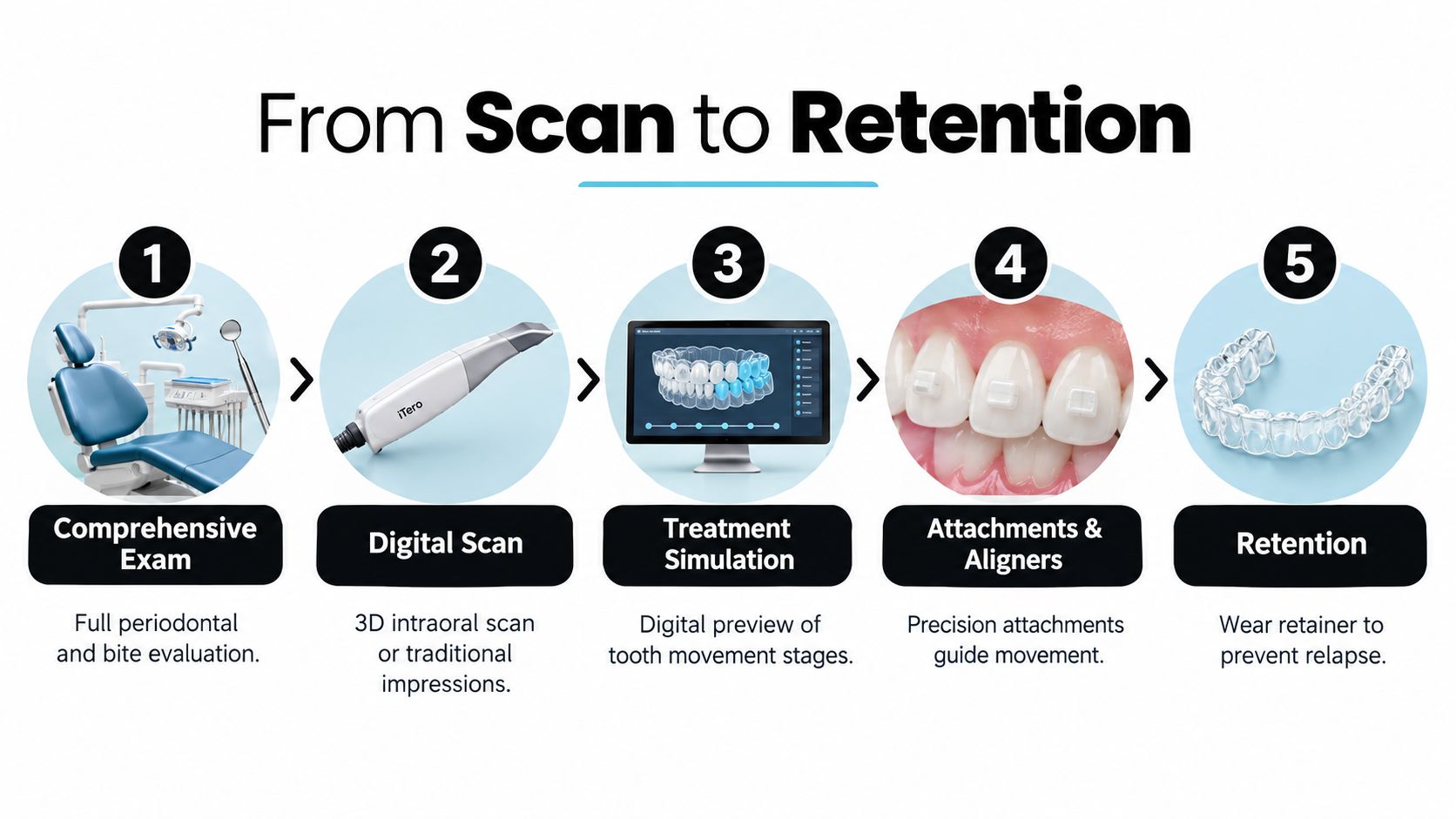
Treatment doesn't start with a scan. It starts with a new patient exam, dental x-rays, and a check of your gums, bone, bite, and existing dental work. Moving teeth through inflamed or unsupported tissue is a bad plan no matter how good the simulation looks on screen.
Once you're cleared, we take a digital scan or impressions and build a staged plan. You'll see a simulation of movement, but treat it as a map, not a guarantee. For a plain-language walkthrough of staging and wear, read how clear aligner treatment moves teeth step by step before your visit.
Attachments, wear time, and check-ins
Most adult cases need attachments, small tooth-colored shapes bonded to certain teeth. They give the tray something to grip so it can rotate, lift, or control a tooth instead of just tipping the crown. If a plan promises complex movement with no attachments and no monitoring, be skeptical.
You'll wear trays most of the day and night, removing them to eat and clean your teeth. Inconsistent wear is the fastest way to lose tracking. At check-ins, we confirm fit, check your bite, review hygiene, and decide whether you're ready to advance or need to hold.
- Exam first: Periodontal health, decay, crowns, implants, and bite are assessed before trays are ordered.
- Simulation second: The digital plan stages movement and estimates attachment placement.
- Refinement when needed: A new scan and extra trays correct teeth that didn't move as predicted. That's normal care, not failure.
- Retention last: Retainers hold the result. Skip them and teeth drift, regardless of brand.
At our Cleveland and Chattanooga offices, practical supports matter over months of visits. A comfort menu, sedation options for anxious patients, and same-day technology for related restorative needs can make it easier to complete care. The best plan is the one you'll follow through on.
Effectiveness, Accuracy, and What the Research Actually Shows
The honest summary is this. Clear aligners work predictably for many mild-to-moderate cases, especially in non-growing adults who don't need extractions. They are not universally equivalent to fixed braces, and anyone who tells you otherwise is overselling.
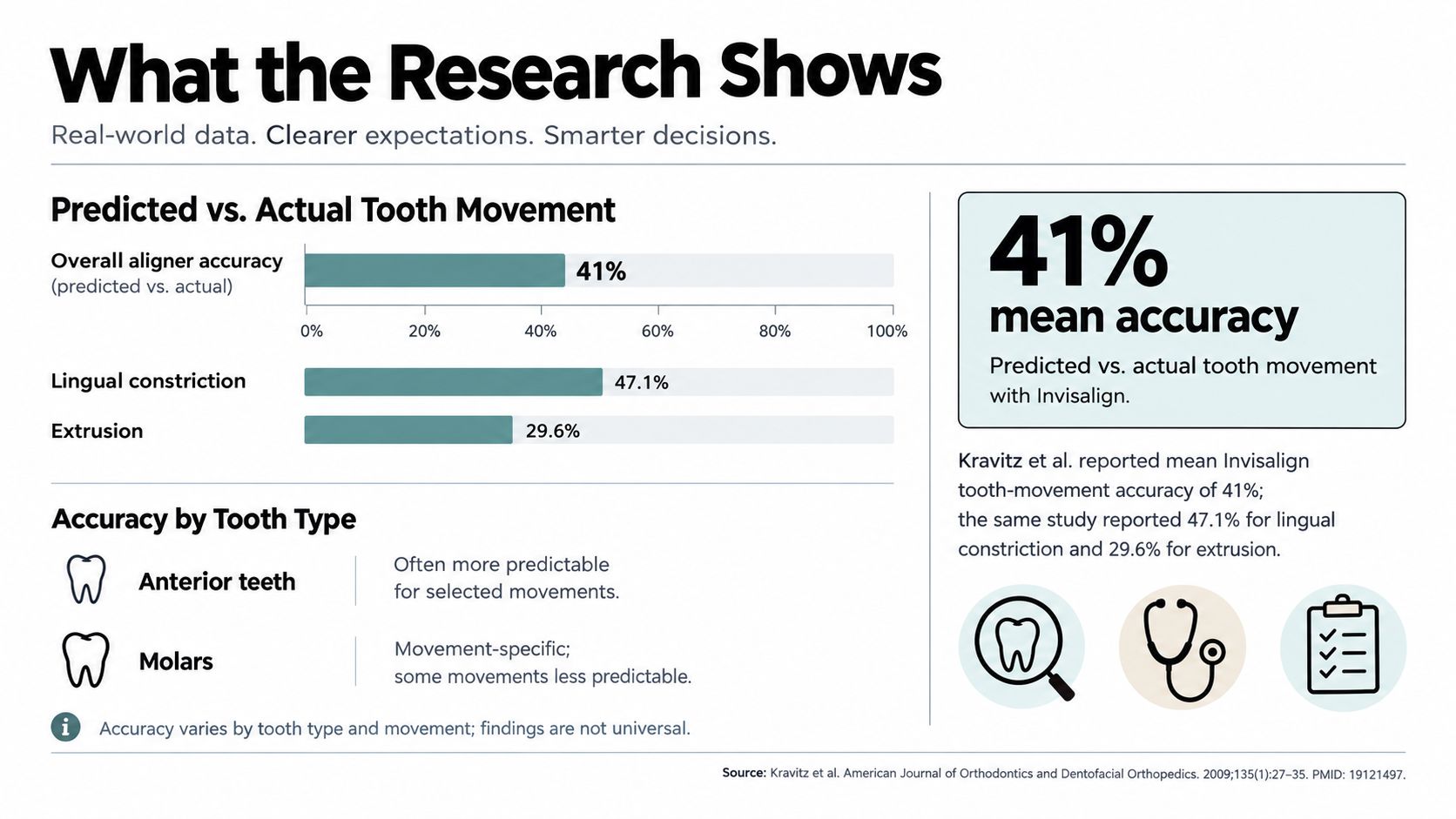
A systematic review found consistency that Invisalign can serve as a viable alternative in non-growing patients whose cases do not require extractions, while rating the overall evidence level as moderate with studies ranging from low to high risk of bias, as reported in a systematic review of Invisalign treatment outcomes. That same body of evidence includes a mean accuracy of approximately 41% for planned anterior movements in an earlier study.
Later data look better for some movements. A review covering 25 studies reported 72.8% accuracy for upper-arch expansion, 87.7% for lower-arch expansion, and 87% for molar distalization. Those numbers should reassure you and caution you at the same time. Expansion may track well. Extrusion, rotation of rounded teeth, and root torque are harder.
Why the simulation is not a promise
A separate review reported about 50% accuracy for all measured tooth movements in a later prospective study, reinforcing that refinements should be expected in many plans, as summarized in a review comparing Invisalign evidence and movement accuracy. More recent comparative evidence is also mixed, including a 2025 systematic review of seven randomized trials involving 402 patients that found advantages in only certain quality domains and no significant differences in several other outcomes, detailed in a 2025 meta-analysis of clear aligners versus fixed appliances.
For a visual explanation of how aligner staging is supposed to work, watch this short overview before you compare quotes.
My take is firm. Diagnosis, attachment design, monitoring, and refinement policy matter as much as brand. If two quotes differ, ask what happens when a tooth doesn't track. The answer tells you more than the logo.
When Clear Aligners Are Not the Right First Choice
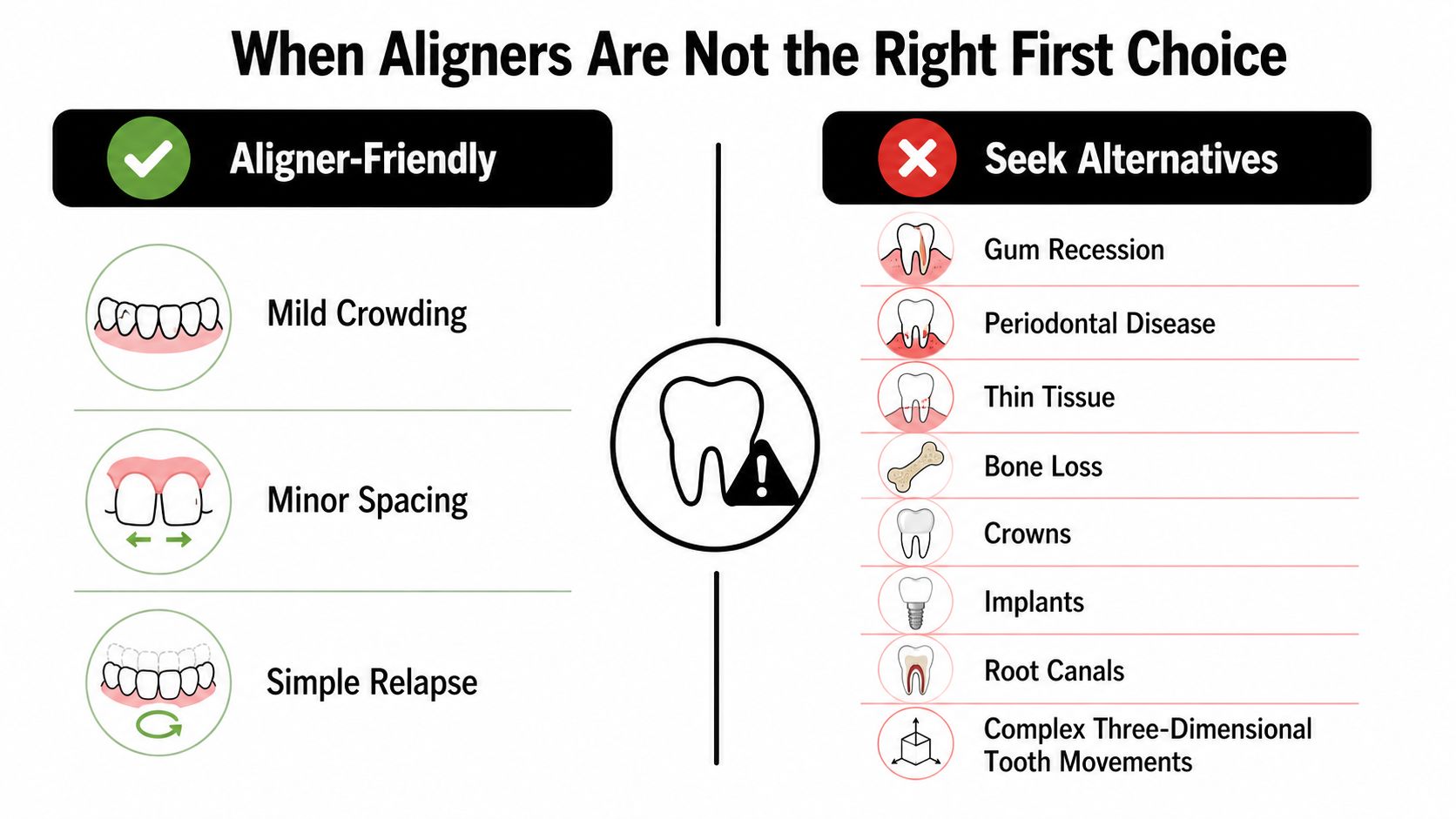
Aligners struggle when treatment needs strong three-dimensional control. In extraction or otherwise complex cases, fixed appliances produced better treatment quality because they control root position and occlusion more strongly, and one extraction meta-analysis found excessive mesial tipping of maxillary first molars averaging about 6.08 degrees, according to systematic-review evidence on aligner control in complex cases. Without well-designed attachments, a tray tends to tip crowns rather than translate teeth bodily.
That doesn't rule you out automatically. It means we need to screen for extractions, major rotations, substantial intrusion, root torque, and extensive expansion before we promise a tray-only result. Sometimes the right answer is braces, a hybrid plan, or aligners after restorative or periodontal work.
Gums, bone, and existing dental work
Start with the foundation. Gum recession, periodontal disease, thin tissue, bone loss, crowns, implants, and root canals can all change what's safe. Implants don't move like natural teeth. Crowns can affect attachment bonding. Inflamed gums need treatment before orthodontic force, not after.
A 2025 randomized trial of 60 adults with anterior gingival recession and mild-to-moderate malocclusion reported better recession-related measurements and compliance with Invisalign than fixed appliances after 12 months, with both groups above 80% recession-coverage success, as described in a randomized trial on Invisalign and gingival recession. Don't misread that. Aligners don't treat gum disease, and a selected mild-to-moderate group isn't every patient.
Practical rule: If your gums bleed, your bone support is reduced, or you have untreated decay, fix the foundation first. Straightening unstable teeth is expensive guesswork.
Real-world limits also show up in bite correction. A large scoping review reported anterior open-bite correction accuracy of 58% to 90% and incisor intrusion accuracy of 33% to 53%, with more than 50% of cases requiring refinements and 17.2% requiring conversion to fixed appliances, as reported in a 2026 scoping review of clear aligner outcomes. Plan for that possibility up front.
Cost, Candidacy, and What Drives the Real Price Difference
You're not just paying for plastic. You're paying for diagnosis, planning time, attachments, monitoring visits, refinements, retainers, and someone to call when a tray cracks or a tooth stops tracking. That's why two quotes for Clear Aligners vs Invisalign can differ sharply even when the trays look identical.
Before you compare numbers, review what drives clear aligner pricing and what should be included so you can spot a low quote that excludes refinements or retainers. Then ask for an itemized plan in writing.
How Clear Aligner Systems Compare on Practical Factors
| Factor | Invisalign | Dentist-Supervised Generic Aligner | Direct-to-Consumer Aligner |
|---|---|---|---|
| In-person exam | Typically included | Typically included | Often limited or absent |
| Attachments | Planned in system software | Varies by system | Often minimal |
| Monitoring | Scheduled in-office checks | Scheduled in-office checks | Mostly remote photos |
| Refinements | Policy varies by plan | Policy varies by practice | Often limited |
| Complex movements | Broadest published evidence | Depends on clinician and system | Best limited to very simple cases |
| Retainers | Ask if included | Ask if included | Often sold separately |
Who is a good candidate
Clear aligners are best supported for mild-to-moderate crowding, gaps, and some bite issues, and more complex conditions may require traditional braces or another treatment, while direct-to-consumer aligners sold without a prescription and supervision have not been authorized, according to FDA guidance on clear dental aligners. That's a safeguard, not a sales tactic.
When you seek dental implants near me, cosmetic dentistry, or teeth whitening at the same time, sequencing matters too. We may align first, then whiten, then finalize veneers or crowns. Doing cosmetic work in the wrong order can lock in a compromised result. Get one coordinated plan, not three separate purchases.
Matching the Right Option to Your Situation
Forget the generic winner. Match the system to your profile.
Mild front-teeth crowding or spacing in a healthy mouth. This is the strongest aligner case. Either Invisalign or a well-supervised generic system can work if attachments, wear, and retention are handled properly. Choose based on the clinician's plan and refinement terms, not hype.
Relapse after braces. If you lost retainers and only a few teeth shifted, aligners are often straightforward. Don't delay. Small relapse becomes larger crowding, and you'll still need a retainer afterward.
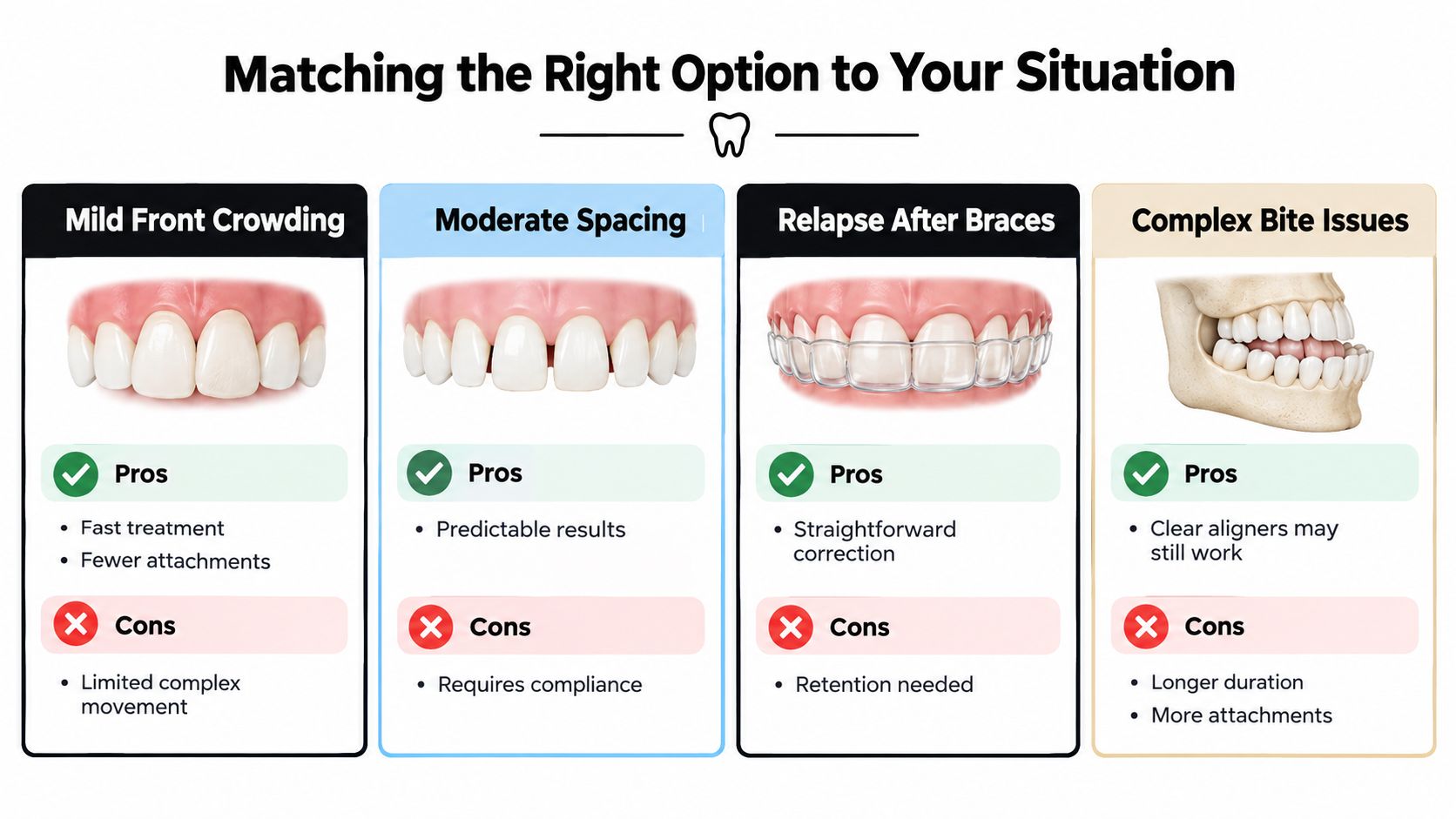
Complex bite, extraction need, or major rotation. Be cautious about a tray-only promise. Ask directly whether fixed braces or a hybrid approach would be more predictable. A trustworthy dentist will tell you when aligners are the second-best tool.
Crowns, implants, recession, or restorative plans. You need an in-person exam with x-rays, not a mail-in impression kit. Your aligner plan must coordinate with restorative dentistry, periodontal care, and any future dental implants so teeth move into positions that support lasting work.
Dental anxiety. Removable trays help some anxious patients, but you still need attachment visits and check-ins. Ask about comfort options and sedation for longer appointments, and choose a pace you can sustain.
Hygiene is a real aligner advantage when you do the work. A systematic review identified five studies and found better plaque-index results with an odds ratio of 0.09 (95% confidence interval 0.05 to 0.15) and lower bleeding on probing with an odds ratio of 0.20, as reported in a European Journal of Orthodontics review of periodontal health during aligner therapy. Trays come out for brushing, but dirty teeth under a clean-looking tray still inflame gums.
What to Ask at Your Winn Smiles Consultation
Bring this list to any consultation for a dentist in Chattanooga, TN or Cleveland, TN. Write down the answers.
- Foundation: Are my gums, bone, and existing restorations healthy enough to move teeth now?
- Movements: Which movements in my case are predictable, and which are borderline for aligners?
- Attachments and elastics: Will I need them, where will they go, and how visible will they be?
- Monitoring: How often will you check tracking in person, and what happens if I fall behind?
- Refinements and retainers: How many refinements are included, what do extra trays cost, and are retainers included?
- Alternatives: Would braces, a hybrid plan, or no treatment serve me better, and why?
A good consultation tells you what aligners can't do for your bite, not only what they can.
We offer free consultations and second opinions for select services, including Invisalign, at our Cleveland and Chattanooga locations. If you also need an emergency dentist, tooth extraction, cleaning and exams, or restorative care, tell us at booking so we sequence everything correctly. Book the exam, get a diagnosis, and then decide on brand with facts in hand.
If you're weighing Clear Aligners vs Invisalign in Cleveland or Chattanooga, schedule a consultation to have your gums, bite, and treatment options evaluated in person before you commit to any tray system. Our team will explain candidacy, refinements, retainers, and total cost in plain language so you can choose with confidence. Visit Winn Smiles to request your appointment today.