If you're a Cleveland or Chattanooga adult who hides your smile in photos, you may have wondered, how do clear aligners work when they look like little pieces of thin plastic? The question becomes especially important if crowding, spacing, or an uneven bite once made traditional braces seem like the only realistic option.
At Winn Smiles, Invisalign treatment begins with an evaluation of your teeth, bite, goals, and daily habits. Clear aligners can be discreet and removable, but they aren't magic trays. They use carefully planned forces, attachments, biological remodeling, and consistent wear to guide teeth over time. A dentist near me search may help you find a convenient office, but understanding the process helps you ask better questions before choosing treatment.
Starting With the Question Behind the Question
Maya, a professional in her thirties from Cleveland, Tennessee, had avoided smiling fully in family photos for years. A crowded area in her lower teeth had bothered her since college, and she remembered a dentist once suggesting that braces might be necessary. Invisalign appealed to her because the trays looked subtle, but one question kept returning: Can a nearly invisible, removable tray really move teeth?
Many adults in Chattanooga and Cleveland have the same concern. A clear aligner doesn't look strong enough to change a bite or guide a rotated tooth. It feels more like a lightweight mouthguard than an orthodontic appliance. The answer depends on what the tray is designed to do, how well it stays seated, and whether the planned movement matches the strengths of the system.
The tray works through a sequence rather than one dramatic push. Each aligner is shaped slightly differently from the teeth as they are now. When you seat it, the thermoplastic material flexes and tries to recover its programmed shape, transferring force to selected teeth. The tissues around each tooth then respond gradually.
The practical answer: clear aligners can move teeth, but their predictability depends on movement type, attachments, staging, biology, and wear time.
Maya's case also illustrates why an online smile simulation can't replace an examination. A crowded lower arch may involve tipping, rotation, tooth-size relationships, bite contacts, or the need to create space. A Cleveland dentist must evaluate those factors before saying whether Invisalign, braces, or another approach makes sense.
The rest of this guide follows the process from biomechanics to daily wear and treatment planning. You'll see what the evidence supports, where aligners can fall short, and what a patient can expect during an Invisalign consultation at Winn Smiles.
The Biomechanics Behind How Clear Aligners Work
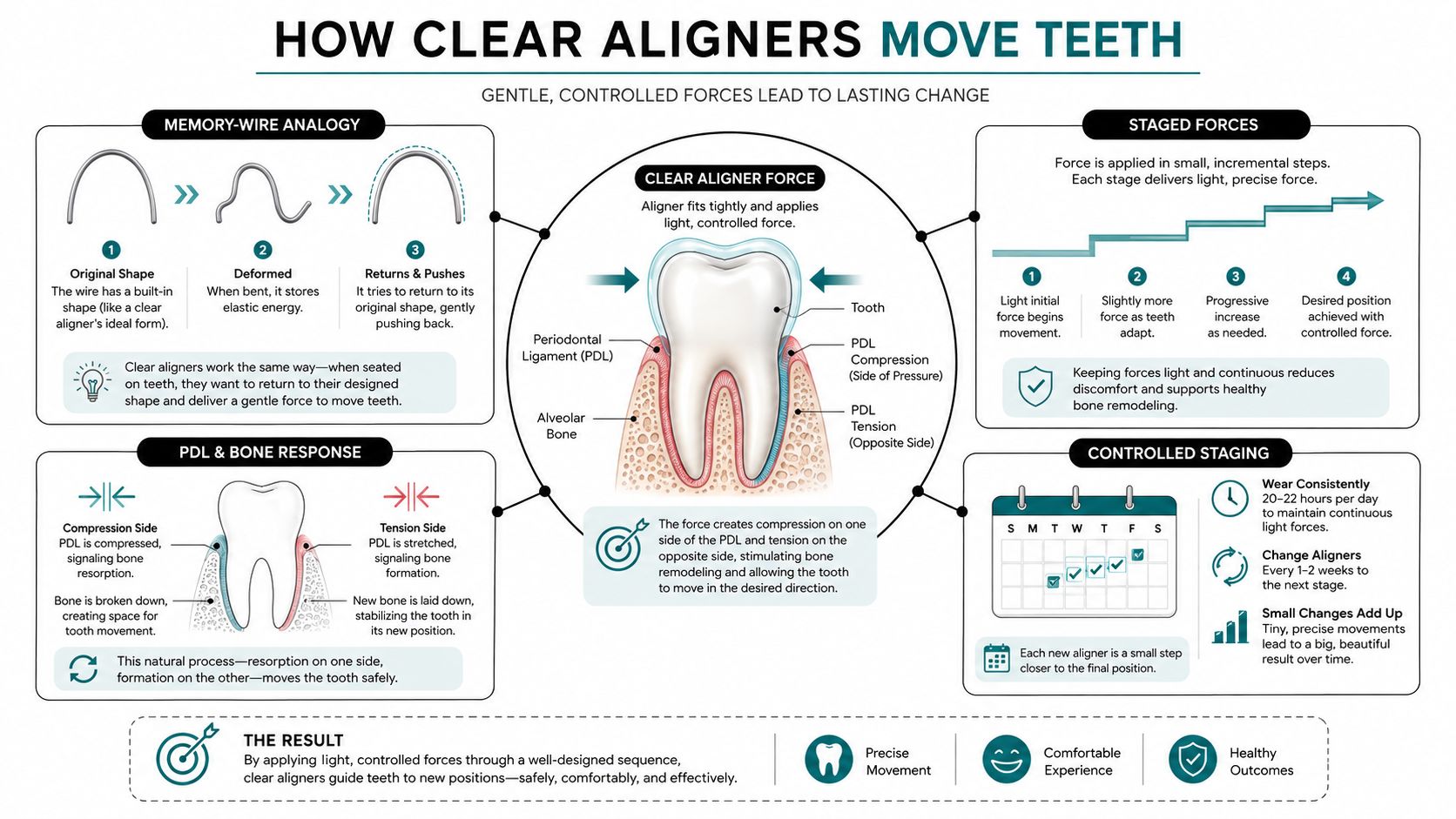
A tooth doesn't move through bone like a bead sliding along a wire. The tooth is suspended in a thin periodontal ligament, the living tissue between its root and the surrounding alveolar bone. When a tray applies force, the ligament experiences pressure and tension, and the nearby bone gradually remodels to accommodate the planned position.
A useful analogy is a flexible memory wire. Bend it slightly and it tries to return to its original shape. A clear aligner behaves in a related way. Its custom geometry is intentionally different from the current position of the teeth, so the polymer flexes when you put it in and releases force as it attempts to recover its printed shape. Reviews of aligner biomechanics describe this relationship between polymer shape recovery, tray geometry, attachments, trimline design, and periodontal ligament stress in more technical detail in this review of clear aligner mechanics.
Why staging matters
Clear aligners use staged forces, meaning the treatment plan divides the overall correction into smaller steps across a series of trays. The requested plan calls for incremental shifts of 0.25 to 0.33 millimeters per aligner stage, but that figure shouldn't be interpreted as a guarantee for every tooth or every patient. The actual response depends on the tooth, the direction of force, the surrounding tissues, and whether the aligner tracks closely.
A simple tipping movement may need only the tray's surface to contact the crown. Rotation and extrusion are different. For those movements, the aligner needs a reliable grip. Attachments are small, tooth-colored composite shapes bonded to selected teeth. They act like handles, giving the tray a surface to push against or pull around.
The trimline is the edge of the aligner near the gumline. Its height and shape influence retention and force delivery. Benchmark evidence found that changing PET-G thickness across 0.5, 0.625, and 0.75 millimeters didn't significantly change the moment-to-force ratio for the tested palatal tipping condition, while trimline design materially changed loading behavior in the systematic review of aligner biomechanics. That's why making a tray thicker isn't the whole solution.
Robertson and colleagues' scoping review found that aligner biomechanics aren't equally precise for every movement. Reported rotational shortfalls averaged about 5 degrees, torque was under-expressed by 35% to 58%, expansion accuracy ranged from 73% to 88%, and incisor intrusion accuracy ranged from 33% to 53%. The same review reported 58% to 90% accuracy for anterior open bite correction and summarized earlier Invisalign research with average accuracy of about 50% in the scoping review indexed by PubMed.
When a movement requires more control, a clinician may add elastics, buttons, power ridges, or temporary anchorage devices. The goal isn't to make treatment more complicated than necessary. It's to give the force system enough mechanical advantage to control the root and bite, not just the visible crown.
Your Treatment Workflow From First Scan to Final Tray
At Winn Smiles, the Invisalign process starts with a complimentary consultation in Cleveland or Chattanooga. A team member reviews your concerns, dental history, smile goals, and questions about treatment. The clinician examines your teeth and bite, then discusses whether clear aligners appear appropriate or whether braces or another service would offer better control.
Each appointment has a job
The first scan uses an iTero intraoral scanner rather than goopy impression material. The digital model shows the current relationship between your teeth and helps the clinician plan movements. You'll discuss likely attachments, space creation, bite changes, and the limits of a projected result before custom trays are fabricated.
A digital treatment preview can make the plan easier to understand. It shows the proposed sequence and final position, but it's a planning tool, not a promise that every tooth will follow the screen perfectly. Your biology and wear habits still matter.
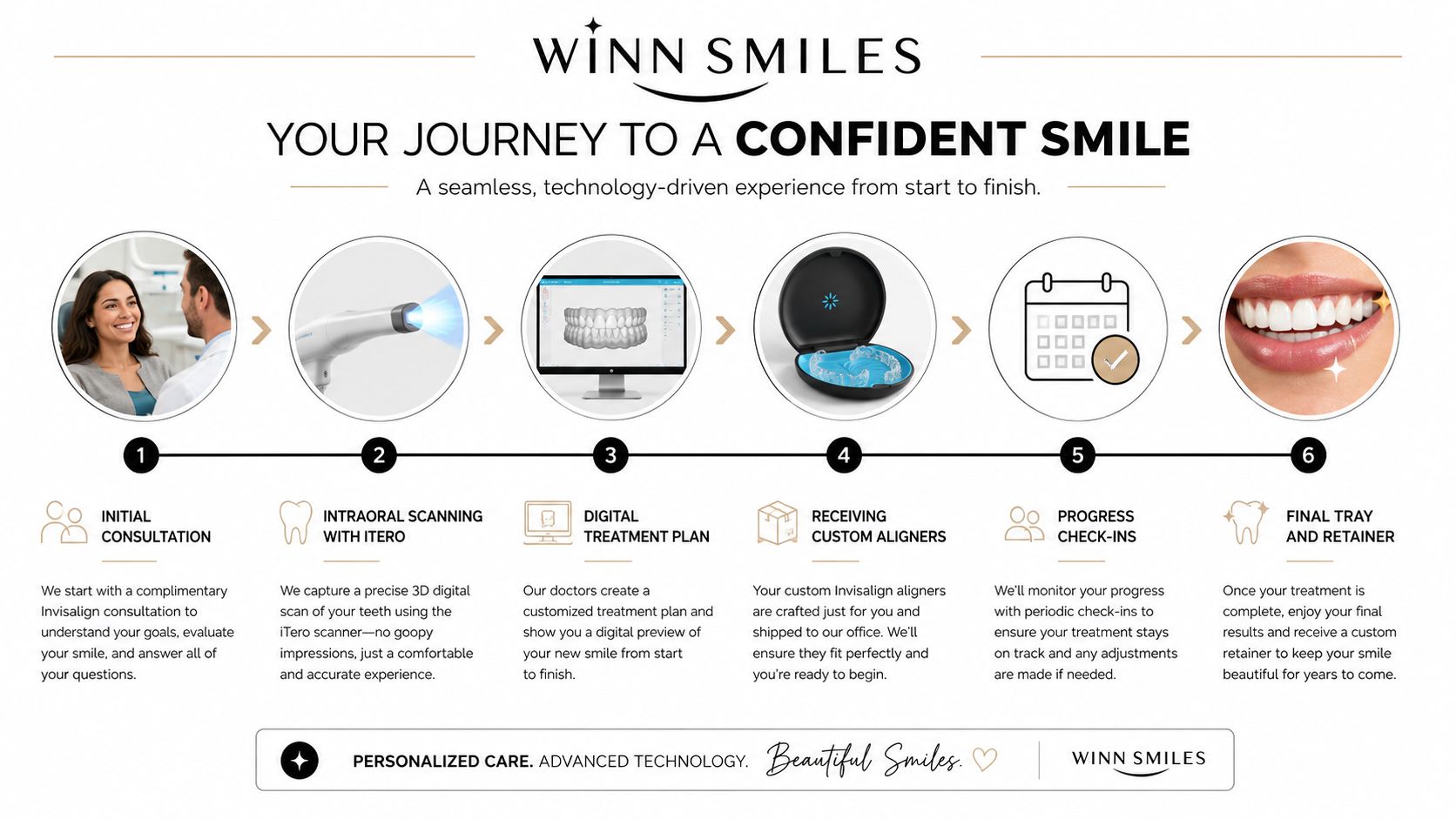
When your trays arrive, the first insertion visit confirms that each aligner seats properly and that you know how to remove and replace it. If crowding requires interproximal reduction, often called IPR, the office schedules that enamel reshaping at the appropriate stage. IPR creates carefully planned space, not a broad alteration to the tooth.
Progress check-ins evaluate tracking, attachment condition, comfort, bite contacts, and the fit of the current tray. Patients may provide tracking photos between visits when the clinician needs additional information. If teeth aren't following the plan closely enough, midcourse refinement trays can adjust the sequence rather than forcing an inaccurate fit.
The final visit evaluates the completed alignment and uses a digital scan to fabricate retainers. Your clinician will explain the retention routine because teeth can shift after active movement without ongoing retainer use.
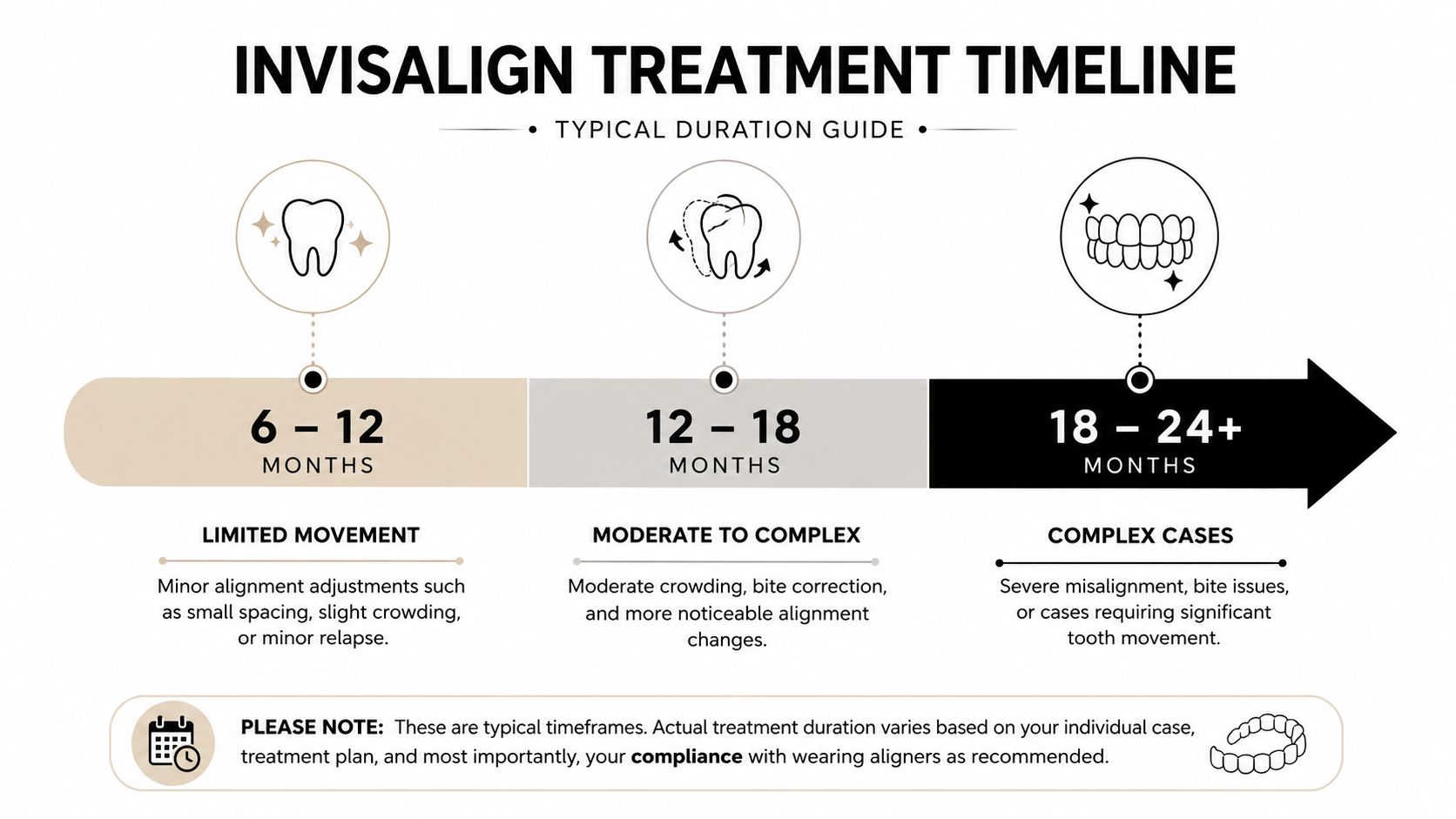
Active treatment varies with the case. Limited corrections usually take less time than full bite treatment, and refinement can extend the plan. During consultation, ask what the proposed stages accomplish, what you'll need to do between visits, and what signs should prompt a call.
The practice's Invisalign journey video offers another visual way to understand the process.
Clear Aligners Compared to Traditional Braces
A patient in Cleveland or Chattanooga may choose between two effective systems that create planned forces over time. Clear aligners use a series of removable trays, while braces use brackets and wires that stay attached. Both can change tooth position, but the experience inside your mouth is different. A new tray may feel tight as it applies pressure, whereas brackets and wires can make the cheeks and lips sore while they adjust to fixed surfaces.
The appearance is another practical difference. Clear trays are designed to be discreet, which can feel more comfortable for adults who meet with clients, speak in public, or want orthodontic treatment to draw less attention in photographs. Metal brackets and wires remain visible throughout active treatment.
Daily cleaning follows separate routines. You remove aligners before eating, then brush and floss before placing them back over your teeth. With braces, the appliance stays in place during meals, so cleaning requires careful work around brackets and wires. Both options still require regular dental exams and professional cleanings.
| Factor | Clear Aligners | Traditional Braces |
|---|---|---|
| Comfort in the mouth | Smooth removable trays may cause pressure or edge awareness | Brackets and wires remain attached and may irritate cheeks during adjustment |
| Appearance | Relatively discreet during wear | Brackets and wires are visible |
| Hygiene | Trays come out for brushing and flossing | Cleaning requires working around fixed brackets and wires |
| Follow-up rhythm | Visits focus on fit, tracking, attachments, and tray progress | Visits commonly focus on wire and bracket adjustments |
| Complex movement control | May need attachments or auxiliaries | Often offers dependable control for difficult movements |
The biomechanics also differ. Aligners can use attachments, shaped tooth-colored features bonded to selected teeth, to help a tray grip and direct rotation or other movement. Treatment is staged, so each tray applies a limited force before the next tray continues the sequence. Braces may offer more dependable control for difficult movements, particularly when the plan involves extraction spaces or complex bite correction.
The evidence does not support calling aligners universally better. A 2025 systematic review of extraction-based cases reported differences between planned and achieved movement, including a mean difference of -6.08 degrees in maxillary first-molar mesial tipping and -1.93 millimeters of under-retraction, along with root divergence, anchorage loss, and lower root-control and occlusal-contact scores than fixed appliances in the review of extraction treatment. Your clinician may therefore recommend braces when the required movement needs that level of fixed control.
For a broader patient-facing comparison, Winn Smiles explains Invisalign versus traditional braces. If you also handle practice marketing, this guide on how to optimize your Google Business Profile covers local visibility separately from clinical treatment decisions.
Daily Habits That Keep Treatment on Track
A removable appliance only works while you're wearing it. Professional guidance commonly recommends about 20 to 22 hours of wear each day from the American Association of Orthodontists' aligner guidance. That leaves short periods for meals, drinks other than water, brushing, and flossing.
Snacking can reduce wear time because every eating occasion requires removal. Hot drinks should also be consumed without the trays, and water is the safest drink to have while they're in. If you leave the aligners out longer than intended, put them back in as soon as practical and contact the office if the next tray no longer fits comfortably.
Use a small routine to avoid preventable problems:
- Remove thoughtfully: Take trays out with clean hands before meals, and avoid wrapping them in a napkin where they can be discarded accidentally.
- Store securely: Keep them in their case whenever they aren't in your mouth.
- Clean gently: Rinse with cool water and brush gently. Avoid abrasive toothpaste that can scuff the polymer.
- Brush before reinsertion: Clean your teeth after eating before placing the aligners back over them.
- Follow the sequence: Change trays on the night instructed by your clinician, not when the current tray feels loose.
A tray that fits well can still underperform if it spends too much time in a case. Consistency helps the aligner express the plan your clinician designed and gives the office a clearer picture at progress checks.
Treatment Timelines and Who Makes a Good Candidate
A busy adult in Chattanooga may want straighter teeth before a wedding, while a Cleveland patient may be addressing crowding that has bothered them for years. Age alone does not decide candidacy. The better questions are whether the planned movements suit clear aligners and whether you can wear each tray consistently.
For limited movement, many adult plans fall around 6 to 12 months. More detailed cases often fall around 12 to 18 months, and refinement trays may extend active treatment. These are planning ranges, not promises. Modest alignment differs from bite correction, major rotations, space closure, or extraction.
Movement matters more than marketing
Aligners generally handle simpler movements more efficiently, including controlled tipping and some spacing or expansion corrections. Attachments act like small handles on the teeth, helping the tray apply force in a more targeted direction. Torque, extrusion, severe rotation, and root control demand more careful planning and may require attachments or additional mechanics.
Research shows that performance varies by movement. A rotational-movement review reported accuracy ranging from 36% to 85%, with an average around 65% in the review available through PMC. Expansion may reach 73% to 88% accuracy, yet can produce tipping rather than true bodily movement, while incisor intrusion accuracy may be only 33% to 53% in the PubMed-indexed scoping review. These figures explain why trays are staged: each aligner makes a small change, and the next tray continues the sequence.
Current indications are mostly mild to moderate malocclusions. Severe cases involving impactions or major craniofacial skeletal deviations may be contraindications. Reviews also discuss concerns such as microplastic exposure and decreased condyle bone volume in the cited clinical review.
Published evidence suggests aligners can approach bracket systems for selected mild to moderate cases, although long-term retention comparisons remain less settled. At Winn Smiles, the clinician evaluates your bite, periodontal health, available space, movement demands, and wear habits before recommending a plan. For more context, read how long Invisalign takes before your appointment.
Common Misconceptions Worth Putting to Rest
Myth: Clear aligners are always faster.
A digital plan can look efficient, but the timeline depends on the movements required and how consistently you wear each tray. Mild alignment may progress smoothly. Root control, difficult rotations, or bite correction can require refinements or another appliance. Braces may provide more dependable control when tooth movement becomes complex.
Myth: Aligners are automatically gentler on gums.
Removable trays make brushing and flossing easier, but they do not compensate for missed cleaning. Plaque around attachments or beneath a poorly cleaned tray can irritate the gums. Attachments and IPR are planned clinical procedures, so your dentist must assess your enamel, gum health, and cleaning routine before and during treatment.
Myth: Invisalign can fix anything.
Clear aligners have limits. Severe rotations, substantial bite problems, extraction-based mechanics, and major skeletal discrepancies may call for braces, elastics, temporary anchorage devices, or surgical care. In extraction cases, research has reported less predictable root control and occlusal contact with aligners than with fixed appliances. The practical lesson is simple: a tray can apply staged forces, but it cannot replace every type of anchorage or correction.
Myth: Teeth stay straight after the last tray.
Teeth can shift because the supporting bone and tissues continue adapting. Retainers hold the positions created during active treatment, so the final aligner marks a change in phase, not the end of care.
A Chattanooga dentist should explain where aligners fit your goals, where attachments or refinements may help, and when braces offer better control. At Winn Smiles, asking those questions supports sound treatment planning, whether your visit takes place in Cleveland or Chattanooga.
Beginning Your Invisalign Journey at Winn Smiles
A first consultation should feel like an evaluation, not a sales presentation. You can contact Winn Smiles by phone or online form and share what concerns you most, whether that's lower crowding, spacing, bite comfort, appearance, or an upcoming event. The front desk can gather the basic information needed to arrange the visit and explain what to expect.
In Cleveland or Chattanooga, the appointment includes a warm welcome, an oral examination, and an iTero digital scan instead of goopy impressions. The scan gives the clinician a three-dimensional view of your current smile. You can discuss treatment goals, possible attachments, expected appointments, active-treatment length, and budget in direct language.
Dr. Winn can review the projected digital treatment simulation on-screen so you can see how the planned movements may change your smile before committing. That preview helps patients understand the destination, but the conversation should also cover limits, possible refinements, and whether braces would provide more reliable control.
Financing and insurance questions belong in the same conversation. The team can explain available payment arrangements, discuss how insurance may apply, and outline the next steps if you choose to proceed. Those steps may include approving the plan, completing any needed dental treatment first, scheduling attachment or IPR visits, and arranging aligner pickup.
You don't have to choose Invisalign because you came in asking about it. A consultation can be equally valuable if traditional braces, restorative dentistry, periodontal care, or another approach better fits your oral health. If you're also researching content growth for dental clinics, keep that separate from your personal treatment decision. Your smile plan should be based on an examination and a conversation with your dental team.
For adults searching for a dentist near me, a cosmetic dentist near me, or an emergency dentist in Chattanooga or Cleveland, Winn Smiles also provides general, cosmetic, restorative, implant, whitening, and emergency dental services. If a tooth needs removal before orthodontic care, the team can discuss tooth extraction. If tooth replacement becomes part of the plan, dental implants near me may be another topic to evaluate after the appropriate examination.
Start with the scan and the questions that have been on your mind. You'll leave with clearer information, whether aligners or braces turn out to be the better fit.
Winn Smiles offers Invisalign consultations, digital scanning, treatment planning, and ongoing dental care for adults in Chattanooga and Cleveland. Visit Winn Smiles to schedule your consultation and find out how clear aligners could fit your smile goals.