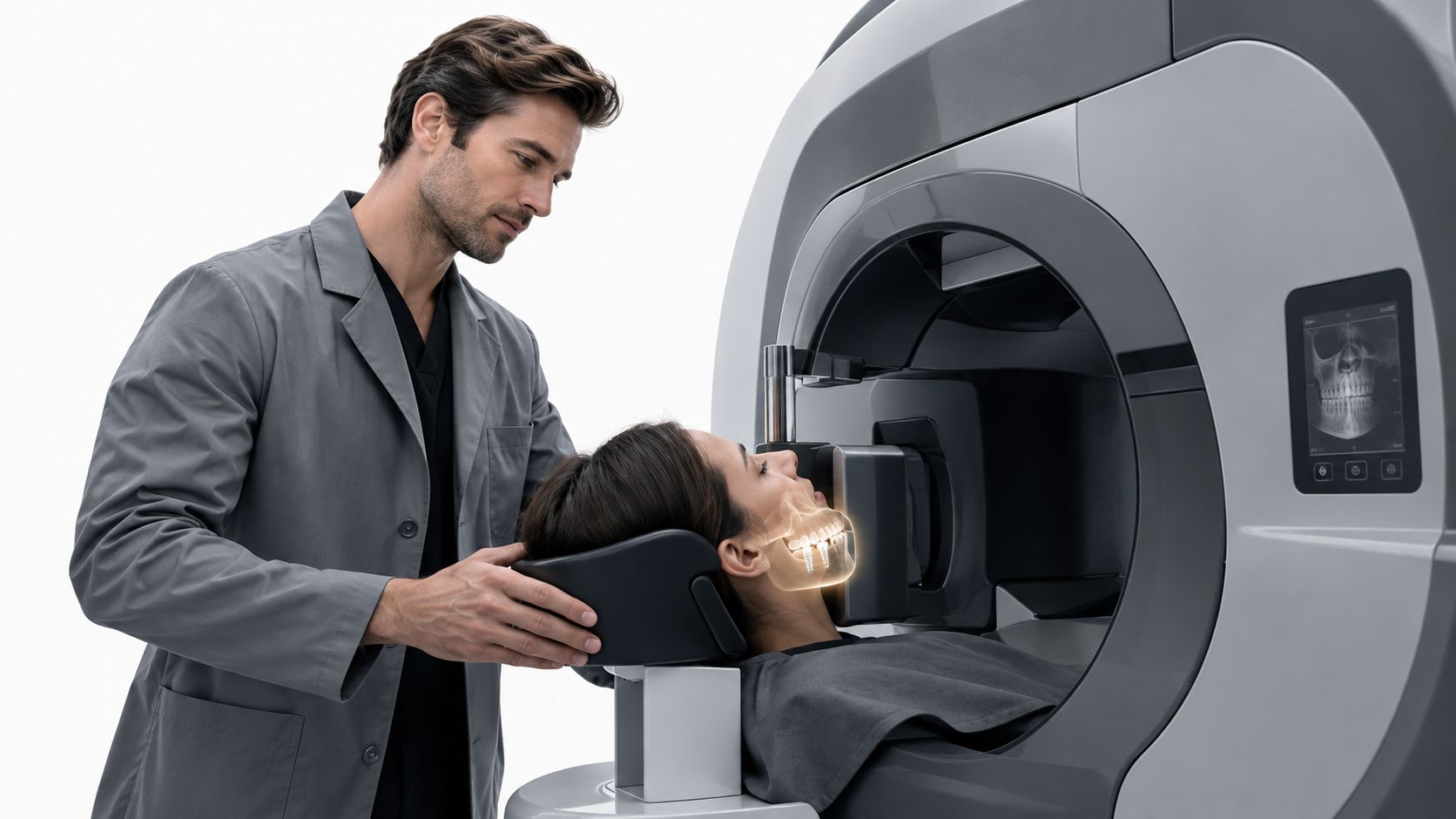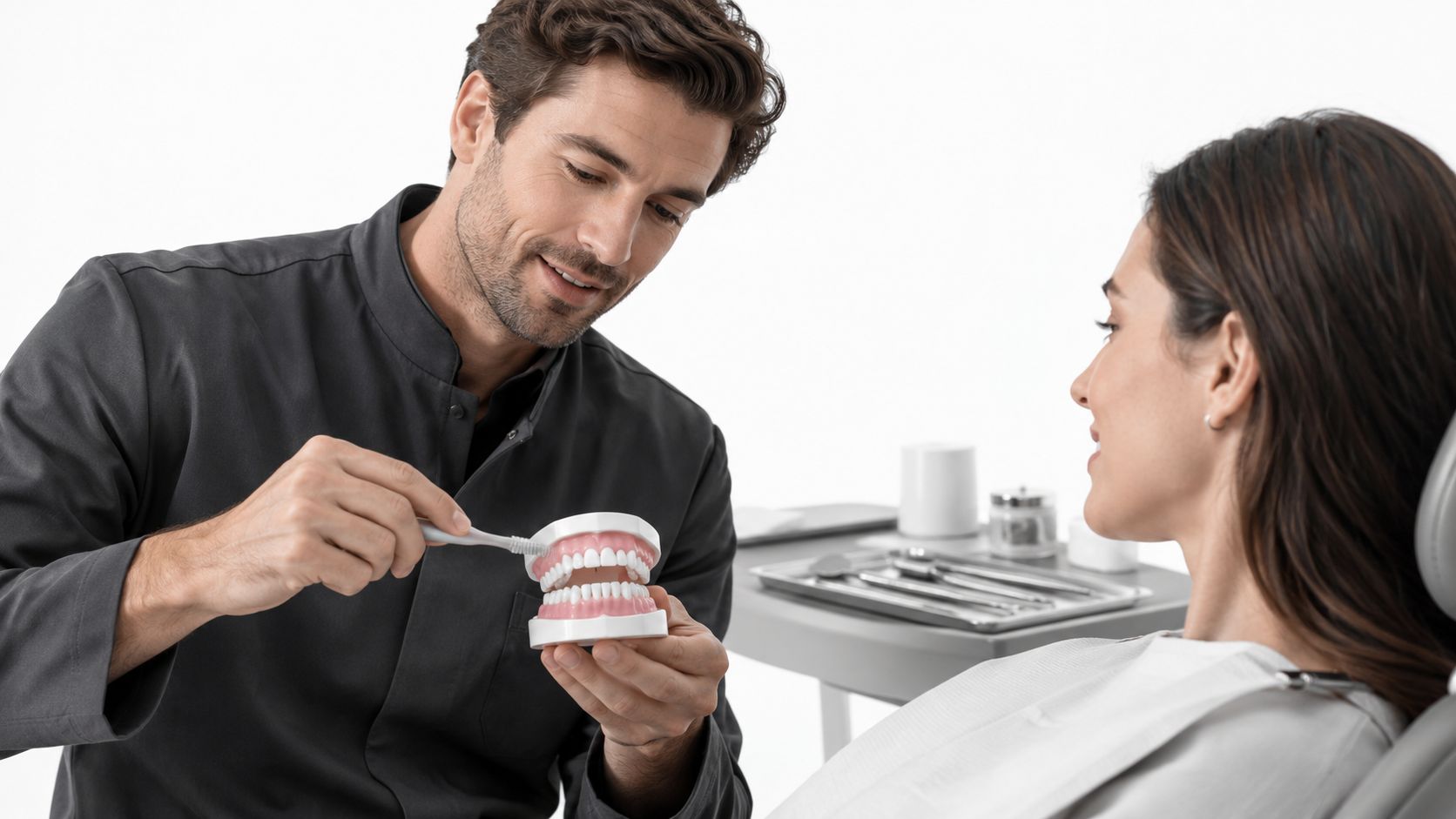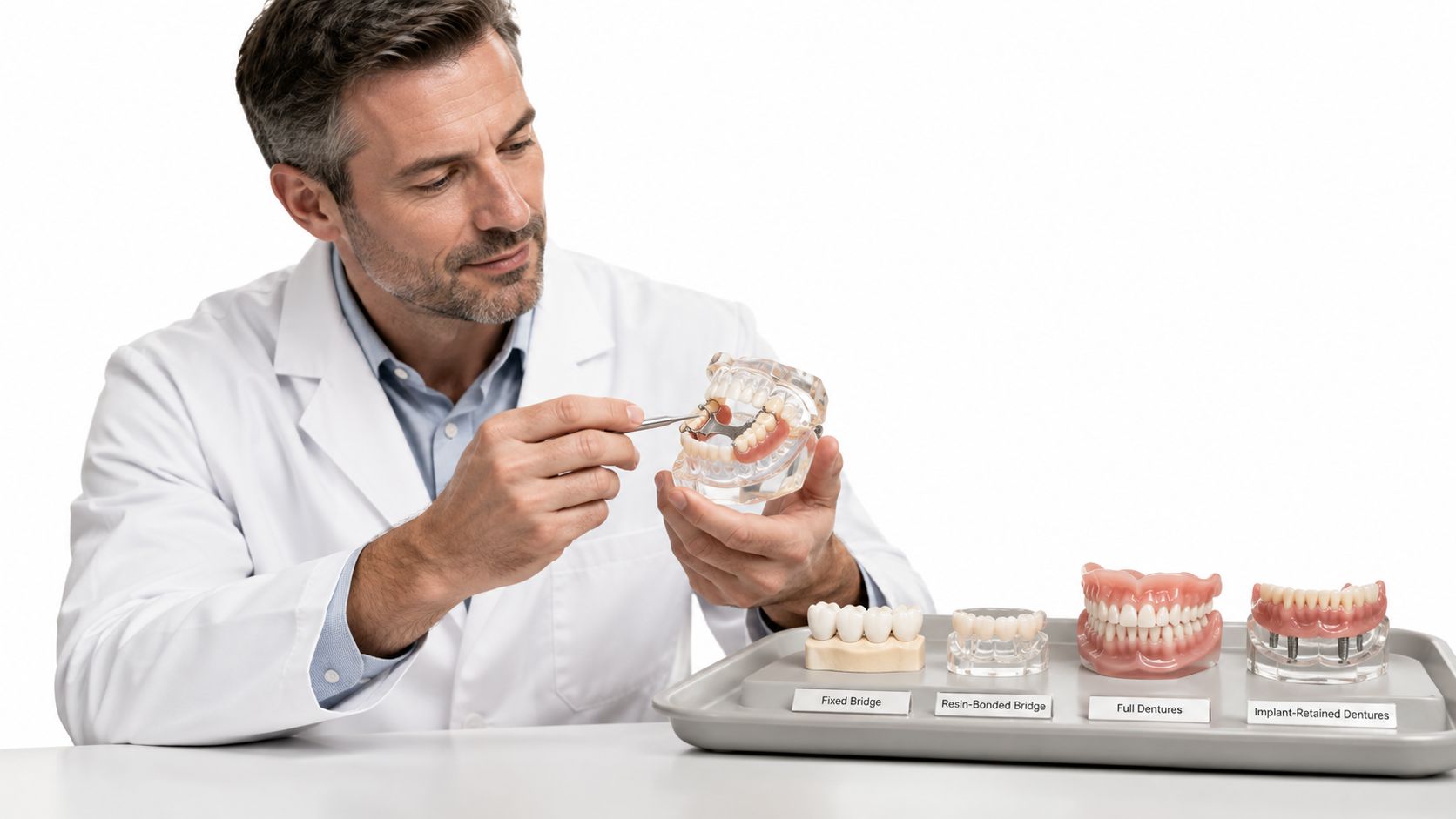
You've been told you need an implant, but you're still thinking about the surgery, the expense, or whether there's another way to fill that gap. Meanwhile, eating feels awkward and you're catching yourself hiding your smile. If you're searching for a dentist in Chattanooga, TN, or Cleveland, TN, Winn Smiles can help you compare a dental implants alternative with an implant plan before you commit.
The right replacement isn't automatically the newest or most expensive one. It's the option that fits your mouth, gives you useful function, and comes with maintenance you can realistically manage.
When You Want to Replace Teeth Without Surgery
Hearing “implant” can turn a straightforward wish into a complicated decision. You wanted to chew comfortably again. Now you're wondering about surgical appointments, healing, and what happens if the treatment stretches your budget.
That hesitation deserves a conversation, not a sales pitch. Dental implants are valuable, but surgery isn't a requirement for every tooth replacement. Bridges and dentures are established choices with their own clinical logic.
Start With the Problem You Want Solved
A missing tooth might bother you most when you smile, while a larger gap might make eating your usual meals difficult. Someone missing an entire arch has a different problem from someone with a small space between otherwise healthy teeth.
The anchorage matters. Leeds Teaching Hospitals explains the distinction between implants, bridges, and dentures: implants use a surgically placed fixture in bone, whereas conventional bridges and dentures use other forms of support. That difference affects both the treatment experience and what your dentist must evaluate.
Practical rule: Don't agree to surgery until you understand which non-surgical options are workable and what you'd gain by choosing an implant instead.
Separate Hesitation From Unsuitability
Being nervous about treatment doesn't necessarily mean an implant is unsuitable. Equally, being willing to have surgery doesn't mean it's the most sensible choice.
Bring your concerns into the consultation:
- Treatment tolerance: Explain whether surgery itself or the anticipated recovery bothers you.
- Financial limits: State what you can comfortably commit to, including future care.
- Daily priorities: Say whether fixed teeth, easier cleaning, appearance, or repairability matters most.
A search for dental implants near me should lead to a comparison, not a predetermined answer. My recommendation is straightforward: choose the least burdensome treatment that reliably meets your needs, rather than treating maximum intervention as the default.
What Counts as a Real Alternative to Implants
A real alternative is an established restoration your dentist can evaluate for your mouth now. It isn't a promise of future technology, and it isn't necessarily a temporary compromise.
This consultation illustration shows the sort of side-by-side discussion patients should expect.
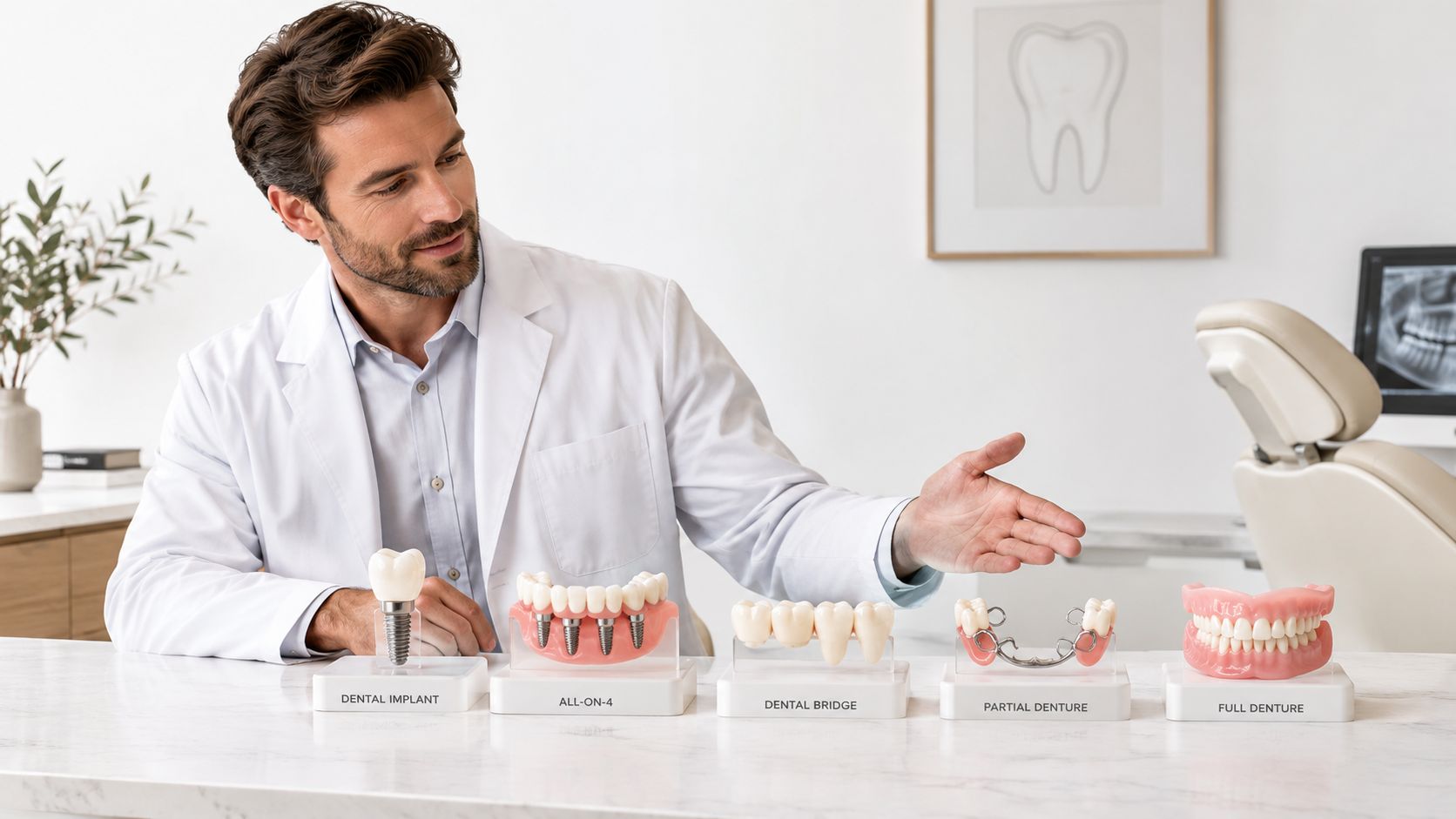
Know What Holds the Replacement in Place
Fixed bridges use neighboring teeth for support. The NHS description of dental bridges explains that they're fixed restorations made to replace missing teeth, rather than appliances you remove during routine use.
The other main choices have different support systems:
- Removable partial dentures: Replace gaps while using remaining teeth and oral structures for support.
- Complete dentures: Replace all teeth in an upper or lower arch without implanted fixtures.
- Resin-bonded bridges: Attach conservatively to adjacent enamel for selected single-tooth spaces.
- Implant-retained dentures: Combine a removable denture with implant anchorage.
That final category needs an important qualification: an implant-retained denture isn't a surgery-free alternative. It's an alternative to other implant restoration designs, including fixed full-arch teeth. Patients still remove the denture even though implants help retain it.
Ask the dentist to show you what stays permanently attached and what you'll take out yourself. The words “implant teeth” don't answer that question clearly enough.
Don't Wait on Experimental Tooth Replacement
Lab-grown teeth attract understandable interest. A natural replacement sounds appealing, especially when you're reluctant to choose an artificial one.
But coverage of regenerative tooth research distinguishes tooth-like tissue developed in research from replacement teeth ready for implantation in humans. Regenerative teeth remain experimental, not an available substitute for a bridge, denture, or implant.
Don't postpone an assessment because of a research headline. Ask what can address your current chewing, appearance, and comfort concerns now, and whether your plan leaves reasonable options open later.
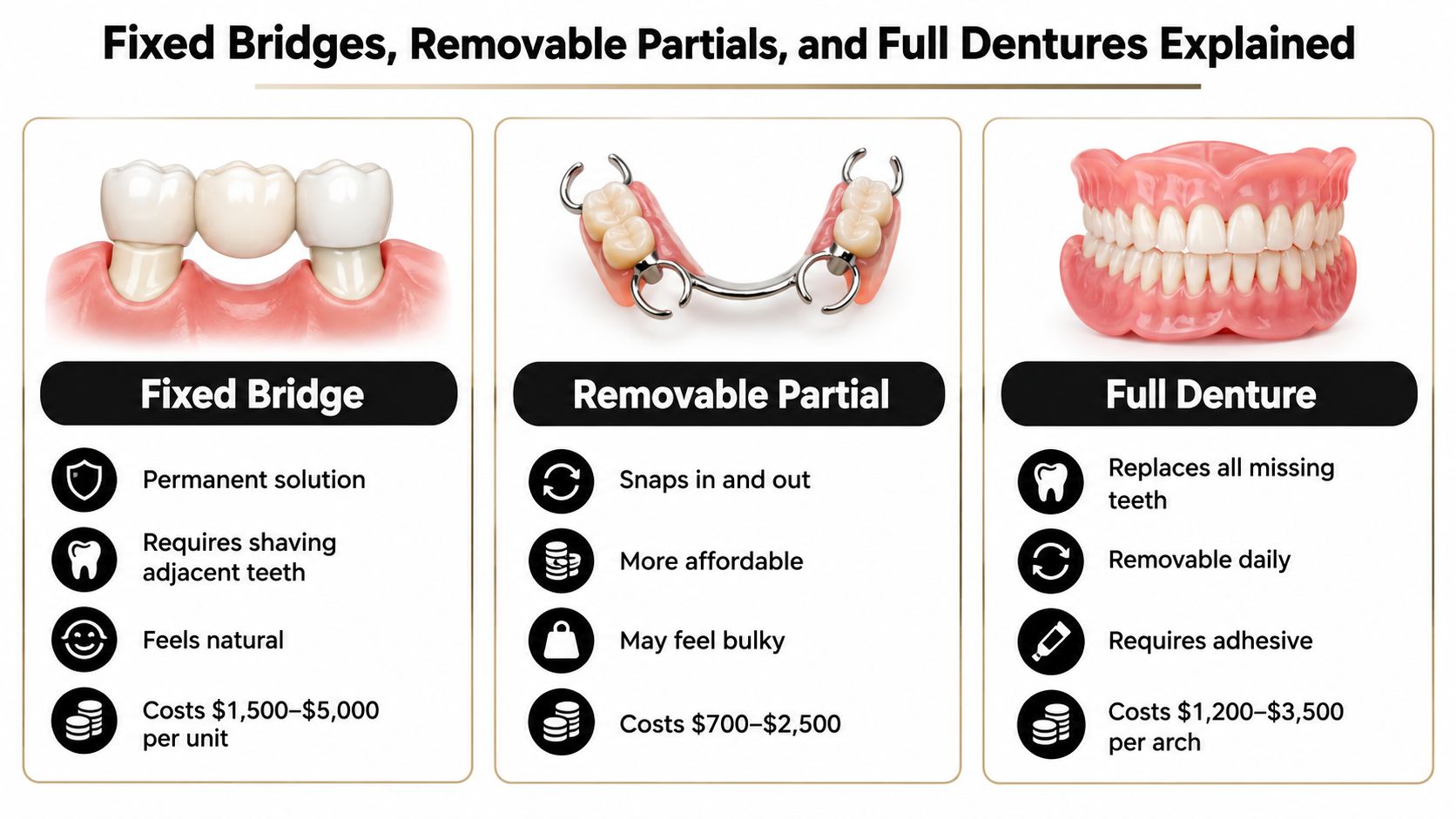
Fixed Bridges, Removable Partials, and Full Dentures Explained
The useful question isn't which restoration looks most natural. It's what each option asks of your existing teeth, your daily routine, and your tolerance for future repairs.
The illustration below summarizes common differences. Treat its cost labels as illustrative, not verified treatment estimates or Winn Smiles pricing; adhesive use also isn't universal. Your written plan should reflect the actual design and care your mouth needs.
Fixed Bridges and Conservative Bonded Bridges
A conventional bridge makes sense when suitable neighboring teeth can support the replacement, especially if those teeth already need substantial restoration. The trade-off is preparation of the supporting teeth. Don't dismiss that biological cost just because the finished bridge feels convenient.
Ask your dentist to demonstrate how you'll clean beneath the replacement tooth and around its supports. Also ask what happens if a supporting tooth develops a problem. A bridge's future depends on more than the strength of its materials.
A resin-bonded bridge deserves specific consideration when adjacent teeth have healthy enamel and the space receives favorable biting forces. It generally requires little or no enamel preparation, but it isn't appropriate for every gap.
An evidence review of resin-bonded bridges reported approximately 87.7% five-year survival, while a prospective study of 771 adhesive bridges estimated 80.4% survival at ten years. These are study outcomes, not a guarantee for an individual restoration.
For a suitable low-load front-tooth space, ask whether a cantilever design is appropriate. Bonding area, stable tooth support, and the bite matter more than just choosing the most conservative-sounding name.
Removable Options With Different Jobs
A partial denture can be practical when missing teeth are spread across the mouth and a fixed bridge would be difficult to support. Its appeal is flexibility; its compromise is accepting a removable appliance rather than fixed teeth.
Try to understand the design before approving it. Ask where the supporting components will sit, what might be visible when you smile, and how you'll remove and clean it.
Complete dentures address full-arch tooth loss. The NHS guidance on dentures explains their removable nature and the importance of cleaning, fit, and professional assessment when they cause problems.
A denture that hurts or repeatedly slips needs evaluation, not a determination to put up with it.
For patients who want a removable restoration but need additional retention, an implant-retained denture deserves a separate discussion. It retains the removable-care routine while introducing surgery and implant-related maintenance.
Ask About the Actual Treatment Sequence
There's no honest universal completion date for these options. Existing tooth problems, necessary extractions, restoration design, and any surgery can change the schedule.
Request a sequence that identifies preparation, impressions or scans, fitting, and follow-up. If appearance during treatment concerns you, ask what you'll wear between stages rather than assuming the final restoration will be ready immediately.
Comparing Cost, Longevity, and Daily Comfort
Compare the whole treatment plan, not just the initial bill. Preparation, repairs, adjustments, replacement components, and care of supporting teeth all belong in the discussion.
A lower upfront fee can be the right choice. It can also become frustrating if the appliance doesn't match your expectations about stability or daily use. Neither expensive nor inexpensive automatically means good value.
Dental Implant Alternatives Compared
The table uses qualitative cost descriptions because there's no verified local fee schedule or universal average lifespan for these treatments.
| Option | Typical Cost | Average Lifespan | Maintenance | Best For |
|---|---|---|---|---|
| Conventional fixed bridge | Case-specific; supporting-tooth treatment affects the total | Depends on supporting teeth and restoration condition | Cleaning beneath the bridge and monitoring supports | Localized gaps with suitable neighboring teeth |
| Removable partial denture | Often a lower-cost route for multiple gaps; request a quote | Depends on fit, materials, and remaining teeth | Removal, cleaning, and fit reviews | Missing teeth in different areas |
| Complete denture | Often a lower-cost full-arch choice than implant-assisted treatment | Fit and condition require ongoing review | Daily removal and cleaning; adjustments as needed | Full-arch loss when non-surgical care is preferred |
| Resin-bonded bridge | Depends on design and clinical suitability | Bond retention and bite strongly influence service | Monitoring the bond and supporting tooth | Selected single-tooth, low-load spaces |
| Implant-retained denture | Includes surgery and attachment-related costs | Implants and removable components need separate assessment | Denture cleaning plus implant and attachment care | Patients seeking added retention while keeping removable teeth |
Read Longevity Claims Carefully
A systematic review comparing tooth-replacement and tooth-preservation treatments summarized conventional fixed partial denture survival beyond six years at approximately 82%, with a 95% confidence interval of 80% to 84%. That figure describes the included evidence, not the expected expiration date of your bridge.
The same review reported survival near 97% beyond six years for endodontically treated and definitively restored teeth. These aren't interchangeable patient groups, but the finding supports an important question: can the tooth be saved before it's extracted?
Budget advice: Ask for an itemized estimate and a plain-language explanation of what future maintenance could involve.
Daily comfort deserves equal attention. Would you rather clean beneath a fixed restoration or remove an appliance to clean it? Would you accept movement in exchange for avoiding surgery?
Pick your priority first. Then ask which clinically suitable option meets it without creating a maintenance burden you're unlikely to sustain.
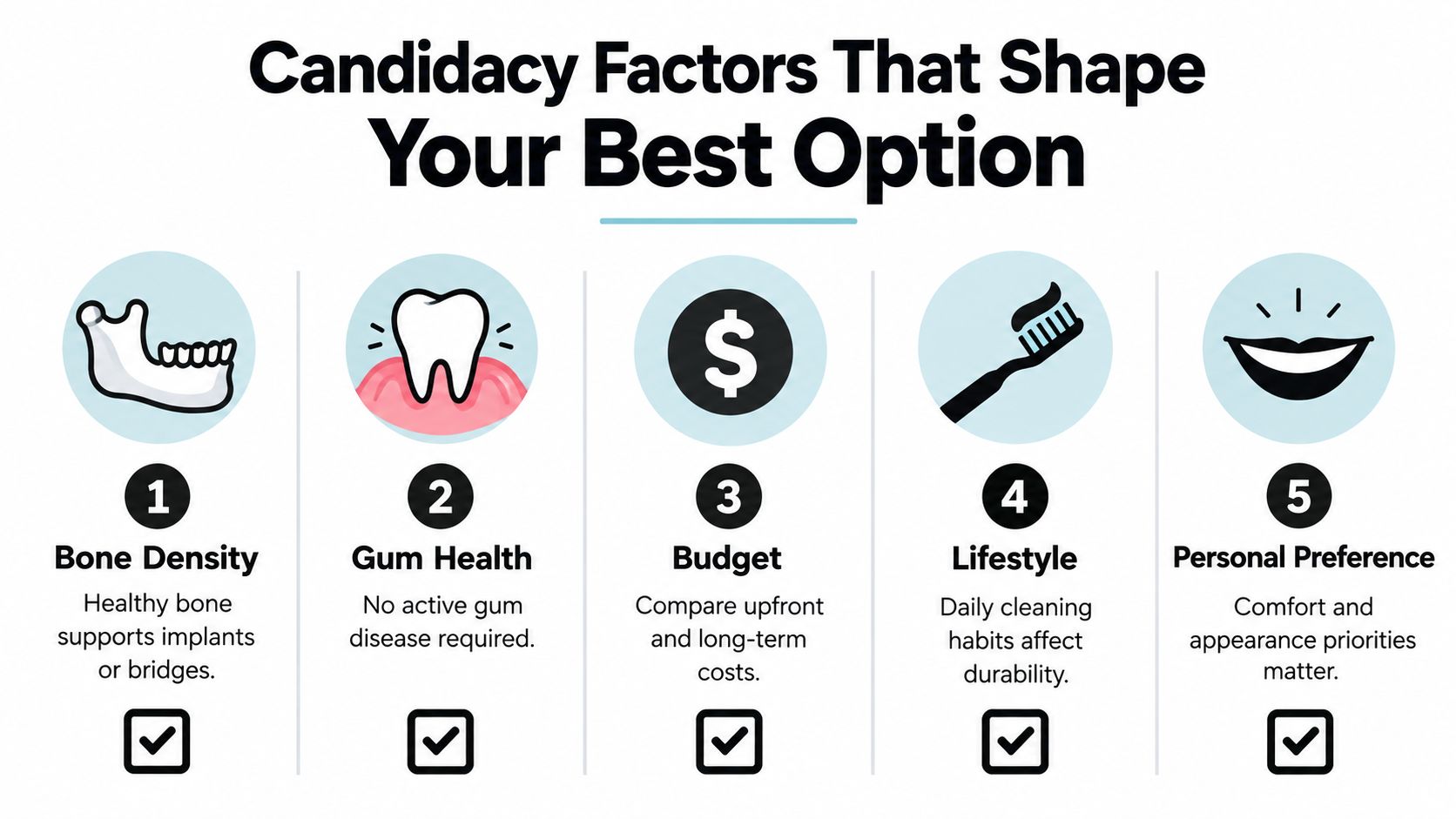
Candidacy Factors That Shape Your Best Option
The same gap can lead to different recommendations because dentists aren't treating empty space alone. They're planning around the teeth, gums, bite, medical history, and person attached to that space.
Use this checklist to organize the discussion, with one clarification: conventional bridges rely on supporting teeth, not an implant fixture placed in bone. Bone assessment has different implications for different treatments.
What the Dentist Needs to Examine
Neighboring teeth come first for a tooth-supported bridge. Your dentist should evaluate their remaining structure, roots, gum support, and ability to carry the restoration. Healthy-looking crowns don't tell the whole story.
The Leeds guidance on removable partial dentures reinforces that bridge designs aren't always possible or appropriate and that removable treatment offers another pathway. A recommendation should explain why the available supports favor one design over another.
Bone volume matters when evaluating surgical anchorage. Gum health and biting forces also need assessment, particularly when considering bonded restorations or loading supporting teeth. The practice's explanation of dental implant candidacy can help you prepare for those questions.
What You Need to Bring Into the Decision
At a new patient exam, bring your medication list, relevant health history, and any available recent dental records. Mention diabetes, smoking, previous healing concerns, and discomfort with dental treatment so the dentist can assess their relevance rather than make assumptions.
Be equally candid about practical limitations:
- Cleaning ability: Explain hand-mobility issues or difficulty reaching back teeth.
- Removable appliances: Say whether taking teeth out at night is acceptable to you.
- Budget and timing: Identify constraints before a treatment plan is finalized.
- Future repair: Ask what can be repaired and what might require replacement.
Ask which dental x-rays or other records are needed and what each will clarify. You deserve a recommendation supported by an examination, not one based only on a photograph or your preference for fixed teeth.
Why a Free Second Opinion Changes the Decision
A major tooth-replacement decision deserves scrutiny. Getting another assessment isn't disloyal, and you don't need to prove that the original recommendation was wrong to ask for one.
A useful second opinion may confirm that an implant is the strongest choice. It may also identify a workable bridge, a conservative bonded restoration, or a removable option that better matches your priorities.
Evidence Doesn't Support Automatic Surgery
A 2025 evidence review of conventional and implant-assisted upper dentures found no consistent superiority for implant-assisted treatment on quality-of-life outcomes. Its scope matters: this finding concerns complete upper-jaw dentures, not every missing-tooth situation.
The practical conclusion isn't that implants lack value. It's that avoiding implants doesn't automatically mean sacrificing satisfaction, especially when a conventional upper denture fits the patient's goals.
The treatment you can afford, maintain, and comfortably live with deserves serious consideration.
Pressure-Test the Recommendation
A second opinion should give you more than a different price. It should explain the diagnosis, reasonable alternatives, and why particular options are unsuitable.
Bring the original plan and ask focused questions:
- Clinical benefit: What specific problem would an implant solve better in my mouth?
- Tooth preservation: Would another design avoid preparing healthy teeth?
- Risks and upkeep: What complications and maintenance should I plan for?
- Urgency: What needs prompt care, and what can be considered carefully?
Reviewing potential dental implant complications can help you formulate questions without assuming complications are inevitable.
Winn Smiles offers free consultations and second opinions for select services. Confirm whether your proposed treatment qualifies when you book. A free consultation should still deliver clarity, including whether further examination or records are needed before a reliable recommendation can be made.
Choosing the Right Alternative for Your Smile
Start with what's bothering you, not the name of the restoration. A focused conversation helps your dentist distinguish a cosmetic concern from a chewing problem or discomfort that needs separate treatment.
Use the consultation to put your priorities into a practical plan.

Match Your Priorities to a Workable Option
For a single missing front tooth with favorable supporting enamel and bite, I'd want a resin-bonded bridge assessed before assuming surgery is necessary. For complete upper-arch loss, I'd want a conventional denture discussed seriously rather than presented as an inferior fallback.
Those are decision examples, not prescriptions. Your examination determines whether either option is appropriate.
- Describe the problem: Explain which foods, conversations, or social situations have become difficult.
- Rank your priorities: Identify whether avoiding surgery, stability, appearance, or affordability matters most.
- Request a comparison: Ask the dentist to explain the strongest suitable option and its closest alternative.
Don't Confuse Replacement With Pain Treatment
A replacement plan doesn't substitute for diagnosing pain. If you're searching for an emergency dentist because a tooth hurts, ask what needs treatment now and whether tooth extraction is necessary.
Likewise, a search for a cosmetic dentist near me may begin with appearance, but restorative dentistry must account for function and supporting oral health. Teeth whitening can be discussed separately; it doesn't replace missing teeth.
You can also bring questions prompted by this video to your appointment.
Talk with a Dentist Serving Cleveland and Chattanooga TN
If you're looking for a dentist near me in Cleveland or Chattanooga, TN, ask for a tooth-replacement consultation that leaves room for questions. Winn Smiles provides bridges, partial and full dentures, dental implants, and full-arch implant solutions, allowing a discussion of different treatment paths.
Expect Comfort and Clear Explanations
The practice offers a comfort menu and sedation options for anxious patients, alongside technology including laser dentistry and same-day crowns. Those services aren't required for every replacement plan; ask which, if any, are relevant to yours.
Bring your concerns about cost, previous treatment, and daily care. Convenient hours and accessible local offices can help with scheduling, while transparent cost discussions help you understand the proposed commitment.
- Before booking: Ask whether your consultation qualifies for a free second opinion.
- During planning: Request a written explanation of treatment stages and maintenance.
For community business owners interested in local outreach, ThroughTheGrapevine.ai offers a separate resource to find local marketing campaign ideas. For patients, the next step is simpler: arrange an examination and compare the options that fit your mouth.
Winn Smiles offers non-surgical tooth-replacement options alongside implant care in Cleveland and Chattanooga, TN. Visit Winn Smiles to request a consultation, ask about eligible free second opinions, and discuss a dental implants alternative that fits your health, budget, and daily life.