How Long Does Invisalign Take? The Truth About Your Smile Timeline
We all want that perfect smile. It’s the kind of confidence booster that changes how you walk into a room, how you greet old friends, and how you feel when a camera is pointed your way. But for many adults and teens, the idea of traditional metal braces feels like a step backward. Enter Invisalign—the clear, removable alternative that has revolutionized orthodontics.
It’s no surprise that Invisalign aligner has exploded in popularity. It offers a way to straighten teeth discreetly, without the "metal mouth" look that many dread. However, once the decision is made to pursue clear aligners, one question immediately follows: How long is this actually going to take?
Understanding the timeline is crucial. It helps you plan your life, manage your expectations, and stay committed to the process. At Winn Smiles, we believe that an informed patient is a happy patient. We know that every smile is unique, and while we can't give you a magic number without seeing your teeth, we can give you a comprehensive guide on what to expect.
What is Invisalign and How Does It Work?
Before we can discuss time, we have to discuss the mechanism. Understanding how Invisalign moves your teeth explains why it takes the time it does.
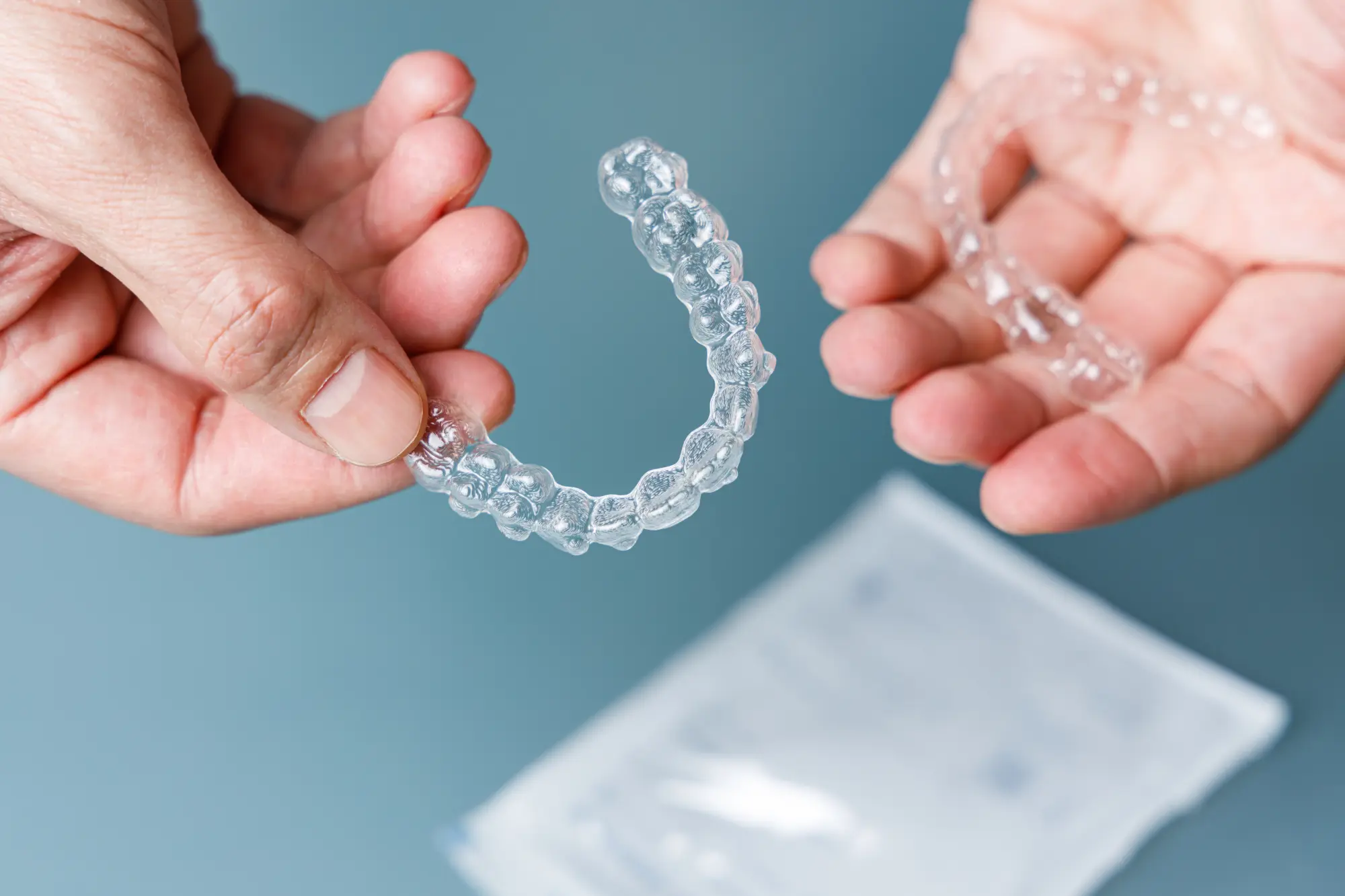
Unlike traditional braces, which use metal brackets and wires to pull teeth into place, Invisalign uses a series of custom-made, clear plastic aligners. These aligners are created using 3D computer-imaging technology. Your dentist or orthodontist maps out the complete journey of your smile from the initial position to the final desired result.
The Mechanics of Movement
Each set of aligners is designed to make small adjustments to the position of your teeth. You wear each set for about one to two weeks before switching to the next set in the series. As you replace each aligner, your teeth move—little by little, week by week—until they have straightened to the final position prescribed by your provider.
The technology behind Invisalign is fascinating. The aligners control not just the amount of movement per aligner, but also the timing of the movement. Consequently, at each stage, only certain teeth are allowed to move. This results in an efficient force delivery system that moves teeth into the desired position.
Invisalign vs. Traditional Braces
People often assume that because Invisalign is removable, it must work slower than fixed braces. This isn't necessarily true. Because the force is applied all over the tooth rather than just at the bracket site, Invisalign can sometimes be faster than traditional braces for certain types of movements.
However, the "removable" aspect is a double-edged sword. Braces work 24/7 because you can't take them off. Invisalign only works when it's in your mouth. This fundamental difference is often the biggest variable in your treatment timeline.
Factors Influencing Invisalign Treatment Time
If you ask five different people how long their Invisalign treatment took, you might get five different answers ranging from six months to two years. Why the discrepancy? Orthodontics is biology, not just engineering. Several factors play a role in how quickly your body responds to the treatment.
Complexity of the Case
This is the single most significant factor.
- Minor Crowding or Spacing: If you have just a few crooked teeth or a small gap, your treatment could be very short. These cases often fall under "Invisalign Express" or "Invisalign Lite" and can take as little as 6 months.
- Moderate Issues: Most people fall into this category. You might have several rotated teeth, an overbite, or more significant crowding. This requires more movement and more aligners.
- Complex Bite Issues: Severe crossbites, underbites, or significant skeletal misalignments take the longest. Moving the roots of teeth and changing how jaws align is a slow, careful process.
Patient Compliance
We mentioned earlier that Invisalign only works when you wear it. The general rule is strict: 20 to 22 hours per day.
If you constantly take your aligners out to snack, drink coffee, or because they feel tight, your teeth will start to shift back to their original positions. This "relapse" can stall progress significantly. A patient who wears their aligners for 22 hours a day will finish months faster than a patient who only manages 16 hours.
Age
While Invisalign works for both teens and adults, age can influence speed.
- Teens: Teenagers’ jaws are still growing, and their bone tissue is slightly more malleable. This can sometimes allow for faster tooth movement.
- Adults: Adult bone tissue is denser and fully formed. While the results are just as effective, the movement might be slightly slower. However, adults often have an advantage in the "compliance" category, as they are typically more disciplined about wearing the aligners.
The Number of Aligners
Simply put, the more aligners you need, the longer it takes. If your plan requires 20 trays and you change them every two weeks, that’s 40 weeks (roughly 10 months). If you need 50 trays, you’re looking at nearly two years. This is determined during your initial scan and cannot be skipped.
Attachments and Refinements
Sometimes, small tooth-colored bumps called "attachments" are bonded to your teeth to give the aligners something to grip. These allow for more complex movements. If your case requires many attachments, it might indicate a more complex, and therefore longer, treatment plan.
Additionally, towards the end of the initial timeline, you may need "refinement" trays. These are extra sets of aligners ordered to tweak the final few millimeters of movement to get the smile perfect.
Average Treatment Time for Invisalign
So, what is the benchmark? While outliers exist on both ends of the spectrum, we can look at the averages.
For the majority of adult patients, the average Invisalign treatment time falls between 12 and 18 months.
However, it is helpful to break this down by case type:
- Very Mild Cases: 3 to 6 months.
- Mild to Moderate Cases: 6 to 12 months.
- Moderate to Severe Cases: 12 to 18 months.
- Complex Cases: 18 to 24+ months.
It is important to remember that these are just averages. You might start seeing results in as little as a few weeks, which can be incredibly motivating. Seeing your teeth straighten out in the mirror often encourages patients to stick to the program, ensuring they hit that 12 to 18-month target.
Tips to Expedite Your Invisalign Treatment
Nobody wants to be in orthodontic treatment longer than necessary. While you can't force your teeth to move faster than biology allows (trying to do so causes damage), you can certainly prevent delays. Here is how to ensure you cross the finish line as fast as possible.
Wear Your Aligners religiously
We cannot stress this enough. Aim for 22 hours a day. Only take them out to eat, brush, and floss. If you have a big event or a meeting, try to keep them in. The aligners are virtually invisible, and most people won't notice them. Every hour they are out is an hour your teeth aren't moving.
Use "Chewies"
Your orthodontist might give you small foam cylinders called aligner chewies. biting down on these for a few minutes a day helps seat the aligners tightly against your teeth. The tighter the fit, the more effective the force delivery, and the more predictable the movement.
Switch Trays on Time (But Not Too Early)
Follow your provider's schedule exactly. If you are told to switch every 10 days, do it on day 10. Do not switch on day 8 thinking you will speed things up—if the current movement isn't complete, the next tray won't fit right, and you could derail the whole plan. Conversely, don't forget and wear them for 20 days. Consistency is key.
Maintain Excellent Oral Hygiene
If you trap food and sugar inside your aligners, you risk cavities. Dealing with restorative dental work in the middle of orthodontic treatment can pause your progress. Brush and floss after every meal before putting your trays back in.
Keep Your Appointments
Invisalign requires fewer office visits than braces, but they are still vital. At Winn Smiles, these check-ups allow us to ensure the teeth are tracking correctly. If a tooth is lagging behind, we can catch it early. Missing appointments can lead to tracking issues going unnoticed, which might require a "reboot" of your case (new scans and new trays), adding months to your timeline.
Protect Your Aligners
If you lose a tray or crack one by stepping on it, you may have to wear your previous tray while waiting for a replacement. This adds unnecessary time. Always keep your aligners in their case when they aren't in your mouth. As the saying goes: "In your face or in the case."
The Importance of Choosing the Right Provider
Technology is amazing, but it is only a tool. The success and speed of your Invisalign treatment service depend heavily on the skill of the person designing your plan.
Invisalign isn't just a product you buy off the shelf; it is a medical prescription. The computer software provides a prediction, but an experienced provider knows how to manipulate that software to account for real-world biology. They know which movements are difficult and require extra time, and how to stage movements to prevent collisions between teeth.
Why Experience Matters
An inexperienced provider might accept the default settings from the software, which can sometimes lead to plans that look good on screen but fail in the mouth. This leads to "mid-course corrections"—stopping treatment, re-scanning, and ordering new trays. This is the number one cause of extended treatment times.
At Winn Smiles, we approach every Invisalign case with a blend of artistic vision and clinical precision. We monitor your progress closely to ensure that your "estimated" timeline becomes your actual timeline. We don't just want you to finish; we want you to finish on time with a smile that exceeds your expectations.

Start Your Journey Today
So, how long does Invisalign take? For most, it's about a year to a year and a half. Compared to a lifetime of hiding your smile, that 12 to 18 months is a blink of an eye.
The time is going to pass anyway. You can let a year go by and still have the same smile, or you can start now and be revealing your new look this time next year. The timeline is variable, but the factors that control it—compliance, hygiene, and choosing the right provider—are largely within your control.
If you are ready to stop wondering and start transforming, we are here to help. Contact Winn Smiles today to schedule your consultation. Let’s map out your timeline and get you on the path to the smile you’ve always wanted.
Winn Smiles - Cleveland
https://maps.app.goo.gl/T2WzhZS2SUre9taH6
148 Stuart Crossing NW, Cleveland, TN 37312, United States
(423) 529-5241
https://www.winnsmiles.com/