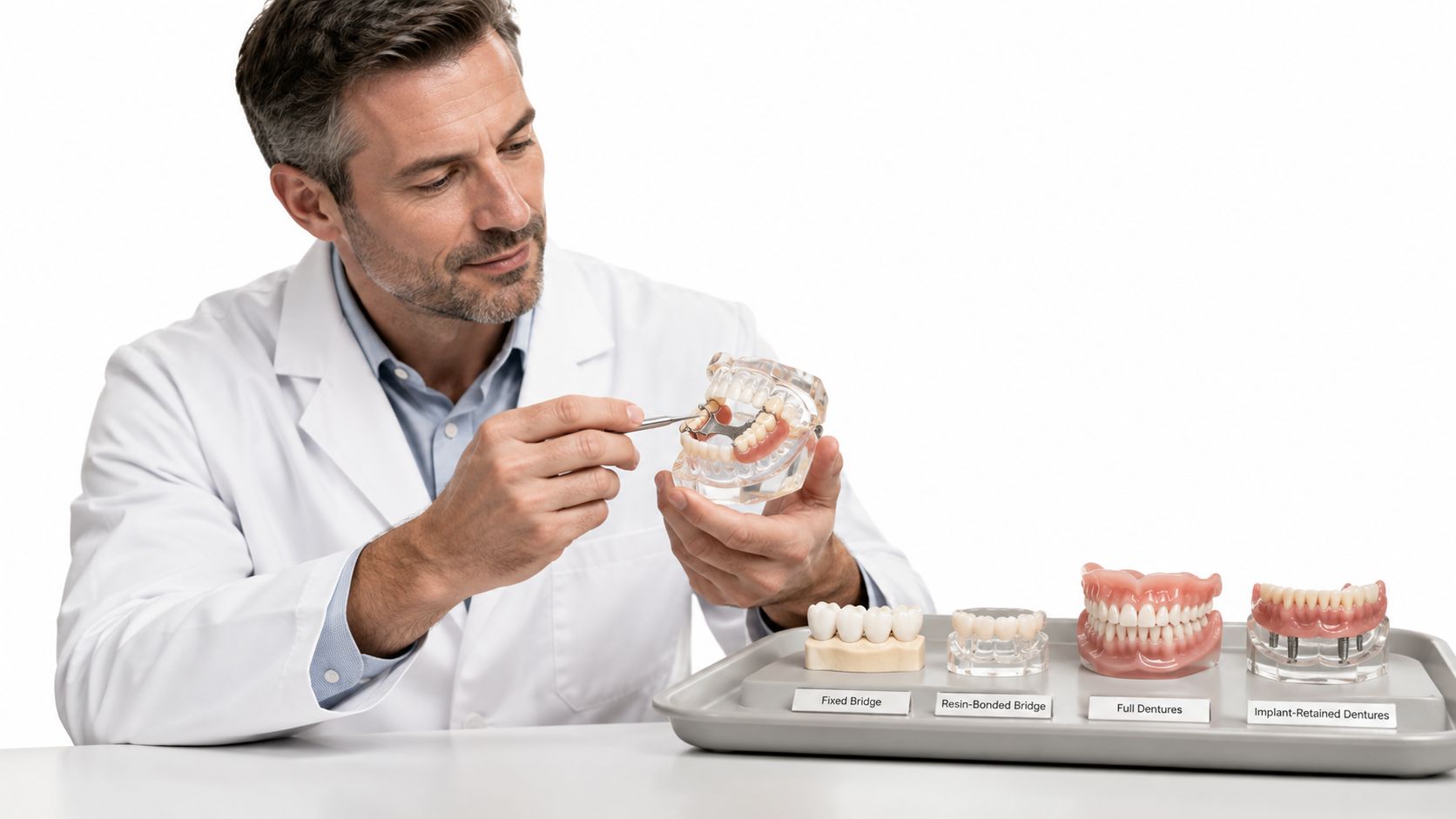
Original Medicare generally doesn't cover dental implants, and a single implant typically costs about $2,800 to $6,000. Whether any related care is covered depends on your specific plan and medical circumstances.
You may be looking into implants because a missing or failing tooth makes eating uncomfortable, a denture won't stay secure, or you've been told an extraction may be needed before replacement. For Cleveland-area patients on Medicare, the insurance answer is usually straightforward, but the payment details can be less so. The key is to separate the decision into three parts: what Medicare may pay, whether a medical or hospital exception applies, and which dental costs you'll likely need to plan for yourself.
What Medicare Actually Does With Dental Implant Cases in Cleveland
Consider a Cleveland patient with a missing tooth who's weighing an implant against a bridge or denture. The patient has Medicare and expects the implant surgery might be treated like other medical care. In most cases, it won't: Original Medicare generally excludes dental implants, and the patient needs to check separate dental coverage and the details of their medical situation before counting on reimbursement. Medicare.gov lists dental implants among services that are usually not covered (Medicare's dental services coverage).
That answer can feel frustrating, especially when the treatment involves surgery. But it helps to separate the decision into three questions:
- Medicare's part: Does a specific medical service connected to treatment meet Medicare's rules?
- The hospital or medical exception: Is the care integral to a covered procedure, or is hospital care medically required?
- The dental part: Who pays for the implant, abutment, crown, and ordinary tooth replacement?
The distinction matters because coverage for a hospital service doesn't automatically mean Medicare pays for an implant. And a plan that includes some dental benefits doesn't necessarily cover implant placement or the final restoration.
For a patient in Cleveland or Chattanooga, the best starting point is a dental evaluation and an itemized plan, followed by a call to the insurer about the exact procedures listed. An implant decision should account for oral health, function, treatment alternatives, and out-of-pocket cost, not just whether an insurance card says Medicare.
The Original Medicare Rule and Why Implants Are Usually Excluded
The basic rule comes from Section 1862(a)(12) of the Social Security Act. In plain English, Original Medicare generally can't pay for care, treatment, filling, removal, or replacement of teeth, or structures directly supporting teeth. The exclusion has been part of Medicare's statutory framework since the program was established in 1965.
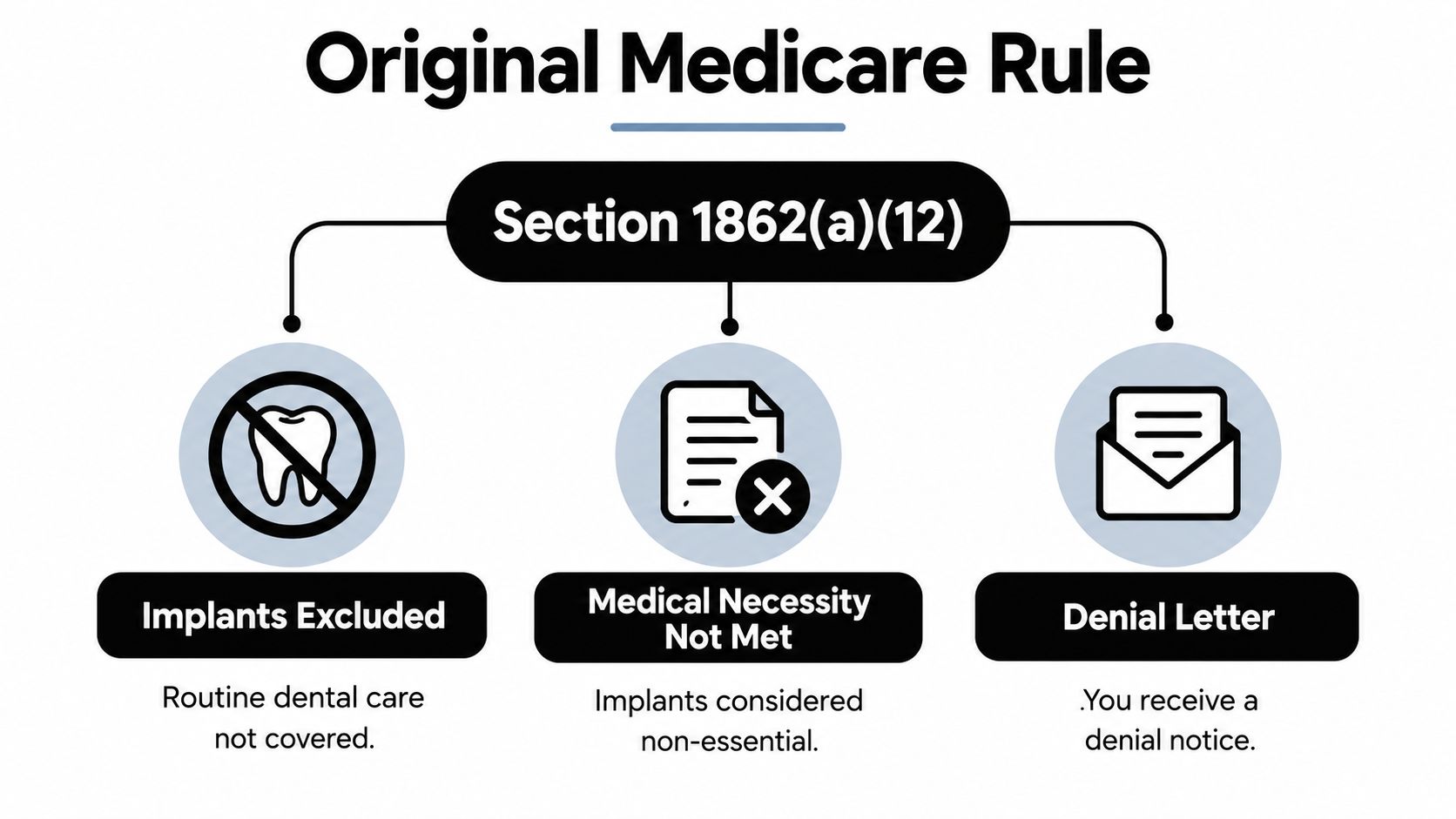
An implant replaces a missing tooth and includes components that support its restoration. For a conventional implant, that makes it ordinary dental treatment under the general rule, rather than a covered medical service. "Covered medical service" means a service that Medicare recognizes under its medical benefit rules. A dental procedure does not become covered because a physician is involved or the patient has a complex medical history.
The setting doesn't change the underlying rule
Receiving dental care in a hospital doesn't automatically make the implant payable. If a patient has implant surgery in a hospital, the dental service itself may remain excluded. Medicare may consider hospital or medical services separately if specific criteria are met, but the location alone doesn't convert routine tooth replacement into covered dental care.
That's why a denial notice may refer to the statutory dental exclusion even when the patient's treatment involved surgery, imaging, or a hospital facility. Read the explanation of benefits line by line, and ask the insurer which component was denied. A useful resource for people coordinating broader care needs alongside dental decisions is this overview of palliative care help from Life Primary Care.
The practical rule is simple: unless a narrow medical exception applies or another plan provides dental benefits, beneficiaries typically pay the cost of a noncovered implant themselves. A Medicare Advantage plan, standalone dental insurance, or other separate coverage may change the calculation, but the plan's own terms control.
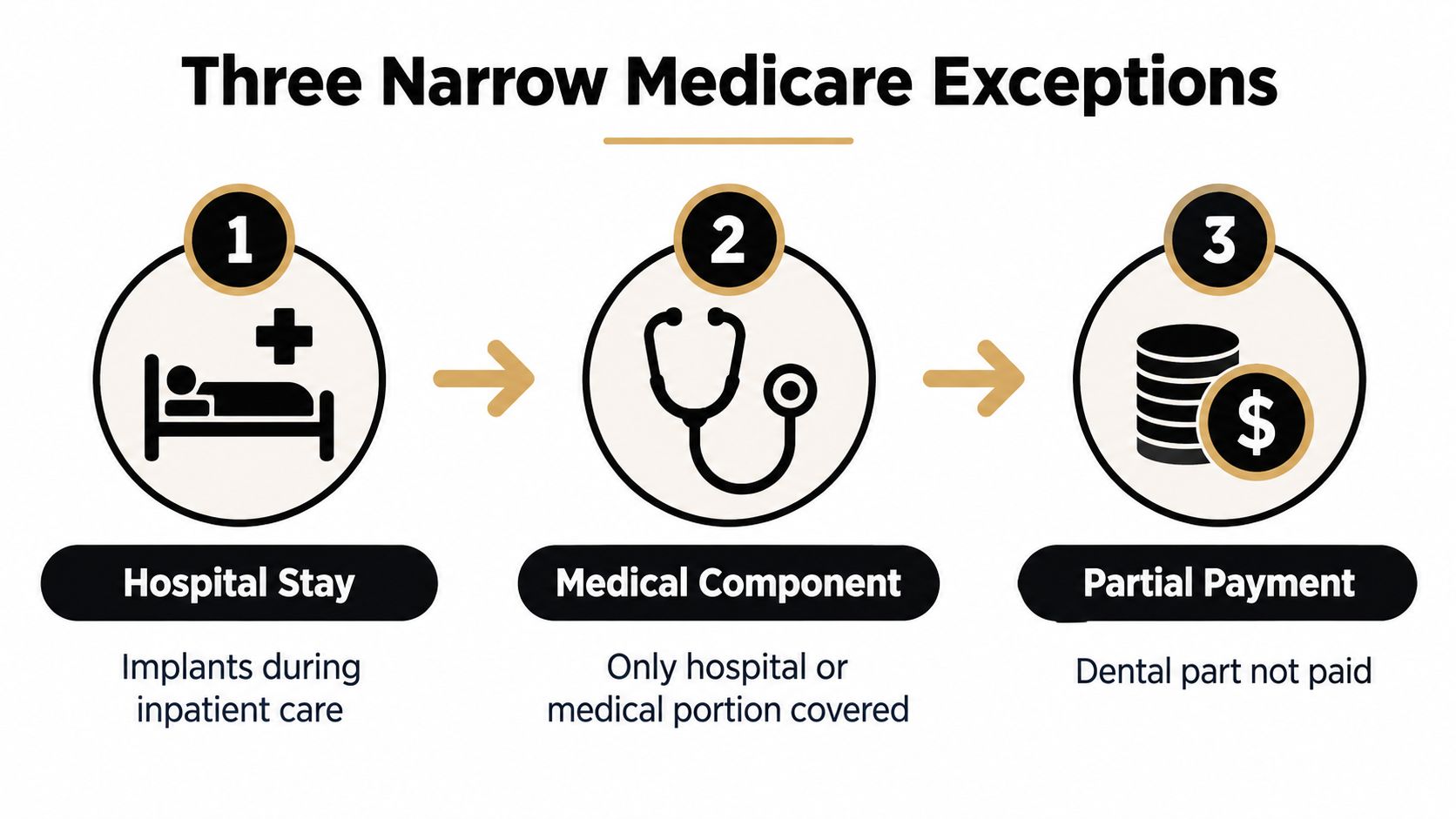
The Three Narrow Medicare Exceptions Worth Checking
There are limited situations where Medicare may pay for part of care connected to dental treatment. The important distinction is which part qualifies. Payment for a medical or hospital component doesn't mean routine implant placement, an abutment, or a crown is covered.
Care integral to a covered medical procedure
Dental services may qualify when they're inextricably linked to, substantially related to, and integral to the clinical success of a Medicare-covered procedure. CMS gives examples involving an oral examination and treatment of an infection before an organ transplant, cardiac valve replacement, or valvuloplasty. Removing an infected tooth to address an infection before a covered procedure may meet the medical-necessity test. A later implant or crown generally isn't necessary to eliminate that infection, so it doesn't automatically qualify (CMS guidance on dental services).
Hospitalization required by the patient's condition
A patient's underlying medical condition, clinical status, or the severity of a dental procedure may require inpatient hospital care. In that case, Medicare may consider hospital services separately from the dental procedure itself. A serious infection or medically complex extraction may prompt this question, but it doesn't create a general implant benefit (CMS guidance on hospital services connected with dental care).
Maxillofacial reconstruction after trauma or surgery
CMS also describes potential coverage involving maxillofacial surgery after traumatic injury, repair of pathological conditions, and oral or facial prosthetic rehabilitation associated with covered medical or surgical treatment. Implant components may be covered when they secure or support a maxillofacial prosthesis in these circumstances. That's different from replacing an ordinary missing tooth.
Ask the dental office to separate the treatment plan into medical, hospital, and dental components before requesting a coverage decision. Medicare Advantage plans may have different dental benefits, but their own documents set limits, networks, authorization rules, and cost sharing (Medicare Advantage dental coverage details).
Comparing Original Medicare, Medicare Advantage, Medicaid, and Standalone Dental Plans
The name on your insurance card doesn't answer whether an implant is covered. The plan's written benefit language does. Use the comparison below to identify what to verify, then call the insurer before scheduling treatment.
| Plan type | Routine implants | Hospital or medical exception | Annual maximum | Network rules |
|---|---|---|---|---|
| Original Medicare | Generally excluded | May cover qualifying medical or hospital components, not routine implants | Not applicable to routine dental implants | Medicare rules apply to covered services |
| Medicare Advantage | Plan-specific; dental benefits don't guarantee implant coverage | Plan rules and Medicare coverage requirements may affect separate components | Check the Evidence of Coverage | Plan network and authorization rules may apply |
| TennCare for adults | Verify current adult dental benefits and implant rules directly | Ask how medical or hospital services are handled | Check current benefit documents | Program and provider rules apply |
| Medigap | Doesn't add routine dental implant coverage | May help with certain Medicare cost sharing, subject to policy terms | Doesn't create a dental maximum | Depends on the policy and underlying Medicare rules |
| Standalone dental plan | Plan-specific; implant benefits may be limited or excluded | Usually check the medical plan separately | Review the policy's maximum and limits | Dental networks and out-of-network rules may apply |
For Medicare Advantage, ask specifically about implant placement, bone grafting, abutments, implant-supported crowns, full-arch treatment, extractions, and diagnostic imaging. Request the Evidence of Coverage and any dental benefit schedule. Confirm waiting periods, prior authorization, frequency limits, annual maximums, participating providers, and your share of the cost.
For TennCare, don't assume adult implant coverage based on another state's Medicaid rules. Ask TennCare or the plan administrator for current adult dental benefits and whether the specific procedure is included. If you're comparing employer or federal employee dental benefits, a Federal Benefits Sherpa dental guide can help you understand the kinds of plan terms to compare, but your own policy documents remain decisive.
A short call can prevent an expensive misunderstanding. Ask the insurer to confirm coverage in writing using the exact procedure descriptions from your proposed treatment plan.
Realistic Implant Costs and How to Read a Cleveland Treatment Plan
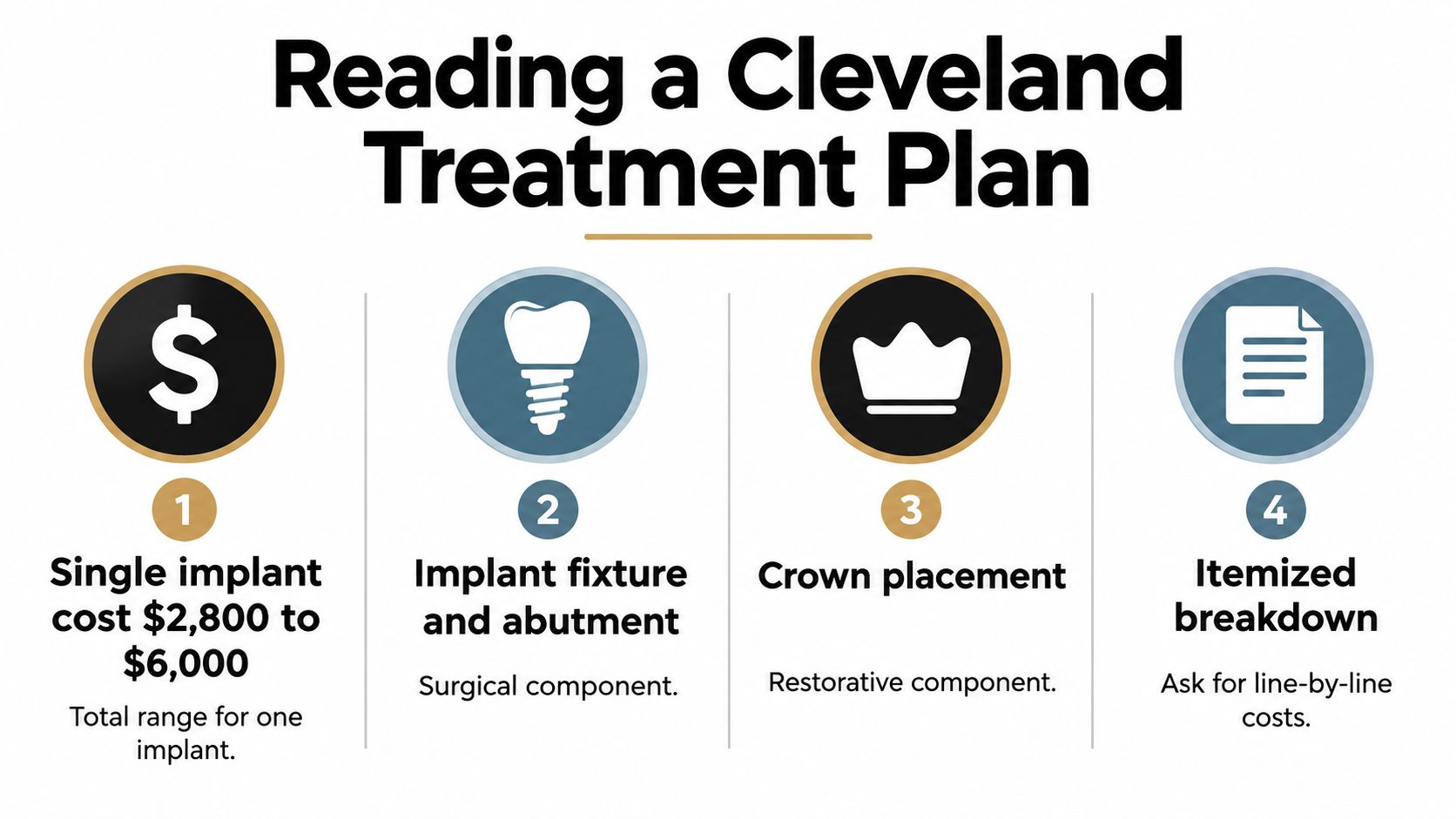
The price of an implant reflects several stages, not just the surgical placement. A typical single implant, including the post, abutment, and crown, is estimated at about $2,800 to $5,600 without dental coverage; another estimate gives a broader typical range of about $3,000 to $6,000 for one implant. These are treatment-cost estimates, not Medicare reimbursement rates. A full-mouth implant rehabilitation can reach approximately $90,000, depending on the treatment design and clinical needs (2026 consumer implant-cost estimate).
Ask for an itemized treatment plan
A clear written estimate should show which services are planned and what each one costs. It should also distinguish dental charges from any medical or facility services that could be assessed under different coverage rules.
| Treatment-plan component | What to look for |
|---|---|
| Surgical | Implant placement and any tooth extraction or bone grafting |
| Restorative | Abutment and final crown or prosthesis |
| Facility | Hospital or outpatient facility charges, if applicable |
| Imaging | Dental X-rays or other diagnostic imaging |
| Medically necessary care | Any component tied to a covered medical procedure |
Costs can vary with bone grafting, provisional teeth, laboratory work, sedation, and the final restoration design. Don't compare estimates based on a headline price alone. Check that each quote covers the same steps and identifies services that could be billed separately.
Before you consent: Ask which lines are noncovered dental care, which might be reviewed as medical or hospital services, and what your plan has confirmed in writing.
Have the treatment coordinator clarify your deductible, coinsurance, annual maximum, out-of-network obligations, and any waiting period. If a covered Part B service is involved, patient responsibility is generally 20% of the Medicare-approved amount after the Part B deductible, with possible facility copayments in outpatient hospital settings; this doesn't make a routine implant covered.
Financing, Preauthorization, and Appeal Tips for Cleveland Patients
A denial or uncertain benefit doesn't have to end the conversation. First, get an itemized treatment plan and ask the insurer whether it requires preauthorization. The dental office can submit relevant clinical records, photographs, and procedure codes, but the insurer makes the coverage decision. Preauthorization isn't a guarantee of payment, so ask for the decision in writing before booking treatment.

If the plan denies a component, review the reason and compare it with the treatment notes and benefit language. Ask the insurer about the appeal deadline, required forms, supporting records, and whether a clinician-to-clinician review is available. Keep copies of the treatment plan, denial, submitted records, and every written response. Don't assume an appeal will change the outcome, but do make sure the insurer has reviewed the correct procedure and medical information.
For a patient paying out of pocket, ask whether the office can phase treatment or discuss financing. Review the total repayment terms, not only the payment amount. For general context on financing options, dental financing tips from Business Loan Warrior may help you prepare questions, but the terms of any financing agreement should be reviewed directly with the lender.
At Winn Smiles, patients can request a free consultation or a second opinion for implant cases. A useful next step is to bring your insurance card, plan documents, medication list, and any prior dental records so the team can discuss the clinical plan and costs together. You can also review implant payment plans before your appointment.
Is Age Really a Barrier for Medicare-Age Adults Considering Implants
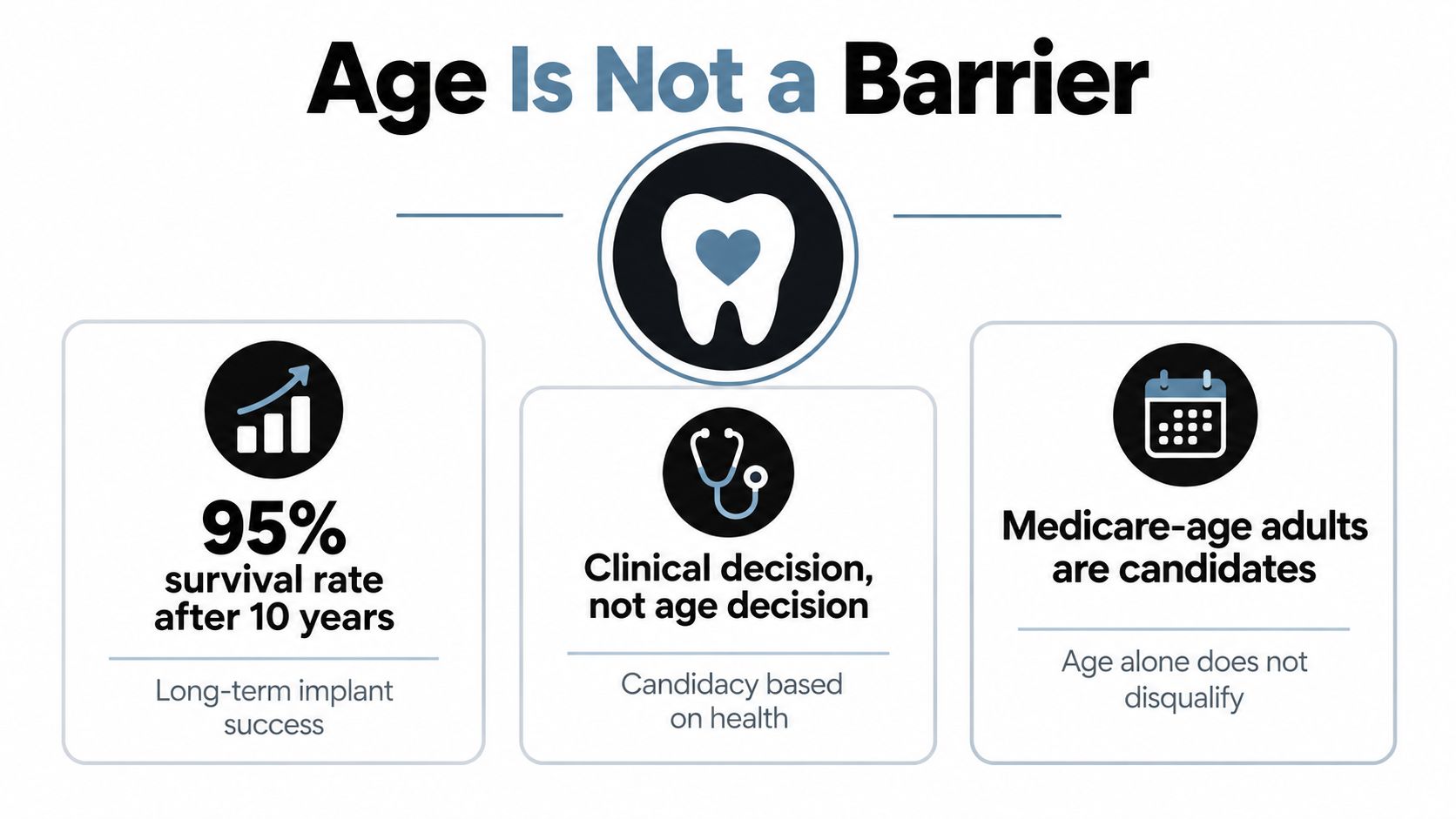
Age alone doesn't rule out dental implants. The decision depends more on oral health, bone support, medical history, and whether the patient can maintain the restoration. A dentist should review periodontal health, plaque control, bone volume and quality, smoking, diabetes management, medications, and any history of radiotherapy before recommending a plan.
A systematic review and meta-analysis covering 27 studies and 3,892 implants reported five-year survival of 92.1% for patients aged 65–75 and 96.8% in cohorts older than 75. It also reported that splinting implants in overdenture patients older than 65 was associated with 5.6-times higher survival (systematic review and meta-analysis on implant survival by age). These results are useful context, not a promise about any individual patient's outcome.
Match the design to health and maintenance
The right question isn't whether a patient can receive implants. It's which design they can heal from, clean, and maintain over time. Smoking, uncontrolled diabetes, periodontal disease, limited bone, high-dose antiresorptive therapy, and prior radiotherapy can affect risk and should be discussed before surgery.
Some patients may be better served by a staged approach or an implant-retained overdenture rather than a fixed full-arch reconstruction. A removable design can offer added stability while keeping the treatment plan distinct from a fixed restoration. Your dentist should explain the maintenance demands and alternatives in plain language.
Bring a complete medication list and ask how your health history affects healing, follow-up, and long-term cleaning. For a closer look at the evaluation process, read about dental implant candidacy.
Your Next Step With Winn Smiles in Cleveland or Chattanooga
You don't need to settle every insurance question before asking whether an implant is clinically right for you. You do need a clear plan that separates the Medicare question, any hospital or medical component, and the dental treatment you may need to pay for yourself.
At Winn Smiles, patients in Cleveland and Chattanooga can discuss dental implants and full-arch options with a team that provides written treatment plans and transparent cost discussions. The first visit can include a review of your records, imaging needs, oral health, and possible sedation options if dental visits make you anxious. Winn Smiles also offers free consultations and second opinions for implant cases, so you can review your choices before deciding.
Bring your Medicare or Medicare Advantage documents, any standalone dental policy, medication list, and previous dental records. Ask for an itemized estimate and a written explanation of which services the office believes may be submitted to insurance. Then confirm those details with the insurer before scheduling treatment.
If you're searching for a dentist near me in Cleveland, TN, or dental implants near me in Chattanooga, TN, contact Winn Smiles to arrange a consultation. A direct conversation can help you understand your options, likely costs, and next steps without committing to treatment before you're ready.
Winn Smiles offers implant consultations and second opinions for patients weighing Medicare coverage, treatment choices, and out-of-pocket costs. Bring your plan documents and questions, then visit Winn Smiles to schedule a consultation in Cleveland or Chattanooga.