Searching for a new dentist often starts the same way. You type dentist near me into Google, open a few tabs, and quickly realize most offices sound similar. They all mention friendly care, modern dentistry, and a welcoming team. What you really want to know is simpler: Can I trust this practice with my health, my time, and my comfort?
That question matters even more when you need more than a routine cleaning. If you're looking for an emergency dentist, comparing options for dental implants near me, or trying to find a cosmetic dentist near me for veneers or teeth whitening, trust shapes every decision that follows.
Finding Your Dental Home in Cleveland and Chattanooga
For many people in Cleveland and Chattanooga, the search begins after a move, a sudden toothache, a broken filling, or a long gap in care. Some are looking for a family dentist. Others need help with a tooth extraction, same-day crowns, sleep apnea treatment, or a full restorative plan. The common thread is that nobody wants to feel like just another appointment on the schedule.
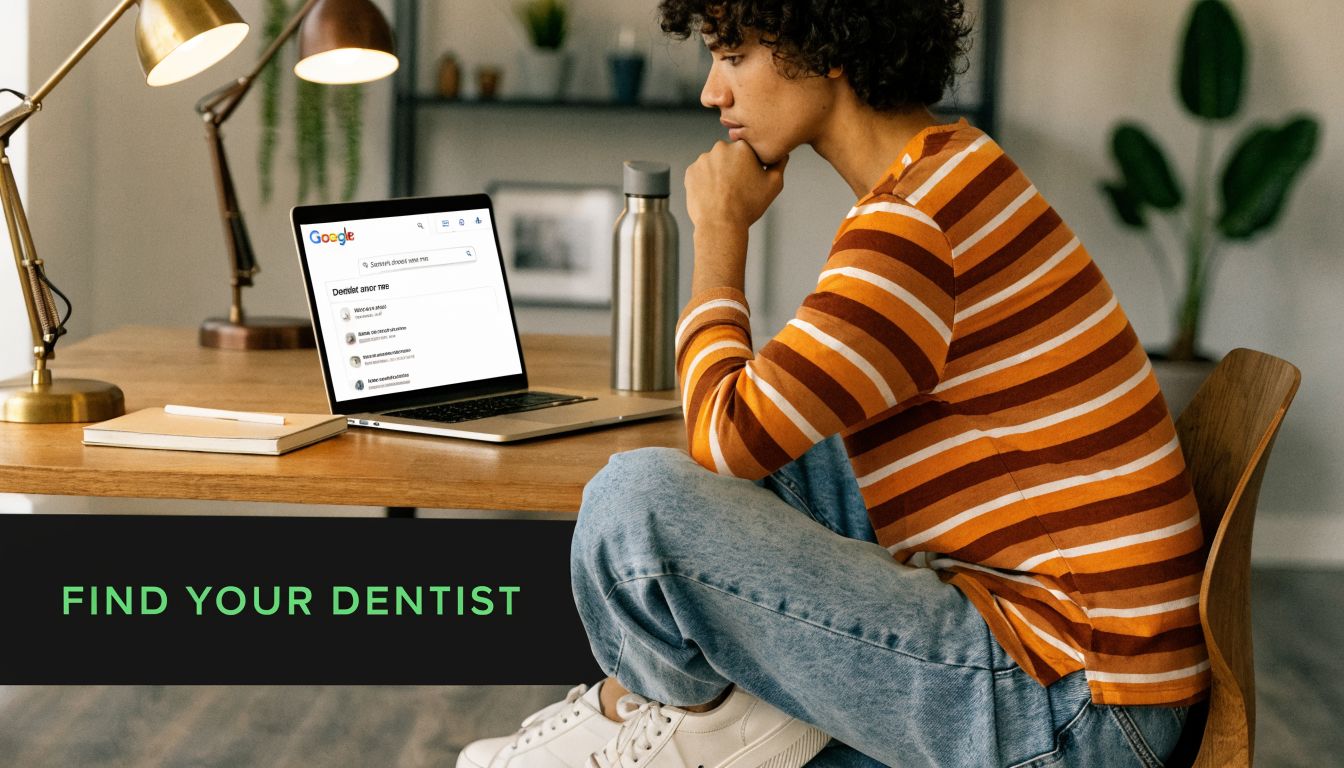
There are more choices than there used to be. In the United States, the number of professionally active dentists per 100,000 people reached 60.84 in 2021, according to CDC data on dentists in the U.S.. More access is good for patients, but it also means you have to sort through more websites, more reviews, and more marketing before you find a practice that feels right.
Trust means more than credentials alone
A trustworthy dentist should be clinically capable, of course. But patients usually notice trust in more human ways first. Did the office explain options clearly? Did anyone rush the conversation? Were costs discussed before treatment started? Did the team acknowledge anxiety instead of brushing it off?
Those details matter because good dental care isn't just about fixing teeth. It's about building a long-term relationship with a practice you can return to for cleanings and exams, dental x-rays, restorative dentistry, cosmetic care, and emergency visits when life takes a turn.
A dental office becomes your dental home when you feel informed, respected, and comfortable asking questions.
Local fit matters
A dentist who works well for your life in Southeast Tennessee should also be practical. Location, office hours, parking, and scheduling flexibility all affect whether you'll keep up with care. That's one reason local search matters so much. If you're curious how nearby practices get found online, this overview of local SEO strategies for businesses gives useful context on why some offices appear more prominently in maps and search results.
For patients who want to start with a local option in Bradley County, the Cleveland dental office at Winn Smiles is one place to compare against the trust signals in this guide. The goal isn't to pick the first office you see. It's to find a place where preventive care, cosmetic dentistry, dental implants, and emergency treatment are handled with the same steady approach.
Your Pre-Visit Checklist for Finding a Trusted Dentist
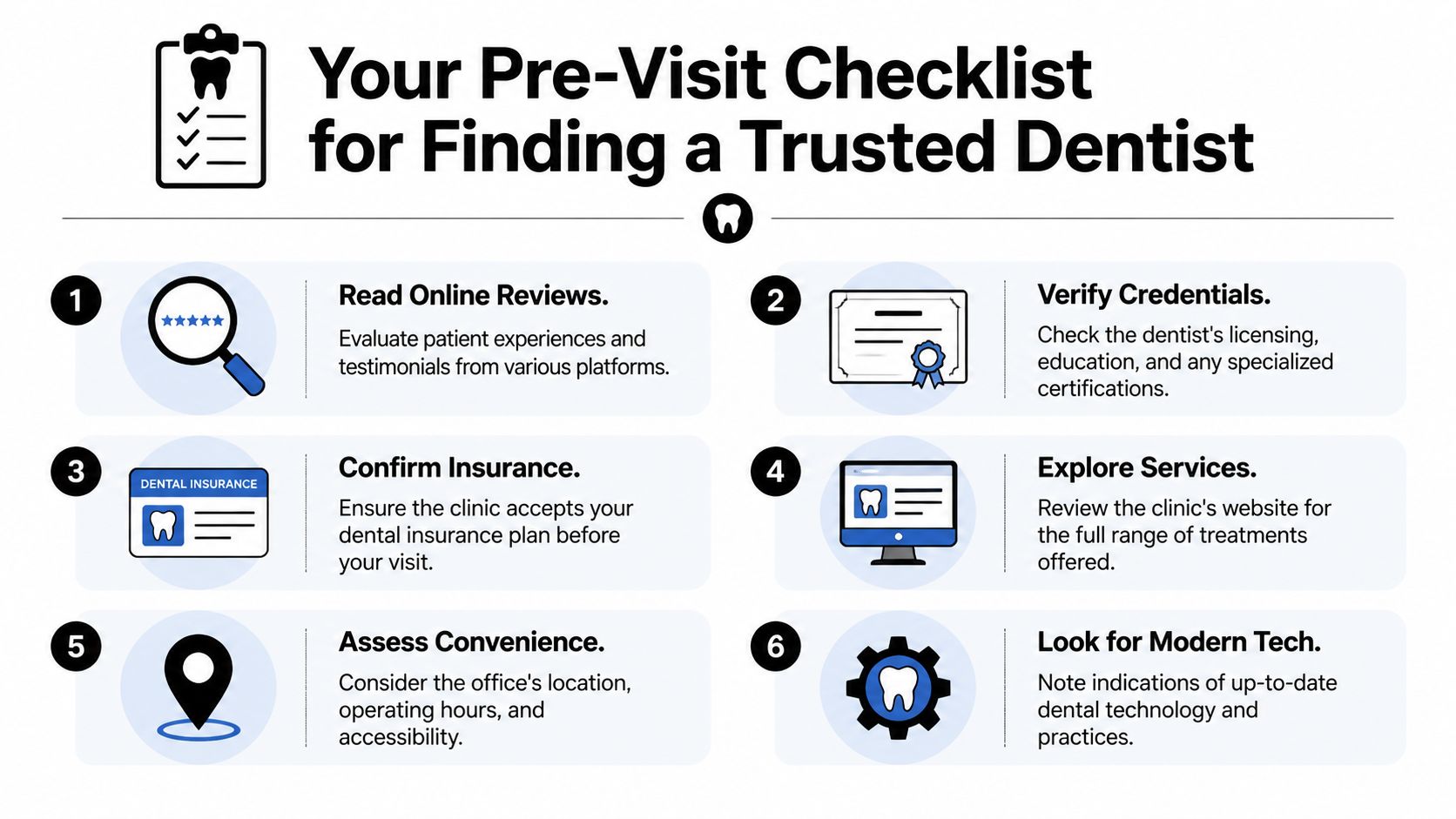
Before you schedule anything, spend a little time doing digital homework. This initial research can be the difference between saving yourself frustration or walking into the wrong office. A polished website can be helpful, but trust usually comes from what you can verify.
Start with credentials
The first box to check is basic, but it matters. The American Dental Association membership is an important trust signal because ADA members are held to high ethical standards, and a sound credential review also includes confirming graduation from an accredited dental school, valid state licensure, and ongoing training, as outlined in Humana's guidance on choosing a dentist.
If a practice makes it hard to find information about the dentist's background, that's not a great sign. A trustworthy office should make credentials easy to confirm.
Here’s a practical way to screen a practice online:
- Verify licensure: Check Tennessee licensure through the state board before you commit.
- Look for ADA membership: This adds another layer of accountability.
- Read the doctor bios carefully: You're looking for relevant training, continuing education, and treatment focus.
- Match expertise to your need: Someone seeking routine family care needs something different from a patient comparing full-arch implants or cosmetic smile design.
Read reviews like a patient, not like an algorithm
Reviews matter, but only if you read them well. Don't stop at the star rating. Read enough comments to spot patterns. Do people mention clear explanations, kindness, efficient scheduling, and follow-through? Or do they repeatedly mention feeling rushed, confused about fees, or pressured into treatment?
A helpful way to think about reviews is this: one emotional review can happen anywhere. Repeated themes usually tell the truth.
Practical rule: Trust patterns, not isolated praise or isolated complaints.
You can also learn a lot from how a practice manages feedback. Offices that consistently monitor public comments and respond professionally tend to show stronger communication habits overall. If you're interested in how practices handle review workflows, FeedbackRobot's dental review solution offers a useful example of the systems clinics use to stay engaged with patient feedback.
Check the website for substance
A reliable dental website should answer real patient questions. It should help you understand whether the office provides:
- Preventive care: cleanings and exams, new patient exams, dental x-rays
- Restorative care: crowns, fillings, tooth replacement, tooth extraction
- Cosmetic options: teeth whitening, veneers, Invisalign
- Urgent support: emergency dentist services and how after-hours issues are handled
- Comfort details: sedation options, anxiety support, and what first visits are like
What doesn't work is choosing a dentist based only on office decor, slogans, or before-and-after photos with no explanation behind them. A trustworthy practice usually talks about trade-offs, not just outcomes. If a site explains when a crown makes sense, when a filling may be enough, or when an implant is worth discussing, that's a better sign than broad promises.
What to Look For and Ask During Your First Consultation
Online research gets you only so far. The visit tells you the rest. An in-person consultation is the most reliable way to judge trustworthiness because it lets you evaluate communication, cleanliness, technology, and infection control directly, as noted in this guide to finding the right dentist.
Watch the room before anyone seats you
Arrive a little early and pay attention. You can learn a lot in the first few minutes without asking a single question.
Notice whether the front desk acknowledges people warmly. Look at whether the waiting area and treatment spaces seem orderly. Watch whether team members appear calm and coordinated or hurried and tense. Cleanliness should be obvious. Protective gear should be routine, not occasional.
A modern office doesn't need to feel flashy, but it should feel maintained. Digital x-rays, intraoral imaging, same-day crown systems, and laser dentistry can all be useful. More important than the equipment itself is whether the team explains why they use it and how it helps patients.
Ask questions that reveal how the practice thinks
The best consultation questions don't just ask what the office offers. They reveal how the dentist makes decisions.
Consider asking:
- How do you decide between conservative treatment and more extensive treatment?
- What are my options if I need restorative dentistry or cosmetic dentistry?
- If I have an emergency after hours, what happens next?
- How do you explain costs and insurance before treatment begins?
- What do you do for patients who are nervous about dental visits?
If you're not sure how to prepare questions in advance, this guide on empowering patients for better care has a useful framework you can adapt for a dental consultation.
If a dentist can explain the trade-offs of treatment in plain language, you're usually in the right room.
Look for comfort, clarity, and no pressure
A trustworthy consultation should feel like a conversation, not a sales presentation. The dentist should listen closely, ask about your goals, and explain what they see without making you feel embarrassed about your teeth.
Here is a simple comparison to use in the moment:
| What you want to see | What should concern you |
|---|---|
| Clear explanations in everyday language | Heavy jargon with little explanation |
| More than one treatment path when appropriate | One expensive solution presented as the only answer |
| Calm discussion of insurance and fees | Vague answers about cost |
| Genuine attention to anxiety or sensitivity | Dismissive comments like "you'll be fine" |
| Staff who communicate well with each other | Disorganized handoffs and mixed messages |
A first visit should leave you more informed than when you walked in. If you leave confused, pressured, or talked over, keep looking.
Red Flags That Signal a Dentist May Not Be Right for You
Sometimes the clearest sign of trust is your own reaction during the visit. If something feels off, pay attention. Good dentistry requires clinical judgment, but it also requires respect, patience, and transparency.
One common red flag is aggressive upselling. If a practice pushes cosmetic treatments before addressing pain, function, or disease, that's a problem. The same goes for any office that recommends major work without taking time to explain alternatives, likely benefits, limitations, and what happens if you wait.
Watch how they handle anxiety
This issue matters more than many people realize. Forty million U.S. adults have dental phobia, and questions about sedation, monitoring, and screening are important because a 2025 analysis found a 28% rise in sedation-related complaints, often tied to inadequate pre-screening, according to MouthHealthy's advice on choosing a dentist.
That doesn't mean sedation is unsafe. It means a trustworthy office should be direct and specific when discussing it.
Ask questions like:
- What sedation levels do you offer for anxious patients?
- How do you monitor patients during sedation?
- Do you screen for conditions such as sleep apnea before certain types of sedation?
If the answers feel vague, rushed, or defensive, that's your signal to pause.
Some patients need reassurance. Others need sedation support. A dependable practice asks which one you need instead of assuming.
Other signs to take seriously
You don't need a dramatic experience to decide an office isn't the right fit. Smaller signals often tell the story:
- Dismissive communication: The dentist interrupts, brushes off questions, or makes you feel silly for asking.
- Unclear pricing: Nobody can explain what insurance may cover, what you're responsible for, or when payment is expected.
- No discussion of alternatives: Every patient gets the same recommendation, regardless of goals or budget.
- Poor office flow: Calls aren't returned, forms get lost, and team members give conflicting answers.
- Lack of interest in long-term care: The conversation jumps straight to procedures without discussing preventive habits, follow-up, or maintenance.
A good dentist in Cleveland or Chattanooga doesn't need to pressure you. Strong care holds up under questions.
The Winn Smiles Difference The Trusted Dentist for Cleveland & Chattanooga
Once you know what to look for, the right practice usually stands out. Public feedback is part of that picture. Eighty-seven percent of patients read online reviews before choosing a dentist, and practices with 4.7+ stars on platforms such as Google and Healthgrades see 3 times more bookings, according to Repugen's analysis of dentist review sites. Reviews aren't the whole story, but they often reflect whether a practice communicates well and delivers a consistent experience.
What trust looks like in practice
For patients comparing local offices, Winn Smiles is one example of a practice that aligns with the checklist above. The practice provides general and cosmetic dentistry, preventive care, emergency visits, same-day crowns, laser dentistry, dental implants, and full-arch implant solutions. It also discusses sedation options, sleep apnea treatment, and second opinions, which gives patients more room to make careful decisions.
That matters because trust isn't built by saying yes to every procedure. It's built by matching treatment to the patient in front of you. Someone looking for a routine cleaning and exams should feel as well cared for as someone considering veneers, Invisalign, or restorative dentistry after tooth loss.
Why this matters for Cleveland and Chattanooga families
Local patients often want one office they can return to through different stages of care. They may start with a new patient exam and dental x-rays, then come back for teeth whitening, a cracked tooth, a dental implant consultation, or emergency care later on.
A dependable dental home makes those transitions easier because the practice already knows your history, your comfort needs, and your priorities.
Trust grows when a practice handles simple visits and complex treatment with the same clear communication.
Your Next Step to Finding a Dentist You Trust
If you've been wondering how to find a dentist you can trust, the process is more manageable than it first appears. Verify credentials. Read reviews for patterns, not hype. Pay attention during the consultation. Ask direct questions about communication, costs, emergencies, and anxiety support. If anything feels unclear or overly pressured, keep looking.
Patients in Cleveland and Chattanooga deserve a dental office that treats routine care, cosmetic concerns, restorative dentistry, and urgent problems with the same level of attention. Whether you're searching for a dentist in Cleveland, TN, comparing a cosmetic dentist near me, or trying to find help for a painful tooth, the right practice should make you feel informed and comfortable from the first contact.
If you're ready to move from searching to deciding, scheduling a new patient exam or consultation is the simplest next step.
If you're looking for compassionate, modern dental care in Cleveland or Chattanooga, Winn Smiles offers an easy place to start. Reach out to ask questions, request a consultation, or schedule a visit for preventive care, cosmetic dentistry, dental implants, same-day crowns, or emergency dental needs.