If you're searching for what is Invisalign and how does it work, you're probably in a familiar spot. You like the idea of straighter teeth, but you don't love the idea of metal brackets, food restrictions, or drawing attention to your treatment every time you smile.
A lot of adults in Chattanooga and Cleveland put off orthodontic treatment for exactly that reason. They may have crowded front teeth, a bite that feels off, or spaces they notice in every photo. They want a smile that feels more polished and easier to maintain, but they want a solution that fits real life, work, family, and everyday routines.
Invisalign was designed for that kind of patient. It offers a more discreet way to move teeth, but it still depends on careful planning, healthy teeth and gums, and consistent follow-through. When it's done well, it can be a very practical path from crooked teeth to a more confident smile.
Your Guide to a Straighter Smile in Chattanooga and Cleveland
A common story goes like this. Someone has wanted straighter teeth for years, but every time they think about treatment, they stop at the same point. They don't want a mouth full of metal, they don't want complicated cleaning, and they don't want treatment to take over their daily life.
That hesitation makes sense.
For many adults and older teens in Chattanooga and Cleveland, their primary goal isn't just straight teeth. It's feeling comfortable in photos, speaking without worrying about a turned tooth, and smiling without automatically covering your mouth.

Why many adults start here
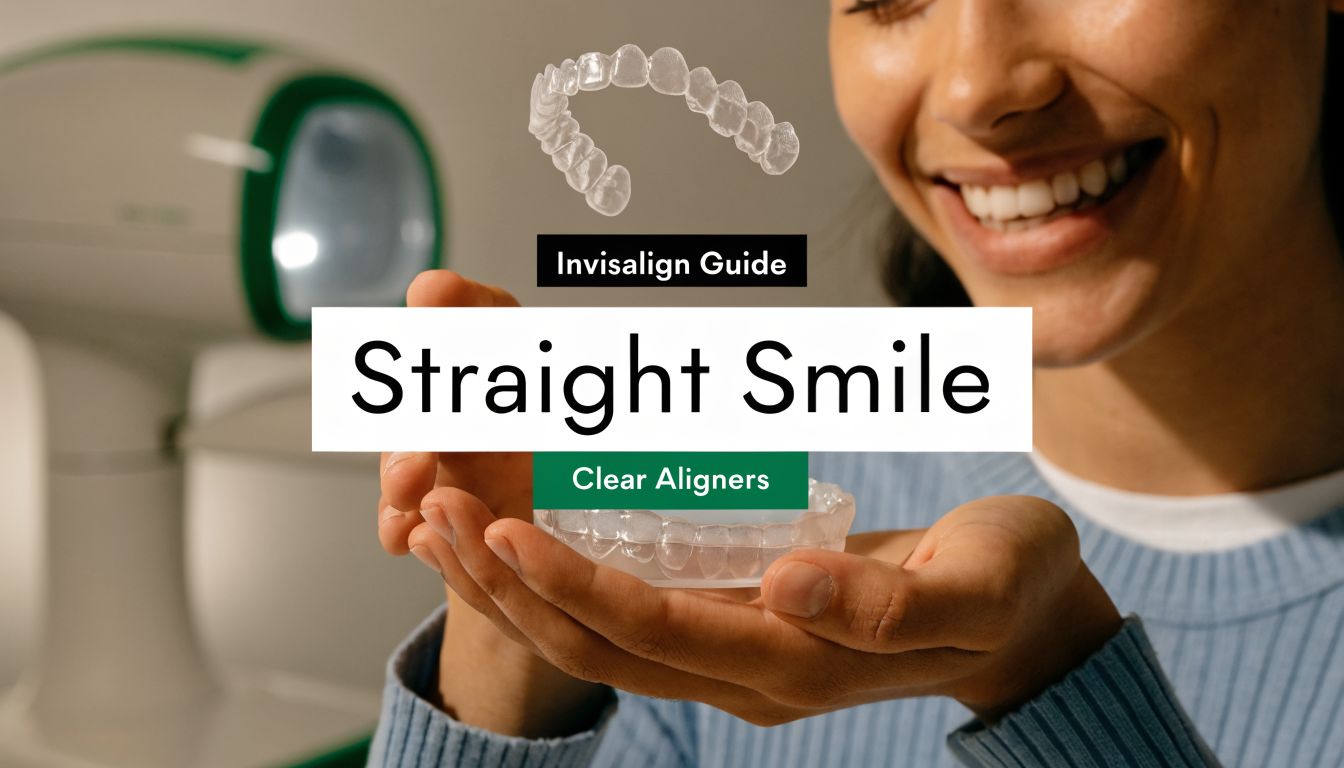
Invisalign gives people a different option. Instead of brackets and wires, treatment uses clear aligners that are custom made to fit over your teeth and move them in stages. Because the aligners are removable, you can take them out for meals and your normal brushing and flossing routine.
That removability is one of the biggest reasons patients ask about Invisalign first. It feels more manageable. It also feels more compatible with work meetings, date nights, family events, and daily life in a way many people didn't expect from orthodontic treatment.
Straightening teeth should fit your life, not force your life to stop.
What matters before you begin
A straighter smile starts with the right plan, not with a box of trays. Teeth need to move in a controlled way. Your bite matters. Existing dental work matters. Gum health matters too.
That's why good Invisalign care isn't just about the aligners themselves. It's about making sure the treatment matches the person wearing them. Some patients are excellent candidates right away. Others need a little dental work first, such as a cleaning, gum care, or restorative treatment, before moving into cosmetic dentistry.
If you've been searching for a dentist near me, a cosmetic dentist near me, or a dentist in Chattanooga, TN or dentist in Cleveland, TN who can explain your options clearly, the key is finding a team that helps you understand both the appeal and the responsibilities of Invisalign.
What Exactly Is Invisalign
Invisalign is a doctor-prescribed orthodontic treatment that uses a series of clear, custom-made plastic aligners to move teeth in small, planned stages. Each tray is shaped a little differently from the one before it, so your teeth shift gradually instead of all at once.
That step-by-step movement is the whole point. Teeth can be guided predictably, but only when the plan fits your bite, your gum health, and the way your teeth meet and function.
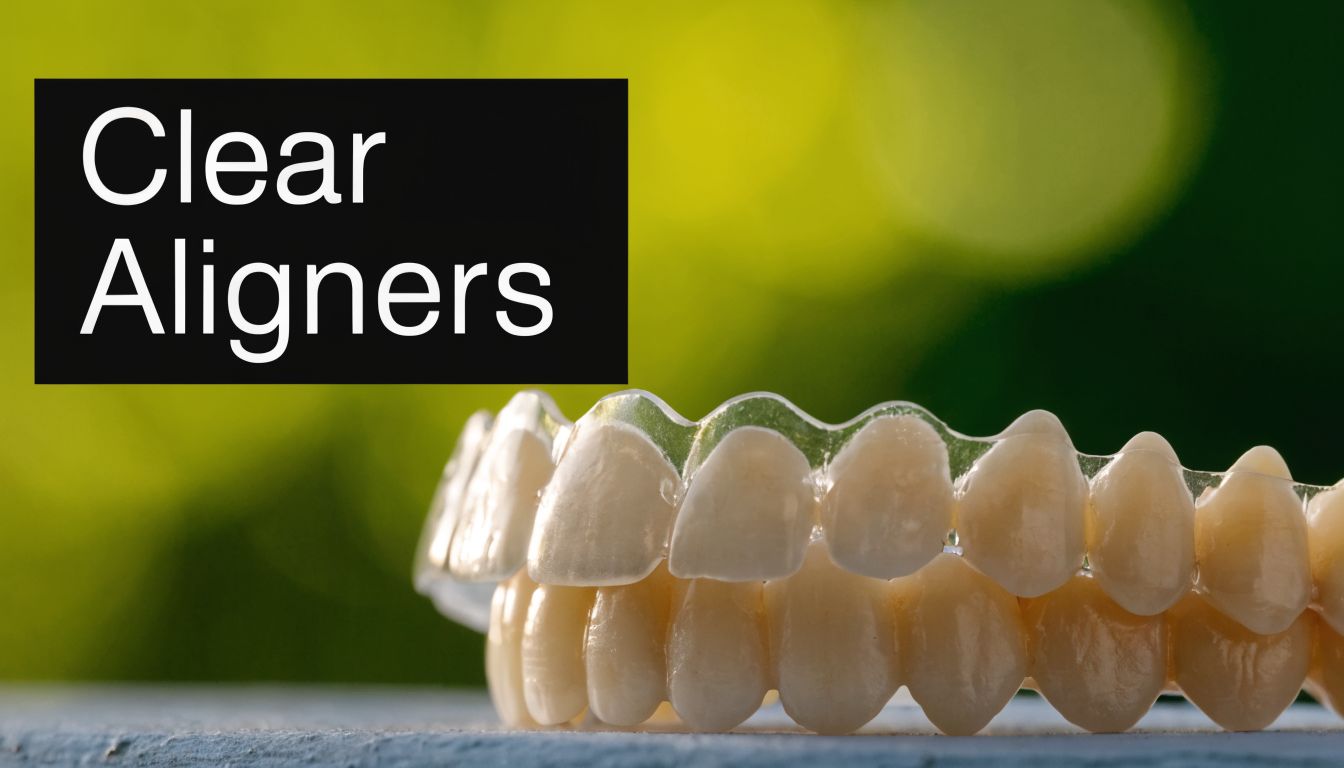
At Winn Smiles, that planning starts with digital records, not guesswork. Our Invisalign treatment at Winn Smiles is built around detailed scans and a supervised treatment plan, because aligners work best when the movements are designed carefully and checked along the way.
What makes it different from braces
The biggest difference is how the force is delivered. Braces use fixed brackets and wires. Invisalign uses removable trays that fit closely over the teeth and apply controlled pressure to specific areas.
Patients usually notice three practical differences first:
- Appearance: The aligners are clear, so they tend to be much less noticeable in daily life.
- Removability: You remove them for meals, brushing, and flossing.
- Feel: Smooth plastic often feels easier on the cheeks and lips than metal brackets and wires.
Those advantages are real. They also come with responsibility. Since aligners can be removed, results depend heavily on wearing them as directed. That is one of the biggest trade-offs patients should understand before they start.
Why dentist-led Invisalign matters
Invisalign is sometimes described as a product. In practice, it is a treatment system that depends on professional planning and follow-up.
Small details matter. Some teeth need attachments to help the trays grip and guide movement. Some bites need closer monitoring to keep the front teeth, back teeth, and jaw position working together properly. In other cases, clear aligners can improve alignment well, but only after a dentist addresses gum disease, decay, or older dental work that could interfere with treatment.
That is why supervised care matters more than many patients realize. The trays are only one part of the process.
What Invisalign can and can't do
Invisalign can treat many mild to moderate alignment problems, and in some cases more involved tooth movement is also possible with the right plan. It is often a strong choice for crowding, spacing, and certain bite concerns.
Still, it is not the right answer for every case. Some patients do better with traditional braces, combined treatment, or dental care before any orthodontic movement begins. Clear aligners are effective, but they are not automatic. The best results come from a realistic plan, steady follow-through, and regular oversight from a dentist who is tracking more than straight teeth alone.
The Invisalign Process Step by Step at Winn Smiles
The treatment process feels much simpler once you see it broken into stages. Most patients do well when they know what's coming, what their role is, and what each visit is meant to accomplish.
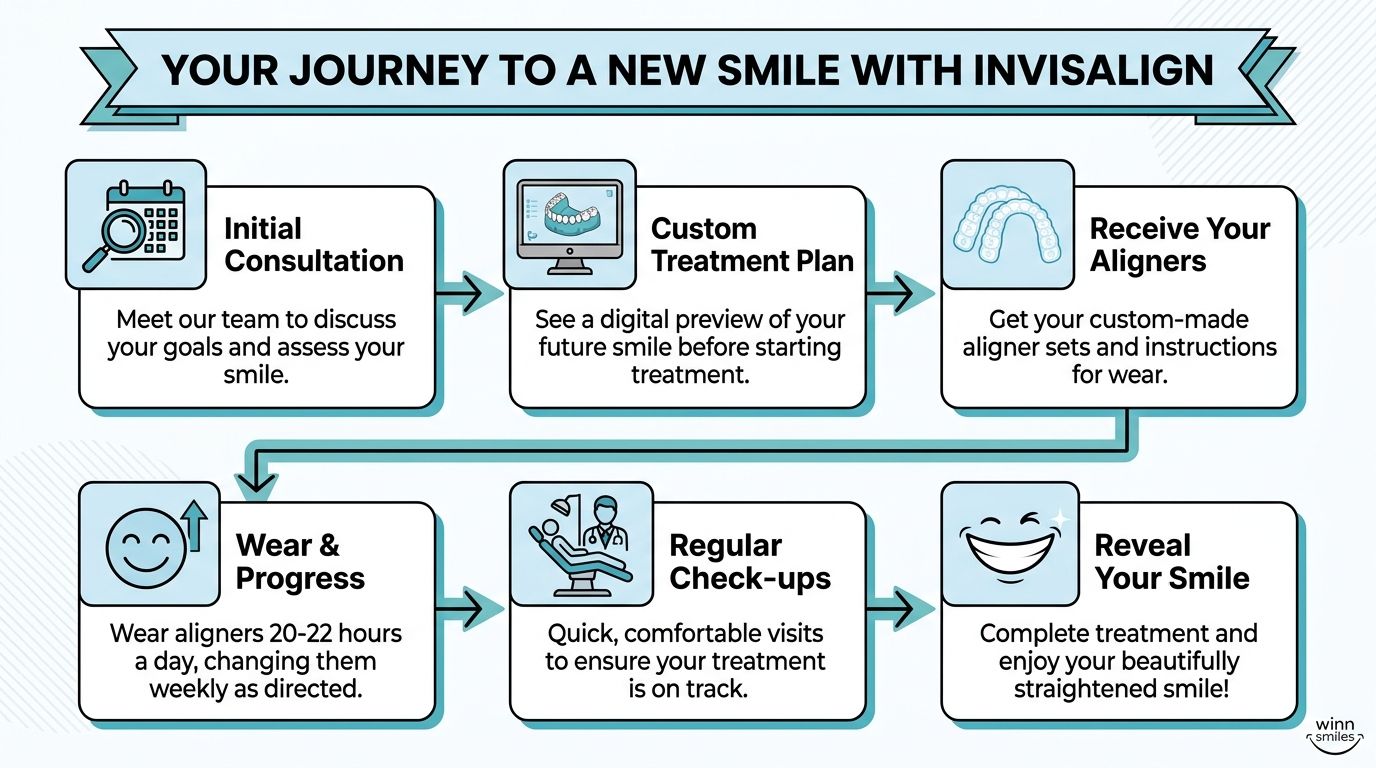
Step 1 The consultation
The first visit is about fit. Not aligner fit yet, but treatment fit.
A dentist reviews your goals, your bite, tooth position, and the health of your teeth and gums. If you've been thinking about cosmetic dentistry, this is also where the conversation gets more specific. Sometimes patients come in asking for straighter teeth and also want to talk about whitening, replacing missing teeth, or fixing worn edges after alignment is complete.
Step 2 The digital scan
One of the biggest upgrades in modern Invisalign care is digital scanning. Instead of old-style putty impressions, the office can capture a 3D model of your teeth quickly and comfortably.
At this stage, Winn Smiles Invisalign care uses an iTero intraoral scanner to create a 3D model of your teeth in under 60 seconds, and that scan feeds ClinCheck software that plans how each aligner shifts teeth by 0.25 to 0.3 mm, using SmartTrack material in a workflow that has been used to treat over 18 million patients globally, based on this explanation of the digital Invisalign workflow.
A good digital scan doesn't just replace messy impressions. It gives the treatment plan a more precise starting point.
After the scan, your dentist can evaluate whether your teeth are ready for movement or whether other dental care should happen first. In some cases, patients may need a cleaning and exam, updated dental x-rays, periodontal care, or restorative dentistry before orthodontic treatment starts.
A short visual overview can help make that easier to picture.
Step 3 The custom treatment plan
Once the scan is complete, the digital plan maps the sequence of movements. At this point, Invisalign transcends being merely a clear tray. The software helps your dentist plan where the teeth need to go and the order they should move.
Patients often like this stage because it makes treatment feel concrete. You're not guessing. You're looking at a planned progression.
Step 4 Receiving your aligners
When the aligners arrive, you'll get your first sets along with instructions on wear, storage, cleaning, and when to switch. Each tray has a job. It isn't unusual for a treatment plan to involve up to 40 or more trays, depending on the case.
The fit should feel snug. That's normal. Tight doesn't mean wrong. It usually means the aligner is engaging the teeth the way it was designed to.
Step 5 Daily wear and tray changes
Patients do the work that makes the plan succeed.
A typical Invisalign plan involves wearing each aligner for 1 to 2 weeks, then moving to the next one in the sequence. The trays need to stay in for 20 to 22 hours a day. They come out for meals, brushing, and flossing, then go right back in.
A simple daily pattern usually works best:
- Wake up and reinsert aligners after brushing
- Remove them for meals and drinks that aren't plain water
- Brush before putting them back in
- Keep them in during work, errands, and sleep
- Change trays on the schedule your dentist gives you
Step 6 Progress check-ins
Check-ins are how your dentist confirms that the teeth are tracking properly, as real mouths don't always behave exactly like software predictions. Most of the time treatment stays on course. Sometimes a tooth needs more time or a small adjustment.
These visits are also a chance to ask practical questions. If something feels rough, loose, or confusing, it's better to bring it up early than to guess.
Step 7 Refinements and Step 8 retention
Some patients finish exactly on the original plan. Others need refinement aligners to fine-tune the result. That's a normal part of careful treatment, not a sign that anything failed.
When active treatment ends, retention begins. Teeth have memory. Without a retainer, they can drift. Retainers protect the result you worked for and are part of finishing treatment properly.
Who Is a Good Candidate for Invisalign Treatment
The best Invisalign candidate isn't defined by age alone. The better question is whether your teeth, bite, and goals match what clear aligners do well.
For many adults and teens, they do.
Problems Invisalign often treats well
Invisalign is commonly used for:
- Crowded teeth: Teeth that overlap, twist, or don't have enough room.
- Spacing issues: Gaps between teeth, including visible spaces in the front of the smile.
- Overbite: Upper front teeth that sit too far over the lower front teeth.
- Underbite: Lower teeth that sit in front of upper teeth.
- Crossbite: Teeth that don't line up correctly side to side.
- Open bite: Front teeth that don't touch the way they should when the mouth closes.
- Relapse after past braces: Teeth that shifted back over time after earlier orthodontic treatment.
These are the kinds of concerns patients often notice when they search for a cosmetic dentist near me, but many of them also affect cleaning, wear patterns, and bite comfort.
When another option may make more sense
Not every case should be treated with aligners alone. Some situations call for traditional braces, a hybrid approach, or treatment that starts with another dental need first.
That may include:
- Severe jaw discrepancies
- Very complex tooth movements
- Cases involving extractions or major bite correction
- Active gum disease or untreated decay
- Dental problems that need restorative work before orthodontics
The right treatment isn't always the most discreet one. It's the one that gives you the healthiest and most stable result.
What the evaluation should answer
A useful Invisalign consultation should answer a few direct questions:
| Question | Why it matters |
|---|---|
| Is this problem cosmetic, functional, or both? | It shapes the treatment goal |
| Are the teeth and gums healthy enough to move? | Orthodontics works best on a healthy foundation |
| Will aligners alone do the job? | Some smiles need another approach |
| What happens after straightening? | Retainers and long-term stability matter |
If you're also considering other care such as teeth whitening, veneers, same-day crowns, or even replacing missing teeth with dental implants near me, your treatment plan should account for the full picture, not just alignment by itself.
How to Care for Your Aligners and Ensure Great Results
The part of Invisalign that sounds easiest is often the part patients underestimate. Because the trays are removable, success depends heavily on daily habits.
That isn't a drawback. It just means the freedom comes with responsibility.

The rule that matters most
The single biggest factor in getting a good result is wearing the aligners long enough each day. According to Invisalign's overview of treatment compliance, non-compliant patients can extend treatment by an average of 4 to 6 months, and practitioner-supervised cases show a 95% on-time completion rate when patients follow the required 20 to 22 hours of daily wear.
If aligners stay out too long, the teeth don't receive the steady pressure the plan depends on. Then the next tray doesn't fit as intended, and treatment starts to drift off schedule.
Practical rule: If you're not eating, drinking anything other than water, brushing, or flossing, the aligners should usually be in.
Daily care that actually helps
Good aligner care doesn't need to be complicated. It just needs to be consistent.
- Rinse them regularly: A quick rinse helps remove saliva and debris.
- Brush gently: Use a soft toothbrush to clean the trays without scratching them.
- Store them in their case: Napkins are one of the fastest ways aligners get lost.
- Brush before reinserting: Putting trays back over unclean teeth can trap plaque and food debris.
- Keep heat away from them: Very hot water can distort the plastic.
What tends to go wrong
Most Invisalign setbacks are practical, not mysterious.
Some patients leave aligners out too long during meals. Others get casual about changing trays late. Some stop wearing them as much because they're at home, traveling, or busy. A few assume missing hours here and there won't matter. Over time, it does.
Speech changes and mild pressure can also make patients remove trays more often in the first few days. Usually that adjustment period passes quickly. The answer is usually not less wear. It's more consistent wear so your mouth adapts faster.
How support helps
The best results usually come from teamwork. When your dentist monitors fit, progress, and tracking, small problems can be corrected before they become larger delays.
That supervision is part of what separates guided Invisalign treatment from less supervised options. The aligners matter, but follow-up matters too.
Invisalign Cost and Treatment Timelines in Tennessee
A patient in Chattanooga or Cleveland may come in ready to start, then pause at the same two questions. How long is this going to take, and what is it likely to cost?
Both answers depend on the kind of tooth movement needed and how reliably the aligners are worn. That is not a sales dodge. It is the practical reality of clear aligner treatment.
What affects the timeline
Some cases are fairly direct. Others involve crowding, bite correction, or teeth that need more controlled movement. Those details affect how many aligners are needed, how often we monitor progress, and whether refinement trays are necessary near the end.
Invisalign treatment often involves a series of trays changed on a set schedule, but the calendar matters less than tracking. Teeth do not always move exactly like they do on a screen. At Winn Smiles, we use the exam, digital records, and iTero scans to map out a realistic plan, then adjust if your teeth need more time to catch up. If you want a closer look at what changes treatment length, this guide on how long Invisalign takes breaks that down in plain terms.
Patient habits matter here too. Someone who wears aligners as directed usually stays on track better than someone who leaves them out for long meals, travel, or social events. That trade-off is part of why supervised Invisalign tends to go more smoothly than less guided options.
What affects the cost
Cost follows complexity.
A simpler alignment case usually costs less than a case that needs more trays, more visits, more refinements, or coordination with other dental work. If teeth have shifted after past orthodontic treatment, the fee may differ from a case that starts with significant crowding or bite issues.
The other factor is planning. If a patient also needs fillings, gum care, extractions, or restorative treatment before starting Invisalign, that changes the sequence of care and the total investment. The right plan is the one that protects your long-term oral health, not just the one with the lowest starting number.
What to expect at your consultation
A useful Invisalign quote comes after a proper evaluation. Before that, any price range is only a rough estimate.
At your consultation, we review:
- How complex the tooth movement appears
- Whether your bite needs correction along with straightening
- The likely number of trays or phases
- Whether any dental treatment should be completed first
- Insurance coverage and financing options, if available
That visit should leave you with more than a price. You should understand the plan, the likely timeline, and your role in keeping treatment on schedule.
Common Invisalign Questions We Hear from Patients
Is Invisalign painful
Most patients describe Invisalign as pressure, not sharp pain. You may feel more tightness when starting a new tray because that aligner is beginning the next stage of movement. That feeling is usually a sign the tray is working.
Will it affect how I talk
It can, briefly. Some patients notice a slight change in speech when they first start wearing aligners. Most adapt quickly as the tongue gets used to the trays.
Can I eat whatever I want
Yes, because the aligners come out for meals. That's one of the biggest day-to-day advantages over braces. The trade-off is that you need to put them back in after eating and clean your teeth before reinserting them whenever possible.
Can I get Invisalign if I've had braces before
Often, yes. Teeth can shift after braces if retainers aren't worn consistently, and Invisalign is commonly used to correct that relapse. Whether it's the right option depends on how much movement is needed and the condition of your current dental work.
What if I have crowns, veneers, or other dental treatment
Sometimes Invisalign still works well, but it needs a careful exam. Existing restorations, bite forces, and long-term goals all affect planning. If you also need general dental care, cleaning and exams, dental x-rays, or even urgent treatment from an emergency dentist, those issues should be addressed as part of the full plan.
If you're ready to find out whether Invisalign fits your smile, the next step is a consultation with Winn Smiles. We help patients in Chattanooga and Cleveland understand their options clearly, review their bite and oral health, and build a treatment plan that fits real life.