If you're reading this, there's a good chance sleep hasn't felt restorative in a long time. You may be waking up with a dry mouth, a headache, or that heavy, worn-down feeling that follows you into work, family time, and even your drive across Chattanooga or Cleveland.
Some people already know they have sleep apnea. Others just know they snore loudly, wake up often, or gave up on CPAP because the mask, hose, or pressure felt impossible to live with. That frustration is real. Many adults want treatment, but they also want something they can use night after night.
Tired of Being Tired? A Local Solution for Sleep Apnea in Chattanooga
A lot of patients describe the same cycle. They go to bed hoping for rest. They wake up groggy. Their partner says the snoring was rough again, or that they seemed to stop breathing. By lunchtime, they're pushing through brain fog with coffee and patience they don't really have.
That pattern can wear on every part of life. Work feels harder. Mood gets shorter. Even simple things, like enjoying dinner with family or paying attention on the road, take more effort than they should.
When CPAP doesn't feel workable
Some people feel relieved when they finally get diagnosed, because now they have an answer. Then treatment starts, and they hit a new problem. The CPAP may be effective, but they can't get comfortable with it. The mask leaks. The equipment feels bulky. Travel gets complicated. A spouse hears the machine. The whole process starts to feel like another source of stress.
That's where oat sleep apnea treatment, also called oral appliance therapy, often enters the conversation. Instead of air pressure through a mask, this approach uses a custom dental device worn during sleep.
Better sleep treatment has to fit real life. If a patient can't tolerate a therapy, comfort becomes part of the medical decision.
A dental path to better sleep
For many people in Chattanooga and Cleveland, this is surprising at first. They don't expect a dentist to be part of sleep apnea care. But a custom oral appliance is a dental device, and its fit matters. Your teeth, jaw position, bite, and comfort all affect whether the treatment works well and feels manageable.
That local, face-to-face part matters. Patients often want someone nearby who can explain things clearly, check the fit, make adjustments, and follow them over time. Sleep apnea treatment isn't just about a diagnosis. It's about finding an option you can live with so you can sleep better and protect your health.
Understanding Obstructive Sleep Apnea and Its Risks
Obstructive sleep apnea, often shortened to OSA, happens when the airway narrows or closes during sleep. A simple way to think about it is this. The throat acts like a soft tube. When the muscles relax too much at night, that tube can partly collapse, and airflow gets blocked.
Your body then has to react. You may gasp, choke, snore loudly, or briefly wake without remembering it. That can happen over and over throughout the night, which means your sleep gets broken apart even if you stayed in bed for plenty of hours.
Signs people often notice first
Some symptoms are easy to miss because they happen while you're asleep. Others show up during the day.
- Loud snoring: Often the first sign a bed partner notices.
- Breathing pauses or gasping: These can look alarming to the person sleeping nearby.
- Morning headaches: Poor oxygen flow and disrupted sleep can leave you waking up feeling unwell.
- Daytime fatigue: You may feel sleepy, foggy, or less patient than usual.
- Dry mouth or sore throat: Mouth breathing at night can contribute to both.
A mattress won't treat sleep apnea by itself, but sleep setup still matters for comfort and snoring. If you're trying to improve the basics around your sleep environment, this guide on how your mattress can help snoring offers practical ideas.
Why untreated OSA matters
Sleep apnea isn't just a snoring problem. When breathing keeps stopping and starting, the body stays under strain. That can affect the heart, blood pressure, metabolism, and daily safety.
Recent estimates suggest that roughly 936 million adults worldwide have OSA, and up to 80 to 90% of moderate and severe cases remain undiagnosed, leaving many people at risk for related health complications, according to sleep apnea prevalence estimates and diagnosis data.
Many people assume poor sleep is something they just have to live with. It isn't.
Why diagnosis comes first
Not every snorer has OSA, and not every breathing issue during sleep is treated the same way. That's why a proper diagnosis matters. A sleep physician can confirm whether you have obstructive sleep apnea and how severe it is.
That diagnosis helps guide the next decision. For some patients, CPAP will remain the right choice. For others, especially those with mild to moderate obstructive sleep apnea or those who can't tolerate PAP therapy, an oral appliance may be an appropriate treatment path.
What Is Oral Appliance Therapy for Sleep Apnea
You may hear "oral appliance" and picture a simple sports mouthguard. The treatment is more precise than that.
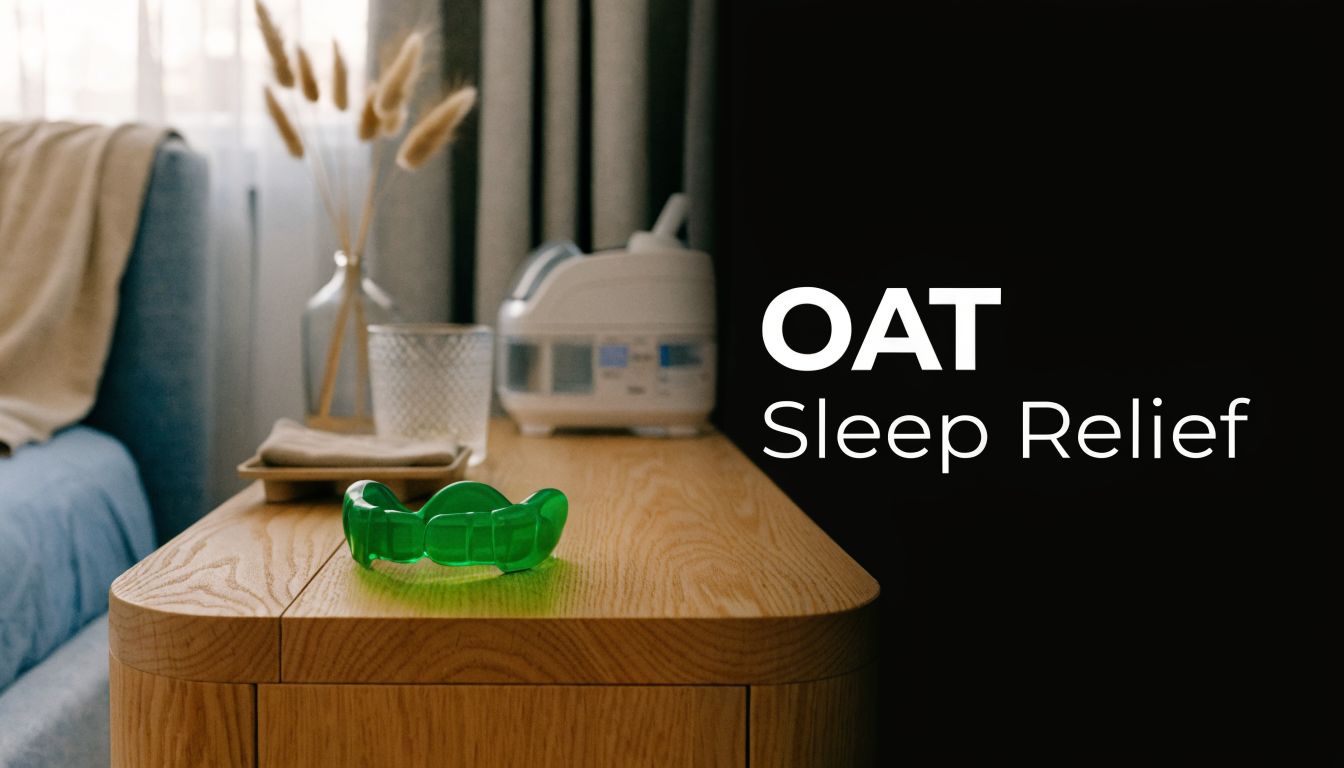
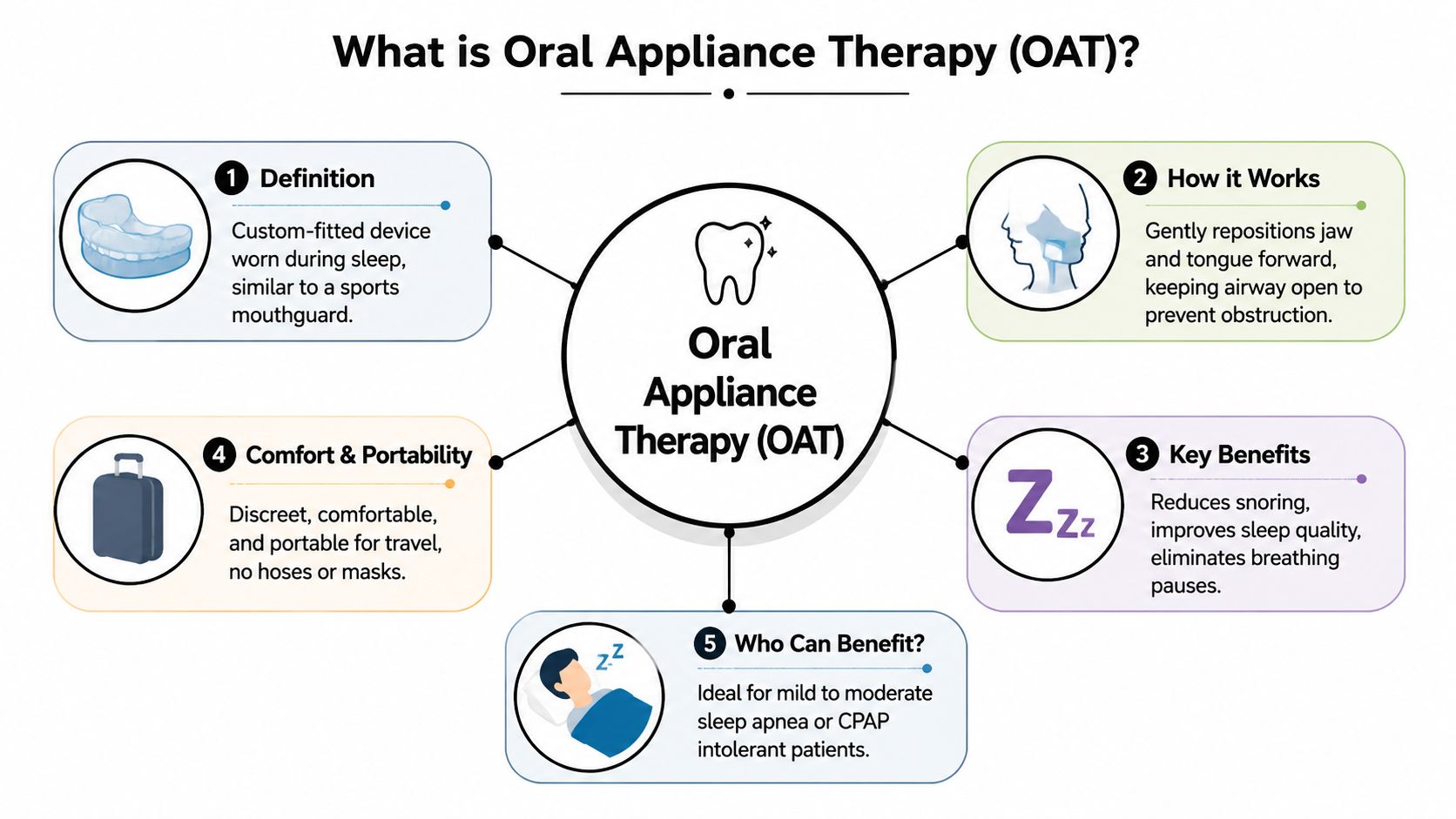
Oral appliance therapy uses a custom-fitted dental device worn during sleep to help keep the airway from narrowing too much. It often looks similar to a retainer or mouthguard, but it is made for a medical purpose and adjusted to your specific bite.
The version used most often is a mandibular advancement device, or MAD. It gently brings the lower jaw forward by a small amount. That small shift can help create more room behind the tongue and soft tissues, which may reduce airway blockage during sleep.
How the appliance helps
A helpful way to picture its function is to imagine a door that tends to swing shut. The appliance does not shove anything into place. It helps hold the jaw in a steadier position so the airway is less likely to close off while you sleep.
That matters because the tongue is attached to the lower jaw. When the jaw moves slightly forward, the tongue and nearby soft tissue often move forward with it. For many patients, that means less snoring, fewer breathing interruptions, and more restful sleep.
Why a custom fit matters
Many patients in Cleveland and Chattanooga have understandable questions. If a device sits in the mouth, why not buy one at the pharmacy and save time?
Because fit changes function.
A professionally made oral appliance is designed around your teeth, your bite, and how your jaw moves. It also needs careful adjustment over time. If the position is too small, it may not help enough. If it is too aggressive, your jaw joints, teeth, or muscles may get sore, and comfort matters if you want to wear it night after night.
Over-the-counter guards are not built to treat diagnosed obstructive sleep apnea. They may feel bulky, fit unevenly, or shift the bite in ways that are not helpful.
What patients often like about OAT
Patients who ask us about oat sleep apnea treatment at Winn Smiles are usually looking for something they can realistically live with. The appeal is often simple and practical:
- No mask on the face
- No hose or machine noise
- Easy to pack for travel
- A familiar bedtime routine that feels more like wearing a dental appliance than using equipment
For someone who has struggled with bulky sleep gear, that difference can feel like a relief.
If you've stopped using CPAP because it feels like too much equipment, an oral appliance may feel more comfortable and easier to use consistently.
A good oral appliance is not just about getting through the night. It is about making treatment feel manageable enough that better sleep can become part of everyday life.
OAT vs CPAP Finding the Right Sleep Apnea Treatment for You
Choosing between oral appliance therapy and CPAP isn't about picking a winner. It's about matching treatment to your diagnosis, comfort level, and daily life. Some patients do very well with CPAP. Others need a different path because they can't sleep consistently with the machine.
Here's the side-by-side view many patients ask for first.
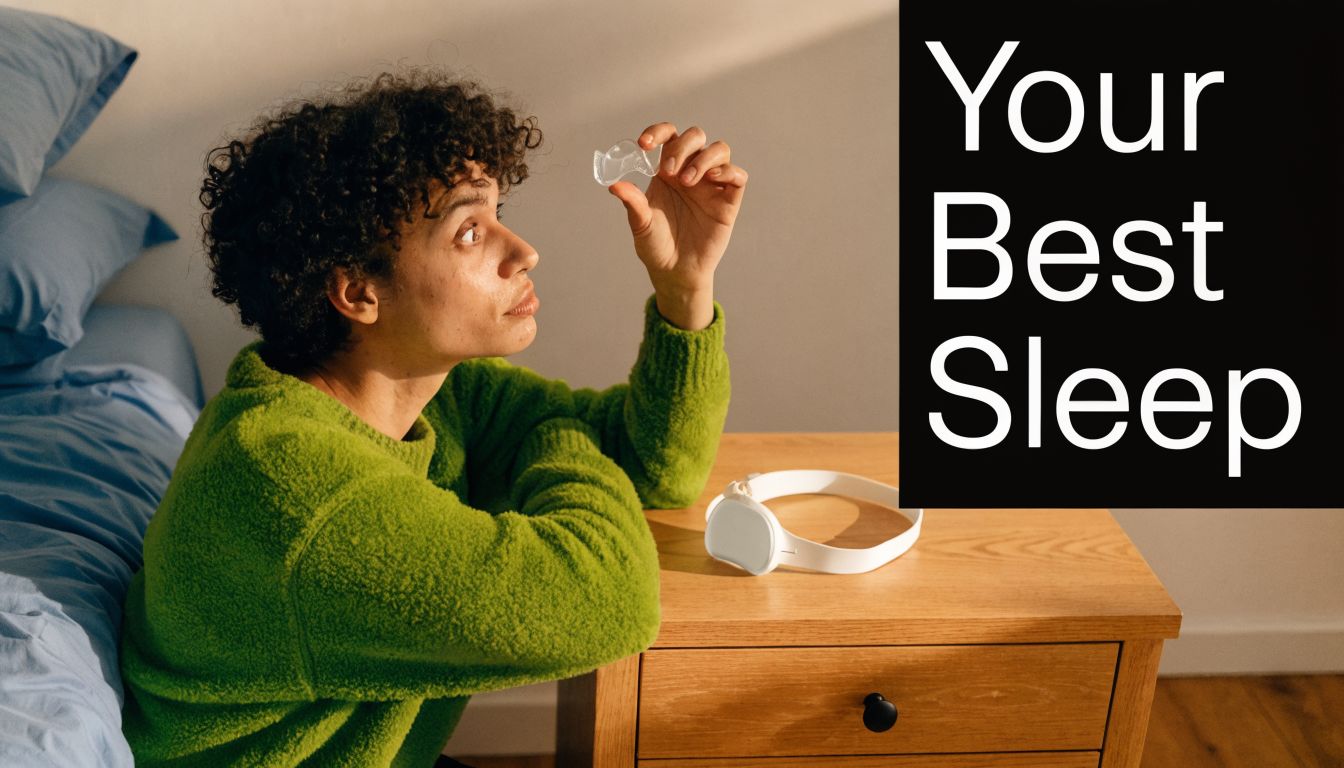
OAT vs. CPAP A Quick Comparison
| Feature | Oral Appliance Therapy (OAT) | CPAP Therapy |
|---|---|---|
| How it works | Repositions the jaw to help keep the airway open | Uses air pressure through a mask to keep the airway open |
| Feel during sleep | Small device inside the mouth | Mask, tubing, and machine |
| Noise level | Silent | Machine-based |
| Travel | Easy to pack and carry | Requires equipment and setup |
| Cleaning routine | Similar to cleaning a dental device | Involves mask, tubing, and machine components |
| Best fit for many patients | Often considered for mild to moderate OSA or CPAP intolerance | Commonly used across OSA severities, especially severe cases |
Where CPAP still fits
CPAP remains a standard treatment, especially when OSA is severe or when a patient tolerates it well. If someone can use CPAP comfortably and consistently, that may remain their best option.
But comfort isn't a side issue. A treatment only helps when you use it. That's why many adults ask about oral appliances after struggling with masks, leaks, pressure, or travel hassles.
If you'd like a consumer-friendly overview of oral appliances for sleep apnea, that resource gives a helpful high-level look at non-CPAP options.
Where OAT can be a strong alternative
Oral appliance therapy is often considered when a patient has mild to moderate obstructive sleep apnea, or when CPAP was prescribed but isn't being tolerated. It can also be appealing for people who want a quieter, less equipment-heavy approach.
For patients comparing practical issues such as insurance discussions, materials, and treatment planning, this page on sleep apnea mouth guard cost can help frame the financial side of the decision.
A short visual explanation can also make the comparison easier to understand:
Questions that help you decide
A few questions usually clarify the next step:
- Can you sleep with a mask on comfortably? If not, that's important.
- Do you travel often? Portability may matter a lot.
- Has your doctor diagnosed mild, moderate, or severe OSA? Severity affects the recommendation.
- Do you want a lower-profile treatment? Some people strongly prefer less equipment.
- Are you willing to attend follow-up visits? Oral appliances work best with adjustment and monitoring.
Your Oral Appliance Therapy Journey at Winn Smiles
A common story in Chattanooga and Cleveland goes like this. Someone finally decides to ask for help after years of loud snoring, restless sleep, or mornings that feel like they never really slept at all. They want a treatment that fits real life, and they want to understand what happens before they commit to it.
That is the value of a local, patient-centered process. At Winn Smiles, oral appliance therapy is handled step by step, with attention to comfort, fit, and follow-up so the treatment works in daily life, not just on paper.

Step one starts with diagnosis
The first step is confirming that obstructive sleep apnea is present. If you already have a diagnosis, bring that information to your visit. If you do not, proper testing with a sleep physician comes first, because an oral appliance should be based on clear findings rather than symptoms alone.
For patients who are still sorting out testing, this guide to a sleep study in Chattanooga explains what the local process can look like.
The exam looks at how your mouth can support treatment
After diagnosis, the dental exam answers a practical question. Can your teeth and jaw support an appliance comfortably and safely over time?
A dentist checks more than cavities. The exam usually includes jaw movement, tooth support, bite alignment, gum health, existing crowns or dental work, and any signs that the jaw joint could become irritated. A good comparison is fitting a pair of hiking boots. If the foundation is off, even a well-made product will not feel right for long.
That evaluation also helps set expectations early. If worn teeth, unstable dental work, or gum problems need attention, the treatment plan may need to account for that before the appliance is made.
Digital records help create a custom fit
Once you are a good candidate, the next appointment focuses on records. Many offices now use digital scans instead of traditional impressions, which many patients find easier and less messy.
Those scans give the lab a detailed map of your teeth and bite so the appliance is made for your mouth, not pulled from a one-size-fits-all template. That custom fit is one of the biggest differences between medical oral appliance therapy and an over-the-counter night guard.
The fitting visit is the start, not the finish
Patients are often relieved at the fitting appointment because the process becomes tangible. You can see the device, feel how it sits on your teeth, and ask questions about sleeping with it, cleaning it, and getting used to it.
Adjustment matters here. The lower jaw is usually advanced gradually, a little at a time, to improve airflow while keeping the jaw comfortable. The goal is not to push the jaw as far forward as possible. The goal is a position you can sleep with night after night.
Clinical guidance from the American Academy of Sleep Technologists describes oral appliance titration as a process of small, measured adjustments, often in 0.5 to 1 mm increments, to balance airway improvement with patient comfort.
Practical rule: The best setting is the one that helps your breathing and still feels manageable when you are trying to sleep.
Follow-up visits protect comfort and long-term success
Follow-up care is where a local practice can make a real difference. A custom appliance is only part of treatment. The other part is checking how you are doing after you start using it at home.
At follow-up visits, the dentist can check for jaw soreness, tooth pressure, bite changes in the morning, wear on the appliance, and whether symptoms such as snoring or daytime fatigue are improving. If something feels off, the device can often be adjusted before a small issue turns into a frustrating one.
For many patients, that steady support is reassuring. You are not left alone to figure it out. You have a team nearby in Cleveland or Chattanooga that can help fine-tune the process until the treatment feels workable in real life.
Real-World Outcomes Benefits and Risks of OAT
When OAT works well, the benefit isn't only a lower sleep study number. Patients usually care most about what they feel. They want quieter nights, less exhaustion, clearer mornings, and fewer complaints from the person sleeping next to them.
The clinical outcomes support that everyday experience. In a one-year clinical study, patients using OAT saw their average apnea-hypopnea index drop by about 68%, from 28.7 to 9.3 events per hour, and their Epworth Sleepiness Scale scores were cut in half, indicating a major reduction in daytime sleepiness, according to this one-year OAT clinical study.
Benefits people often notice first
The first wins are usually practical and easy to recognize.
- Quieter sleep: Bed partners often notice reduced snoring early.
- More alert mornings: People may wake up feeling less foggy.
- Better daily function: Work, concentration, and patience can improve when sleep is more stable.
- A treatment they can stick with: The simpler routine helps many adults stay consistent.
Risks patients should know about
An honest conversation about oral appliances should include the downsides too. Some patients experience jaw soreness, tooth tenderness, or bite changes. Over longer periods, some people can develop dental side effects such as tooth movement or changes in how the teeth come together.
That doesn't mean OAT is a bad choice. It means it should be monitored. Qualified dental oversight matters because the appliance affects both breathing and the bite.
The goal isn't to ignore side effects. It's to catch them early and manage them before they become bigger problems.
Why follow-up protects the outcome
A carefully made device, gradual adjustment, and regular review can reduce a lot of the trouble patients worry about. If the jaw feels strained, the setting may need to be modified. If the bite is changing, the dentist can evaluate next steps and monitor those changes over time.
That's one reason custom care is very different from buying a generic device online. Oral appliance therapy can be highly useful, but it works best when the medical and dental pieces are both taken seriously.
Frequently Asked Questions About OAT in Cleveland TN
Is OAT covered by medical insurance
Coverage depends on your diagnosis, plan details, and documentation requirements. Because obstructive sleep apnea is a medical condition, benefits are often discussed through medical insurance rather than standard dental coverage. The best next step is to ask for a benefits review before treatment begins.
How much does an oral appliance typically cost
The final cost varies based on the type of appliance, records needed, follow-up care, and insurance participation. A custom device is different from an over-the-counter guard because it involves diagnosis coordination, fabrication, fitting, and adjustment over time. Patients should ask for a written estimate and a clear explanation of what follow-up is included.
How long does an oral appliance last
That depends on the material, your bite forces, how well you care for it, and whether changes in your teeth affect the fit. Some appliances last for years with good maintenance, but they do need regular review to make sure they're still fitting and functioning properly.
Is the appliance comfortable to sleep with
Most patients need a short adjustment period. At first, it may feel unusual because you're sleeping with something in your mouth. A custom fit and gradual adjustment usually make a big difference. If a device feels painful or creates persistent jaw strain, it should be checked rather than pushed through.
Do I still need a dentist if my sleep doctor diagnosed me
Yes. The diagnosis comes from the sleep physician, but the appliance is a dental treatment device. It needs to fit your teeth, respect your bite, and be monitored over time for comfort and side effects.
If you're looking for a clearer answer about snoring, CPAP intolerance, or oat sleep apnea treatment in Chattanooga or Cleveland, the next step is a conversation. The team at Winn Smiles can help you understand whether a custom oral appliance may fit your diagnosis, your mouth, and your day-to-day life.