If your gums bleed when you brush, your breath doesn't stay fresh, or your teeth feel a little more sensitive than they used to, a visit to a dentist in Chattanooga, TN is warranted. You're not overreacting. Those are common signs that the issue may be deeper than a routine cleaning can fix.
Many adults put this off because the phrase periodontal scaling and root planing sounds intimidating. In plain language, it's a deep cleaning below the gumline that helps remove infection and give your gums a chance to heal. For people looking for a dentist near me, an emergency dentist, or ongoing dental care in Chattanooga or Cleveland, understanding this treatment can make the next step feel much less stressful.
Understanding Gum Disease and Its Health Impact
Gum disease usually starts without obvious symptoms. You may notice bleeding when flossing, puffiness along the gumline, tenderness, bad breath, or gums that seem to be pulling away from the teeth. A lot of people assume these are minor issues. They aren't.
Your gums are the support system for your teeth. Think of them like the foundation of a house. When the foundation is solid, everything above it stays stable. When infection begins to damage the tissue and bone underneath, teeth can lose support even if the visible part of the tooth still looks fine.
The difference between gingivitis and periodontitis
Gingivitis is the early stage. The gums get inflamed, they may bleed, and they often look redder than usual. At this stage, the problem can often be reversed with timely professional care and better home habits.
Periodontitis is more advanced. Infection has moved deeper below the gumline and begins to affect the structures that hold teeth in place. That damage is manageable, but it isn't something you should ignore and hope goes away on its own.

According to the CDC data summarized by RCPeRio on periodontitis prevalence, 47.2% of adults in the United States have periodontitis, and the rate rises to over 70% in adults age 65 and older. If you've been told you need deep cleaning, you're far from alone.
Gum disease is common, but common doesn't mean harmless.
Why this matters beyond your smile
Patients often think of gum treatment as cosmetic. It isn't. Infected gums can affect comfort, chewing, confidence, and long-term tooth retention. Gum inflammation is also part of your overall health picture, which is why dentists and physicians both take it seriously.
You may also be wondering about recession. If your gums look lower than they used to, home care matters, but internet advice can be confusing. A practical overview of effective solutions for gum recession can help you understand what lifestyle steps may support healthier gums between dental visits.
Why a regular cleaning may not be enough
A standard cleaning focuses on the areas above the gumline. Gum disease often lives below it, in spaces called periodontal pockets. Once bacteria and hardened tartar settle there, brushing and flossing alone can't fully remove them.
That's when a deeper, more targeted treatment becomes necessary. The goal isn't just to make teeth feel cleaner. The goal is to stop an active infection from continuing to damage the support around your teeth.
What Is Periodontal Scaling and Root Planing
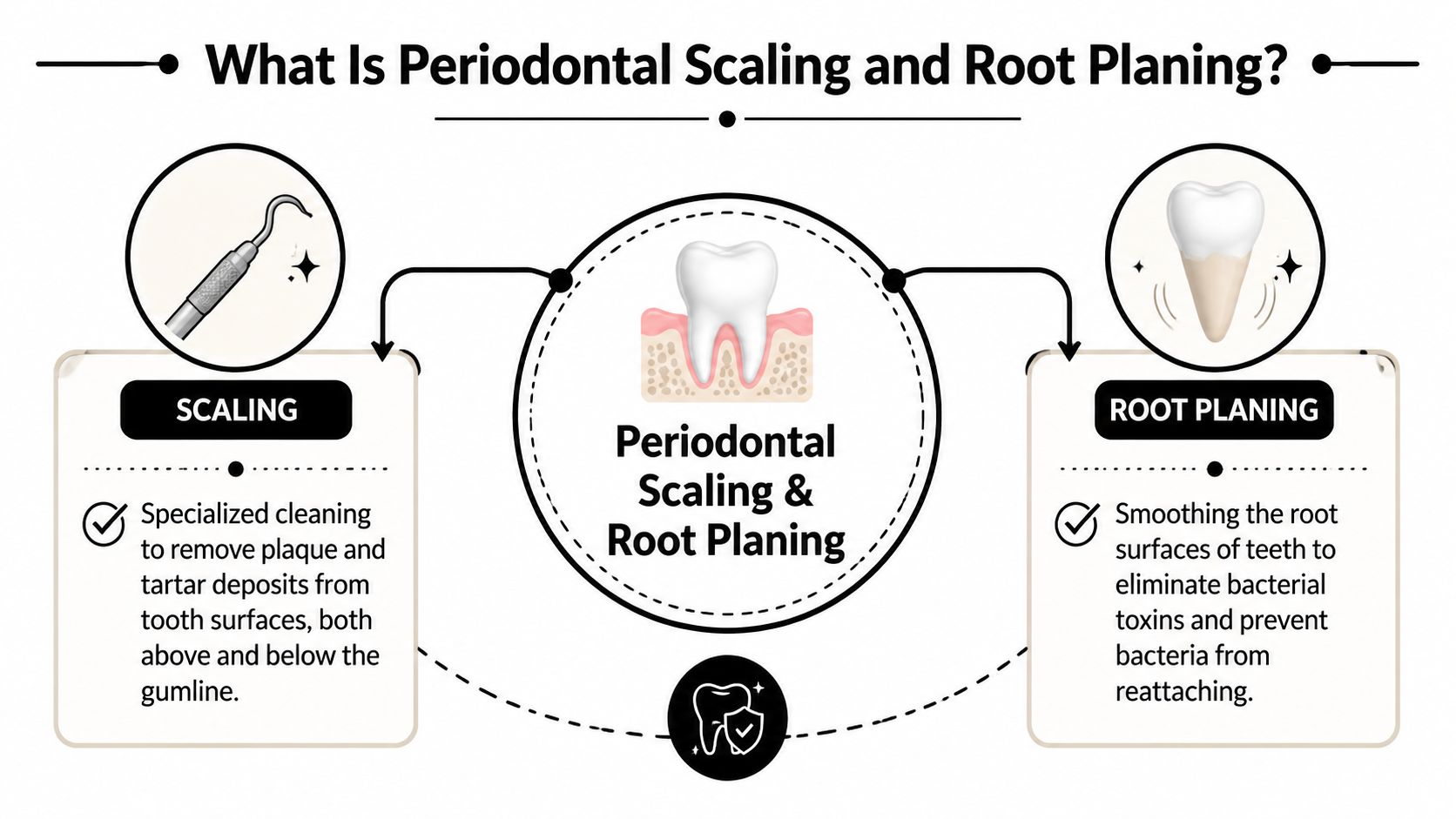
The name sounds technical, but the idea is straightforward. Periodontal scaling and root planing is a non-surgical treatment used when infection and buildup have moved below the gumline.
The National Institutes of Health resource at NCBI describes scaling and root planing as the gold-standard nonsurgical therapy for periodontitis because it removes plaque and calculus from subgingival root surfaces and creates a healthier surface for healing.
What scaling means
Scaling is the careful removal of plaque and tartar from the tooth surface, including the part below the gums. Gum disease isn't driven only by what you can see in the mirror. Deeper bacterial buildup often presents the primary challenge.
A useful way to think about it is garden work. Pulling weeds from the top without removing what is packed into the soil doesn't solve much. Scaling clears out what shouldn't be there.
What root planing means
Root planing comes next. After buildup is removed, the root surface is smoothed so bacteria have a harder time sticking again. That smoother surface also gives the gum tissue a better environment for healing and reattaching more closely to the tooth.
Here is the simplest distinction:
| Part of treatment | What it does | Why it matters |
|---|---|---|
| Scaling | Removes plaque and tartar below the gumline | Lowers the bacterial burden |
| Root planing | Smooths the root surface | Supports healing and helps gums fit more snugly |
Practical rule: A regular cleaning polishes visible surfaces. Scaling and root planing treats infection in places a routine cleaning can't reach.
Why patients confuse it with a normal cleaning
That confusion is understandable. Both involve cleaning teeth, and both use dental instruments. The difference is depth, purpose, and diagnosis.
A routine cleaning is preventive care for a healthier mouth. Deep cleaning is treatment for active gum disease. It isn't surgery, and for many patients, it is the first step that helps avoid more invasive care later.
Your Scaling and Root Planing Procedure at Winn Smiles
Patients often feel better once they know how the visit goes. The process is methodical, gentle, and focused on comfort from the start.
It begins with an exam. Your dental team checks the gums, looks at areas of inflammation, and reviews imaging when needed so the treatment matches what your mouth needs. If you're comparing options for a periodontal treatment consultation in Chattanooga, this visit is where the plan gets personalized.

What the appointment usually feels like
Before treatment starts, the area is typically numbed with local anesthetic so you stay comfortable. The American Dental Association notes that scaling and root planing may involve local anesthetic and may also require more than one visit, especially when several areas need treatment. Many patients are surprised by how manageable this makes the experience.
Some patients also like learning more about dental anesthetics ahead of time. If you're curious about how numbing medications are used in care, this patient-friendly overview of bupivacaine uses and side effects offers general background.
For the cleaning itself, clinicians may use ultrasonic scalers and fine hand instruments. Ultrasonic tools help break up hardened buildup with vibration and water, while hand instruments allow careful finishing in smaller areas. That combination helps reach below the gumline with precision.
Comfort matters during gum treatment
Patient experience makes a big difference. People who have dental anxiety often delay treatment because they expect discomfort, embarrassment, or a long, tense appointment. A more modern approach changes that.
At Winn Smiles, patients are welcomed into an environment designed to reduce stress, with a comfort menu and sedation options available for people who feel nervous about treatment. That doesn't change the clinical purpose of scaling and root planing, but it can change how approachable the appointment feels for someone who has been putting it off.
Here is what many patients want to know before they book:
- Will I be awake? Usually yes, with the area numbed well. Sedation options may be available for anxious patients.
- Will it happen in one visit? Sometimes, but treatment may be completed over multiple appointments depending on how much area needs care.
- Can I go back to work after? Many people can return to normal routines the same day.
This short video gives a helpful visual overview of what deep cleaning involves.
What happens right after treatment
Once the deeper cleaning is complete, you'll get instructions for brushing, flossing, eating, and managing temporary tenderness. You may notice the teeth feel cleaner in a different way, especially around the gumline. Some patients also notice less puffiness and less bleeding fairly quickly as the tissue begins to calm down.
The key point is that the visit isn't rushed. The purpose is to remove infection thoroughly while keeping the experience as calm and controlled as possible.
Key Benefits and Expected Results from Treatment
The biggest question most patients ask is simple. Will it help? In many cases, yes, especially when gum disease is caught before the deepest areas become harder to manage non-surgically.
One practical benchmark comes from Kentucky Periodontics' explanation of scaling and root planing outcomes, which notes an average reduction of 2 to 3 mm in periodontal pocket depth after successful treatment. That matters because shallower pockets are easier to keep clean at home, which lowers the chance of bacteria settling back into hard-to-reach spaces.
What those results mean in everyday life
Pocket-depth reduction sounds clinical, but patients feel the benefits in ordinary ways:
- Less bleeding during brushing and flossing often means the gums are becoming less inflamed.
- Fresher breath can improve when the bacteria trapped below the gums are reduced.
- Reduced swelling and tenderness can make eating and brushing more comfortable.
- Better long-term support for teeth helps protect your natural smile.
Shallower pockets are easier for your toothbrush and floss to reach. That's one reason this treatment can improve day-to-day home care, not just what happens in the dental chair.
Why early treatment is often simpler
Deep cleaning works best when there is still a good opportunity for the gums to respond and tighten up around the teeth. Waiting doesn't guarantee you'll need surgery, but it can make treatment more involved.
This is also why gum treatment often connects with other services. If gum disease has already affected damaged teeth, some patients may later need restorative dentistry, a tooth extraction, or even dental implants near me when teeth can't be saved. On the other hand, treating the gums early may help preserve teeth and keep future care simpler.
For many adults, one of the most meaningful benefits is confidence. When your mouth doesn't bleed, ache, or smell unpleasant, it's easier to smile, speak up, and stop worrying that something is getting worse.
Aftercare Instructions and Long-Term Gum Health
After scaling and root planing, it's normal to have some tenderness or sensitivity for a short time. The first few days are mostly about protecting the healing tissue while keeping the mouth clean.
Soft foods can feel more comfortable right away. Gentle brushing is still important, even if the gums feel a little sore. Skipping oral hygiene because the area is tender usually makes healing slower, not faster.
What to do in the first several days
A simple home routine is usually the best approach:
- Brush gently with a soft-bristled toothbrush along the gumline.
- Follow the cleaning instructions your dental team gives you for flossing or other tools.
- Choose milder foods if the gums feel tender.
- Watch for sensitivity to cold foods or drinks, which can happen temporarily.
If you like to refresh or replace oral care tools after treatment, you may also want to review effective toothbrush sanitization methods so your home routine stays as clean as possible.
Why follow-up matters
According to the ADA's guidance on scaling and root planing, a re-evaluation visit is often needed to measure pocket depths and decide whether more treatment is necessary. That follow-up is important because gum disease treatment isn't just about the first procedure. It's about checking how the tissue responded.
Some areas heal very well after deep cleaning. Others may still need closer monitoring, added therapy, or a different approach if the infection was more advanced.
The procedure treats the current infection. Maintenance helps keep that infection from returning.
What periodontal maintenance means
Periodontal maintenance is not the same as a standard cleaning. It is a more targeted cleaning program for patients who have had gum disease and need closer supervision over time.
If you're working on healthier gums long term, Winn Smiles also shares practical patient education on how to improve gum health naturally. Resources like that can support what you do at home between visits, but they don't replace professional follow-up when periodontal pockets have already formed.
This is the part many people don't expect. Deep cleaning is often the start of control, not the end of care. That isn't bad news. It's a realistic plan for keeping your teeth and gums healthier over time.
Risks Alternatives and Cost of Periodontal Therapy
Patients deserve a clear answer about downsides, limits, and next steps. In most cases, the risks of scaling and root planing are modest and temporary. The most common concerns are soreness, gum tenderness, and short-term tooth sensitivity.
For many people, those effects fade as the tissue heals. The bigger issue is not usually the procedure itself. It is whether deep cleaning alone can fully manage the disease in every area of the mouth.

Where non-surgical treatment may fall short
A classic study summarized on PubMed found that complete calculus removal becomes much harder in deeper pockets. The reported success dropped from 86% in 1 to 3 mm pockets to 32% in pockets deeper than 6 mm. That doesn't mean treatment failed. It means anatomy matters, especially in very deep areas and complex root shapes.
This is why honest dentists recommend re-evaluation instead of assuming one round of treatment solves everything. Advanced periodontitis can involve pockets, grooves, and furcations that are difficult to clean completely without additional access.
Alternatives and adjuncts
The usual sequence is to start with scaling and root planing because it is the standard first-line treatment. After healing, the next decision depends on response.
A few possibilities include:
| Option | When it may be discussed | General purpose |
|---|---|---|
| Laser therapy | When a gentler adjunctive approach is appropriate | Target infected tissue and support periodontal care |
| Localized medication | In selected cases after cleaning | Add support inside periodontal pockets |
| Periodontal surgery | For advanced areas that don't respond enough to non-surgical care | Improve access and treat deeper defects |
The right option depends on the severity and location of disease, not on a one-size-fits-all formula.
What about cost and insurance
Cost is one of the most common concerns, and it varies. The total depends on how much of the mouth needs treatment, how extensive the disease is, whether treatment is completed over multiple visits, and what insurance benefits apply.
The most useful next step is a clinical exam and a written estimate. That gives you a chance to ask practical questions about priorities, sequencing, and payment before treatment starts. If you have been delaying care because you're unsure about finances, bring that up directly. Dental teams hear that concern every day.
Your Partner for Gentle Dental Care in Chattanooga and Cleveland
Choosing a dental office for gum treatment isn't only about the procedure. It's also about whether you feel heard, informed, and comfortable enough to follow through with care.
For patients in Chattanooga, Cleveland, and nearby communities, many dental searches start broadly. You may be looking for a dentist near me, cleaning and exams, dental x-rays, new patient exams, cosmetic dentist near me, or even an emergency dentist because something suddenly started hurting. Gum problems often overlap with those concerns, which is why a full-service practice can be helpful when your needs extend beyond one appointment.
What tends to matter most is simple. You want clear explanations, modern treatment options, and a team that doesn't make you feel embarrassed for waiting. Comfort-focused details such as sedation options, calming amenities, and newer tools like laser dentistry can make periodontal care feel much more manageable.

If your gums bleed, feel swollen, or seem to be pulling away from your teeth, don't wait for it to become a bigger problem. A careful exam can tell you whether you need a routine cleaning, periodontal scaling and root planing, or another kind of treatment plan entirely.
If you're ready to talk through bleeding gums, deep cleaning, dental anxiety, or your options for long-term gum health, schedule a visit with Winn Smiles. A consultation can help you get clear answers, understand your treatment choices, and take the next step toward a healthier, more comfortable smile.