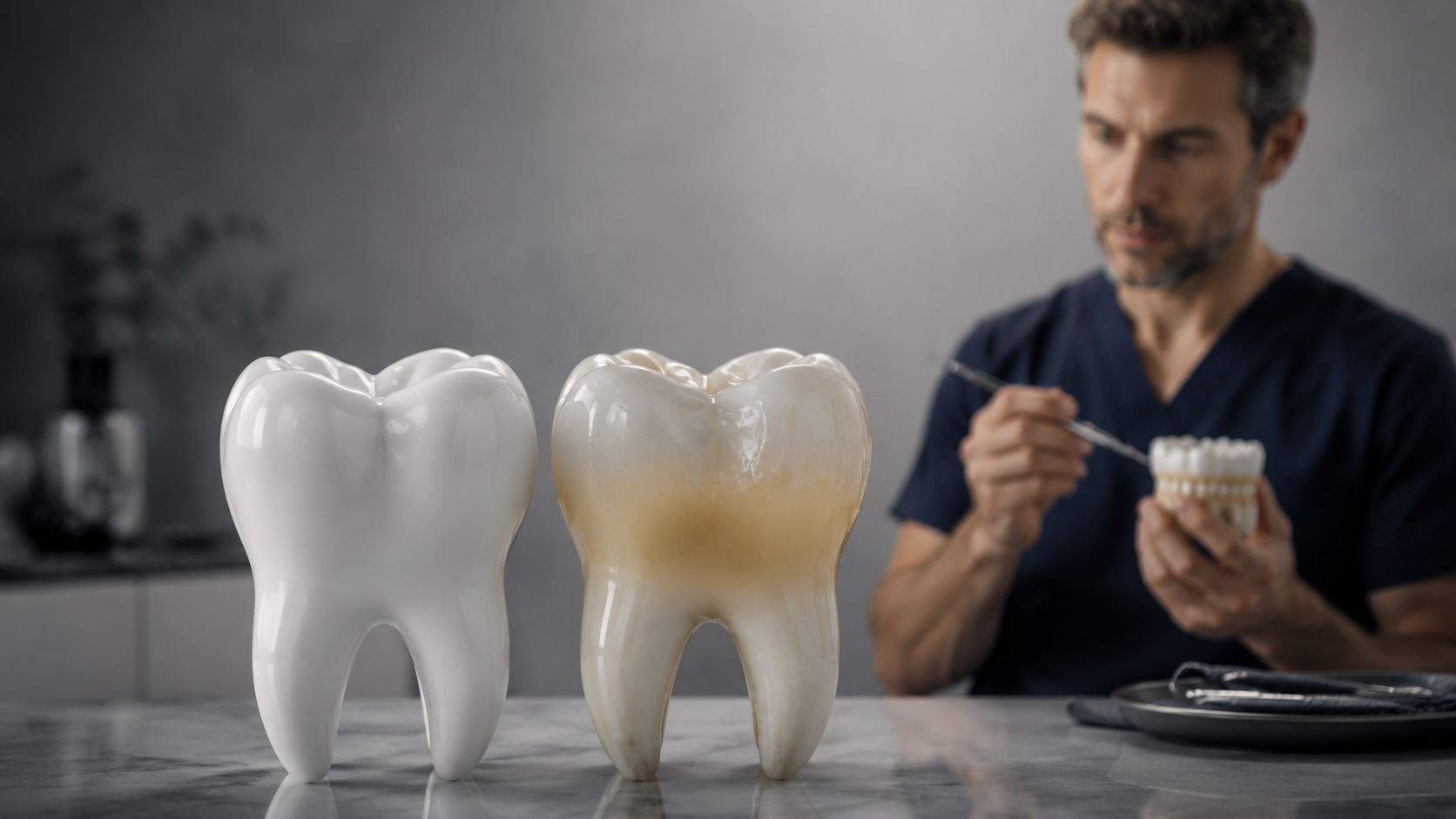
Enamel erosion is the irreversible wearing away of the tooth's outer layer by acid, and once that enamel is gone the body can't grow it back. It's common, with average prevalence estimated at 30%–50% in deciduous teeth and 20%–45% in permanent teeth in a major review, and that helps explain why so many Cleveland patients notice sensitivity or yellowing and wonder what changed (ADA dental erosion overview).
A patient sits down in the chair and says the same thing I hear all the time, “Cold drinks suddenly bother me, and the edges of my teeth look thinner.” That's often how what is enamel erosion first shows up, before the damage becomes obvious. In Cleveland and Chattanooga, Winn Smiles sees this pattern often enough to treat it as a real dental problem, not just a cosmetic annoyance.
Why Cleveland Patients Are Asking About Enamel Erosion Right Now
A lot of people do not notice enamel erosion while it is happening. The first clue may show up later, a sharp twinge when biting into ice cream, a rough edge on a front tooth, or a yellow strip near the gumline when they look in the mirror after brushing.
That is the frustrating part. Erosion usually builds slowly, so early changes can feel minor until the enamel has already thinned.
The quiet stage is why people miss it
Enamel wear is common in everyday dental care, and it fits the kinds of problems Cleveland patients bring up in the chair. Coffee, sports drinks, reflux, dry mouth, and grinding can all play a part, and many people do not connect those habits to the changes they see on their teeth.
The other reason this gets missed is simple, early erosion often does not hurt much. A person can brush, work, eat, and go months before the first sensitivity flare makes them pay attention.
Practical rule: if your teeth look a little more translucent at the edges or cold foods are suddenly uncomfortable, do not wait for pain to prove something is wrong.
Cleveland and Chattanooga patients usually want a plain answer, not a lecture. They want to know whether they are dealing with a temporary sensitivity issue, a cavity, or something that needs treatment now.
That is the right question to ask. Enamel erosion sits in that overlap, and Winn Smiles looks at the teeth, the habits behind the wear, and the treatment that can slow it down or rebuild what has already been lost.
What Enamel Actually Is and How Acid Wears It Down
Enamel is the hardest part of the tooth, but it isn't indestructible. I often compare it to the glaze on a ceramic mug, it protects what's underneath, but once that glaze is thinned or chipped, the surface changes fast.
The key idea is acid exposure, not just sugar or sweetness. Enamel starts losing minerals when the mouth drops below about pH 5.5, and repeated dips below that level create permanent wear over time (BDJ Team).
The two-step process most people never hear about
First, acid softens the enamel. Then normal chewing, brushing too soon, or even the friction of eating can wear that softened layer away.
That's why this problem isn't just about what you drink. It's also about how often acid touches the teeth, how long it stays there, and whether saliva can bring the mouth back toward balance.
Once enamel softens, ordinary chewing can do part of the damage for the acid.
That's the reason two people can drink the same beverage and have very different outcomes. One person rinses with water, has good saliva flow, and spaces exposures out. Another sips all afternoon, brushes immediately after, and has dry mouth or reflux in the background.
When patients understand this mechanism, the rest of the conversation becomes easier. It also explains why a Cleveland dentist may talk about timing, saliva, and night guards, not just soda or candy.
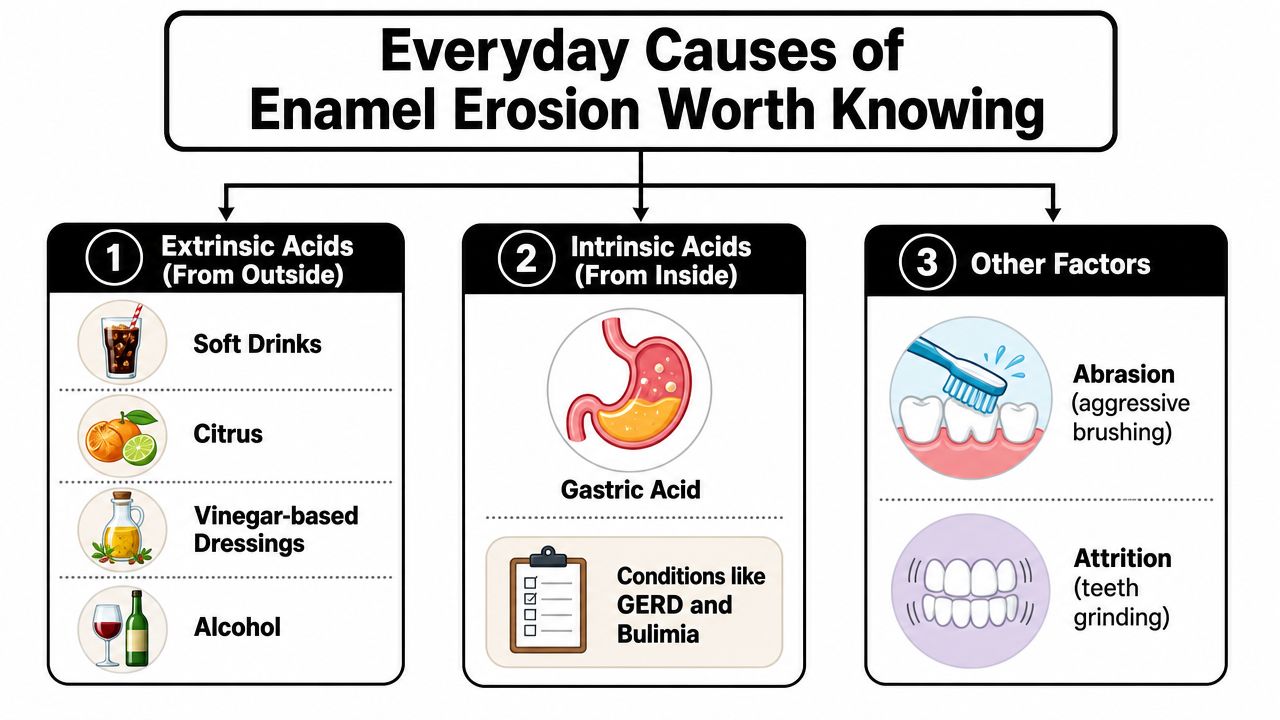
Everyday Causes of Enamel Erosion Worth Knowing
The causes usually fall into three buckets. I find that framework helps patients stop blaming themselves for only one habit and start seeing the full picture.
Acids from outside the mouth
Soft drinks, diet beverages, energy drinks, sports drinks, citrus fruits, vinegar-based dressings, and alcohol can all bring acid to the tooth surface. Healthdirect also names products with citric acid, sodium citrate, or phosphoric acid as common dietary triggers (Healthdirect).
A patient who says, “I don't even drink soda,” may still be sipping iced tea with lemon, wine with dinner, or flavored sparkling water all day. The pattern matters as much as the label.
Acids from inside the body
Reflux and recurrent vomiting matter because stomach acid is strong enough to erode enamel when it keeps reaching the teeth. Dental sources also identify GERD and bulimia as common intrinsic causes, which is why a dentist should ask about stomach symptoms before assuming the problem is diet alone (Delta Dental enamel guide).
The modifiers that speed things up
Dry mouth is a big one. Saliva helps neutralize acid and support remineralization, so when saliva is reduced, enamel stays exposed to acid longer (Oral-B enamel erosion causes, symptoms, treatments). Bruxism, or grinding, adds mechanical wear on enamel that's already softened.
Winn Smiles can respond in practical ways during care, including evaluating reflux symptoms, discussing saliva-friendly home care, and fitting a custom night guard when grinding is part of the picture.

How to Tell Enamel Erosion Is Happening to You
The first signs are usually visible or felt, not dramatic. Patients often notice sensitivity to cold, hot, or sweet foods, tooth edges that look more yellow or translucent, and a shape that seems rounder than it used to.
What you can spot at home
Look closely at the front teeth and chewing surfaces. Erosion can show up as cupping on the biting surfaces, flattened edges, or a change in how light passes through the enamel.
A few signs deserve attention right away:
- Yellowed or translucent edges because thinning enamel exposes more of the dentin underneath.
- Rounded or chipped tooth shape that makes teeth look shorter or worn.
- Cupping on chewing surfaces where the top layer has dissolved.
- Sudden sensitivity to hot, cold, or sweet foods and drinks.
- Fillings that seem higher than the surrounding tooth, because the tooth around them has worn away.
How a dental exam confirms it
A dentist in Cleveland or Chattanooga confirms erosion by looking directly at the teeth, asking about reflux, dry mouth, grinding, and diet, and using dental x-rays when needed to rule out decay or other problems. That exam matters because enamel erosion and cavities can feel similar at first, but they're not treated the same way.
Good news: catching it early usually opens the door to simple prevention, not major repair.
For patients who've already been dealing with sensitivity, this tooth sensitivity relief guide can be a helpful next read, but the more important step is a proper evaluation if the symptoms keep showing up.
Daily Habits That Protect Your Enamel at Home
The most useful home plan is usually about timing, not perfection. I tell patients to keep acidic foods and drinks with meals when possible, because salivary flow is higher and the mouth can recover faster than when acid is sipped slowly all day.
Small changes that make a real difference
If you drink something acidic, use a straw and aim it toward the back of the mouth. Then rinse with water afterward, especially after coffee, tea, wine, or sports drinks.

- Use a straw for acidic drinks so the liquid spends less time on the front teeth.
- Drink water after acidic exposures to help dilute and clear acid.
- Wait about 30 minutes before brushing after an acidic meal or drink, because enamel needs time to re-harden.
- Chew sugar-free gum between meals to stimulate saliva.
- Use fluoride toothpaste and a soft-bristled brush to lower wear.
The Cleveland Clinic also lists dry mouth and certain medications as risk factors, so patients with lower saliva flow often need a more specific routine than someone with no medical issues (Cleveland Clinic).
A good home plan helps, but it doesn't replace a cleaning and exam. A dentist can match your routine to your actual risk pattern, especially if grinding, reflux, or dry mouth is part of the story.
Professional Treatment Options at Winn Smiles
Treatment depends on how far the enamel has worn and whether the tooth still has enough structure to protect itself. Early cases may only need stronger prevention, while more advanced wear needs rebuilding.
Matching treatment to the stage of wear
For early erosion, the focus is often protection. Fluoride varnish and other fluoride-based care can help strengthen vulnerable areas, and a clinician may recommend prescription-strength products when sensitivity is getting in the way of daily life. Winn Smiles also discusses fluoride varnish applications as part of preventive care (fluoride varnish application).
For moderate wear, bonding or veneers may help restore shape and smooth the worn edges. That can improve both appearance and function, especially when front teeth are starting to look thin or uneven.
For more advanced loss, same-day crowns can rebuild a tooth's form and bite in a single visit when the tooth needs more coverage than bonding can provide. If erosion has led to tooth loss, dental implants and full-arch implant options can replace what's missing and restore stability.
Treatment works best when the cause is still active and the plan addresses that cause too.
A personalized consultation is the starting point for all of it. At Winn Smiles, free consultations and second opinions are available on select services, which helps patients compare options without feeling rushed.
When to Schedule an Appointment at Winn Smiles
Book a new patient exam if your teeth are getting more sensitive, if you notice yellowed edges or a changed tooth shape, or if fillings seem to sit higher than the surrounding enamel. You should also call if sensitivity lasts more than a week, because that usually means the irritation isn't just temporary.
Reflux, dry mouth, and grinding are strong reasons to come in sooner. Those conditions often keep enamel under steady stress, even when your diet looks fairly normal.
If you chip a tooth, feel a sharp edge, or get sudden pain, that's a good reason to ask about emergency dentistry. If you're anxious about the visit, Winn Smiles offers a comfort menu and custom sedation options so the appointment feels manageable instead of overwhelming.
Cleveland and Chattanooga patients don't need to wait until a tooth breaks down. Schedule a consultation at the Cleveland or Chattanooga office and get a clear plan for protecting the enamel you still have.
Common Questions Cleveland Patients Ask About Enamel Erosion
Can enamel grow back?
No, enamel doesn't regenerate once it's gone. It can, however, be strengthened and protected so the loss doesn't keep progressing. Fluoride care, improved home habits, and timely treatment can all help preserve what remains, which is why an early visit matters. If you're unsure how much damage has happened, schedule a consultation and let the dentist look first.
Are sugar-free drinks safe?
Not automatically. A drink can be sugar-free and still be acidic enough to soften enamel, especially if it contains citric or phosphoric acid. That's why the timing and frequency of the drink matter so much. If you're reaching for flavored sparkling water or diet beverages often, bring that habit up at your appointment so the plan fits your routine.
Is teeth whitening risky after erosion?
It can be, depending on how much enamel is left and how sensitive the teeth already are. Whitening can increase discomfort on worn teeth, so a dentist should check the surface first and decide whether whitening should wait. If appearance is a concern, there may be a better sequence, including protection or restorative care before cosmetics.
How long does treatment take?
It depends on the fix. Same-day crowns can be completed in a single visit when a tooth needs full coverage, while implants and full-arch solutions usually take more than one appointment because they involve planning and placement. The important part is starting with an exam, so you know which path fits your teeth, budget, and comfort level.
If your teeth have started feeling more sensitive, looking thinner, or showing yellowed edges, Winn Smiles can evaluate the cause and talk through prevention, bonding, crowns, implants, and comfort-focused care in Cleveland or Chattanooga. Visit Winn Smiles to schedule a consultation and get a clear plan for protecting your smile before the wear gets worse.