Someone in your household has a toothache, your child is due for a cleaning, and you've been putting off a broken filling because it doesn't hurt yet. Searching for family dentistry in Chattanooga, TN, brings those needs together, but they shouldn't all be booked as the same appointment.
Winn Smiles serves families in Chattanooga and Cleveland with preventive, restorative, and emergency dental care. The useful starting point isn't choosing a procedure. It's explaining what's happening, finding the right visit, and making sure the comfort plan and cost discussion work for you.
Which Family Visit Fits Today
Family dentistry means children and adults can receive care through one local practice, with appointments shaped around their different needs. Use this table to identify what to ask for when you call.
Family dentistry visits by need in Chattanooga
| What is going on | Visit to book | Usually for | When to go |
|---|---|---|---|
| Due or overdue checkup | Exam, cleaning, and x-rays when due | Children and adults | About every 6 months |
| Child cavity prevention | Fluoride varnish and molar sealant check | Children as molars erupt | With routine visits, not once only |
| Hole, stain, or sweet sensitivity | Filling, or a crown if the tooth needs more coverage | Any age | Promptly, before pain |
| Broken tooth, swelling, or night pain | Emergency visit for pain and infection control | Any age | Same day when the office can see you |
| Bleeding or puffy gums | Periodontal evaluation and cleaning plan | Mostly adults | Do not wait for the next checkup |
| Missing tooth or loose denture | Exam of gums and bone, then implant or full-arch discussion | Adults | After disease is controlled |
| Stained, chipped, or crowded teeth | Whitening, veneers, or Invisalign after a health check | Teens and adults | Consult once the mouth is stable |
| Snoring or suspected sleep apnea | Evaluation for an oral sleep appliance | Adults | Consult; not a substitute for a medical diagnosis |
Routine visits and tooth repair
For a checkup, ask for cleaning and exams, with dental x-rays when clinically appropriate. The interval in the table is a starting point, not a rule for every mouth. Gum disease, cavity risk, and previous treatment can change your recommended schedule, while x-rays follow their own clinical timing.
A child's appointment should also account for developing teeth. A prevention visit is not an adult cleaning with smaller instruments. The team checks brushing habits, cavity risk, and whether new molars are ready for protective treatment. This explanation of what preventive dental care includes can help you prepare questions.
A sensitive tooth needs an examination before anyone promises a filling. A small defect may need a conservative repair, while a weakened tooth may need a crown. Same-day crowns may be an option when the tooth, treatment requirements, and appointment schedule fit.
Urgent needs and elective decisions
Tell the scheduler immediately about swelling, a broken tooth, or pain that interrupts sleep. An emergency dentist first determines what's causing the problem and how to relieve it safely. Trouble breathing or swallowing, or rapidly spreading facial swelling, requires emergency medical attention rather than waiting for an office opening.
Bleeding gums call for a periodontal evaluation, not automatically a routine polish. For a missing tooth, the dentist checks gum health and supporting bone before discussing an implant or full-arch replacement.
Searching for dental implants near me or a cosmetic dentist near me can start a consultation, but active decay or gum disease needs attention before elective cosmetic work. Snoring requires a different pathway again, with medical diagnosis guiding whether an oral appliance is appropriate. Pick the row that matches today's concern, even if you have other goals for later.
How a Small Cavity Becomes a Bigger Problem
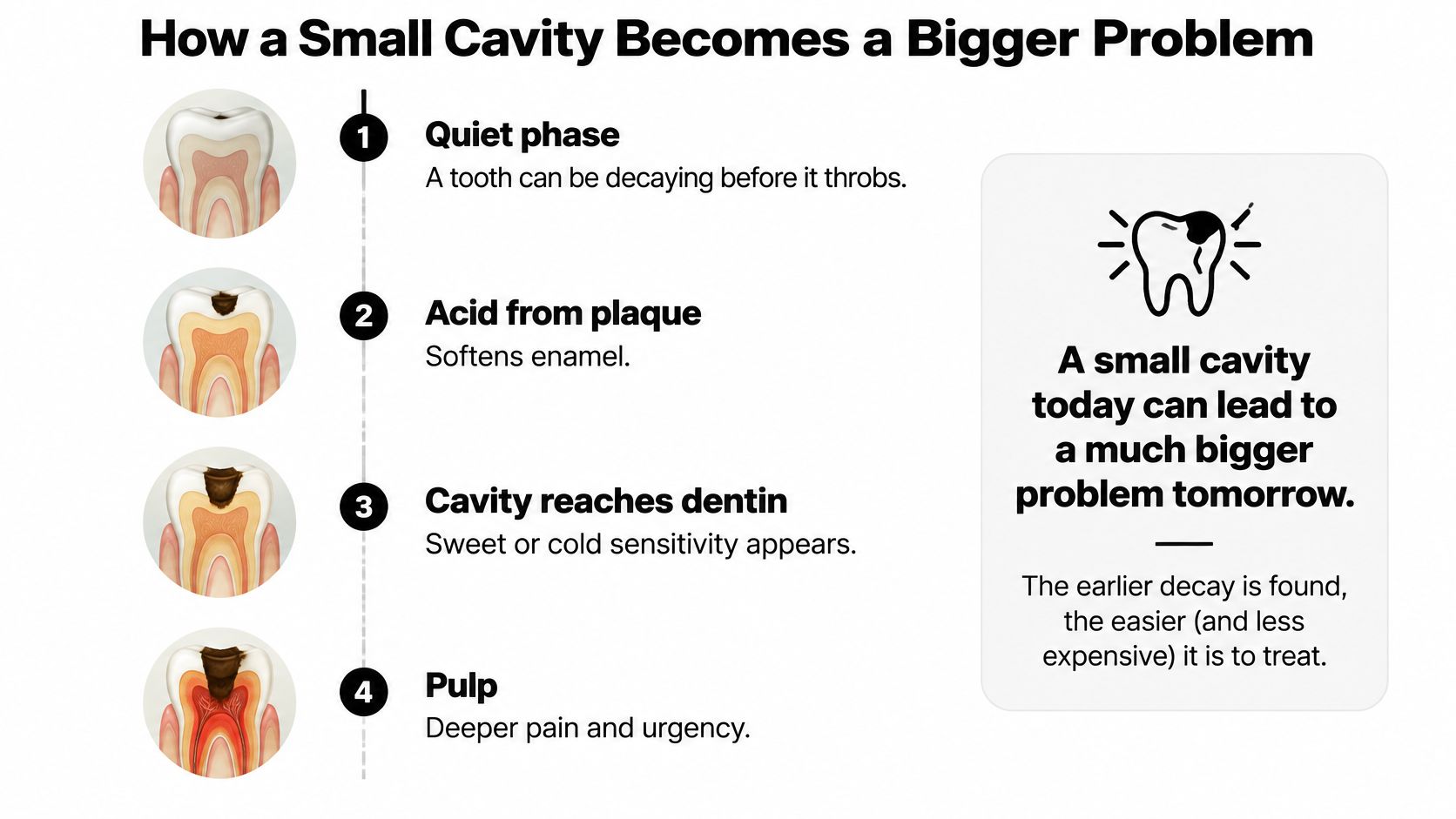
A tooth can be decaying before it throbs. Bacteria in plaque use sugars from food and drinks to produce acids, which remove minerals from the hard outer enamel. At an early stage, a weakened area may be managed without a filling, but a formed hole needs professional assessment and usually a repair.
Once decay reaches dentin, the softer layer beneath enamel, sweet foods or cold drinks may trigger sensitivity. Deeper decay can reach the pulp, the tissue containing nerves and blood vessels. Inflammation or infection there may cause lingering pain, swelling, or an abscess.
The progression below shows why symptoms aren't a reliable measure of cavity size.
Common doesn't mean harmless
According to CDC oral-health surveillance, nearly 21% of U.S. adults ages 20–64 had at least one permanent tooth with untreated decay, including 21.8% of adults ages 21–34 and 21.4% of those ages 35–49. These are national figures, not Chattanooga estimates, but they show that untreated cavities affect younger and middle-aged adults too.
An exam and appropriate diagnostic imaging can reveal decay between teeth or beneath an existing restoration before you can see it yourself. Tell the dentist whether sensitivity disappears quickly, lingers, occurs when biting, or wakes you at night. Those details help distinguish problems that can feel similar at home.
A small filling repairs damaged tooth structure. Waiting can turn that same tooth into a root canal, tooth extraction, or replacement discussion.
That isn't a prediction that every sensitive tooth will be lost. It's a reason to establish what's wrong while more treatment choices may remain.
The effects reach beyond one tooth
The CDC identifies cavities, severe gum disease, and severe tooth loss as the oral conditions with the greatest effects on overall health and quality of life. Bleeding gums signal inflammation; when periodontal disease advances, teeth can lose supporting tissue and become loose.
Chewing pain may lead someone to avoid crunchy vegetables or chew only on one side. A broken front tooth can make another person avoid smiling in photographs. Treatment should address both function and confidence, without assuming that an appearance concern is merely cosmetic.
The practical goal is preserving comfortable, usable teeth, not waiting until discomfort becomes unbearable. Early assessment also gives you time to compare treatment choices rather than deciding during a painful emergency.
Fluoride and Sealants for Growing Molars
Think of a cavity like a pothole. Acid weakens the surface, while the deep grooves in back teeth can hold plaque and food where brushing is difficult. Fluoride and sealants protect teeth in different ways, so a child may benefit from both.
This checklist illustrates how those preventive steps fit together.

The CDC's children's oral-health guidance reports that fluoride varnish prevents approximately 33% of cavities in primary teeth, while sealants prevent about 80% of cavities in permanent back teeth, where roughly 90% of childhood cavities in permanent teeth occur. The same guidance recommends supervising children younger than 6, using a pea-sized amount of fluoride toothpaste, and teaching them to spit rather than swallow; younger toddlers need age-appropriate toothpaste amounts discussed with their dental team.
Strengthening enamel and protecting grooves
Fluoride helps enamel resist acid and supports the repair of early mineral loss. Varnish is brushed onto teeth during an appointment. The team should also ask about fluoride toothpaste and drinking-water sources rather than assuming every child has the same exposure.
A sealant is a thin protective barrier placed over pits and fissures on the chewing surface. After cleaning and preparing the tooth, the clinician applies the material and checks its coverage and the bite. It isn't a coating over every tooth surface, and it doesn't replace brushing between teeth or along the gumline.
The timing matters. A newly erupting molar may be difficult for a child to clean, but the dentist also needs enough access to place a reliable sealant. Later visits allow the team to check whether that barrier is intact or needs repair.
Questions to bring to a child's appointment
Ask practical questions that connect the recommendation to your child:
- Erupting teeth: Which permanent molars are coming in, and can they be cleaned effectively?
- Individual risk: Do existing cavities, frequent snacking, or difficult brushing change the prevention plan?
- Home routine: Which toothpaste amount and brushing technique fit this child's age and abilities?
- Follow-up: When should the team reassess an unsealed or partly erupted tooth?
Baby teeth deserve care too. Children use them for eating and speech, and they help hold space for permanent teeth. A painful baby tooth shouldn't be dismissed because it will eventually fall out.
For another way to understand preventive care, this video offers a visual explanation.
Bring the eruption question to your Chattanooga appointment. Prevention works best as an ongoing plan that combines professional care, manageable home habits, and food and drink choices, rather than a one-time sealant appointment.
What to Expect at the Chattanooga Visit
A new patient exam should make your situation clearer, not leave you wondering what happens next. Whether you're arranging care in Chattanooga or Cleveland, tell the office your main concern when booking so it can reserve the appropriate appointment.
The intake process begins with information that affects safe treatment.

The appointment sequence
Share your medical history before treatment begins. Bring current medicines, allergies, heart history, and the reason for the visit. Include nonprescription products and explain any previous difficulty with dental treatment.
The team checks whether preventive antibiotics could apply. American Dental Association guidance limits heart-related antibiotic prophylaxis to selected highest-risk cardiac conditions and relevant procedures involving the gums, root-tip region, or oral lining. Mention prosthetic heart valves, previous infective endocarditis, and congenital heart repairs, including when they occurred.
The dentist examines teeth, gums, and your bite. Necessary x-rays can help show areas between teeth or around roots that aren't visible with a mirror. An urgent visit may focus first on the painful area rather than completing every part of a full assessment.
Cleaning or the booked urgent treatment follows when appropriate and agreed upon. A patient with significant gum disease may need a different cleaning plan. During treatment, speak up if you feel sharp pain or aren't fully numb.
You receive findings in plain language. The recommendation might be monitoring an early weak area, placing a filling or crown, treating a root canal, managing periodontal disease, or considering extraction. Ask the dentist to distinguish what's urgent from what can be planned.
Review costs and the next appointment before leaving. You should understand the proposed treatment, reasonable alternatives, and what the office still needs to confirm with your insurer. Request a written plan if several visits are involved.
A safety check, not a prescription request
Antibiotics aren't routine preparation for a cleaning or extraction. Don't start leftover tablets at home or request them just because a dental procedure is planned. If your cardiac history makes preventive medication appropriate, the dentist can coordinate with your physician or cardiologist.
Bring the details: A medication list and accurate heart history are more useful than trying to remember everything while you're already in the chair.
Pack your identification, insurance card if you have one, and a written list of questions. If you need communication assistance, mobility accommodations, or help tolerating the chair position, explain that before the appointment.
Comfort Choices from Stop Signals to Sedation
An anxious patient doesn't automatically need sedation. A promise of gentle care isn't a complete plan either. Some people primarily need dependable numbness; others need control over pauses, fewer sensory distractions, or a clear explanation before each step.
A 2025 survey of 223 adults found that anxious participants more often preferred additional local anesthesia, distraction, light sedation, and companion support, with light sedation preferred by 23.7% of anxious participants versus 8.0% of relaxed participants. The practical lesson is to ask what you need rather than assume one comfort option suits everyone.
These approaches can complement each other, but they serve different purposes.

Match comfort to the procedure
Start with a stop signal, such as raising your hand, and agree on what it means. Headphones, a quieter room, a companion, or a longer appointment may help without medication.
Local anesthetic blocks pain in the treatment area. Sedation manages anxiety and awareness. Sedation doesn't replace adequate local anesthesia, and persistent pain requires reassessment rather than stronger sedation.
Comfort and sedation by type of visit
| Visit | Control without medicine | When sedation is discussed | Home logistics |
|---|---|---|---|
| Cleaning and exam | Stop signal, distraction, short breaks | Uncommon | Usually drive yourself if no impairing medicine was used |
| Filling | Step-by-step explanation and pauses; extra local anesthetic for pain | Light sedation if anxiety remains despite adequate numbness | Driver if oral sedation is planned |
| Root canal | Longer visit, pause signal, clear sequence | Case by case after medical history | Follow fasting and escort rules if sedated |
| Extraction | Companion, written after-care, consent | Often discussed | Driver required for oral or deeper sedation |
| Implant or surgical visit | Pre-visit call and medical screening | After health review, not by default | Confirm escort, fasting, and recovery supervision |
| Emergency pain | Explain the plan; numb the tooth and address the source | Based on swelling, medicines, and airway history | Get clear eating and driving instructions |
Preparation is part of comfort
Nitrous oxide is inhaled through a nose mask and generally wears off quickly after it's stopped. Oral sedation lasts longer and usually requires a driver, while deeper sedation needs additional screening and monitoring. Follow the specific eating, drinking, medication, and supervision instructions for the method selected.
Winn Smiles offers a comfort menu and customized sedation options, but medical screening, consent, and recovery requirements still apply. Disclose medicines, sleep apnea, pregnancy, previous sedation reactions, and who can take you home.
You can ask for sensory adjustments or a pause even if sedation is planned. The right choice is made visit by visit, with attention to the procedure, your health, and the kind of control you want.
Paying for Care When Coverage Falls Short
A benefit on paper isn't the same as a completed appointment. The TennCare annual report describes adult dental coverage beginning in 2023, including exams, cleanings, fillings, crowns, dentures, extractions, and palliative treatment, yet adult participation rose only from 12% in 2023 to 16% in 2024; among surveyed members, 95% were very or somewhat satisfied with their dental care.
That combination points to a practical need for help navigating care, not merely another list of covered services. Appointment availability, transportation, paperwork, and understanding the plan all affect whether someone reaches the dental chair.
Separate the coverage questions
Eligibility means you're enrolled and entitled to benefits under the plan's rules. Check that your coverage is active for the appointment date, especially after a renewal, employment change, or plan transition.
Covered benefits are the procedures the plan includes, subject to its requirements. A listed service may still need documentation or prior authorization. Approval requirements should be checked before treatment whenever possible.
Provider participation means the dental office works with your specific plan. Having a coverage card doesn't establish that a particular practice participates, and this isn't a promise that Winn Smiles accepts every plan.
Patient responsibility is what you may owe after the plan applies its terms. Ask for an estimate that separates the office's fee, expected insurance payment, and your anticipated share.
For readers comparing private policies, My Policy Quote's a guide to choosing dental coverage can help frame questions about plan types and benefits. Your insurer and dental office still need to confirm the details that apply to your treatment.
Verify before you travel
Use a short checklist when contacting the office and plan:
- Confirm participation: Give the exact plan name, not just the insurance company.
- Ask about approval: Find out who submits prior authorization and whether treatment should wait for a decision.
- Check plan changes: Ask what happens to an existing treatment plan if you switch TennCare plans.
- Discuss affordability: Request written fees, clinically appropriate staging, and available lower-cost pathways if the office can't accept your coverage.
This explanation of payment plans for dental work can support a financing conversation, but ask about repayment terms before agreeing. Also ask whether the service qualifies for a free consultation or second opinion.
If you've relied on emergency-only visits, request an exam and confirm benefits rather than assuming you have none. Arrange transportation and appointment time alongside the financial plan, not after treatment is booked.
Schedule the First Family Visit
Book the appointment that matches your main concern instead of waiting until every family member has the same need. When searching for a dentist near me or a dentist in Chattanooga, Tennessee, a useful first conversation tells the office what hurts, what's overdue, and what could make care difficult.
Winn Smiles provides preventive cleanings and exams, pediatric prevention, fillings, emergency visits, periodontal care, root canals, and same-day crowns. Other treatment pathways include implants and full-arch replacement, whitening, veneers, Invisalign, sleep-apnea appliance evaluation, and laser options where clinically appropriate. You don't need to choose among them before an assessment.
Make the booking conversation specific
Tell the scheduler:
- Who needs care: Give the names and ages of family members coming.
- What's happening: Describe the main symptom, when it began, and whether it affects eating or sleep.
- What affects treatment: Mention medicines, heart history, insurance details, and accommodation needs.
- What would help: Ask about a companion, a longer visit, or advance discussion of anxiety.
Request the Chattanooga or Cleveland location and confirm current hours when calling or using the website. For swelling, pain, or a broken tooth, ask for the earliest emergency opening. For a child, request a check of fluoride needs and erupting molars; for anxiety, identify the planned procedure so screening can happen beforehand.
Ask for the right level of care
Some findings need specialist involvement rather than a general appointment alone. For someone coordinating periodontal care outside Tennessee, Periodontal Associates of Delaware provides an appointment resource, See a periodontal specialist in Delaware; local patients should ask their treating dentist whether referral is appropriate.
Expect clear explanations and a cost conversation before agreeing to treatment. Ask whether a free consultation or second opinion is available for the service you're considering, then schedule the exam or consultation and bring your unanswered questions.
Winn Smiles offers family dental care in Chattanooga and Cleveland, with preventive visits, restorative treatment, emergency care, and individualized comfort options. Visit Winn Smiles to request the exam or consultation that fits your family's current need, and mention symptoms, coverage questions, or anxiety when booking.