You sit in the dental chair, hear that you need a crown, an implant, or treatment for a painful tooth, and your first thought isn't always about the procedure. It's often, “How am I going to pay for this?”
That reaction is normal. A lot of people in Chattanooga and Cleveland delay care because they're trying to balance rent, groceries, school costs, and everything else life throws at them. Dental treatment can feel urgent and overwhelming at the same time, especially when you weren't planning for it.
Payment plan dental work exists for exactly that reason. It gives you a way to move forward with care without having to pay the full amount all at once. If you're searching for a dentist near me, an emergency dentist, a cosmetic dentist near me, or help with dental implants near me, understanding your payment options can make the decision feel much more manageable.
Affording the Smile You Deserve in Chattanooga and Cleveland
You come in expecting a quick fix for a broken tooth. After the exam, the conversation gets bigger. You may need a crown, a root canal, an implant, or another step to protect the tooth for the long term.
For many patients at Winn Smiles in Chattanooga and Cleveland, that is the moment when the room gets quiet. The treatment plan may make sense. The question that follows is often, “How do I fit this into my budget?”

That reaction is understandable. Dental care is personal because the decision is rarely only about teeth. It touches your comfort, your confidence, your schedule, and your household finances all at once. A needed crown can feel very different from buying something you planned for. An implant after tooth loss can feel even heavier because it affects how you eat, speak, and smile.
At Winn Smiles, the financial conversation is part of the care conversation. If a patient in Chattanooga needs a same-week crown after a fracture, or a patient in Cleveland is weighing implants after years of putting it off, the goal is to explain the options clearly and help that patient choose a path that feels realistic. Some people want to complete treatment as soon as possible. Others need to break care into phases or spread payments out over time.
Why the cost can feel overwhelming
Insurance may reduce part of the bill, but patients are still often responsible for deductibles, annual maximums, upgrades in materials, or services their plan does not fully cover. That gap is where stress tends to show up.
Patients in Chattanooga and Cleveland commonly ask about payment help for:
- Crowns and bridges after a tooth cracks, breaks, or weakens
- Dental implants after tooth loss changes chewing, appearance, or speech
- Root canal treatment when pain or infection needs prompt care
- Cosmetic dentistry for services such as veneers or whitening that may not be covered by insurance
- Emergency dental care when waiting is not a good option
A payment plan works a lot like dividing a large repair bill into smaller monthly pieces. The total cost still matters, but the timing changes. For many families, that difference makes treatment feel possible instead of out of reach.
A local conversation, not a judgment
Patients sometimes worry that asking about money will feel uncomfortable or embarrassing. It should not. A good financial discussion is part of planning care responsibly.
That may include reviewing which treatment should happen first, whether a procedure can be staged, what insurance is likely to cover, and whether paying by card makes sense for your household. If that is part of your decision, Winn Smiles also explains dental office credit card payment options so you can compare them with other arrangements.
The goal is simple. Help you get the care you need in a way that fits real life in Chattanooga or Cleveland.
Understanding Your Dental Payment Options
A dental payment plan is different from dental insurance. Insurance helps cover part of a bill, based on your benefits. A payment plan changes when you pay your share.
Instead of paying one large amount on the day of treatment, you spread the cost over time.

Think of it like four lanes
One simple way to understand dental costs is to picture four lanes a patient may use to pay for treatment.
- Insurance lane helps reduce part of the bill if your plan covers the service.
- In-house payment plan lane means the office may let you divide your cost into scheduled payments.
- Third-party financing lane means an outside lender handles the payment arrangement.
- Cash or upfront payment lane may be preferred by some patients who want to settle the cost immediately.
Rectangle Health explains that dental payment plans are distinct from insurance because they shift a lump-sum obligation into installments, often through an outside finance partner that pays the practice upfront while the patient repays over time. The same overview notes this structure is commonly used for higher-cost care such as cosmetic work, crowns, and implants in its article on how dental payment plans work.
Two terms that confuse people most
Patients often hear financial terms in the office and aren't sure what they really mean. Usually, the confusion comes down to these:
- In-house plan means the arrangement is handled directly through the dental office.
- Third-party financing means another company reviews the application, pays the practice if approved, and collects your payments over time.
Some patients also want to know whether cards are accepted before they think about financing. If that's part of your planning, this guide on dentists taking credit cards can help clarify another common payment route.
Practical rule: Don't focus only on the monthly number. Ask what the total cost will be over the full life of the plan.
What payment plans are really for
Payment plans can help with routine care, but they become especially useful when the recommended treatment is more involved. A crown after a cracked tooth, an implant after tooth loss, or cosmetic treatment before an important life event can all be medically or personally important, even when the bill feels hard to absorb in one payment.
That's why many people looking for a dentist in Chattanooga, TN or dentist in Cleveland, TN ask about payment options before they book.
Comparing In-Office Plans and Third-Party Financing
Patients don't need a lecture on financing. They need a plain answer to one question. “Which option fits my situation better?”
The answer depends on your treatment, timeline, and whether you want to work directly with the office or through a financing company. It also depends on whether approval is likely and whether the payment terms feel sustainable.
What patients usually care about most
CareCredit cites affordability concerns as a major reason people delay treatment. Its dental financing overview says 58% of people feel dental care is unaffordable, 92% would consider postponing treatment because of cost, and accepted providers may receive payment within two business days through participating financing arrangements, as described in CareCredit's article on dental patient financing and oral health.
That helps explain why financing comes up so often for treatment like tooth extraction, crowns, implants, and cosmetic dentistry. But the right choice still comes down to the details.
In-Office vs. Third-Party Dental Financing
| Feature | In-Office Payment Plan | Third-Party Financing (e.g., CareCredit) |
|---|---|---|
| Who manages it | The dental office manages the arrangement directly | An outside financing company manages approval and repayment |
| Application process | Often simpler, based on the office's policies | Usually requires a formal application |
| Credit requirements | May be more flexible, depending on the office | Often tied to credit review and lender criteria |
| Approval speed | Can be straightforward if the office offers it | Can be quick, but depends on lender approval |
| Treatment size | May work well for smaller or moderate treatment plans | Often used for larger restorative or cosmetic cases |
| Interest and fees | Terms vary by office | Terms vary by lender and may include promotional periods or other costs |
| Best fit | Patients who want a direct arrangement with the office | Patients who want longer repayment structures or lender-based plans |
How to read that table in real life
If you need a smaller treatment plan, an in-office arrangement may feel more personal and easier to understand. If you're planning extensive restorative work, a third-party lender may offer a structure better suited to a larger balance.
A patient needing a single crown may prefer a simple office arrangement. A patient replacing several teeth or exploring full-arch implant treatment may need a longer repayment path that an outside lender is set up to handle.
The cheapest monthly payment isn't always the least expensive option overall. Lower payments over a longer term can still mean a higher total cost.
One more point people don't ask soon enough
Ask what happens if you're not approved.
That question matters because some plans work well on paper but don't help if the lender declines the application. If that's a concern for you, bring it up early so the conversation can stay practical and honest.
Estimated Costs for Common Dental Procedures
When people ask about payment plan dental work, they usually want numbers. That's understandable. The challenge is that treatment costs vary by the condition of the tooth, the materials used, the number of visits, and whether related procedures are needed.
For that reason, the most accurate estimate comes after an exam and treatment plan. A general online range can't tell you whether a cracked tooth needs a simple filling, a same-day crown, root canal treatment, or extraction with replacement.
Why estimates vary so much
A crown is a good example. Two patients may both hear the word “crown,” but one may need only the restoration while another also needs buildup work or treatment for infection first.
The same is true for implants. One patient may be ready for straightforward implant placement. Another may need extraction, bone support considerations, or a staged treatment approach.
A useful way to budget before your visit
Rather than relying on a generic price list, use this planning method:
- Identify the main procedure you think you may need, such as whitening, a crown, implant care, or tooth extraction.
- Assume related services may be part of treatment if the tooth is broken, infected, or missing.
- Ask for a written treatment estimate after your exam so you can compare payment routes clearly.
- Review total cost, not just monthly cost, before choosing a plan.
If you're exploring appearance-focused treatment, this overview of cosmetic dental cost considerations can give you a helpful starting point for questions to bring to your consultation.
Procedures that commonly lead to financing questions
Patients most often ask about payment plans when they're considering:
- Professional teeth whitening for a brighter smile before a major event
- Dental crowns after fractures, large fillings, or wear
- Dental implants for a long-term tooth replacement option
- Same-day crowns when restoring strength and function quickly matters
- Restorative dentistry that involves several appointments or multiple teeth
A consultation isn't just for diagnosing the tooth. It's also where the financial picture becomes clear enough to make a calm decision.
If you're searching for a cosmetic dentist near me or dental implants near me, that clarity matters just as much as the procedure itself.
Your Step-by-Step Guide to the Approval Process
You come into Winn Smiles in Chattanooga or Cleveland because a tooth broke, an implant is finally back on your priority list, or a crown can't wait much longer. The clinical part matters, but so does knowing how the bill will be handled before treatment starts. Approval usually works like a checklist, not a mystery.
Step 1 and Step 2
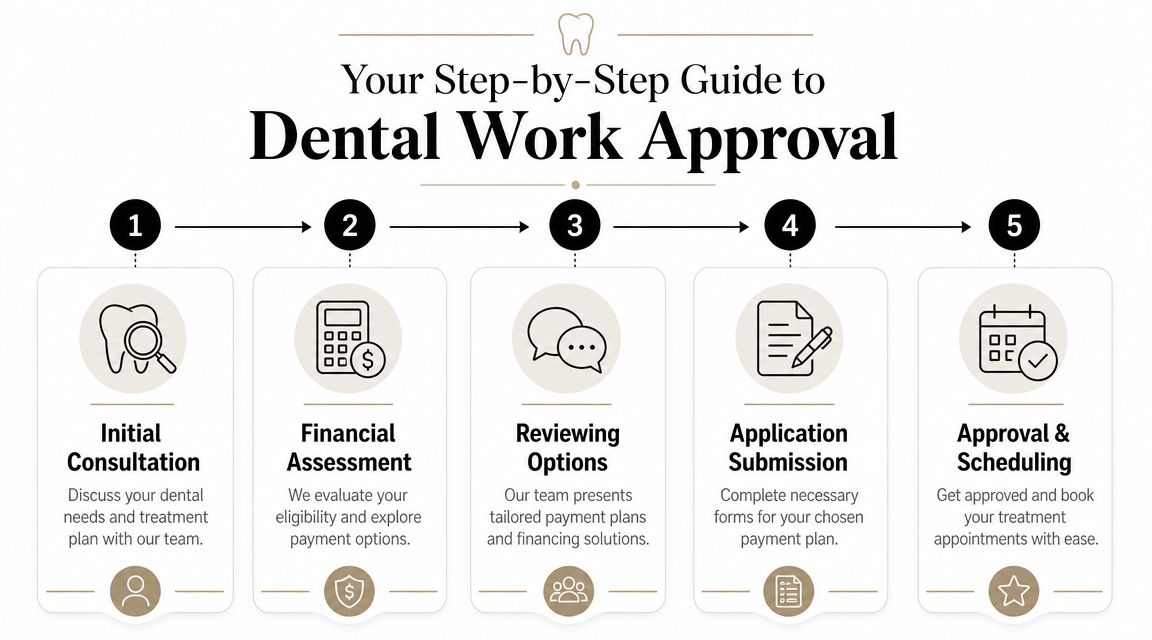
1. Have your consultation.
Your visit starts with the reason you came in. Maybe you have pain, a missing tooth, a damaged filling, or you want to talk about improving your smile. The dentist gathers the facts through an exam, images if needed, and a conversation about what is bothering you now versus what can wait.
2. Review the treatment plan in plain language.
This step is like reading the map before starting the drive. You should know which treatment solves the immediate problem, which services may be optional, and whether care can be phased over time. At Winn Smiles, that conversation helps patients in Chattanooga and Cleveland connect the financial decision to the actual care in front of them, whether that means one crown, several restorations, or implant treatment.
Step 3 and Step 4
Approval gets easier once the plan is specific. Instead of asking, “Can I afford dental work?” you're asking a much clearer question: “How do I pay for this crown, this implant, or this series of visits?”
A related administrative point can matter if insurance is part of the picture. If your medical or dental care involves extra insurance review, it can help to evaluate prior authorization services so you understand how outside support may fit into a broader treatment workflow.
3. Choose your payment path.
After the treatment plan is clear, the financial team can walk you through the available route for your situation. You may use insurance and cover the remaining balance yourself, apply for third-party financing, ask about an in-office arrangement if one applies, or divide treatment into phases that fit your budget more comfortably. This is often the moment when a patient goes from worried to relieved, because vague cost concerns become real numbers and dates.
4. Complete the application or agreement.
If you choose third-party financing, the application is usually short and handled online or in the office. If you're using an office-based arrangement, you'll review the terms, payment timing, and any deposit requirements before care is scheduled. Ask questions here. A good financial conversation should feel as clear as consent for treatment.
A quick walkthrough can make the process easier to picture:
Step 5
5. Schedule treatment and get started.
Once the financial details are settled, the next step is simple. You book the visit or series of visits and move ahead with care. That may be a single appointment for a crown, a staged implant process, or prompt help from an emergency dentist.
For many patients, approval is the point where the plan starts to feel real in a good way. You know what is being done, when it will happen, and how you'll pay for it.
Your Partner for Comfortable Care in Chattanooga and Cleveland
The money conversation matters. So does how you're treated while having it.
Many people looking for a dentist near me aren't just comparing services. They're also asking whether the office will explain things without pressure, whether someone will listen if they're anxious, and whether the visit will feel manageable from the first phone call onward.
What support should feel like
A good payment discussion should be clear and calm. You should know what treatment is recommended, what alternatives exist, and what your next step would be under each option.

That same approach applies to comfort during care. For some patients, the main issue is cost. For others, it's fear, sensitivity, embarrassment, or a long gap since their last visit. Sedation options, a welcoming environment, and a team that explains each step can make it easier to come back for the care you need.
Why local access matters
Winn Smiles serves patients in Chattanooga and Cleveland with general, cosmetic, restorative, implant, and emergency dental care, along with flexible financing conversations tied to actual treatment needs rather than generic advice.
If you're researching how dental practices communicate clearly online before choosing one, these proven dental marketing strategies are useful for understanding why transparency, education, and patient-centered messaging matter when evaluating a local office.
A payment plan helps only if the treatment experience itself feels safe, understandable, and worth moving forward with.
That's especially true when you need something bigger than a routine visit, such as same-day crowns, implant treatment, or care for a painful tooth that can't wait.
Questions to Ask About Your Dental Payment Plan
Some of the most important questions come after the consultation, when you're looking at the numbers and trying to decide what's realistic.
Can I use a payment plan with dental insurance
Often, yes. Insurance may reduce a portion of the fee, and a payment plan may help with the remaining balance. The details depend on your benefits and the office's financing options, so ask for the numbers to be broken down clearly.
Will applying for financing affect my credit score
It can depend on the lender and the type of application. The safest approach is to ask before you apply. A good question is, “Will this involve a credit check, and if so, what kind?”
What if I'm not approved for third-party financing
At this point, many patients feel discouraged, but it shouldn't end the conversation. ADA guidance notes that for patients who don't qualify for third-party credit, alternatives such as phased treatment, prioritizing urgent needs first, or referral to community resources may be necessary, as discussed in the ADA's overview of patient financing options in dental practice.
Here are realistic follow-up questions to ask:
- Can treatment be phased so the most urgent problem is addressed first?
- Is there a lower-cost option that still protects my health and function?
- Can I prioritize pain, infection, or broken teeth first and delay cosmetic work?
- Are there community resources or referrals if my situation requires a different access path?
If financing doesn't work out, ask for the next-best plan. A smaller first step is still a step toward better oral health.
If you're trying to figure out payment plan dental work for a crown, implant, cosmetic treatment, tooth extraction, or emergency visit, Winn Smiles can help you review your options in plain language. Schedule a consultation in Chattanooga or Cleveland to talk through your treatment needs, understand the costs, and find a payment path that fits your life.