When seeking information on a sleep apnea dental appliance covered by insurance, you're likely already navigating a difficult situation. You wake up tired. Your partner is tired too. You may have tried a CPAP and found it hard to tolerate, or you've been told an oral appliance could help but nobody has clearly explained who pays for it, why the billing feels so confusing, or what to do next.
That confusion is common in Chattanooga and Cleveland. People assume that if a dentist makes the device, dental insurance should cover it. Then the claim goes the wrong direction, the paperwork stalls, and treatment gets delayed. The good news is that there is a real path forward. It just runs through medical insurance more often than dental insurance, and the process works better when the diagnosis, prescription, and billing all line up.
Tired of Being Tired? Your Search for Sleep Apnea Relief
A lot of people arrive at this point after months or years of poor sleep. They aren't just snoring. They're dragging through work, fighting headaches, nodding off in the afternoon, and feeling worn down in ways that start to affect home life too. Some are also looking for a dentist near me in Chattanooga, TN or Cleveland, TN because they want a local office that can help with more than routine cleaning and exams.

When CPAP doesn't feel like the right fit
Some patients do well with CPAP. Others don't. They may feel claustrophobic, struggle with the mask, pull it off during sleep, or stop using it because it feels too intrusive. That's usually when they start asking about a custom mouthpiece from a dentist in Chattanooga, TN or a dentist in Cleveland, TN.
What they often hear next is only half the story. Yes, a custom oral appliance can be a practical option for the right patient. But the treatment itself is only one piece. The other piece is figuring out the insurance process without getting lost in medical terms, claim codes, and prior authorization requests.
Many people don't need more information. They need someone to make the process understandable and manageable.
The real problem isn't only sleep
Untreated sleep apnea doesn't stay neatly in the bedroom. Poor sleep can affect concentration, patience, and daily energy. It can also make other dental issues harder to manage because exhausted patients often grind more, wake with sore jaws, or put off care they need, whether that's restorative dentistry, cosmetic dentistry, or even a new patient exam because they just don't have the bandwidth.
That is why this topic matters so much. Sleep treatment isn't separate from overall dental care. When people sleep better, they usually handle their oral health better too. They keep appointments, follow through with treatment, and feel more like themselves again.
How a Custom Dental Appliance Treats Sleep Apnea
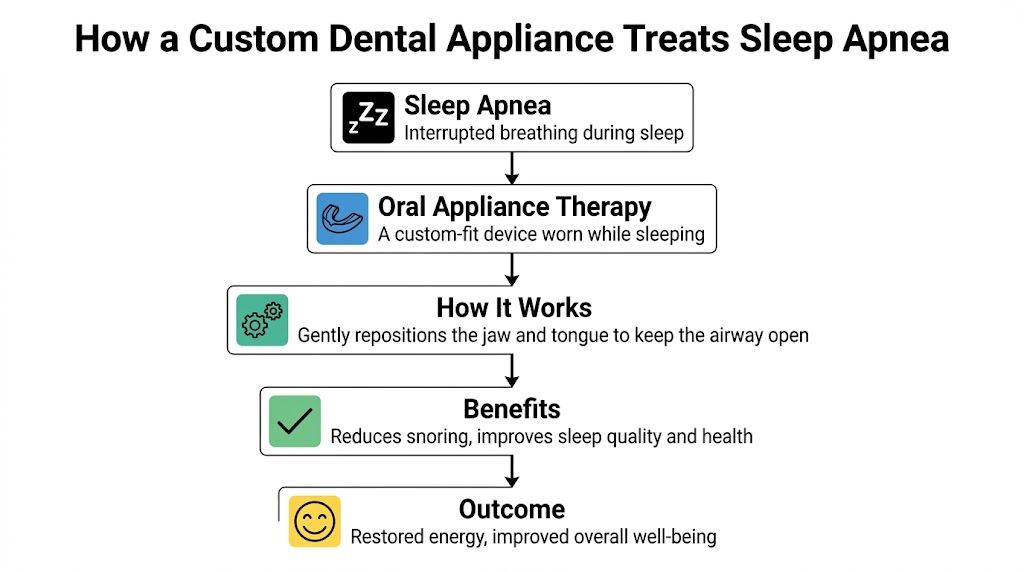
A sleep apnea appliance is usually a custom oral device that fits over the teeth, similar in appearance to a mouthguard. The most common version for obstructive sleep apnea is a mandibular advancement device, which gently moves the lower jaw forward while you sleep. That small shift can help keep the airway from collapsing.
The device isn't a generic boil-and-bite product. It should be made to fit your bite, your jaw position, and your comfort needs. That's part of what makes treatment more wearable and more realistic for people who couldn't stick with bulkier equipment.
What the appliance is doing while you sleep
When the jaw and soft tissues fall backward during sleep, the airway can narrow. That narrowing contributes to the repeated breathing interruptions that define obstructive sleep apnea. An oral appliance works by helping maintain a more open airway position.
That sounds simple because it is simple in concept. The difference is that simple doesn't mean casual. The fit matters. The bite registration matters. The follow-up matters. If the device is uncomfortable or poorly adjusted, people stop wearing it. If it's custom and carefully managed, it has a much better chance of becoming part of nightly life.
Why some patients prefer it
Patients usually ask the same practical questions first. Can I travel with it? Is it quiet? Will it feel less intrusive than a mask? In many cases, the answer is yes. That's one reason oral appliance therapy is often appealing for adults who want a less cumbersome option.
A few common advantages stand out:
- Smaller design: It doesn't take up bedside space or require tubing and a machine.
- Easier travel: It can be packed easily for work trips or weekends away.
- Quiet use: There isn't a machine running beside the bed.
- Custom fit: A professionally made appliance is designed around your mouth, not a one-size-fits-most template.
Clinical reality: The best treatment is the one a patient can actually use consistently.
Oral health still matters
Not every mouth is ready for a sleep appliance on day one. Teeth, gums, restorations, jaw joints, and bite stability all matter. If someone also needs restorative dentistry, treatment planning may need to account for crowns, missing teeth, wear, or clenching before long-term appliance success is likely.
That same whole-mouth approach is part of good dentistry in general. A patient may come in focused on sleep and also need dental x-rays, periodontal care, or work that supports comfort and function. For some, cosmetic dentistry goals also come up because they want better sleep and a healthier smile at the same time. Good planning looks at the whole picture, not just the appliance.
The Insurance Puzzle Medical vs Dental Coverage
The biggest misunderstanding in this entire process is this: a sleep apnea appliance may come from a dental office, but insurance often treats it as a medical item.
That sounds backward until you understand what the insurer is paying for. The claim isn't based mainly on who hands you the device. It's based on what medical condition the device is treating. Sleep apnea is a medical diagnosis, so coverage often follows the medical side of the policy.
Why medical insurance often applies
A major policy milestone came in 2011, when Medicare approved oral appliances for obstructive sleep apnea. Medicare Part B generally covers FDA-approved mandibular advancement devices when they are medically necessary, and CMS places them under the Durable Medical Equipment benefit, which puts them in the medical insurance system rather than dental coverage, according to CMS guidance on oral appliances for obstructive sleep apnea.
That classification matters in everyday practice. If the claim is sent through the wrong channel, the result is often frustration. Patients hear, "But my dentist made it," while the insurer is asking, "Where is the sleep study, physician diagnosis, and prescription?"
A simpler way to think about it
An easy comparison helps. Some healthcare items are dispensed in one place but paid under another benefit structure. Sleep apnea oral appliances can work like that. The dental office handles the exam, impressions or scans, fitting, and adjustments. The insurer may still process the claim more like other medically necessary equipment.
If you're trying to sort through terms like deductibles, DME, and plan exclusions, general articles on medical expense coverage can help you understand how medical benefits are structured before you start calling your carrier.
Medical vs. dental insurance for sleep apnea appliances
| Coverage Aspect | Medical Insurance (Often Applies) | Dental Insurance (Rarely Applies) |
|---|---|---|
| Primary reason for coverage | Treatment of a diagnosed medical sleep disorder | Routine dental benefit categories usually don't fit this service |
| What insurers often want | Physician diagnosis, sleep study, prescription, medical necessity documentation | Dental plans often don't recognize the appliance as a standard dental benefit |
| How the appliance is classified | Often handled as Durable Medical Equipment | Usually not treated like a regular dental appliance benefit |
| Common outcome | Potential reimbursement when the documentation is complete | Claims are commonly denied |
The device may be dental in delivery, but the claim logic is usually medical.
What works and what doesn't
What works is a coordinated process. The physician documents the diagnosis. The sleep study supports it. The prescription points to oral appliance therapy. The dental office builds and fits the appliance, then submits through the proper medical pathway when appropriate.
What doesn't work is assuming a dental plan will automatically pay because the treatment happened in a dental chair. That's one of the fastest ways to lose time and create unnecessary denials.
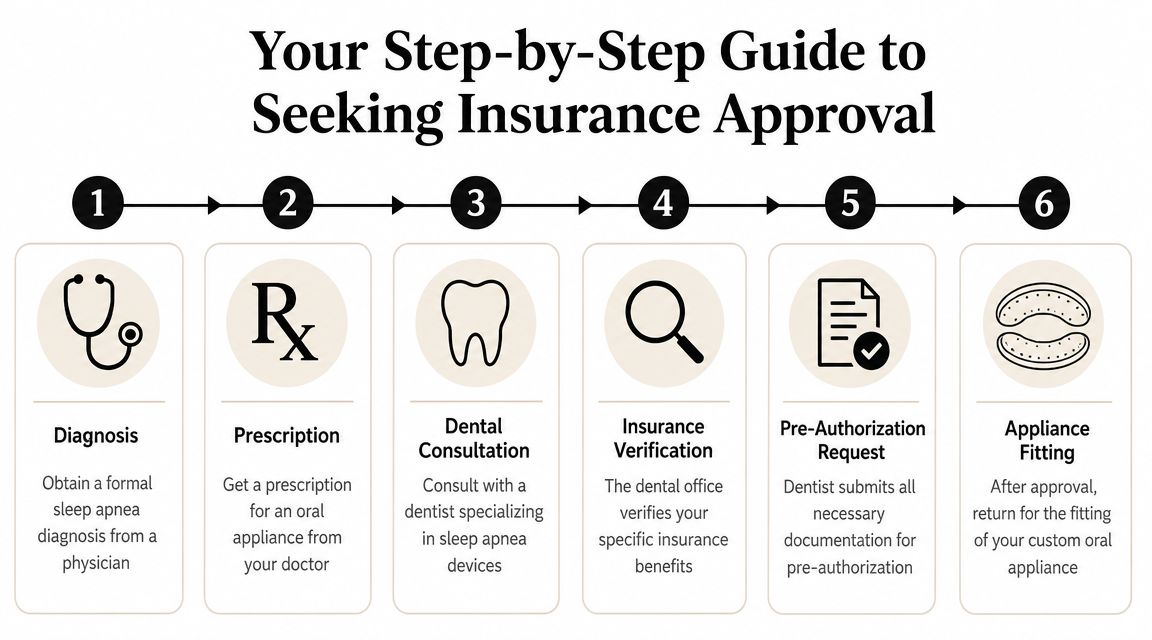
Your Step-by-Step Guide to Seeking Insurance Approval
The approval process gets much less intimidating once you break it into steps. Most insurers aren't asking for magic words. They're asking for proof that the treatment is medically necessary, properly prescribed, and delivered through the right workflow.
A helpful visual can make that easier to follow.
Start with diagnosis, not the device
Coverage is usually built on medical necessity and diagnostic proof. Many policies require a physician diagnosis, a qualifying sleep study, often no older than one year, and evidence that CPAP was not tolerated or was ineffective before they approve an oral appliance as Durable Medical Equipment, as explained in this overview of insurance requirements for sleep apnea oral devices.
That means the first move usually isn't calling a dental office about price. The first move is making sure your medical documentation is current and complete.
A practical checklist you can follow
Get a formal diagnosis
If you haven't had a medical evaluation, start there. Insurance needs a diagnosed condition, not just symptoms like snoring or daytime fatigue.Confirm the sleep study details
Check the date. Some plans want a qualifying sleep study that is recent enough to meet their documentation rules.Document CPAP problems if they apply
If you've tried CPAP and couldn't tolerate it, that history matters. Don't assume your insurer already knows.Obtain the physician prescription
The appliance isn't usually covered just because a patient wants one. The prescription links the treatment to the diagnosis.Choose a dental office that understands the process
Some offices provide the appliance but don't work through the medical side well. A coordinated office can verify benefits, request records, and help organize the submission. One example is Winn Smiles' overview of snore guard and related coding questions, which gives patients added context on how this category differs from routine dental billing.Prepare for prior authorization when your plan requires it
If that term feels opaque, this guide to understanding prior authorization gives a useful plain-English explanation of why insurers ask for documentation before treatment.
Bring your sleep study, physician notes, insurance card, and any CPAP history to your consultation. Missing records are one of the most common causes of delay.
For patients who like to see the process discussed visually, this video may help clarify what the path can look like in practice.
What to ask before you move forward
When you speak with a dental office in Chattanooga or Cleveland, ask direct questions:
- Will you verify my medical benefits for oral appliance therapy?
- What records do you need from my physician or sleep doctor?
- Do you submit pre-authorization requests if my plan requires them?
- What happens if the claim is denied?
- Will I receive an estimate before treatment starts?
These questions matter just as much as the fitting itself. A well-made appliance helps clinically. A well-managed process helps financially and emotionally.
Understanding Your Potential Out-of-Pocket Costs
Insurance approval doesn't always mean zero cost. Patients usually still need to deal with deductibles, coinsurance, and any plan rules that affect what portion of the claim is their responsibility. That's why a clear estimate before treatment matters.
For Medicare-covered patients, one verified example is that beneficiaries generally pay 20% coinsurance after meeting the annual Part B deductible for covered oral appliances under the DME framework, as noted earlier in the CMS policy discussion. Commercial plans vary, so your own numbers depend on your policy.
The cost questions that matter most

Ask about these items before the appliance is made:
- Deductible status: If your medical deductible hasn't been met, more of the upfront cost may fall to you.
- Coinsurance responsibility: Even after coverage starts, you may owe a share of the allowed amount.
- Adjustment coverage: Early follow-up may be included differently than later changes.
- Appeal options: If a claim is denied, ask whether additional records or a corrected submission may help.
What insurance often includes, and what it may not
The initial fitting and adjustments are typically bundled into the payment for the first 90 days, and replacement is often allowed only after the device's reasonable useful lifetime, commonly cited as 3 to 5 years, with some policies using a 5-year threshold before a new device is covered, based on this summary of insurance timing and replacement rules for sleep apnea oral appliances.
That has a practical effect. Early fine-tuning is expected. Later modifications may be treated differently, and replacing a worn appliance too soon may not be covered even if you want a new one.
A lower initial estimate isn't always the full financial picture. Ask how follow-up, repairs, and future replacement are handled.
Ways patients sometimes manage the patient portion
If you use pre-tax healthcare funds, it can help to review broader explanations of Benely insights for HSA dental to understand how dental and medically related oral health expenses may fit into planning. Patients also often want a straightforward overview of pricing before insurance, and this sleep apnea mouth guard cost article can help frame the discussion.
The most useful financial conversation is the honest one. What is covered, what isn't, what is estimated, and what happens if the insurer responds differently than expected. That's the conversation patients deserve before treatment begins.
Partner with Winn Smiles for Sleep Apnea Care in Chattanooga
Getting a sleep apnea dental appliance covered by insurance is rarely just about the appliance. It's about coordination. The patient needs the right diagnosis, the right documents, the right billing path, and a dental team that understands where clinical care and insurance rules meet.
In practical terms, that means your visit should feel organized from the start. You should know what records are needed, whether your benefits are being checked through the medical side, what your likely out-of-pocket responsibility may be, and what follow-up looks like after delivery. Patients looking for a dentist near me, emergency dentist support, dental implants near me, or cosmetic dentist near me often value the same thing here they value everywhere else in healthcare. Clear answers.
What local patients should expect
A good sleep apnea consultation should include a review of your symptoms, your sleep diagnosis, your oral health, and whether your mouth and bite are good candidates for treatment. If you also need general dental care, restorative treatment, tooth extraction planning, or routine cleaning and exams, those issues should be considered as part of your bigger health picture.
For patients in Chattanooga, TN, Cleveland, TN, and nearby communities, local care matters because sleep treatment isn't usually one-and-done. There may be follow-up visits, adjustments, coordination with a physician, and questions about insurance paperwork. It's easier when your care is close to home and your dental team can guide the process instead of leaving you to decode it alone.
Why partnership matters here
The right local office doesn't just hand you a device. It helps you move through a system that often feels fragmented. Medical diagnosis lives in one place. Dental fabrication lives in another. Insurance review lives somewhere else entirely.
That gap is where many patients get stuck. A coordinated partner helps close it.
If you're ready to talk through your options for sleep apnea treatment, insurance questions, or whether you're a good candidate for an oral appliance, contact Winn Smiles to schedule a consultation in Chattanooga or Cleveland. A clear plan can make the next step feel much simpler.