

If you're searching for sleep apnea treatment options without CPAP, there's a good chance you're tired in more ways than one. Tired of waking up drained. Tired of snoring complaints. Tired of trying to make a mask, hose, and machine feel normal when it doesn't fit your life.
Many people in Chattanooga and Cleveland reach this point after weeks or months of trying to "just get used to it." They move the mask. Tighten the straps. Change sleeping positions. Bring the machine on trips and dread the setup. Some stop using it altogether, then worry they're out of options. They aren't.
Tired of CPAP A Better Night's Sleep Is Possible in Chattanooga
A common story goes like this. A patient finally gets answers after years of poor sleep, morning headaches, dry mouth, or constant daytime fatigue. CPAP is prescribed. At first, there's relief because treatment is finally on the table. Then real life begins.
The mask feels bulky. Air pressure feels unnatural. Travel becomes one more hassle. A bed partner hears the machine, and the person wearing it still doesn't feel rested. That frustration is real, and it's one reason people start looking for a different path.
Sleep apnea care shouldn't start and end with a machine. For many patients, better treatment means finding something they can use consistently, comfortably, and long term. Some alternatives work by physically keeping the airway more open during sleep. Others support the airway by improving muscle tone, sleep position, or related health factors.
Why your search for another option makes sense
Recent evidence shows that non-CPAP approaches are expanding. Moderate exercise can improve the apnea-hypopnea index by 20-40% even without weight loss, and new GLP-1 agonists have shown a 20-30% drop in AHI in trials, with these options discussed as adjuncts for people who struggle with CPAP in Sleep Foundation's overview of CPAP alternatives.
That doesn't mean every alternative fits every patient. It does mean the conversation has changed. If CPAP hasn't worked for you, the next step isn't giving up. It's finding a treatment plan that matches your diagnosis, your anatomy, and your daily routine.
Many patients don't need more pressure to "try harder." They need a treatment they can realistically live with every night.
In a dental setting, one of the most practical alternatives is custom oral appliance therapy. It's quiet, small, and designed around your mouth and jaw instead of forcing your sleep habits around a machine. For the right patient, that can make a very meaningful difference.
Understanding Sleep Apnea and Its Impact on Your Health
Obstructive sleep apnea happens when the airway narrows or collapses during sleep. A simple way to think about it is a soft straw. When the walls of that straw get too loose, airflow becomes restricted or stops for short periods. Your body then has to keep reacting to reopen the airway.

Those interruptions may happen again and again through the night. You might not remember them in the morning, but your body does. Sleep becomes fragmented. Oxygen drops can occur. The brain shifts you out of deeper sleep often enough that you wake up feeling unrefreshed, even after spending enough hours in bed.
What patients usually notice first
Some signs show up at night, and some show up during the day.
- Nighttime clues include loud snoring, gasping, choking sounds, restless sleep, and waking with a dry mouth.
- Morning signs often include headaches, grogginess, and the feeling that sleep didn't do its job.
- Daytime effects can include irritability, trouble concentrating, low energy, and nodding off when you should feel alert.
A bed partner often notices the pattern before the patient does. They hear the pauses in breathing, the snoring, or the sudden gasp that follows a blocked airway.
Why treatment matters beyond snoring
Sleep apnea isn't just a noise problem. It affects how the whole body functions during sleep and recovery. Poor breathing at night can put stress on the cardiovascular system and contribute to broader health concerns over time. It also has a very practical cost in daily life. People often feel less focused, less patient, and less safe behind the wheel when their sleep quality keeps breaking down.
Better sleep isn't a luxury. It's part of how your body repairs, regulates, and stays resilient.
If you're also trying to improve overall sleep quality, including your evening routine, this guide on best supplements for better sleep can be a helpful non-treatment resource to review alongside professional care.
Why CPAP is hard for many people
CPAP can be effective, but effectiveness only matters if someone can use it regularly. That's where many people struggle. The barrier usually isn't motivation. It's the practical reality of sleeping with a mask, tubing, noise, pressurized air, or skin irritation.
For patients in Chattanooga who are still in the diagnosis stage, a local sleep evaluation is often the first step before choosing a therapy. This sleep study overview for Chattanooga patients explains how testing helps determine what kind of treatment makes sense.
| Common concern | Why it matters |
|---|---|
| Mask discomfort | Makes it hard to fall asleep or stay asleep |
| Claustrophobic feeling | Can cause anxiety at bedtime |
| Travel inconvenience | Reduces consistency away from home |
| Noise and setup | Adds friction to an already tired routine |
When a patient says, "I know I need treatment, but I can't keep doing this," that's a reasonable concern. It usually means the treatment plan needs to change, not that the patient has failed.
Oral Appliance Therapy A CPAP Alternative from Your Dentist
For many adults with obstructive sleep apnea, the most practical non-CPAP option is oral appliance therapy. This treatment uses a custom dental device, often called a mandibular advancement device, to hold the lower jaw in a more forward position during sleep. That forward position helps keep the airway from collapsing as easily.
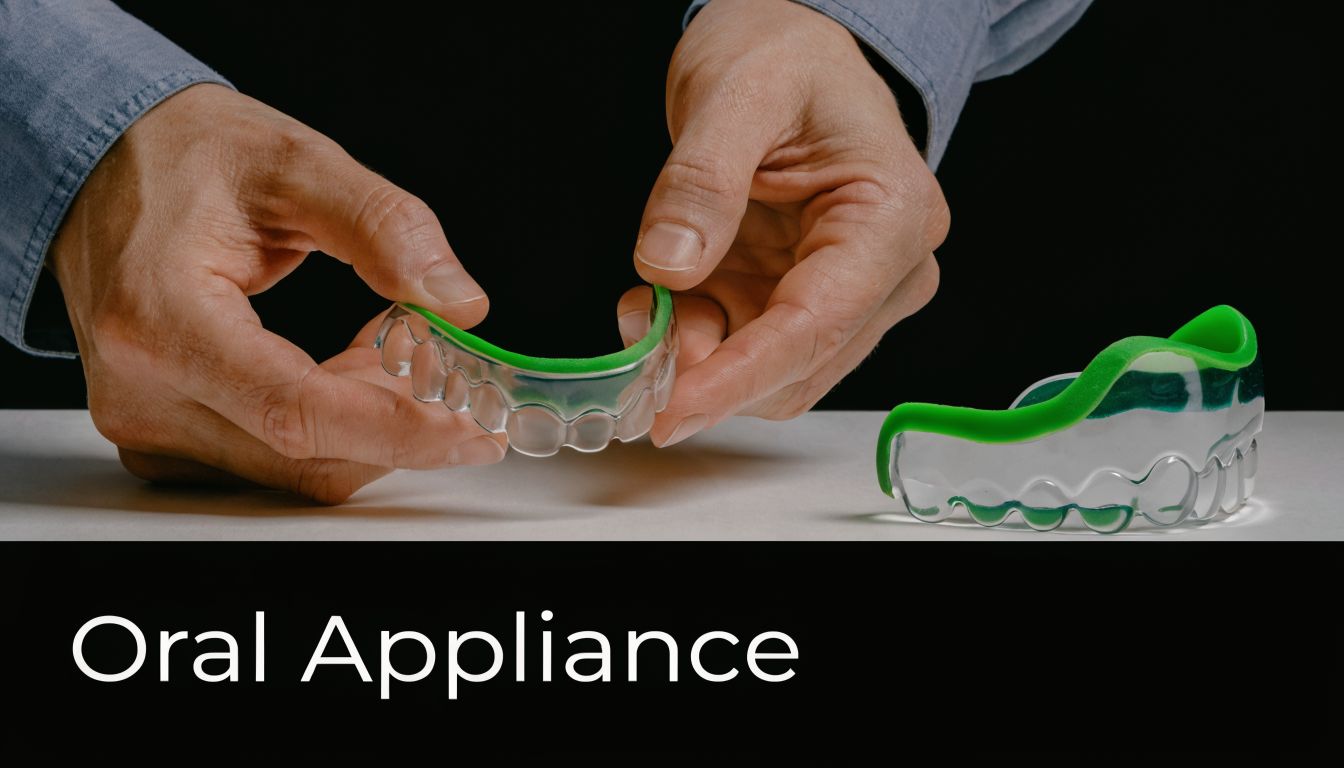
This isn't the same as an over-the-counter snoring mouthguard. A medical oral appliance is prescribed, custom fit, and adjusted over time. The fit matters. The jaw position matters. The follow-up matters. That precision is what separates a true treatment device from a generic product.
How the device works while you sleep
The appliance fits over the teeth and gently advances the lower jaw and tongue base forward. That creates more room in the upper airway and reduces the chance that soft tissues will collapse backward during sleep.
Custom oral appliance therapy is used most often for mild to moderate obstructive sleep apnea. In one cited review, mandibular advancement devices achieved treatment success rates of 50-70% and long-term compliance of 65-80%, while CPAP dropout rates can exceed 50% in the first year according to this review of mandibular advancement devices for obstructive sleep apnea.
That difference matters in real life. A treatment doesn't need to be the most impressive on paper if it stays in the drawer. It needs to be effective and usable.
Why patients often prefer oral appliances
The appeal is straightforward.
- Small and silent. No hose, no bedside machine, no airflow noise.
- Easy to travel with. It fits in a compact case instead of adding another device to pack.
- More natural bedtime routine. Patients brush, place the appliance, and go to sleep.
- No mask on the face. That alone removes a major barrier for many people.
Practical rule: The treatment you can wear every night usually beats the treatment you avoid.
For some people, oral appliance therapy also feels more compatible with life as it already is. That's especially true for frequent travelers, light sleepers, and patients who've never felt comfortable with a mask.
Why customization makes the difference
A sleep apnea appliance isn't one-size-fits-all. A dentist evaluates the teeth, bite, jaw joints, restorations, gum health, and overall oral stability before moving forward. The appliance is then designed around that anatomy and adjusted gradually to improve both comfort and airway support.
That step-by-step adjustment process matters because the jaw has to move enough to help the airway without creating unnecessary strain. If the fit is off or the advancement is too aggressive too quickly, patients may notice soreness or find the device hard to tolerate.
A dental provider plays a specific role. Oral appliance therapy is part sleep care and part dental care. The bite has to stay monitored. The fit has to stay precise. Existing dental work such as crowns, bridges, implants, or periodontal concerns can affect treatment planning.
For readers who want a closer look at the dental side of this treatment, this oral appliance therapy guide for sleep apnea explains how a custom device is made and adjusted.
What the treatment process usually involves
Most patients move through oral appliance therapy in a few clear stages.
Review of diagnosis
A confirmed sleep apnea diagnosis and sleep study help determine whether oral appliance therapy is a reasonable fit.Dental and airway evaluation
The dentist checks tooth support, jaw movement, bite stability, and any issues that could affect appliance wear.Custom impressions or digital scans
These are used to fabricate a device that fits your bite precisely.Delivery and titration
Once the appliance is ready, the patient begins wearing it and the device is adjusted over time.Follow-up confirmation
Ongoing review helps confirm comfort and whether treatment goals are being met.
A short visual explanation can help if this is your first time seeing how these devices work.
What oral appliance therapy does well and where it has limits
Oral appliance therapy works well when the patient selection is right and the follow-up is taken seriously. It's especially useful for adults with mild to moderate obstructive sleep apnea or for people who can't tolerate CPAP.
It isn't a universal replacement for every case. Some patients with more complex or severe obstruction may need a different therapy or a combination plan. Some need a sleep physician's input before any dental device is considered. And some have dental or jaw conditions that need to be stabilized first.
Winn Smiles provides custom oral appliance therapy for appropriate patients in Chattanooga and Cleveland as part of dental sleep care. The value of that approach isn't hype. It's that patients can pursue a non-CPAP option through a provider who also understands bite function, restorations, comfort, and long-term appliance maintenance.
Exploring the Full Spectrum of Non-CPAP Solutions
Not every patient should use the same sleep apnea treatment. The right choice depends on sleep study results, anatomy, symptoms, and what someone can maintain night after night. Oral appliance therapy is an important option, but it sits inside a broader treatment context.

Positional therapy
Some people have breathing events that become noticeably worse when they sleep on their back. In those cases, positional therapy may help. The goal is simple. Keep the patient sleeping on their side more consistently.
This can involve wearable devices, specialty pillows, or other methods that discourage back sleeping. Positional therapy is usually most helpful when a sleep study shows a strong body-position pattern. It tends to be less effective when airway collapse happens in multiple positions.
Lifestyle changes and adjuncts
Lifestyle measures are worth discussing because they can support almost any treatment plan, but they need realistic expectations. They often help most when paired with a device-based or medically supervised treatment.
- Moderate exercise can improve airway function and overall sleep quality. It may also support treatment even when weight isn't changing.
- Avoiding alcohol close to bedtime can help reduce airway relaxation during sleep.
- Smoking cessation may help reduce irritation and inflammation in the airway.
- Consistent sleep habits improve the stability of the sleep schedule, which can reduce some symptom burden even if they don't fix the obstruction itself.
If you're making home changes to your sleeping environment as part of a broader plan, this resource on alleviating sleep disorders offers practical sleep setup ideas that can complement professional treatment.
Myofunctional therapy
Orofacial myofunctional therapy focuses on tongue, throat, and oral muscle exercises. The idea is to strengthen the structures that help support the airway.
Clinical reports cited for this approach show that myofunctional therapy can reduce AHI by approximately 50% in adults with mild to moderate OSA and can significantly boost the effectiveness of oral appliance therapy when used in combination, as described in this guide to alternative sleep apnea treatments.
This option tends to work best for motivated patients who will do the exercises consistently. That commitment is the whole treatment. Without it, results are less likely.
Some of the most effective plans aren't single treatments. They're combinations that reduce airway collapse from more than one angle.
Surgery and implanted therapies
For selected patients, surgery may be part of treatment. These cases usually involve clear structural problems, such as tissue obstruction or anatomy that makes collapse more likely. Surgery can be useful, but it's not casual care. It requires specialist evaluation, planning, healing time, and realistic expectations.
Implanted therapies such as upper airway stimulation may also be considered for some CPAP-intolerant patients. These options are medical and surgical decisions, not dental ones, and they require careful screening.
What works well and what often disappoints
A balanced way to look at non-CPAP care is to separate options by where they tend to succeed.
| Option | Often works best for | Main trade-off |
|---|---|---|
| Oral appliance therapy | Mild to moderate OSA, mask-intolerant patients | Needs custom fitting and follow-up |
| Positional therapy | Back-sleep related apnea patterns | Less helpful if events occur in all positions |
| Myofunctional therapy | Motivated patients, adjunct care | Requires steady daily practice |
| Surgery or implants | Selected anatomy-driven cases | More invasive and specialist-dependent |
What usually disappoints patients is chasing convenience without diagnosis. Nasal strips, generic mouthguards, and internet devices may help snoring in some situations, but they don't replace a proper evaluation for obstructive sleep apnea.
How to Choose the Right Sleep Apnea Treatment for You
Choosing among sleep apnea treatment options without CPAP gets easier when you stop asking, "What's the best treatment?" and start asking, "What's the best treatment for my case?" That shift matters because the right answer depends on diagnosis, airway pattern, oral health, and what you'll use.
Start with four practical questions
The first question is severity. Mild and moderate cases often open the door to more conservative treatments. More complex cases may need combination care or specialist management.
The second question is tolerance. If you've already tried CPAP and know you won't wear it consistently, that information matters. It shouldn't be ignored out of guilt.
The third question is oral condition. A patient with stable teeth, healthy gums, and a manageable bite may be a good oral appliance candidate. Someone with active periodontal problems, significant mobility, or unresolved jaw issues may need dental treatment first.
The fourth question is lifestyle. Frequent travel, shift work, a light-sleeping partner, claustrophobia, or the need for a low-maintenance routine all affect treatment success.
Know what success looks like
When oral appliance therapy is used, precision matters. Custom oral appliances are designed to protrude the lower jaw by 50-75% of its maximum forward movement, and the American Academy of Sleep Medicine defines treatment success as an AHI under 10 with at least a 50% reduction from baseline, a target met by 60-70% of mild-to-moderate OSA patients using these devices according to this overview of custom oral appliance therapy.
That definition helps patients ask better questions. Don't settle for "it seems to help." Ask how improvement will be measured, how the appliance will be adjusted, and when follow-up testing is appropriate.
Bring the right information to your consultation
A productive consultation usually includes:
- Your sleep study results if you already have them
- Your CPAP history if you've tried it, including what made it hard to continue
- A medication and health summary because sleep care often overlaps with broader medical care
- A dental history including crowns, implants, bite changes, jaw pain, or gum disease
Treatment selection gets better when symptoms, testing, and daily habits all point in the same direction.
A simple way to think about your options
If your sleep apnea is mild to moderate and CPAP feels unworkable, oral appliance therapy deserves serious consideration. If body position clearly drives your events, positional therapy may belong in the plan. If muscle tone, weight-related factors, or sleep habits are involved, adjunctive strategies can strengthen the overall result.
The goal isn't to chase trends. It's to choose a therapy that fits both your airway and your life.
Your Consultation Process at Winn Smiles in Cleveland TN
A sleep apnea consultation should feel clear, not overwhelming. Patients usually come in with a mix of frustration and cautious hope. They want to know if a dental solution is realistic, whether it will feel bulky, and what the process looks like from start to finish.

The first step is a free consultation. That visit gives you space to talk through your symptoms, prior diagnosis, CPAP experience, and whether oral appliance therapy makes sense in the context of your oral health. It's also where many people realize they don't need to guess their way through treatment.
Step one begins with your diagnosis and dental foundation
A custom oral appliance works best when it's built on a healthy, stable dental foundation. That means the exam doesn't only focus on sleep. It also looks at the teeth, gums, restorations, and jaw.
If a patient has active periodontal problems, unstable restorations, or unresolved bite concerns, those issues may need attention as part of treatment planning. This is one reason dental sleep care is different from buying a device online. A professionally managed appliance depends on tooth support and ongoing fit.
A consultation may include discussion of related dental services if they affect appliance success, such as periodontal care, crowns, implant stability, or general restorative treatment. In some cases, routine diagnostics like dental x-rays are helpful in evaluating the supporting structures.
Step two is custom records and appliance design
Once a patient is determined to be an appropriate candidate, detailed records are taken to create the appliance. That may involve digital impressions or other modern methods that make the process more accurate and more comfortable than traditional techniques.
The appliance is then fabricated to match your bite. This part matters because a sleep apnea oral appliance isn't just meant to fit. It needs to guide the jaw into a therapeutic position while remaining wearable night after night.
Step three is fitting, education, and realistic expectations
When the device is ready, the fitting appointment focuses on more than delivery. Patients need to know how to place it, remove it, clean it, store it, and recognize what early adjustment feels like.
A short adjustment period is common. Some patients notice mild jaw awareness at first. Others adapt quickly. What matters is careful titration and follow-up, not forcing the jaw into an aggressive position on day one.
The most successful patients treat follow-up as part of the therapy, not an optional extra.
This point is especially important because oral appliance treatment often improves with refinement. Oral appliance therapy can reduce apnea events by 50-80% in suitable candidates, and up to 30% of cases require follow-up adjustments for fit and comfort, as noted in this discussion of non-CPAP treatment through dental practices.
What ongoing maintenance usually involves
Long-term success depends on a few practical habits.
- Routine check-ins help confirm the appliance still fits well and remains comfortable.
- Bite monitoring matters because the jaw and teeth need periodic review during extended use.
- Cleaning and storage protect the appliance and help it last.
- Reporting changes early is important if you notice soreness, a shift in bite, or wear on the device.
A local dentist near you can be particularly valuable. If you live in Chattanooga, Cleveland, or nearby communities, access to in-person follow-up makes treatment far easier to manage than trying to troubleshoot a device remotely.
Why patients often prefer a dental setting for this process
A dental office is already built around precision fit, oral comfort, and long-term maintenance. Those strengths carry over naturally into sleep apnea appliance care. Patients also appreciate when one office can look at the whole picture, including gum health, restorative work, bite stability, and comfort options if anxiety is part of the experience.
For someone who's been searching for a practical answer instead of another frustrating device trial, that local support can be the difference between starting treatment and staying with it.
Schedule Your Free Sleep Apnea Consultation Today
If CPAP hasn't worked for you, that doesn't mean you're out of answers. It means it's time for a more practical conversation about what fits your sleep, your mouth, and your daily life.
A quieter treatment. A travel-friendly option. A custom device made for your bite. Those are all realistic possibilities for the right patient. The key is getting evaluated instead of guessing.
Patients in Chattanooga, Cleveland, and nearby Tennessee communities often start with the same concern. They want relief, but they don't want another treatment they'll abandon after a few difficult nights. That's exactly why custom oral appliance therapy and other non-CPAP solutions deserve careful consideration.
If you're also looking for a dentist in Cleveland, TN or a dentist near you who understands how oral health connects to sleep, this is a useful place to start. Sleep apnea care doesn't sit apart from dentistry. It depends on healthy teeth, stable gums, a functional bite, and proper follow-up.
You don't need to make this decision alone. Bring your questions. Bring your sleep study if you have one. Bring the honest version of what has and hasn't worked so far. A good consultation turns that information into a plan.
If you're ready to explore a comfortable path forward, request a consultation with Winn Smiles. The team serves patients in Cleveland and Chattanooga, TN, and can help you determine whether a custom oral appliance or another next step makes sense for your sleep apnea care.


