A healthy, confident smile starts with a simple daily habit, but are you brushing the right way? Many of our new patients from Chattanooga and Cleveland, TN, come to us with common issues like plaque buildup, tooth decay, or sensitive gums. Often, the cause traces right back to their tooth brushing techniques. As your local dental team, we want to provide the clear, expert guidance you need to brush effectively and protect your oral health.
This guide will explain the proper methods to ensure your smile stays bright and healthy between your dental cleanings and exams.
Building a Foundation for Lifelong Oral Health in Chattanooga
At Winn Smiles, we believe preventive dental care is the most important service we offer our community. A great at-home routine, built on proper tooth brushing techniques, is your first and best line of defense against cavities, gum disease, and the need for more complex restorative dentistry down the road. It’s the true cornerstone of a healthy smile, whether you're caring for your natural teeth, protecting cosmetic work like veneers, or maintaining dental implants.
During new patient exams at our Chattanooga office, we often find that small tweaks to brushing habits can make a huge difference. It’s not just about brushing twice a day; it’s about how you brush. Using the right technique ensures you’re clearing away harmful plaque without accidentally damaging your enamel or gums—a common issue we address.
The Evolution of Brushing
The simple act of brushing our teeth has a surprisingly rich history. It only became a widespread daily habit in the United States after World War II, when soldiers brought home the routine the military had required them to follow. That shift dramatically improved the nation's oral health.
Today’s recommended tooth brushing techniques have been refined to focus on spending two minutes, twice a day, cleaning every single tooth surface with gentle, deliberate motions. It’s a science designed to effectively remove plaque and keep your mouth healthy. You can learn more about the fascinating history of tooth brushing, from ancient “chew sticks” to the modern tools we use today.
Why Your Brushing Technique Matters
Without the right approach, you might be missing entire sections of your mouth or even causing unintentional damage. Ineffective brushing can quickly lead to a host of preventable dental problems that may require a visit to your dentist in Chattanooga, TN.
- Plaque Buildup: This sticky, bacterial film is the direct cause of cavities and gingivitis.
- Gum Recession: Brushing too hard can wear away your gum tissue, exposing sensitive tooth roots and potentially leading to the need for a tooth extraction.
- Enamel Abrasion: Using too much force can scrape away your tooth's protective outer layer over time.
- Staining: Lingering plaque acts like a magnet for stains from coffee, tea, and other foods, dimming your smile.
At Winn Smiles, our goal is to be your local partner in dental wellness. We empower our Cleveland and Chattanooga patients with the knowledge to care for their smiles confidently between visits. A simple conversation about your brushing technique during a routine cleaning and exam can prevent a world of future problems.
Whether you're looking for a new dentist near you or seeking a second opinion on a treatment like a tooth extraction or dental implants, our team is here to help. We always start with the basics, making sure you have the right tools and knowledge for truly effective dental care.
How to Brush Your Teeth: The Dentist-Approved Method
Whether you’re team manual or team electric, the real secret to a clean mouth isn't the brush itself—it's how you use it. This is a conversation we have every day with our patients at Winn Smiles in Chattanooga because even tiny tweaks in technique can make a world of difference for your oral health.
Our goal is to help you remove plaque effectively without hurting your gums or enamel, achieving that "just left the dentist" clean feeling every single day.
The Best Technique for a Manual Toothbrush
For anyone using a manual toothbrush, the method we stand by is the Modified Bass Technique. It’s considered the gold standard in dentistry for a reason: it’s fantastic at cleaning along the gumline, which is exactly where plaque loves to build up and cause problems like gingivitis.
Instead of a frantic back-and-forth scrubbing motion, this technique is all about precision and a gentle touch.
- Angle Is Everything: Position your brush at a 45-degree angle toward your gums. This specific angle allows the bristles to gently slide just under the gumline to disrupt that stubborn, hidden plaque.
- Small, Gentle Circles: Use short, vibratory, or circular motions to clean just 2-3 teeth at a time. Think of it as polishing, not scouring.
- Sweep It Away: After focusing on a small group of teeth, sweep or roll the brush away from the gumline to clear away the plaque you just loosened.
- Be Systematic: Work your way around your entire mouth, making sure you hit the outer, inner, and chewing surfaces of every single tooth. Don't forget the backs of your front teeth!
This infographic breaks it down visually.
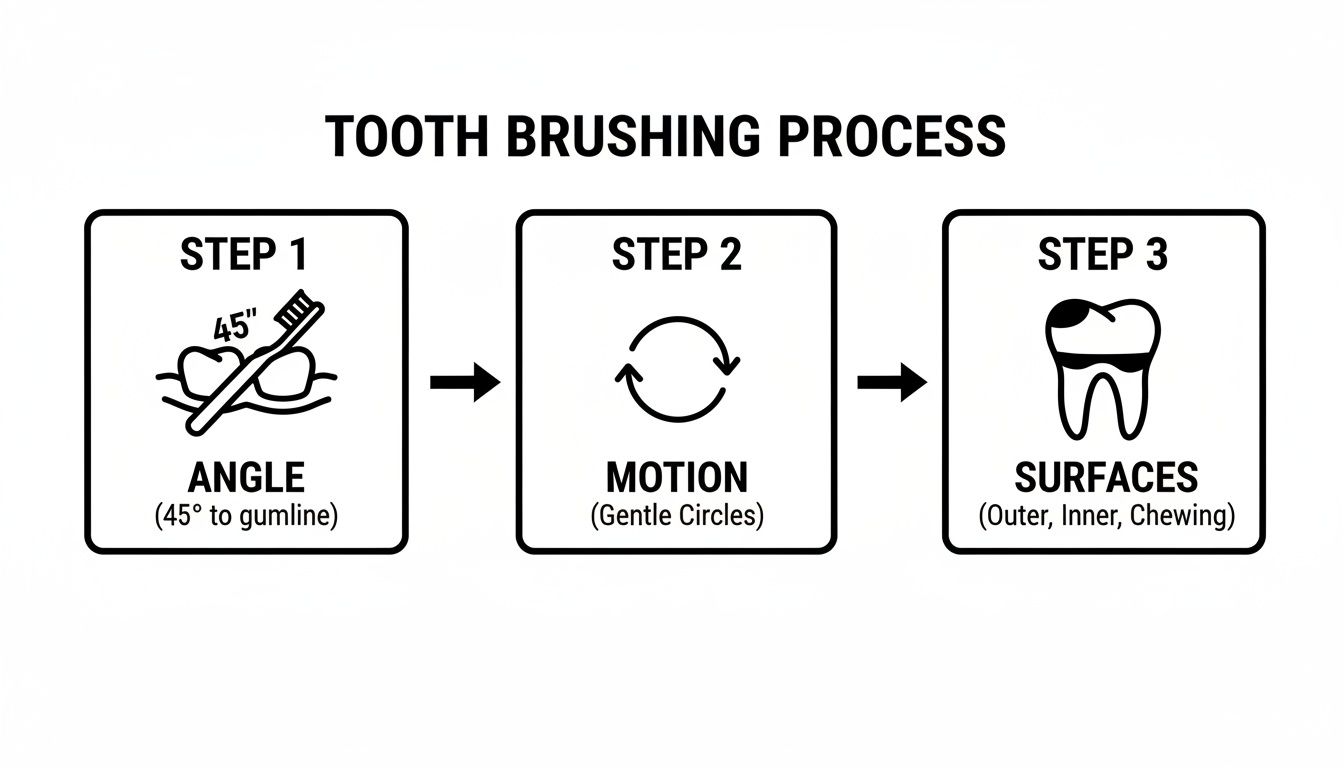
As you can see, it’s a simple but mindful process that ensures you’re not just brushing, but brushing correctly.
Let Your Electric Toothbrush Do the Work
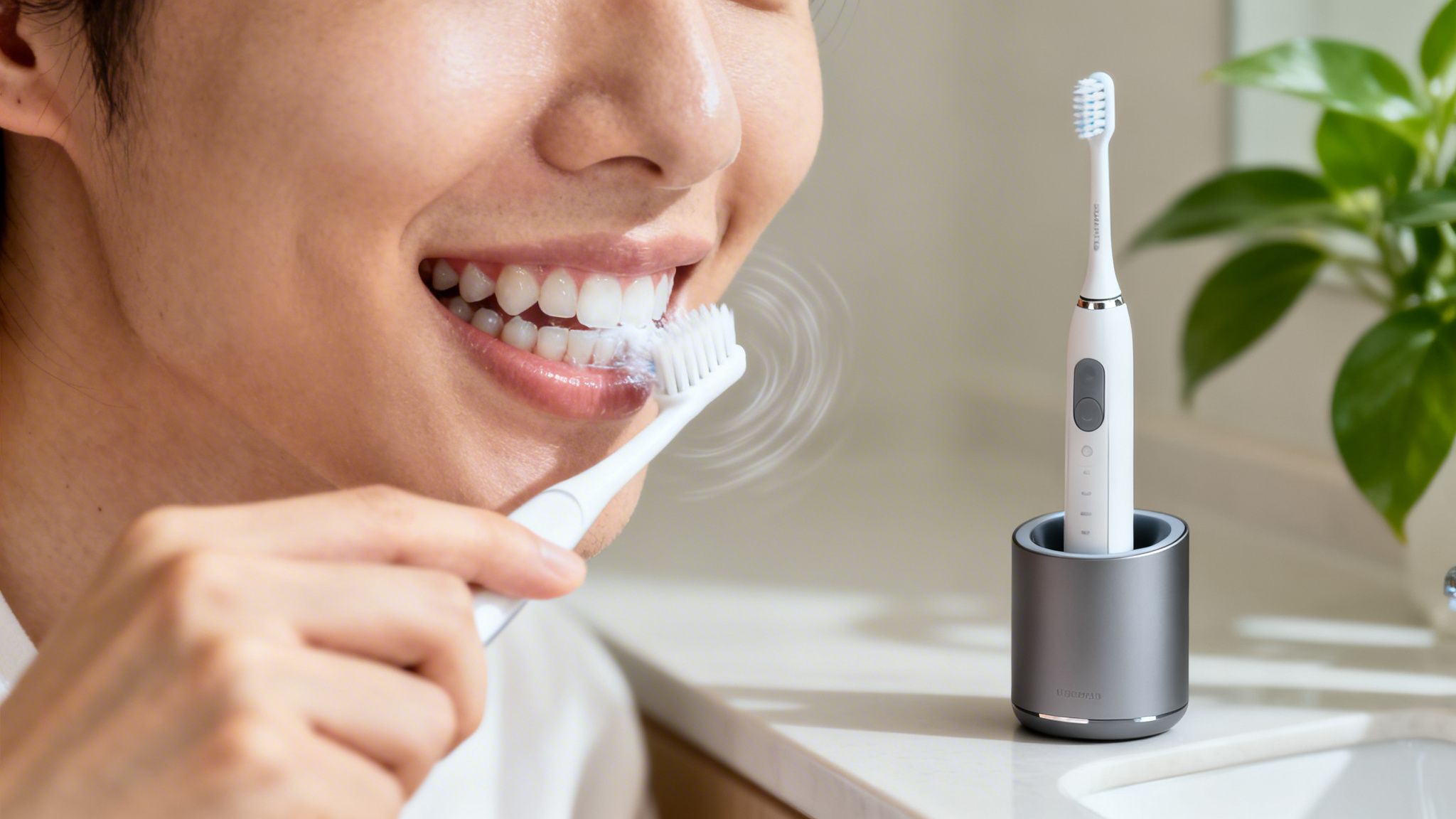
If you've switched to an electric toothbrush, your job gets even easier. These gadgets are engineered to do the hard work—the oscillating and vibrating—for you. Your main task is just placement.
Simply guide the brush head from one tooth to the next, pausing for a few seconds on each one. Remember to use only light pressure. Let the brush do what it was designed to do. Pushing too hard is a very common habit we see at our Chattanooga dental office, and it can actually damage your gums and enamel.
A common mistake we see is people pressing down hard with their electric brush, thinking it cleans better. The opposite is true. Gentle guidance is far more effective and much safer for your teeth and gums.
Powered toothbrushes have come a long way. In some countries, usage jumped from 10% to 30% in a decade as sonic models proved to be superstars at plaque removal. If you’re curious about the science, you can dig into the research on modern brushing methods and their effectiveness/G06052938.pdf).
Of course, a great brush needs a great partner. To complete your routine, take a look at our guide on choosing the best toothpaste for your teeth.
Brushing Techniques for Braces, Implants, and Sensitive Gums
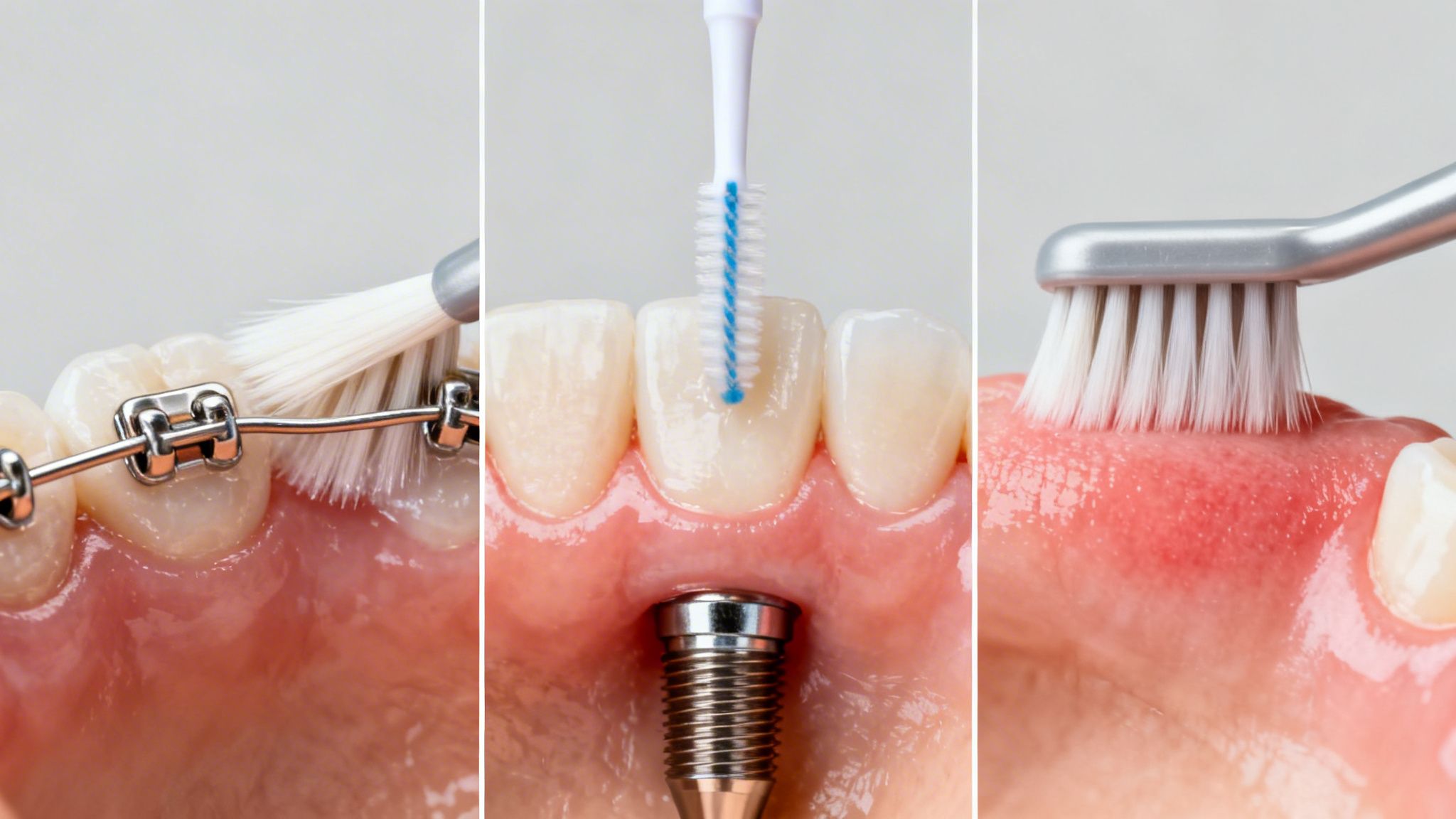
The standard brushing techniques we teach work wonders for most people, but your oral hygiene routine needs to adapt if you have braces, dental implants, or deal with sensitive gums. These situations require a more specialized approach to ensure you’re cleaning effectively without causing harm.
At Winn Smiles, we guide our patients in Chattanooga and Cleveland, TN, through these exact changes, ensuring their investment in a healthy smile—whether through cosmetic dentistry or restorative care—is protected for the long haul.
Cleaning Effectively with Braces
Traditional braces create a landscape of brackets and wires that act like magnets for food particles and plaque. Without meticulous cleaning, you risk developing white spots, cavities, or swollen gums. The key is to be both thorough and patient.
Use a soft-bristled brush and angle it at 45 degrees to clean both above and below each bracket. Small, gentle, circular motions are your best friend here. Don't forget to brush the wire itself and the tooth surface hiding behind it.
Many of our orthodontic patients find tools like interdental brushes (proxy brushes) are an absolute game-changer for reaching tiny spaces around brackets. If you're still weighing your orthodontic options, you might find our article comparing Invisalign vs. traditional braces helpful.
Protecting Your Dental Implants
A dental implant is a significant investment, and its long-term success hinges on proper care. While the implant crown can't get a cavity, the surrounding gum tissue is still vulnerable to plaque. This can lead to peri-implantitis, a condition similar to gum disease that can threaten the stability of the implant.
For our dental implant patients in Chattanooga, we recommend a gentle but thorough brushing technique. Your main focus should be the area where the implant crown meets your gumline. A soft-bristled brush is non-negotiable to prevent scratching the crown or irritating the delicate gums.
Think of it like cleaning a natural tooth, but with extra attention paid to that gumline connection. The goal is to disrupt bacterial plaque before it has a chance to cause inflammation and put your beautiful restorative dentistry at risk.
Gentle Care for Sensitive Gums
If you're dealing with gum disease (periodontitis) or just have generally sensitive gums, the thought of brushing can be intimidating. However, avoiding it only makes the problem worse. The right technique allows you to remove plaque without causing more pain or recession.
We advise our patients with sensitive gums to use an extra-soft toothbrush and the Modified Bass Technique. This involves focusing on gentle, vibratory motions right at the gumline. You must avoid aggressive, back-and-forth scrubbing at all costs—that will only lead to more irritation and damage. If pain persists, it may be time to visit an emergency dentist. Our team is always happy to demonstrate the perfect amount of pressure during your next cleaning and exam in Chattanooga.
Common Brushing Mistakes to Avoid
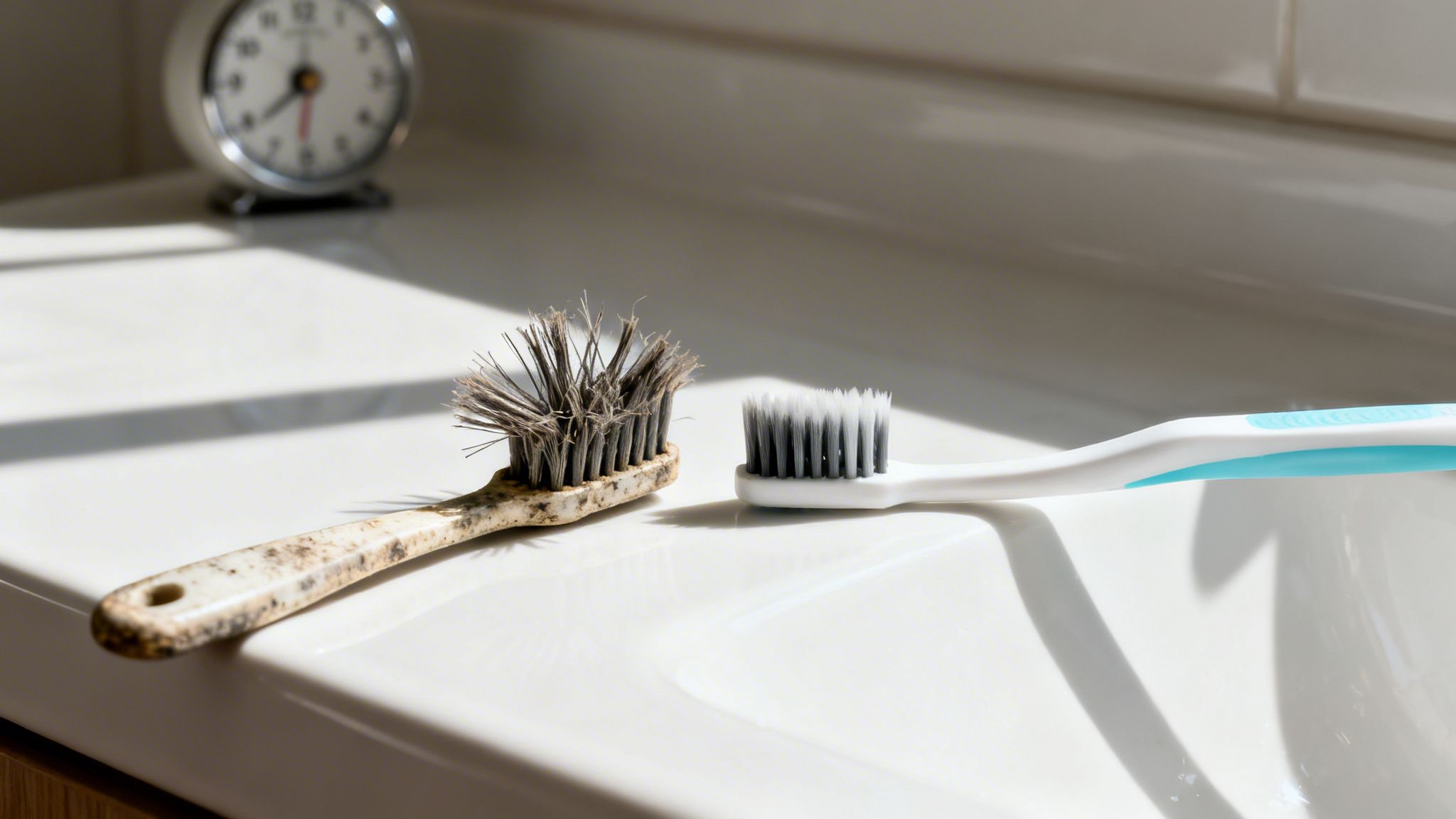
Even with the best intentions, it's easy to fall into brushing habits that do more harm than good. At Winn Smiles, we see the results of these common mistakes every day—from stubborn plaque to gum irritation—and correcting them is one of the fastest ways to improve your oral health between dental cleanings.
By becoming aware of these pitfalls, our patients in Chattanooga and Cleveland, TN, can better protect their smiles from enamel wear, cavities, and gum recession.
Using Too Much Force
One of the most frequent mistakes we see is brushing too hard. There’s a common misconception that aggressive scrubbing equals cleaner teeth, but it's just the opposite. All that pressure can wear away your protective enamel and even cause your gums to recede, exposing the sensitive root surfaces underneath.
A gentle touch is all you need. The bristles are designed to sweep away plaque, not scour it off. If your toothbrush bristles look smashed and splayed out after just a few weeks of use, that’s a telltale sign you’re pushing way too hard.
Not Brushing Long Enough
The magic number is two minutes. Anything less simply doesn't give you enough time to thoroughly clean every surface of every tooth. It's easy to rush, especially on a hectic morning, but those full 120 seconds are absolutely critical for effective plaque removal.
A simple fix is to use the timer on your phone or an electric toothbrush with a built-in timer. This little habit makes a huge difference, ensuring you give equal time to all quadrants of your mouth and dramatically improving your dental care at home.
Neglecting Key Areas and Old Habits
Most of us brush on autopilot. Research confirms that people tend to use the same motions and miss the same spots every single time they brush. This means if you have a habit of skipping the inside surfaces of your lower front teeth or the very back molars, those areas are always being neglected. You can learn more by exploring the statistical data on tooth brushing behaviors.
At Winn Smiles, we often point out these consistently missed spots during a cleaning. The key is to be mindful and systematic. Try starting in a different part of your mouth each time you brush to break the muscle memory and ensure every tooth gets the attention it deserves.
Making these small adjustments can help you avoid more complex treatments later, like fillings or even a tooth extraction. If you're concerned about your technique or just need a trusted dentist in Chattanooga or Cleveland, our team is here to help you get your oral health back on track.
Building Your Complete Oral Hygiene Routine in Chattanooga
Mastering your brushing technique is a huge win, but it's only one piece of the puzzle. To truly shield your smile from decay and disease, you need a complete daily routine. Think of your toothbrush as the star player—it handles the heavy lifting on the wide, open surfaces of your teeth. But even the best player needs a strong supporting cast to win the game.
At Winn Smiles, we work with our patients in Chattanooga and Cleveland, TN, to build these complete, effective routines. A genuinely healthy mouth comes from combining your great at-home habits with our professional dental care.
The Non-Negotiable: Flossing
Brushing is fantastic, but even the best toothbrush can't reach everywhere. The tight spaces between your teeth are perfect hiding spots for plaque, making up about 35% of your total tooth surface. If you skip flossing, you’re leaving a huge part of your mouth uncleaned every single day.
Daily flossing is absolutely non-negotiable for preventing cavities between teeth and keeping gum disease at bay. By gently sliding the floss up and down the sides of each tooth, you break up the colonies of bacteria that your brush simply can’t touch.
Adding an Antiseptic Mouthwash
Once you’ve brushed and flossed, an antiseptic mouthwash can give you an extra layer of defense. It's not a replacement for the physical cleaning of brushing and flossing, but a good mouthwash helps in a few important ways:
- It reduces the overall number of bacteria in your mouth.
- It rinses soft tissues that your brush and floss miss, like your cheeks, tongue, and the roof of your mouth.
- It can help fight bad breath and leave your mouth feeling exceptionally fresh.
Think of it as the final rinse that flushes away any last bits of debris you've just dislodged.
Why Professional Cleanings Are Essential
No matter how diligent you are at home, you’ll never get rid of 100% of the plaque. Over time, any plaque you miss will harden into tartar—also called calculus. This is a stubborn, cement-like substance that you can't remove on your own; it requires professional instruments.
This is exactly why regular dental cleanings and exams at our Chattanooga and Cleveland offices are so vital. They are a critical preventive step where we reset your oral health. We remove tartar buildup before it can cause gum disease and use dental x-rays to spot any potential issues while they’re still small and easy to manage.
This powerful combination—your daily efforts and our professional care—is the most effective strategy for lifelong oral health. Whether you're due for a routine cleaning and exam, exploring cosmetic dentistry, or need an emergency dentist in Chattanooga, it all starts with this solid foundation.
Your Questions About Tooth Brushing Answered
We get a ton of questions from our patients in Cleveland and Chattanooga, TN, and we love it. An informed patient is a healthy patient. While we always make time to chat during your appointment, we’ve put together some of the most common questions we hear right here.
Here are some clear, straightforward answers about tooth brushing and daily dental care.
How Often Should I Replace My Toothbrush?
This is a big one. We recommend swapping out your toothbrush or electric brush head every three to four months. If you notice the bristles are frayed or splayed out before then, go ahead and replace it sooner.
Once the bristles lose their shape, they just can’t effectively sweep away the plaque and food debris from your teeth and gums.
It’s also a smart move to toss your old toothbrush after you’ve been sick with the flu or a bad cold. A fresh brush helps prevent reinfection and keeps your daily routine as healthy as possible.
Is a Hard-Bristled Toothbrush Better?
We hear this all the time, and it's a common misconception we're happy to clear up. We strongly advise all our patients to stick with a soft-bristled toothbrush.
It’s easy to think that harder bristles mean a deeper clean, but they often do more harm than good. Aggressive brushing with hard bristles can wear away your tooth enamel and cause your gums to recede. This can lead to sensitive teeth and other problems down the road.
A soft-bristled brush is more than enough to remove plaque and debris, as long as you're using the gentle, effective technique we show our patients.
What Is the Best Way to Brush to Whiten My Teeth?
Proper brushing is your first line of defense against surface stains from things like coffee, tea, and red wine. By brushing correctly twice a day, you're essentially polishing your teeth and preventing new stains from settling in, which helps keep your smile bright.
But brushing alone won’t change the underlying, natural shade of your teeth.
For a truly noticeable, lasting white smile that goes beyond what a toothbrush can do, professional teeth whitening is the way to go. Here at Winn Smiles, we offer safe and effective treatments that deliver incredible results. Once you have that ideal shade, your great brushing habits will be key to maintaining it.
If you’re curious about what’s possible with cosmetic dentistry, we can walk you through all your options during a consultation at our Cleveland or Chattanooga office.
Does My Child Need a Special Brushing Technique?
Absolutely. A child’s brushing needs change as they grow.
- For infants: Before any teeth pop through, you can gently wipe their gums with a soft, damp cloth after feedings.
- For babies with new teeth: As soon as that first little tooth arrives, it’s time for a baby-sized toothbrush and a tiny smear of fluoride toothpaste—about the size of a single grain of rice.
- For young children (around 6-8 years old): As their motor skills improve, they can start learning the gentle, circular motions we recommend. But they’ll still need your help and supervision to make sure they're brushing for a full two minutes and reaching every single tooth.
Our team at Winn Smiles loves helping our youngest patients build healthy habits from the very start. It’s a true privilege to help families in Chattanooga and Cleveland build a foundation for a lifetime of healthy smiles.
Your smile deserves expert care. Whether you have more questions about tooth brushing techniques or you're looking for a dentist near me in Chattanooga or Cleveland, the team at Winn Smiles is ready to help you achieve your healthiest, most confident smile. Schedule your new patient exam today. Visit us at https://www.winnsmiles.com.