You may be putting this off right now. Maybe you've had a bad dental experience before. Maybe the sound of a drill makes your whole body tense up, or you know you need help with a painful tooth, dental implants, or a same-day crown, but anxiety keeps winning.
That hesitation is common, and it can affect far more than routine cleanings and exams. People often delay treatment for tooth pain, infection, broken teeth, cosmetic dentistry, or even an emergency dentist visit because the idea of sitting in the chair feels overwhelming. Sedation dentistry changes that experience. It gives anxious patients in Chattanooga and Cleveland a way to get the care they need with far less fear, more comfort, and a better path back to a healthy smile.
Anxious About the Dentist You Are Not Alone
If you've been searching for a dentist near me and closing tabs because every office feels the same, the underlying issue may not be finding a dentist. It may be finding a place where you feel safe enough to come in.
Dental anxiety can look different from person to person. Some patients feel nervous before a cleaning. Others avoid care for years, even when they know they may need a tooth extraction, restorative dentistry, or treatment for pain that keeps getting worse. In both Chattanooga and Cleveland, that pattern is more common than many people realize.

Why fear causes real dental problems
When fear leads you to postpone care, small concerns can turn into larger ones. A cavity may become a deep infection. A cracked tooth can become a painful emergency. Gum irritation can progress until eating, smiling, and sleeping all feel harder than they should.
That's why sedation matters. It isn't only about feeling calmer in the moment. It helps remove the barrier that keeps many patients from getting preventive care, new patient exams, dental x-rays, and needed treatment before things become more complicated.
Many people don't need more willpower. They need a gentler way to receive care.
A practical solution for patients who have been avoiding treatment
Sedation dentistry gives patients a controlled way to relax during treatment while remaining comfortable and, depending on the method, still able to respond. For people who've been avoiding the dentist in Chattanooga, TN, or Cleveland, TN, it can make care feel possible again.
Research on sedation dentistry and treatment follow-through shows strong practical value. Patients offered procedural sedation were 3.2 times more likely to complete recommended treatment plans and 4.1 times more likely to maintain regular preventive visits, and in a study of 450 patients with severe dental anxiety, 78% of those who received IV sedation for their first complete treatment returned for a 6-month recall appointment, compared with 23% of similarly anxious patients treated without sedation, according to a data-driven analysis of sedation dentistry outcomes and practice impact.
For patients, that means one simple thing. Sedation helps people stop delaying care and start getting better.
Understanding Sedation Dentistry
Sedation dentistry is a method of helping you enter a deep state of calm during dental treatment. It's designed for comfort, not for taking away control.
Many patients worry that sedation means being completely unconscious. In most dental settings, that isn't what's happening. Sedation dentistry is not the same as general anesthesia. With common dental sedation options, you remain conscious, and depending on the level used, you can still respond to questions or instructions while feeling much more relaxed.
What sedation is and what it is not
A simple way to think about it is this. Sedation turns the volume down on fear, tension, and physical stress so dental care feels manageable.
It can help if you:
- Feel panicky in the chair and struggle to settle once treatment begins
- Avoid appointments altogether even when you know you need help
- Need longer procedures such as restorative work, tooth replacement, or multiple treatments in one visit
- Have a strong gag reflex or difficulty sitting still for extended care
Why the distinction matters
Patients often feel reassured when they understand that sedation is customized. The goal is to match the sedation level to the procedure, your health history, and your comfort needs. A mild option may be enough for a cleaning or small restorative visit. A deeper option may make more sense for dental implants, complex treatment planning, or a longer appointment.
If you want a clearer overview of how the process works before, during, and after treatment, this guide on how sedation dentistry works explains the basics in patient-friendly terms.
Practical rule: Sedation should make treatment feel easier, steadier, and less stressful. It should never feel mysterious or rushed.
For many adults looking for a dentist in Chattanooga, TN or dentist in Cleveland, TN, understanding that difference is what finally makes the first appointment feel possible.
Types of Sedation We Offer Our Patients
Different patients need different levels of support. Someone coming in for a routine visit with mild anxiety may do well with nitrous oxide. Someone planning a longer procedure, such as dental implants or extensive restorative dentistry, may need a stronger option.
At Winn Smiles, sedation options are selected based on the procedure, your medical history, and how anxiety tends to affect you before and during treatment.
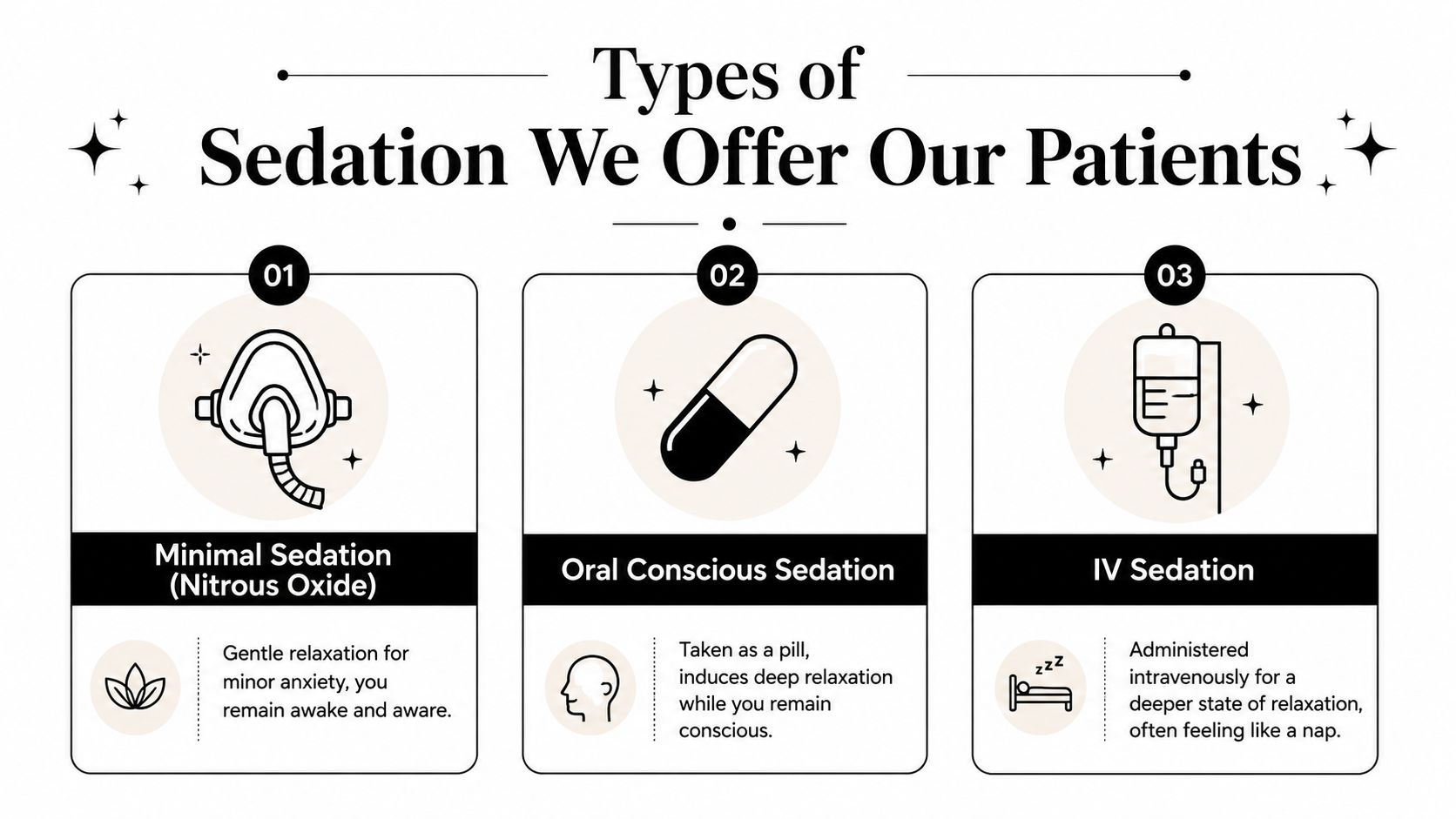
Minimal sedation with nitrous oxide
Nitrous oxide, often called laughing gas, is the lightest option. You breathe it through a small mask, and it creates a gentle sense of ease while you remain awake and aware.
This is often a good fit for:
- Mild to moderate anxiety before cleanings, exams, fillings, or shorter restorative visits
- Patients who want fast recovery and a lighter approach
- Busy schedules because recovery is typically quick
Nitrous oxide is widely used in dentistry, and 70% of dental practices offering sedation services use nitrous oxide as their primary method because of its safety profile and quick recovery, according to sedation dentistry statistics on use and safety.
Oral conscious sedation
Oral conscious sedation usually involves a prescribed pill taken before the appointment. You're still conscious, but much more relaxed. Many patients describe it as feeling drowsy, detached from the usual stress, and less focused on the procedure.
This option often works well for adults who feel anxious before they even arrive. It can also be helpful for longer visits in cosmetic dentistry, restorative dentistry, or multiple procedures scheduled together.
IV sedation
IV sedation is the strongest of the commonly used office-based options discussed here. It works quickly because it's delivered directly into the bloodstream, and many patients feel as if they slept through the appointment or remember very little afterward.
Research shows that IV sedation demonstrates the highest efficacy for reducing dental anxiety in adults, producing a mean Visual Analogue Scale reduction of 7.8 ± 1.1 points, while oral midazolam offers a superior safety profile with fewer adverse effects for light to moderate sedation, according to a clinical review of adult dental sedation efficacy and safety.
IV sedation often makes the biggest difference for people who've spent years avoiding treatment because fear takes over the moment they sit down.
Comparing Sedation Dentistry Options at Winn Smiles
| Sedation Type | How It Works | Best For | Recovery Time |
|---|---|---|---|
| Nitrous Oxide | Inhaled through a mask during treatment | Mild anxiety, shorter visits, routine care | Quick recovery after the appointment |
| Oral Conscious Sedation | Prescribed medication taken before the visit | Moderate anxiety, longer appointments, adult patients who feel anxious in advance | Slower recovery, with the rest of the day reserved for recovery |
| IV Sedation | Administered intravenously for deeper relaxation | Strong anxiety, complex procedures, dental implants, longer treatment | Requires a ride home and recovery time afterward |
The Transformative Benefits of Sedation Dentistry
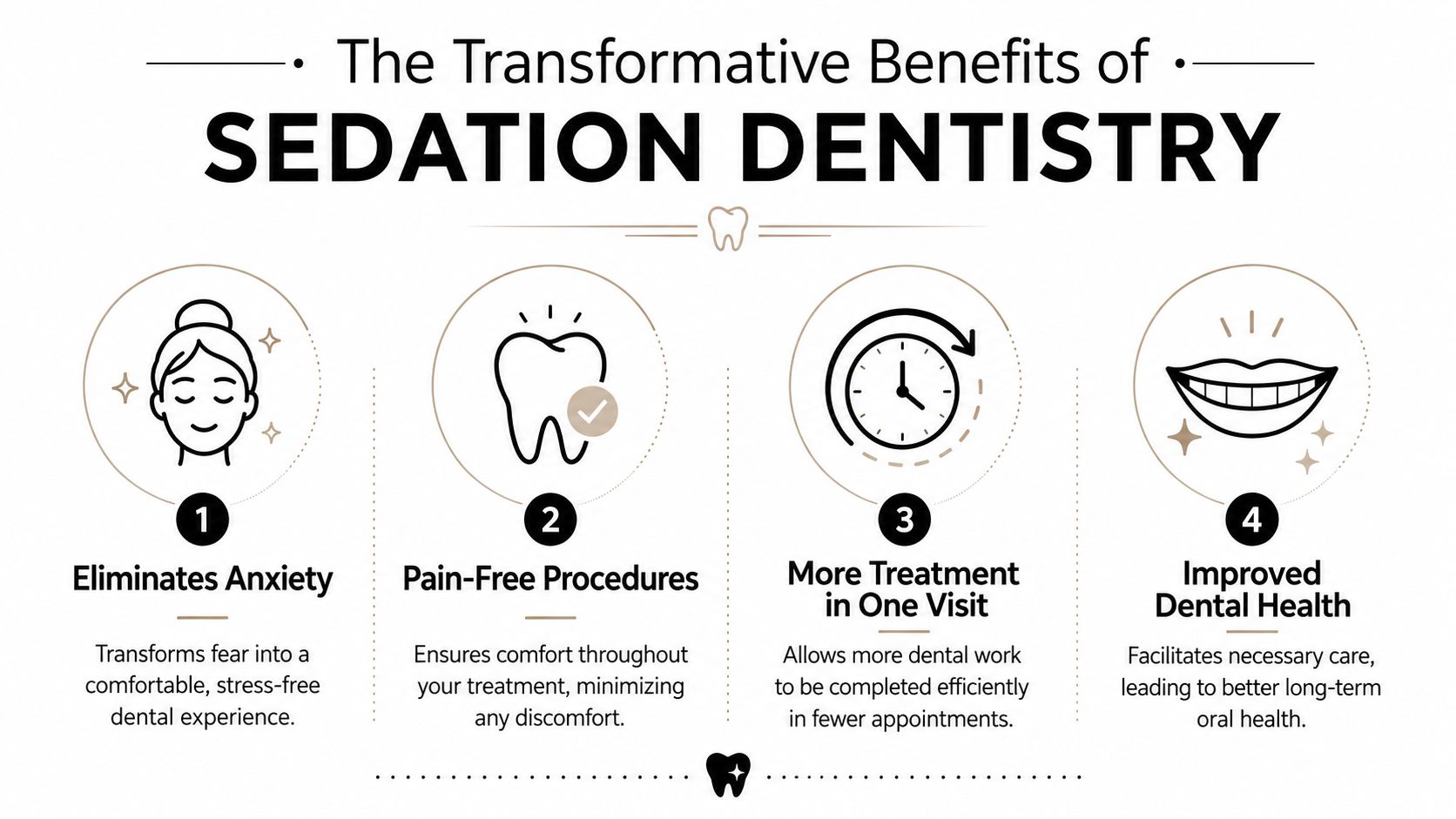
The biggest benefits of sedation dentistry start with comfort, but they don't stop there. In practice, sedation often changes the entire treatment experience. It can make care possible for someone who has delayed it for years, and it can also improve how efficiently and comfortably complex procedures are completed.
Comfort goes beyond feeling calm
When patients think about sedation, they usually think first about fear. That makes sense. Sedation can lower anxiety, reduce physical tension, and help the body settle enough to tolerate treatment comfortably.
But there are other practical gains that matter just as much:
- Better tolerance for treatment means longer procedures often feel shorter and more manageable.
- Less movement and less gagging can help the dentist work with more precision.
- More care in one appointment may reduce the need for repeated visits for patients receiving restorative dentistry, dental implants, or full-arch treatment.
- Less memory of the procedure can matter for fearful patients. IV sedation is noted for resulting in little to no memory of treatment and can reduce fear of future visits, as described in this overview of IV sedation benefits in dental care.
A short video can help make that experience feel more familiar.
Why sedation can improve clinical outcomes
Sedation also supports treatment in ways patients don't always expect. The physiological impact matters, especially in oral surgery and implant care.
Data shows that sedation can reduce cortisol and inflammatory mediators, leading to less post-operative pain, reduced inflammation, better healing, and lower analgesic requirements compared to non-sedated patients. That's especially relevant for people considering implants or full-arch procedures, as noted in this discussion of sedation and post-operative healing.
This is one of the most overlooked benefits of sedation dentistry. A calmer body often heals better than a body that remains highly stressed through treatment.
Common advantages patients notice most
Some benefits are immediate, and some show up afterward. Patients often value sedation because it helps with:
- Fear reduction when routine care, tooth extraction, or an emergency dentist visit feels overwhelming
- Pain control support during treatment along with local anesthetic
- Efficiency when multiple concerns are addressed in fewer appointments
- Access to care for people who otherwise wouldn't move forward with needed treatment
- Long-term oral health because getting care today helps prevent bigger problems later
Sedation doesn't fix every dental concern by itself. What it does is remove a major obstacle. For many people, that obstacle has been the only thing standing between ongoing pain and finally getting treatment done.
Are You a Good Candidate for Sedation Dentistry
Sedation isn't only for people with extreme fear. It can also help patients whose body reacts strongly to dental treatment even when they want to be cooperative. If your heart races before an exam, your muscles tighten in the chair, or you avoid care until something hurts, sedation may be worth discussing.
Patients who often benefit most
You may be a good candidate if any of these sound familiar:
- Severe dental anxiety or phobia that has caused you to delay cleanings, exams, or treatment
- A low pain threshold or strong sensitivity during dental work
- A difficult gag reflex that makes even simple procedures stressful
- Trouble sitting still for long appointments because of tension, discomfort, or physical limitations
- Complex treatment needs such as full-mouth restorative care, dental implants, or multiple procedures in one visit
- Special care needs that make routine dental treatment harder to complete comfortably
Sedation is also a standard part of care for many children and adults. Sedation dentistry is reported as highly safe, with only 2% of patients experiencing complications associated with dental sedation, and it's commonly used in routine practice, including pediatric care, according to these published sedation dentistry safety details.
When extra review is important
Sedation still requires careful screening. Pregnancy, certain medications, some medical conditions, airway concerns, and elements of your health history may affect which type of sedation is appropriate, or whether treatment should be modified.
The safest sedation plan is always personalized. It starts with a real conversation, not a one-size-fits-all checklist.
That's why a full consultation matters. For patients looking for a cosmetic dentist near me, dental implants near me, or a family-friendly dentist in Cleveland or Chattanooga, the right answer isn't always the deepest sedation. It's the safest option that matches your needs.
Your Sedation Visit at Our Cleveland or Chattanooga Office
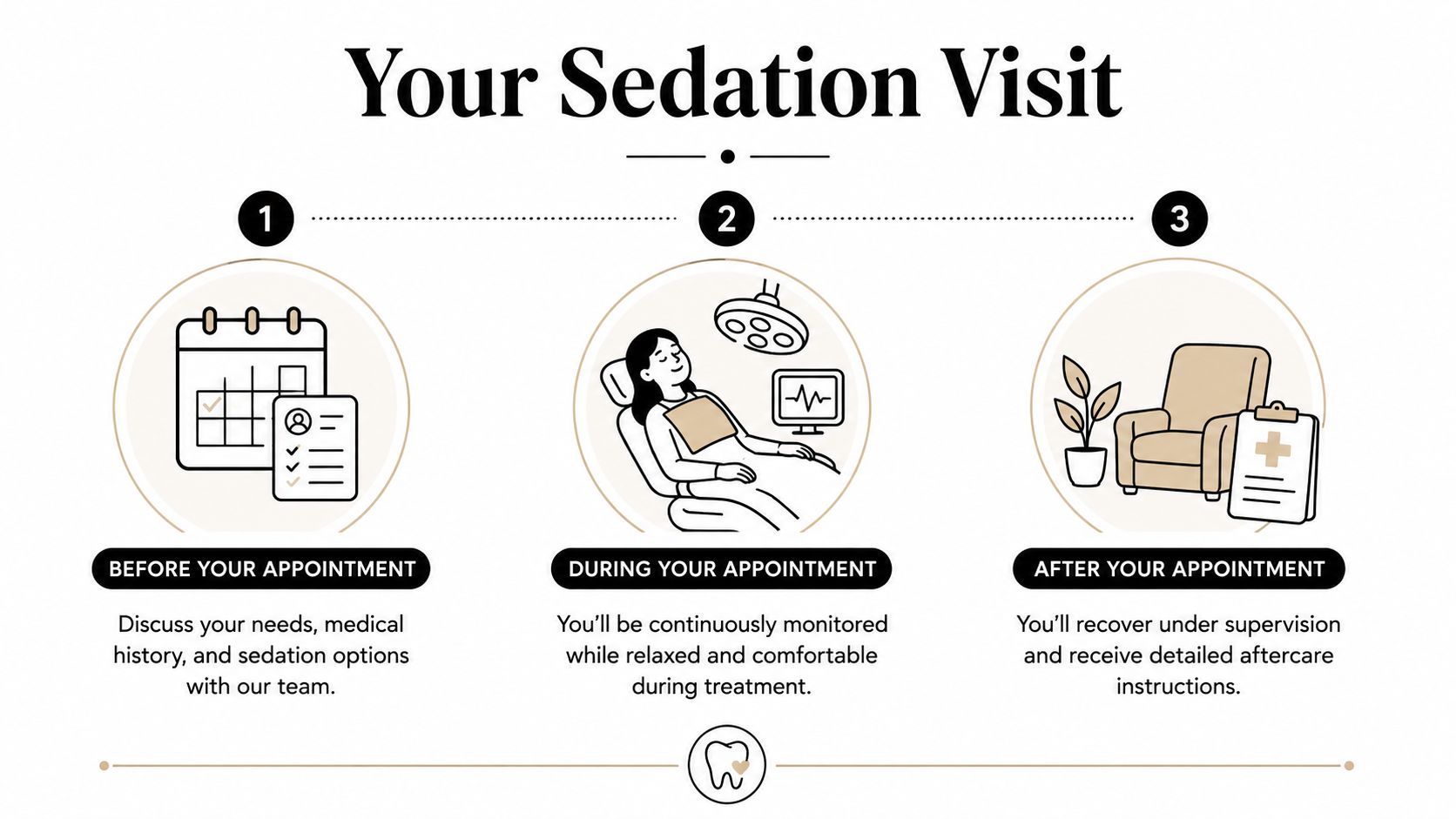
Fear usually gets worse when the process feels unclear. A sedation visit should feel structured, explained, and calm from the first conversation through recovery.
Before your appointment
The visit starts with a review of your health history, current medications, treatment goals, and anxiety level. If you're coming in for tooth pain, a broken tooth, dental implants, cosmetic work, or a same-day crown, the team will explain what kind of sedation may fit that procedure.
You'll also receive clear instructions. These may include what to eat or avoid before the visit, when to take prescribed medication if oral conscious sedation is planned, and what to bring with you. The practical details matter because they make the day feel predictable.
During your appointment
When you arrive, the environment should feel calm and organized. Many patients appreciate small comfort details, and that's where an office experience can make a meaningful difference. Winn Smiles uses a comfort-focused approach with amenities designed to help patients settle in before treatment begins.
Once sedation starts, the team monitors you throughout the procedure. The goal is steady comfort and safe observation while your dental care is completed. Depending on the treatment plan, that may include anything from restorative work to cosmetic dentistry, tooth extraction, or implant treatment.
Clear communication before sedation usually matters as much to anxious patients as the medication itself.
After your appointment
Recovery depends on the type of sedation used. According to the Cleveland Clinic guidance on sedation dentistry recovery and driving, nitrous oxide recovery allows driving within 15 to 30 minutes, while oral or IV sedation requires 24 hours of no driving and a plan to take it easy the next day.
That means if you're scheduling a same-day crown, implant procedure, or a longer restorative appointment in Chattanooga or Cleveland, transportation planning should happen before the day of treatment. For oral or IV sedation, you'll need a responsible adult to drive you home.
After the appointment, you'll get post-op instructions specific to your procedure. If you've had more involved care, such as implants or extractions, those instructions become part of a smoother recovery and a more confident return to normal routine.
Schedule Your Anxiety-Free Consultation Today
If fear has been keeping you from the dentist, you don't have to keep pushing through pain, postponing treatment, or hoping the problem stays small. Sedation dentistry offers a practical path forward for patients who need help feeling comfortable enough to begin.
Whether you're looking for a dentist near me, need help with a painful tooth, want to explore dental implants near me, or are searching for a dentist in Chattanooga, TN or dentist in Cleveland, TN who understands anxiety, the first step is a conversation. During a consultation, you can ask about sedation options, treatment timing, comfort concerns, and what to expect for your specific procedure.
Cost and insurance questions matter too. A good dental team should explain those clearly and help you understand your options before treatment begins. What matters most right now is that you don't let anxiety make the decision for you.
If you're ready to talk through your concerns and explore a more comfortable way to receive dental care, contact Winn Smiles to schedule a consultation in Cleveland or Chattanooga.