If you're looking in the mirror and thinking about veneers, whitening, same-day crowns, or even full-arch dental implants, you're probably balancing two feelings at once. You want a smile that looks natural and confident, but you also don't want to commit to treatment without knowing how it will turn out.
That hesitation is reasonable. Many people searching for a cosmetic dentist near me, a dentist in Cleveland, TN, or a dentist in Chattanooga, TN aren't just looking for a procedure. They're looking for clarity, comfort, and a plan that makes sense before anything irreversible happens.
Cosmetic Dentist in Cleveland and Chattanooga for Your Dream Smile
A common story starts the same way. Someone hides their teeth in photos, covers their mouth when they laugh, or keeps putting off treatment because they're worried the result might look too big, too white, or not like them. They may also have practical concerns. Will it hurt? Will it affect their bite? Will they still recognize their own smile?
That concern matters in cosmetic dentistry. A smile makeover shouldn't feel like a leap of faith. It should feel informed, measured, and personal.
Why uncertainty stops people from moving forward
Traditional cosmetic planning often left too much to imagination. Patients heard descriptions, looked at shade tabs, and tried to picture the final result from a verbal explanation. That can feel stressful, especially when you're considering veneers, crowns, restorative dentistry, or dental implants near me for a larger rebuild.
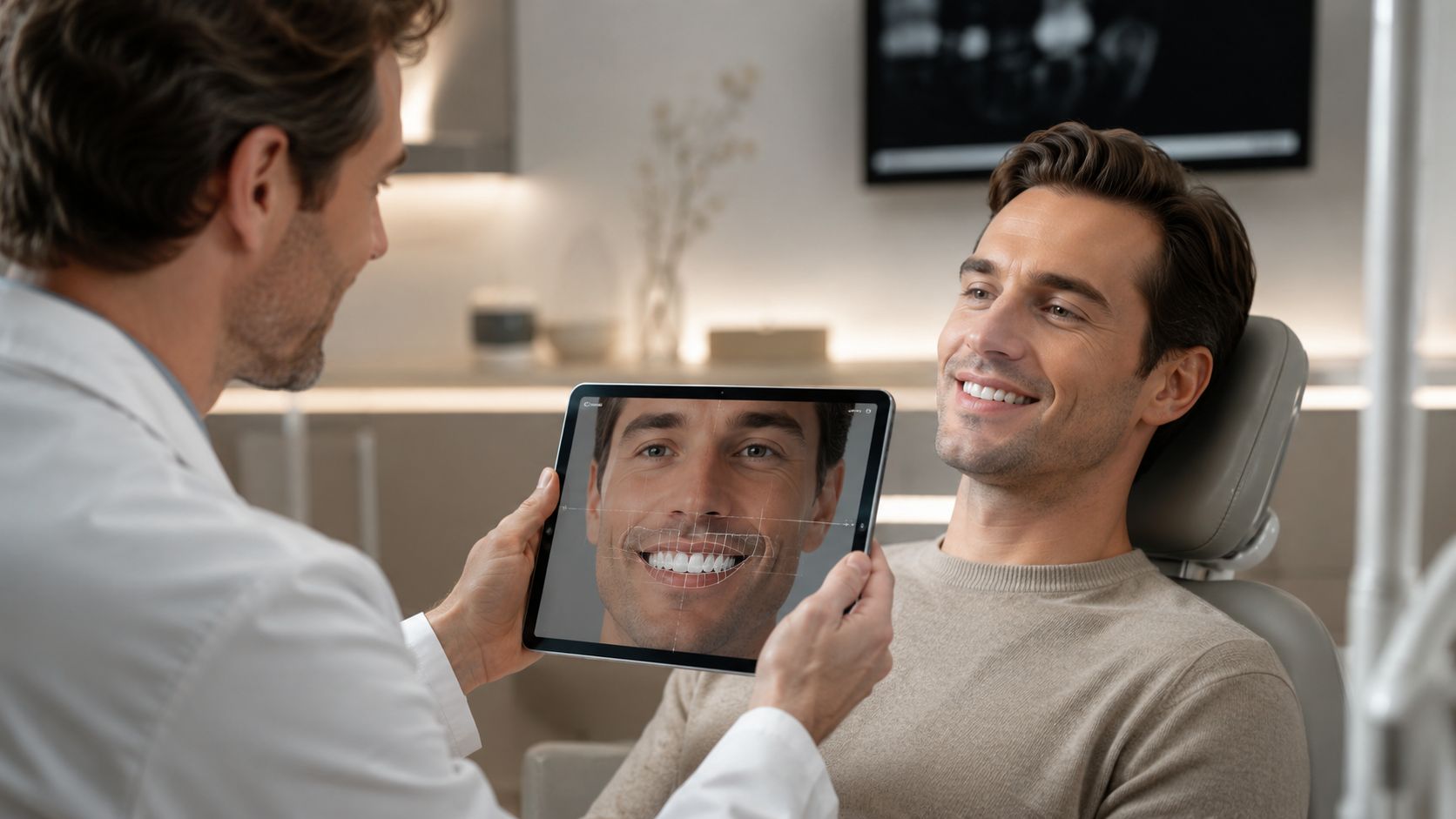
The modern Digital Smile Design process changes that experience. Instead of guessing, patients get a visual plan. The process uses photos, video, and digital scans to design a smile around the person's face, lip movement, and dental structure before treatment begins.
A good cosmetic plan doesn't just ask, "What looks attractive?" It asks, "What will look natural on this specific face, and what will stay healthy and comfortable over time?"
More than cosmetic improvement
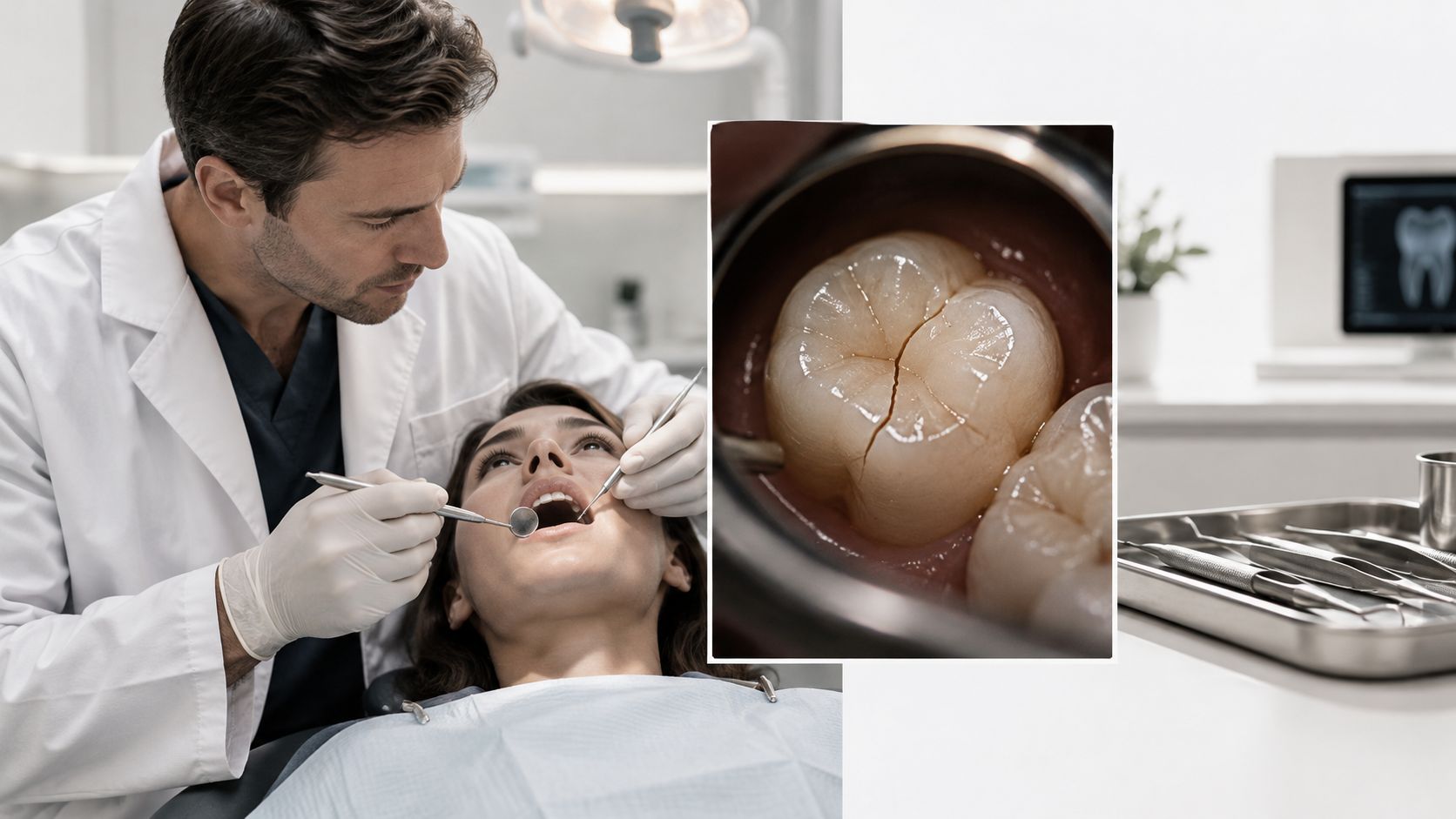
This matters for people seeking cosmetic dentistry, but also for patients coming in for broader dental care. A smile design conversation can overlap with restorative dentistry, same-day crowns, replacement of worn teeth, and even full-arch implant planning. It can also reveal issues that need attention first, such as gum health, bite balance, or damaged teeth.
For local families and adults searching for a dentist near me, this kind of planning supports more confident decisions. It also makes early appointments feel less intimidating. You're not being rushed into treatment. You're seeing the options clearly.
For many patients in Cleveland, Chattanooga, and nearby communities, that's the turning point. Once they can preview the direction of treatment and understand how the pieces fit together, the process starts to feel manageable.
Understanding the Digital Smile Design Concept
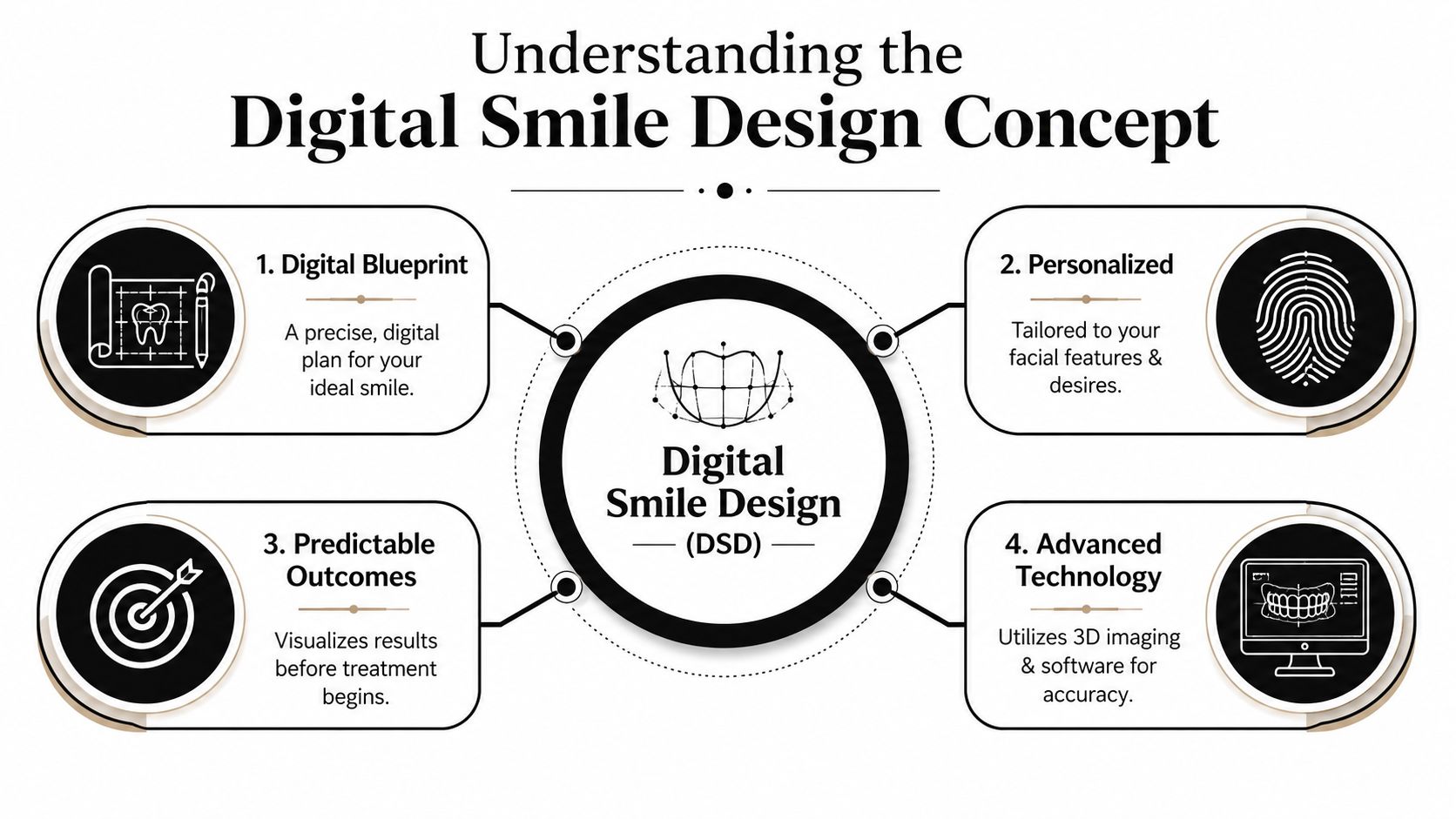
Think of Digital Smile Design as a digital blueprint for a smile makeover. Before changing teeth, the dentist gathers visual and structural information, then builds a plan that shows how tooth shape, length, position, and smile line could work together.
That blueprint isn't made in isolation. It starts with your face, your current smile, and your goals. The point isn't to place a generic "perfect smile" onto every patient. It's to design one that fits.
How this differs from older smile planning
Before digital planning became common, aesthetic dentistry relied much more heavily on physical impressions, manual wax-ups, and stone models. Digital Smile Design was invented in 2007 by Brazilian dentist Christian Coachman, a turning point that shifted aesthetic dentistry toward a digital workflow. That shift replaced slower analog steps with digital scans and allowed initial designs to be completed in 20 to 30 minutes, according to this review of the development of DSD.
For patients, that change means the planning phase can feel much more understandable. You can see the proposal on screen instead of trying to imagine it from a description.
What the software is actually doing
A simple way to think about it is like architectural planning. An architect doesn't start pouring concrete before drawing the structure. In the same way, the dentist uses:
- Facial photographs to understand how the smile sits within the face
- Intraoral scans to capture tooth position and shape without messy traditional impressions
- Video records to study how the smile behaves when you talk and move
- Design software to test proportions and create a realistic treatment preview
The result is a plan that supports both communication and precision. It gives patients something concrete to react to. It also gives the clinical team a shared target.
Patients often feel more relaxed once they stop trying to imagine the outcome and start reviewing a visual plan they can discuss and refine.
If you're curious how this type of planning is presented in other smile design settings, it can be helpful to explore Arquiteta De Sorrisos client experiences and see how visual previews shape patient conversations.
Why the concept matters beyond appearances
The biggest benefit of understanding the concept is this. The digital smile design process isn't just a cosmetic add-on. It creates a structure for better decisions. That can help with veneers, whitening and bonding combinations, restorative work, and larger treatment plans that may include crowns or implants.
For those seeking a cosmetic dentist near me or comparing options for cosmetic dentistry in Southeast Tennessee, that level of planning helps answer the most important question early. Not just "Can you improve my smile?" but "Can you show me how the plan fits me?"
Your Patient Journey with DSD at Winn Smiles
A patient may come in expecting veneers and leave that first visit realizing the better first step is gum care, bite adjustment, or replacing a failing restoration. That shift is not a detour. It is how digital smile design becomes reliable in practical application.
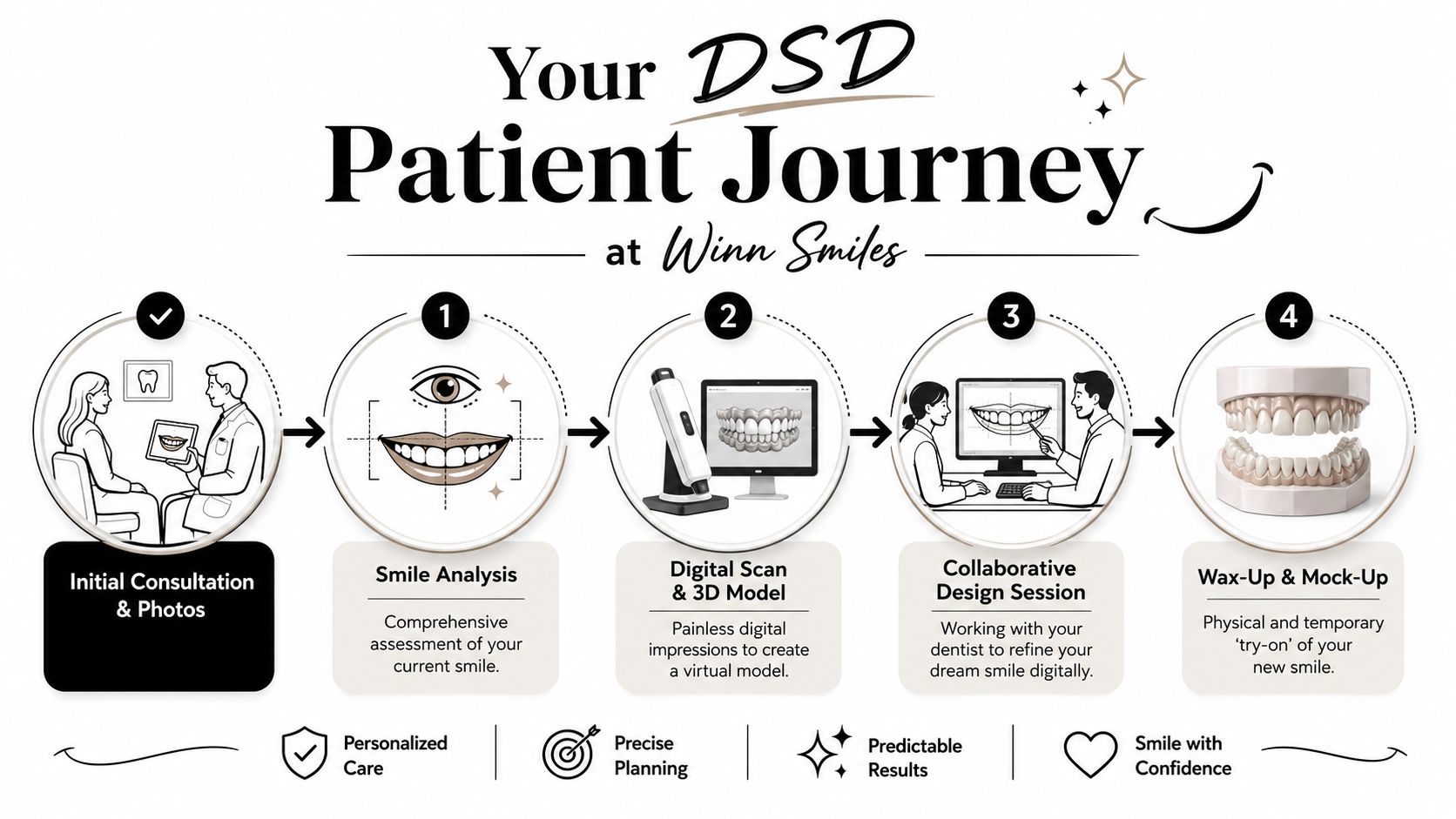
The first visit and smile analysis
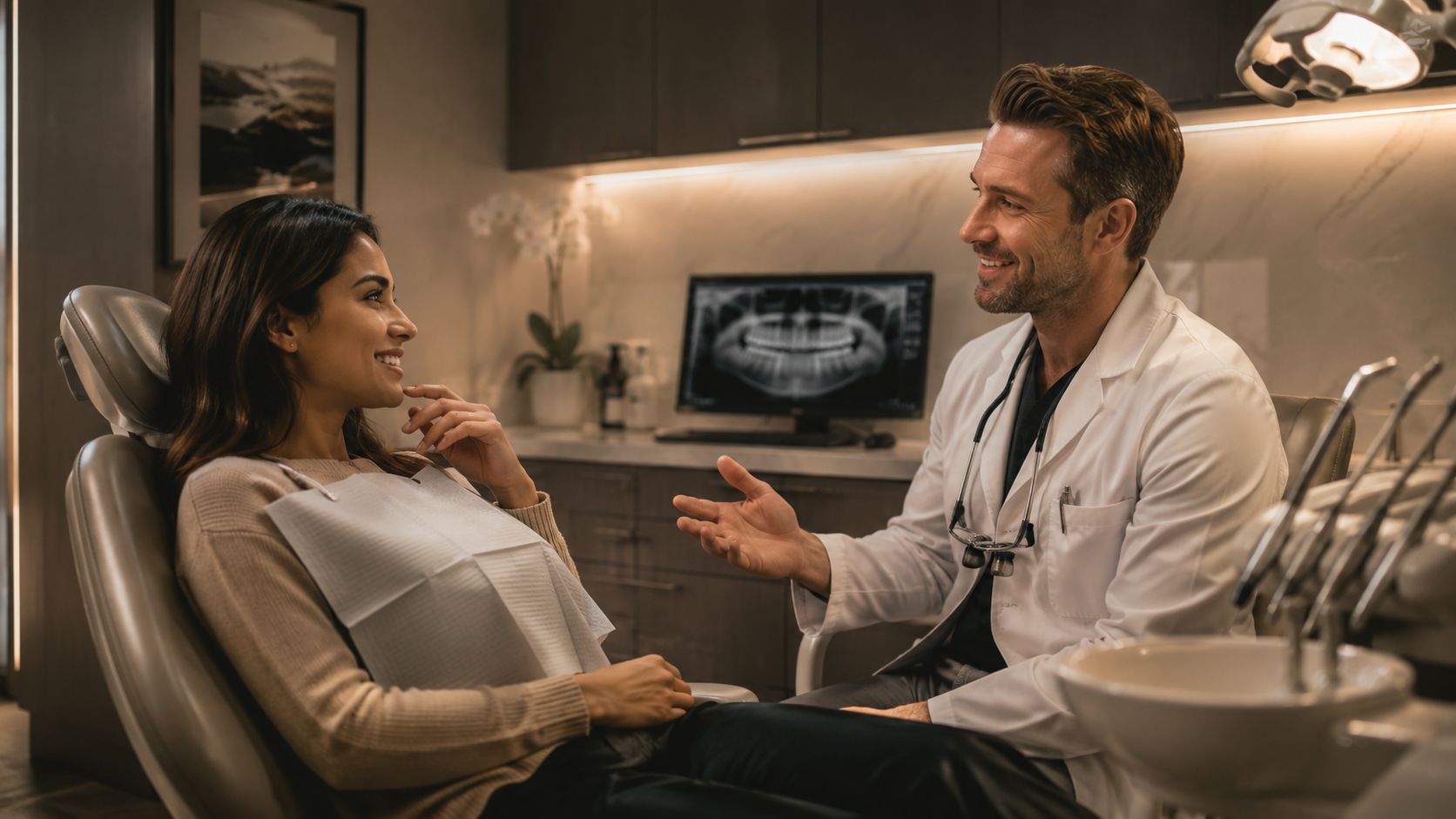
The opening appointment focuses on two things at once. We need to understand the smile you want, and we need to confirm what your teeth, gums, jaw joints, and bite will support.
That changes the plan more often than patients expect. Wear patterns, fractures, gum asymmetry, clenching, old dental work, and tooth position all affect what will look good and what will hold up. A smile preview is helpful, but biology still sets the boundaries.
Some patients are good candidates for a conservative plan such as whitening and bonding. Others need staged treatment before cosmetic work begins. Full-arch implant cases need even more planning because esthetics, speech, lip support, bone availability, and long-term maintenance all have to line up.
Patients comparing options can get a better sense of that first conversation by reviewing this cosmetic dentistry consultation.
Digital records without the old discomfort
After the clinical exam, we gather records that help us design with fewer surprises later. Intraoral scans replace traditional impressions in many cases, which makes the process cleaner and more comfortable. We also take photographs and short videos so the smile can be evaluated in motion, not just in a posed image.
Those moving records matter. A tooth length that looks ideal in a still photo may show too much during speech, or a gumline that seems even on screen may read differently once the lips move naturally. Video helps us check the link between the virtual design and what people will see day to day.
That is one of the biggest differences between a pretty concept and a plan you can trust.
The collaborative design phase
Once the records are in, the design work becomes a conversation about priorities and trade-offs. Some patients want the brightest possible smile. Others want edges softened, spaces closed, or old dentistry replaced without making the result look obvious. In more complex cases, we may need to balance ideal tooth proportions against gum behavior, implant position, or the way the upper and lower teeth meet.
That honesty matters. Software can propose ideal shapes very quickly. Real treatment still has to respect soft tissue healing, bite forces, tooth structure, and how much change can be made safely in one phase.
Timelines and costs are determined the same way. A straightforward veneer case usually moves differently than a case involving gum contouring, bite correction, provisional restorations, or full-arch implants. The digital plan helps make those steps clearer early, but it does not erase the clinical work behind them.
A well-run office also needs organized follow-up during this process, especially when treatment involves several decisions or phases. For readers interested in that operational side, this overview of CRM for appointment businesses explains how service practices track consultations and next steps.
What patients usually notice most
Patients usually tell us the process feels calmer than they expected because each decision has a purpose. Questions get answered in a practical order:
- Which part of the smile bothers you most, such as color, shape, worn edges, spacing, or missing teeth
- Whether the gums and bite support the cosmetic plan, or need treatment first
- Which option fits your goals and budget, from whitening and bonding to veneers, crowns, implant restorations, or a full reconstruction
- How the sequence affects comfort, timing, and final result
That structure is especially helpful for patients whose needs cross over into general or restorative care, including exams, x-rays, repair of broken teeth, or treatment after years of wear. The digital smile design process gives those cases a visible target, but the strength of the process is that it also accounts for the clinical realities that determine whether the final smile will feel natural, function well, and last.
Trying On Your New Smile Before Committing
You have seen the digital preview and like the direction. The next question is the one that matters most in real life. How will this smile look and feel on your face, with your speech, your lips, and your bite?
That question deserves more than a screen image.
What a Test Drive does
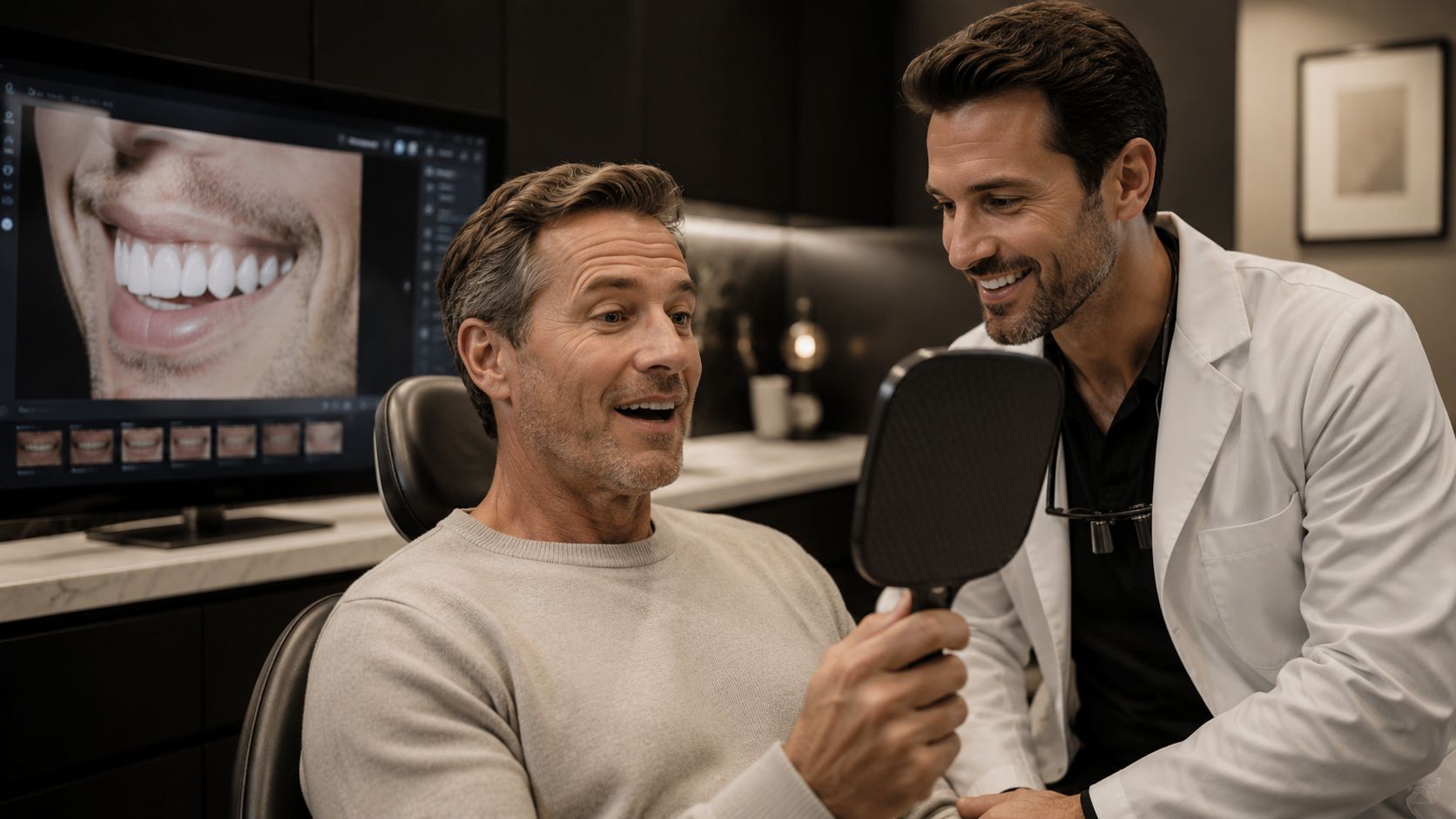
At Winn Smiles, the mock-up phase lets patients try the proposed smile in the mouth before any irreversible treatment is approved. After the digital design is refined, we transfer that plan into a temporary physical version that you can wear briefly and judge for yourself.
Patients often notice details the screen cannot fully convey. A central incisor may look perfect in a rendering but feel slightly long when you say certain words. A fuller smile may look youthful in photos but need a small adjustment at the edges so the lips close comfortably. Those are useful findings, not setbacks. They help us improve the design before porcelain is made or tooth structure is changed.
For veneer and crown cases, this step often brings the biggest sense of relief.
The gap between a beautiful preview and a healthy result
A digital plan can show shape, symmetry, and tooth display very well. Clinical success still depends on whether that design respects the gums, the bite, and the way the teeth function together every day.
Published literature has pointed out that digital smile planning can overemphasize ideal proportions if the case is not checked against soft tissue limits and occlusion in the chair. This review on limits between digital simulation and clinical reality explains that the final outcome still depends on careful clinical translation, not software alone.
I tell patients this plainly. The preview is a planning tool, not a promise that biology will automatically cooperate.
That distinction matters even more in complex treatment. In a full-arch implant case, for example, the virtual smile has to be reconciled with implant position, bone support, lip dynamics, phonetics, and the space needed for a durable prosthesis. In natural-tooth cases, the same principle applies on a smaller scale. The proposed smile has to fit the person, not just the photo.
What we evaluate before approval
Before treatment is finalized, the design should work in the mouth as well as on the screen.
| Area reviewed | Why it matters |
|---|---|
| Gum response | The planned contours need to support healthy, stable tissue around the teeth or restorations |
| Bite contact | Contacts must be balanced so the result feels natural and avoids excess wear, strain, or chipping |
| Speech and comfort | Tooth length and position can affect sounds like F, V, and S, along with lip support |
| Tooth preservation | The plan should match the least invasive option that can still deliver a stable cosmetic result |
This short video helps illustrate how patients can preview changes before final treatment:
This stage also helps clarify cost and timeline. Minor changes to a mock-up are usually simple. Larger changes, or findings that show the gums or bite need treatment first, can change the sequence of care. That is not bad news. It is how realistic planning prevents disappointment later.
Patients should never feel pushed from a digital rendering straight into irreversible dentistry. A well-run Test Drive gives them something better than reassurance alone. It gives them evidence that the plan can be delivered comfortably, predictably, and with the clinical judgment required to make the final smile look right and function well.
Why DSD Delivers Predictable and Beautiful Results
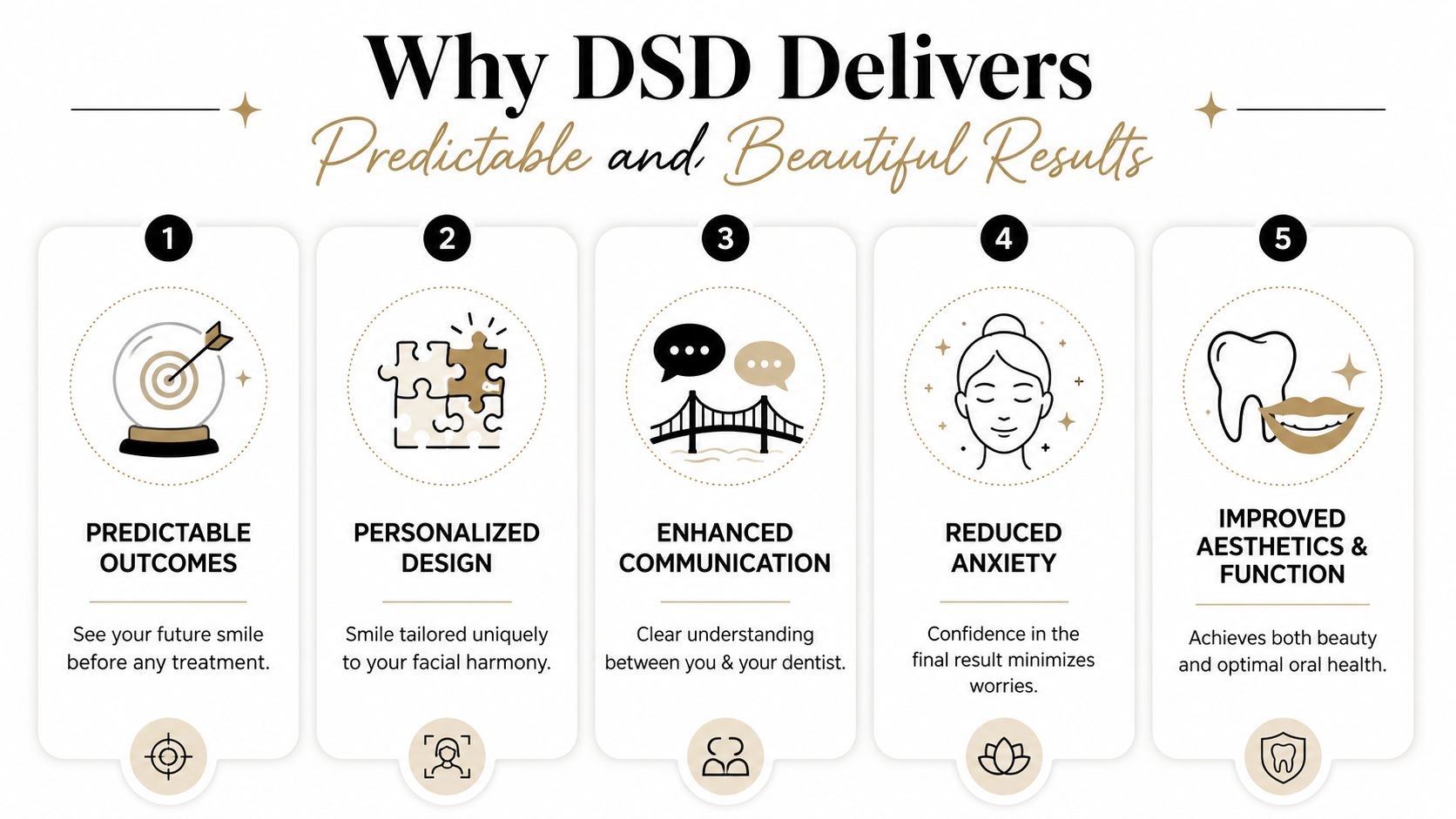
Digital planning has become a standard in modern cosmetic dentistry for a simple reason. It improves both the decision-making process and the clinical result.
The strongest value isn't that it makes treatment feel high-tech. It's that it makes treatment more understandable and more consistent.
What the evidence supports
Clinical data shows that Digital Smile Design enhances patient and clinician satisfaction by 58%, reaches 95% accuracy between digital previews and final outcomes, and produces a 70% reduction in clinical errors through integrated diagnostics. It also reduces overall treatment duration by 40 to 50%, according to this published review of clinical outcomes with DSD.
Those numbers are meaningful because they connect directly to what patients care about.
- Higher satisfaction means the planning conversation is clearer and the final look is more aligned with expectations.
- High preview-to-outcome accuracy means fewer surprises between what you approved and what you receive.
- Fewer clinical errors means a smoother path with less need for avoidable corrections.
- Shorter treatment duration often means less interruption to work, family life, and daily routine.
How those benefits show up in real appointments
In practice, predictability changes the experience as much as the outcome. Patients tend to ask better questions when they can see the design. Dentists and lab teams can work toward the same visual target. Adjustments happen earlier, when they are easier and less invasive.
Better communication is one of the hidden advantages of DSD. A patient can point to what feels right or off, and the clinical team can respond before treatment becomes difficult to change.
That also helps in mixed-treatment cases. Someone may begin by searching for a cosmetic dentist near me and end up needing a blend of restorative dentistry, whitening, contouring, or implant restoration. A digital plan makes it easier to sequence those decisions in a rational way.
Why this matters for comfort and confidence
From the patient's point of view, a more predictable process usually feels more comfortable. Anxiety often comes from uncertainty, not just from treatment itself. When the design is visible, discussed, and tested before commitment, many of the biggest fears lose momentum.
That doesn't remove the need for clinical skill. It supports it. The technology gives the team a stronger map. The patient benefits from clearer expectations, improved aesthetics, and a treatment path that feels less like guesswork.
Planning Your Smile Makeover in Chattanooga and Cleveland
The two practical questions patients ask most are simple. How long will this take, and how much will it cost?
The honest answer is that the timeline and investment depend on what the smile needs. A focused cosmetic case can move very differently from a plan that includes gum treatment, restorative dentistry, same-day crowns, or full-arch implant reconstruction.
Why timelines vary so much
Digital planning can make the front end of treatment more efficient, but not every case has the same clinical demands. Veneers on a small number of front teeth are very different from rebuilding a worn bite or coordinating implants with a full-arch design.
That difference matters because patients often want to know whether DSD is a separate charge or part of a larger treatment fee. In more complex cases, especially full-arch implant planning, the workflow becomes more time-intensive and the digital wax-up and mock-up stages can materially affect the timeline and cost. This discussion of cost and workflow transparency in DSD cases highlights why clear breakdowns matter.
What a transparent planning conversation should include
A useful consultation should explain:
- What treatment is being planned. Veneers, crowns, implants, whitening, or a combination.
- Which planning steps are included. Digital scans, smile design, mock-up, and any preparatory care.
- What may need to happen first. Cleaning and exams, gum treatment, tooth extraction, or stabilization of damaged teeth.
- Whether fees are bundled or separate. Especially in larger implant or full-mouth cases.
For patients reviewing costs ahead of time, this guide to smile makeover cost can help frame the right questions before a consultation.
If a treatment plan sounds simple on paper but the case is clinically complex, ask for the sequence in writing. Clarity reduces surprises.
Comfort matters just as much as planning
Cost and timing aren't the only barriers. Many adults who need cosmetic or restorative care also carry real dental anxiety. That's especially common when someone has postponed care, had a difficult experience elsewhere, or now needs treatment that goes beyond routine cleaning and exams.
A comfort-focused office can make a major difference here. Features like a comfort menu, calm communication, and sedation options help patients move forward without feeling overwhelmed. That matters for cosmetic visits, but it also matters for people searching for an emergency dentist, dealing with a broken tooth, or preparing for implant surgery after years of avoiding the dentist.
For people in Chattanooga, Cleveland, and nearby service areas, the best next step is usually a consultation that puts all of those pieces in one place. Smile goals, oral health, timeline, fees, and comfort options should be discussed together, not in fragments.
Your Digital Smile Design Questions Answered
Is the process painful
The planning phase usually isn't painful. Photos, video, exams, and digital scans are non-invasive. If treatment moves into veneers, crowns, implants, or other restorative procedures, comfort options and sedation discussions become part of the plan.
Am I a candidate for digital smile design
If you're considering cosmetic dentistry, restoring worn or damaged teeth, replacing missing teeth, or improving your smile before a major treatment plan, you may be a good candidate. The main requirement is a proper evaluation of teeth, gums, and bite before final decisions are made.
Can this help with more than veneers
Yes. The digital smile design process can support veneer planning, crown cases, implant restorations, full-arch treatment, and mixed cosmetic-restorative cases. It can also help patients compare conservative and extensive options more clearly.
Is the preview guaranteed to match the final result
The preview is a planning tool, not a guarantee. It can be highly accurate, but the final outcome still depends on careful execution, healthy tissues, and a bite that works properly over time. That's why the mock-up and clinical review are so important.
What if I also need general or urgent dental care
That's common. Some patients begin with cosmetic goals and also need cleaning and exams, periodontal treatment, a tooth extraction, restorative care, or help from an emergency dentist. Thorough planning allows those needs to be addressed in the right order.
If you're ready to explore a smile makeover with clear answers, realistic guidance, and a comfort-first experience, schedule a consultation with Winn Smiles. Patients in Cleveland, Chattanooga, and nearby Tennessee communities can get personalized recommendations for cosmetic dentistry, same-day crowns, dental implants, and everyday dental care in one place.