If you're searching for a dayton cosmetic dentist, there's a good chance something small has started to feel big. Maybe you smile with your lips closed in photos. Maybe you notice one dark tooth, a chip on the edge of a front tooth, or stains that don't seem to lift no matter what toothpaste you try. Many people wait years before asking about cosmetic dentistry because they assume it will be painful, expensive, or too dramatic.
Most of the time, the first step is simpler than people expect. A good cosmetic dentist doesn't start with a sales pitch. They start by asking what bothers you, what you want to keep natural, and how comfortable you feel in the dental chair.
Your Guide to Finding a Top Dayton Cosmetic Dentist
Many Dayton residents experience a similar realization. They catch their reflection in a car window, on a video call, or in a family photo and think, "I wish I liked my smile more." That feeling can come from stained teeth, small gaps, worn edges, older dental work, or one missing tooth that seems to draw all your attention.
Cosmetic dentistry exists to help with exactly that. It isn't just for celebrities or total smile makeovers. Many treatments are designed to make subtle improvements that still look like you, just more polished and confident.

The reason you see so many people exploring these options is simple. Demand is growing. The U.S. cosmetic dentistry market is projected to reach USD 33,803.5 million by 2030, with a 14.4% CAGR from 2023 to 2030, according to Grand View Research's U.S. cosmetic dentistry outlook. That tells you this isn't a fringe service anymore. It's become a mainstream part of dental care for people who want both health and appearance to improve together.
What patients usually want
Patients typically aren't asking for a "perfect" smile. They're asking for one or two specific changes:
- Brighter teeth that don't look dull in photos
- Straighter-looking front teeth without metal braces
- Repair for chips or worn edges that make teeth look older
- Natural replacements for missing teeth that don't stand out
- Crowns or veneers that match the rest of the smile
A good cosmetic plan should fit your face, your budget, and your comfort level. It shouldn't make you feel pressured into doing more than you want.
If you're comparing providers online, it's also helpful to understand how dental practices present their services and patient experience. This practical dental SEO guide gives a useful look at how dental information is organized online, which can help you sort through what you're seeing as a patient.
Why local experience matters
A cosmetic dentist near me search isn't only about distance. You want someone accessible for follow-ups, shade checks, and maintenance. Cosmetic work is personal. It's easier to move forward when your dentist is close by and communication feels easy.
For many Dayton patients, true relief comes when cosmetic dentistry stops feeling mysterious. Once you understand your options, the process becomes much less intimidating.
What Is Cosmetic Dentistry and How Can It Help You
Cosmetic dentistry is dental care focused on improving the appearance of your teeth, gums, and smile. That doesn't mean it's superficial. In many cases, cosmetic treatment also supports comfort, bite balance, and long-term function. But the main goal is visual improvement. Color, shape, spacing, symmetry, and proportion all matter.
An easy way to think about it is this. A general dentist protects your oral health. A restorative dentist rebuilds damaged teeth. A cosmetic dentist works like an architect for your smile, planning how each visible detail fits together.
What cosmetic dentistry can change
You don't need major dental problems to benefit from cosmetic care. Patients often come in with concerns like:
- Stains or discoloration that whitening toothpaste can't fix
- Small chips or uneven edges that catch the eye
- Gaps between teeth
- Teeth that look short, worn, or misshapen
- Old dental work that doesn't match natural enamel
- Mild crowding or alignment issues
- Missing teeth that affect appearance and confidence
Sometimes one treatment solves the problem. Sometimes a combination creates the best result. For example, a patient might whiten first, then use bonding on one chipped tooth so everything blends.
What makes it different from regular dental care
General dentistry is often about prevention and maintenance. Cleanings, exams, fillings, gum care, and dental X-rays keep your mouth healthy. Cosmetic dentistry starts with a different question: "What would you like to improve when you smile?"
That shift matters. A cosmetic dentist pays close attention to smile lines, tooth display, facial balance, and how dental materials reflect light. That's why two crowns can both be functional, but only one may look natural in the front of the mouth.
| Concern | Cosmetic approach |
|---|---|
| Yellow or stained teeth | Professional whitening |
| Chipped front tooth | Bonding or veneer |
| Uneven tooth shape | Veneer, bonding, or contouring |
| Missing tooth | Implant or bridge |
| Tooth that needs strength and a natural look | Crown |
Why whitening comes up so often
If you're new to cosmetic care, whitening is usually the easiest place to start. It's also the most common procedure. Teeth whitening has been undergone by 19% of U.S. adults, and the global teeth whitening market is forecasted to reach $10.6 billion by 2030, according to this overview of cosmetic dentistry statistics and whitening trends.
That popularity makes sense. Color changes are easy to notice. If your teeth are healthy but look dull, whitening can make a meaningful difference without changing the shape of your smile.
Practical rule: Cosmetic dentistry works best when it's built around one clear goal. "I want my smile brighter" or "I want this chipped tooth fixed" gives your dentist something precise to design around.
When cosmetic care should wait
People sometimes get confused about treatment priorities. You might want veneers or whitening, but if you also have untreated decay, gum inflammation, or a painful tooth, those issues usually need attention first. Cosmetic care looks best and lasts longer when the foundation is healthy.
That doesn't mean your goals have to go on hold for long. It just means your dentist should be honest about sequence. Healthy gums, stable teeth, and a clean bite give cosmetic work the best chance of looking natural and lasting well.
Cosmetic care can be subtle
One of the biggest fears patients have is looking fake. In reality, the best cosmetic dentistry often goes unnoticed by everyone except the patient. Friends may just say you look rested, happier, or more confident.
That usually comes from restraint. Whitening to a believable shade. Smoothing one edge instead of changing every tooth. Choosing veneers only where they add value. Good cosmetic dentistry isn't about making every smile look the same. It's about helping your smile look healthy, balanced, and like it belongs to you.
A Closer Look at Common Cosmetic Procedures in Dayton
People often search for a cosmetic dentist near me because they know they want a better smile, but they don't know which treatment fits their situation. That's normal. The names can sound technical, and many procedures overlap.
The simplest way to understand your options is to look at the problem first, then the tool used to fix it.
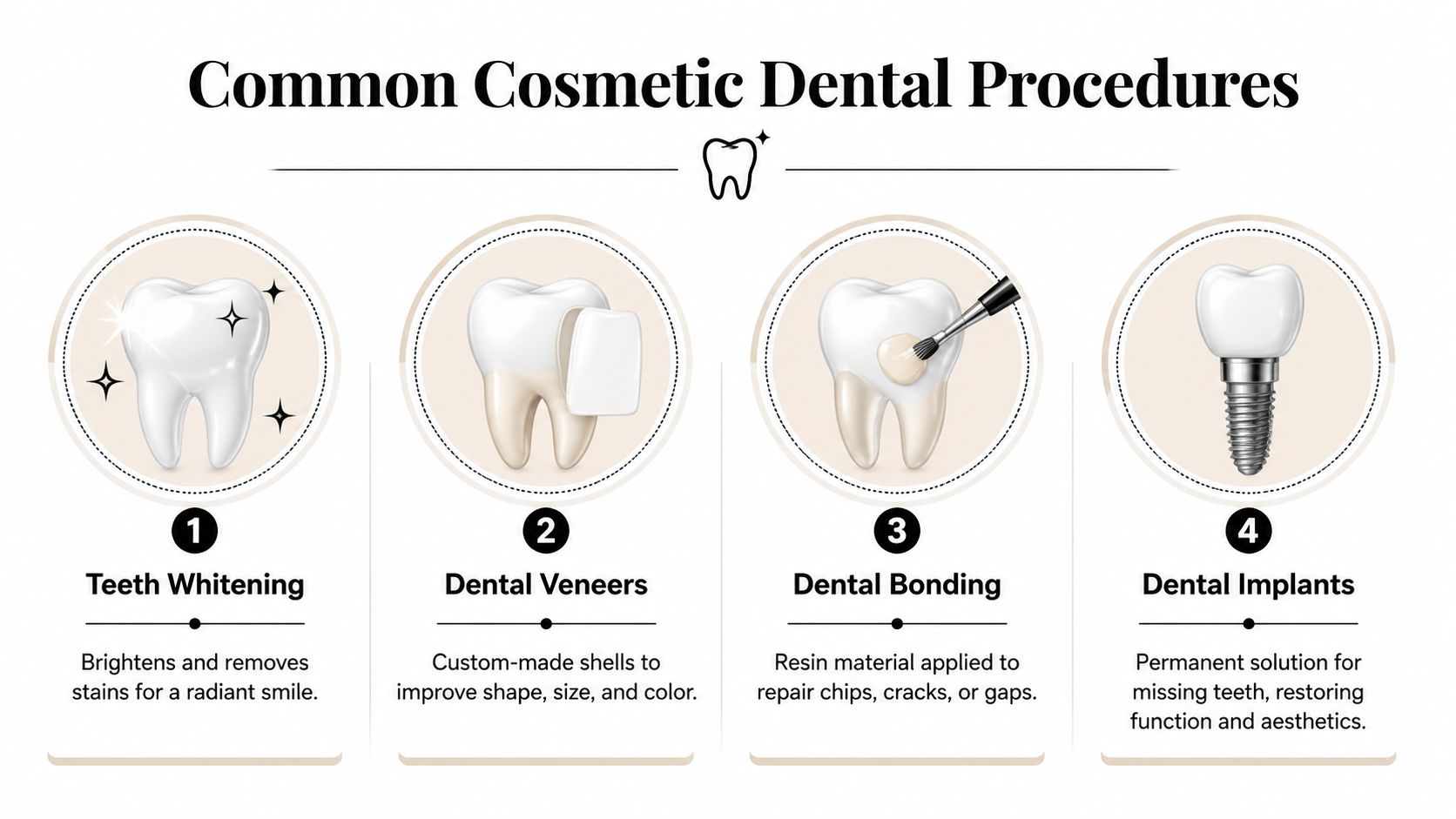
Professional teeth whitening
Whitening is usually the first cosmetic treatment people try because it changes the overall look of the smile quickly. It works best for external stains from coffee, tea, red wine, tobacco, or normal aging.
In-office whitening is more controlled than store-bought products. Your dentist checks for gum recession, sensitivity, old fillings, and uneven color before treatment. That matters because not every dark tooth responds the same way, and existing crowns or bonding won't whiten like natural enamel.
Whitening may be a strong option if:
- Your teeth are healthy and you mainly dislike the color
- You have an event coming up, such as photos or a wedding
- You want a simple starting point before considering veneers or bonding
If your teeth are dark because of internal discoloration or old restorations, whitening alone may not create an even result. That's where a cosmetic consultation helps.
Porcelain veneers
Veneers are thin coverings placed on the front of teeth to improve shape, color, size, and symmetry. They're often used for front teeth that are chipped, worn, uneven, slightly misaligned, or resistant to whitening.
Patients sometimes think veneers are only for dramatic smile makeovers. They can be, but they can also be conservative. A few carefully designed veneers can correct the teeth that draw attention without changing your whole smile.
A typical veneer process includes:
- Planning the look with photos, shade selection, and discussion
- Preparing the teeth only as needed
- Wearing temporary veneers in some cases
- Bonding the final veneers and refining the fit
If you're curious about the mechanics, this explanation of how veneers work gives a helpful patient-friendly overview.
Veneers are best when the shape of the tooth is the problem. Whitening is best when the color is the problem. Many people need help telling those apart.
Dental bonding
Bonding uses tooth-colored resin to reshape or repair a tooth. It's often a good fit for small chips, narrow gaps, rough edges, or one tooth that looks slightly off compared with the others.
This option appeals to patients who want a less invasive change. Bonding is usually completed in one visit, and it allows the dentist to sculpt details directly on the tooth. It's especially useful when the issue is small but visually distracting.
Bonding can be a smart choice when you want to:
- Repair a minor chip
- Close a small gap
- Soften an uneven edge
- Improve one tooth without treating several
The tradeoff is that bonding may not have the same long-term stain resistance as porcelain. It can still look excellent, but it usually requires thoughtful maintenance.
Clear aligners and Invisalign
Some cosmetic concerns are really alignment concerns. A tooth may look too prominent, crowded, or tilted, even if the enamel itself is healthy. In those cases, moving the teeth may be better than covering them.
Clear aligners like Invisalign can improve spacing and position in a discreet way. Patients often like that aligners don't call attention to treatment and can fit into work and social life more easily than traditional braces.
Clear aligners may help if you have:
| Smile concern | Why aligners may help |
|---|---|
| Mild crowding | Teeth can be repositioned rather than reshaped |
| Small gaps | Spaces can be closed more conservatively |
| Teeth that look uneven in photos | Alignment often improves symmetry |
| Bite issues affecting wear | Positioning can reduce strain on edges |
This is a good example of why cosmetic dentistry shouldn't be rushed. Covering a crooked tooth with a veneer may be possible, but moving it first may preserve more natural tooth structure.
Dental implants
If you're searching for dental implants near me, you're likely dealing with more than appearance. A missing tooth can affect chewing, speech, and the way the rest of the smile feels balanced.
A dental implant replaces the root of a missing tooth and supports a restoration on top. From a cosmetic perspective, the goal is for the replacement to blend with neighboring teeth in color, shape, and gum contour.
Implants can be used for:
- One missing tooth
- Several missing teeth
- A more complete rebuilding plan
They aren't the right fit for every person right away. Bone support, gum health, and overall treatment timing matter. But for many adults, implants are one of the most natural-looking long-term options for tooth replacement.
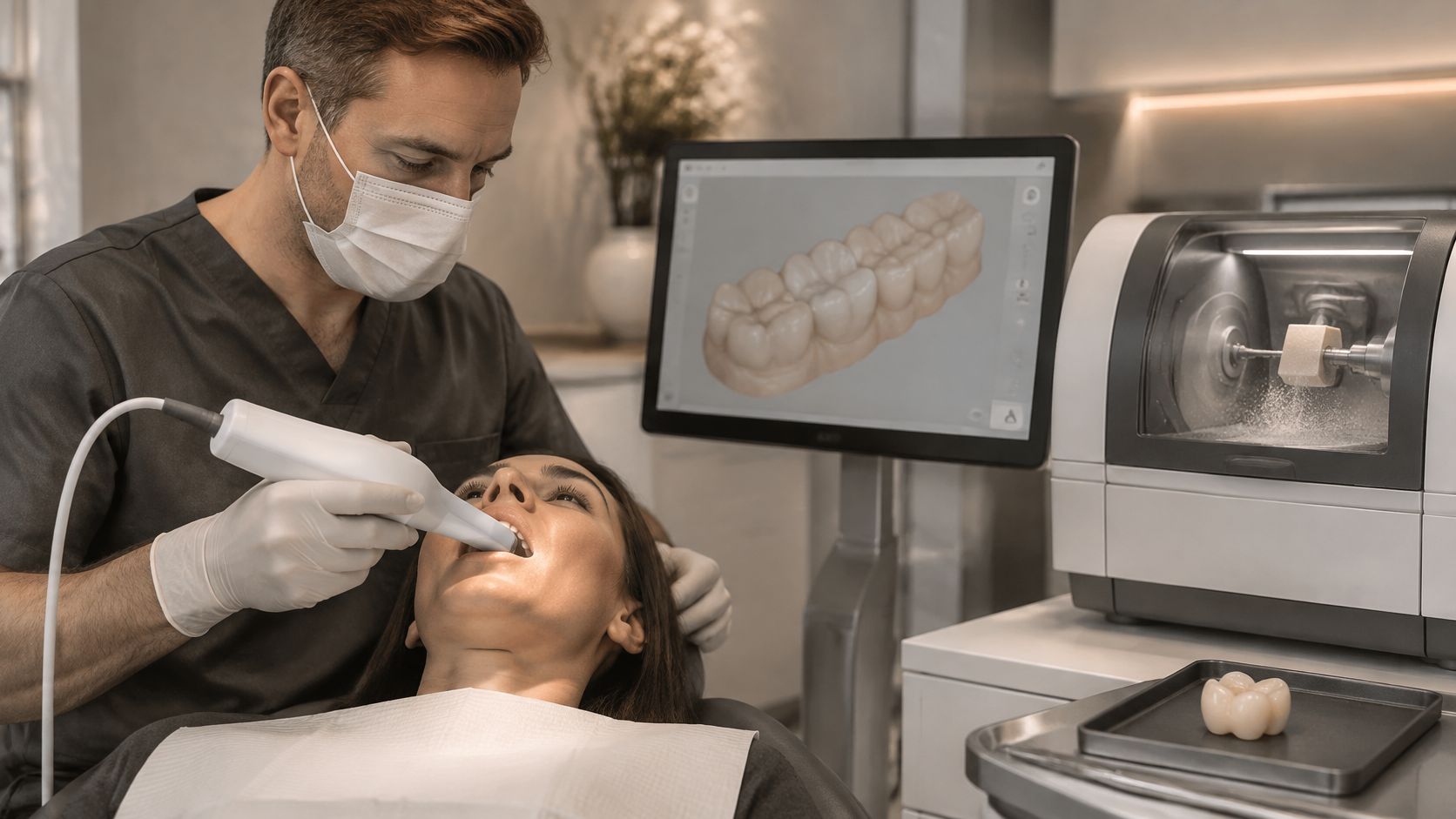
Same-day crowns with digital design
Crowns are often thought of as restorative, but they can be strongly cosmetic too, especially when a visible tooth needs both strength and a better appearance. The old model involved impressions, a temporary crown, and waiting for the lab. Many modern practices use digital systems instead.
In leading Dayton cosmetic dentistry practices, CAD/CAM technology allows same-day crowns with 50 to 100 microns of accuracy, reduces treatment time from weeks to hours, and has shown 5-year survival rates exceeding 95%, as described by South Dayton Smiles' CAD/CAM technology overview.
Why that technology matters to patients
Patients don't usually care about milling units and scanners for their own sake. They care because the technology changes the experience.
A digital scan is cleaner and easier than traditional impressions for many people. A same-day crown often means fewer appointments, less time in a temporary, and a faster return to normal eating and speaking. If dental visits make you anxious, reducing the number of steps can make treatment feel much more manageable.
Laser dentistry and comfort-focused tools
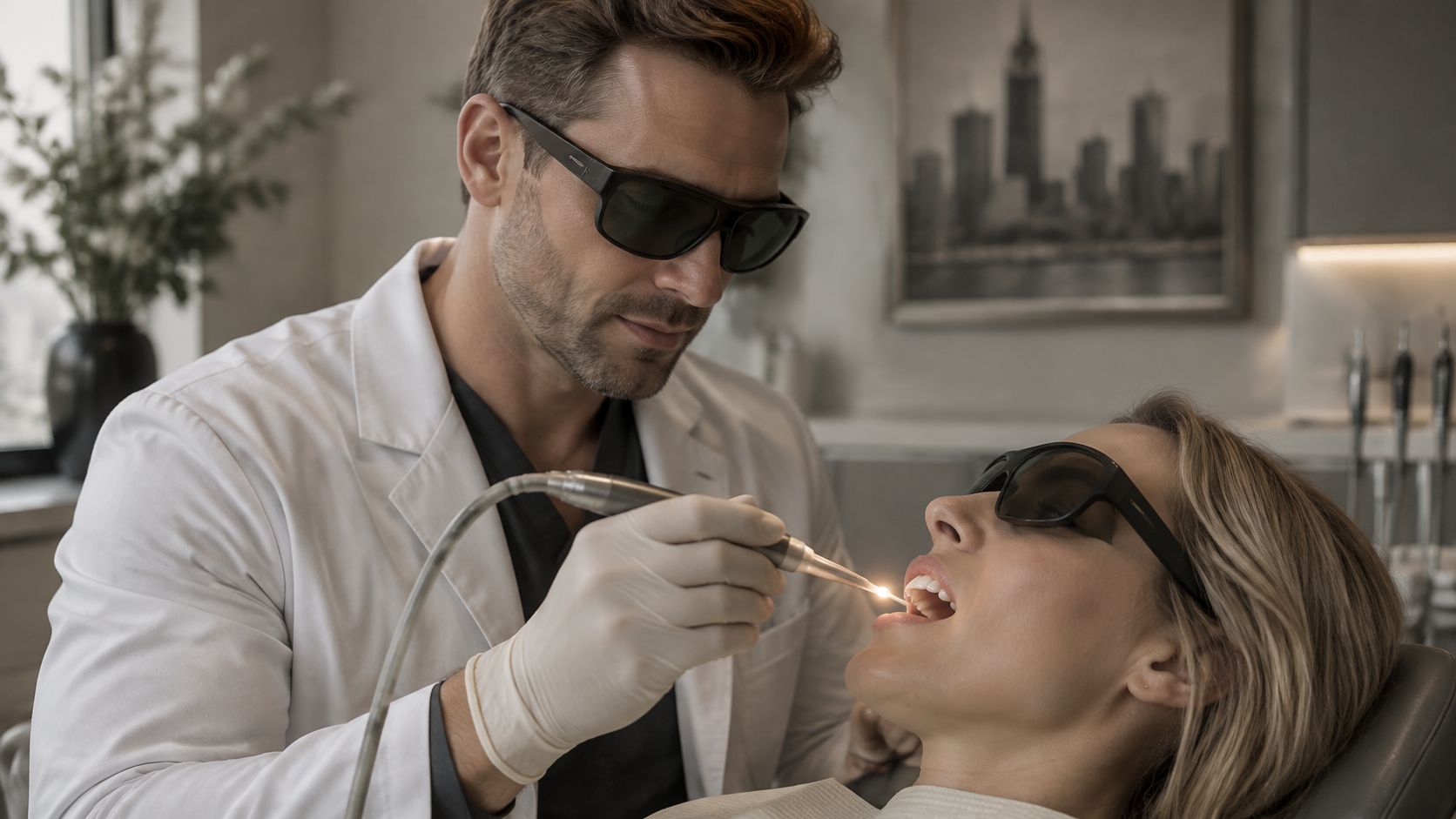
Some patients hesitate over cosmetic work not because they dislike the result, but because they dread the process. That's where modern tools can make a major difference. Dental lasers can support precise soft-tissue treatment in selected cases, and digital scanners can replace materials that many patients find uncomfortable.
These tools don't eliminate every sensation, and they aren't used for every procedure. But they often make treatment cleaner, calmer, and easier to tolerate. For people who put off care for years, that can be the deciding factor.
How to Choose the Right Cosmetic Dentist in Dayton
Choosing the right dayton cosmetic dentist isn't just about finding the office with the nicest website or the longest list of services. Cosmetic dentistry is personal work. You're trusting someone with your appearance, your comfort, and often your confidence.
That means technical skill matters. But it isn't enough by itself.

Look for proof, not promises
A dentist may offer veneers, whitening, implants, and same-day crowns. That tells you what they do. It doesn't tell you how well they do it.
Ask to see real before-and-after cases. Pay attention to whether the results look natural, whether the tooth shapes fit the patient's face, and whether the work seems consistent across different smiles. You can also learn a lot from how the office explains options. A thoughtful dentist usually talks in terms of tradeoffs, not one-size-fits-all answers.
Useful things to evaluate include:
- Training and continuing education in cosmetic procedures
- Experience with multiple treatment types, not just one
- Digital planning tools that help preview results
- Clear explanations of what each option can and can't do
- A willingness to preserve healthy tooth structure when possible
A resource like how to find a good cosmetic dentist can help you compare offices with a more critical eye.
Comfort should be part of the standard
This is the piece many patients need most. A dentist can be talented and still not be the right fit if they don't take fear seriously.
Many Dayton dental sites list cosmetic services but don't explain anxiety support. That's a real gap, especially since 40% to 50% of Americans report dental phobia, as noted on Dr. Sato's cosmetic dentistry page discussing this content gap. If you've delayed treatment because you're nervous, embarrassed, or worried about discomfort, that concern deserves direct answers.
The right cosmetic dentist doesn't act like fear is a small issue. They build the visit around helping you feel safe enough to move forward.
Questions worth asking at a consultation
Some of the most important questions aren't about porcelain brands or whitening gels. They're about experience in the chair.
- What do you do for anxious patients
- Do you offer nitrous oxide or oral sedation
- Can digital scans replace traditional impressions
- How do you help patients who gag easily
- What happens if I need breaks during treatment
The answers tell you a lot about the office culture. A comfort-first practice will answer calmly and specifically, not vaguely.
For a closer look at what patients often want from a modern dental visit, this short video is helpful.
Signs you've found a better fit
A strong cosmetic consultation often feels collaborative. The dentist listens first. They ask what bothers you most. They explain what needs treatment now, what can wait, and what may not be necessary at all.
That's especially important if you're also searching terms like dentist near me, dentist in Dayton, Ohio, or even emergency dentist, because many patients don't arrive with purely cosmetic needs. They may need a crown on a broken tooth, a replacement for a missing tooth, or treatment after years of avoiding care. The right dentist can handle appearance and health together without making you feel judged.
Understanding Costs Financing and Your Smile Investment
Cosmetic dentistry costs vary because smiles vary. One person may need simple whitening. Another may need veneers on several teeth, a crown that blends with the front smile line, or implant planning before cosmetic finishing. Materials, lab work, treatment time, and complexity all affect the final cost.
That uncertainty can make people hesitate. They want a better smile, but they don't want surprises.
Why prices can differ so much
A front tooth is different from a back tooth. A tiny chip repair is different from rebuilding a worn smile. Even among crowns, the material and design approach matter. A carefully crafted restoration that looks natural under daylight and office lighting takes planning.
This is one reason quality matters more than bargain pricing. In Dayton cosmetic dentistry, porcelain crowns can reach 900 to 1200 MPa in flexural strength and show 98% 10-year aesthetic stability, according to North Main Dental's cosmetic dentistry information. In plain terms, that's why many patients see a well-made crown as more than a short-term fix. It supports function and appearance over time.
A better way to think about value
Some cosmetic choices are elective. That part is true. But "elective" doesn't mean unimportant.
When people invest in cosmetic dentistry, they're often paying for more than enamel and porcelain. They're paying for comfort in photos, less self-consciousness at work, the ability to smile without covering their mouth, and in many cases the confidence to stop thinking about their teeth every day.
Key takeaway: The cheapest option can become the most expensive if it doesn't look right, feels bulky, or has to be redone.
Financing and planning questions to ask
Most offices discuss payment options during the consultation. That conversation should feel straightforward, not awkward. If you're comparing providers, ask:
- Whether they offer phased treatment so you can spread care over time
- Whether third-party financing is available
- Which parts may have insurance involvement if treatment also restores function
- Whether you'll receive a written treatment plan before you commit
A good financial discussion should lower stress, not add to it. When patients understand the plan, they can make decisions carefully instead of putting off care out of uncertainty.
Your First Cosmetic Dentistry Visit What to Expect
Most first visits are much more conversational than people imagine. You don't walk in and get pushed into veneers or whitening. You sit down, talk about what bothers you, and explain what you'd like to change.
A calm cosmetic consultation usually starts with simple questions. What do you notice first when you look at your smile. Is it color, spacing, a broken tooth, old dental work, or something else. Your dentist may take photos, review your bite, and check that your teeth and gums are healthy enough for cosmetic treatment.

What usually happens during the appointment
Many offices use digital scans instead of traditional impressions, which makes the visit easier for patients who gag easily or feel nervous. From there, the dentist can show you what's possible and recommend one option or a few.
You should expect:
- A conversation about your goals, not just your teeth
- An oral health evaluation to look for issues that affect treatment
- Photos or digital scanning to help with planning
- A realistic discussion of options with pros and cons
- Clear next steps if you decide to move forward
You don't need to know the right treatment before you arrive. That's your dentist's job. Your job is to explain what you want to feel different when you smile.
A good first visit should leave you informed, not pressured. If you've been waiting to ask about a brighter, straighter, or more complete smile, scheduling that consultation is often the hardest part. Once you're in the chair with someone who listens well, the path usually becomes much clearer.
Frequently Asked Questions About Cosmetic Dentistry in Dayton
Does cosmetic dentistry hurt
Most cosmetic procedures are more comfortable than patients expect. Whitening can cause temporary sensitivity for some people. Bonding is usually very gentle. Veneers, crowns, and implant-related care vary based on the work involved. If you're anxious, ask about sedation options, breaks during treatment, and digital tools that make visits easier.
How do I know which treatment is right for me
Start with the problem you see most clearly. If you dislike the color, whitening may help. If the shape is the issue, bonding or veneers may fit better. If a tooth is missing, implants or other replacement options may be part of the discussion. A consultation helps sort out whether the concern is color, shape, alignment, or structure.
Will my results look natural
They should. Natural cosmetic dentistry pays attention to tooth size, shape, surface texture, and shade matching. The goal isn't to make your teeth look obviously "done." It's to make them look healthy, balanced, and believable with your face.
Can I combine treatments
Yes. Many smile improvements involve more than one approach. A patient might whiten first, then place bonding on one tooth, or align teeth before restoring worn edges. Combining procedures can create a more balanced result when done with a clear plan.
How long do cosmetic results last
That depends on the treatment, your bite, home care, staining habits, and whether you grind your teeth. Porcelain generally holds polish and shape well, while whitening may need touch-ups. Your dentist should explain maintenance before treatment begins so expectations are clear.
What if I feel embarrassed about the condition of my teeth
You're not alone, and you won't shock your dentist. People seek cosmetic dentistry after years of avoiding photos, dental visits, or even smiling freely. A good office will focus on solutions, not judgment. If fear or embarrassment has kept you away, say that at the start. It often changes the whole tone of the visit for the better.
If you're ready to explore a brighter, more natural-looking smile with comfort-focused care, Winn Smiles offers cosmetic dentistry, dental implants, same-day crowns, sedation options, and patient-first technology for adults and families in Cleveland and Chattanooga, Tennessee. Whether you're looking for a cosmetic dentist near me, need help with a chipped or missing tooth, or want a second opinion on your smile goals, their team can help you take the next step with clarity and confidence.