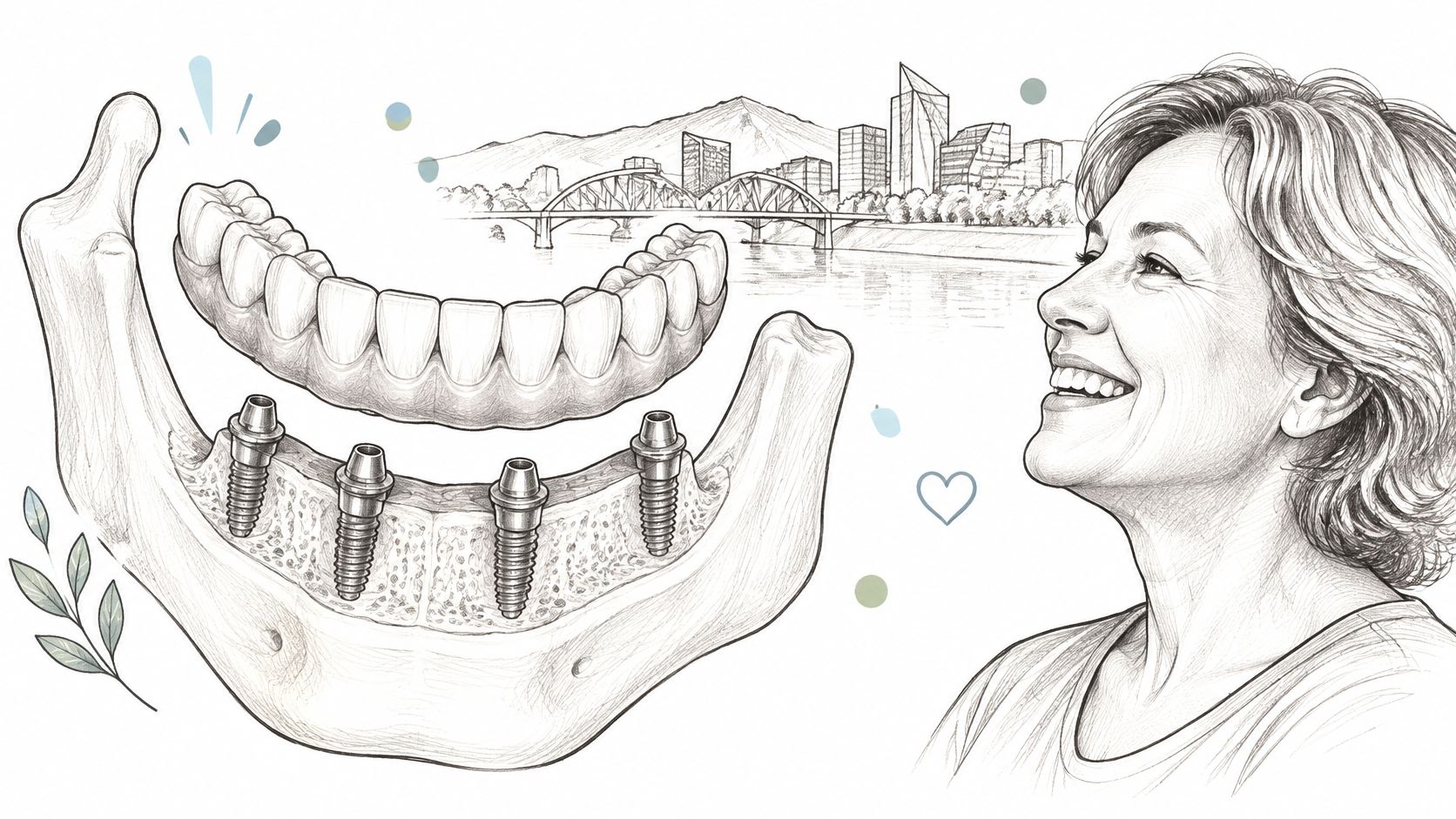
Missing a tooth has a way of making ordinary things harder. Steak turns into a chore, apples start getting avoided, and a loose denture can make a family photo feel nerve-wracking. Dental implants meaning is easier to grasp than it sounds. A dental implant is an artificial tooth root set into the jawbone, and it holds a custom crown, bridge, or denture in place. You end up with something much sturdier than a set of false teeth. If you are searching for a dentist near me in Cleveland or Chattanooga, Winn Smiles offers that care from two offices that are easy to reach, and our team is also here for sudden dental emergencies.
Dental Implants Meaning for Your Smile
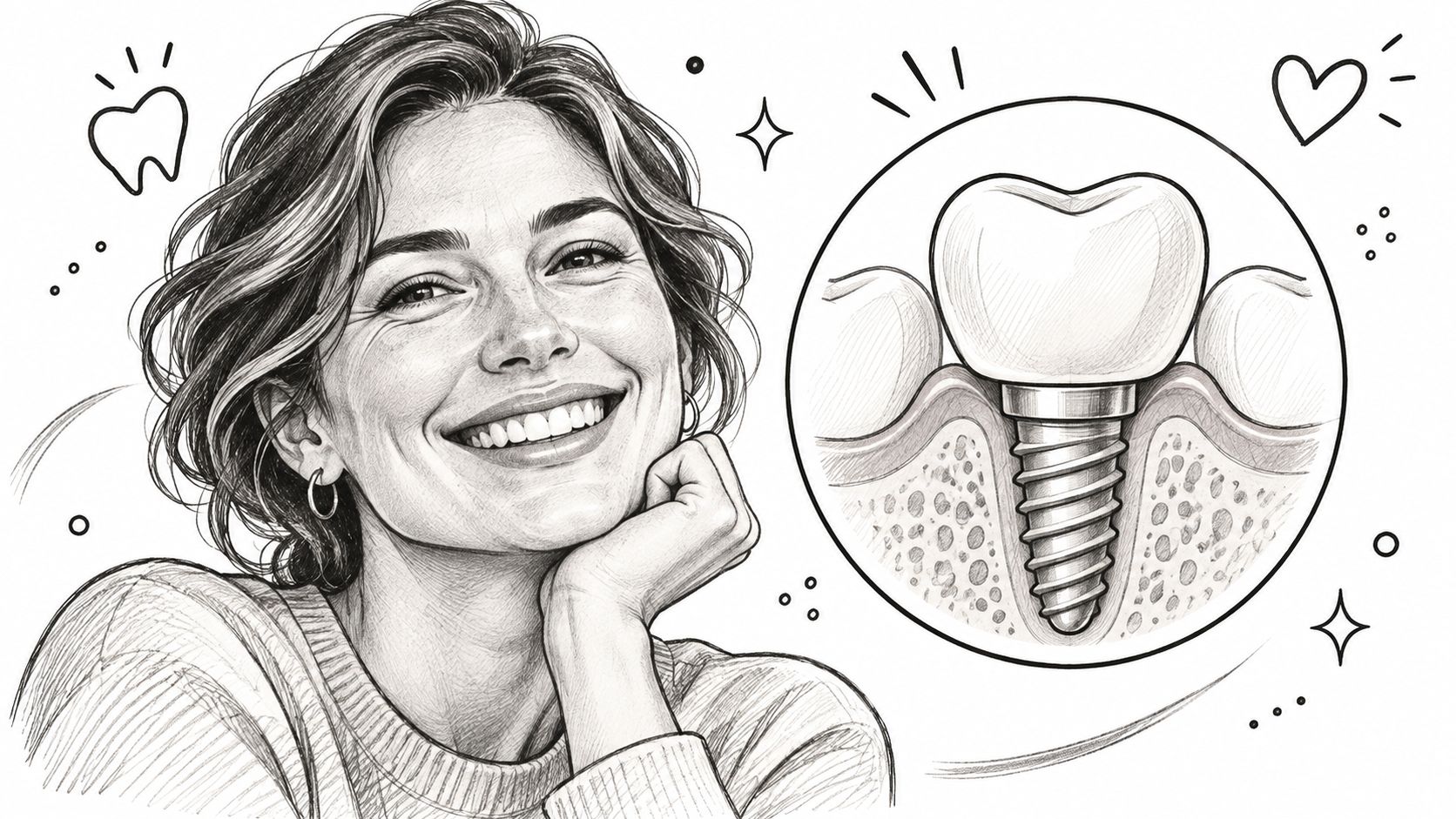
A gap does more than change how your smile looks. The teeth next to it may start drifting, chewing can feel lopsided, and plenty of adults in Cleveland, TN and Chattanooga, TN begin searching for dental implants near me only after a tooth is gone or a denture slips at dinner.
A dental implant is an artificial tooth root set in the jawbone to hold a custom crown, bridge, or denture.
| Piece | Plain-language role |
|---|---|
| Implant post | New root held in the jawbone |
| Custom restoration | Crown, bridge, or denture you see and use |
| Everyday purpose | A stable bite instead of a tooth that only looks present |
Why the Meaning Goes Beyond False Teeth
Removable teeth usually sit on top of the gums and depend on suction or adhesive to stay put. An implant works differently because it anchors into bone. That is why Winn Smiles recommends implants to replace a single tooth or support a full arch, not as a clip-on smile.
Most patients notice the daily frustration first. They quietly skip apples, hide a gap in photos, or feel a tooth tipping into the empty space. Those signs are a good reason to book a local exam before deciding on anything.
This guide walks through how an implant takes the place of a root, how the replacement options compare, and why supporting the jaw matters for long-term comfort. Later sections cover what a visit looks like in Cleveland or Chattanooga, everyday care, and how to book a consultation with Winn Smiles.
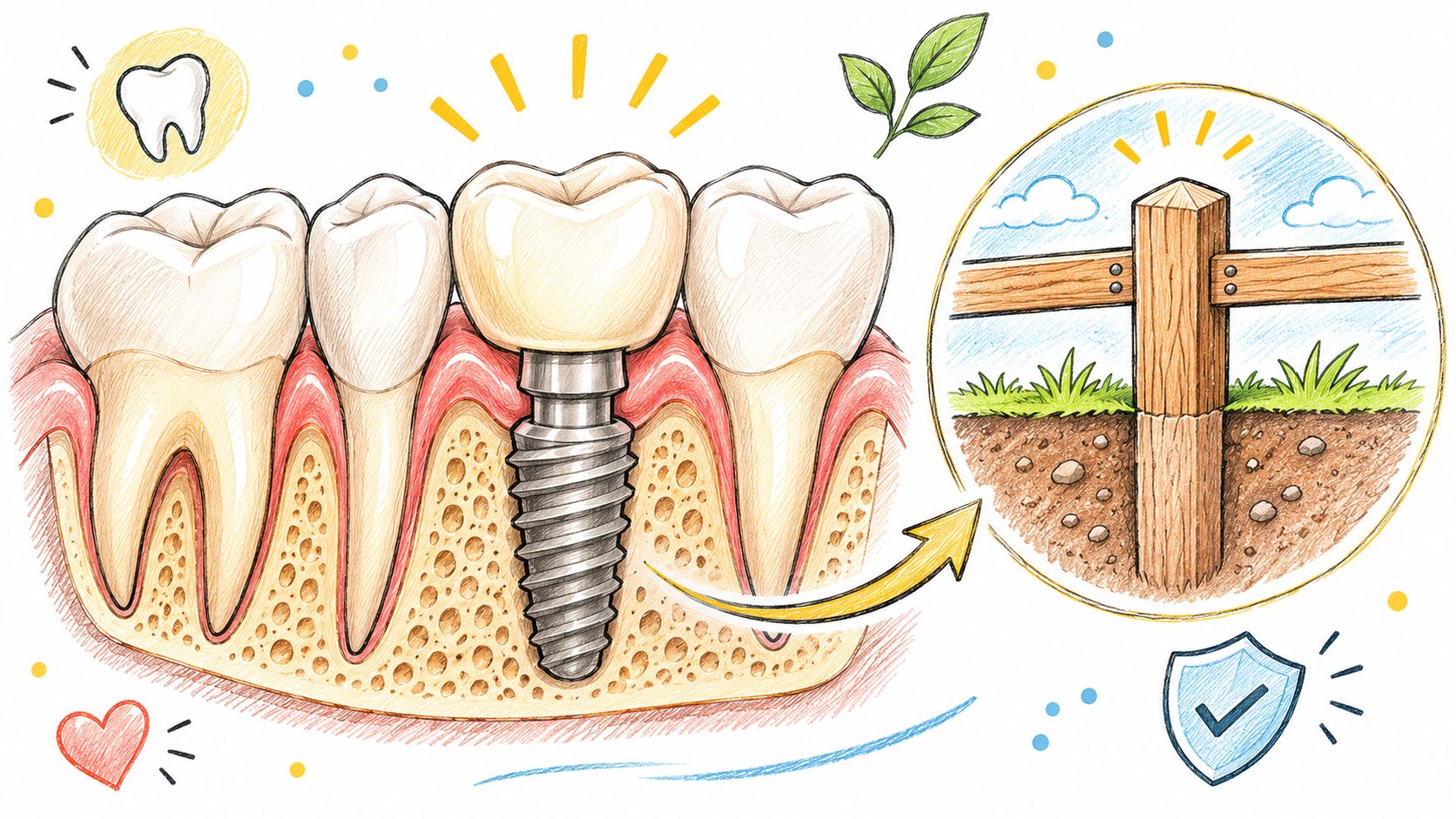
Picture a fence post sunk deep into the ground, then compare it with a sign resting on the soil. The post stays put through wind and weather because it's anchored. A replacement tooth needs that same kind of anchor.
How an Implant Replaces a Missing Tooth Root
That's the core idea behind dental implants. The visible tooth is only part of the story. The implant sits inside the jawbone, filling the spot where a natural root used to be, rather than just resting against the gums.
Patients in Cleveland, TN, and Chattanooga, TN, often find that this distinction makes treatment conversations easier to follow. You aren't only choosing a tooth. You're also choosing the support that will hold it.
- Titanium post is the screw-shaped piece placed in the jawbone to act as the replacement root.
- Abutment is the small connector that links the post to the tooth above it.
- Custom crown is the visible, tooth-shaped part, made to match your smile and bite.
The diagram below shows how these three pieces fit together, how bone holds them in place, and which kinds of restorations implants can support.

Here's the key point: the crown handles the chewing, while the implant and the bone beneath it do the heavy lifting out of sight.
How Bone Anchors the Implant
Once the post is placed, the surrounding bone slowly grows right up against the titanium. All of this happens under the gums, so you can't judge how it's going by how your mouth feels.
Osseointegration is the close bond between bone and titanium that locks an implant into the jaw, so it's held by bone rather than simply stuck in place.
At Winn Smiles, the team monitors integration over the following months before the final custom crown goes on. That wait matters. It gives the foundation time to settle before it has to handle everyday chewing.
- The implant goes into the planned position.
- Bone heals around the surface while the team checks progress.
- The final crown is attached once integration is complete.
That's why placement and the finished tooth are separate stages. The waiting period has a purpose, even when you're eager to see the finished smile.
From Early Replacements to Modern Support
People were trying to replace missing teeth with shells and stones more than 2,000 years ago. Much later, Per-Ingvar Brånemark's early observations of bone growing closely against titanium laid the biological groundwork for modern implants.
Removable appliances often rely on adhesive and suction to stay put. An implant-supported restoration gets its stability from the jawbone instead. Maintenance still matters, of course, but the support comes from a very different place.
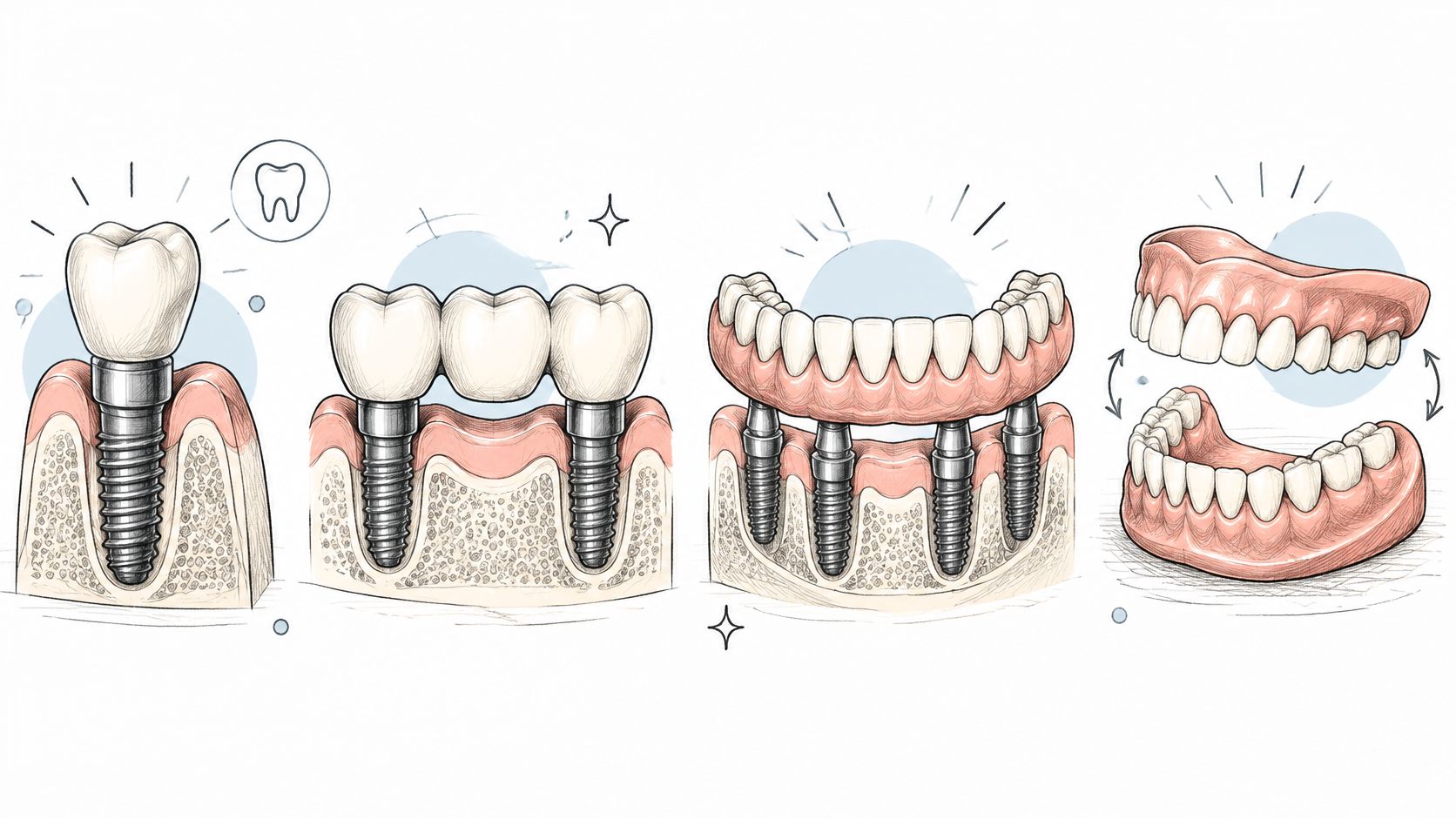
A single implant can support one crown, while several implants can hold a bridge or a full arch. A consultation with Winn Smiles in Cleveland or Chattanooga is a good way to figure out which setup suits your missing teeth, your bone, and your goals.
Once you know what dental implants are, the next question is a practical one. Which option fits your missing teeth, your daily routine, and your jawbone? Tooth loss is more common than many adults in Cleveland, TN, and Chattanooga, TN expect. National surveillance data shows that U.S. adults aged 20 to 64 with at least one decayed, missing, or filled tooth averaged 2.0 teeth missing because of disease. A reported 69% of adults aged 35 to 44 had lost at least one permanent tooth to an accident, gum disease, a failed root canal, or decay.
The Main Replacement Paths at a Glance
The table below lays out the realistic choices side by side. It won't tell you that one option works for every mouth, but it gives you a solid starting point for that conversation.
| Option | How It Is Held in Place | What It Replaces | Effect on Jawbone |
|---|---|---|---|
| Implant-supported crown | Titanium post fused with bone | One missing tooth | Helps maintain bone where the root used to be |
| Implant-supported bridge | Two or more implants hold several teeth | A short gap of missing teeth | Spreads support across the jaw |
| Full-arch implant solution | Implants in the jawbone anchor a full set | Most or all teeth in one arch | Supports bone structure across the whole arch |
| Traditional removable dentures | Suction, adhesive, and gum support | A full or partial set | Does not replace tooth roots |
A full-arch implant solution at Winn Smiles is anchored to implants placed in the jawbone. Traditional dentures, on the other hand, depend on suction and adhesive. You notice that difference every time you bite into an apple, laugh at a joke, or carry on a conversation.
Many patients describe the switch as moving from managing a denture to simply using their teeth.
That contrast is worth bringing up at your next consultation.
Why the Anchoring Difference Matters
Think of it like the difference between a tent pegged into the ground and one that just sits on top of the grass. An implant-supported crown feels closer to a natural tooth because chewing force travels down into the bone, just as it did through the original root. A bridge spreads that load across several implants instead of putting it all on one spot. A full arch uses multiple implants to hold a complete set steady.
Removable dentures still have a real place, especially when surgery isn't the right call for your health. But because they rest on the gums, slipping and sore spots can become part of everyday life.
Your search habits matter here too. Many people first look up how patients search for emergency dentists after a tooth cracks or a denture starts rubbing a sore spot, and that moment often pushes them to ask about longer-lasting options.
Factors That Shape Candidacy
Not everyone follows the same path. A few things tend to shape what's possible for you:
- Overall health
- Smoking habits
- The condition of your gums
- Your bone density
When bone volume is low, in-house bone grafting and sinus lifts at Winn Smiles can help build a stronger foundation before the implant goes in.
A consultation is the best way to see which option makes sense for you. If you want to understand the cost side before you book, take a look at our guide to tooth replacement options and cost first.

The real dental implants meaning becomes obvious at the dinner table. A fake tooth that only fills a gap still leaves you working around it every time you eat.
An implant gives you a root again. Chewing force travels down into the jaw, the same way it did when your natural root was doing the job. That is why biting into corn on the cob, or ordering your usual dish at a Chattanooga restaurant, can feel ordinary again instead of something you have to plan around.
Restored Chewing and Facial Support
A missing tooth does more than change how your smile looks in photos. The teeth next to the gap can slowly drift, and your bite may start feeling lopsided on one side.
- Chewing becomes more even, so steak, apples, and corn stop feeling like a project.
- Speech stays clearer, since the tooth does not shift around while you talk.
- Facial support comes from a root that holds the shape of your jaw, not just a tooth resting on the gum.
Without a root, the bone under an empty space slowly shrinks. Dental implants help slow jaw bone loss and support the bone structure that often fades after a tooth is missing. That is why the benefit goes deeper than appearance.
An implant is less like a fake tooth and more like a new root that keeps your jaw doing its job.
Many people searching for a dentist near me in Cleveland, TN or Chattanooga, TN notice the difference once they stop avoiding certain foods. It is often the small, everyday moments that tell them it worked.
How Long Implants Actually Last
Implants are known for lasting a long time, but that does not mean every part of the tooth lasts forever.
A large electronic dental-registry study of 158,824 implants reported 97.79% overall survival and a 2.21% failure rate. Early failures during osseointegration, the healing stage when bone grows around the implant, happened in 1.56% of implants.
A major review of long-term research found success commonly ranging from 90% to 95% at 10 years in healthy patients.
The implant itself is built for lifetime use. With good care, it rarely needs replacing. The crown or restoration may need replacing after roughly 10 to 15 years of normal wear, so think of it like the part of a car you expect to swap out sooner than the frame.
Implants cannot get cavities, which surprises a lot of people. The gums around them can still become inflamed, though, so brushing, flossing, and regular checkups still matter.
If you care about long-term oral health, an implant fits best inside a broader routine. You can browse oral hygiene supplies for everyday tools, then keep up with regular exams at Winn Smiles.
If a gap is already changing how you eat, a local exam is the logical next step. Winn Smiles can look at your chewing, your bone support, and what a plan would look like for your mouth in Cleveland or Chattanooga.
Booking an implant visit should feel clear long before you sit in the chair. At Winn Smiles, that first appointment is where you find out what dental implants actually mean for your own mouth, not just how they look on a diagram.
Your First Appointment and Treatment Plan
The visit starts with a full exam and 3D imaging of the jaw, along with any dental x-rays your team needs. Those scans show how much bone you have, where the sinuses sit, and a safe spot for the implant post.
Then comes the part many people value most: a real conversation. Maybe you want one missing tooth replaced. Maybe you're tired of a full set of dentures that shifts every time you laugh.
You walk out with a personal treatment plan. It lays out each step, how long healing takes, and whether your final result will be a crown, a bridge, or a denture.
A good first visit combines 3D imaging, an honest talk about goals, and a plan built around your bite.
When the Jaw Needs More Bone
Thin bone doesn't always rule you out. With in-house bone grafting and sinus lifts, many adults in Cleveland, TN and Chattanooga, TN can build the support they need to qualify.
Placement only happens once that foundation is solid. The post then spends the next several months fusing with the jawbone, a process called osseointegration. The team keeps an eye on healing before any visible tooth goes in.
Think of it like pouring a foundation before framing a house. The custom crown, bridge, or denture only gets attached once that bond is complete. Rushing it would put chewing force on a root that hasn't finished settling.
A Numbered Look at the Patient Path
- Scan and exam. 3D images map your jaw before anyone talks about surgery.
- Goals on the table. Single-tooth and full-arch options are compared in plain language.
- Bone support if needed. Grafting or a sinus lift may come before placement.
- Healing checks. The team follows osseointegration over the following months.
- Finished restoration. Your custom tooth is secured once integration is done.
How the Offices Ease Dental Anxiety
A lot of adults put off care simply because the chair feels stressful. The Winn Smiles offices are bright and open, and a comfort menu gives you small choices that make the hour easier.
Sedation can be matched to how nervous you feel that day. The team walks you through each step and treats you like family rather than a file number.
Other Care and Clear Next Steps
You can also handle related care under the same roof. That covers tooth extraction, same-day crowns, restorative and cosmetic work, teeth whitening, cleanings and exams, and emergency dentistry for sudden pain.
Costs get discussed openly at both locations, and hours are set to fit a workday. Free consultations and second opinions are available for select services.
If you're wondering whether an implant plan fits your health, your bone, and your budget, a visit is the quickest way to find out, whether you're in Cleveland or Chattanooga.
Once the crown is seated, the story of your implant moves from the surgeon's chair to your bathroom sink. The implant itself can't develop a cavity, but the gums around it still can, so your daily habits matter more than many people expect.
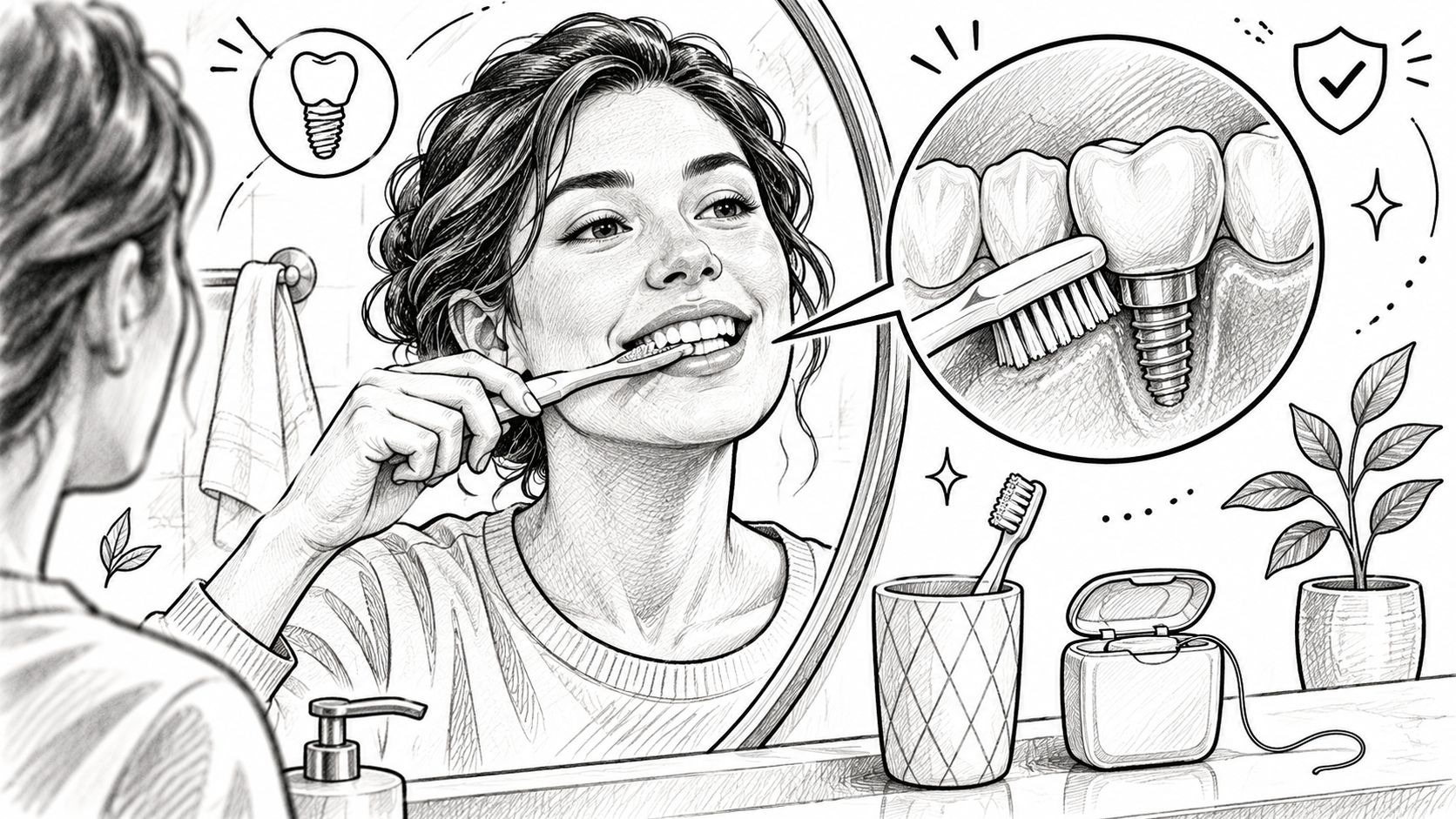
Daily Brushing and Flossing
Brush twice a day with a soft brush, and make sure you work along the gumline around the restoration, not just the chewing surfaces. Then floss or use an interdental cleaner. Most people skip this step, but plaque loves to collect where the crown meets the gum.
If you're shopping for rinses and other daily products after implant treatment, oral care essentials at Vitamin Planet carry options some patients like to add. Check with your dentist first, though, since not every rinse suits healing tissue.
- Brush the crown and nearby teeth with light, steady pressure.
- Clean between teeth every day so plaque doesn't settle under the gum edge.
- Skip harsh scrubbing, which can irritate healing or mature tissue.
Why Professional Cleanings Matter
Think of an implant like a well-planted tree. The crown is what everyone sees, but the roots in the soil are what keep it standing. For an implant, that soil is your bone and gum tissue. Peri-implant inflammation and gum disease, rather than cavities, are the real threats. Plaque can irritate the gums and, if it's left alone long enough, slowly wear away the bone holding the post.
An implant doesn't get cavities, but the gums and bone around it still need the same steady care you'd give a natural tooth.
Professional cleanings and exams catch bleeding, changes in gum pockets, and early bone loss long before the implant starts to feel loose. That's why follow-up visits belong in the plan, not treated as an optional extra.
Two misconceptions cause a lot of trouble. First, implants aren't just dentures by another name. Dentures rest on the gums, while implants are anchored in bone. Second, they aren't maintenance-free once placed. They need steady attention, just like your natural teeth.
You can learn more about caring for dental implants in our guide if you'd like a closer look at home routines.
Book a Consultation in Cleveland or Chattanooga
Winn Smiles offers implant services, including placement, restoration, and maintenance, at our offices in Cleveland, TN and Chattanooga, TN.
If you're considering full-mouth dental implants, the best next step is an in-person visit. We'll examine your mouth so we can give you a clear, accurate estimate based on what you actually need, not a guess from a photo.
Living in Cleveland, Chattanooga, or a nearby Tennessee community? Schedule a consultation or ask for a second opinion at Winn Smiles today. You can expect a comfortable visit, straight answers, and a plan built around lasting, healthy results for your smile.
Patients often have a few practical questions once they understand the dental implants meaning. Here are plain-English answers, so the next step feels a little less uncertain.
Do Dental Implants Hurt During Placement
Most people fear the pain more than the procedure itself, and that's understandable. At Winn Smiles, you can choose from a comfort menu and sedation options that match how nervous you feel that day.
Those choices go a long way toward keeping you relaxed while the implant is placed. Afterward, some tenderness and mild swelling are normal, and they usually fade as the site heals. The team walks you through what to expect before you leave, so the first few days don't catch you off guard.
Comfort comes from a clear plan, sedation choices, and knowing what early healing usually feels like.
Can You Be Too Old or Lack Bone
Age by itself rarely rules anyone out. Many adults with missing teeth are good candidates for dental implants.
A few other factors tend to carry more weight:
- Overall health, including conditions that affect healing
- Smoking habits, since smoking slows recovery
- Bone density in the area where the implant will go
If your jaw is on the thinner side, in-house bone grafting and sinus lifts can sometimes rebuild enough support. The fairest way to find out where you stand is a proper exam in Cleveland or Chattanooga.
Can a Dental Implant Get a Cavity
The implant itself cannot get a cavity. It isn't made of tooth enamel, so decay has nothing to take hold of on the post.
The gums around it are a different story. They can still develop gum disease, which can slowly wear away the bone holding the implant in place. Brushing, flossing, and regular checkups are what protect that bone. Neglect is the real risk here, not a bit of sugar sitting on titanium.
How Many Visits Does a Full Arch Take
There isn't one visit count that works for every mouth. Timing depends on healing and osseointegration, the process where bone slowly grows around the implant over the next few months while the team keeps an eye on progress.
Your personalized plan starts with 3D imaging of the jaw, a conversation about your goals, and a look at whether grafting is needed. Full-arch care at Winn Smiles follows that scan, not a one-size-fits-all calendar.
Contact Winn Smiles in Cleveland or Chattanooga to talk through your own implant questions.
Ready for a clear answer about your smile? Visit Winn Smiles to schedule a consultation in Cleveland or Chattanooga.