A systematic review of 21 studies following patients for 2 to 11 years found that sleep apnea oral appliances can produce measurable dental changes, with treatment duration influencing the changes researchers measured, according to the European Journal of Orthodontics review. That doesn't mean you should avoid treatment. It means your care should include more than receiving a device and hoping it stays comfortable.
Jaw soreness, dry mouth, or a different-feeling bite may bring you to a dentist near me in Chattanooga or Cleveland, TN. At Winn Smiles, we want you to understand which sleep apnea oral appliance side effects can be managed through routine adjustments, which need prompt attention, and why better sleep still needs to be confirmed with testing.
Common Side Effects and How Often They Occur
Oral appliances are a well-studied treatment option for obstructive sleep apnea. Most reported side effects involve the teeth, jaw muscles, gums, or bite, rather than dangerous complications elsewhere in the body.
Obstructive sleep apnea happens when the airway repeatedly becomes blocked during sleep. A mandibular advancement appliance helps by holding the lower jaw forward, but that positioning can also affect the tissues supporting the device.
Reported Side Effects and How Often They Occur
The following figures come from clinical evidence summarized in the American Academy of Sleep Medicine review, and represent different studies rather than a single group of patients.
| Side effect | Reported frequency | Context |
|---|---|---|
| Jaw-joint pain | About 30% | American Academy of Sleep Medicine review |
| Dry mouth | 30% in review evidence; 11% in a 38-patient study | Different study groups and devices |
| Temporary bite changes | 15% | American Academy of Sleep Medicine review |
| Permanent bite changes | 26% | American Academy of Sleep Medicine review |
| Tooth, jaw or gum pain | 69% | Study result after 8 weeks |
| Excessive salivation | 19% | Study result after 8 weeks |
| Soreness or difficulty inserting and removing | 13% | 38-patient clinical study |
| Jaw tenderness | 8% | 38-patient clinical study |
| Periodontal (gum) problems | 5% | 38-patient clinical study |
| Difficulty sleeping with the appliance | 3% | 38-patient clinical study |
Jaw-joint pain and dry mouth are prominent findings in the review. Joint discomfort may feel like tenderness near the ears, while dry mouth can make wearing the device unpleasant even when it fits securely.
Temporary and permanent bite changes describe different outcomes. A bite that feels unusual after removing the appliance isn't automatically permanent, but a change that doesn't resolve deserves examination.
The high report of tooth, jaw, or gum pain after early treatment illustrates how strongly results can differ between studies. Researchers may ask directly about every symptom, while another study records only problems patients volunteer.
What These Percentages Mean for You
Excess saliva, difficulty removing the appliance, gum irritation, and trouble sleeping with it matter even when they're less frequently reported. A tight insertion path or a rough edge can make an otherwise useful device difficult to wear.
Device design, fitting, adjustment, and the length of follow-up all affect what patients experience. These percentages aren't predictions for your mouth, and they shouldn't be added together because symptoms can overlap.
Practical rule: Tell your dentist what you're feeling rather than deciding that discomfort is simply the price of treatment.
Patients in Chattanooga and Cleveland, TN can start that conversation with a local dental office that evaluates both appliance fit and oral health. Qualified dental oversight should include checking the bite, not just asking whether the device stays in place.
Early Side Effects That Usually Settle
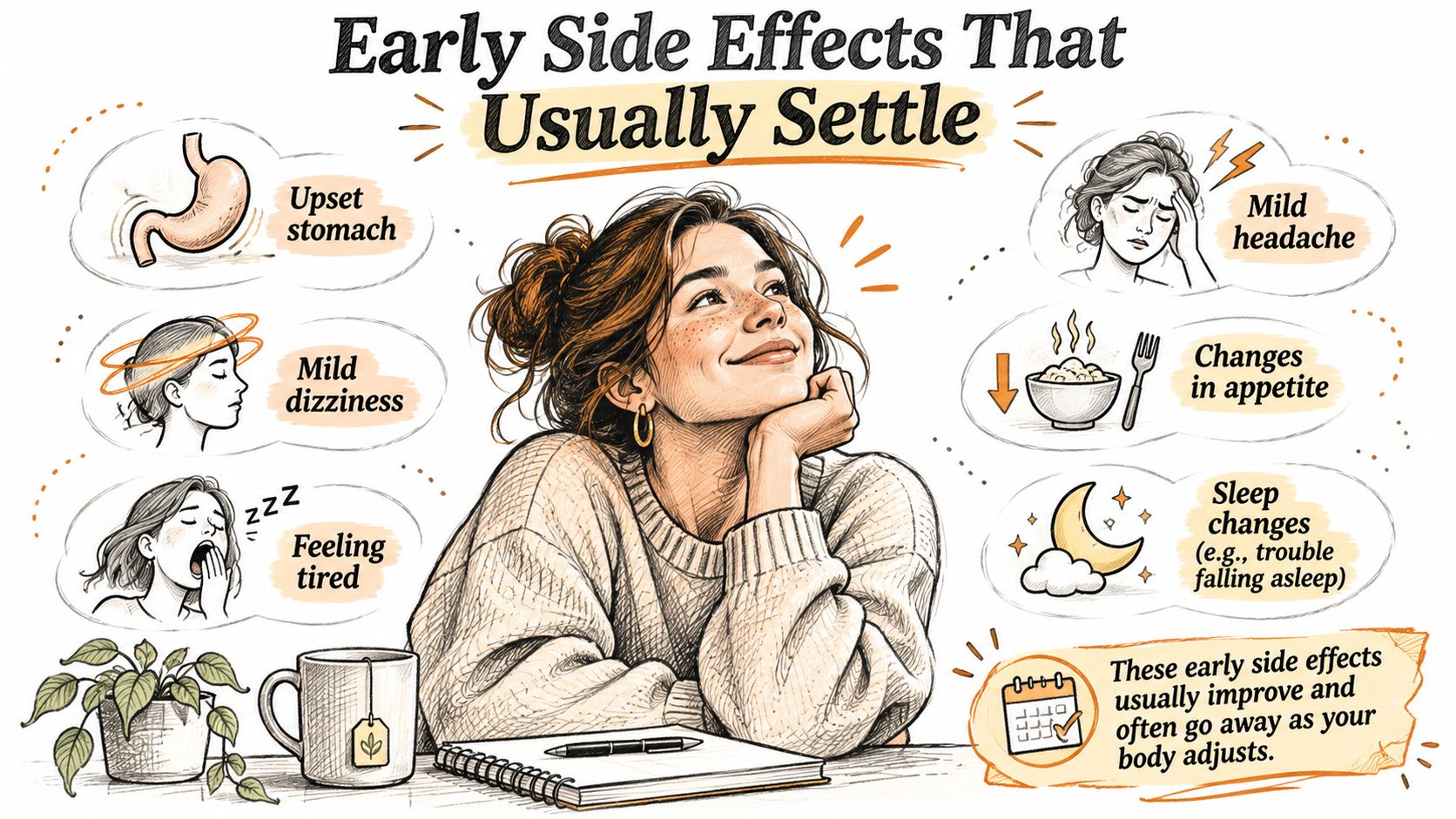
Morning jaw stiffness, tender teeth, dry mouth, extra saliva, and irritated cheeks or gums can occur while you adjust to an oral appliance. Some patients also notice clenching or nighttime grinding. These symptoms are common, but how they change over time helps determine whether simple adjustment is enough.
The appliance holds your lower jaw in a position it may not be used to. Mild muscle tension can ease as you adapt, much like stiffness after using a muscle differently. Pain that grows stronger or keeps disrupting sleep deserves attention rather than endurance.
In a review comparing mandibular advancement splints with CPAP, pain-related jaw-joint disorders occurred during the first 2 to 3 months in 24% of appliance users, compared with 6% of CPAP users, as described in the Dental Press Journal of Orthodontics review. This finding supports tracking discomfort and discussing it with your dentist, rather than stopping treatment without guidance.
Make Adaptation Easier Without Changing Treatment Yourself
- Follow your prescribed wearing schedule. Your dentist's instructions reflect your device and treatment plan.
- Change advancement only when advised. Adjusting the appliance yourself can increase strain or affect treatment.
- Keep water available. Drink water before bed and keep a glass nearby if dry mouth wakes you, unless your physician has restricted fluids.
- Clean the appliance each morning. Use the recommended cleaner and brush, then follow the manufacturer's storage directions. Materials can require different care.
- Keep a symptom log. Note where discomfort occurs, whether it begins during wear or afterward, and whether it is improving.
A useful entry is specific: mild tenderness around the right jaw joint on waking, easing after breakfast. That gives your dentist more to work with than “the device hurts.”
Grinding Needs Its Own Assessment
If you grind your teeth at night, Winn Smiles may recommend a night guard to protect a crown and other teeth. A standard night guard does not replace a sleep apnea appliance. Do not stack devices or switch between them without a coordinated plan.
Symptoms that ease over the first few weeks may reflect adjustment. If they remain unchanged, interrupt sleep, or become more intense, contact your dentist for guidance. Comfort matters, and so does confirming that your apnea treatment remains effective.
Warning Signs That Need a Dentist Right Away
A symptom that persists, worsens, or changes your bite needs dental review. Don't keep advancing the appliance to experiment, and don't abandon your sleep apnea treatment without discussing a safe alternative.
Dental side-effect management can include adjustments, reduced advancement, guided morning exercises, or a morning bite guide, as discussed in the Australian Dental Journal review. Progressive problems may require a different treatment strategy rather than repeated minor modifications.
Warning Signs, Likely Causes and the Action to Take
These are possible explanations, not diagnoses you can make at home.
| Symptom | Likely cause | Action |
|---|---|---|
| Loose or moving teeth | Changes in tooth support | Urgent dental visit |
| Cracked or broken appliance | Device failure | Contact your dentist before the next night of use |
| Damaged crown, filling or bridge | Extra force on dental work | Dental visit as soon as possible |
| Jaw locking or limited opening | Joint or muscle problem | Prompt dental review |
| Teeth no longer meet normally | Bite change | Visit within a few days |
| Jaw pain that persists or worsens | Jaw-joint or muscle strain | Scheduled review; don't keep adjusting the device yourself |
A loose tooth needs urgent attention because your dentist must assess the tooth and its supporting gums and bone. If pain is severe, ask for an urgent appointment, even if the symptom otherwise appears lower in the table.
A broken appliance may no longer hold your jaw as intended. Don't glue it, file it, or keep using a damaged component without instructions.
Damaged dental work also needs an examination. If you're trying to distinguish a cracked tooth or cavity?, Mouthology's symptom guide can help you describe the problem, but it can't determine the cause or replace a dental visit.
What Your Dentist May Change
Jaw locking or limited opening can indicate a joint or muscle problem that needs assessment before further advancement. A new bite change may reflect altered jaw positioning, tooth movement, or both.
For lingering soreness, your dentist may relieve a pressure point, reassess retention, or reduce how far forward the jaw is held. Morning exercises or an occlusal guide, a device used to help guide the bite after appliance removal, should be taught rather than improvised.
You don't have to choose between enduring pain and giving up treatment. Contact the dental office so the next step is planned.
Dental follow-up is part of safe therapy because the dentist monitors your mouth's response, not merely whether the appliance looks intact.
How Bite Changes Build Up Over Years
The appliance holds your lower jaw forward night after night, so sustained pressure on the teeth can gradually change their position.
Overbite means the vertical overlap of the front teeth. Overjet means how far the upper front teeth sit ahead of the lower front teeth horizontally.
Measured Bite Changes in Long-Term Studies
The first group of measurements below comes from a clinical study of 117 patients with a median 4.6 years of appliance use. The controlled comparison and longer observational measurements are summarized in the long-term oral-appliance review, while the pooled measurements come from the systematic review and meta-analysis summary.
| Measurement | Reported change | Study context |
|---|---|---|
| Overbite | 0.5 mm decrease | 117 patients, median 4.6 years of use |
| Overjet | 0.7 mm decrease | 117 patients, median 4.6 years of use |
| Upper-incisor inclination | 2.5-degree decrease | 117 patients, median 4.6 years of use |
| Lower-incisor inclination | 2.2-degree increase | 117 patients, median 4.6 years of use |
| Overbite | 1.2 mm decrease | Controlled comparison with CPAP, long-term use |
| Overjet | 1.5 mm decrease | Controlled comparison with CPAP, long-term use |
| Overbite and overjet | 0.87 mm and 0.86 mm reductions | 2025 meta-analysis, 23 studies in quantitative analysis |
| Maxillary (upper) incisors | About 6 degrees retroclined | Observational series, average 12.6 years |
| Mandibular (lower) incisors | About 8 degrees proclined | Observational series, average 12.6 years |
The shorter-follow-up measurements show modest average reductions in front-tooth overlap and horizontal spacing. The inclination measurements describe upper front teeth tipping backward and lower front teeth tipping forward.
The controlled comparison found larger average changes in the appliance group. The pooled findings also support measurable reductions, but differences between studies mean these figures aren't a timetable for your own teeth.
The longer observational series illustrates what can happen over extended treatment. An average change doesn't mean every patient develops the same movement or clinically significant damage.
This video provides an additional visual resource about appliance therapy.
Why Comfortable Teeth Still Need Measuring
Patients don't always feel tooth-position changes as they develop. You may chew comfortably while the pattern of contact between upper and lower teeth becomes different.
For example, fewer back teeth may meet when you close your mouth, even though no individual tooth hurts. That makes symptom reports useful but insufficient on their own.
Baseline records and periodic comparisons give the dentist a way to detect change before it becomes more difficult to manage. They also help distinguish an appliance-related shift from an existing bite pattern.
Choosing a Device With Fewer Side Effects
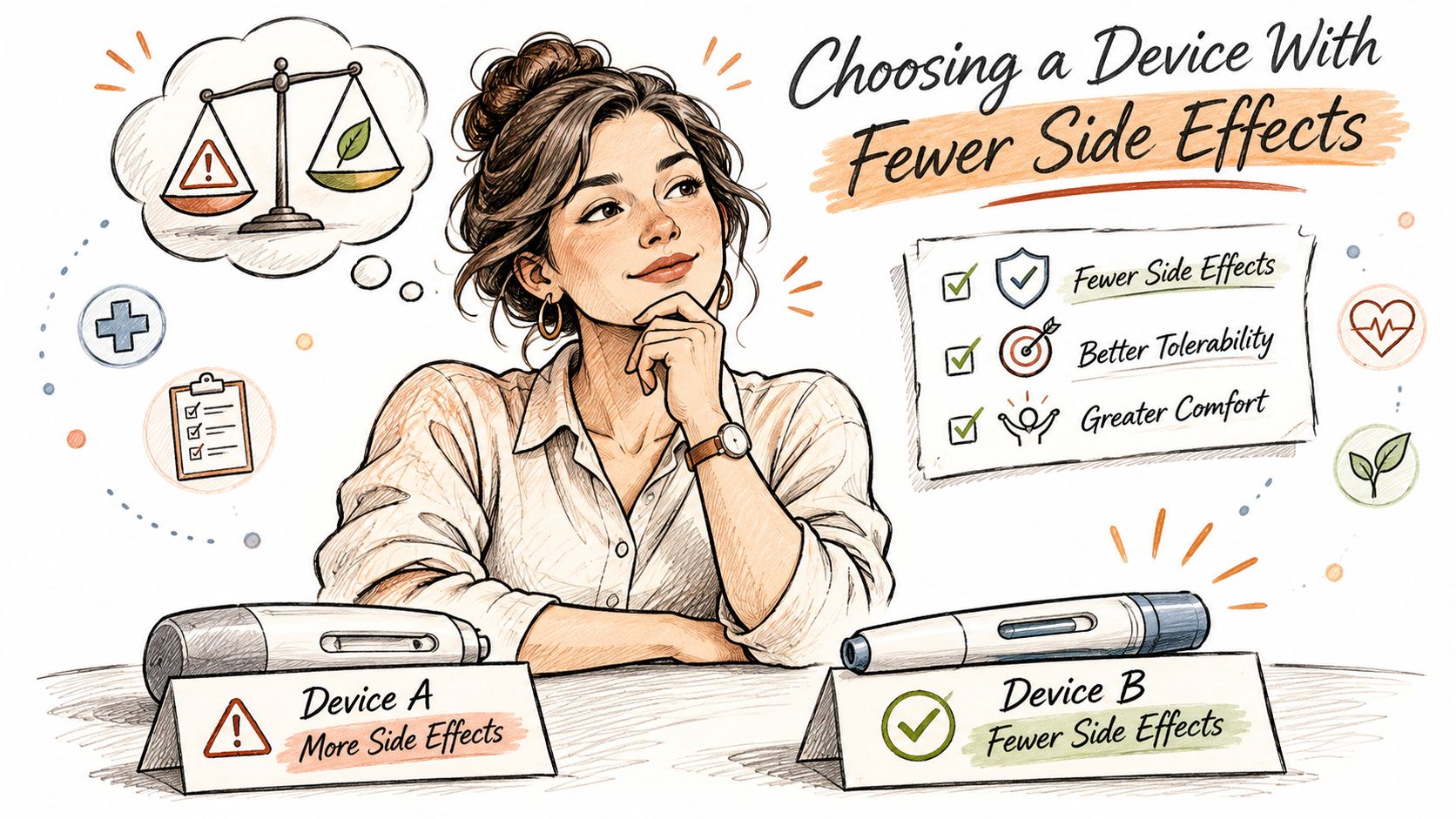
A device's fit, material, and adjustment mechanism affect both comfort and how forces reach your teeth. Custom-made describes how a device is shaped to your mouth; adjustable describes whether its jaw position can be changed. These features can work together, but neither guarantees freedom from side effects.
A custom mandibular advancement device is made from impressions or digital records of your mouth. A thermoplastic boil-and-bite version is softened in hot water and shaped by biting into it.
Precise Fit and Adjustable Positioning
Custom fabrication lets the dentist account for your teeth, existing restorations, and how the appliance grips your dental arches. A precise fit can make pressure points easier to spot and address, though soreness or bite changes may still occur.
An adjustable appliance allows the dentist to move the jaw forward in controlled steps. A nonadjustable device does not offer the same way to change its position. The published meta-analysis reports greater average reductions in overjet and overbite with adjustable devices than with nonadjustable ones. This comparison does not mean adjustable devices prevent bite changes.
Measured adjustments give the dentist control over jaw positioning, not immunity from tooth movement. Ask how your bite will be monitored, especially when the setting changes.
Questions to Bring to Your Fitting
The guide to types of oral appliances for sleep apnea explains designs you may discuss with your care team.
- Construction: Is the device custom-fabricated or boil-and-bite?
- Adjustment: Can its forward position be changed, and who should make the adjustment?
- Monitoring: How will my bite be checked during treatment?
- Pain plan: What should I do if a tooth, restoration, or jaw joint becomes sore?
A brief fitting cannot show how a device will feel overnight or whether its position is appropriate for you. Avoid choosing based only on appearance or immediate comfort. The device must also be assessed for whether it controls your apnea.
A good choice balances comfort, oral health, and treatment effectiveness. If discomfort develops, tell your dentist rather than tolerating it. Comfort is one part of the decision, not proof on its own that treatment is working.
Confirming the Device Still Controls Your Apnea
Feeling more rested and snoring less doesn't prove your apnea is controlled. A comfortable device may hold the jaw too far back to adequately reduce airway obstruction.
The American Dental Association's guidance on obstructive sleep apnea supports follow-up sleep testing to confirm appliance effectiveness, together with periodic physician and qualified-dentist visits. Your sleep physician coordinates appropriate testing and interprets what the results mean for treatment.
Separate Comfort From Treatment Success
A dental examination answers questions about fit, pressure, teeth, gums, and jaw function. A sleep test answers whether breathing interruptions are adequately controlled while you're wearing the appliance.
These are different assessments. Passing one doesn't replace the other.
Bring this question to follow-up: How will we confirm that my current appliance setting is treating my apnea?
Testing is generally arranged after fitting and adjustment have established a treatment position. If the setting changes again, your physician decides whether and when repeat testing is needed; don't assume every small adjustment requires an immediate new study.
Your airway and treatment needs can also change over time. If snoring or daytime sleepiness returns, contact your sleep physician instead of advancing the appliance yourself.
Our guide to signs you have sleep apnea can help you describe recurring symptoms clearly. Symptoms are a reason to seek reassessment, not a reliable measure of severity.

What Your Dentist Records and Rechecks
Baseline dental records should make later comparisons possible. Depending on your needs, the examination can include:
- Overbite and overjet: The vertical and horizontal relationships between the front teeth.
- Incisor angle: Whether front teeth are tipping forward or backward.
- Tooth mobility: Whether teeth move more than expected.
- Gum health: The condition of the tissues supporting the teeth.
- Bite contacts: Which upper and lower teeth meet when you close.
- Photographs or digital scans: Visual records that help compare tooth position over time.
Routine cleaning and exams remain important, but an appliance review needs specific attention to these treatment-related findings. Dental x-rays may be recommended when there's a separate clinical reason, rather than automatically at every follow-up.
What to Expect at a Chattanooga or Cleveland Visit
Bring your appliance, symptom log, medication list, and sleep test reports. If you have previous dental records, those can help establish what has changed.
A careful visit should leave room for questions rather than feel like a quick device handoff. The usual assessment follows a practical sequence:
- Review sleep history and symptoms. Discuss the original sleep test, current treatment, snoring, daytime alertness, and difficulties wearing the device.
- Examine teeth, gums, and jaw joints. The dentist checks for tenderness, irritated tissue, damaged dental work, and changes in how your teeth meet.
- Record comparison measurements. Images or scans may be recommended when they add useful information.
- Assess fit and comfort. The dentist checks retention and pressure points, then decides whether an adjustment is appropriate.
- Agree on follow-up and reporting. Leave knowing when to return and which symptoms should trigger an earlier call.
The follow-up rhythm should connect dental examinations with physician-directed sleep testing and additional reviews when symptoms change. The goal isn't merely a device you can wear. It's a treatment that remains tolerable, protects teeth and gums, and demonstrates adequate control on objective testing.
Book Your Follow-Up Visit in Chattanooga or Cleveland
If jaw pain won't settle, dry mouth keeps interrupting sleep, your teeth no longer meet normally, or your appliance doesn't fit as it used to, arrange a follow-up rather than continuing to troubleshoot alone. Winn Smiles serves Chattanooga and Cleveland, TN, with oral-appliance care that includes attention to fit, the bite, jaw joints, and gums over time. Searching for a dentist near me is a practical first step, but the appointment should address both your discomfort and the plan for continued sleep apnea treatment. Our team can help keep dental follow-up connected with your sleep physician's assessment.
Keep the Appointment Focused on Your Concern
Tell the office whether you're calling about mild soreness, a changed bite, a damaged restoration, or severe pain. That information helps the team understand whether you need a routine appliance review or assessment by an emergency dentist.
If you're also considering restorative dentistry or searching for dental implants near me, bring that up during treatment planning. Crowns, bridges, implants, and other changes to your mouth can affect how an existing appliance fits.
The same applies if you initially came looking for a cosmetic dentist near me. Teeth whitening doesn't address an appliance-related bite problem, and cosmetic treatment should be planned with your sleep device in mind.
A tooth extraction isn't a routine solution for appliance discomfort. The priority is to identify the cause and preserve healthy teeth whenever possible.
Winn Smiles also uses lasers for sleep apnea treatment by reshaping the soft palate to improve airway obstruction. Whether that approach belongs in your care requires an individual assessment, not a decision based solely on appliance soreness.
Winn Smiles offers free consultations and second opinions for sleep apnea therapy, including a conversation about discomfort and your next treatment steps. Book a consultation through Winn Smiles, and bring your appliance, available dental records, and sleep test results so we can review your concerns together.