Snoring that wakes your partner, interrupted breathing, morning headaches, and daytime fatigue can make sleep feel unrefreshing even after a full night in bed. If you've tried CPAP and struggled with the mask, tubing, or nightly routine, you may be researching the types of oral appliances for sleep apnea and wondering which one could fit your needs.
These devices aren't interchangeable. Some move the lower jaw forward, some hold the tongue forward, and others address specific palate or airway concerns. At Winn Smiles, patients in Cleveland and Chattanooga, Tennessee can discuss sleep-apnea treatment in a comfortable setting with modern technology, clear consultation guidance, and straightforward cost conversations. A dentist evaluates your oral health, teeth, dental restorations, bite, and jaw function, then considers the diagnosis and recommendations from your sleep physician before an appliance is selected. If sleep disruption is keeping you awake, you can also explore these practical tips for how to fall asleep naturally, while arranging appropriate medical evaluation.
1. Mandibular Advancement Devices
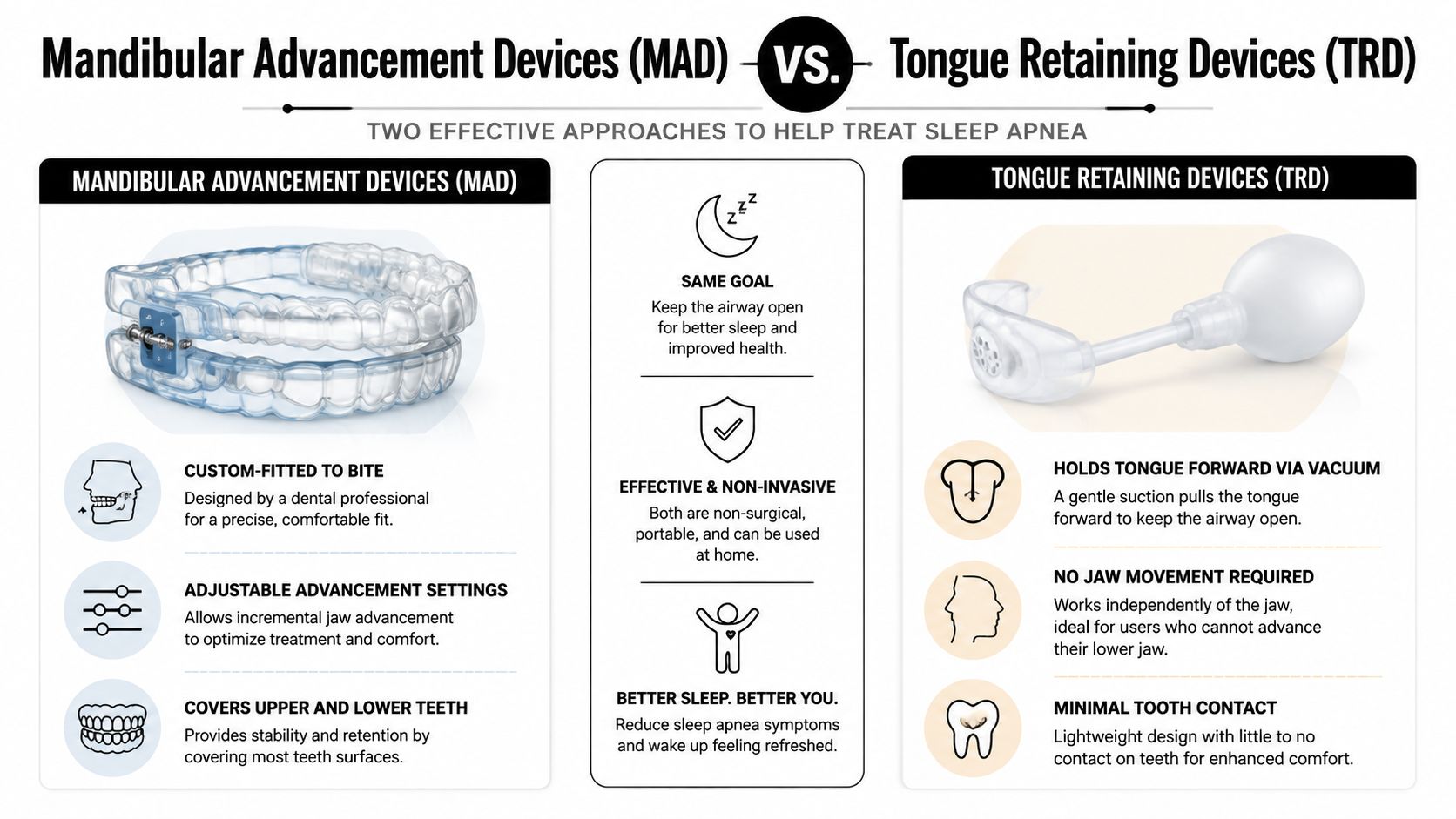
A mandibular advancement device, or MAD, gently positions the lower jaw forward during sleep. That movement can bring the tongue and nearby soft tissues forward, creating more room behind the tongue and reducing the tendency of the airway to narrow.
MADs are the most established option in professional oral appliance therapy. Clinical reviews describe several oral-appliance categories, but the evidence base has historically favored custom-fabricated, adjustable appliances. One review found that oral appliances reduced the apnea-hypopnea index below 10 in 54% of patients, while the wider literature suggested that mild-to-moderate sleep apnea was “cured” in about 40% to 50% of patients and improved further in another 10% to 20%. These figures come from a broad body of studies, so your result can differ based on anatomy, diagnosis, device design, and consistent use. Clinical review of oral appliance therapy
A MAD may be worth discussing if you have obstructive sleep apnea, want a discreet alternative to CPAP, or need a portable option for work and travel. A Cleveland patient who stopped using CPAP may prefer a custom MAD because it fits in a case rather than requiring a larger nighttime setup. A Chattanooga business traveler may also value a device that's easier to carry between time zones.
Fitting and daily care
The device should usually begin at a conservative jaw position, followed by gradual advancement as your jaw adapts. Daily cleaning with mild soap and water, thorough rinsing, and storage in a protective case can help preserve the appliance. Wear it consistently, even on nights when you feel rested.
Watch for changes: Persistent jaw pain, new bite changes, or difficulty closing your teeth should be reported to your Winn Smiles dentist rather than ignored.
Follow-up appointments allow the team to assess comfort, bite, appliance condition, and treatment response. Winn Smiles provides information about sleep apnea oral appliance therapy, including the fitting and adjustment process.
2. Tongue Retaining Devices
A tongue-retaining device, or TRD, takes a different route to airway support. Instead of moving the jaw, it uses gentle suction to hold the tongue forward in a soft chamber. Keeping the tongue from falling backward may reduce one source of obstruction during sleep.
TRDs can be useful when jaw advancement isn't comfortable or appropriate. For example, a Chattanooga patient with limited jaw movement or temporomandibular joint concerns may want to discuss a device that doesn't place the same emphasis on advancing the mandible. A Cleveland resident with minimal tooth structure may also need an option that doesn't depend on conventional tooth-supported retention.
Clinical descriptions commonly group oral appliances into mandibular advancement devices, tongue-retaining devices, and palatal lift appliances. MADs move the mandible, TRDs use suction to hold the tongue forward, and palatal lift appliances lift the soft palate and uvula. Overview of oral appliance categories
Getting used to a TRD
The tongue position can feel unfamiliar at first. Practice inserting and removing the appliance during the day before trying to wear it overnight. Beginning with shorter periods may make the transition easier, particularly if you notice tongue dryness or increased salivation.
A humidifier may make the bedroom more comfortable during the adjustment period. Rinsing with warm water before insertion can also make positioning easier. Persistent tongue soreness, ulceration, or excessive discomfort deserves prompt attention.
TRDs require careful follow-up, too. Your dentist needs to confirm that suction remains effective, the device is stable, and your oral tissues remain healthy. Good home care includes rinsing the appliance after use, cleaning it according to the manufacturer's guidance, and keeping it in its case.
For broader nighttime oral-health guidance, patients can read this resource on professional dental care via DentalHealth.com. It isn't a substitute for sleep-apnea diagnosis or appliance fitting, but it may help you identify related habits that affect comfort.
3. Fixed Mandibular Repositioning Appliances
A fixed mandibular repositioning appliance holds the lower jaw in one selected forward position. Unlike a titratable MAD, it doesn't provide an adjustment mechanism for changing the amount of advancement during treatment.
That distinction matters. A fixed device may be considered after an adjustable appliance has already helped identify a comfortable and effective jaw position. In that situation, the dentist documents the position before the fixed appliance is fabricated. A Chattanooga patient who has completed titration may prefer a stable design that doesn't require ongoing advancement changes. A Cleveland patient who wants a consistent nightly routine may also appreciate that simplicity.
Fixed and adjustable appliances aren't identical in their treatment potential. In a large clinical series of 805 patients, 74.8% used adjustable appliances and 25.2% used fixed devices. Obstructive events fell below five per hour in 56.8% of adjustable-appliance users compared with 47.0% of fixed-device users in that study. Clinical series comparing adjustable and fixed appliances
Those findings don't mean a fixed device is unsuitable. They show why the selection process should follow diagnosis, anatomy, response to therapy, and the ability to maintain a stable bite.
Stability requires maintenance
A fixed appliance still needs professional monitoring. Regular dental visits can help identify wear, changes in bite sensation, tooth movement, jaw discomfort, or mechanical damage before the problem becomes more disruptive.
Clean the device every day, including areas that are difficult to reach. If the appliance breaks, don't reshape it at home or continue wearing it if it no longer holds the jaw correctly. Ask Winn Smiles whether a backup device is appropriate for your situation, especially if reliable nightly treatment is important for travel or work.
The practical appeal of a fixed design is consistency. The limitation is that a later need for more or less advancement may require fabrication of a different appliance rather than a simple chairside adjustment.
4. Combination Appliances
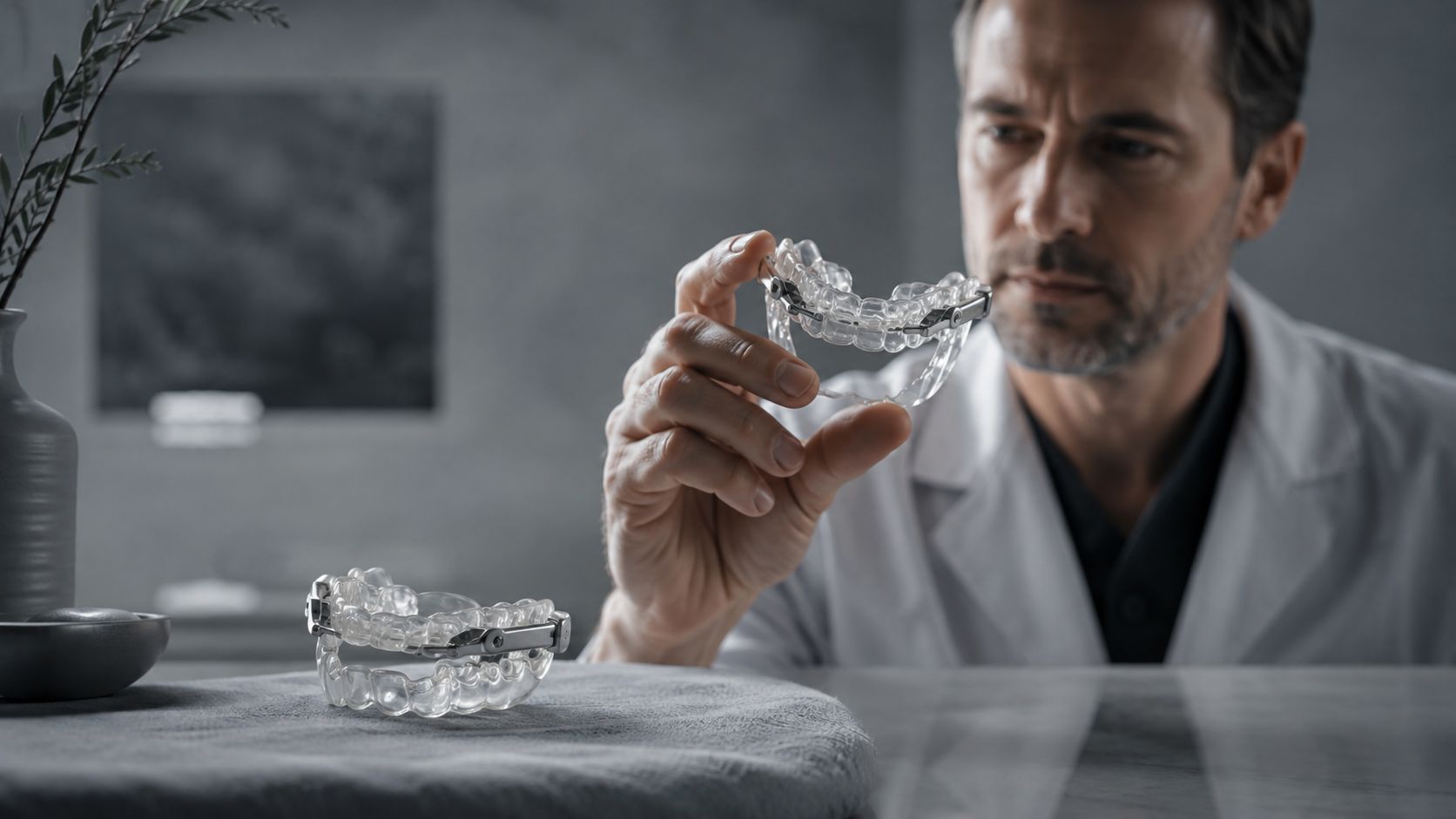
A combination appliance, sometimes called a hybrid device, uses more than one airway-support strategy. Depending on its design, it may combine mandibular advancement with tongue positioning or incorporate another component intended to support a particular area of the mouth and airway.
This approach may be worth discussing when a single-mechanism device hasn't provided adequate support. A Cleveland patient with multiple possible sites of narrowing may need a more individualized design conversation. A Chattanooga patient who can't tolerate a standard MAD but still needs jaw and tongue support may also be considered for a hybrid approach.
A 2025 review pooled 27 studies involving 3,799 patients and identified six distinct oral-appliance design categories, reinforcing that device type can influence outcomes rather than every appliance functioning the same way. Review of oral appliance design categories
More mechanisms require more communication
Hybrid devices can have several areas that need adjustment, so your feedback becomes especially important. Keep notes about snoring, awakenings, dry mouth, jaw soreness, tongue discomfort, and how refreshed you feel. Your dentist can use those observations to determine which part of the device needs attention.
Avoid changing multiple mechanisms at once. One controlled adjustment makes it easier to understand what improved comfort or caused irritation. Clean moving components using the manufacturer's recommended method, since different materials and mechanisms may need different care.
A longer adaptation period can occur with a more complex appliance. That doesn't automatically mean the treatment is failing. It does mean that scheduled visits and honest communication are central to safe, comfortable use.
The following video offers a visual introduction to oral appliance therapy and device design:
5. Adjustable Titration Devices
An adjustable titration device allows the lower jaw to move forward in small, controlled steps. The purpose of titration is to find the least amount of advancement that supports breathing while keeping the appliance comfortable enough to wear consistently.
The mechanism may use hinges, screws, bands, or another design that allows the position to change. Guidelines describe titratable appliances as devices that permit varying amounts of mandibular protrusion. Non-titratable appliances hold the jaw in a single protrusive position and can't be adjusted during treatment. Explanation of titratable and non-titratable appliances
This makes an adjustable device particularly useful at the beginning of therapy. Your Winn Smiles dentist can start conservatively, monitor your response, and make measured changes rather than asking your jaw to adapt immediately to a final position.
Why gradual advancement matters
Customization affects more than comfort at delivery. A meta-analysis found mean nightly use of 6.418 hours for custom-made appliances compared with 5.107 hours for non-custom appliances. Dropout rates were similar, at about 17.1% over a mean follow-up of 4.1 months. Meta-analysis of custom and non-custom appliances
The evidence supports a practical point: fit and personalization can matter for long-term wearing time, even though no single design wins every efficacy comparison. A Cleveland professional with a changing schedule may benefit from appointments planned around work. A Chattanooga patient may discover that a smaller amount of advancement provides adequate comfort and support.
Keep a sleep diary between visits. Record symptoms and side effects, and don't skip an appointment just because the appliance seems to be helping. Objective follow-up testing may be needed to confirm that the device is addressing the diagnosed sleep-disordered breathing.
Patients can ask Winn Smiles how insurance benefits may apply to a sleep apnea dental appliance. Coverage depends on the plan and treatment requirements, so a benefits discussion should be part of the consultation.
6. Palatal Expansion Devices
A palatal expansion device focuses on the upper jaw and palate rather than advancing the lower jaw. It applies controlled outward pressure to widen the upper dental arch or address a narrow, high-arched palate that may contribute to limited oral and airway space.
This design deserves careful discussion because it changes the structure and position of the upper arch. A Chattanooga patient with a high-arched palate may want to explore whether an anatomically focused approach is appropriate. A Cleveland patient may be evaluated for a combined plan if modest mandibular advancement and upper-arch treatment are both relevant.
Palatal expansion isn't a universal sleep-apnea solution. Its suitability depends on age, skeletal development, dental support, periodontal health, bite, and the nature of the airway obstruction. Your dentist may need to coordinate with a sleep physician or another dental specialist before recommending it.
Monitoring protects oral health
Expansion should proceed under regular supervision. Your dental team monitors the rate of change, tooth movement, gum health, bite, and appliance fit. Report pressure, unexpected tooth movement, new spacing, or bite changes rather than waiting for the next routine cleaning and exam.
Excellent oral hygiene is especially important because the appliance can affect how you brush and floss around the upper teeth. Follow the cleaning instructions provided for the specific device, and keep dental x-rays or other records available when they help assess roots, bone support, or existing restorations.
A palatal device may be used alone or alongside another therapy when your care team believes the combination is appropriate. It's important to discuss what changes are intended, which changes may be permanent, how long monitoring will continue, and what happens if your bite or comfort changes.
7. Nasal Obstruction Bypass Appliances
Nasal obstruction bypass appliances are a specialized option for people whose breathing difficulty includes obstruction higher in the airway. The concept is different from a standard MAD. Rather than primarily advancing the jaw or holding the tongue forward, the device is intended to create an alternative route for airflow around a selected obstructed area.
This type of appliance may be worth discussing when nasal anatomy, chronic congestion, prior nasal surgery, or a deviated septum affects nighttime breathing. A Cleveland patient with a deviated septum may need a thorough evaluation before deciding whether an appliance could reduce dependence on another intervention. A Chattanooga resident with persistent congestion may also need allergy or nasal care alongside dental treatment.
These devices are niche options, not a replacement for diagnosis. A sleep physician, dentist, and, when appropriate, an ear, nose, and throat clinician may each contribute information about where obstruction occurs and which treatment is realistic.
Coordinate dental and nasal care
Tell Winn Smiles about prior nasal surgery, current congestion, allergy treatment, and difficulty breathing through your nose during the day or night. A saline rinse before use may help some patients keep the nasal passage more comfortable, but it doesn't treat the underlying cause of obstruction.
Regular communication with your medical team matters if nasal symptoms change. The appliance may need a different design or may not be the right treatment if nasal airflow remains severely limited.
A careful evaluation comes first: An appliance can only address the airway problem it was designed to support. Identifying the obstruction helps prevent an unsuitable fit and an unnecessarily frustrating trial.
7-Way Comparison: Oral Appliances for Sleep Apnea
| Device | Implementation complexity | Resource requirements | Expected outcomes | Ideal use cases | Key advantages |
|---|---|---|---|---|---|
| Mandibular Advancement Devices (MAD) | Moderate, custom fit and adjustable settings | Dental lab work, dentist fittings, periodic follow-ups | Effective for mild–moderate OSA; improves sleep quality | CPAP-intolerant patients, travelers, good dentition | Portable, quiet, reversible, higher compliance |
| Tongue Retaining Devices (TRD) | Low–moderate, simple suction design | Minimal dental contact, practice for insertion, occasional adjustments | Variable efficacy; good for tongue-based obstruction | Limited jaw mobility, TMJ issues, few teeth or dentures | No jaw movement, suitable with limited dentition |
| Fixed Mandibular Repositioning Appliances | Moderate–high, requires prior titration and precise fabrication | Initial titration with adjustable device, durable lab fabrication | Consistent long-term positioning and symptom control | Patients who completed titration and want stability | Stable, no ongoing adjustments, durable |
| Combination Appliances (Hybrid Devices) | High, multi-mechanism custom design | Advanced dental sleep specialist, complex lab work, multiple follow-ups | Potentially superior for complex or refractory OSA | Severe or multi-level obstruction, failed single-mechanism therapy | Addresses multiple obstruction points, adjustable optimization |
| Adjustable Titration Devices | Moderate, iterative adjustment process | Frequent office visits, adjustment tools, periodic sleep testing | Identifies optimal jaw position; reduces side effects | New oral appliance patients, those optimizing therapy | Gradual adaptation, measurable optimization for final device |
| Palatal Expansion Devices | High, orthodontic expansion with permanent change | Orthodontic expertise, long-term monitoring, imaging | Permanent airway widening for narrow palates | Narrow or high-arched palates, anatomical airway limitations | Structural airway improvement, may reduce other device need |
| Nasal Obstruction Bypass Appliances | High, specialized design targeting nasal anatomy | ENT evaluation, specialized fitting, experienced specialist | Can improve breathing when nasal obstruction contributes to OSA | Documented nasal obstruction, deviated septum, surgery avoidance | Targets nasal-level obstruction, non-invasive alternative to surgery |
Choose Your Next Step With a Sleep-Apnea Dentist
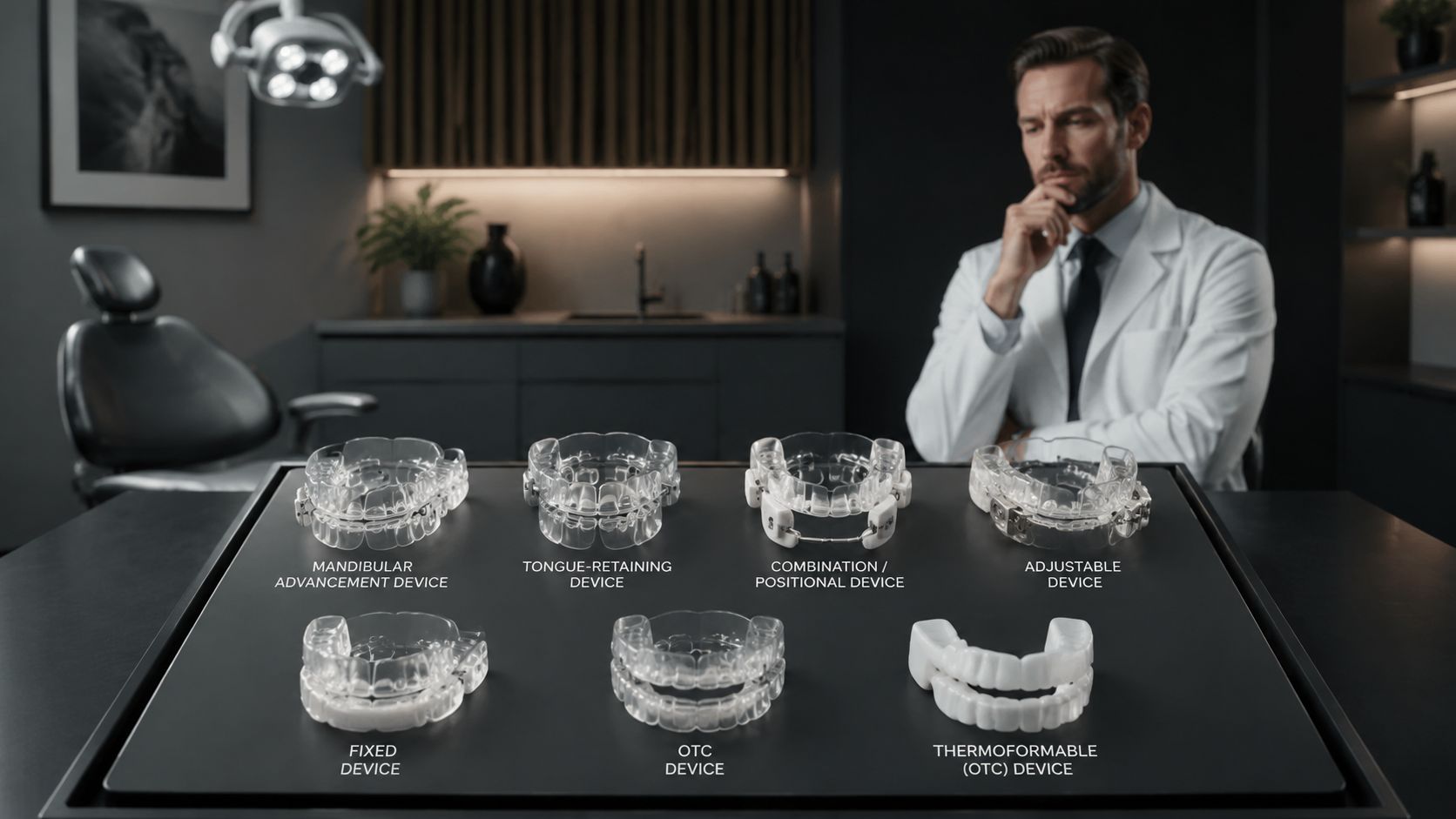
The best choice among the types of oral appliances for sleep apnea depends on more than whether a device is small or easy to carry. A custom titratable MAD is generally the recommended default in modern clinical guidance, but a TRD, fixed device, combination appliance, palatal approach, or specialized design may be worth discussing when jaw movement, tooth structure, palate shape, bite, or nasal anatomy changes the treatment picture.
Custom care also gives your dentist an opportunity to evaluate the foundation supporting the device. Winn Smiles may review your teeth, gums, restorations, jaw joints, bite, and oral hygiene before fabrication. If you need a tooth extraction, restorative dentistry, periodontal care, dental implants, or treatment for another dental concern, those issues may affect when and how an appliance is designed. A healthy, stable mouth supports more predictable fitting and follow-up.
Custom versus over-the-counter appliances
Over-the-counter and boil-and-bite products may appear convenient, but they don't provide the same individualized assessment, controlled advancement, or ongoing monitoring as a professionally fitted appliance. A device that reduces snoring without addressing diagnosed obstructive sleep apnea shouldn't be assumed to provide adequate treatment.
Ask Winn Smiles:
- Candidacy: Is oral appliance therapy appropriate for my sleep-apnea diagnosis and severity?
- Oral health: Do my teeth, gums, restorations, bite, and jaw joints support this type of appliance?
- Adjustment: How will the device be fitted, titrated, and monitored?
- Side effects: What jaw soreness, bite changes, dryness, salivation, or tissue irritation should I report?
- Durability: How will the appliance be cleaned, repaired, replaced, and checked for mechanical wear?
- Testing: Will follow-up sleep testing be needed to confirm effectiveness?
- Coverage: Which parts of the consultation, appliance, adjustments, repairs, and testing may be included in my insurance benefits?
- Financial planning: Are financing options available, and can I receive a written estimate of total fees?
- Second opinion: Would a consultation or second opinion help me compare oral appliance therapy with CPAP or another treatment?
Long-term wear and device condition deserve attention. A 2026 analysis of FDA MAUDE reports found that oral-appliance complaint volume increased from an average of 42 reports per year in 2020 to 2023 to 423.5 per year in 2024 to 2025. The complaint mix also shifted from allergy or biocompatibility events, which represented 78% of reports in 2020 to 2023, to broken or fractured devices, which represented 91.6% in 2024 to 2025. Analysis of oral-appliance safety reports
These figures don't predict what will happen with your appliance, but they reinforce why maintenance, inspection, and replacement planning belong in the conversation. Medicare's E0486 requirements also specify construction and use features for certain custom fabricated mandibular advancement devices, including a fixed mechanical hinge, mandibular protrusion beyond the front teeth at maximum advancement, advancement in increments of one millimeter or less, retention of the setting when removed, stability during sleep, and no ongoing modification visits beyond the initial 90-day fitting and adjustment period. Clinical information about oral appliance therapy
Real-world adherence matters because a treatment you wear consistently may be more useful than one you abandon. One five-year study reported that more than half of patients remained effectively treated, 82.8% used their MAD on seven nights per week, and 91.3% reported at least six hours of nightly use. Another cohort found a median objective use of 5.5 hours per night at six months, with 74.7% using the appliance at least four hours per night and 56.5% reaching at least six hours per night. Long-term adherence and effectiveness data
Cost and coverage vary by insurance plan, diagnosis, appliance design, dental needs, and follow-up requirements. Request a transparent estimate from Winn Smiles instead of relying on a generic online price. Patients in Cleveland, Chattanooga, and assigned nearby service areas can schedule a consultation to review candidacy, comfort, oral health, and a treatment path that fits daily life.
Winn Smiles offers sleep-apnea consultations and custom oral appliance therapy discussions for patients in Cleveland and Chattanooga, including guidance on fitting, adjustment, repair, and related dental care. Visit Winn Smiles to request a consultation and talk with the team about a comfortable, carefully monitored option for better nighttime breathing.