
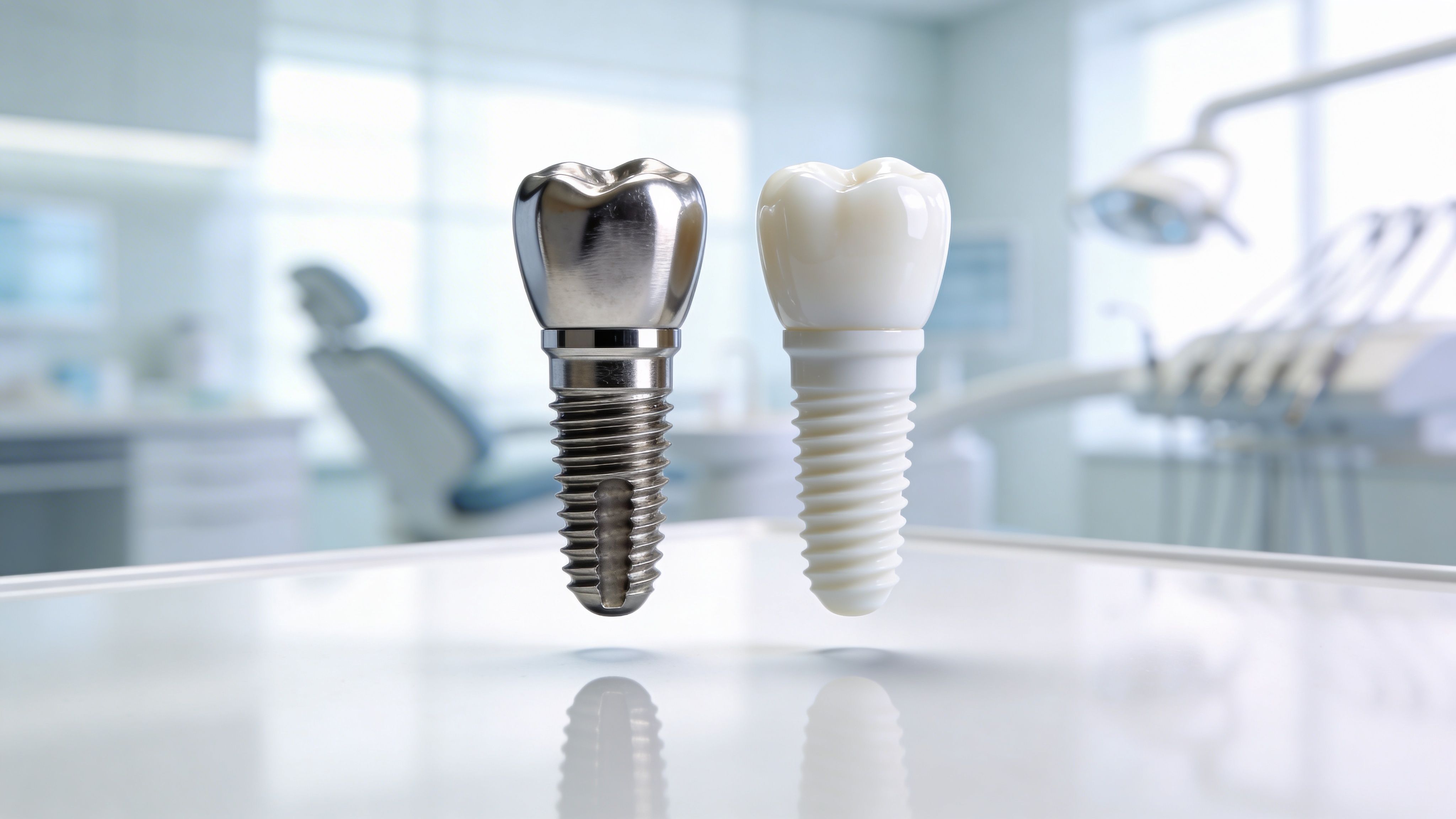
If you are researching dental implants metal, you may already feel pulled in two directions. You want a tooth replacement that feels secure and lasts, but the word “metal” can trigger a lot of questions about safety, allergies, and what is going into your body.
That reaction is normal.
Many patients looking for dental implants near me in Chattanooga or Cleveland start with the same concerns. They miss chewing comfortably. They hide their smile in photos. They worry that a removable option will slip, click, or feel bulky. Then they start reading about titanium, zirconia, alloys, and surface treatments, and the process starts to sound more like engineering than dentistry.
It helps to slow the topic down and make it practical. A dental implant is not just “a metal screw.” The material choice affects healing, stability, appearance, and how well the implant fits your specific bite and bone. That is why patients searching for a dentist near me, an emergency dentist, or a provider for restorative dentistry often need more than a quick answer. They need a clear explanation.
Dental Implants in Chattanooga Your Guide to a Lasting Smile
A missing tooth can change ordinary moments more than people expect. Lunch becomes something you chew on one side. Talking feels awkward if the gap shows. A back tooth may not be visible, but you still feel it every time you bite down.
In Chattanooga and nearby Cleveland, many adults start their search after a problem has lingered for a while. Sometimes it begins with a cracked tooth that leads to a tooth extraction. Sometimes an old bridge or denture no longer feels stable. Sometimes the issue is confidence, not pain. You are tired of planning your smile around what is missing.

Why this topic feels confusing
Patients often tell me the same thing. They understand the idea of replacing a tooth, but they do not understand why implant materials matter so much.
That confusion makes sense. Implant dentistry sits at the intersection of biology, mechanics, and design. The material has to live comfortably in the body, resist corrosion, handle chewing force, and support a crown that looks natural. If you are curious about how materials are used more broadly in healthcare, this overview of medical market applications gives useful context for why precision manufacturing matters in medicine.
What patients often want to know first
Before they ask about the surgery itself, patients usually want answers to a few basic questions:
- Is the metal safe: They want to know whether titanium is well tolerated in the body.
- Will it feel natural: They want a tooth that does not move when they chew or speak.
- Are there metal-free options: They may have heard about zirconia and want to know if it is better.
- What if I have sensitivities: They want guidance, not guesswork.
A good implant conversation should leave you feeling calmer and more informed, not more overwhelmed.
If you are searching for a dentist in Chattanooga, TN or dental implants near me, the most helpful starting point is understanding why metal has been used so successfully in the first place.
Why Metal Is the Gold Standard for Dental Implants
A dental implant replaces the root of a missing tooth. After it is placed in the jawbone, it supports the visible part of the restoration, such as a crown, bridge, or full-arch prosthesis.
The reason metal became so important is this: The right metal can become stable in bone in a way that allows the replacement tooth to function more like a natural one.
How osseointegration works
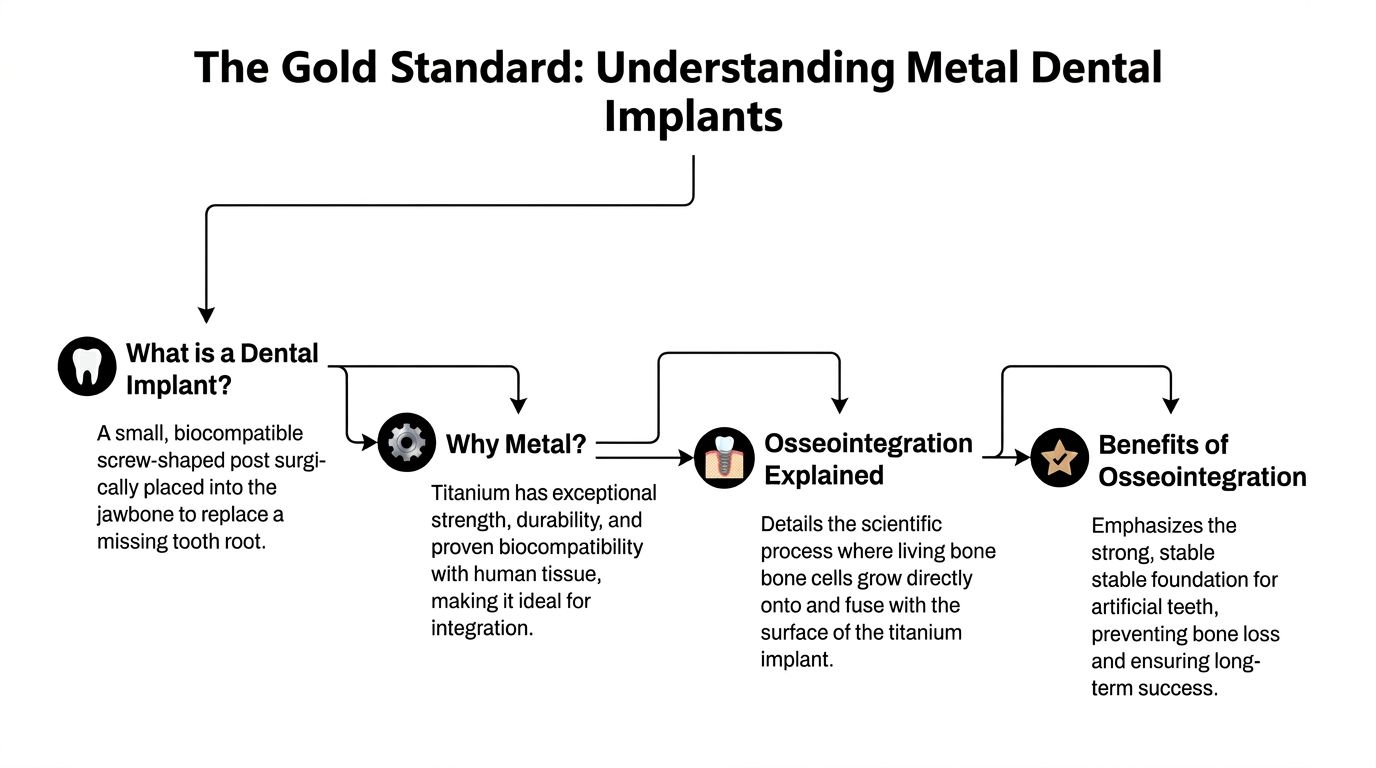
The key term is osseointegration. In plain language, that means the implant surface and the jawbone connect directly.
Imagine a post set firmly into the ground. If the post is stable and the surrounding ground supports it well, the structure above it stays strong. In the mouth, bone heals around the implant and creates the foundation for biting and chewing.
That connection is what separates implants from options that rest only on top of the gums.
Why titanium became the standard
Titanium has earned trust over time because of how predictably it performs in the body. According to dental implant statistics, titanium comprises 92.45% of all implants placed in the United States and has a documented 10-year success rate of up to 98%.
Those two facts matter for patients. First, this is not a fringe material. It is the one used most often. Second, it has a long clinical history behind it.
What this means in daily life
For a patient, the “gold standard” label is not about hype. It translates into practical benefits:
- Steady chewing: A well-integrated implant can support normal function better than a loose replacement.
- A secure foundation: The implant supports the restoration from within the jaw, not just above the gums.
- Long-term confidence: A material with a long track record can make decision-making easier.
If you want a simple overview of how implants work as a treatment option, this page on dental implants is a helpful next read.
The safest feeling choice for many patients is not the newest material. It is the one with the clearest history of success.
Metal in implant dentistry sounds intimidating at first. Once you understand that the goal is a stable bond with bone, the logic behind titanium becomes much easier to follow.
A Closer Look at Titanium Grades and Alloys
Not all titanium implants are exactly the same. Patients often hear “titanium” as if it were one single material, but dentists and manufacturers work with different forms depending on the clinical situation.
The ideal implant in the front of the mouth, for instance, may not be the ideal implant in a high-pressure chewing area.
Commercially pure titanium
Commercially pure titanium, often shortened to CP titanium, is valued for how well it interacts with bone. According to the review on titanium implant materials, commercially pure titanium (Grades 1-4) often achieves bone-to-implant contact rates over 70-90%.
That is one reason many clinicians favor purer titanium when they want excellent osseointegration. Fewer alloying elements can mean a simpler material profile, which appeals to both dentists and patients focused on biocompatibility.
In practical terms, this can be a good fit when the priority is dependable healing and a strong bond between implant and bone.
Titanium alloys for strength
Some areas of the mouth take heavier force. Back teeth do more grinding. Patients who clench or have powerful chewing patterns can place more stress on an implant system.
That is where stronger titanium alloys can be useful. The same source notes that stronger alloys like Ti-6Al-4V can withstand significant masticatory forces, which can allow the use of narrower implants that preserve bone and avoid grafting in up to 40% of cases.
That does not mean alloys are automatically better. It means they can solve a different problem. A stronger implant may help when space is limited or when the bone is narrow.
Why patients should care about the difference
The grade or alloy is not just a technical detail for the chart. It can affect treatment planning in ways patients notice:
- Bone preservation: A narrower but strong implant may help fit the available bone more conservatively.
- Implant location: Front and back teeth may place different demands on the material.
- Healing goals: Some cases prioritize maximum biocompatibility, while others require added mechanical strength.
If you want a general consumer-friendly explanation of understanding titanium grades and alloys, that resource can make the language less abstract.
A simple way to think about it
Commercially pure titanium is often chosen for how comfortably it works with bone. Titanium alloys are often chosen when extra strength helps the treatment plan.
Neither category is “good” and the other “bad.” The right question is whether the implant material matches your anatomy, bite, and restorative goals.
The best implant material is the one that fits your mouth, not the one with the most impressive-sounding name.
That is why a thoughtful implant consultation should include digital imaging, a close review of bone shape, and a discussion of function, not just appearance.
Addressing Concerns About Metal Allergies and Testing
For some patients, the biggest question is not strength or longevity. It is safety.
They may say, “I know implants work, but what if I react to the metal?” That concern deserves a calm, honest answer.
What we know about titanium sensitivity
Patient education online often leaves people with partial information. One of the most important points from this discussion of metal-free implant questions is that true titanium allergy is rare, but patients still need practical guidance about what testing options exist and when a metal-free implant is medically necessary versus just preferred.
That distinction matters.
A confirmed metal allergy is not the same thing as a general worry about metals. It is also not the same as a sensitivity to another metal, such as nickel, which many people have heard more about in jewelry and other products.
Where confusion happens
Patients often group several different concerns into one category:
- A diagnosed allergy: Someone has had formal medical evaluation or a known history with metals.
- A past reaction to jewelry: This may involve metals that are different from implant materials.
- A personal preference: Some people prefer choosing a metal-free option.
- Anxiety from online reading: Articles can raise fears without offering context.
Each of those situations calls for a different conversation.
Is routine testing always needed
There is no one-size-fits-all answer. Some patients do not need special testing. Others may benefit from a more detailed review of their history, especially if they have had documented reactions to metals in medical or dental settings.
The most important thing is not to guess.
If you suspect a metal sensitivity, bring that up before treatment planning starts. Material choice should be discussed early, not after the implant is already placed.
When metal-free may be considered
A metal-free implant may be appropriate for patients with a strong preference against metal or for those with a concern that needs additional evaluation. In other cases, titanium remains the more established and predictable choice.
The reassuring part is this. A careful implant discussion does not dismiss your concern. It separates fear from evidence and helps you choose with clarity.
Zirconia The Metal-Free Implant Alternative
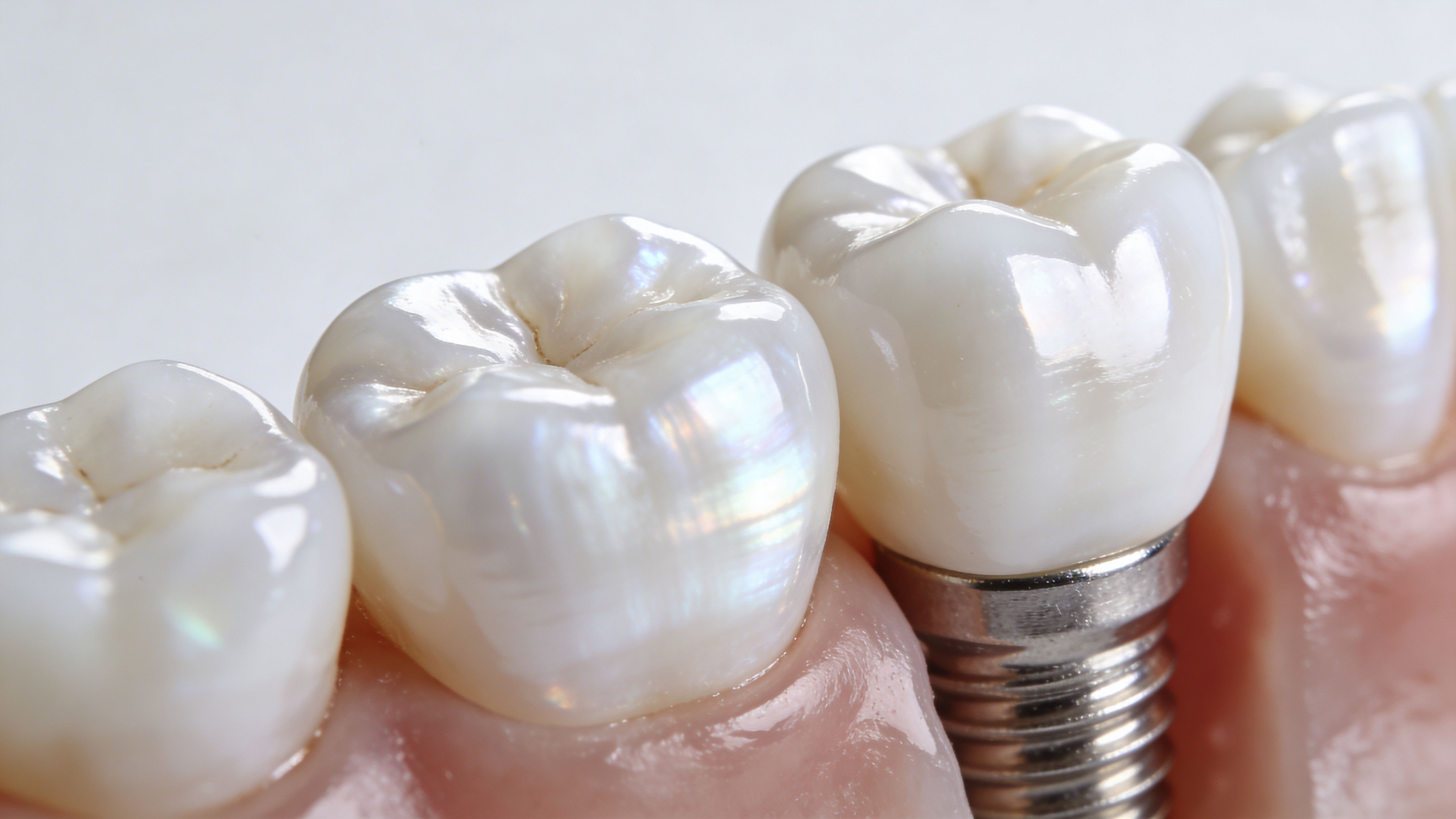
Zirconia is the main alternative patients ask about when they want to avoid metal. It is often described as a metal-free implant option and is especially appealing to people who value a tooth-colored material.
Why some patients prefer zirconia
The appeal of zirconia is easy to understand.
It is white rather than metallic in color, which can matter in areas where esthetics are a major priority. Patients with thin gum tissue may like the idea of a lighter-colored material beneath the gums. Others want a restoration that is fully metal-free because it aligns with their comfort level.
For people researching options, this article on a metal-free dental implant can be a helpful introduction to that approach.
Where titanium still has an advantage
The main caution with zirconia is not that it performs poorly. It is that its long-term comparative record is not as extensive in patient-facing data.
According to this overview of metal-free implants, zirconia implants show good bone integration and are durable, but there is a gap in patient education around specific long-term comparative data at 5, 10, and 15 years when matched directly against titanium’s much longer clinical history.
That does not make zirconia a bad choice. It means patients should understand that “metal-free” and “better” are not automatically the same thing.
A balanced way to compare them
Zirconia may be attractive when esthetics and material preference lead the conversation. Titanium often feels reassuring when the patient wants the longest-established option.
This short video can help you picture how implant choices are discussed in real life.