A tooth that throbs at night can make everything feel urgent. You may be searching for an emergency dentist in Chattanooga, TN, wondering if the pain means you need a root canal, and worrying that the treatment will be worse than the problem.
That fear is common. It is also usually based on old stories, not on how modern dentistry works.
Your Guide to a Comfortable Root Canal in Chattanooga TN
Hearing the words “you need a root canal” tends to trigger the same thoughts. Will it hurt. How long will I be in the chair. What will I feel. Will I be able to go back to work after. Those are reasonable questions, and patients deserve direct answers.
The first reassuring fact is that root canals are not rare or unusual. More than 95% of root canals succeed, and dentists in the United States perform approximately 25 million root canals each year according to root canal facts and statistics from Heroes Dental. That tells you something important. This is a routine, well-established way to save a natural tooth.

Why fear builds so fast
Many individuals are not only worried about pain. They are worried about the unknown.
Patients often tell us they can handle treatment if they know what is coming. The hard part is sitting at home in Chattanooga or Cleveland, replaying worst-case scenarios and reading scattered advice online. A simple explanation usually helps more than vague reassurance.
That is why understanding what to expect during a root canal matters. Once you know the sequence, the sensations, and the purpose behind each step, the procedure starts to feel much more manageable.
What matters most
A root canal is not punishment for a bad tooth. It is a way to keep that tooth.
Saving a natural tooth often means avoiding the larger chain of problems that follows an extraction. When a tooth can be preserved, chewing feels more natural, your bite stays more stable, and restorative dentistry tends to stay simpler.
A root canal is designed to remove infection and stop pain at the source, not create more of it.
If you are getting ready for treatment, our practical guide on how to prepare for a root canal can help you know what to do before your appointment.
A calm, honest expectation
In Chattanooga and Cleveland, many patients who need a root canal are also looking for a dentist near me, an emergency dentist, or a dentist in Chattanooga, TN who can treat pain without making the visit feel overwhelming. That is a fair standard.
You should expect clear communication, complete numbing before treatment begins, and a plan to restore the tooth afterward. You should also expect your questions to be answered in plain language. Anxiety usually drops when the process stops feeling mysterious.
Why a Root Canal is a Tooth-Saving Hero
A root canal treats the inside of a tooth. That is where the pulp lives. The pulp is the soft tissue that contains nerves and blood vessels.
When bacteria reach that inner space, the tooth cannot heal on its own. A deep cavity, a crack, repeated dental work, or an injury can open the door. Once the pulp becomes inflamed or infected, pressure builds inside a structure that has nowhere to swell.
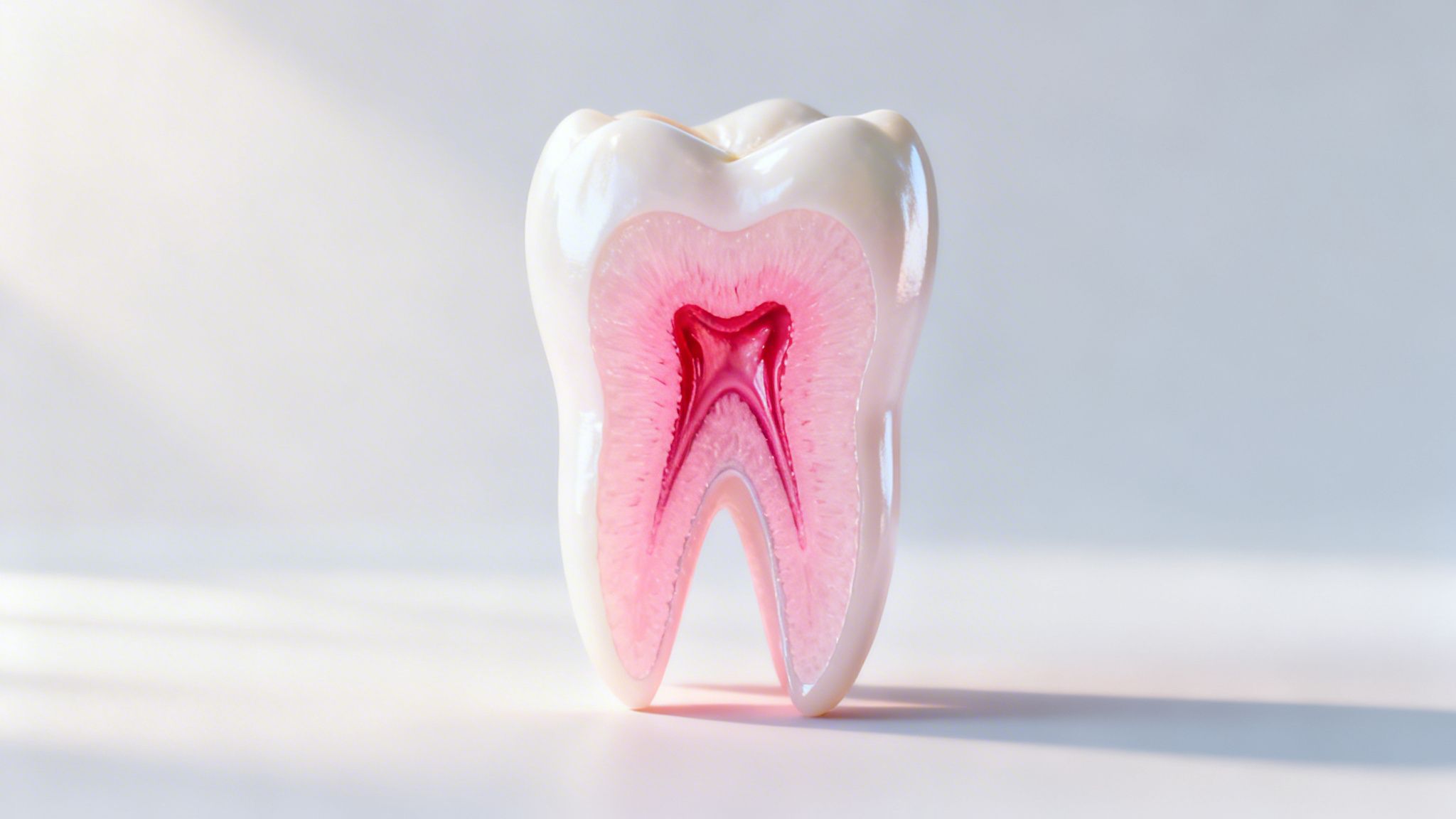
A Root Canal: Cleaning an Internal Wound
The easiest way to understand a root canal is to think about a deep wound that needs to be cleaned from the inside before it can heal. If infected tissue stays trapped, pain tends to continue and the infection can spread.
A root canal removes the unhealthy tissue, cleans the inner chamber and root canals, and seals the space so bacteria cannot easily get back in. The outer tooth stays in place. That is the point. You keep the structure you were born with.
What happens if you wait
Avoiding treatment rarely makes an infected tooth calmer. In practice, it usually means one of two things. The pain worsens, or the nerve dies and the problem gets quieter for a while, even though the infection remains.
Here is what untreated infection can lead to:
- Persistent pain: Biting pressure, temperature sensitivity, or a constant ache can become hard to ignore.
- Swelling: The area around the tooth or gums may become tender or puffy.
- Spread of infection: Bacteria can move beyond the tooth root into the surrounding tissues.
- Tooth loss: If the tooth cannot be saved later, extraction may become the only option.
That last point matters. Once a tooth is removed, replacing it often means more treatment, such as a bridge or dental implants. Those are valuable restorative dentistry options when a tooth is missing, but keeping your own tooth is usually the simpler path when it is still possible.
Signs that should not be brushed off
Some teeth announce trouble loudly. Others do not.
You should have a tooth checked if you notice:
- Lingering sensitivity: Heat or cold that hangs on after the food or drink is gone.
- Pain when chewing: Especially if one tooth feels different from the others.
- A darkening tooth: Color change can signal internal damage.
- A gum bump or tenderness: This can point to drainage from infection.
The goal of a root canal is not just to stop pain today. It is to stop the damage that pain is warning you about.
For patients in Chattanooga, TN or Cleveland, TN, this often starts as an emergency dental visit and then becomes a straightforward plan to save the tooth. That is very different from letting the problem grow until extraction becomes unavoidable.
A Step-by-Step Walkthrough of the Root Canal Procedure
Most anxiety comes from not knowing what happens in the chair. When patients know the order of events, the appointment feels less intimidating and more predictable.
The process is careful, deliberate, and focused on precision. Before getting into the details, this visual overview helps many patients feel grounded.
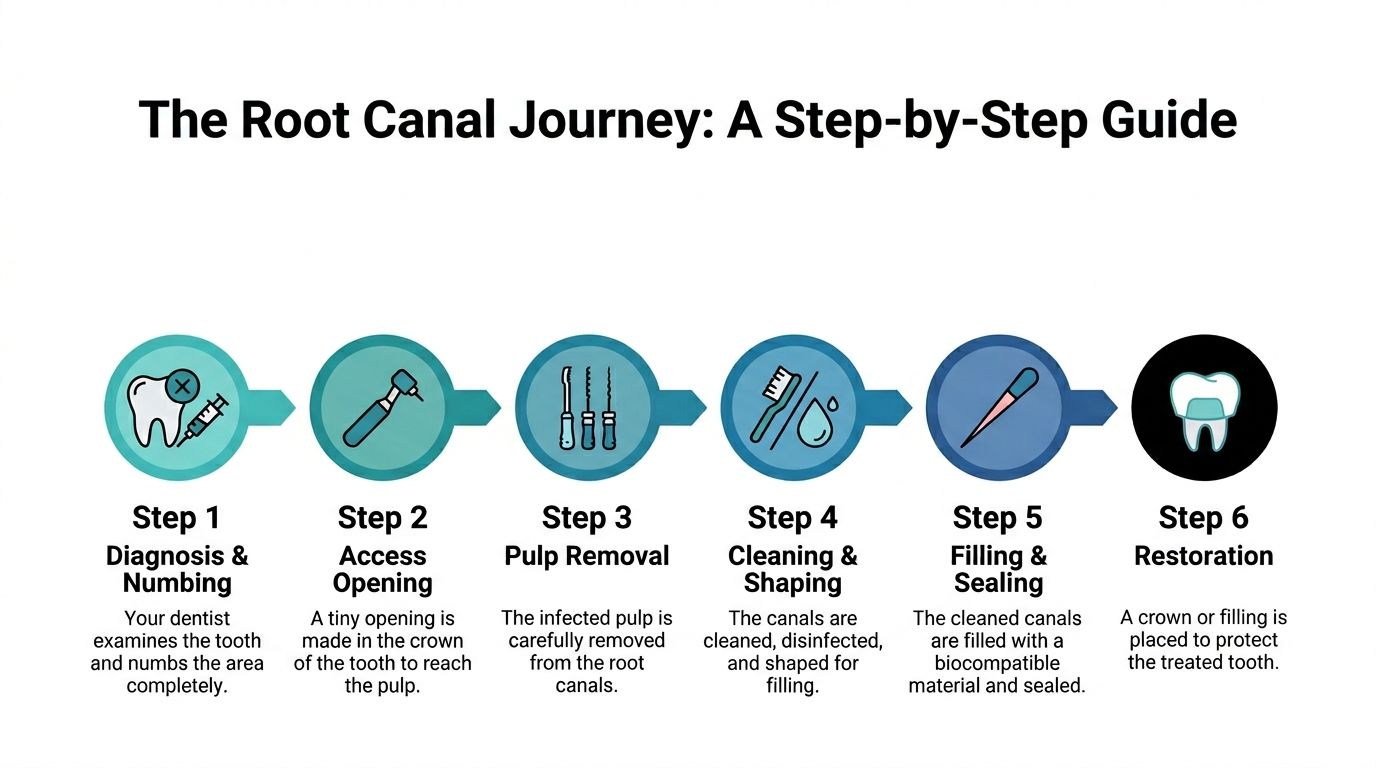
The procedure in plain language
It starts with diagnosis. The tooth is examined, and imaging is used to understand the root shape and the extent of the problem. During root canal treatment, imaging such as X-rays or advanced CBCT scans helps map the tooth’s anatomy, local anesthesia is used to numb the area, the tooth is isolated with a dental dam, the infected pulp is removed with fine files, and the canals are cleaned, shaped, and sealed. The treatment is often completed in one or two visits, with 60 to 90 minutes per visit for many cases, according to Delta Dental’s step-by-step root canal procedure guide.
Step 1 through Step 3
- Diagnosis and numbing
The first priority is comfort. The tooth and surrounding tissue are numbed before treatment begins. If the tooth is very inflamed, extra time may be needed for the anesthetic to fully work. - Isolation with a dental dam
A small protective sheet is placed around the tooth. This keeps the area clean and dry and helps prevent saliva and bacteria from getting into the tooth while it is being treated. - Access opening
A small opening is made in the top of the tooth so the inside chamber can be reached. This opening is what allows the dentist to remove the damaged tissue and clean the canals thoroughly.
A short video can also make the sequence easier to picture.
Step 4 through Step 6
By this point, the hard part for most patients is already over because the tooth is numb and the process has a clear rhythm.
| Step | What happens | Why it matters |
|---|---|---|
| Cleaning the canals | Fine instruments remove infected or inflamed pulp tissue | This eliminates the source of infection inside the tooth |
| Shaping and disinfecting | The canals are widened and cleaned with irrigants | This helps remove debris and bacteria so the space can be sealed properly |
| Filling and sealing | The canals are filled with gutta-percha, a biocompatible rubber-like material | This blocks bacteria from re-entering the tooth |
Delta Dental describes this clearly. Dentists use fine instruments to clean and shape the canals, disinfect them with irrigants such as sodium hypochlorite, and then fill them with heated, compressed gutta-percha to create a seal that helps prevent reinfection.
What works and what does not
Some patients assume the goal is to “kill the nerve” and move on. That is not enough. A successful root canal depends on complete cleaning, careful shaping, and a good seal.
What works is methodical treatment with strong visibility and isolation. What does not work is rushing, incomplete cleaning, or skipping the final restoration plan.
A root canal is not one dramatic step. It is a sequence of small, precise steps done well.
That is why the appointment can feel slower than patients expect even when they are comfortable. Precision matters more than speed.
What You Will Feel Hear and See
Most patients are pleasantly surprised by what a root canal feels like. The surprise is not that they feel nothing at all. The surprise is that the sensations are odd but manageable, and they are very different from pain.
That distinction matters. If you expect complete silence and zero pressure, normal sensations can feel alarming. If you know they are coming, they tend to pass without much stress.
What you will likely feel
The first sensation is usually the anesthetic. That may feel like a quick pinch and some pressure as the area is numbed. After that, the tooth should feel heavy, thick, or “asleep.”
During the procedure, many patients notice pressure. Some describe it as pushing, tapping, or a sense that something is happening deep in the tooth. That is normal. It is not the same as sharp pain.
You may also notice vibration. Instruments touching the tooth can create a buzzing or trembling feeling through the jaw. Again, unusual does not mean harmful.
What you may hear and smell
Dental procedures are sensory. Root canals are no exception.
Many patients notice:
- Drill sounds: A high-pitched sound may happen when the opening is made.
- Tool noise: Cleaning instruments can create lighter clicking or scraping sounds.
- Water and suction: You may hear a steady rinse-and-suction rhythm.
- A clinical smell or taste: Disinfecting solutions can have a distinct smell, and some patients notice a temporary taste despite isolation.
These details often surprise people more than the treatment itself. It is normal to notice pressure, vibration, drill sound, and a clinical smell from the disinfecting solution, and patient education about these non-painful sensations can reduce anxiety by up to 30% according to this explanation of root canal sensations from Marc A. Minch, DMD.
What you will see
You will not see much of the actual procedure because the team works from above and around you. You may notice:
- Overhead light: Bright but routine.
- Instruments passing in and out: Usually only briefly in your peripheral vision.
- The dental dam: A barrier that isolates the tooth so the area stays clean.
Some patients find it calming to close their eyes. Others prefer to know what is happening as they go. Both are fine.
If something feels strange but not painful, that usually means the numbing is doing exactly what it should do.
When to speak up
You should always say something if you feel pain. Pressure is expected. Sharpness is not.
A good dental team wants feedback during treatment. If the tooth needs more anesthetic or a short pause, that is part of good care, not an inconvenience.
This is one of the biggest differences between feared root canals and real modern treatment. Patients are not expected to “tough it out.” The procedure should move forward only when you are comfortable enough to continue.
Comfort Is Our Priority at Winn Smiles
Some teeth are easy to numb. Some are not.
The most frustrating root canal stories usually come from a highly inflamed tooth, often called a “hot” tooth. These are the cases that can make patients nervous because they worry the anesthetic will not work. That concern is real, and it should be addressed directly instead of brushed aside.

The difficult numbing issue
For about 10% to 20% of cases involving a highly inflamed tooth, standard anesthesia can be harder to achieve, and supplemental injections such as intraosseous or intraligamentary blocks are successful in over 90% of resistant cases, according to Harvard Health’s overview of what to expect if you need a root canal.
That is the practical answer anxious patients need. If a tooth is difficult to numb, there are additional tools and techniques available. The right move is not to push through discomfort. The right move is to stop, reassess, and deepen anesthesia until the tooth is ready.
What comfort care should include
Comfort is not one thing. It is a system.
A patient-focused root canal visit may include:
- Clear communication: Knowing what the next sound or sensation means lowers stress quickly.
- Sedation options: Nitrous oxide or oral conscious sedation can help anxious patients relax.
- Physical comfort support: Blankets, music, and small adjustments in the chair can make a long visit feel easier.
- Pacing: Short pauses help patients reset, swallow, and breathe.
For patients who have delayed treatment because of fear, these details matter. They are not extras. They are part of making care possible.
Technology that supports a gentler visit
Some practices also use modern tools that can improve precision and cleaning. Laser-assisted disinfection is one example. It is used to help clean canal spaces more effectively and can support a gentler post-operative experience in appropriate cases.
One local option is Winn Smiles, which offers customized comfort support, sedation options, and technology-forward care in Chattanooga and Cleveland. For a patient searching for a dentist in Chattanooga, TN, an emergency dentist, or even a cosmetic dentist near me who also handles restorative dentistry, that combination can be useful because the same office can often guide treatment from diagnosis through restoration.
The most comforting thing in dentistry is not a promise that nothing unusual will happen. It is knowing there is a plan for what to do if your tooth is one of the harder cases.
That is what anxious patients need to hear. Not “you’ll be fine” in a vague way, but “if the tooth is stubborn, we know how to handle it.”
After Your Root Canal Recovery and Your New Crown
When the root canal is finished, most patients feel relief mixed with a little uncertainty. The tooth is clean and sealed, but the area may still feel tender for a short time. That does not mean the treatment failed. It usually means the surrounding tissues are settling down after being inflamed.
Recovery is usually straightforward when patients know what to do and what not to do.
The first day or two
Your bite may feel different while the numbness wears off. Once feeling returns, it is common to notice mild soreness when chewing or pressure in the area.
A few practical habits help:
- Eat softer foods at first: Choose foods that do not force you to chew hard on the treated tooth.
- Avoid chewing directly on that side if instructed: Especially if the final crown is not in place yet.
- Keep the area clean: Brush and floss gently but normally unless your dentist gives a specific instruction.
- Return to normal activity as advised: Many patients go back to their regular routine quickly.
Why the crown matters so much
The root canal solves the infection problem inside the tooth. The crown solves the strength problem outside it.
A treated tooth can become more vulnerable to fracture, especially if a large amount of tooth structure was already lost to decay, breakage, or an old filling. That is why the final restoration is not an optional add-on in many cases. It is part of protecting the investment you just made in saving the tooth.
Modern technology like laser-assisted disinfection can make the procedure gentler and reduce post-operative sensitivity, and with a permanent crown the 10-year survival rate of a root-canal-treated tooth is over 92% according to this overview of root canal restoration and crown survival from Toothsavers.
What works long term
Patients sometimes ask if they can just wait on the crown if the tooth feels fine. Sometimes a short delay is manageable depending on the tooth and the temporary restoration. As a general rule, though, the longer an unprotected treated tooth goes without full restoration, the greater the risk of cracking.
A practical long-term plan usually looks like this:
- Complete the root canal
- Protect the tooth with the recommended restoration
- Return for routine dental care
- Treat the tooth like the rest of your smile, not like a fragile exception
A root canal saves the tooth from infection. A crown helps save it from breaking.
For patients who want to understand that restoration step better, this guide on what is a dental crown procedure explains how the final protective covering works.
Why same-day restoration is appealing
Many adults in Chattanooga and Cleveland want fewer appointments and fewer weeks of dealing with a temporary tooth. Same-day crown technology can help with that in the right case.
The main benefit is convenience, but not convenience alone. It can also improve continuity. You move from treatment to protection without a long gap. For a patient balancing work, family, and dental anxiety, that often makes the whole process feel more manageable.
This is also where restorative dentistry connects with the bigger picture. If a tooth can be cleaned, sealed, and protected, you may avoid extraction and the need for tooth replacement options later, including dental implants near me searches that many patients would rather avoid if their natural tooth can still be saved.
Your Trusted Emergency Dentist in Chattanooga and Cleveland
Dental pain does not wait for a convenient time. It starts during a work week, before a trip, or in the middle of the night when every heartbeat seems to land in one tooth. In those moments, patients usually are not looking for a long lecture. They are looking for a dentist near me who can explain the problem clearly and help them feel safe moving forward.
That is why root canal care should be practical, calm, and comfort-focused. Patients in Chattanooga, TN and Cleveland, TN need an office that can handle urgent pain, evaluate whether the tooth can be saved, and complete the restorative plan after treatment. That may include emergency dentistry, dental x-rays, new patient exams, restorative dentistry, and in some cases alternatives such as tooth extraction or dental implants if a tooth is beyond repair.
What patients should expect from local care
A strong local dental home does more than fix one issue. It helps patients move from crisis care to steady oral health.
That often means access to:
- Emergency visits for tooth pain
- General dental care such as cleaning and exams
- Restorative treatment for damaged teeth
- Cosmetic services for smile improvements after health is restored
- Clear guidance if replacement options are needed
Many people who first search for an emergency dentist later want one office for ongoing care. They may also be searching for a cosmetic dentist near me, a dentist in Chattanooga, TN, or a practice that can handle same-day crowns and long-term maintenance under one roof.
The next step is simple
If you think you may need a root canal, do not wait for the pain to become impossible. An exam can tell you whether the tooth is inflamed, infected, cracked, or irritated from another cause. Even when a root canal is needed, the situation usually feels much less frightening once there is a clear plan.
If you are in Chattanooga, Cleveland, or a nearby service area, reaching out early gives you more treatment options and a better chance of saving the tooth.
If you are dealing with tooth pain, sensitivity, or swelling and want clear answers, contact Winn Smiles to request an appointment, a consultation, or a second opinion. Whether you need an emergency dentist, restorative care, or guidance on the next step, the team can help you understand your options and move forward with confidence.