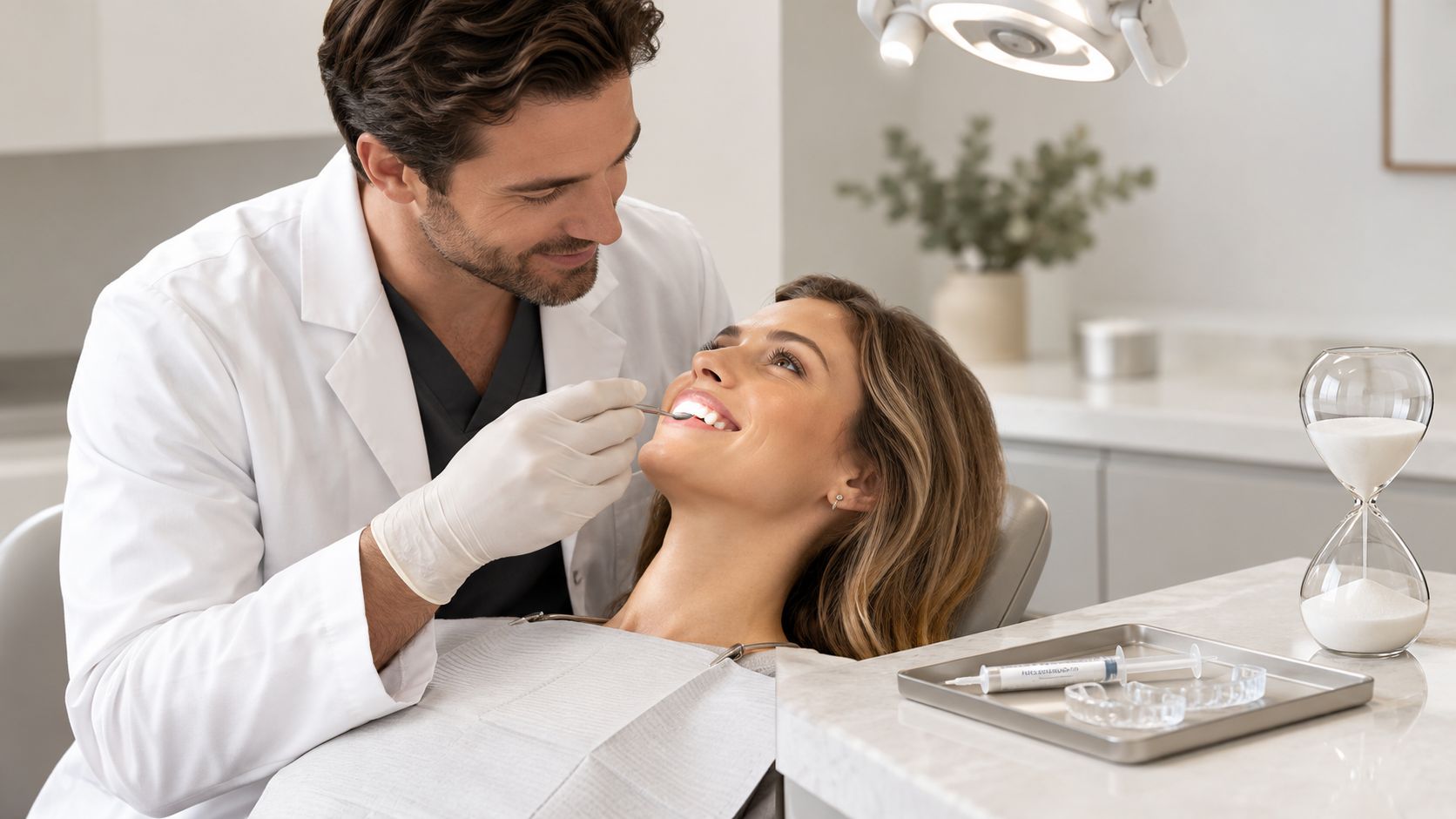
A lot of people start looking into teeth whitening at the same moment. They catch their smile in a photo, notice yellowing in the bathroom mirror, or feel less confident when they laugh in a meeting or at dinner. The concern usually isn't vanity. It's wanting your smile to look healthy, clean, and like you take care of yourself.
If that sounds familiar, you're not alone. Patients across Chattanooga and Cleveland often search for a cosmetic dentist near me because they want clear answers before they commit to treatment. They want to know what whitening can achieve, what it won't do, whether it will make their teeth sensitive, and how long the result will last.
Good guidance matters. Teeth whitening is a real dental treatment with predictable outcomes, but the right approach depends on your stain type, your existing dental work, and your expectations. A trusted dentist in Chattanooga, TN should help you understand those trade-offs so you can choose with confidence.
Your Cosmetic Dentist for a Brighter Smile in Chattanooga TN
A common patient story goes like this. Someone has a wedding, work event, vacation, or family photos coming up. They're brushing, flossing, keeping up with cleanings, and still feel like their smile looks dull. Then they hesitate, because they don't want to walk into a dental office and feel pushed into something they don't understand.
That hesitation makes sense. Cosmetic dentistry should feel straightforward, not intimidating.
At a local practice, the first job isn't selling whitening. It's listening. Some patients want a subtle refresh. Others want the brightest result they can safely get. Some are worried about old fillings showing after whitening. Others have tried strips before and were disappointed. Those are all different starting points, and they deserve different recommendations.
What most patients are really asking
Individuals seeking a dentist near me or a cosmetic dentist near me typically have a few practical questions in mind:
- Will this look natural
- Will it work on my kind of stains
- Will it hurt
- Will the results last
- Is professional whitening worth it compared with store-bought products
Those are the right questions. Whitening isn't one-size-fits-all, and honest answers build trust faster than big promises.
Teeth whitening works best when the plan matches the person, not when the product makes the decision.
A good dental consultation also looks beyond color alone. If someone has chips, worn enamel, old bonding, crowns, or gum recession, those details affect the result. Sometimes whitening is the ideal first step. Sometimes a patient gets a better cosmetic result by pairing whitening with another treatment later, such as bonding or veneers. If someone also needs routine dental care, cleaning and exams, or updated dental x-rays, those basics help create a healthier foundation before cosmetic work begins.
Why local guidance matters
Patients in Chattanooga and nearby communities usually don't want a generic internet answer. They want to sit down with a real dentist, look at their smile, and hear what makes sense for them. That's the value of working with a local dental team that also provides general, restorative, and emergency care. You're getting advice that fits your whole mouth, not just one cosmetic concern.
What Teeth Whitening Results Can I Realistically Expect
You look in the mirror a week before family photos, or you notice your smile looks more yellow on video calls than it does in your bathroom mirror. The first question is usually simple. How much whiter can my teeth get?
The honest answer is that professional whitening often gives the most noticeable improvement, but the final result depends on your starting shade, the type of staining present, and whether you already have visible dental work.
What a shade change actually means
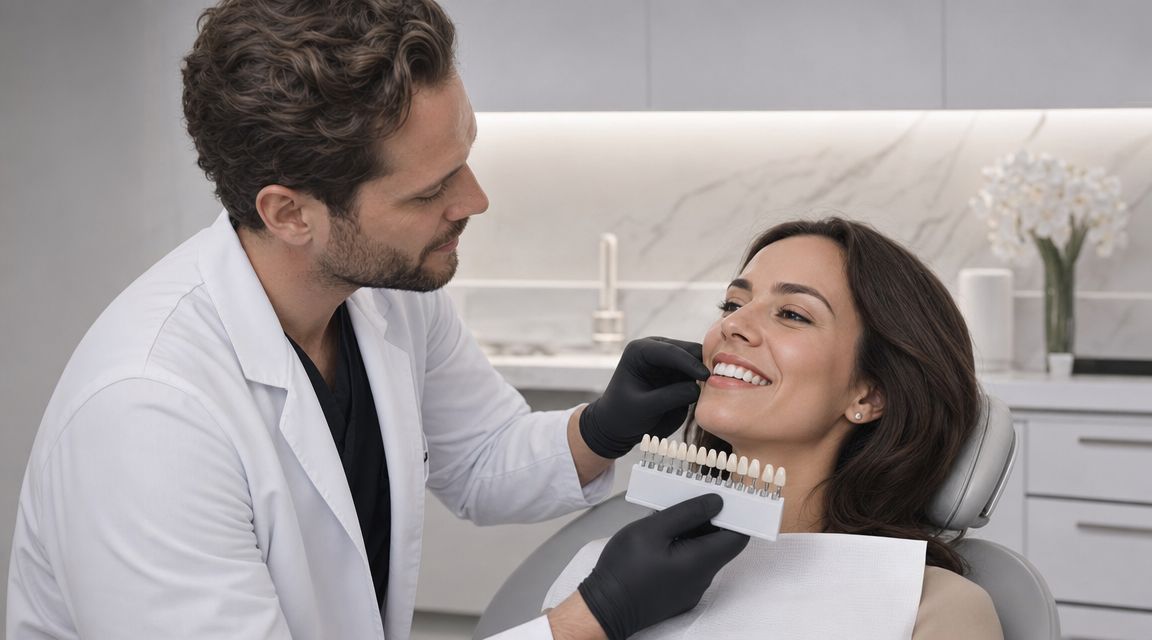
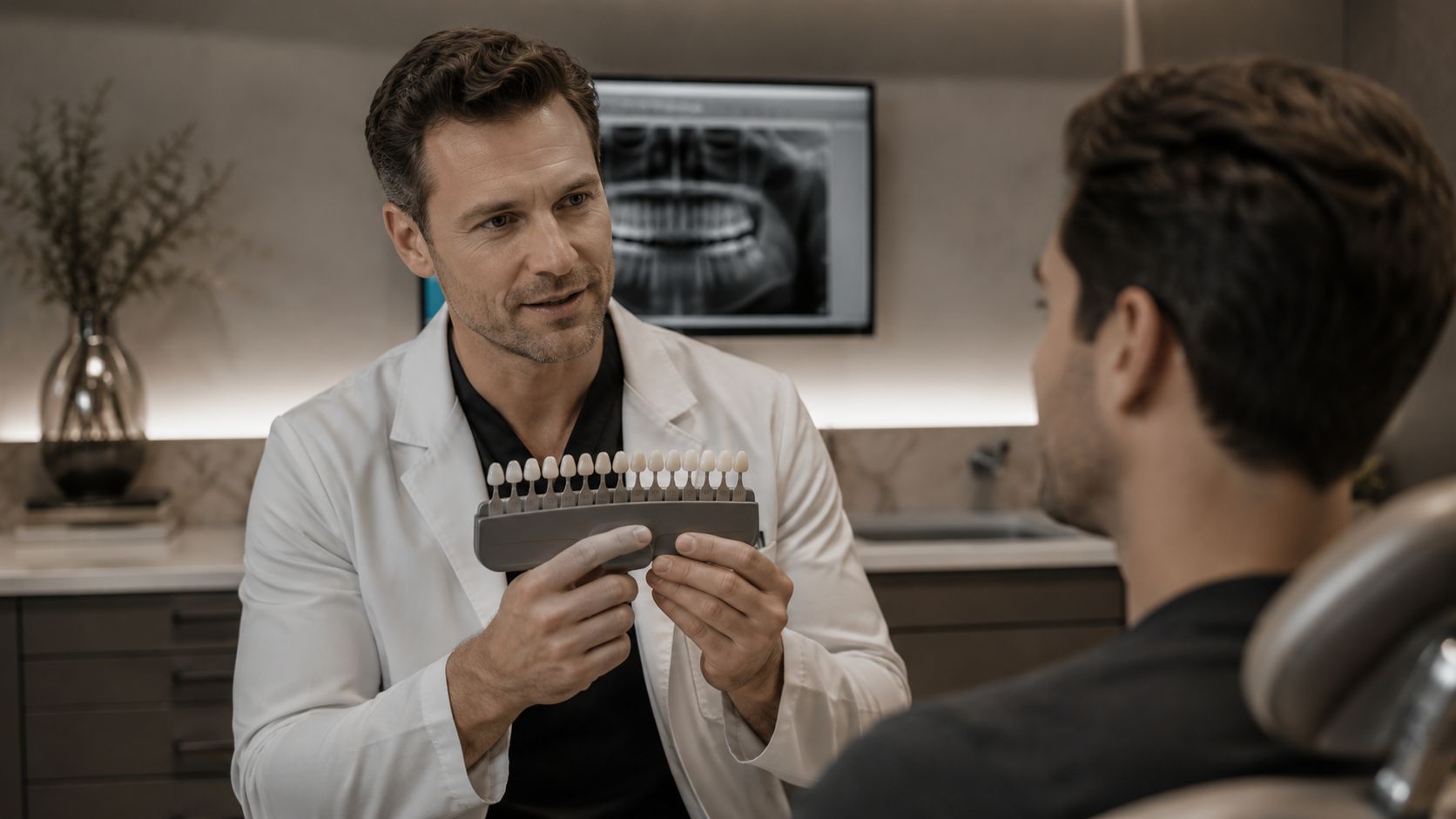
In practice, dentists measure whitening with a shade guide. That gives us a before-and-after reference instead of vague terms like “a little brighter.” Patients usually appreciate that because it turns the conversation into something visible and specific.
A major review summarized in this clinical overview of tooth whitening reports that professional whitening can produce the most dramatic results, with teeth typically becoming three to eight shades lighter, while peroxide-based strips and gels used at home usually lighten teeth by one to two shades after 10 to 14 days of use.
That range matters. Someone who wants a small refresh before an event may be happy with an over-the-counter option. Someone who wants a stronger change, more even results, and supervision if sensitivity is a concern usually does better with professional treatment.
What patients tend to notice first
Patients rarely describe results by saying they moved several shade tabs lighter. They usually say their teeth look cleaner, less yellow, and brighter in indoor light or in photos. That is often the point where whitening starts to feel worthwhile.
If you are comparing options and want to see how realistic cosmetic changes are discussed, this teeth whitening before and after guide offers a helpful visual reference.
Photos add another layer. Tooth color can look different depending on lighting, lipstick tone, skin tone, and camera settings. If you are preparing for portraits, engagement photos, or a special event, PhotoMaxi's guide to flawless makeup is a useful companion read for balancing your overall look on camera.
What whitening can and can't do
Whitening can improve many common stains, but it does not make every smile the same shade of white. Natural enamel has its own baseline color. Some teeth brighten quickly. Others improve more gradually and stop short of the bright white patients had in mind from edited photos or social media.
I often tell patients that a good result is a healthier-looking, brighter version of their own smile. That is a realistic goal and, in most cases, the one that looks best.
The same clinical review mentioned earlier also found that whitening is generally safe and effective when used as directed. It noted that light activation did not meaningfully improve results or reduce sensitivity in the evidence reviewed.
Here's a short explainer if you want to see the topic discussed visually:
Key Factors That Influence Your Whitening Outcome
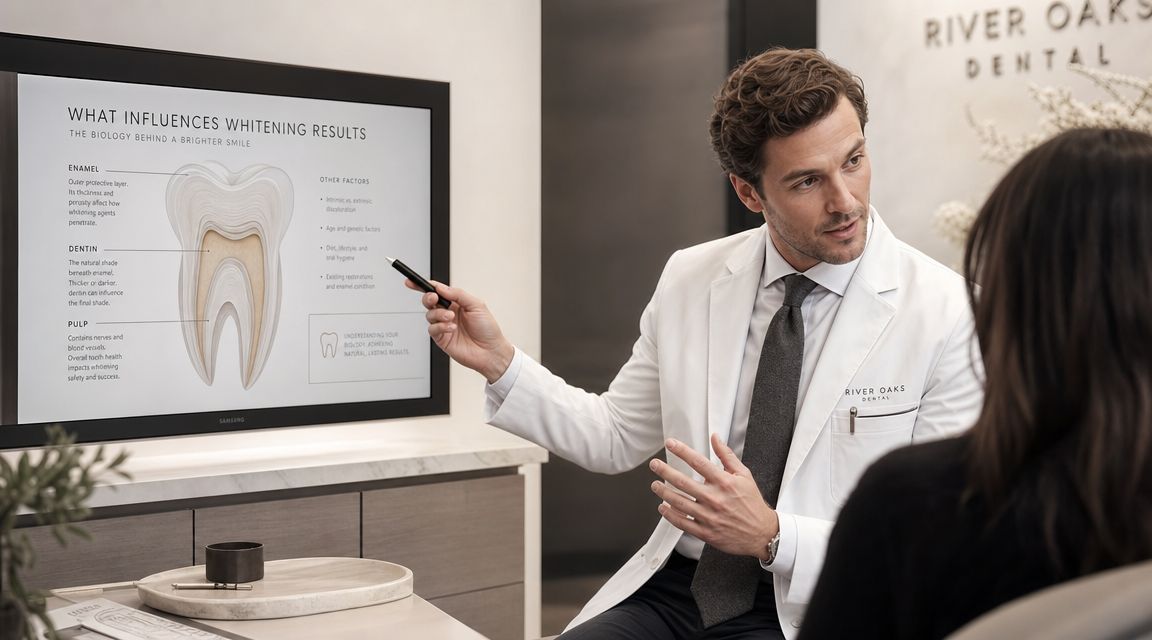
A common patient question is, “Why did my friend get a brighter result than I did with what sounded like the same treatment?” The answer usually comes down to starting conditions. Whitening results depend on the type of stain, the condition of the enamel, and whether there is visible dental work in the smile.
Surface stains usually respond better
Stains from coffee, tea, red wine, tobacco, and similar habits tend to sit on or near the outer enamel. Those cases often respond more predictably because whitening agents are designed to break down stain molecules so teeth look lighter. The American Dental Association explains that whitening products commonly use hydrogen peroxide or carbamide peroxide for that purpose in its ADA whitening overview.
That does not mean every surface stain lifts to the same degree. Long-standing buildup, enamel wear, and inconsistent use can all affect the final shade.
Deeper discoloration needs a more careful plan
Some teeth darken from within. Gray tones, banding, spots, trauma-related discoloration, and certain medication-related changes often respond less evenly than general yellowing. Whitening may still improve the smile, but the change is usually less dramatic and sometimes less uniform.
This is one reason I recommend an exam before treatment, especially if the color looks patchy or one tooth appears darker than the others. A shade issue is only part of the story. The pattern matters too. If you want a better sense of which treatments fit different stain types, our guide to professional and at-home teeth whitening options can help.
Chairside reality: Patients with healthy natural enamel and generalized yellow staining usually see the most predictable improvement.
Restorations stay the same color
Whitening changes natural tooth structure. It does not change the shade of crowns, fillings, bonding, or veneers. The same ADA resource also notes that tooth-colored restorations do not respond to whitening products.
This point matters most for front teeth. If you have older bonding on an edge, a visible crown, or veneers in the smile zone, the natural enamel around them may lighten while the restoration stays exactly where it started. In practice, that means whitening may still be the right first step, but the cosmetic plan may need to include updating a visible restoration afterward so the color matches.
| Situation | Likely whitening response | What to consider |
|---|---|---|
| Mostly natural front teeth | Often more predictable | Whitening may be a good first step |
| Visible fillings or bonding | Natural teeth may lighten unevenly compared with restorations | Color matching may need review afterward |
| Crowns or veneers in the smile zone | Restorations will not change color | Replacement timing may matter if you want a more uniform result |
Sensitivity and gum irritation affect how treatment should be paced
Tooth sensitivity and temporary gum irritation are the side effects dentists see most often with whitening. They are usually short-lived, but they still matter when choosing strength, wear time, and treatment format.
A faster approach is not always the better approach. Some patients do well with stronger in-office whitening. Others get a better experience and a steadier result with custom trays used over more days. At Winn Smiles, that is part of the conversation from the start. The goal is not only a whiter smile. The goal is a result that looks good and feels manageable while you get there.
Comparing Whitening Options Available to You
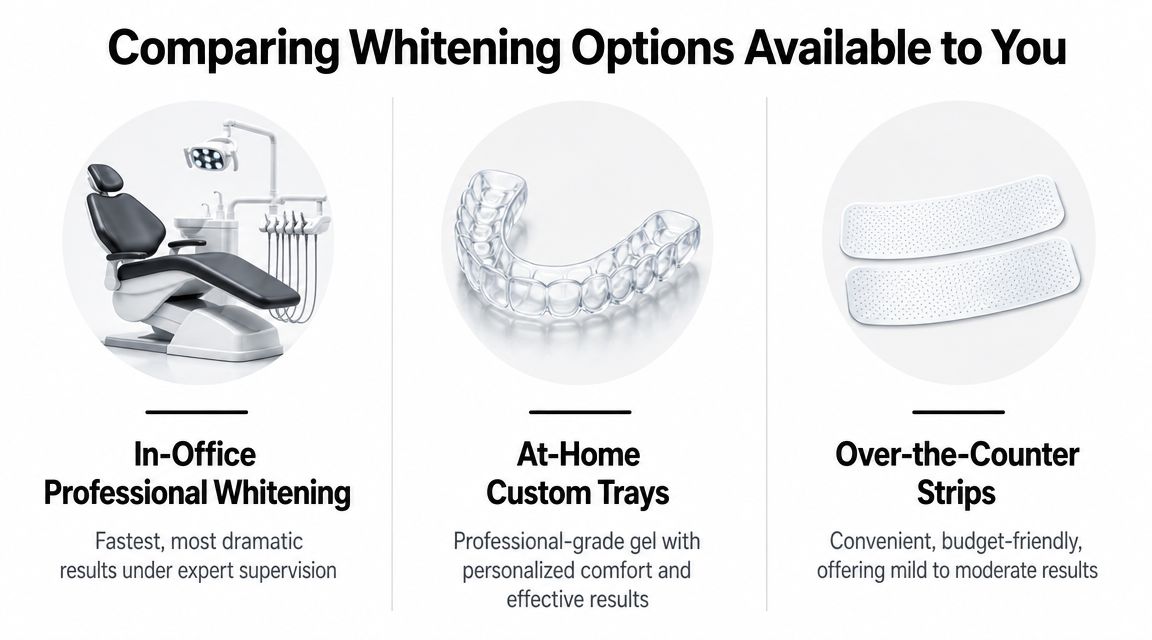
Whitening options usually fall into three categories. In-office treatment, custom take-home trays from a dental office, and over-the-counter strips or gels. Each has a place. The right choice depends on how fast you want results, how noticeable a change you want, and how much guidance you want during the process.
A side-by-side view
| Option | Main advantage | Main trade-off | Good fit for |
|---|---|---|---|
| In-office professional whitening | Fast, supervised, most dramatic visible change | Higher upfront investment | Patients who want a noticeable result quickly |
| Custom take-home trays | Professional guidance with flexible at-home use | Slower than chairside treatment | Patients who want control and gradual whitening |
| Over-the-counter strips and gels | Easy to buy and convenient | Milder results and less customization | Mild staining or maintenance minded users |
In-office whitening
This is the most direct route when someone wants a bigger visible improvement and wants a dental team involved from the start. It also gives the dentist a chance to check whether sensitivity, restorations, or uneven staining are likely to affect the final look.
For patients considering office-based treatment in this area, Winn Smiles teeth whitening options outlines one local path among the available choices.
The right whitening option isn't always the strongest one. It's the one that fits your teeth, your schedule, and how much change you want to see.
Custom trays from a dentist
Custom trays sit in the middle. They give you a more personalized fit than generic store-bought trays, and that usually means more even gel contact and more control over wear time. Many patients like this option because they can whiten gradually and pause if sensitivity shows up.
This approach can also make sense for people who want flexibility. They may not need one dramatic jump in brightness. They may prefer a steadier process that fits into everyday life.
Over-the-counter products
Strips and gels are widely available and can help with mild surface staining. They're often the entry point for people who want to test whitening before booking a cosmetic visit. The trade-off is that they can be less customized for your teeth and may not sit evenly on crowded or irregular surfaces.
They also don't come with an exam. If the color issue is partly related to restorations, enamel wear, or another dental concern, a box off the shelf won't identify that.
How dentists usually guide the choice
A practical recommendation often comes down to these questions:
- How fast do you want to see a change
- How important is a larger color shift
- Do you have visible crowns, fillings, or veneers
- Have you had sensitivity with whitening before
- Are you trying to refresh before a specific date
That's why cosmetic dentistry works better as a conversation than a product purchase.
How to Maintain Your Bright New Smile Long-Term
You finish whitening, love the mirror, and then a few months later start wondering why your teeth do not look quite as bright. That is normal. Whitening fades because teeth are exposed to new stain every day, and maintenance plays a bigger role than the initial treatment many patients expect.
How long results can last
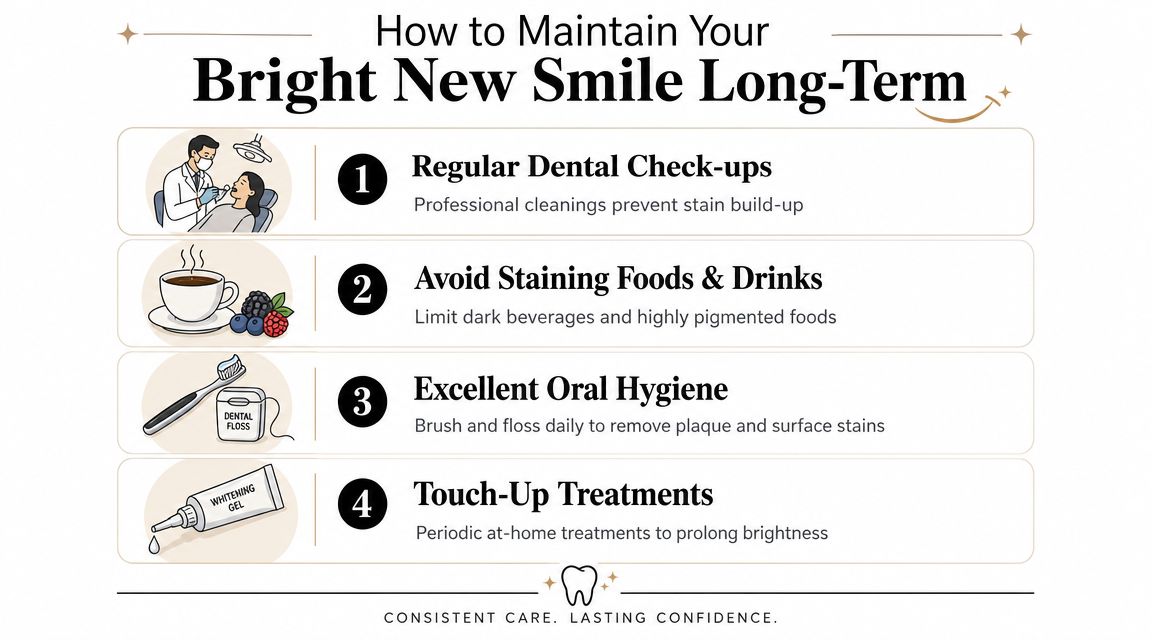
According to WebMD's teeth whitening guide, teeth whitening results are not permanent, and their durability can range from four months to three years, depending on the whitening method used and the patient's diet. The same source notes that the most effective long-term regimen often involves an in-office treatment followed by periodic home touch-ups.
That wide range reflects real life. A patient who drinks coffee through the morning, sips tea in the afternoon, and enjoys red wine on weekends will usually see color return sooner than someone with fewer staining habits.
Habits that help preserve your result
A few simple choices usually make the difference between a smile that stays brighter and one that fades quickly.
- Be selective with dark drinks. Coffee, tea, cola, and red wine are common sources of new stain.
- Rinse with water after staining foods or drinks. It reduces how long pigments sit on the enamel.
- Keep brushing and flossing consistent. Daily plaque and surface buildup can make teeth look dull faster.
- Stay on schedule with cleanings and exams. Professional care removes surface stain and lets your dentist monitor sensitivity, enamel wear, and any changes around restorations.
- Use touch-up whitening only as directed. Small refreshers are often more predictable than waiting until teeth darken again.
Why a maintenance plan works better
In practice, patients tend to do better with occasional touch-ups than with repeated heavy whitening sessions. The smile stays more stable, and the process is easier to manage.
That matters for safety too. As noted earlier, stronger peroxide systems can affect enamel in laboratory settings when they are overused. The practical takeaway is simple. Do not stack whitening products or repeat high-strength treatments too often without a dentist's guidance.
At Winn Smiles, this is part of the conversation from the start, especially for patients in Chattanooga and Cleveland who want a result that still looks natural months from now. The goal is not to chase the brightest possible shade. The goal is to get a shade you like, then keep it looking good with a realistic plan you can follow.
Begin Your Whitening Journey at Winn Smiles
A whitening consultation should feel calm and useful. You should leave knowing whether you're a good candidate, what kind of result is realistic, and whether any existing dental work may affect the final appearance. That's the standard patients should expect from a dentist in Chattanooga, TN or Cleveland who offers cosmetic care.
At a visit, the dentist typically starts by examining your teeth and gums, reviewing restorations that show when you smile, and talking through your goals. Some patients want brighter teeth before a big event. Others are building a larger smile plan that may also include veneers, bonding, same-day crowns, or restorative work. If there's active decay, gum irritation, or another issue that needs attention first, that should be discussed plainly.
What patients usually appreciate most
The experience matters almost as much as the result. People looking for a dentist near me often aren't only comparing whitening methods. They're looking for a practice where they feel comfortable asking questions and not being rushed.
That matters even more for patients who feel anxious about dental treatment. A comfort-focused office, clear communication, and a personalized plan can make cosmetic dentistry feel much more approachable.
A practical next step
If you've been comparing strips, trays, and office whitening on your own, the most helpful next move is a consultation. An in-person exam can tell you more than online product descriptions ever will. It can also help you understand whether whitening alone is enough or whether another cosmetic option would create a more even result.
Patients in Chattanooga, Cleveland, and nearby service areas often start with whitening because it's one of the simplest ways to refresh a smile. When the plan is structured appropriately, it can also become the first step toward broader dental care, from routine cleanings to restorative dentistry, dental implants near me searches, or even seeing an emergency dentist when more urgent needs come up.
If you're ready to talk through your options, schedule a consultation with Winn Smiles. The team can evaluate your smile, answer your questions about teeth whitening results, and help you choose a treatment plan that fits your goals in Chattanooga or Cleveland.