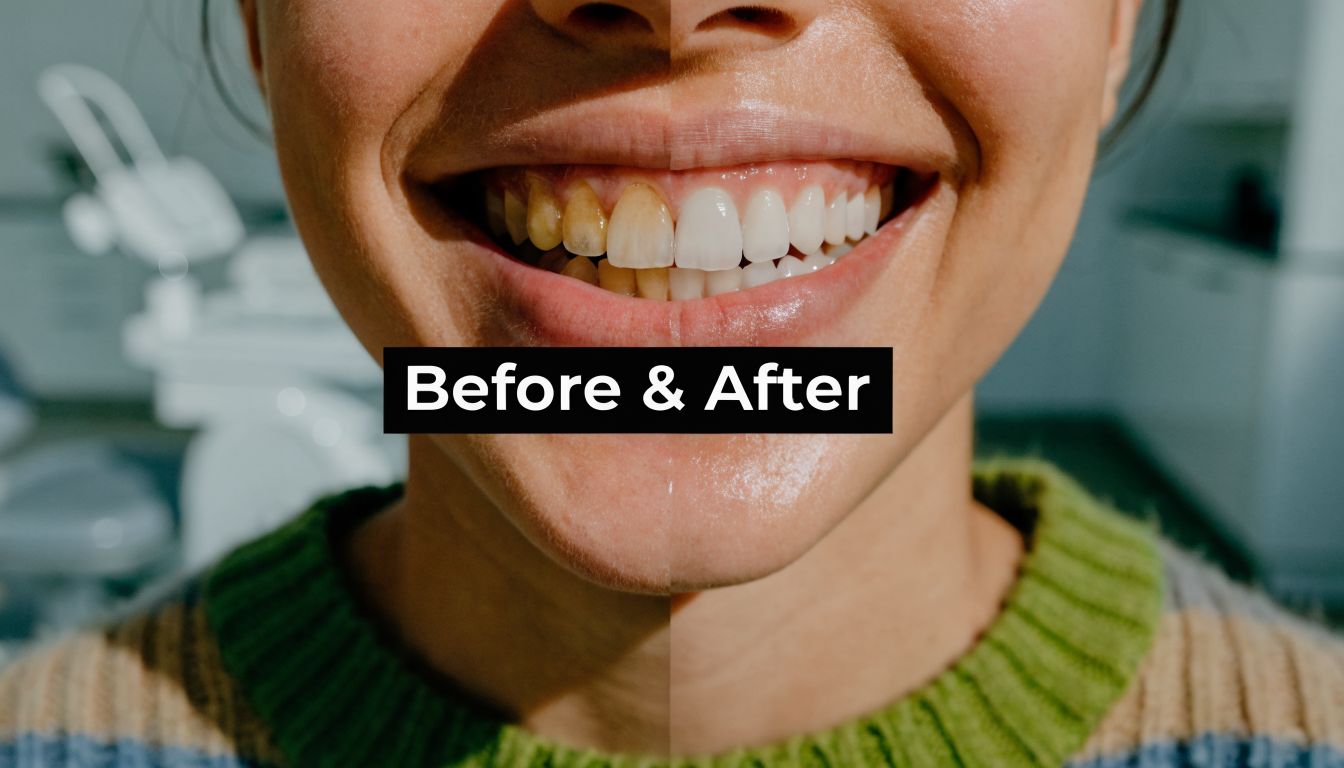
If you're searching for teeth whitening before and after, there's a good chance you're not just curious about shades on a chart. You want to know whether your smile can look brighter in real life, in photos, at work, at dinner, and when someone hands you a phone for a quick group picture.
A lot of people in Chattanooga and Cleveland feel the same way. Their teeth may look more yellow than they used to, coffee has left its mark, or years of normal aging have dulled the brightness they remember. They may brush every day and still feel like their smile looks tired.
That frustration is understandable. Tooth color affects how people feel about smiling, laughing, and even speaking up. If you've been comparing strips, searching for a cosmetic dentist near me, or wondering whether professional treatment is worth it, the key is understanding what causes staining, what whitening can realistically change, and why one person's result can look very different from another's.
Your Guide to a Brighter Smile with a Cosmetic Dentist in Chattanooga TN
A common story goes like this. Someone catches their reflection before a meeting, notices that their teeth look darker than they expected, and starts smiling with their lips closed. Then the search begins. They look up whitening photos, compare products, and wonder if they need a cosmetic dentist in Chattanooga, TN or Cleveland to get a result that looks clean and natural.
That search makes sense because whitening isn't only about vanity. For many patients, it's about feeling comfortable again. It can mean wanting to look polished for a wedding, refreshed for job interviews, or more like yourself after years of coffee, tea, tobacco, or simple wear.
At a local dental office, those concerns are familiar. People looking for a dentist near me, a dentist in Chattanooga, TN, or a cosmetic dentist near me often ask the same practical questions:
- Will whitening work on my teeth
- How white can I realistically get
- Will it make my teeth sensitive
- Should I do in-office whitening or trays at home
- What if I already have crowns or fillings
Those are the right questions to ask.
Why before and after photos only tell part of the story
A photo can show a brighter smile. It can't show why that result happened. It also can't tell you whether the patient had surface stains from coffee, deeper discoloration from aging, or dental work that needed to be matched carefully.
That's why a personalized plan matters more than a gallery alone. Two people can start with teeth that both look "yellow" and still need very different treatment approaches.
Practical rule: The most useful whitening consultation doesn't start with "How white do you want to be?" It starts with "What are you seeing in the mirror, and what's causing it?"
For patients in Chattanooga and Cleveland, whitening often fits into a bigger picture of care. Some need a cleaning first. Some need an exam because a dark tooth can mean more than staining. Others are also exploring veneers, same-day crowns, Invisalign, restorative dentistry, or even an emergency dentist because a damaged tooth changes how the smile looks overall.
A brighter smile starts with a simple question. Are your teeth stained on the surface, darker from within, or affected by existing dental work that won't change color with bleach?
Understanding Why Teeth Lose Their Brightness
Teeth don't all darken for the same reason. That's where many people get confused. They assume every yellow or dull smile should respond the same way to whitening, but tooth color changes can happen on the outside, on the inside, or both.
Surface stains and deeper discoloration
The easiest way to think about it is this.
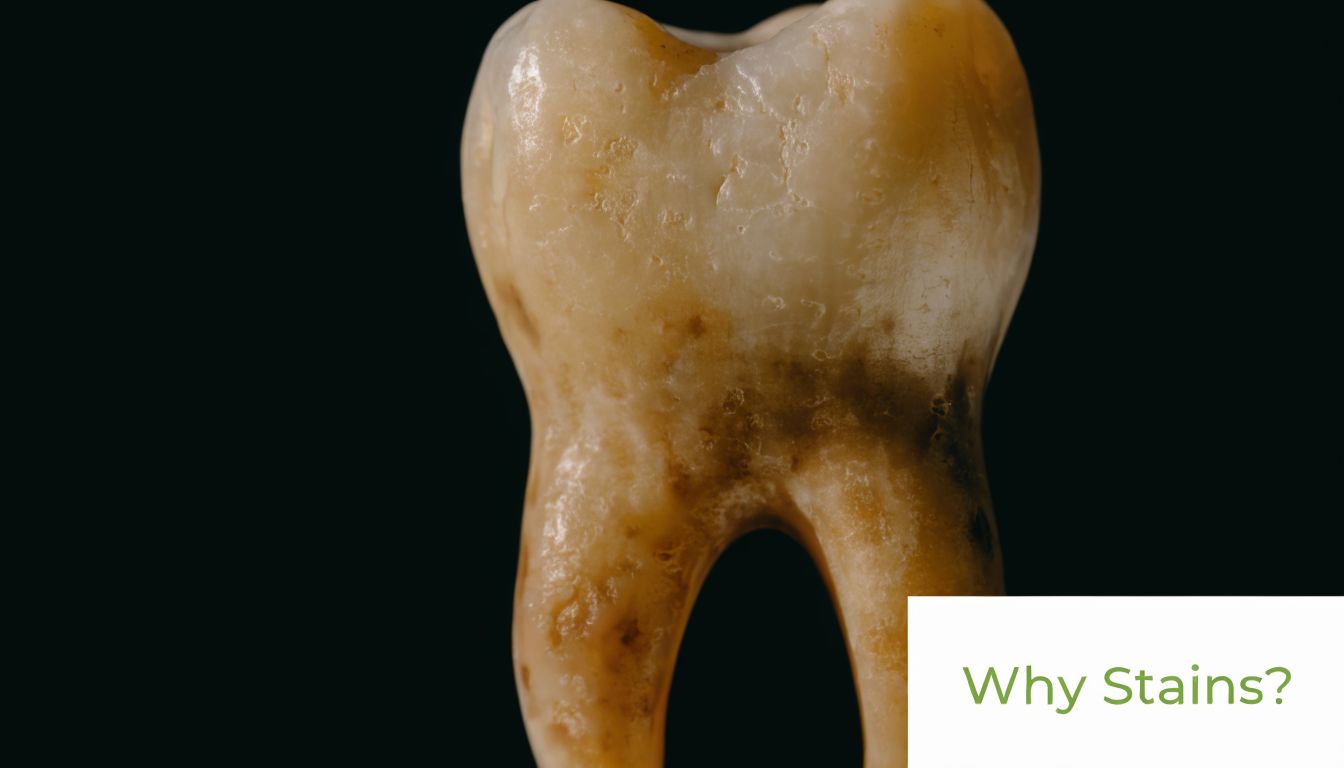
Extrinsic stains are like spots on a white shirt. They sit on the outside. Coffee, tea, red wine, tobacco, and dark foods can cling to the enamel surface and gradually make teeth look tan, yellow, or brown.
Intrinsic stains are more like color changes inside the fabric itself. These sit deeper in the tooth. Aging is a common reason. Over time, enamel becomes less bright, and the darker layer underneath becomes more visible. Some medications, genetics, and tooth trauma can also change color from within.
Both types matter because whitening works differently depending on what it's trying to lift.
What many patients notice first
Many individuals don't say, "I think I have extrinsic staining." They say things like:
- "My teeth look dull in photos."
- "The edges don't look bright anymore."
- "I had braces off years ago, and now I want everything to look cleaner."
- "One tooth looks darker than the others."
Those observations help a dentist figure out whether a simple cleaning, professional whitening, or another cosmetic option makes the most sense.
A professional exam is important here. If discoloration comes from plaque, tartar, or old buildup, a cleaning may improve the appearance before whitening is even discussed. If one tooth has changed color on its own, that may need a different kind of evaluation entirely.
Why whitening is so popular
Whitening remains one of the most requested cosmetic services because people notice the difference quickly in everyday life. Consumer adoption is broad, with about two-thirds of U.S. adults, or 67%, having tried some form of whitening, and nearly 90% of orthodontic patients requesting it according to teeth whitening statistics from Alpine White. That same source notes that people report boosts in self-confidence, professional experiences, and mood after whitening.
A brighter smile doesn't always mean unnaturally white teeth. For many patients, success means looking healthier, cleaner, and more rested.
Why a cleaning and exam come first
Before whitening, a dentist needs to answer a few basic questions.
| What your dentist checks | Why it matters |
|---|---|
| Surface buildup | A cleaning may remove some discoloration before whitening starts |
| Gum health | Irritated gums can make whitening less comfortable |
| Cavities or cracks | These may need treatment first |
| Existing crowns, veneers, or fillings | These materials don't whiten like natural teeth |
| Type of staining | Helps predict how strong the result may be |
If you're looking for a dentist in Chattanooga, TN or dentist near me for whitening, this first step matters as much as the whitening itself. Good results depend on understanding the reason behind the color change, not just applying gel and hoping for the best.
Comparing Professional and At-Home Teeth Whitening Methods
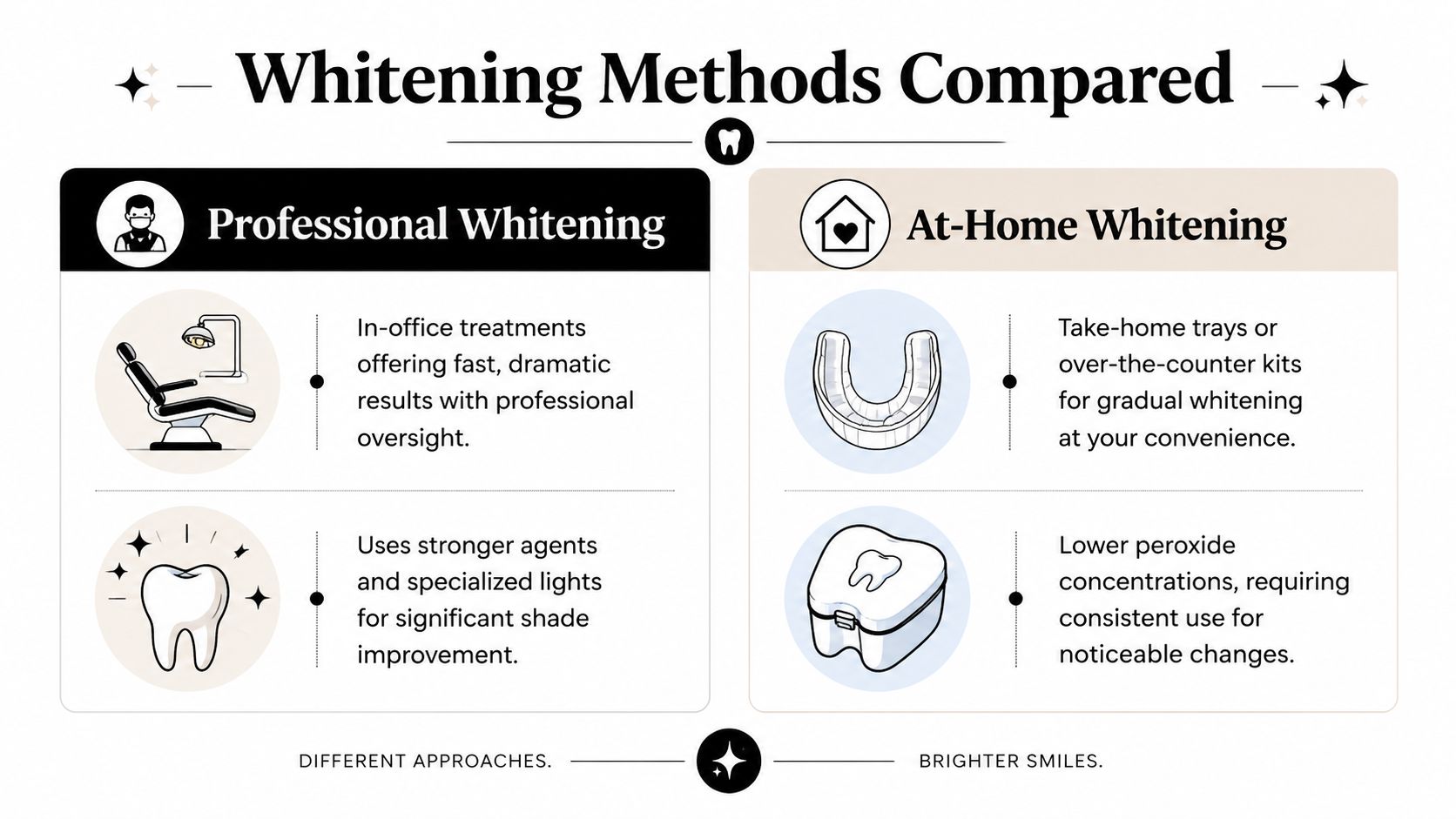
The three main paths are professional in-office whitening, dentist-supervised take-home trays, and over-the-counter products. Each can help in the right situation, but they don't work the same way, and they don't fit the same kind of patient.
In-office whitening for fast visible change
Professional in-office whitening is usually the fastest option. High-concentration hydrogen peroxide gel is placed on the teeth under controlled conditions, and the full appointment often takes 60 to 90 minutes. Professional in-office whitening can lighten teeth by an average of 6 to 8 shades in a single visit, with results lasting 12 to 24 months with proper aftercare, according to this teeth whitening before and after overview.
This is often the right fit for patients who want a quick improvement for an upcoming event or who don't want the guesswork of store-bought products.
Common reasons patients choose in-office whitening include:
- Speed: They want a result they can see the same day.
- Oversight: A dental team protects the gums and watches for sensitivity.
- Planning: They may be preparing for veneers, bonding, or another cosmetic treatment.
Custom take-home trays for controlled whitening
Dentist-made trays work differently. Instead of one concentrated office visit, whitening happens gradually at home with trays shaped to your teeth. That matters because a close fit helps keep the gel where it belongs and gives more even contact across the smile.
This option appeals to patients who want more control over the pace or who prefer to whiten on their own schedule. It can also be useful when a dentist wants to fine-tune the result over time.
A simple comparison helps:
| Method | What it feels like | Best for |
|---|---|---|
| In-office whitening | Fast, supervised, one main visit | People who want quicker visible change |
| Custom trays | Gradual, flexible, more personalized at home | People who want control and even coverage |
| Store products | Convenient, but less tailored | Mild surface stain improvement |
For a practical review of options, this guide to the best teeth whitening options lays out how different approaches compare in real patient situations.
The strongest whitening plan isn't always the fastest one. It's the one that matches your tooth color, sensitivity history, schedule, and goals.
Over-the-counter strips and whitening toothpastes
Store products are easy to find and easy to start. That's why many people try them first. Whitening strips can help with mild staining, and whitening toothpastes may improve the look of surface discoloration over time.
The tradeoff is fit and predictability. A strip doesn't know where your teeth are uneven, where you have dental work, or whether one side of your smile darkens more than the other. Toothpaste can freshen the surface, but it won't create the same kind of change as a professional whitening system.
Over-the-counter options may be reasonable when:
- Stains are mild
- You want a smaller change
- You're not ready for professional treatment yet
They tend to be less helpful when discoloration is deeper, when there are multiple shades across the smile, or when someone already feels disappointed after trying products on their own.
How to think about cost and value
Patients often compare whitening by sticker price alone. That's understandable, but it can lead to frustration. A lower-cost product isn't a better value if it gives an uneven result, causes irritation, or doesn't address the type of staining you have.
A better question is whether the method fits your goal.
If your goal is "a little fresher," a store product may be enough. If your goal is "I want this to look noticeably better and professionally managed," office whitening or custom trays usually make more sense.
For people also exploring restorative dentistry, same-day crowns, or even dental implants near me, whitening may need to be timed carefully. Natural teeth can be whitened. Crowns, veneers, and implants won't change color the same way, so shade planning matters.
The safest path is the one that's evaluated first
Whitening seems simple, but not every dark or yellow tooth should be whitened right away. A cracked tooth, untreated cavity, or dark tooth caused by internal changes may need something else first.
That's why many patients start with a consultation instead of another box from the store shelf. It saves time, avoids guesswork, and gives you a clearer answer about what kind of before-and-after result is realistic.
Real Patient Results Teeth Whitening Before and After Photos
When people search for teeth whitening before and after, they usually want proof they can picture on their own face. That's fair. Whitening is personal, and patients want to know whether the change will look natural, clean, and worth the effort.
A photo gallery helps, but the story behind each result matters just as much.

The coffee drinker who wanted a fresher smile
One common patient type is the daily coffee drinker. Their teeth aren't damaged. They just look a little darker every year. In before photos, the smile often appears more yellow near the gumline and flatter in indoor lighting.
After professional whitening, the biggest difference isn't always "Hollywood white." It's that the whole smile looks clearer and more even. Patients often say their teeth look cleaner and their face looks brighter in pictures.
The patient getting ready for a major event
Another common story is someone planning around a wedding, reunion, work event, or family photos. They don't want to wonder whether whitening strips will work in time. They want a plan.
In these cases, the best before-and-after results usually come from timing. If a patient also needs a cleaning, a filling replaced, or cosmetic work such as veneers or bonding, those steps affect the final look. Whitening first can help the dentist match future restorations to the brighter natural shade.
Good cosmetic dentistry doesn't chase the whitest possible result. It aims for a shade that fits the person's features, goals, and existing dental work.
Why photos can be misleading online
Patients need to be careful. Many whitening photos on the internet are heavily edited, overly bright, or shot under very different lighting conditions. If you've ever tried to improve product visuals with AI, you already know how much digital tools can change brightness, contrast, and color balance. That can be useful for product photography, but it's one reason dental before-and-after photos should be reviewed thoughtfully.
A trustworthy whitening discussion includes more than an image. It includes:
- Starting shade
- Type of staining
- Whether the patient had restorations
- How quickly they wanted results
- What maintenance was recommended after treatment
Here is a short video that helps patients understand what a professional whitening result can look like in a real-world setting.
The patient whose concern was age-related yellowing
Not every patient has dark beverage stains. Some notice that their teeth don't look as bright as they did years ago. Their before photos may show a smile that is generally healthy but less reflective and less lively.
After whitening, these patients often notice subtle but meaningful changes:
- Teeth look more even from side to side
- Edges appear cleaner in daylight
- Lipstick, skin tone, and facial features look more balanced in photos
- They stop thinking about their tooth color every time they smile
That last point matters. A successful result often changes how a person feels long before anyone comments on shade.
What to look for in real whitening examples
If you're reviewing smile photos while searching for a cosmetic dentist near me or a dentist in Chattanooga, TN, focus on realism.
Look for examples where:
| Sign of a useful example | Why it matters |
|---|---|
| The before photo clearly shows the original shade | You can judge the actual change |
| The after photo still looks like a natural tooth color | It suggests a believable result |
| Teeth are shown straight on, not hidden behind filters | It reduces the chance of misleading editing |
| The case description explains the patient's goal | It helps you compare it to your own situation |
The best whitening results don't all look identical. They look appropriate to the patient. That's why a personalized plan matters more than chasing someone else's photo.
What Factors Influence Your Personal Whitening Results
Two people can use the same whitening method and still end up with different results. That's normal. Teeth don't respond like identical tiles. They respond based on shade, stain type, enamel, dental history, and daily habits.
Starting shade matters more than most people think
A patient who begins with mild yellowing may reach a very bright result quickly. A patient with darker, deeper discoloration may still improve a lot, but the final shade can be different.
This is one reason whitening shouldn't be judged by generic promises. The goal is movement in the right direction, not a copy-and-paste outcome.
Enamel thickness and tooth structure affect the change
Some teeth whiten more easily because of their structure. Others resist change. Professional whitening timelines note that darker baseline shades and thicker enamel can limit how dramatic the result appears, which is why one smile may look brighter sooner while another takes more gradual improvement.
A dentist also looks for wear, exposed root areas, and signs that sensitivity may become a factor. Those details help shape the safest approach.
Existing dental work changes the plan
Crowns, veneers, fillings, and implants don't whiten the same way natural enamel does. That's one of the biggest sources of confusion in cosmetic dentistry.
If your front teeth include older restorations, whitening may brighten the surrounding teeth and make the existing dental work stand out more. In some cases, that's fine. In others, it means planning for replacement or cosmetic updates after whitening.
Patients who are also considering bonding, veneers, same-day crowns, or dental implants near me need the sequence mapped out carefully.
A whitening consultation isn't only about making teeth lighter. It's about preventing color mismatch across the whole smile.
Why custom trays sometimes outperform expectations
Whitening results are often measured in ΔE units, which track color change. According to this review of whitening effectiveness and sensitivity, professionally supervised at-home treatments using custom trays can achieve superior immediate results in some systems, with ΔE values of 10 to 11, even though in-office systems tend to show rapid initial change. The same review notes that all methods can experience some color reversion over time.
That finding matters because it shows that faster isn't always the whole story. For some patients, a controlled custom-tray plan can produce a stronger immediate change than expected.
The daily habits that shape the final outcome
A whitening plan has to fit real life in Chattanooga and Cleveland. If someone drinks coffee every morning, sweet tea through the day, or red wine on weekends, that affects both how the teeth got stained and how the result will hold.
During a consultation, a dentist usually evaluates:
- Current shade and stain pattern
- History of sensitivity
- Presence of crowns, fillings, veneers, or implants
- Lifestyle habits that may shorten the result
- Whether whitening should happen before other cosmetic work
That kind of planning gives patients a more honest answer. Not just "yes, whitening works," but "here's how your teeth are likely to respond, and here's the method that makes the most sense for you."
Your Teeth Whitening Journey at Winn Smiles in Chattanooga or Cleveland
The whitening process feels easier when you know what will happen before you sit in the chair. Most patients don't need a complicated cosmetic plan. They need a clear one.

Step one is a consultation and exam
The first visit usually starts with a conversation, not whitening gel. The dental team looks at your current shade, asks what bothers you about your smile, and checks whether the discoloration appears to be surface stain, deeper color change, or something that needs treatment first.
This is also where gum health, old dental work, and sensitivity risk are reviewed. If a patient needs a cleaning and exam first, that's addressed before whitening begins.
For patients comparing options, professional teeth whitening in Chattanooga is one service page that outlines how treatment is offered locally.
Step two is choosing the right whitening path
Not everyone needs the same method. Some patients want the fastest visible result and prefer in-office treatment. Others want the flexibility of whitening gradually with custom trays at home.
The recommendation usually depends on three things:
| What matters most to you | Whitening approach that may fit |
|---|---|
| You want a quicker visible change | In-office whitening |
| You want flexibility and gradual control | Custom take-home trays |
| You have a history of sensitivity | A slower, more tailored approach |
This is also the point where your dentist can explain if whitening should come before veneers, bonding, or crowns so the final smile matches well.
Step three is the actual treatment visit
On the day of professional whitening, your lips and gums are protected before the whitening gel is placed. The process is designed to target the stain on the teeth while reducing unnecessary irritation to the soft tissues.
Patients who feel nervous about dental visits often do better when they know the appointment is straightforward and closely monitored. Comfort matters in cosmetic dentistry just as much as color change.
Some practices also use comfort-focused amenities and sedation options for anxious patients, especially when whitening is part of a broader treatment plan that may include restorative or cosmetic work.
If you're uneasy about sensitivity or chair time, say so early. The team can adjust the plan more effectively when they know what worries you.
Step four is knowing what happens after
Whitening isn't just one appointment. It's also what happens in the days and weeks after. A professional whitening timeline shows that Week 1 typically targets surface stains for a 2 to 4 shade gain, and by Week 2 to 3 deeper stains are oxidized, stabilizing at a 6 to 8 shade improvement, according to this week-by-week whitening timeline.
That helps patients understand why the smile can keep settling after treatment instead of looking identical every hour afterward.
What patients are usually told after treatment
Aftercare instructions are simple, but they matter:
- Be careful with staining foods and drinks right away
- Brush gently and keep up normal oral hygiene
- Use any recommended desensitizing products if needed
- Return for touch-ups when advised
If the whitening was part of a larger smile plan, the next step may involve matching restorations or discussing other cosmetic changes. If it was a stand-alone treatment, maintenance becomes the focus.
For many patients in Chattanooga and Cleveland, the most reassuring part of the process is that it isn't mysterious. It follows a pattern, it's customized for the teeth in front of the dentist, and it can be adjusted if sensitivity, timing, or cosmetic goals require a different pace.
How to Maintain Your Bright Results for Years to Come
Whitening doesn't fail all at once. It usually fades through daily habits. Coffee in the car, sweet tea at lunch, dark sauces at dinner, tobacco, inconsistent hygiene, and skipped touch-ups all add up.
That's why maintenance isn't an extra. It's part of the treatment.
Your habits shape how long the result lasts
Lifestyle has a direct effect on longevity. A 2025 whitening longevity review found that results can last only 6 to 9 months for daily coffee drinkers, especially in Southern U.S. markets with common staining foods like sweet tea and BBQ, versus 18+ months for those with low-stain diets.
That doesn't mean coffee drinkers shouldn't whiten. It means their maintenance plan should be more intentional.
Simple ways to protect your result
The best aftercare is usually simple and repeatable.
- Use a straw when you can: This helps limit contact between dark beverages and the front teeth.
- Rinse with water after staining drinks: It won't erase stains, but it helps reduce what sits on the enamel.
- Stay consistent with brushing and flossing: Clean surfaces pick up less visible stain than plaque-coated teeth.
- Keep regular cleanings and exams: A professional cleaning helps remove buildup that dulls the smile.
- Ask about touch-ups: Some patients do well with periodic maintenance rather than waiting until the teeth look noticeably darker again.
What maintenance looks like in real life
A realistic plan for someone in Chattanooga or Cleveland might be different from a generic online checklist. If you drink coffee every morning, your dentist may suggest a different touch-up rhythm than they would for someone who mainly drinks water. If you already have crowns or bonding in the front, maintenance may also include watching for color mismatch over time.
The goal isn't to live on a white-diet forever. The goal is to know which habits matter most for your smile and manage them consistently.
When to check in again
Call your dental office if the color fades faster than expected, if sensitivity lingers, or if one tooth looks different from the others. Whitening is cosmetic, but uneven color can sometimes signal something more than routine staining.
If you're looking for a dentist near me, cosmetic dentist near me, or a dentist in Chattanooga, TN or Cleveland who can help you build a personalized whitening plan, the right next step is a consultation that looks at your teeth, your goals, and your everyday habits together.
If you're ready to see what's possible for your own smile, schedule a consultation with Winn Smiles. A personalized whitening plan can help you understand your starting shade, the kind of result to expect, and the best way to keep your smile bright in Chattanooga or Cleveland.