A lot of people make this search when they're already in a tough spot. A tooth has been hurting for days, a filling may have come loose, or you've been putting off care because you're worried the first phone call will end with a price you can't manage.
If you're looking for a dentist near me no insurance payment plan in Chattanooga or nearby, the good news is that you do have options. The challenge isn't just finding a dental office. It's figuring out which kind of payment help is real, which treatments can be financed, and how to get care quickly if the problem can't wait.
Affordable Dental Care in Chattanooga is Possible Even Without Insurance
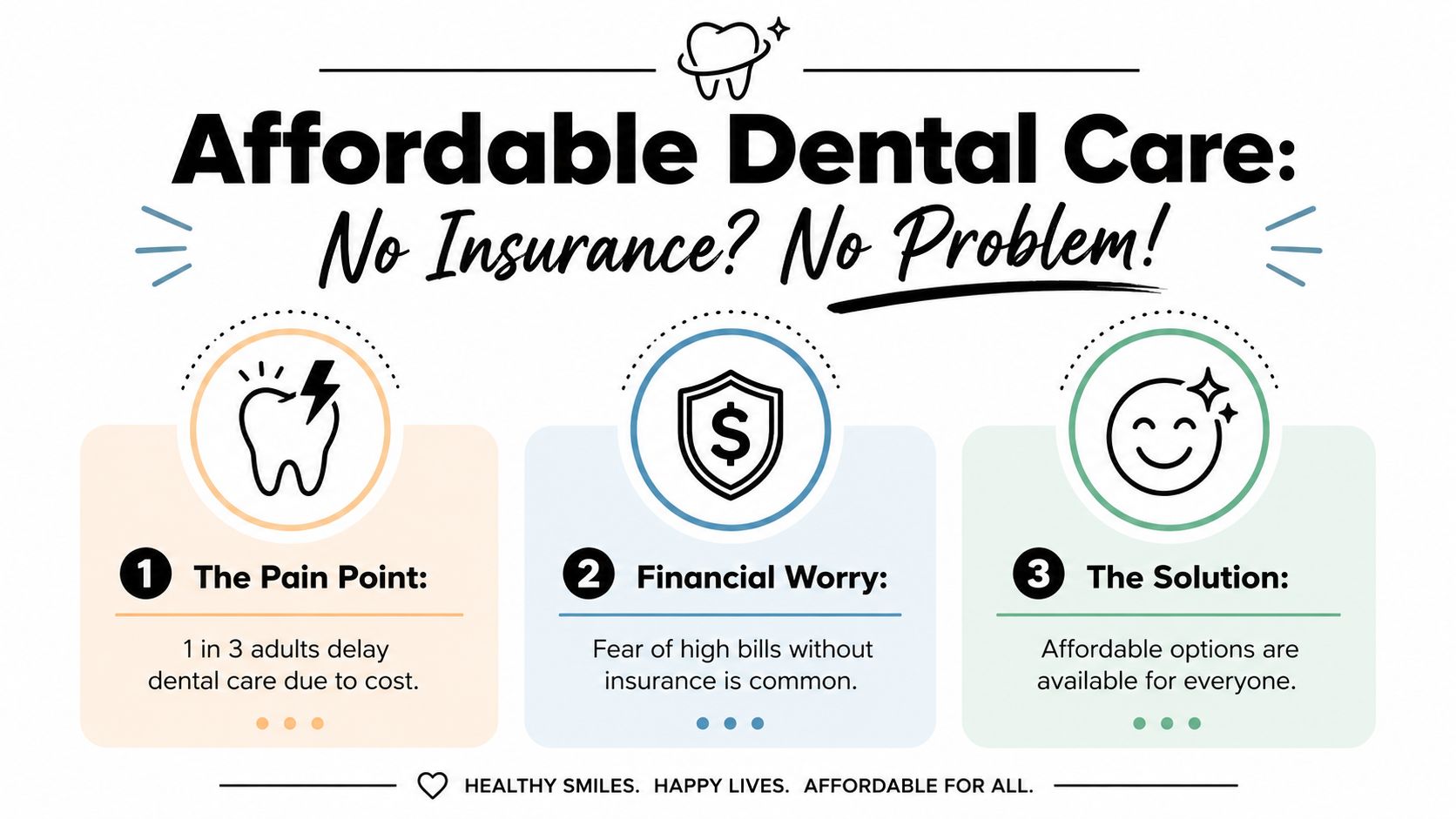
That mix of pain and financial stress is more common than many people realize. In the U.S., about 77 million adults lack dental coverage, and uninsured patients often turn to sliding-fee clinics, free or low-cost community clinics, and payment plans to get care, according to Penn Dental Medicine's overview of affordable dental options.
For someone in Chattanooga, that usually means the search starts with urgency. You wake up with swelling, a cracked tooth, or pain when you bite down. Then the next thought is often just as sharp as the toothache: how am I supposed to pay for this without insurance?
Why this search is so common
People don't usually search for financing because they enjoy comparing payment terms. They search because they need relief and don't want to make a mistake under pressure.
A patient without insurance usually wants answers to a few practical questions:
- Can I be seen soon if this is painful or getting worse?
- Will the office explain costs clearly before treatment begins?
- Is the payment plan real for the procedure I need, or just a discount on basic care?
- Can I keep moving forward with treatment instead of delaying it month after month?
Those questions matter because dental problems rarely stay still. A small issue can become a larger one if it's ignored, and the financial stress tends to grow alongside the dental problem.
Practical rule: If you're searching because something hurts, don't wait until you've researched every possible option perfectly. Start by calling and asking how the office handles uninsured patients and urgent visits.
What affordable care usually looks like
Affordable dental care doesn't always mean one single program. It often means a combination of choices, depending on your situation. For some people, that may be a community clinic or income-based care. For others, it may be a private dental office that offers installment options, a membership plan, or financing for larger treatment.
That's where many patients get stuck. The phrase “payment plan” sounds simple, but offices may use it to mean very different things. Some are talking about direct monthly installments. Some are talking about outside financing. Some mean a membership discount that lowers the fee but doesn't spread payments over time.
In Chattanooga and Cleveland, TN, patients need more than a vague promise of affordability. They need clear terms, immediate next steps, and a path that fits both their mouth and their budget.
Understanding Your Payment Options In-House Plans vs Third-Party Financing
The most confusing part of this search is the wording. Patients often type dentist near me no insurance payment plan assuming every office means the same thing. They don't.
Many dental resource pages also leave out an important distinction. A key need is often both affordability and immediate treatment, especially for urgent care, and many pages don't clearly explain whether a payment plan covers major treatment or whether it's a more limited discount arrangement, as noted by Neighborcare's dental services page.
The three models patients usually encounter
Here's the practical difference.
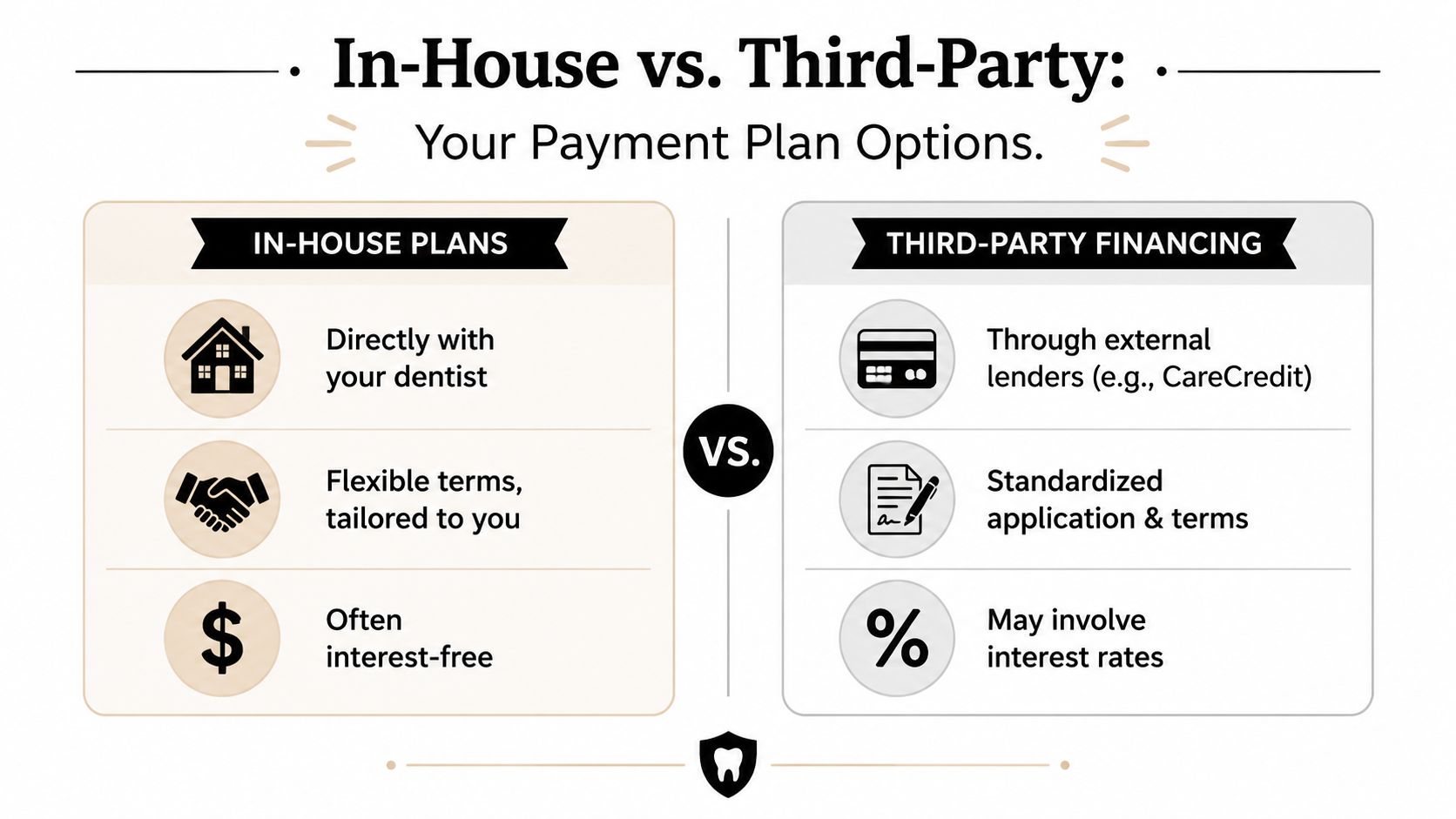
| Option | How it works | Usually best for | Common trade-off |
|---|---|---|---|
| In-house payment plan | The dental office manages payments directly | Patients who want simple communication with the practice | Availability and terms can vary by office and treatment |
| Third-party financing | An outside lender handles approval and repayment | Larger treatment plans or patients who want longer repayment options | Approval depends on the lender and terms may include interest |
| Membership or discount plan | You pay for access to reduced office fees | Preventive care and patients who want lower routine costs | It may reduce fees without creating monthly installments for major work |
In-house plans are the simplest to understand
When an office offers an in-house arrangement, you're working directly with the practice. That usually means fewer layers, more direct answers, and a clearer conversation about what is and isn't included.
Patients often like this model because the office team already knows the treatment plan. You're not trying to explain a crown, extraction, or emergency visit to a bank or finance company. You're discussing the cost with the people scheduling your care.
Still, don't assume every office offers this for every service. Some practices limit in-house plans to specific procedures or established patients. Ask directly.
Third-party financing can open up more treatment choices
Outside financing is common in dentistry, especially for larger restorative or cosmetic treatment. It can help when someone needs more than a basic visit and wants to spread payments over a longer period.
The downside is that it's a separate approval process. That means the office may be willing to help, but the final financing terms come from the lender, not the front desk team. If you're comparing options, it can help to review broader patient responsibility solutions so you understand how healthcare payment systems are typically structured.
Ask one direct question: “Is this a financing application with an outside company, or is this a payment plan handled by your office?”
Discount plans lower fees, but they aren't the same as financing
This is the point that trips people up most often. A discount or membership plan may be useful, especially if you don't have insurance and want more predictable pricing for exams, cleanings, or routine care. But a discount program isn't automatically an installment plan.
That difference matters if you need a root canal, crown, extraction, dentures, or dental implants. A lower fee helps, but it doesn't answer the monthly affordability question by itself.
For a plain-language explanation of how these choices can overlap, this overview of payment plan dental work is a useful starting point.
How to Find a Dentist Who Offers Payment Plans
A good search result isn't enough. You need to know what the office offers before you rearrange your day, drive across town, or sit through a consultation that doesn't fit your budget.
State-supported and community health centers can be a real option for people without insurance. Michigan's health department notes that many centers treat patients even without insurance and charge based on what they can afford, while some free clinics provide free or low-cost dental care through volunteer providers. At the same time, private practices with flexible payment options may offer broader services and shorter waits, according to Michigan's guidance on free or low-cost dental care.
What to ask when you call
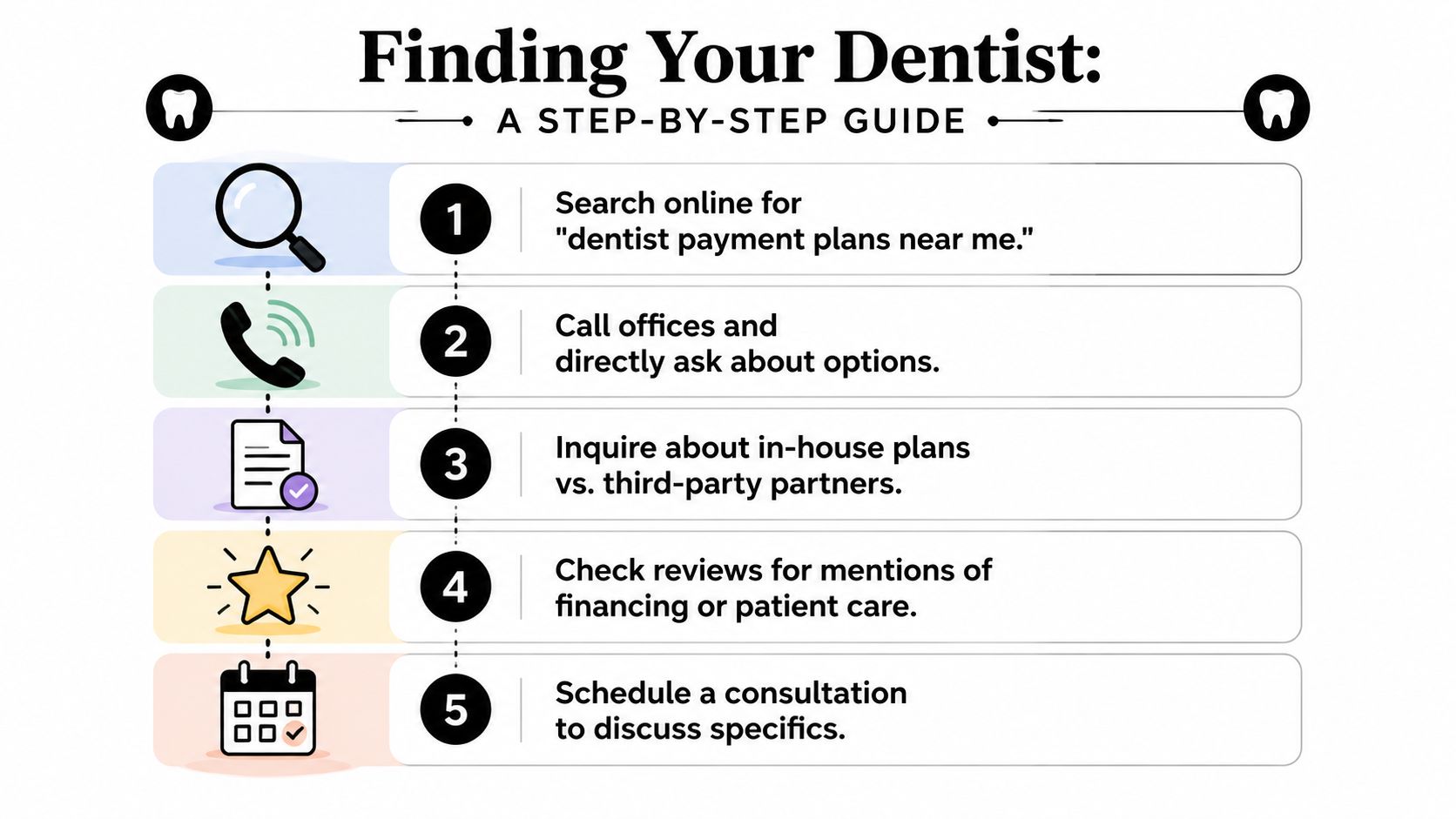
The first call matters. You don't need perfect dental vocabulary. You need the right questions.
Ask how payment help is structured
Say, “Do you offer in-house payment plans, third-party financing, or a membership plan for patients without insurance?”Ask about the first visit cost
Try, “What does a new patient exam usually include for someone paying out of pocket, and are X-rays part of that visit?”Ask whether major treatment can be financed
This is where misunderstandings happen. Say, “If I need a crown, extraction, root canal, dentures, or implants, can those be put on a payment plan too?”Ask about timing for urgent care
If you're in pain, say so plainly. Emergency scheduling is part of affordability because delaying treatment often makes life harder.
Listen for clear answers, not vague comfort
A helpful front desk team should be able to explain the difference between a discount arrangement and monthly financing. If the answers stay fuzzy, that's a sign to keep calling.
You should also ask whether the office is currently accepting new patients. This page on accepting new adult patients reflects the kind of information that can save time before you book.
If the office can't explain costs in plain language on the phone, the in-person financial conversation usually won't feel clearer.
A quick phone script that works
Keep it short. You don't need to tell your whole story.
Introduce the problem
“I don't have dental insurance, and I may need to be seen soon.”Name the financial concern
“I'm looking for an office that offers payment plans or financing.”Ask the treatment question
“If I need more than a basic exam, what options do you have for spreading out the cost?”
This approach helps you sort offices quickly in Chattanooga and Cleveland without feeling rushed or embarrassed.
Preparing for Your Consultation to Discuss Costs
Once you've found an office that sounds promising, the next step is showing up prepared. This visit goes more smoothly when you bring the information the team needs and ask direct questions early.
A cost discussion shouldn't feel awkward. It's part of care. The office needs to understand what's going on with your teeth, but they also need to know what kind of financial path is realistic for you.
What to bring with you
Bring the basics first. That usually includes a photo ID, a list of medications, and any recent dental records or X-rays if you have them.
If you think outside financing may be part of the plan, it also helps to bring whatever information you'd want handy for an application. You don't need to guess every requirement in advance, but being prepared can keep the visit from stalling after the treatment discussion.
A simple note on your phone can help too. Write down when the pain started, what triggers it, and whether you've had swelling, sensitivity, a broken tooth, or trouble chewing.
Questions that make the visit clearer
Don't leave with a stack of papers you don't understand. Ask for the treatment plan in plain language.
- What needs to be done first if the problem is urgent?
- Which treatment is most important now and which parts can wait?
- What is included in the quoted cost and what might be separate?
- Is the payment option tied to this full treatment plan or only part of it?
- If I need to phase treatment, what order makes the most sense?
A good financial conversation is specific. It names the problem tooth, the recommended treatment, the immediate priority, and how payment would work for that exact plan.
If the estimate feels overwhelming
Don't panic and disappear. That's when people lose momentum and end up back in pain a few months later.
Instead, ask whether treatment can be staged. Ask whether there is a way to address pain or infection first, then complete the restorative work after. If you want help thinking through broader healthcare negotiation habits, this guide to a strategic plan for medical bill negotiation can be useful as a general resource for organizing questions and preparing for payment discussions.
What transparency looks like
You should leave the consultation knowing three things:
- What condition is being treated
- What the next recommended step is
- How the office expects payment to work
If any one of those is still unclear, ask again before you schedule the larger procedure.
Financing Emergency Dental Care and Major Procedures
The most stressful dental costs usually come without much warning. A tooth cracks on the weekend. A crown falls off. A severe toothache turns into swelling. In that moment, individuals aren't thinking about ideal long-term budgeting. They just want the pain to stop and the bill to feel manageable.
That's why financing matters most for emergency and major care. It can be the difference between getting treatment now and spending weeks trying to “wait and see” whether the problem settles down on its own.

The treatments patients worry about most
Some procedures create immediate sticker shock because they sound large or complex. Common examples include:
- Tooth extraction when a damaged or infected tooth can't be saved
- Root canal treatment when pain comes from infection inside the tooth
- Crowns or same-day crowns when a tooth needs strength and protection
- Dental implants when a missing tooth needs a long-term replacement
- Dentures or larger restorative work when several teeth are involved
These are exactly the situations where a vague “we have affordable options” message isn't enough. Patients need to know whether the office can treat the problem now and whether the monthly cost is realistic.
Why delaying often costs more than it feels
People without insurance often try to manage around the problem. They chew on the other side, avoid cold drinks, take over-the-counter pain medicine, and hope they can buy time.
Sometimes that short delay is unavoidable. But long delays usually narrow your options. A tooth that might have been restored can become a tooth that has to be removed. An unstable situation can turn into an emergency visit. Financially, postponing care can make the final path more complicated.
When pain is active, the cheapest plan on paper isn't always the most affordable plan in real life. The more useful question is whether the treatment solves the problem before it grows.
When outside funds may be part of the solution
Some patients can handle the cost with office-arranged payments or staged treatment. Others may need a broader financial bridge, especially when the need is sudden and urgent. In those cases, it can help to review general emergency loan options carefully and compare them with the dental office's own financing routes before making a decision.
The key is not to borrow blindly. Match the payment method to the treatment urgency. If the office can relieve pain, stabilize the tooth, or divide treatment into phases, that may create a safer and more manageable plan than rushing into the first funding option you see.
For adults in Chattanooga and Cleveland searching for an emergency dentist, tooth extraction, or dental implants near me, the practical goal is straightforward. Get the diagnosis, understand the treatment sequence, and choose the payment route that lets you finish the care.
How Winn Smiles Makes Dental Care Affordable in Chattanooga
Patients without insurance usually need several things at once. They need a dentist in Chattanooga or Cleveland, TN who can explain treatment clearly, discuss cost without making it uncomfortable, and offer options that fit both routine care and bigger procedures.
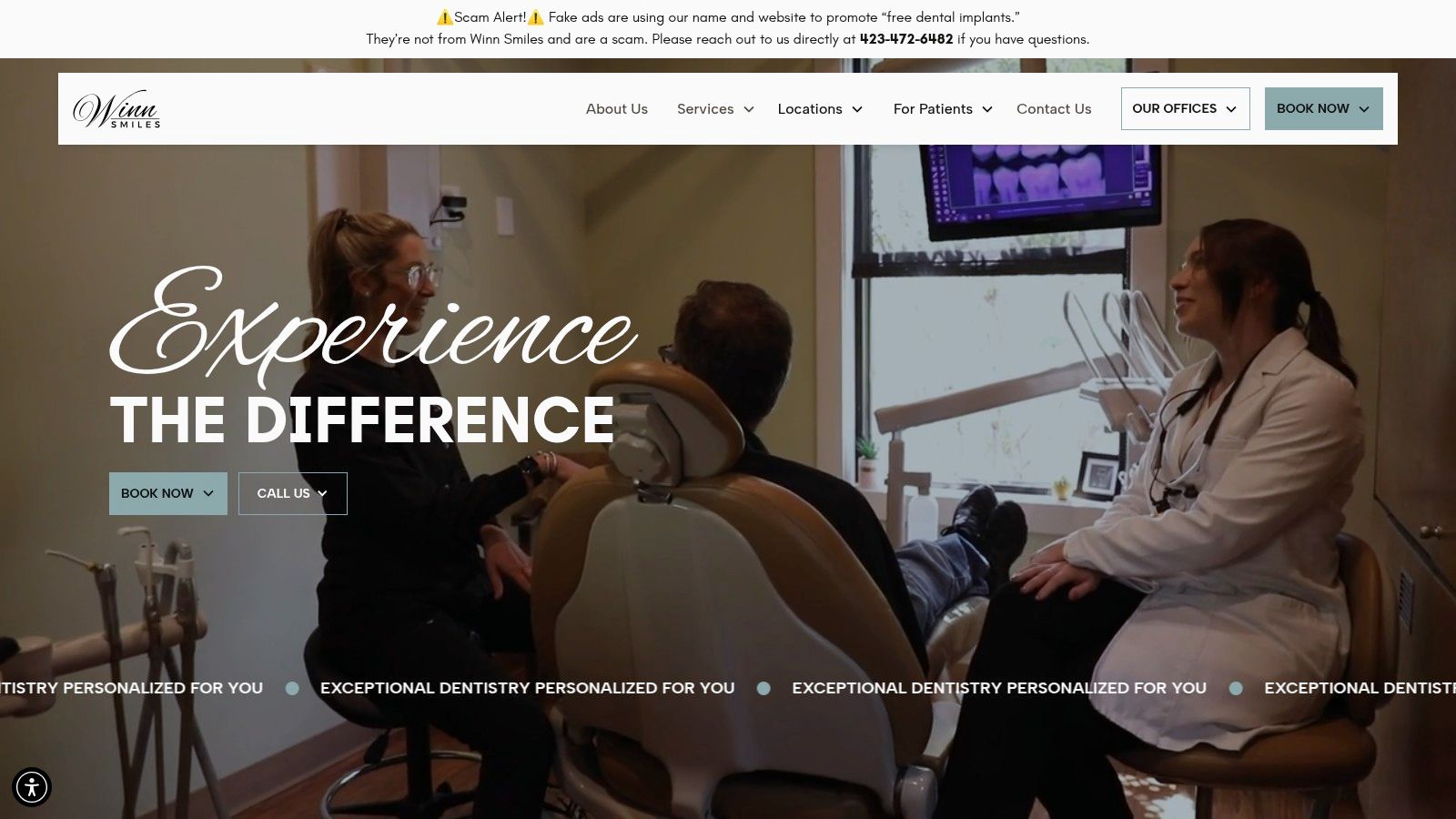
One practical option in this area is Winn Smiles, which offers an in-office membership plan for patients without insurance, a $199 new patient special for patients without insurance, flexible financing options, and free consultations or second opinions for select services, based on the practice information provided in the publisher brief.
Why that combination matters
A membership plan, financing access, and select free consultations solve different problems. They aren't interchangeable.
Membership savings help with routine care
This can make preventive visits, cleaning and exams, and ongoing maintenance easier to plan for if you don't have insurance.Flexible financing helps with larger treatment
If you need restorative dentistry, cosmetic work, or a more complex treatment path, financing can make it easier to move forward instead of delaying.Free consultations lower the barrier to starting
That matters when you're considering services such as dental implants or a second opinion and don't want to commit blindly.
The value of modern dental technology
Affordability isn't only about the monthly payment. It's also about efficiency.
Same-day crowns, for example, can reduce the hassle of repeated visits for some patients. That can matter if you're taking time off work, arranging childcare, or driving in from nearby service areas around Chattanooga or Cleveland. Modern technology can also support a smoother treatment experience when timing matters.
Comfort also affects whether people follow through. A practice that offers a comfort menu and sedation options removes a barrier that many anxious patients don't talk about until they're already in the chair.
For a closer look at the office and the care environment, this video gives helpful context before you book:
What a new patient can expect
The strongest sign of a workable dental office isn't a flashy promise. It's a clear process.
A useful first visit should include a straightforward conversation about your symptoms, a diagnosis based on exam findings, and a cost discussion that doesn't dodge hard questions. If you're coming in for emergency dental care, cosmetic dentistry, restorative dentistry, or dental implants near me, the financial side should be explained with the same clarity as the clinical side.
That's especially important for adults searching terms like dentist near me, emergency dentist, cosmetic dentist near me, or tooth extraction in Chattanooga, TN. The search itself tells you what people want. They want care that is local, understandable, and realistic to pay for.
If you're looking for a practical next step, contact Winn Smiles to ask about new patient scheduling, payment options, membership savings, or a consultation for the treatment you've been putting off. A clear conversation now can help you move from uncertainty to a plan that fits your health and your budget.