A toothache that keeps pulsing after dinner, pain that wakes you up at night, or a sharp sting when you sip something cold can send you straight to your phone. If you've been searching for an endo teeth doctor, an emergency dentist, or a dentist near me in Cleveland, TN or Chattanooga, TN, you're probably not looking for a broad lecture, you want relief, answers, and a place that feels calm when you already feel stressed.
That's where endodontic care comes in. The word endodontics comes from Greek, where “endo” means inside and “odont” means tooth, which fits the specialty's focus on problems inside the tooth, especially the pulp and root Penn Dental Medicine. In plain language, this is the dental specialty that helps save a tooth when the pain is coming from within it, not from the surface.
Searching for Tooth Pain Relief in Cleveland and Chattanooga
When a tooth starts hurting and doesn't let up, the immediate thought isn't, “I need a specialist.” It's, “Why won't this stop?” That's a normal response, especially when the pain feels deep, throbbing, or hard to explain.
A lot of patients end up searching for the wrong thing first. They'll type emergency dentist, tooth extraction, or endo teeth doctor because they know something is wrong, but they're not sure what kind of care they need. That uncertainty can make a stressful problem feel even bigger.
Practical rule: pain that feels like it's coming from inside one tooth deserves attention sooner rather than later.
An endodontist is the specialist trained to sort out that kind of pain. They focus on the tooth's internal structures, especially the dental pulp and root tissues, and they're often the right clinician when the goal is to preserve the natural tooth instead of removing it Cleveland Clinic. That's why people in Cleveland and Chattanooga often start with a general search, then narrow it down once they realize the problem may need specialized treatment.
If you're looking for a local overview of care in the Cleveland area, this is also a helpful place to start with Cleveland dentistry solutions. It can make the search feel a little less overwhelming when you're trying to figure out your next step while you're still in pain.
The reassuring part is that tooth pain doesn't always mean extraction. In many cases, the goal is to clean out the problem, settle the infection, and keep the tooth working comfortably again.
What Is an Endodontist
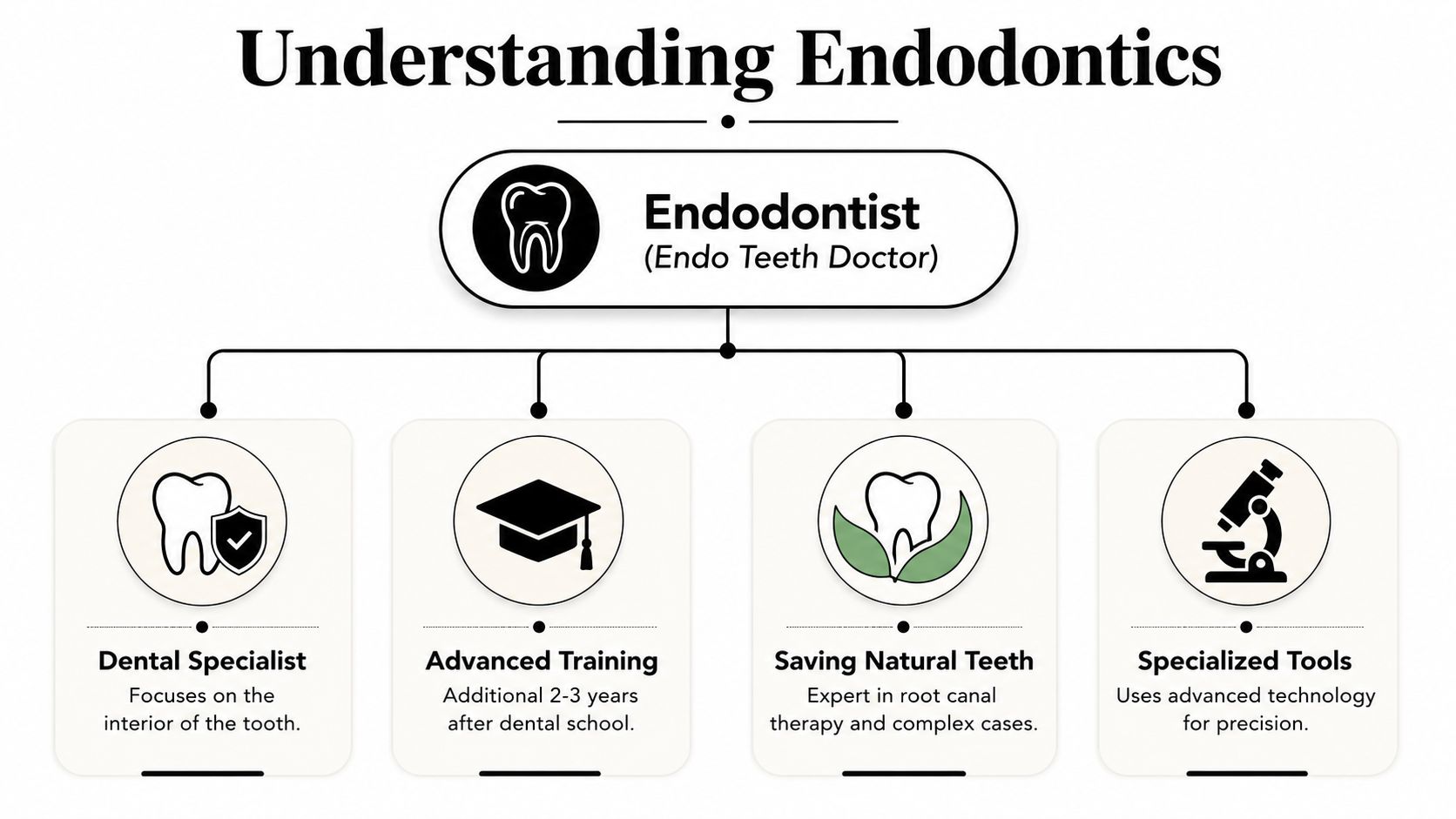
An endodontist is a dental specialist who treats problems inside the tooth. They're the clinicians people mean when they say endo teeth doctor, and their work centers on diagnosing complex pain, treating infection, and saving natural teeth when possible.
Why this specialist matters
General dentists do a lot of important work, and they may handle straightforward root canal cases. Endodontists are trained for the more difficult situations, especially when the pain is hard to diagnose, the tooth anatomy is more complex, or a prior treatment hasn't healed the way it should. They complete two or more years of advanced training after dental school, with some descriptions noting two to three years, focused on root canals, retreatment, and endodontic surgery American Association of Endodontists.
That extra training matters because tooth pain can be deceptive. A tooth may ache even when the problem started deeper in the pulp, and a specialist is often the person who can tell the difference. In a setting like Winn Smiles in Cleveland and Chattanooga, that kind of precise diagnosis helps patients move from guessing to getting a clear plan.
What they're trained to do
An endodontist's day-to-day work often includes root canal treatment, endodontic retreatment, and endodontic surgery. That is why they're often involved when the goal is to keep a natural tooth in place rather than remove it. They also use specialized tools and training to look closely at the inside of the tooth, where the source of pain can hide.
For many patients, that distinction brings real relief. Once they understand that an endodontist is the inside-the-tooth specialist, the next decision becomes simpler, get evaluated, get the infection addressed, and protect the tooth if possible.
Signs You May Need to See an Endodontist
A tooth problem can develop gradually. It may begin as a dull ache, then turn into pain that keeps coming back when you chew, drink, or even rest. For some people, the first sign is that one tooth feels different from the others.

Common symptoms that point to inside-the-tooth trouble
Several warning signs can suggest the problem is coming from deep inside the tooth, where the nerve and pulp live:
- Lingering tooth pain. Pain that stays after you stop chewing, or after a hot or cold drink is gone, can point to pulp irritation or infection.
- Pain when biting down. A tooth that feels sharp, sore, or unusually tender under pressure deserves a closer look.
- Swollen gums near one tooth. Swelling focused around a single tooth can mean the issue is centered there.
- Tooth discoloration. A tooth that starts to darken can sometimes signal damage inside the tooth.
- Sensitivity that hangs around. Brief sensitivity can happen for many reasons, but sensitivity that lingers needs more attention.
These symptoms do not automatically mean you need a root canal, but they do mean the tooth should be checked. An endodontist is trained to sort out complex tooth pain and determine whether the problem is urgent, which matters when an abscess or deeper infection may be forming University of Illinois Chicago Dentistry.
If you are unsure what a specialist visit looks like, our root canal treatment services at Winn Smiles are focused on finding the source of pain and protecting the tooth whenever possible.
When the pain becomes urgent
Pain that keeps getting worse should not be brushed aside. A tooth that shifts from sensitive to sharply painful may need prompt evaluation, and waiting can make the appointment feel more stressful later.
At that point, the goal is not to guess at home. It is to get a professional exam, learn whether the problem is inside the tooth, and decide how quickly treatment should begin.
Understanding Endodontic Procedures Root Canal and More
A lot of fear around endodontic care comes from the name, not the treatment itself. People hear root canal and picture pain, yet the treatment is meant to remove the source of pain and protect the tooth from more damage.
What happens during a root canal
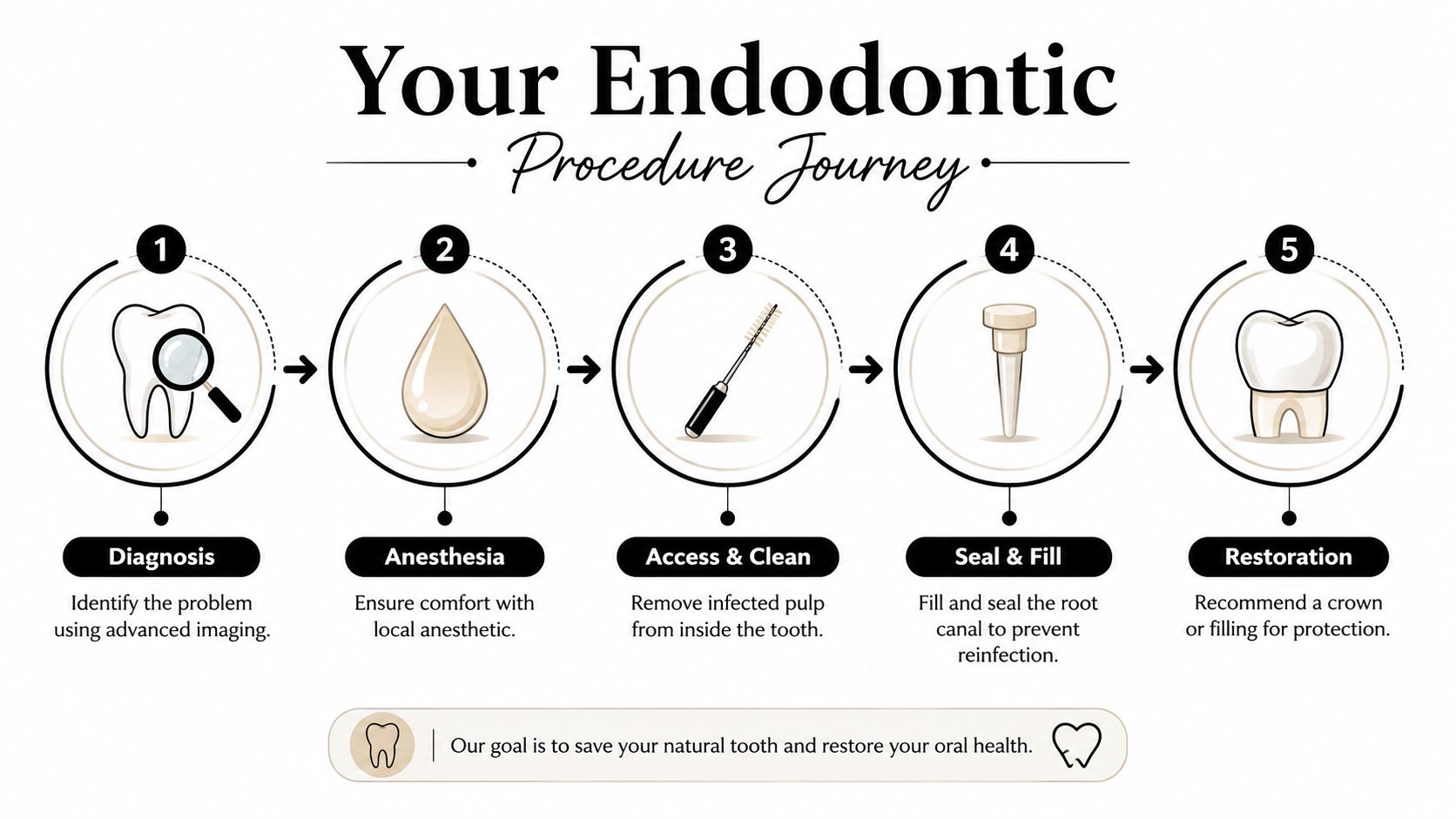
A root canal starts with removing infected or inflamed pulp, then carefully cleaning, shaping, disinfecting, and sealing the entire canal system Endodontics. That order matters because any bacteria left behind can keep the infection active and make retreatment more likely later.
The process is like repairing the inside of a house while keeping the outside wall in place. The tooth may still look whole from the outside, but the tissue inside can be irritated or infected. Once that diseased tissue is removed and the space is sealed, the tooth can often be restored and kept in place.
Other procedures an endodontist may use
Some teeth need a different approach. Endodontic retreatment is used when a previously treated tooth has not healed the way it should. Endodontic surgery, including an apicoectomy, may be recommended when the problem is at the root tip and needs direct treatment.
For patients who want a closer look at how root canal therapy is offered locally, Winn Smiles explains the process on its root canals service page.
Plain-language takeaway: the procedure sounds more intimidating than it usually feels in real life, because the real job is to remove infection and keep the tooth.
The main goal is the outcome. Endodontics is meant to save a natural tooth when that is still possible, so you can chew, speak, and smile without dealing with an empty space or a more involved replacement plan right away.
Your Endodontic Treatment Journey at Winn Smiles
The first visit often feels like the hardest step, because by then you've already spent days worrying, searching, and trying to ignore the pain. A calm check-in, a clear explanation, and a team that listens can change that experience fast.
At Winn Smiles in Cleveland and Chattanooga, patients often start with a new patient exam and an honest discussion about what hurts and when it hurts. From there, the team may use imaging and a focused exam to pinpoint whether the source is inside the tooth, around the root, or somewhere else entirely. That matters because not every painful tooth needs the same solution.
What the visit can feel like
A patient might come in anxious, expecting a worst-case scenario. Instead, the appointment usually becomes a step-by-step conversation about what the tooth needs, what can be saved, and what the next treatment should look like. That approach helps replace fear with a plan.
Once treatment is decided, the procedure itself is designed to be controlled and purposeful. The tooth is treated carefully, the infected or inflamed tissue is addressed, and the tooth is prepared for restoration afterward. In some cases, that restoration may connect with other dental services such as a crown or broader restorative dentistry, so the tooth can go back to doing its job comfortably.
The long-term outlook is a big reason patients choose this path. In a large Taiwan National Health Insurance analysis covering 1,557,547 teeth, primary endodontic therapy had a 92.9% retention rate after five years PMC. That kind of preservation result helps explain why root canal treatment remains a cornerstone of tooth-saving care.
After treatment, patients usually get clear instructions for recovery and follow-up, so there's no guesswork about what's normal and what needs a callback. That clarity matters almost as much as the procedure itself.
The role of restoration after treatment
A treated tooth still needs protection. Depending on the tooth and the amount of remaining structure, restoration helps the tooth stay functional after the infection is gone.
The end goal isn't just pain relief. It's a stable tooth that can keep working.
That's why a careful treatment plan and restoration plan belong together, especially for patients who want a practical, lasting result in their own neighborhood, not a rushed fix that leaves them wondering what happens next.
Advanced Comfort and Sedation for Your Root Canal
Pain is one barrier. Anxiety is the other. Many people delay care because they've had a rough dental experience before, or because they've heard too many stories about root canals that sounded worse than the problem itself.
At Winn Smiles, comfort is part of the treatment plan. The practice's approach includes sedation options and a comfort menu, which gives nervous patients more room to relax during care. For people who feel tense in the dental chair, that can make the difference between delaying treatment and finally getting help.
Why comfort options matter
A calm patient can tolerate care better, follow instructions more easily, and leave the office feeling less drained. That's especially important for endodontic treatment, where the goal is precision and patience, not rushing.
The practice also uses laser dentistry for gentler, more precise care in appropriate situations, which fits well with a comfort-focused visit. If you want more detail on how sedation can help anxious patients, this overview on the benefits of sedation dentistry gives a helpful local perspective.
You should never feel like you have to white-knuckle your way through dental treatment.
That mindset matters for new patients who are already worried about cost, time, or whether the tooth can still be saved. A supportive approach keeps the visit centered on your experience, not just the procedure.
For a lot of patients, the biggest relief is simple. They realize the appointment is built around comfort, communication, and getting the tooth treated without adding more stress to an already painful situation.
Emergency Care and Next Steps in Cleveland and Chattanooga
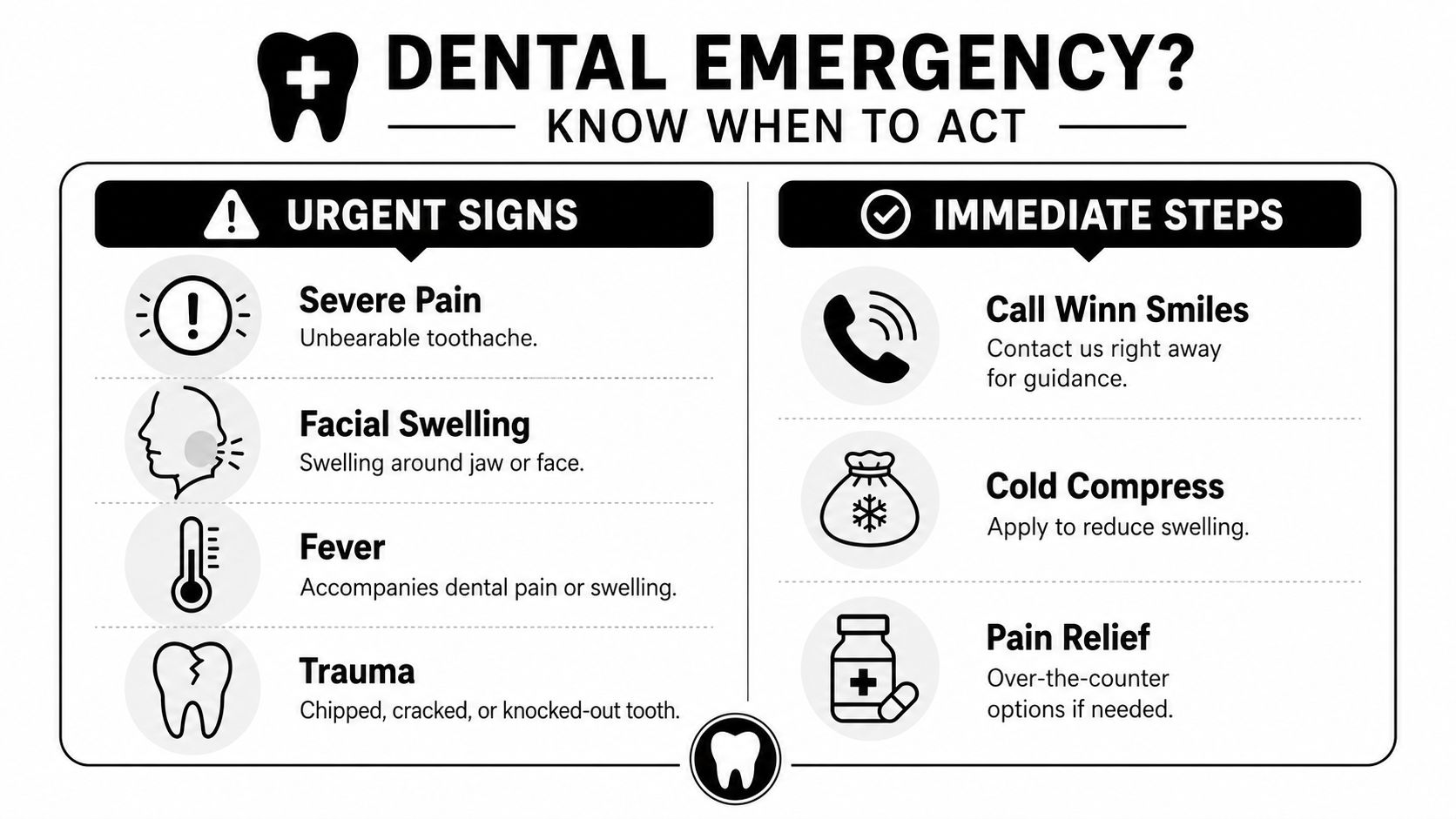
Some tooth problems can wait for a scheduled visit. Others can't. If you have severe pain, facial swelling, fever with tooth pain, or signs of trauma like a chipped, cracked, or knocked-out tooth, that deserves prompt attention.
How to think about urgency
A tooth can send out warning signals the way a smoke alarm does. The pain may start small, then change into pressure, throbbing, or swelling that no longer feels manageable at home. An endo teeth doctor is trained to sort out whether the problem is inside the tooth, around the root, or part of a larger infection, so the next step is based on what is happening rather than on guesswork.
If swelling is spreading, pain is getting worse, or the tooth feels loose or unstable, call for guidance instead of waiting to see if it improves overnight. Infections around the root can worsen quickly, and the sooner they are evaluated, the more likely you are to keep more treatment options open and get relief sooner.
What to do next
- Call the office right away. Get the tooth checked instead of trying to guess the cause.
- Use a cold compress. It can help calm swelling on the outside of the face.
- Take over-the-counter pain relief if appropriate. Follow the label and any instructions you have already been given.
- Avoid chewing on the sore side. That keeps pressure off a tooth that may already be irritated.
- Save a knocked-out or broken tooth fragment if you can do so safely. It may help the dental team understand what happened.
Cost worries are common too, especially when pain starts without warning. A helpful dental team should explain your coverage, answer payment questions plainly, and help you understand what care is needed now versus what can wait. That kind of clarity matters when you are already uncomfortable and trying to make a decision quickly.
If you're in Cleveland or Chattanooga and you think your tooth pain may need specialist attention, schedule a consultation or new patient exam with Winn Smiles today. Prompt care can reduce pain, give you a clearer plan, and improve the chance of keeping your natural tooth.