A patient usually arrives at this search after one of those moments that is hard to ignore. A denture slips during a meal. Another tooth breaks. Chewing starts to feel like work, and the question changes from "How do I patch this?" to "What will it take to fix this properly?"
Full arch dental implants are a major investment. A single arch often falls somewhere in the tens of thousands, and replacing both upper and lower arches can cost much more depending on the plan. In Chattanooga and Cleveland, TN, the number is never one-size-fits-all. A real quote comes from an exam, images, and a treatment plan built around your bone support, oral health, materials, and goals.
The hard part for patients is not just the price. It is the lack of clarity behind the price. One office may be quoting a fixed temporary bridge, while another is discussing a more durable final restoration. One plan may include extractions, sedation, imaging, and bone reduction. Another may not. That is why two estimates for "full arch implants" can look far apart even when they are not describing the same treatment.
At Winn Smiles, I want patients to understand what they are paying for in practical terms. This procedure can change how you eat, speak, smile, and feel day to day. The cost matters. So do the trade-offs between lower upfront pricing, long-term durability, comfort, and the amount of treatment needed to get a stable result.
Your Guide to Full Arch Dental Implants in Chattanooga
Many people start this process. They don't always say, "I need a full arch implant consultation." They say their teeth are breaking down. Their denture moves when they talk. They chew on one side. They avoid steak, apples, and sometimes dinner with friends altogether.
That kind of dental decline affects more than appearance. It changes confidence, nutrition, and comfort. It can also create urgency, especially when a patient realizes that patching one tooth at a time no longer makes sense.
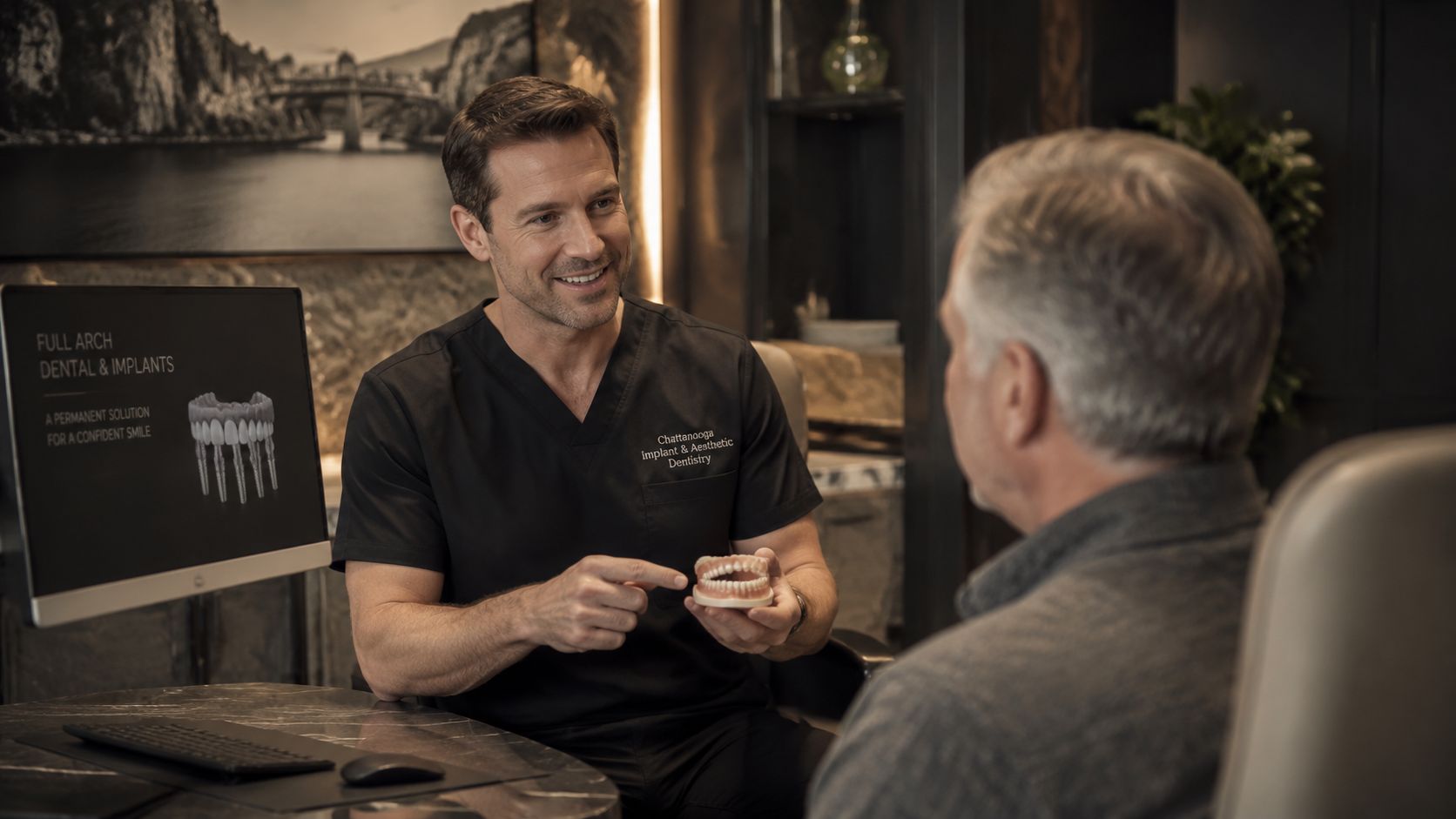
Why people in Chattanooga and Cleveland start searching for cost
Most patients don't search for full arch dental implants cost because they're casually comparing cosmetic upgrades. They're trying to solve a real quality-of-life problem. In Chattanooga and Cleveland, I often see people who have spent years trying to hold things together with extractions, partials, relines, repairs, or temporary fixes that no longer feel stable.
A search for price is usually a search for clarity. Can this be done? Is it out of reach? Is one office quoting a different kind of treatment than another? Those are reasonable questions.
Full arch treatment is life-changing for the right patient, but the quote only makes sense when you know what is included, what is removable versus fixed, and what preparatory care your mouth needs first.
A local decision, not just a national number
National ranges are useful starting points, but they don't tell you what your mouth needs. One person may be a straightforward candidate for a fixed bridge with limited prep. Another may need extractions, grafting, periodontal care, or a different prosthetic design to get a durable result.
That's why cost discussions should feel calm and specific, not vague. Patients in Chattanooga and Cleveland deserve a treatment plan that connects the fee to actual clinical decisions, not just a headline price.
When you're also looking for a dentist near me, dental implants near me, or a dentist in Chattanooga, TN, it's worth focusing on a team that can explain the treatment in plain English. The right consultation should leave you with a clear understanding of what you're buying, what alternatives exist, and what next step fits your goals.
Understanding Your Investment What Really Goes Into the Cost
A full arch quote covers far more than placing implants. It usually includes the planning that makes surgery safer, the temporary teeth you wear during healing, the final prosthesis, and the visits needed to monitor how everything is progressing.
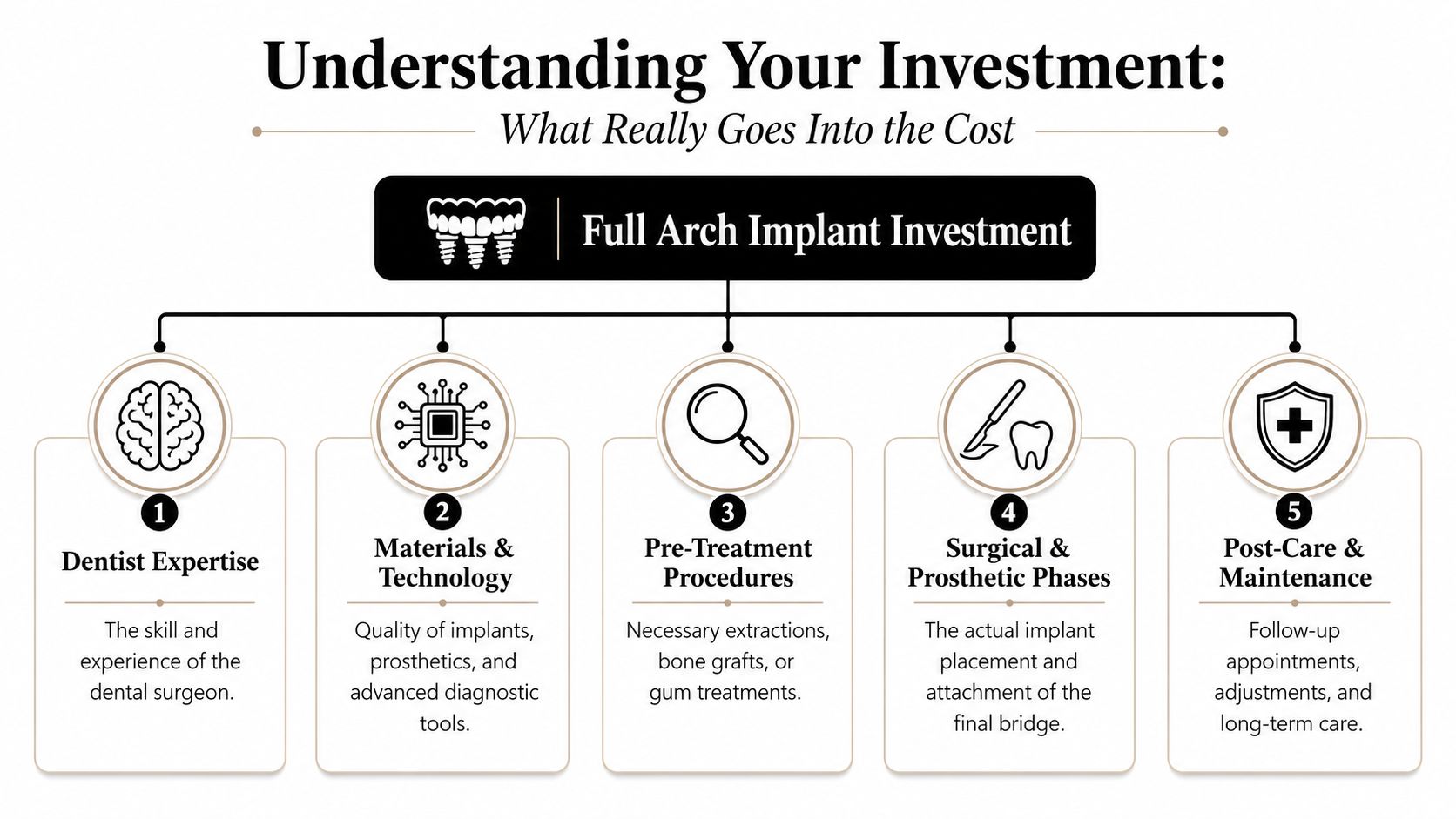
That matters because two fees can look similar on paper and represent very different treatment. In Chattanooga and Cleveland, TN, I want patients to see what is built into the number, not just whether one office is higher or lower than another.
What the arch price usually includes
A full arch fee often combines several parts of care into one treatment plan:
- Implant placement is the surgery to place the implants in the jawbone.
- Abutments are the connectors that attach the prosthesis to the implants.
- A provisional restoration is the temporary bridge or set of teeth used while the implants heal.
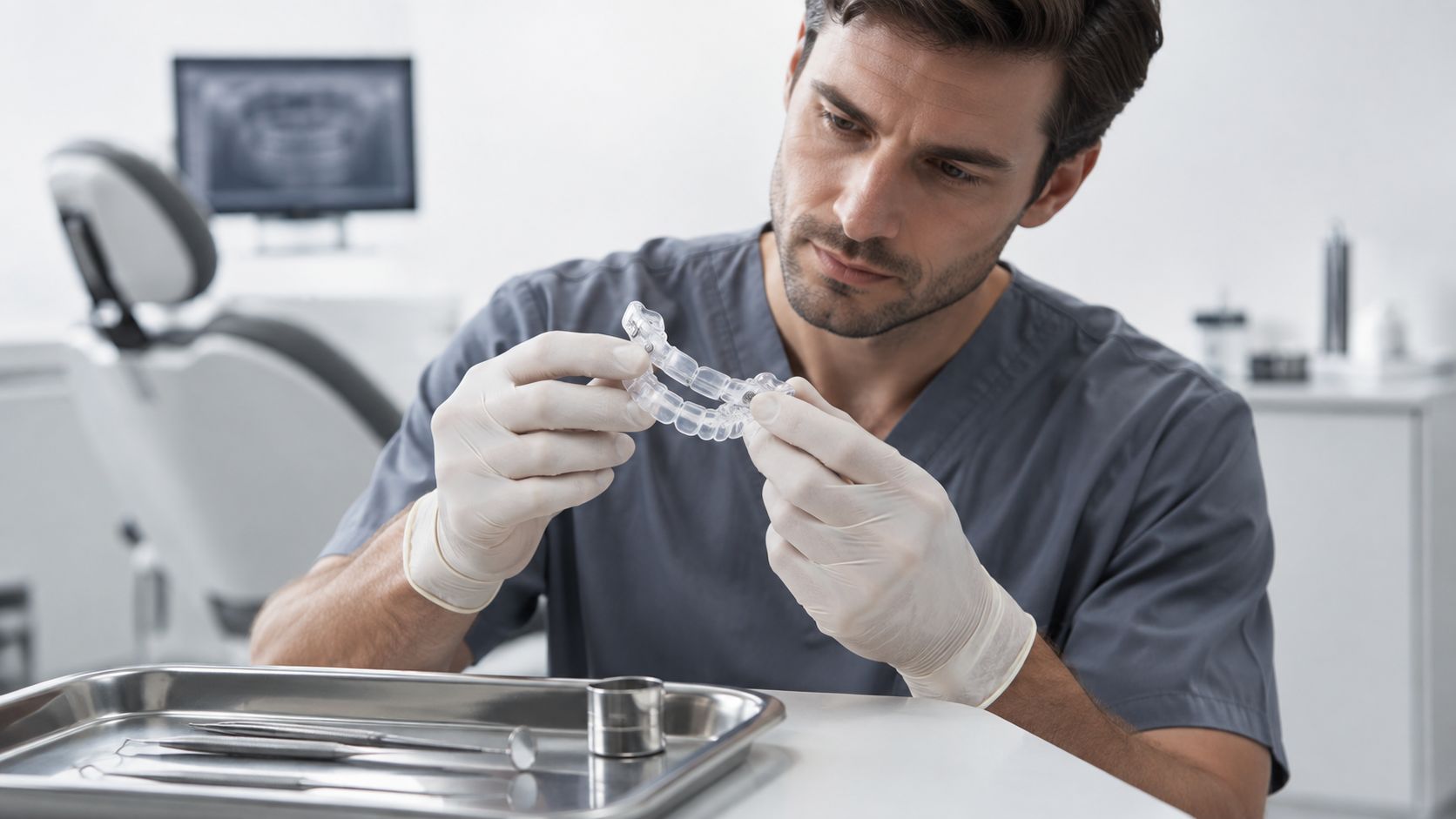
- The final bridge is the custom long-term restoration designed for function, fit, and appearance.
Some offices also include imaging, surgical guides, follow-up visits, and adjustments. Others separate those items. That is one of the main reasons online comparisons can confuse people.
What you're really paying for
Part of the fee is the hardware. A large part is the work behind the scenes.
Patients are paying for records, 3D imaging, treatment planning, surgical skill, prosthetic design, lab fabrication, bite adjustment, and the coordination required to move from failing teeth to a stable full arch result. If immediate temporary teeth are part of the plan, that adds another layer of clinical and lab work on the same timeline.
The final teeth also matter. A basic prosthesis and a premium final bridge are not priced the same because they are not built the same. Materials, strength, esthetics, repairability, and how the bridge is designed for your bite all affect cost.
Here are the categories I encourage patients to ask about during a consultation:
- Diagnostic planning includes the exam, records, photos, scans, and imaging used to map the case.
- Clinical judgment shapes whether the plan fits your bone, bite, smile line, and long-term goals.
- Surgical care includes implant placement and, in some cases, same-day delivery of temporary teeth.
- Lab fabrication covers the custom prosthesis. These restorations are made for your mouth, not pulled from stock.
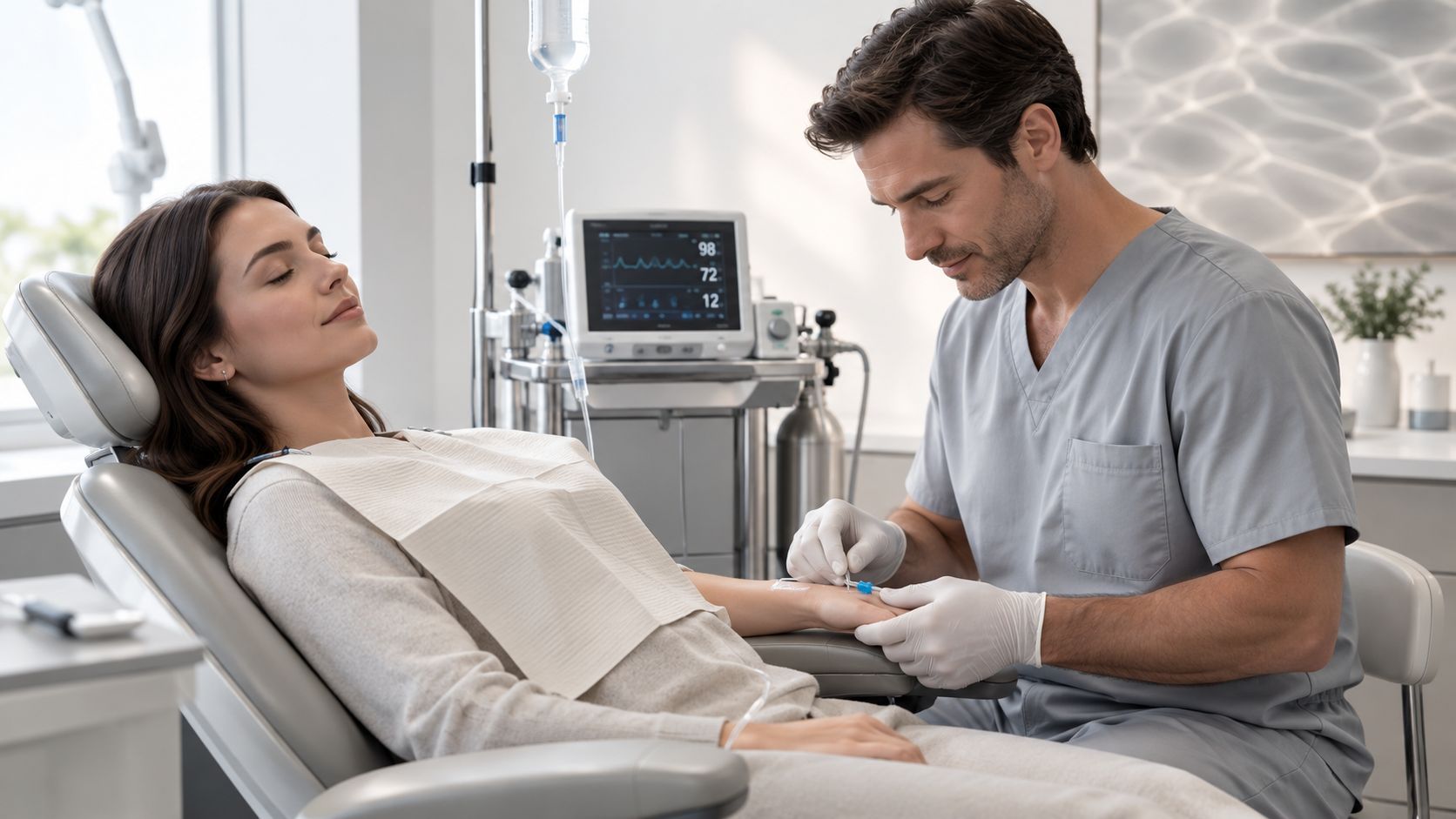
- Comfort options may include sedation for patients who want a calmer surgical experience.
A short video can help make that bundled concept easier to visualize.
Why cheaper isn't always cheaper
A lower quote can be appropriate if the treatment is simpler. It can also mean part of the treatment has been postponed, excluded, or built with a different type of final restoration.
That is why patients should ask direct questions.
Practical rule: Ask whether the quoted fee includes the temporary teeth, the final bridge, imaging, extractions if needed, sedation options, and post-operative visits. If those items are separate, the initial price may rise quickly.
The goal is not to chase the lowest number. The goal is to compare complete plans and understand what each office is proposing for your mouth, your health, and your long-term function.
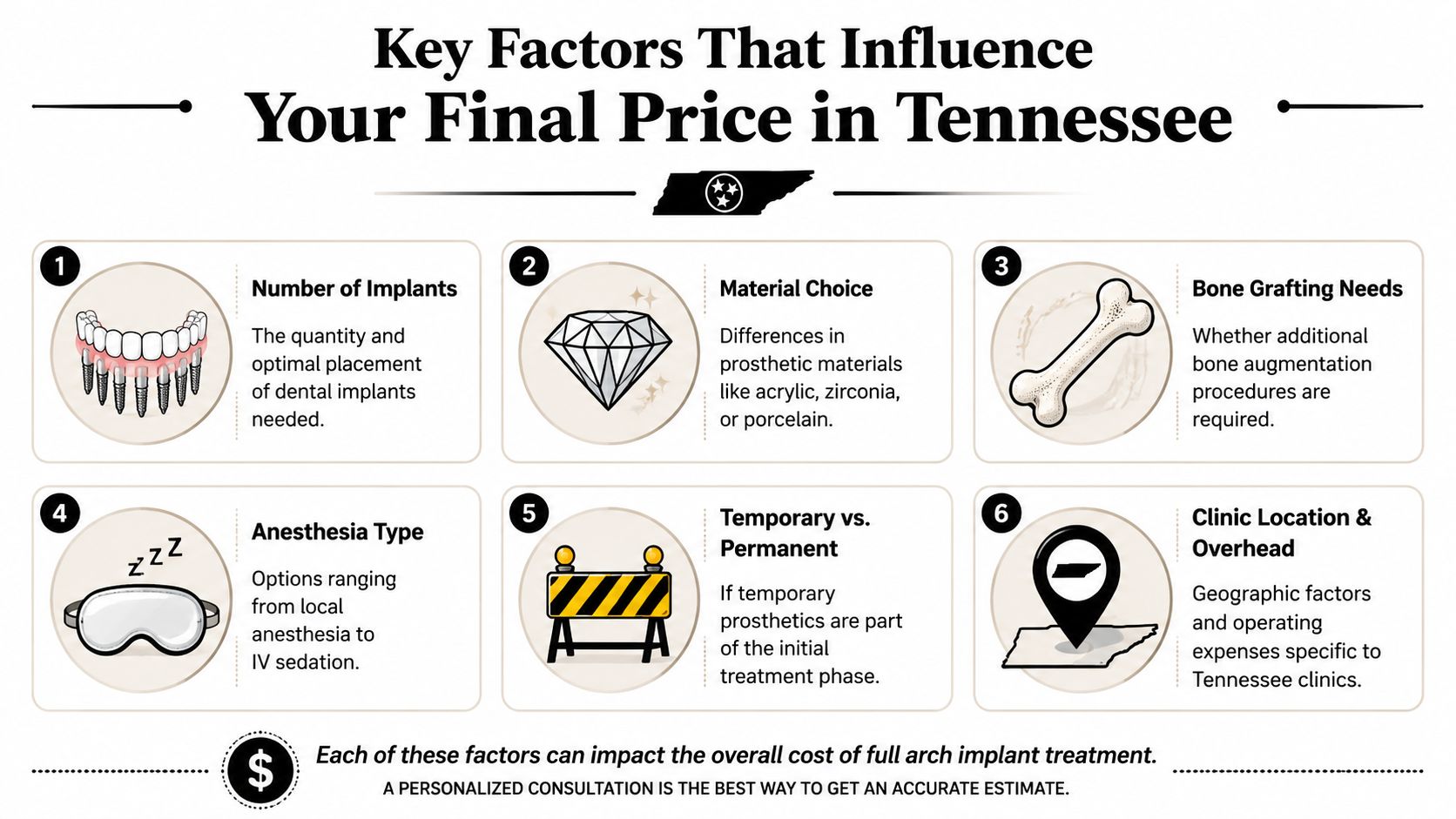
Key Factors That Influence Your Final Price in Tennessee
Once you move past the national averages, your own price starts behaving like a set of sliders. Each clinical choice can move the total up or down. That's true whether you're considering treatment in Chattanooga, Cleveland, or nearby communities in Southeast Tennessee.
Independent guidance shows how wide that range can be. ClearChoice places full-mouth dental implants at $14,000 to $36,000 per arch, while another guide estimates $18,000 to $35,000+ per arch for All-on-4 or All-on-6 and $30,000 to $60,000+ per arch for more traditional full-arch cases with more implants and zirconia. That same guidance puts a full upper-and-lower rehabilitation at roughly $36,000 to $70,000+ for All-on-4 or All-on-6 and $60,000 to $100,000+ for more complex reconstructions, as summarized in Main Street Dental Newark's U.S. implant cost guide.
The biggest clinical variables
Some factors change cost because they change the complexity of the surgery. Others change cost because they change the quality, strength, or design of the final teeth.
The main drivers usually include:
- Implant count: A plan using fewer strategically placed implants may cost less than one requiring more support points.
- Pre-treatment needs: Extractions, grafting, and infection control can add necessary steps before implants are placed.
- Final material choice: Acrylic, hybrid designs, and zirconia don't involve the same lab process or long-term wear profile.
- Temporary versus final prosthetics: Some plans include a distinct temporary phase before the definitive bridge.
- Sedation level: Comfort options can vary depending on patient anxiety, health history, and procedure length.
- Geographic overhead: Regional operating costs and lab relationships affect pricing from one market to another.
What tends to raise the quote
When a patient asks why one full arch plan lands near the lower part of the range and another rises well above it, the answer is usually visible in the treatment details.
A higher quote often reflects one or more of these realities:
| Factor | How it affects the fee |
|---|---|
| More complex surgery | Requires more planning, chair time, and surgical resources |
| Higher-end prosthetic materials | Increases lab work and fabrication cost |
| Bone support issues | May require added procedures before or during treatment |
| More customized bite design | Demands extra records, verification, and adjustments |
Some patients are disappointed when they learn they need preparatory treatment. Clinically, that's often the step that protects the long-term result. Skipping foundation work to save money can be one of the most expensive decisions in implant dentistry.
What doesn't work well when people shop by price alone
The most common mistake is comparing unlike treatments. A removable implant denture isn't the same as a fixed full-arch bridge. A quote that excludes final prosthetic work isn't equal to one that includes the complete process. A lower-cost material may be reasonable for one patient and a poor fit for another.
Another mistake is focusing only on surgery while ignoring maintenance, repairability, bite design, and comfort. The best value isn't the lowest number. It's the plan that fits your anatomy, your health, and your expectations without cutting corners that matter later.
When looking for dental implants near me in Chattanooga or Cleveland, that's the right standard to use.
Comparing Full Arch Solutions Finding the Right Fit
Not every patient needs the same kind of full-arch restoration. Some want the most secure fixed option available. Others need a lower entry point while still improving stability over traditional dentures. The right answer depends on anatomy, goals, maintenance preferences, and budget.
A useful starting benchmark comes from Aspen Dental's published pricing. That source lists fixed full-arch implants at about $19,979 per arch, with a range of $19,315 to $30,878 per arch, and lists implant denture treatment at about $8,289 per arch, as shown in Aspen Dental's full-mouth implant cost page. That same guidance notes that extractions, bone grafting, and similar clinical needs can change the final fee.
Fixed full-arch implants
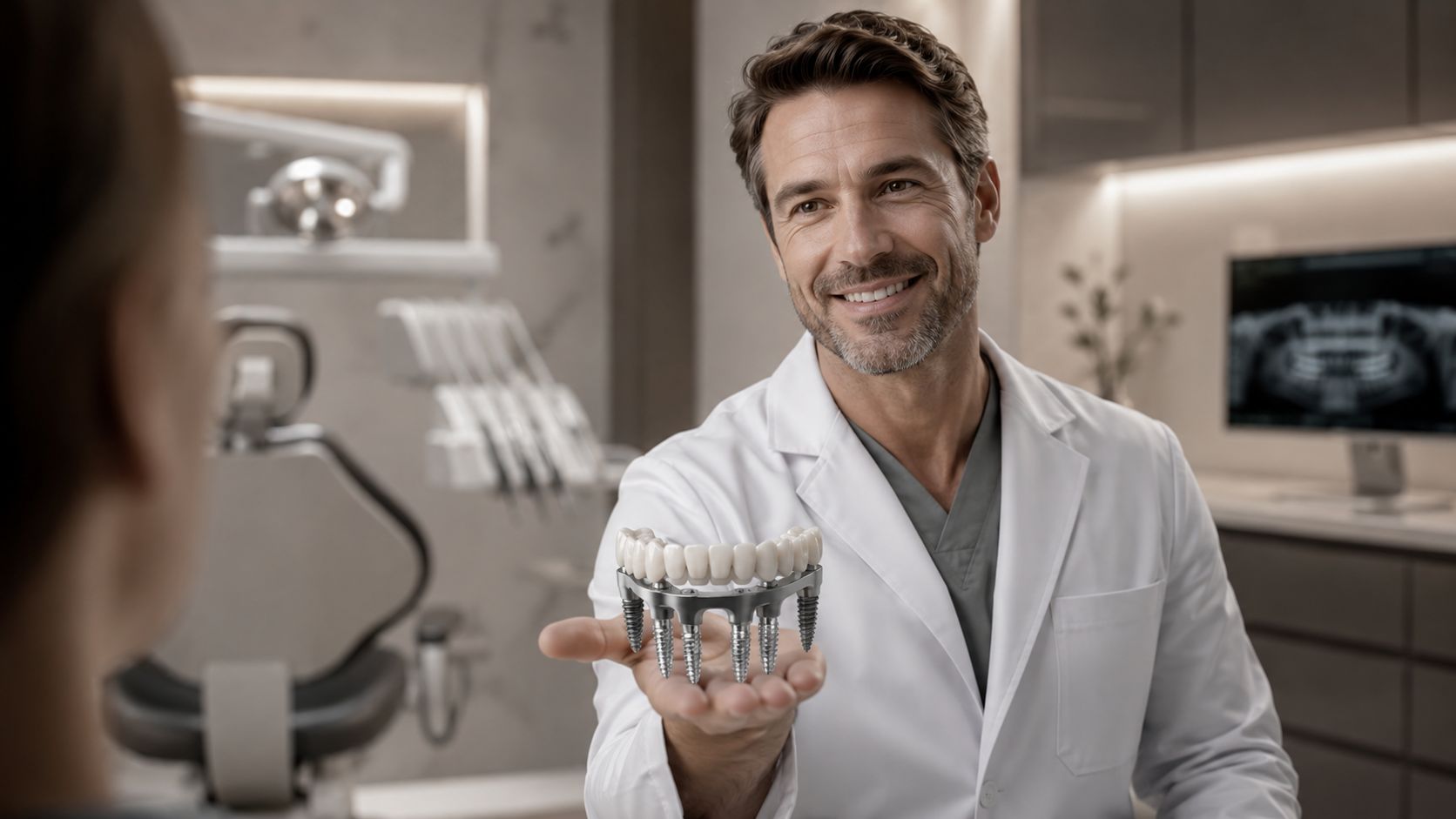
This is the option many patients mean when they search for full arch dental implants cost. The prosthesis is fixed in place rather than removed nightly by the patient. It generally offers the strongest feeling of stability and the closest experience to having non-removable teeth.
For the right candidate, this option is usually the most satisfying functionally. It tends to feel more secure during eating and speaking, and many patients prefer the psychological comfort of a restoration that stays in place.
A practice may describe this as All-on-4, All-on-X, or a similar fixed-bridge approach. Patients exploring full-arch implant treatment options should pay close attention to the exact prosthetic design being proposed, because "fixed" and "implant-supported" don't always mean the same thing.
Implant-supported overdentures
An implant-supported overdenture is still anchored to implants, but it is removable. That makes it a different category than a fixed bridge.
This option can be a strong middle ground. Patients often get much better retention than they do with a conventional denture, while staying at a lower cost than a fixed full-arch case. The trade-off is convenience and feel. You still remove it for cleaning, and it doesn't function exactly like a fixed bridge.
Clinical reality: For patients whose top priority is a lower entry cost with more stability than a standard denture, an implant overdenture can be a sensible solution. For patients who want the closest thing to fixed teeth, it usually won't scratch that itch.
Traditional removable dentures
Traditional dentures usually have the lowest upfront cost, but they come with familiar frustrations. Movement, sore spots, reduced chewing confidence, and a less secure fit are common reasons people begin looking at implant solutions in the first place.
For some patients, a conventional denture is still the right temporary or long-term choice. But if you're comparing long-term satisfaction, it helps to be honest about the compromises.
Full-Arch Options at a Glance
| Feature | Fixed Full-Arch Implants (e.g., All-on-4) | Implant-Supported Overdenture | Traditional Denture |
|---|---|---|---|
| Fit | Fixed in place | Removable, but attached to implants | Removable |
| Stability | Highest of the three | Better than a traditional denture | Least stable |
| Daily feel | Closest to non-removable teeth | More secure than standard denture, but still removable | Often shifts more during eating and speaking |
| Maintenance | Home care plus professional maintenance | Removed for cleaning | Removed for cleaning |
| Upfront cost direction | Highest | Mid-range | Lowest |
| Best for | Patients wanting a fixed solution | Patients wanting better retention with lower entry cost | Patients needing a simpler removable option |
The right fit isn't always the most expensive one. It's the one that matches how you want to live with your teeth every day.
Navigating Insurance and Financing for Your New Smile
Cost is often the biggest obstacle between wanting treatment and moving forward with it. That's understandable. Full arch care is a major investment, and most patients need a plan for the financial side before they can say yes.
What to expect from insurance
Dental insurance sometimes helps with pieces of treatment, but it often doesn't cover the entire cost of a full arch implant case. Coverage may apply more to related services than to the complete implant reconstruction itself. Every policy is different, so the details matter.
That means it's smart to approach insurance as one part of the solution, not the whole solution. A clear benefits review can still be worthwhile, especially if extractions or other supportive treatment are involved.
Financing can make the treatment manageable
Many patients complete treatment by combining available insurance benefits with monthly financing. Third-party healthcare financing, including CareCredit when approved, can spread a large fee into more manageable payments instead of requiring one lump sum.
For patients trying to understand their options before a consultation, a practical overview of payment plans for dental work can help frame the conversation. The key is transparency. You want to know what is due up front, what can be financed, and whether your plan covers the full treatment or only part of it.
What a good financial conversation should include
A useful treatment discussion should answer more than "What does it cost?" It should also answer:
- What is included: Whether the quote includes surgery, temporaries, and the final prosthesis
- What may be separate: Whether grafting, extractions, or sedation carry separate fees
- What the payment path looks like: Whether monthly financing is available and how the timeline works
- What alternatives exist: Whether a different prosthetic design changes the financial picture
Patients often feel relieved once they see the cost broken into understandable pieces. The fee may still be significant, but uncertainty usually feels worse than a clear plan.
Your Full Arch Implant Journey at Winn Smiles
The treatment itself feels less intimidating when you know what the sequence looks like. Most full arch cases follow a steady progression, with each step building on the one before it.
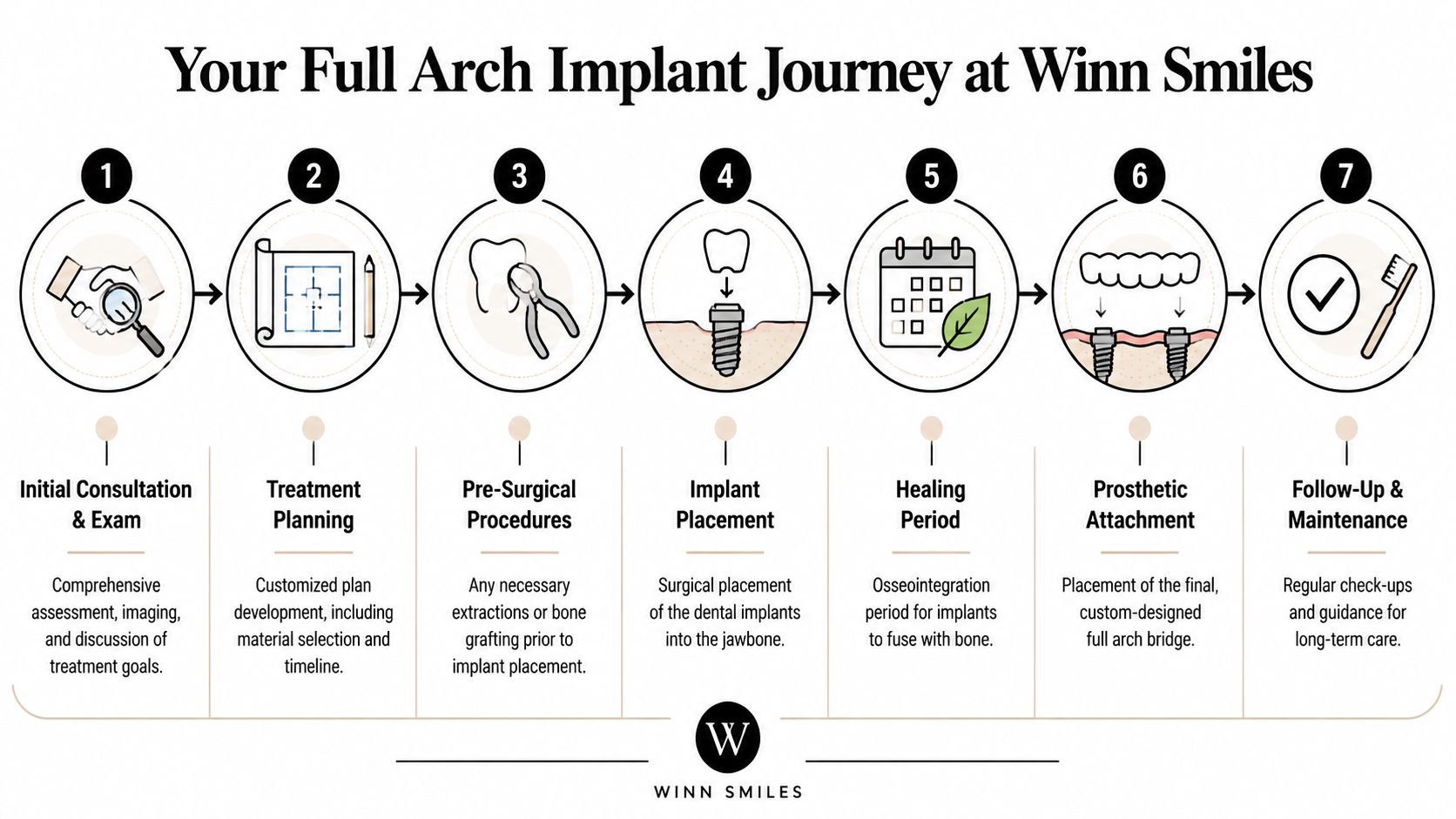
The first visit
The process starts with a consultation, imaging, and a close look at your goals. Some patients arrive knowing they want fixed teeth. Others know their current teeth or dentures aren't working anymore.
At this stage, the clinical team is looking at bone support, gum health, bite relationships, and whether any teeth need to be removed. This is also when questions about sedation, timing, and restoration design become practical rather than theoretical.
Planning the case carefully
A strong treatment plan doesn't rush to the procedure. It maps the case. If extractions are needed, that gets addressed. If the bone foundation raises concerns, that gets discussed before anyone talks about a final bridge as if it's guaranteed.
This is also where patients usually feel the most relief. Once the plan is laid out in plain terms, the problem becomes manageable.
Treatment gets easier emotionally when the path is clear. Patients don't need every technical detail. They need to know what happens first, what happens next, and what each step is meant to accomplish.
Surgery and temporary teeth
On procedure day, comfort matters. For patients with dental anxiety, sedation options can make the experience far more manageable. The surgery itself places the implants that will support the future arch.
In many cases, patients receive a temporary set of teeth during the healing phase. People often refer to this as a "teeth in a day" concept, but it's important to understand what that usually means. It refers to a temporary restoration that helps you leave with teeth, not the final long-term bridge on the same day in every case.
Healing and the final restoration
After surgery, the implants need time to integrate with the bone. During this period, the temporary restoration protects function and appearance while the foundation matures.
The final prosthesis comes later, after healing, verification, and adjustments. This step matters. A well-made final bridge should fit your bite, your smile line, and your long-term maintenance needs.
Long-term care
Even when the case is complete, the relationship with your dentist doesn't end. Full arch work still requires maintenance, home care, and periodic professional evaluation. That's true for cosmetic dentistry, restorative dentistry, and especially for implant care.
Patients who commit to maintenance usually do better over time. The investment is too significant to treat follow-up as optional.
Reclaim Your Confidence Schedule Your Free Consultation
A full arch solution can change daily life in ways that matter immediately. Eating becomes easier. Smiling feels natural again. Speaking in public, laughing in photos, and sitting down to a meal without worry all start to feel normal.
If you've been putting this off because the process feels overwhelming, the most useful next step isn't guessing from online ranges. It's getting a personalized exam and a written plan. That gives you answers specific to your mouth, your health history, and your priorities.
For many people, the hardest part is making the call. If that sounds familiar, a short resource like this team call booking guide can help you think through what to ask and how to prepare for a first conversation. A consultation should feel informative, not pressured.
Patients in Chattanooga, Cleveland, and nearby Tennessee communities often come in with questions that go beyond implants alone. They may also need extractions, restorative dentistry, cosmetic dentistry support, or care from an emergency dentist if failing teeth are causing pain now. Those details can all be reviewed during the same discussion.
A good consultation should leave you with clarity on four things:
- Your candidacy: Whether a fixed full-arch solution is appropriate
- Your options: Whether fixed, removable, or phased treatment makes more sense
- Your cost: What your specific treatment plan includes
- Your next move: Whether to start now or plan treatment in stages
The price matters. So does getting the right plan the first time.
If you're ready to talk through your options, request a free consultation with Winn Smiles and get a personalized full arch treatment evaluation for Chattanooga or Cleveland, TN.