A new veneer smile changes the way many people carry themselves. They laugh a little easier, stop covering their mouth in photos, and finally feel like their smile matches how they want to show up in the world.
Then the practical question kicks in. How do you keep veneers looking polished, comfortable, and natural year after year?
That's the right question to ask, especially if you've invested in cosmetic dentistry and want to protect it. Patients in Chattanooga and Cleveland often want simple answers, not a complicated rulebook. The good news is that how to care for veneers usually comes down to steady habits, smart food choices, and regular follow-up with a cosmetic dentist who knows what to watch for over time.
Your New Smile Is Here How to Protect Your Investment
You get home, catch your reflection again, and smile on purpose this time. The veneers look right. The next question is the one I want every patient to ask early. How do you keep that result looking natural and healthy over the years?
If you're still learning how veneers work, that context helps. Once veneers are placed, the job shifts from creating the smile to protecting the tooth, the margins, and the surrounding gum tissue.
Veneers need care because the tooth underneath still matters
Porcelain does not get cavities. The bonded tooth underneath can. Gum tissue can also become inflamed or recede, and that is often where aging veneers start to show their age first.
That point gets missed in many veneer care articles. The day-to-day routine matters, but long-term success also depends on what happens at the edges of the veneer and along the gumline. The American Dental Association advises brushing twice a day, cleaning between teeth daily, and keeping regular dental visits to protect overall oral health and any restorations you have, as explained in the ADA's guidance on brushing, flossing, and oral hygiene.
I tell patients to treat veneers like fine dental work, because that is exactly what they are. Strong, beautiful, and worth protecting with consistent care.
Long-term care depends on habits and follow-up
Veneers are durable, but they are not maintenance-free. Bite pressure, clenching, gum changes, and home care all affect how they age. A patient may feel that everything is fine because nothing hurts, yet I may still spot early margin staining, a rough edge, or a gumline shift that is easier to address now than later.
That partnership matters. At Winn Smiles, our Chattanooga and Cleveland teams do more than place veneers and send patients on their way. We monitor how the restorations are sitting, how the gums are responding, and whether your bite is putting too much force on a specific tooth. Those details often determine whether veneers continue to look polished or start to look older than they should.
Small product choices can help too. Patients who want to refine their home routine sometimes ask about ingredients beyond fluoride, and understanding xylitol for oral health can be a useful place to start as you compare toothpaste options with your dentist.
A good veneer result is not a one-day event. It is a long-term relationship between your daily habits and a dental team that knows what to watch for as your smile matures.
Your Essential Daily Veneer Care Routine
Daily veneer care should feel simple enough to repeat without thinking. If a routine is too fussy, adherence becomes difficult. The goal is a clean gumline, a protected veneer margin, and gentle cleaning that doesn't scratch the surface.
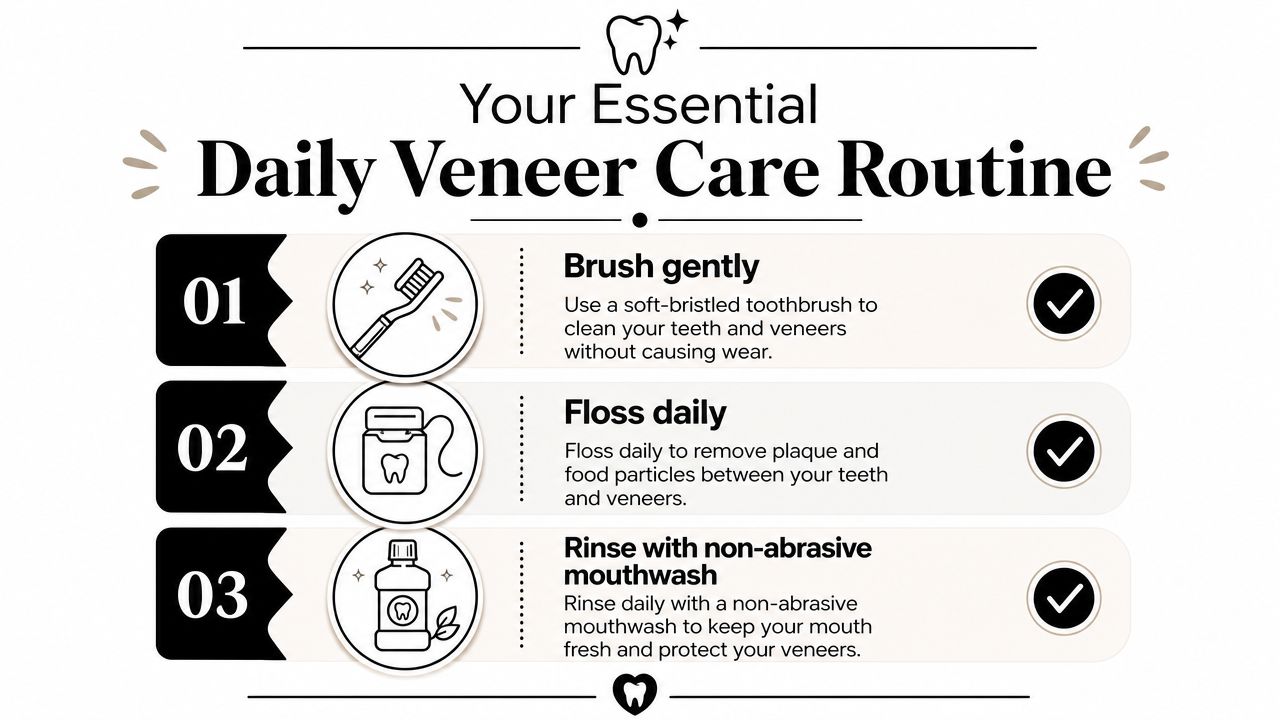
Brush gently and choose the right toothpaste
The recommended home protocol for daily veneer care includes brushing twice daily with a soft-bristled brush and non-abrasive toothpaste, plus flossing daily. A follow-up check within about 1–2 weeks after placement helps confirm fit and comfort, and whitening toothpastes should be avoided because they can abrade veneer surfaces or create a color mismatch since porcelain doesn't whiten like enamel, according to this veneer application and aftercare overview.
What works:
- Soft bristles: They clean effectively without roughing up the gumline.
- Non-abrasive fluoride toothpaste: It supports the natural tooth structure without scratching the veneer surface.
- Small, controlled motions: Focus on the area where the veneer meets the tooth and gum.
What doesn't work:
- Whitening toothpaste: These are a common mistake.
- Hard scrubbing: More pressure doesn't mean cleaner teeth.
- Ignoring the back teeth: Bite balance affects veneers too.
Flossing is about the edges, not just the spaces
The area most patients miss is the margin where the veneer meets the natural tooth. That edge can collect plaque, and that's where gum irritation and discoloration tend to start.
Floss daily and be deliberate about it. Slide the floss carefully between the teeth, clean along the side of each tooth, and avoid snapping it down hard onto the gums. Good flossing protects the tissue framing your veneers, and that framing is what makes a cosmetic result keep looking natural.
Clean veneers like fine surfaces, not like stained tile. Gentle and consistent wins.
A rinse can also be part of the routine if it's non-abrasive and comfortable for daily use. It won't replace brushing or flossing, but it can support a fresher mouth and help round out the habit.
For patients comparing toothpaste ingredients, it can also be useful to spend a few minutes understanding xylitol for oral health. It's not a substitute for technique, but ingredient choices do matter when you're trying to build a gentle, long-term routine.
Foods and Habits to Avoid with Dental Veneers
Most veneer damage doesn't come from one dramatic accident. It comes from repeated stress. A little ice chewing here, a pen cap there, clenching at night, biting into something harder than expected. Those habits add up.
That's why I frame restrictions differently. You're not giving up everything you enjoy. You're making better trade-offs so your veneers keep looking the way they should.
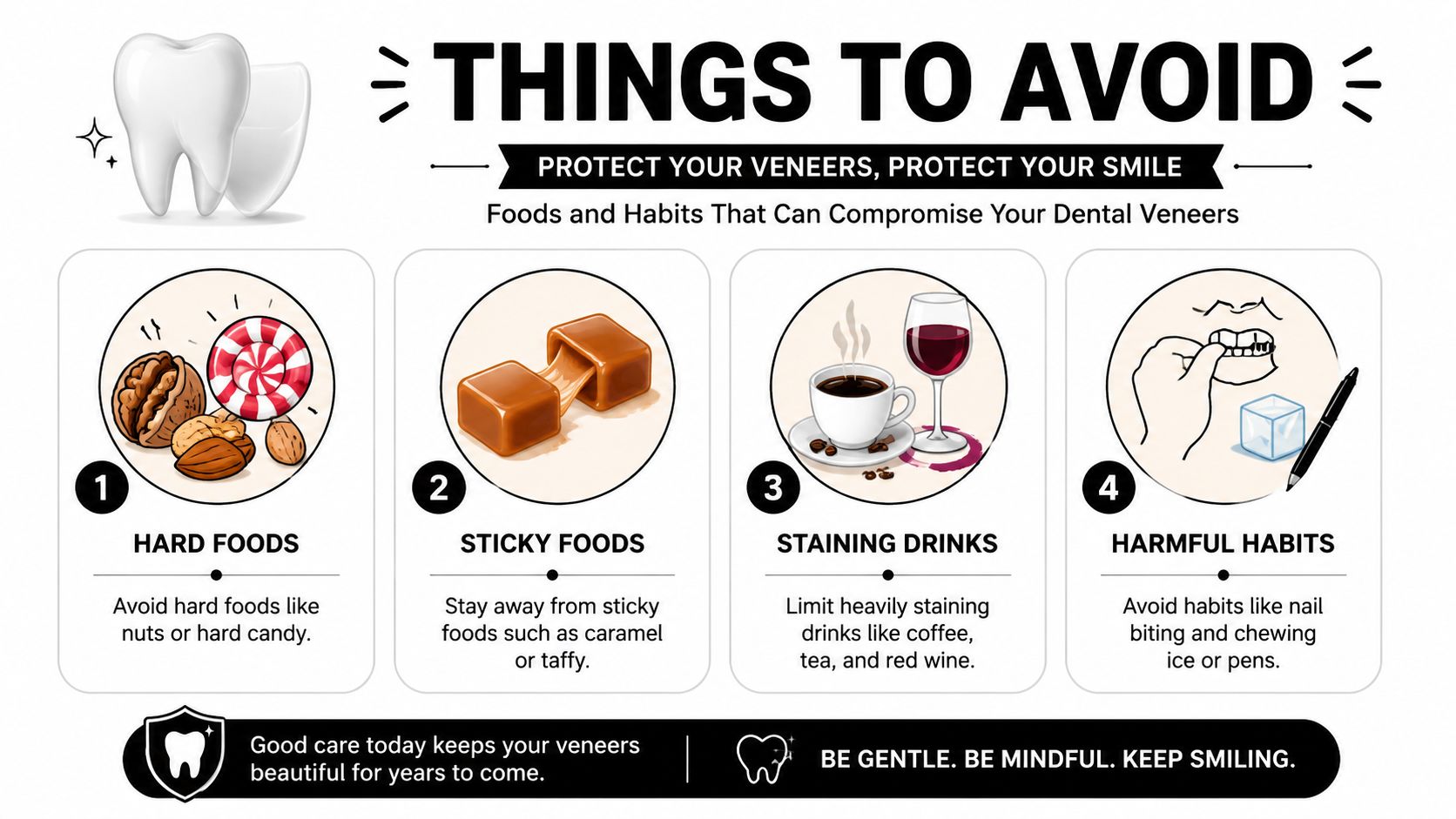
Hard items are a bigger risk than most people think
Dental guidance warns against chewing hard foods and objects such as ice, hard candies, pens, and fingernails because they can chip or loosen veneers. Patients who grind or clench are advised to wear a custom night guard, and while porcelain veneers are stain resistant, patients are commonly advised to limit dark-colored foods and drinks like coffee, tea, red wine, and berries because they are not stain proof, as explained in this veneer aftercare resource.
Here are smarter substitutions that protect your smile:
- Skip the ice chewing: Drink the cold beverage, don't crunch the cubes.
- Swap hard candy for a softer treat: The goal is less direct force on the veneer edges.
- Use scissors, not your teeth: Opening packages with your front teeth is one of the fastest ways to create damage.
- Leave pens and nails alone: Repeated pressure in the same spot is a problem.
Bruxism needs a plan, not wishful thinking
Clenching and grinding are different from occasional hard bites because they happen over and over, often while you're asleep. Patients with bruxism usually don't notice the pressure until they start seeing rough edges, tight jaw muscles, or a veneer that feels different.
A custom night guard matters because it helps manage mechanical stress. Over-the-counter options may feel convenient, but fit matters when you're protecting cosmetic dental work.
If you know you clench, a night guard isn't an extra. It's part of veneer maintenance.
Stains are manageable when you stay realistic
Porcelain resists stains better than many people expect, but it isn't stain proof. Coffee, tea, red wine, and dark berries are common culprits. That doesn't mean you can never have them. It means moderation and practical habits help.
A short table makes the trade-offs easier to see:
| Everyday choice | Better approach |
|---|---|
| Long coffee sipping | Finish it in a shorter window and rinse with water after |
| Biting directly into very hard foods | Cut them into smaller pieces first |
| Ignoring night grinding | Ask about a custom night guard |
| Using teeth like tools | Keep that force off your veneers entirely |
Long-Term Success and Professional Dental Care
A veneer can still look beautiful years after placement and need a closer professional look.

Daily care does a lot. It does not replace regular exams and cleanings. Veneers sit on natural teeth, next to living gum tissue, under real chewing forces. Long-term success depends on how those teeth and gums age around the cosmetic work, not just on how bright the veneers look in the mirror.
Porcelain veneers often last many years, and composite veneers usually have a shorter service life. The exact timeline varies with bite pressure, gum health, home care, and whether small changes are caught early. The American Dental Association notes that veneers are durable but may need replacement over time, especially as surrounding teeth and tissues change, as explained in the ADA's veneer overview.
Why cleanings matter even when everything feels fine
At recall visits, the goal extends beyond polishing the front surfaces. A good veneer check includes the margins where veneer meets tooth, the condition of the gums, and the way the upper and lower teeth are meeting now compared with the day the veneers were placed.
I tell patients this often. Veneers do not age in isolation. If the gumline shifts slightly, if one tooth starts taking more force, or if plaque collects around a margin, the veneer may still look fine at first. Catching those changes early usually means simpler treatment and fewer surprises.
Professional monitoring helps identify problems such as:
- inflammation around the veneer margins
- small bite changes that increase edge stress
- early gum recession that can expose the edge of the restoration
- wear on neighboring teeth that affects how the veneers contact
The long view matters
This is the part many online veneer guides skip. Veneer care is a long-term partnership with your cosmetic dentist. As the years pass, your restorations may need polishing, bite adjustments, or a broader conversation about adjacent teeth, gum contours, or older dental work that no longer matches.
Patients seen in Chattanooga or Cleveland often use these follow-up visits to review more than veneers alone. A routine exam may also reveal a cracked filling on a nearby tooth, gum changes that affect the smile line, or a need for updated x-rays before a small issue turns into a larger one. Winn Smiles provides that kind of ongoing dental care as part of regular maintenance, not as an afterthought.
A short video can help if you want a visual explanation of veneer care and expectations.
Professional maintenance protects the fit of the veneer, the health of the gumline, and the way your bite feels over time.
How to Spot and Address Potential Veneer Issues
Most veneer problems are easier to manage when patients call early. Waiting usually doesn't make things simpler. It just gives a small issue more time to affect the tooth, gum, or bite around it.
A key aspect of veneer care is monitoring the tooth-veneer interface and gum health. Patients should watch for signs of gum recession or dark lines at the veneer edge, which may indicate a need for professional evaluation, as discussed in this Cleveland Clinic veneer overview.
Signs worth paying attention to
Some changes are visual. Others are about feel.
- A rough edge: You may notice it with your tongue before you can see it.
- A veneer that feels loose or different: Even slight movement deserves a prompt call.
- New sensitivity near the gumline: This can point to exposed margins or tissue changes.
- A dark line where the veneer meets the gum: That's a clear reason to book an exam.
- Receding gums around one veneer: The tissue may be changing even if the veneer itself looks intact.
What to do if something seems off
Don't panic, and don't try to fix it yourself.
Skip whitening products, don't file or smooth a rough edge at home, and don't assume sensitivity will just pass. If you chip a veneer, notice a stain that seems to be coming from the margin, or feel a change in fit, call your cosmetic dentist. If the problem feels urgent, treat it like an emergency dental concern and get it evaluated quickly.
Your Veneer Follow-Up at Winn Smiles in Chattanooga & Cleveland
A veneer follow-up should feel calm and straightforward. You arrive, check in with a team that explains what's happening, and sit down in an environment designed to feel comfortable instead of clinical and rushed.
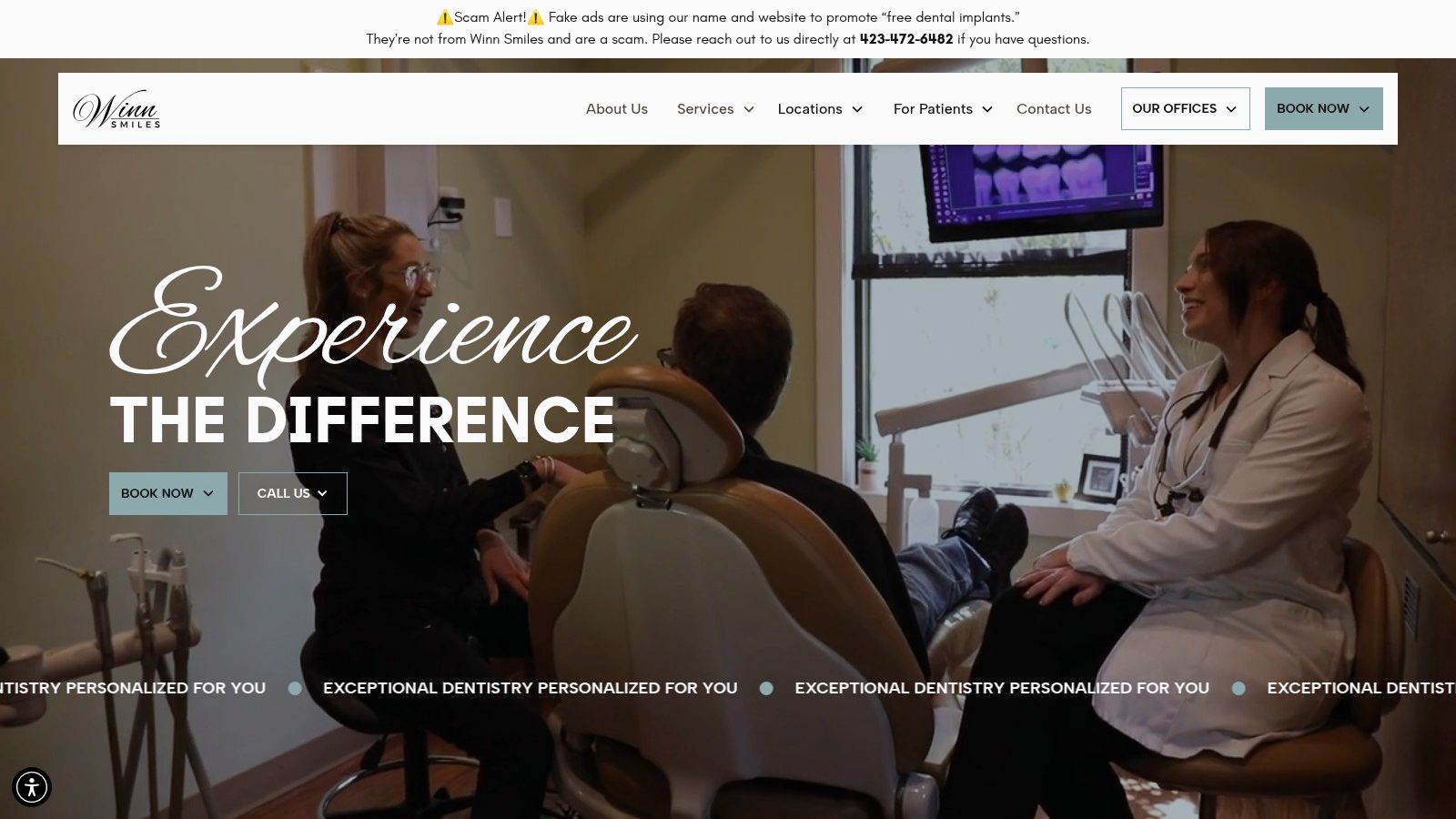
For patients in Chattanooga, Cleveland, and nearby communities, that visit may include a review of comfort, bite, gum health, and the way the veneers are aging in day-to-day use. If you're nervous about dental care, comfort options and a gentle pace make a real difference. For many adults, knowing what to expect lowers anxiety.
Some patients come in for a routine veneer check. Others start by looking at veneers before and after results and then book a consultation because they want to improve shape, color, or symmetry. Either way, the visit should leave you with clear guidance, not guesswork.
Cosmetic dentistry works best when it doesn't stop at placement day. It keeps working when your dental team helps you maintain the result, catch small issues early, and make sure your smile still feels like your own.
If you want help maintaining veneers or you're looking for a cosmetic dentist in Chattanooga, TN, or Cleveland, TN who can guide you through cleanings, exams, repairs, and long-term smile care, schedule a visit with Winn Smiles.