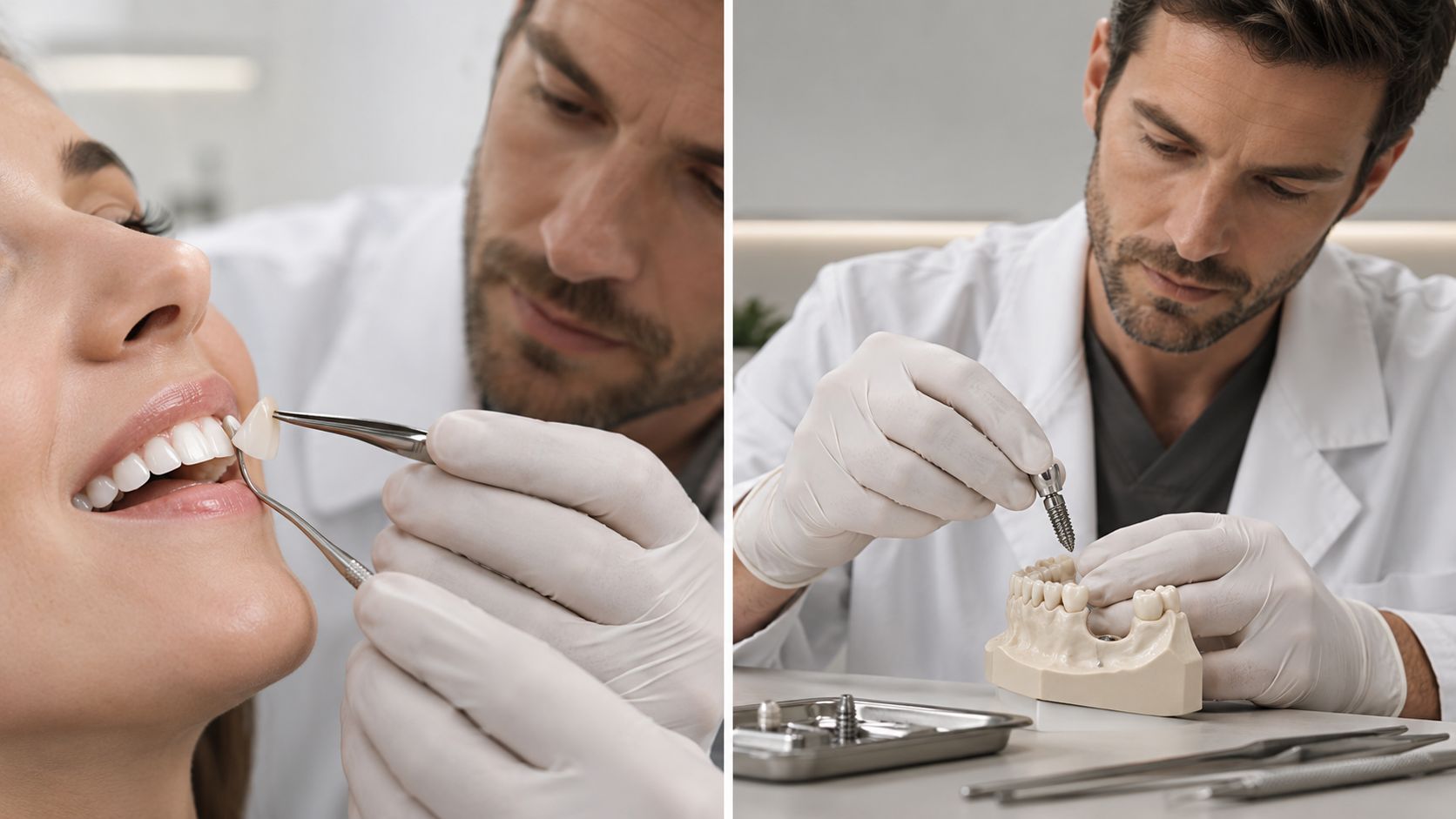
Minimal prep veneers are ultra-thin shells bonded to the front of teeth with little to no enamel removed, and clinical reports describe enamel reduction in a narrow conservative range, often around 0.1 mm at the cervical third, 0.2 to 0.5 mm in the middle third, and 0.7 to 1.0 mm near the incisal third. Long-term evidence has reported a 100% Kaplan-Meier survival rate for no-prep or minimally invasive veneers in one prospective comparison, although your result depends on your teeth, bite, habits, and the quality of planning and bonding.
You may be researching veneers after a front tooth chipped during a college softball game, after years of coffee staining that professional whitening can't lift, or because a small gap has become more noticeable in photographs. You want a smile that looks natural, but you don't want aggressive drilling, unnecessary discomfort, or a treatment plan that feels unclear.
For patients searching for a cosmetic dentist near me, a dentist in Chattanooga, TN, or a practice serving Cleveland, TN, the right first step is a careful evaluation. Minimal prep veneers can be an excellent option for selected healthy teeth, but they're not a universal solution. Your consultation should address enamel preservation, bite comfort, gum health, materials, maintenance, sedation, and the full cost before you decide.
Why Chattanooga TN Patients Are Choosing Minimal Prep Veneers
A chipped edge can draw your attention every time you smile. Dark staining can remain visible after whitening, and a small gap can affect how confidently you speak or pose for a photo. These concerns aren't emergencies, but they can still influence how you feel in everyday conversations, work meetings, and family gatherings around Chattanooga and Cleveland.
Minimal prep veneers address the visible surface of a tooth with a conservative approach. A custom-made shell is bonded to the front of the tooth, helping change its color, shape, size, or minor spacing while aiming to preserve as much healthy enamel as the case allows. The treatment may suit someone who wants a noticeable cosmetic improvement without the more extensive reshaping associated with traditional veneers or crowns.
Comfort matters as much as appearance
Many patients looking for a cosmetic dentist near me are also worried about needles, drilling, or sitting through a lengthy appointment. Comfort-focused dentistry can include a calm pace, clear explanations, topical and local anesthetic when appropriate, and sedation options such as nitrous oxide or oral conscious sedation for eligible patients. The appropriate option depends on your health history and the procedure.
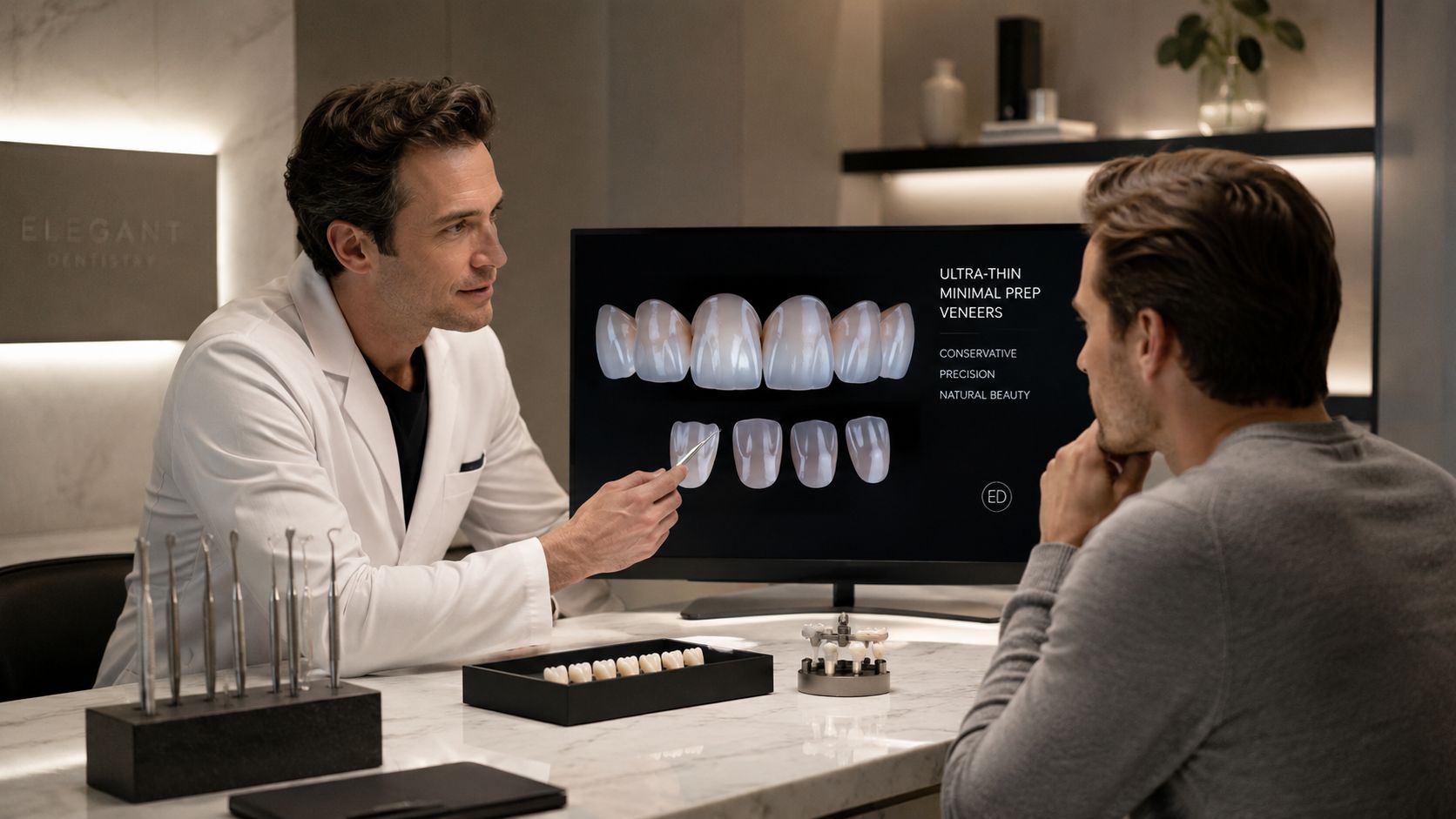
Winn Smiles serves patients in Chattanooga and Cleveland, TN, with digital planning and comfort-oriented care. A digital preview can help you discuss the proposed shape and proportions before treatment begins, rather than relying only on verbal descriptions.
Practical rule: A conservative veneer plan should protect your natural tooth while also respecting your bite, gumline, speech, and facial proportions.
The technology helps, but diagnosis remains the foundation. Your dentist needs to check for decay, cracks, gum inflammation, enamel quality, existing restorations, and bite forces before recommending veneers. If a tooth needs restorative dentistry, a tooth extraction, or replacement with dental implants near me, cosmetic veneers won't solve the underlying problem.
What Minimal Prep Veneers Actually Are
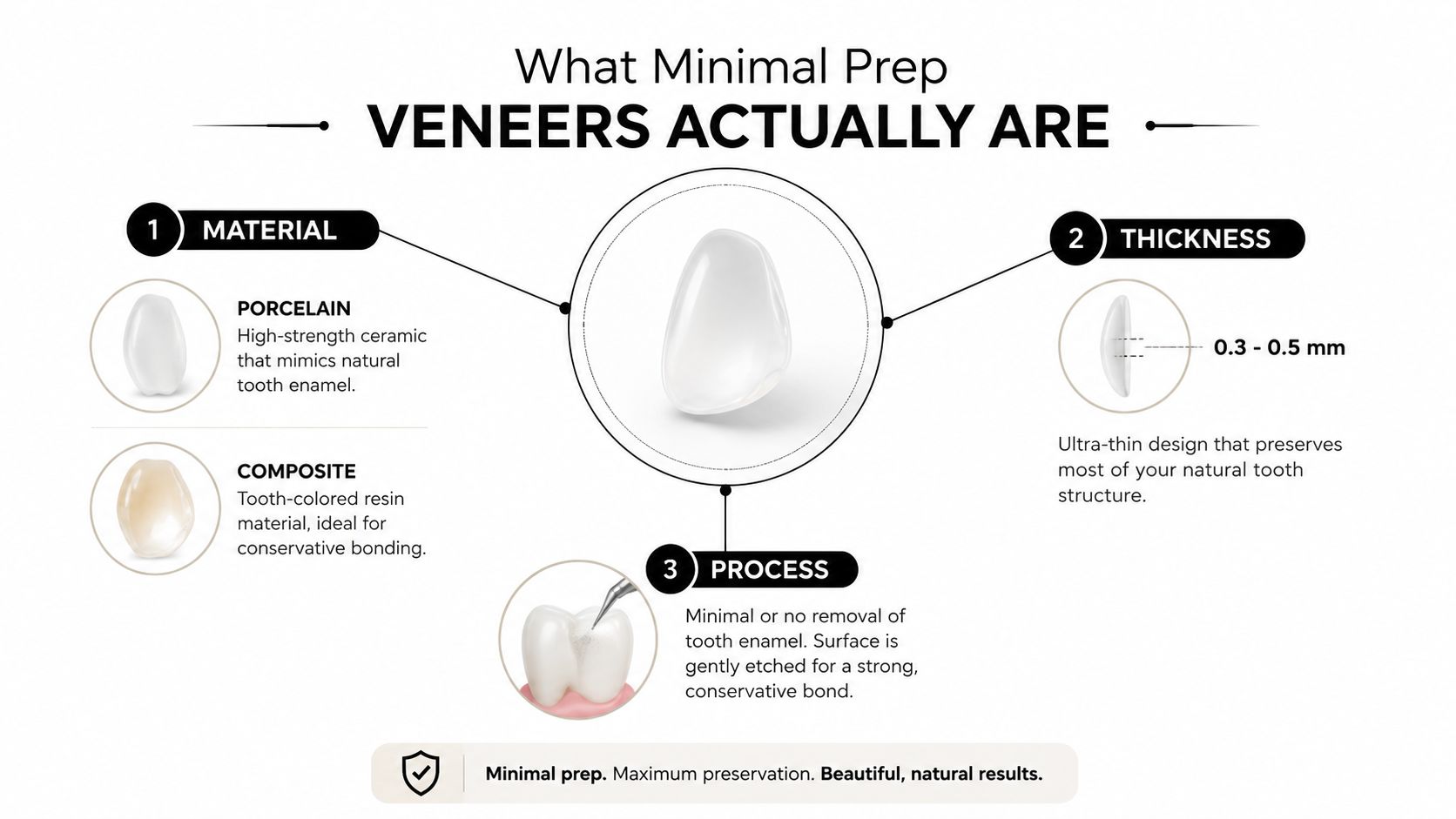
Minimal prep veneers are thin porcelain or composite shells made to fit the visible front surface of a tooth. They can improve mild discoloration, small chips, slight rotations, minor gaps, or uneven edges. The dentist may polish or reduce a small amount of enamel to create space and a clean bonding surface, but the preparation is deliberately limited.
The exact amount isn't identical for every tooth. The referenced clinical literature describes preparation zones commonly around 0.1 mm at the cervical third, 0.2 to 0.5 mm in the middle third, and 0.7 to 1.0 mm in the incisal third, while other descriptions identify approximately 0.5 mm to 0.7 mm of surface enamel reduction as typical for minimal preparation. A review of conservative veneer preparation explains why enamel matters: bonding to enamel is associated with more predictable adhesion and long-term clinical success than bonding primarily to dentin. The clinical review on minimally invasive veneer preparation provides the technical background.
Minimal prep is different from no prep
No-prep veneers avoid preparation entirely, or involve only very limited polishing. They can work when the teeth have enough space to accept the added material without looking bulky. Minimal prep veneers allow the dentist slightly more control over contour, fit, and the final position of the restoration.
Traditional veneers generally require more enamel reduction to create room for the ceramic and achieve the planned shape. That doesn't make traditional veneers wrong. They may be more suitable when a patient needs a larger change in color, shape, alignment, or tooth position. The key is matching the treatment to the starting anatomy.
Materials and planning
Common materials include feldspathic porcelain, lithium disilicate, pressed ceramic, and composite resin. Porcelain can provide a natural surface appearance and color stability, while composite may be easier to repair or modify in selected cases. Material selection depends on the tooth, bite, desired shade, available space, and your dentist's laboratory workflow.
Digital smile design, photographs, and intraoral scanning can help map the teeth, gumline, and bite before preparation. If you'd like a deeper explanation of one ceramic option, 3D DDS's guide to lithium disilicate restorations offers useful background on the material and its restorative applications.
Comparing Veneers, Crowns, Bonding, and Implants
Minimal prep veneers sit between direct cosmetic bonding and more extensive restorations. They add a thin shell to a tooth that is still present and generally healthy. Crowns cover the entire visible tooth structure, while implants replace a missing tooth rather than changing the surface of an existing one.
The right choice depends on what needs repair, how much healthy structure remains, how your teeth meet, and what kind of maintenance you can commit to. The table below offers a practical starting point, but a dental examination is still necessary before treatment.
Cosmetic and Restorative Options at a Glance
| Option | Tooth Preservation | Typical Lifespan | Best For | Approximate Cost |
|---|---|---|---|---|
| Minimal prep veneers | Conservative enamel reduction, planned case by case | Long-term performance varies with bonding, bite, material, and care | Healthy teeth with mild cosmetic concerns | Varies by case and practice |
| Traditional veneers | More enamel reduction to create restorative space | Long-term performance depends on preparation, bonding, bite, and maintenance | Larger changes in color, shape, or alignment | Varies by case and practice |
| Crowns | Full-coverage restoration, with more tooth reshaping | Depends on remaining tooth structure, fit, bite, and care | Teeth weakened by extensive damage or restorations | Varies by tooth and treatment |
| Composite bonding | Little or no enamel removal in many cases | Often shorter-term than ceramic and more vulnerable to staining and wear | Small chips, minor shape changes, and selected low-risk corrections | Often lower than ceramic, but varies |
| Dental implants | Replaces a missing tooth after removal or loss | Long-term outcome depends on bone, hygiene, implant planning, and maintenance | A missing tooth, not a cosmetic surface change | Varies by surgical and restorative needs |
For example, a healthy front tooth with a small chip may be a candidate for bonding or a minimal prep veneer. A tooth with extensive structural loss may need a crown instead. If the tooth is absent, a dental implant and crown address the missing root and visible tooth, while a veneer can't.
Composite bonding can be attractive when you want a quick, conservative repair or a more easily modified material. It may not offer the same surface stability as ceramic, especially for someone who frequently drinks staining beverages or places heavy force on the front teeth. Traditional veneers provide more room for changing form and shade, but they require a different preparation strategy.
A dentist near me should explain not only what can make your smile look better, but also what protects function. If you have pain, swelling, a broken tooth, or sudden trauma, contact an emergency dentist before arranging cosmetic treatment.
The Treatment Journey From Consult to Final Smile
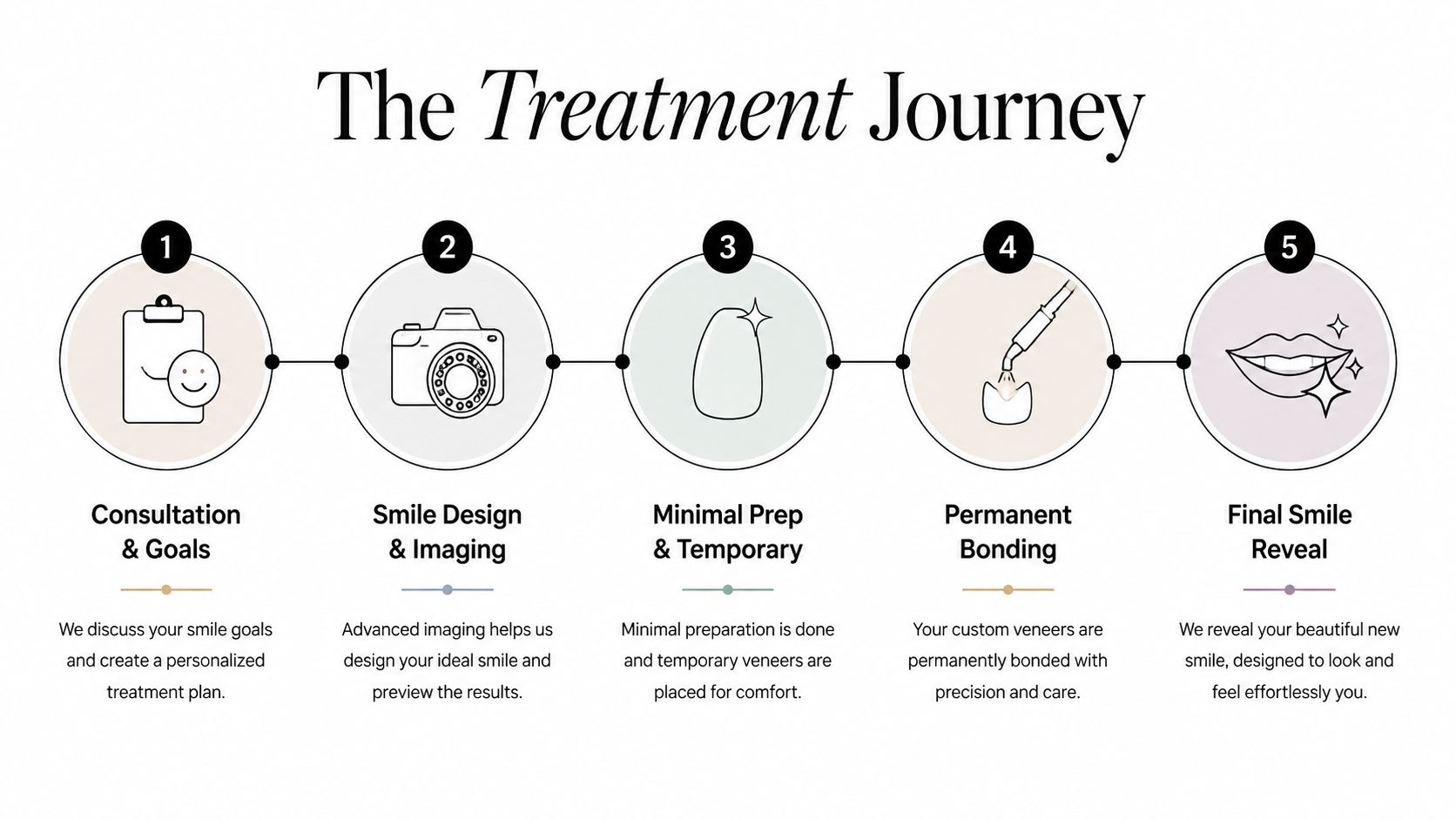
A veneer appointment should feel like a planned sequence, not a rushed cosmetic purchase. Your dentist first needs to determine whether the teeth and gums can support the treatment, then confirm that the proposed smile works with your bite and facial features.
Consultation and smile planning
At the first visit, expect an oral examination, photographs, and a conversation about what you want to change. The dentist may assess your enamel, gumline, tooth proportions, bite, existing fillings, cracks, discoloration, and signs of grinding. Dental X-rays may be appropriate when the examination raises concerns beneath the visible surface.
Digital scanning or impressions create a record of your teeth. With digital smile design, a mock-up or wax-up can show the proposed length, width, contour, and shade before final treatment. This preview gives you a chance to discuss changes while the design is still adjustable.
Preparation and temporaries
During preparation, the dentist removes only the amount needed for the selected design, often keeping the reduction under 0.5 mm in conservative cases. The dentist may smooth the enamel, refine the edges, and record the prepared teeth again so the laboratory receives an accurate prescription.
Temporary veneers may protect the teeth and give you a preview of the planned appearance. Pay attention to how they feel when you speak, close your teeth, and clean around the gumline. If something feels too thick or your bite feels uneven, tell the dental team before final bonding.
For a plain-language explanation of preparation choices, you can review how teeth are prepared for veneers at Winn Smiles.
Fabrication, bonding, and recovery
A dental laboratory fabricates the final veneers from the approved design and selected material. At the bonding appointment, each veneer is checked for fit, shade, shape, contact points, and relationship to the surrounding teeth. Once you approve the appearance and the dentist confirms the function, the enamel and veneer are prepared for adhesive cementation.
The procedure may involve pressure, vibration, or the sensation of holding your mouth open, but the team should explain each stage. Sedation can be discussed in advance if anxiety makes treatment difficult.
After bonding, mild sensitivity may occur. Your dentist may recommend softer foods and avoiding extreme temperatures or heavy biting with the treated teeth during the first 24 to 48 hours. A follow-up visit checks bite comfort, gum tissue, cleaning access, and the condition of the veneer margins.
Longevity and the Real Reasons Veneers Fail
Minimal prep veneers can perform well over time, but no dentist should promise that every veneer will last indefinitely. A prospective comparative study followed 186 veneers over a mean observation period of 9.06 years, with evaluations across 20 recalls. It reported a Kaplan-Meier survival rate of 100% for no-prep or minimally invasive veneers, compared with 9.67% for conventional veneers in that cohort, and a mean success time of 10.28 years versus 9.32 years. Read the long-term comparative study.
A separate clinical evaluation reported minimally prepared ceramic veneer success at 100% at 6 months, 98% at 12 months, and 91% at 24 months. The clinical evidence review also discusses the broader role of minimally invasive veneers and why enamel preservation, bonding, and case selection matter.
What can cause problems
Failures aren't limited to a veneer breaking. Chipping and fracture can occur when biting forces exceed the restoration's strength, particularly with grinding or hard foods. Debonding can separate the veneer from the tooth, while discoloration may develop at the margin or from changes in surrounding teeth. Shade mismatch and dimensional inaccuracy can also lead to replacement, even when the ceramic itself hasn't fractured. A review of veneer complications and failure patterns highlights why contour and aesthetic accuracy deserve as much attention as strength.
Overcontouring creates another concern. If a veneer adds too much bulk, the gumline may become harder to clean, and the result may look less natural. Digital planning, careful tooth selection, and verification of the proposed contour help reduce that risk.
Minimal Prep Veneer Longevity Factors
| Factor | Impact on Longevity | Prevention Strategy |
|---|---|---|
| Enamel preservation | Reliable enamel bonding supports retention | Plan conservative preparation and confirm enamel quality |
| Bite and grinding | Excess force can contribute to chipping, fracture, or debonding | Discuss a nightguard and manage grinding risk |
| Contour accuracy | Bulky margins can affect cleaning and gum comfort | Review digital design, temporaries, and gumline access |
| Daily habits | Ice, nail biting, and hard objects place avoidable stress on veneers | Use teeth for chewing food only |
| Maintenance | Plaque and staining can affect margins and surrounding teeth | Brush, clean between teeth, and attend maintenance visits |
Evidence summaries also describe indirect composite resin minimal-prep or no-prep veneers as lasting about 5 to 8 years, with one reported 10-year survival rate of 82%. Chipping, staining, and surface wear are common concerns. This evidence summary on veneer longevity provides that material-specific context.
Cost, Financing, and the Winn Smiles Experience
The cost of minimal prep veneers depends on the number of teeth, preparation complexity, material, laboratory process, and whether additional treatment is needed first. In the Chattanooga area, patients may see an investment of $800 to $2,500 per tooth, with the exact fee determined during an individualized examination and treatment plan.
Cosmetic veneer treatment is rarely covered by dental insurance. Coverage may be different when a tooth has functional damage or an accident-related injury, but the plan's exclusions and limitations control the final benefit. Ask for a written estimate that separates the veneer fee from examinations, imaging, periodontal treatment, repairs, or other procedures.
Clear financial conversations
Winn Smiles discusses treatment costs before care begins and offers options that may include third-party healthcare lenders, in-house payment plans, and HSA or FSA acceptance. Patients can also ask about a free initial consultation and select-service second opinions when comparing possible treatment paths.
A transparent consultation should answer practical questions:
- Number of teeth: Which teeth need treatment, and why?
- Material choice: What material is recommended for your bite and goals?
- Preparation: How much enamel is expected to be removed?
- Follow-up care: What happens if a veneer chips, debonds, or feels uncomfortable?
- Payment details: Which services are included, and which are separate?
Sedation options can range from nitrous oxide to oral conscious sedation for appropriate patients. A comfort plan doesn't replace diagnosis, but it can make it easier to complete the care you need without avoiding appointments.
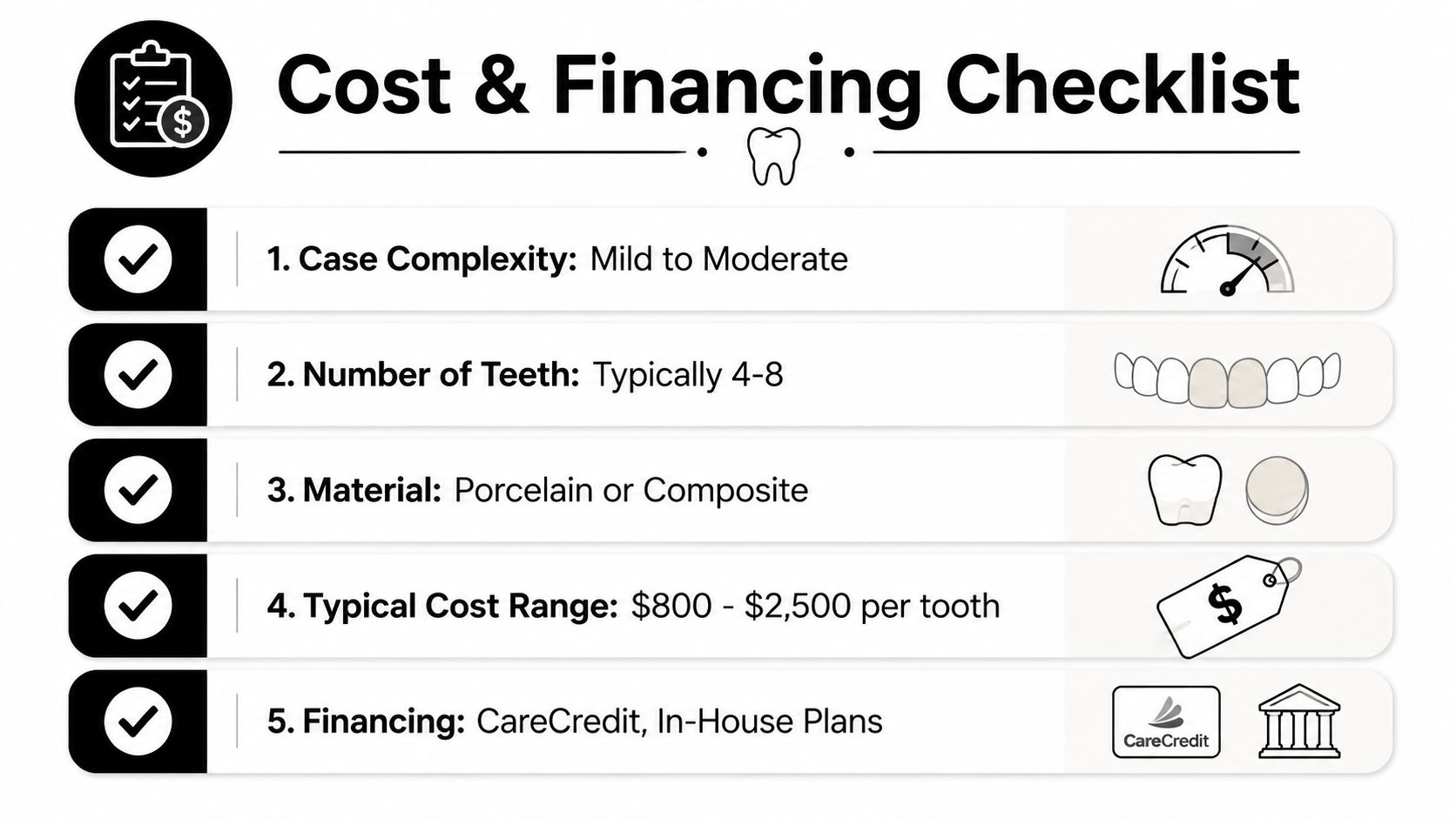
Digital scanners and smile previews can make communication more precise and may reduce unnecessary adjustments during treatment. Before booking, Winn Smiles' guide to veneer costs can help you prepare for a more focused financial discussion.
Are Minimal Prep Veneers the Right Choice for You
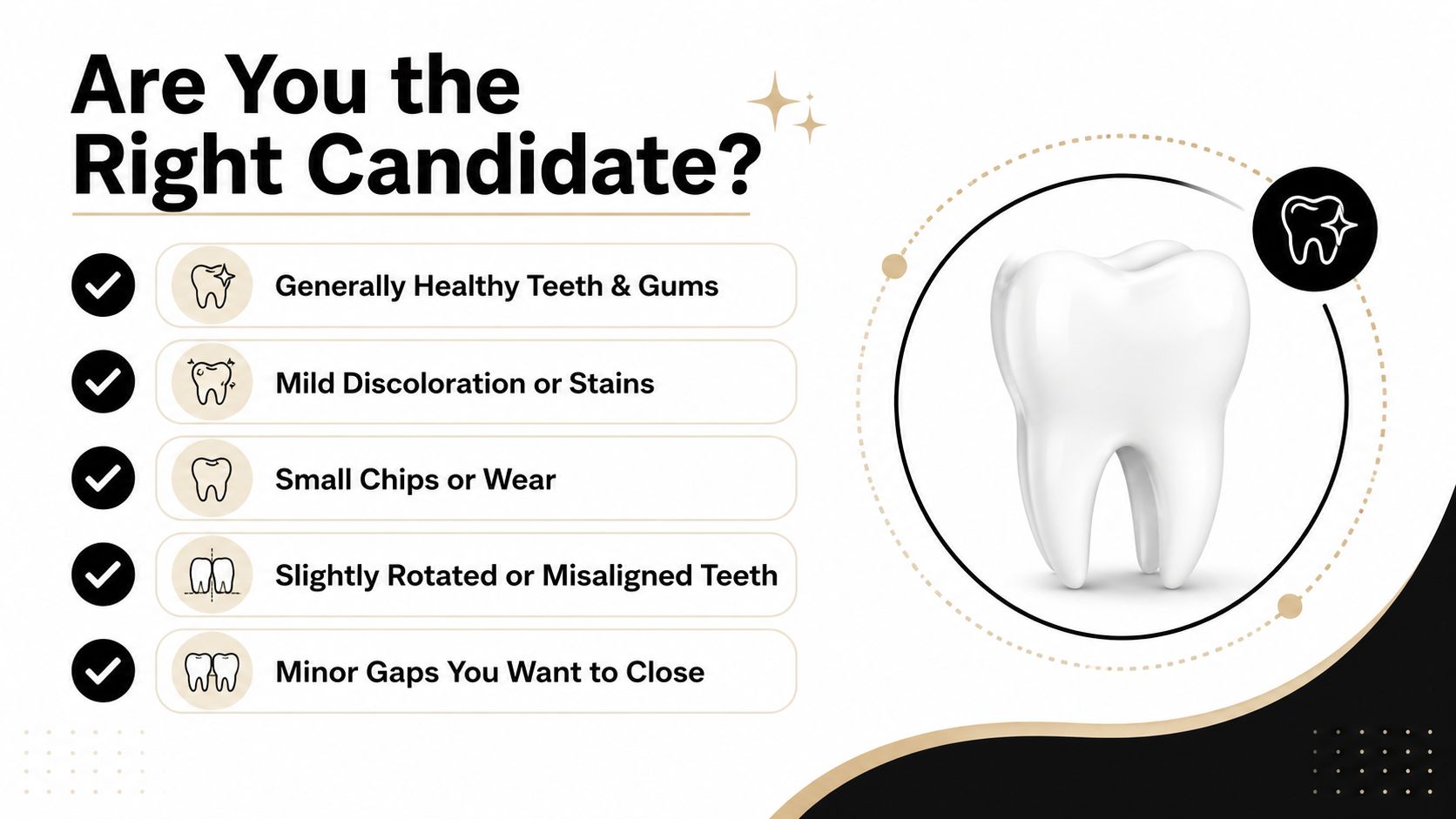
The strongest candidates usually have healthy teeth and gums, enough enamel for bonding, and cosmetic concerns that don't require major movement or structural repair. Minimal prep veneers may suit mild discoloration, small chips, slight rotations, worn edges, or minor gaps.
They may not be appropriate when decay, active gum disease, large restorations, severe misalignment, or significant bite problems are present. Heavy grinding that has already shortened the teeth can also change the recommendation. In those situations, your dentist may discuss periodontal care, orthodontics, bonding, crowns, or another restorative approach first.
Bring direct questions to a Chattanooga or Cleveland consultation:
- Enamel goals: How much natural enamel can remain?
- Design preview: Will I see a digital mock-up or temporary version?
- Material: Why is porcelain, ceramic, or composite right for me?
- Experience: How does the dentist evaluate veneer cases like mine?
- Problem planning: What happens if a veneer chips, debonds, or needs replacement?
- Comfort: What sedation and anxiety-support options are available?
Choosing a local practice also makes follow-up easier. Intraoral scanning, coordinated laboratory work, comfort options, and accessible maintenance visits can provide continuity that traveling for cosmetic care may not.
Common Questions From Chattanooga TN Patients
Are minimal prep veneers reversible?
Sometimes. If the dentist leaves most enamel intact, removal may be possible with limited structural change. But “reversible” doesn't mean risk-free. The answer depends on the actual preparation, bonding materials, tooth condition, and whether the veneer has been repaired or replaced over time.
Will I feel sensitivity?
You may experience mild sensitivity during the early period after preparation or bonding, especially to cold. Preserving enamel can help reduce unnecessary exposure, but sensitivity varies by tooth and patient. Tell the team if discomfort is strong, persistent, or triggered by biting.
Can I whiten veneers?
Whitening products change natural enamel, not the color of porcelain or composite veneers in the same way. If you want teeth whitening, discuss it before selecting the final veneer shade so the restorations can be planned to match the smile you intend to maintain.
What should I do next?
Schedule a consultation with a dentist serving Chattanooga or Cleveland, TN, and bring photographs or examples of the smile changes you prefer. Ask about a digital preview, enamel-preserving preparation, sedation, financing, and what happens if another service, such as a tooth extraction, crown, or dental implant, is needed first.
Winn Smiles offers consultations for cosmetic treatment, digital planning, comfort-focused care, and sedation discussions for patients considering minimal prep veneers in Chattanooga and Cleveland, TN. Visit Winn Smiles to request an appointment, discuss your smile goals, and receive a clear plan for the next step.