If you're reading this, there's a good chance you already know what you want your smile to look like. Maybe you cover your mouth in photos because of worn edges, deep stains, small gaps, or teeth that look uneven even though they're healthy. You may also be stuck on one nervous question: how are teeth prepared for veneers?
That concern is normal. Many patients in Chattanooga and Cleveland, TN come in excited about veneers but worried that their teeth will be "shaved down" too much or that the process will be uncomfortable. In real life, veneer treatment is far more precise and carefully planned than patients often anticipate.
At our office, the conversation usually starts with what bothers you when you smile, not with a drill. Veneers are one of the most popular cosmetic dentistry options because they can improve color, shape, symmetry, and balance all at once. But good results don't come from rushing. They come from good planning, gentle technique, and making sure the final smile still looks like you.
Your Guide to Veneers from a Cosmetic Dentist in Chattanooga
A lot of people wait years before asking about veneers. They tell themselves the chip isn't that noticeable, the discoloration isn't that bad, or the gap is just part of their look. Then one day they see a photo of themselves smiling carefully instead of naturally, and that's when they decide it's time to ask about cosmetic dentistry.
Porcelain veneers can be a beautiful option for adults who want a brighter, more even smile without changing who they are. The goal isn't to make your smile look fake or overly uniform. The goal is to create a result that fits your face, your bite, and your personality.
Why the prep part sounds scarier than it is
When patients search for how teeth are prepared for veneers, they often picture large amounts of tooth structure being removed. That's usually the biggest source of anxiety. In modern cosmetic dentistry, veneer preparation is guided by careful measurements, smile design, and conservative planning.
Many patients are relieved to learn that veneer prep is about creating space for a natural fit, not aggressively cutting teeth.
That distinction matters. Veneers need room to sit flush against the front of the tooth so they don't look bulky or feel awkward. The preparation is there to support a smooth, natural-looking result and a comfortable bite.
Care that feels personal
Patients looking for a cosmetic dentist near me, a dentist in Chattanooga, TN, or a practice that also serves Cleveland often want more than technical skill. They want a team that explains things clearly, checks on their comfort, and gives them time to make decisions.
That matters whether you're coming in for veneers, teeth whitening, cleaning and exams, restorative dentistry, dental implants, or even an emergency dentist visit. Trust starts with being heard.
The First Step Your Veneer Consultation at Winn Smiles
The first veneer visit doesn't feel like a sales pitch when it's done correctly. It should feel like a design conversation. You sit down, talk about what you want to change, and look at whether veneers are the right solution for your teeth and goals.
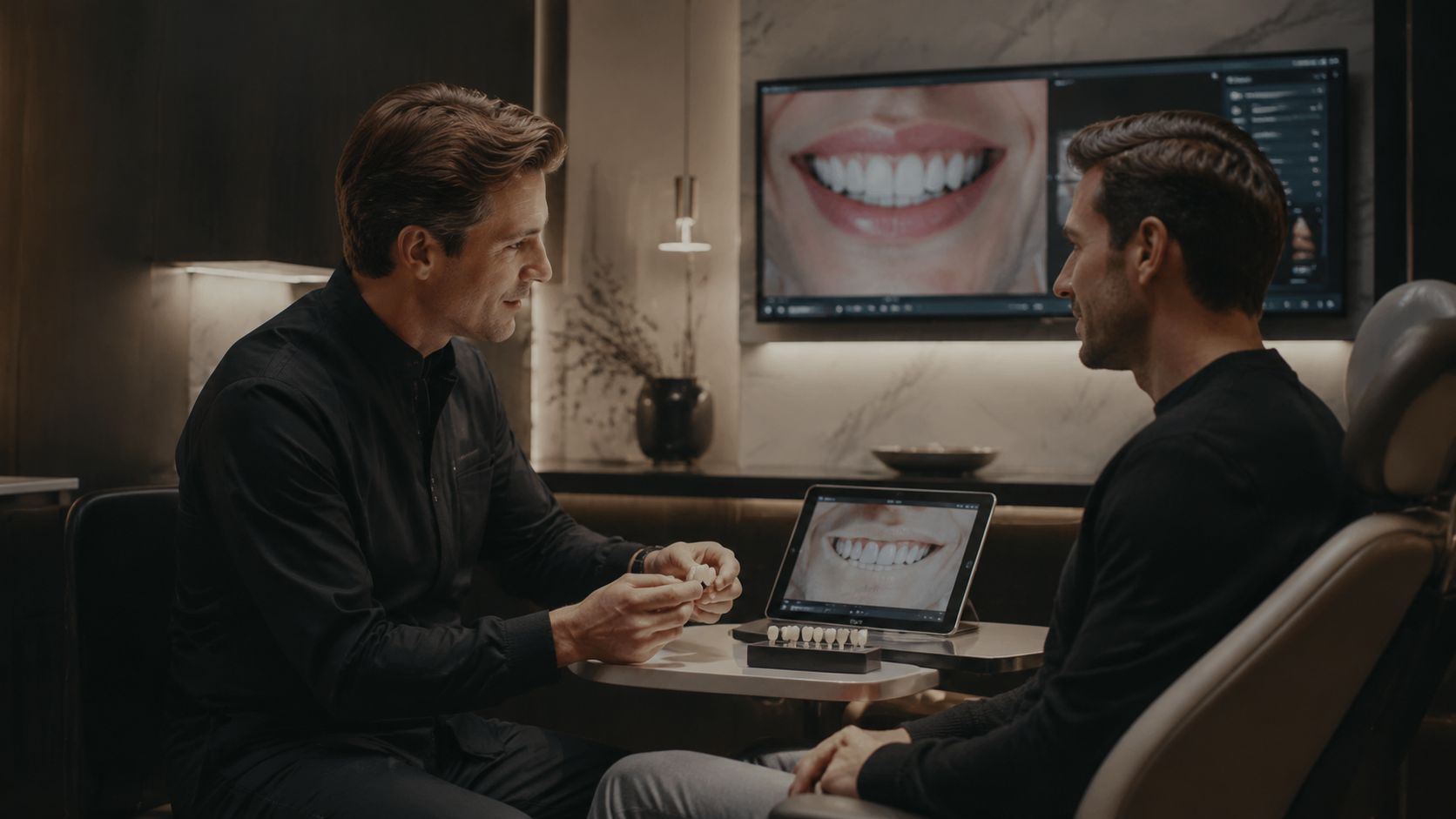
Some patients want to close small spaces. Others want to improve shape after years of grinding or staining that whitening alone won't fix. During a consultation, we also look at the foundation. Healthy gums, stable teeth, and a bite that supports the veneers all matter.
What happens at the consultation
A veneer consultation usually includes a few important parts:
- Your smile goals: We talk about what you notice first when you look in the mirror and what kind of result you want.
- A full evaluation: A new patient exam helps us check teeth, gums, enamel, and bite before planning cosmetic work.
- Smile design planning: Digital imaging and mock-ups can help you picture the shape and style of your future smile more clearly.
- Treatment options: Some people are better candidates for veneers, while others may benefit from whitening, Invisalign, bonding, crowns, or other cosmetic dentistry.
This is also the right time to ask practical questions. Will the veneers look natural? Will they feel bulky? Will you need temporaries? Is a minimal-prep option realistic for your case?
Practical rule: The best veneer plan starts with listening. If the dentist doesn't ask what you want your smile to look and feel like, the planning is incomplete.
A quick look at a smile consultation can help patients feel more prepared before they visit the office:
Why mock-ups matter
One of the biggest advantages of modern cosmetic care is predictability. Digital planning and mock-ups help remove guesswork. Instead of hoping you'll like the result, you get a clearer preview of size, shape, and overall balance before the final veneers are made.
That level of planning is especially helpful for patients who feel nervous about making a visible change to their smile.
Understanding the Veneer Preparation Process
You may be picturing a lot of tooth being shaved away. That fear is common. In reality, veneer preparation is usually much more conservative and carefully measured than patients expect.
The goal is simple. We create just enough room on the front surface of the tooth so the veneer can sit naturally, look lifelike, and feel comfortable when you smile and speak. The amount depends on the veneer material, how much color change you want, and the starting shape and position of your teeth.
For traditional porcelain veneers, preparation often involves removing a small layer of enamel, commonly about the thickness of a fingernail. Composite veneers may require less, and some no-prep veneers can work with little to no enamel reduction in very specific cases, according to Winn Smiles veneer guidance.
Why a small amount of reduction helps
A veneer needs space, much like a custom cover needs room to fit flush instead of sticking out. If a tooth is not prepared properly, the final result can look too full near the gums or feel bulky against the lips. Good preparation helps the veneer blend into your natural smile rather than sit on top of it.
Color matters too. If you want a significantly brighter result, the dentist may need a little more room for the porcelain to block underlying tooth color and still look natural in different lighting. This overview of how veneers work and why preparation varies by case gives helpful background on that part of the process.
Just as important, we preserve enamel whenever we can. Enamel gives veneers the most reliable bonding surface, so a conservative plan supports both appearance and long-term stability.
Veneer Preparation Types at a Glance
| Veneer Type | Typical Enamel Removal | Best For |
|---|---|---|
| Porcelain veneers | 0.5 to 0.7 mm | Patients who want a custom, polished result with room for color and shape correction |
| Composite veneers | 0.1 to 0.3 mm | Patients who want a more conservative approach in selected cases |
| No-prep veneers | Minimal to none | Highly specific cases with well-aligned teeth and limited need for change |
What often surprises patients
“Minimal prep” does not mean the same thing for every smile. A tooth that already angles outward may need a different approach than a tooth that sits slightly inward. Bite pressure, crowding, worn edges, and the style of smile you want all affect how much space is needed.
That is why the process is so individualized. One patient may need only subtle contouring for a soft, natural refresh. Another may need more reshaping to create symmetry, improve proportions, or support a brighter final shade.
The best veneer prep keeps two goals in balance. It creates enough room for the material to look natural and durable, while protecting as much healthy enamel as possible.
Clear communication helps patients feel calmer before treatment even begins. Many offices now use digital previews, mock-ups, and organized follow-up systems so patients know what to expect before, during, and after preparation. Tools like SkipCalls for dentists show how practices can make scheduling and question follow-up easier, which can be especially reassuring for anyone feeling nervous about cosmetic dental work.
Precision and Comfort During Your Appointment
A lot of new veneer patients come in worried about one moment in particular: the part where the teeth are prepared. They picture aggressive shaving or a long, uncomfortable visit. In reality, the appointment is usually calm, controlled, and much gentler than expected, especially when your dentist plans each step carefully and uses modern tools to keep you comfortable.
The focus during this visit is simple. Keep you numb, keep the preparation precise, and protect your teeth while your final veneers are being made.
What the appointment feels like
The first priority is comfort. Your teeth are numbed before any reshaping begins, so you should not feel sharpness or pain during preparation. For patients who feel nervous in the dental chair, it also helps to talk through sedation options ahead of time. That conversation matters. Knowing you can have breaks, ask questions, and stay comfortable often lowers anxiety before the appointment even starts.
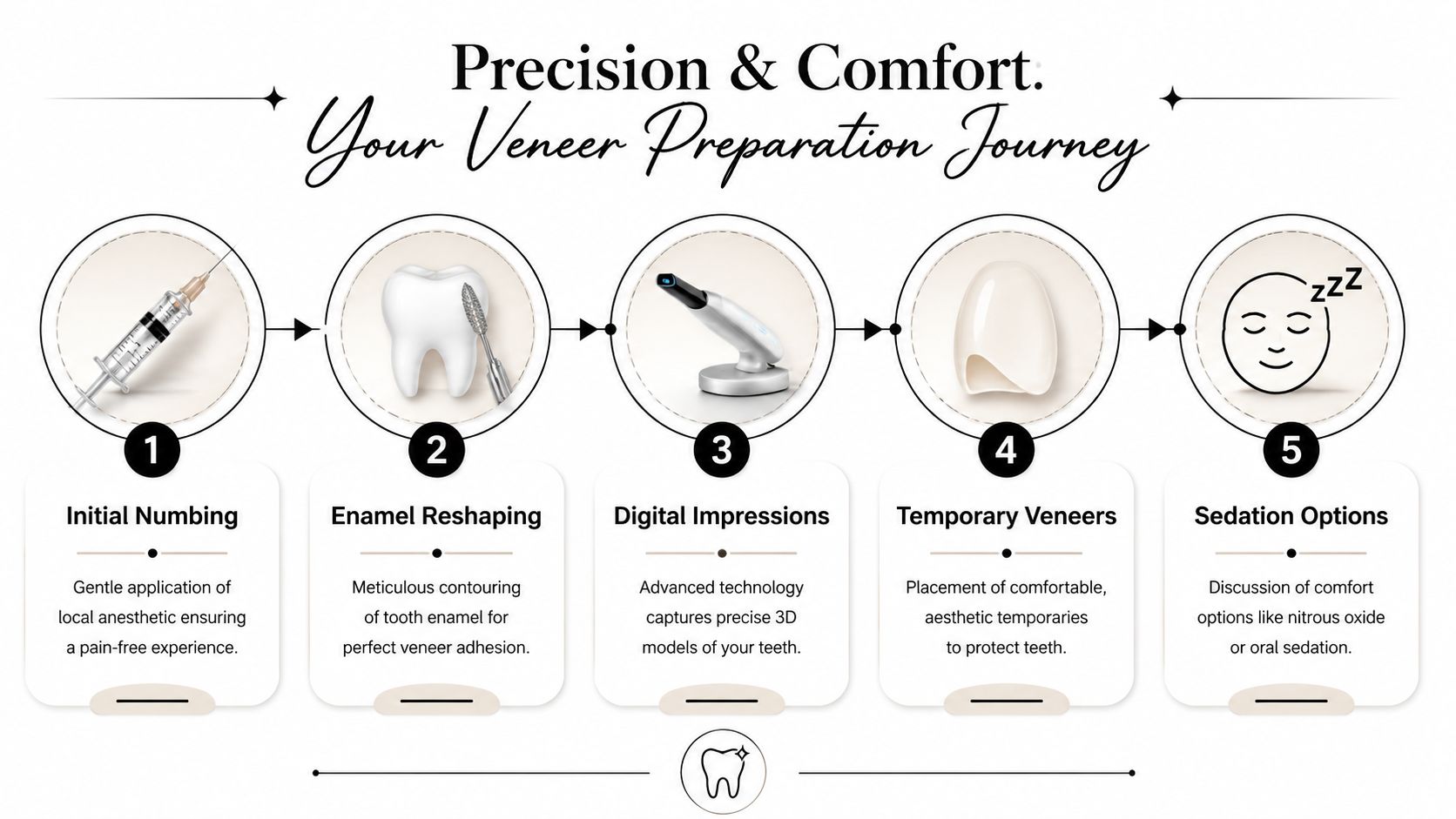
Once you are comfortable, the reshaping begins. This step is very measured. A dentist removes only the amount of enamel needed for the veneer to sit naturally, much like making room for a thin custom shell so it does not look bulky at the edges. The goal is not to make teeth smaller for the sake of it. The goal is to create the right space for strength, fit, and a natural-looking result.
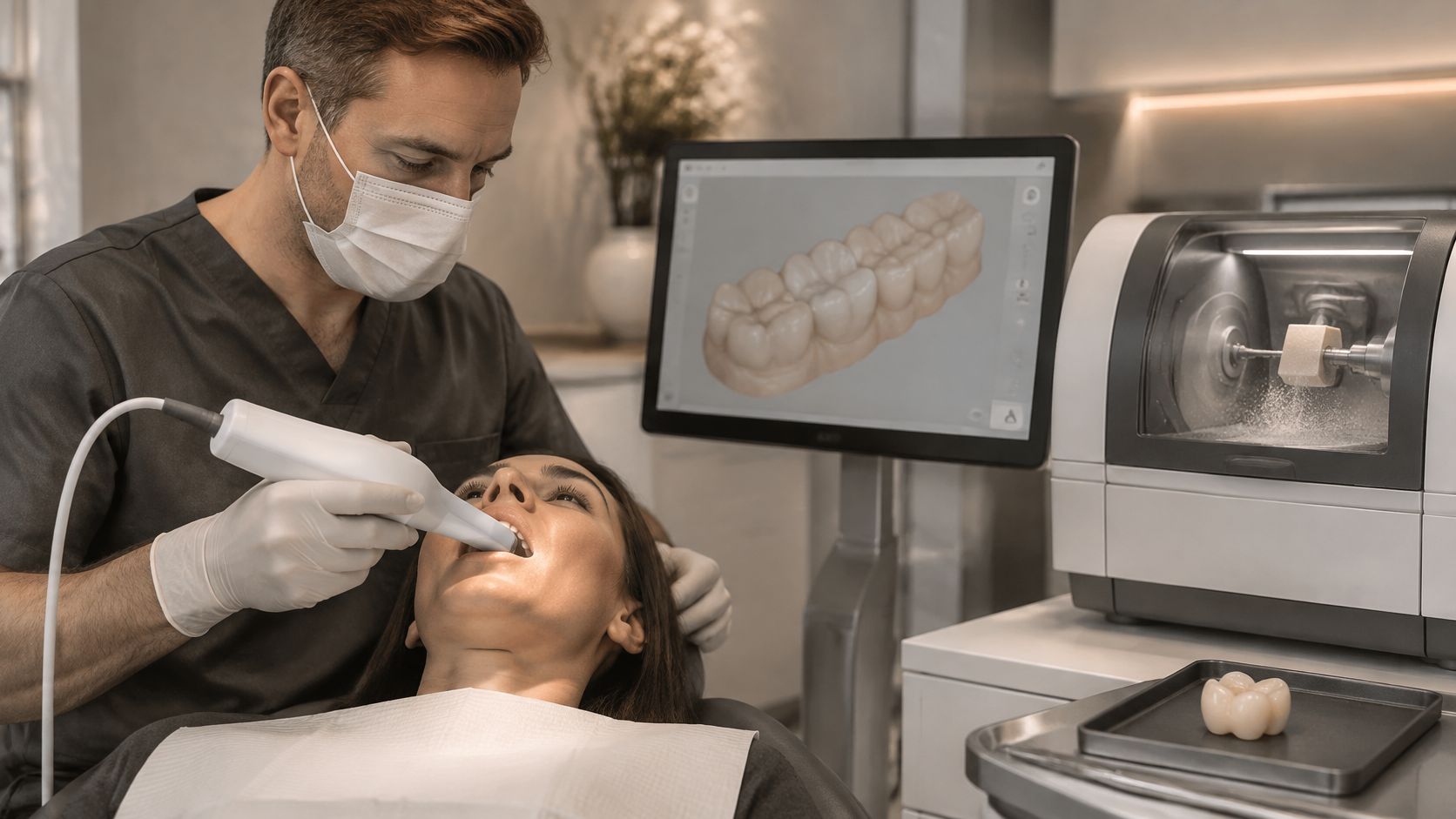
After that, digital records are taken. Many offices now use intraoral scanners instead of relying only on traditional impressions, which means a highly detailed 3D model can be captured without messy trays. For many patients, that alone makes the visit feel easier.
Why modern technology helps
Technology improves comfort, but it also improves accuracy. Reduction guides, mock-ups, and digital scans let the dentist verify how much enamel has been reshaped and how the final veneers are expected to sit. That level of control matters because veneers are thin, custom restorations. Small differences in thickness or edge position can change how the final smile looks and feels.
Here is how those tools help during the appointment:
- Digital scanning records the prepared teeth with fine detail for the lab.
- Mock-ups and guides help confirm that the preparation matches the smile design.
- Temporary veneers protect the teeth and let you test the general shape in daily life before the final bonding visit.
Temporary veneers are more than a placeholder. They act like a trial version of your new smile, while also shielding prepared teeth from sensitivity and helping you function comfortably between visits. If you want a practical overview of how to care for temporary and final veneers, that can make this stage feel even more predictable.
At Winn Smiles, digital impressions are used after the enamel has been carefully reshaped, which helps make the process feel more manageable for patients who want a comfort-focused cosmetic experience in Chattanooga and the surrounding area. For someone who has been worried about tooth "shaving," that combination of numbing, careful planning, and digital precision often changes the whole experience.
Beyond Preparation Your Veneer Aftercare and Timeline
Once the teeth are prepared and the temporaries are in place, the next step is waiting for the final veneers to come back from the lab. The permanent restorations are typically fabricated over about a week using digital scanning and design, so there is usually a short period between the prep visit and the bonding appointment.

Living with temporaries
Temporary veneers are there for a reason. They help protect the prepared teeth and give you a chance to get used to the new general shape. During this phase, it's smart to be mindful with very hard or sticky foods and to keep up with normal brushing and flossing as instructed.
If something feels off, this is the time to mention it. Small feedback about length, edge shape, or overall feel can help guide the final result.
The final bonding visit
The bonding appointment is where the smile comes together. The temporaries are removed, the teeth are cleaned, and the final veneers are tried in before they're secured. A strong result depends on the underlying preparation being accurate.
A key part of that success is precise edge control and margin placement, often supported by digital mock-ups and silicone guides so the veneer fits cleanly and bonds strongly to enamel, as noted in this guide to preparing your teeth for veneers.
A beautiful veneer result doesn't depend on the veneer alone. It depends on the fit, the bond, and the details that happen before cementation.
Long-term care
After your final visit, daily care stays simple:
- Brush and floss consistently: Veneers still need healthy gums and clean surrounding tooth surfaces.
- Use good judgment with hard objects: Don't use your teeth to open packaging or bite very hard items.
- Keep regular dental visits: Routine exams and cleanings help protect both the veneers and the teeth underneath.
- Follow home care instructions: For more guidance, review these tips on how to care for veneers.
Veneers are cosmetic dentistry, but they still work best when they're part of a healthy mouth.
Start Your Smile Transformation in Cleveland or Chattanooga
A confident smile can change how you show up in photos, conversations, work meetings, and everyday life. For many adults, veneers aren't about looking different. They're about looking more like themselves again, just brighter, more balanced, and less self-conscious.
The biggest takeaway is simple. Veneer preparation is careful, measured, and customized. It isn't random tooth shaving. It's a controlled process that creates space for a restoration that looks natural, feels comfortable, and fits your bite.
Patients searching for a dentist in Chattanooga, TN, a provider in Cleveland, or a practice that also offers cleaning and exams, teeth whitening, restorative dentistry, dental implants, tooth extraction, and emergency dentist care often want one office they can trust for both appearance and health. That trust grows when the dentist explains the process clearly and treats anxiety as something important, not something to ignore.
If you've been thinking about veneers but haven't taken the next step, a consultation can answer your questions without pressure. You can learn whether porcelain veneers, composite bonding, whitening, or another treatment fits your goals and your teeth.
If you're ready to talk about veneers, smile design, or other cosmetic dentistry options in Chattanooga or Cleveland, schedule a consultation with Winn Smiles. It's a simple way to get clear answers, see what's possible for your smile, and choose a plan that feels comfortable from start to finish.