Veneers cost Arizona patients about $760 to $2,380 per porcelain veneer in 2026, with a typical Arizona average near $1,420 to $1,710 per tooth. If you're staring at a quote that feels too high or too low, that spread is normal, and it usually comes down to material, prep, lab work, and how many teeth are in the plan.
You're probably looking at a treatment estimate, a social media smile makeover, or a friend's new teeth and wondering why the numbers don't line up. They often don't, because veneers are sold per tooth, but the actual bill is built around the whole case, not just one shell on one tooth.
Why Veneers in Arizona Come With Such a Wide Price Tag
You sit in the parking lot after a consult, scroll back through a few quotes, and realize the same smile can cost thousands more depending on who designed it. That's exactly why a single average rarely helps. The useful question is not, “What do veneers cost?” It's, “What does this specific case include, and what am I paying for?”
The quote changes with the case, not just the city
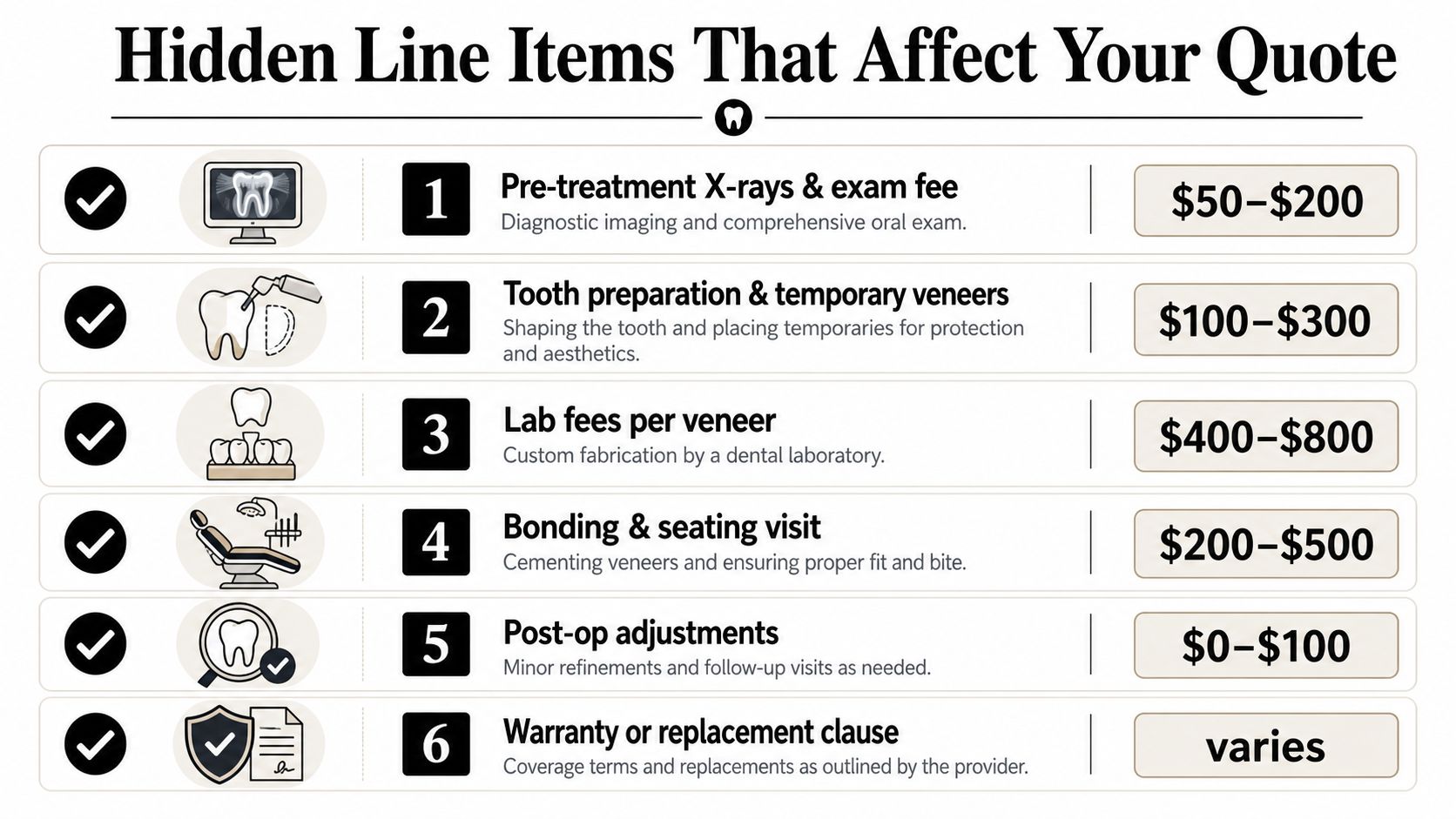
A veneer estimate is a bundle of decisions. The dentist may be pricing diagnostic records, a wax-up or smile preview, tooth preparation, temporaries, lab fabrication, bonding, and follow-up care. If one office folds those into a clean line item and another breaks them apart, the totals can look very different even when the clinical plan is similar.
That's why a patient searching veneers cost Arizona often feels stuck between online averages and the number on the paper in front of them. The best move is to treat the first quote as a draft, not a verdict.
Practical rule: if the estimate doesn't say how many teeth are included, what material is being used, and whether temporaries are part of the plan, it's not a finished price.
What this means before you commit
A strong consultation gives you enough detail to do the math yourself. Ask how many veneers are being proposed, what each tooth costs, and which steps are extra. If the office can't explain the price in plain English, that's a problem.
The goal is simple. Replace guesswork with a plan you can understand before a drill ever touches enamel.
What Veneers Actually Cost Per Tooth and Per Smile in Arizona
Arizona veneer pricing makes more sense when you start with the per-tooth number instead of the full smile total. A 2026 Arizona cost guide puts the average at $1,420 per tooth, with a typical range of $760 to $2,380 per porcelain veneer, and a separate dental-finance reference lists Arizona's average at $1,710 per veneer Arizona cost guide Arizona dental-finance benchmark. Nationally cited single-porcelain-veneer averages land near $1,500 to $1,765 per tooth, so Arizona sits in the same general range as major U.S. markets.
The math for a 6-tooth case and a 10-tooth smile
A six-tooth cosmetic case is the fastest way to see how the math works. At the low end, that plan comes to about $4,560. Using the Arizona average of $1,420 per tooth, the same six teeth total about $8,520, and at the upper end of $2,380 per tooth, the bill reaches $14,280 Arizona cost guide.
A 10-tooth smile makeover pushes the total higher fast. That case lands around $7,600 at the low end, $14,200 at the Arizona average, and $23,800 at the upper end Arizona cost guide. If you are budgeting for a visible smile zone instead of a single tooth, these are the numbers that matter.
| Arizona veneer cost scenarios at a glance | Low end ($760/tooth) | Midpoint ($1,420/tooth) | Upper end ($2,380/tooth) |
|---|---|---|---|
| 2 teeth | $1,520 | $2,840 | $4,760 |
| 4 teeth | $3,040 | $5,680 | $9,520 |
| 6 teeth | $4,560 | $8,520 | $14,280 |
| 8 teeth | $6,080 | $11,360 | $19,040 |
| 10 teeth | $7,600 | $14,200 | $23,800 |
What's usually not in the first number
The first quote is rarely the full bill. In many Arizona cases, the published price leaves out consultation work, prep, follow-up, and maintenance or repair, and one Arizona insurance-oriented page says that exclusion plainly Arizona practice pricing note. That means the base number is the starting point, not the whole financial picture.
The cleanest way to budget is simple. Multiply the number of teeth by the per-tooth estimate, then ask what gets added for records, temps, and the final bonding visit.
That is the number you should plan around, not the headline price.
Porcelain vs Composite Veneers and How Each Affects Price
The biggest reason quotes diverge is material choice. Traditional porcelain veneers usually cost more because they involve lab fabrication, more chair time, and a more detailed finish. Composite veneers are generally cheaper because the dentist builds them directly onto the tooth with less lab work and, in some cases, fewer visits.
Why porcelain costs more
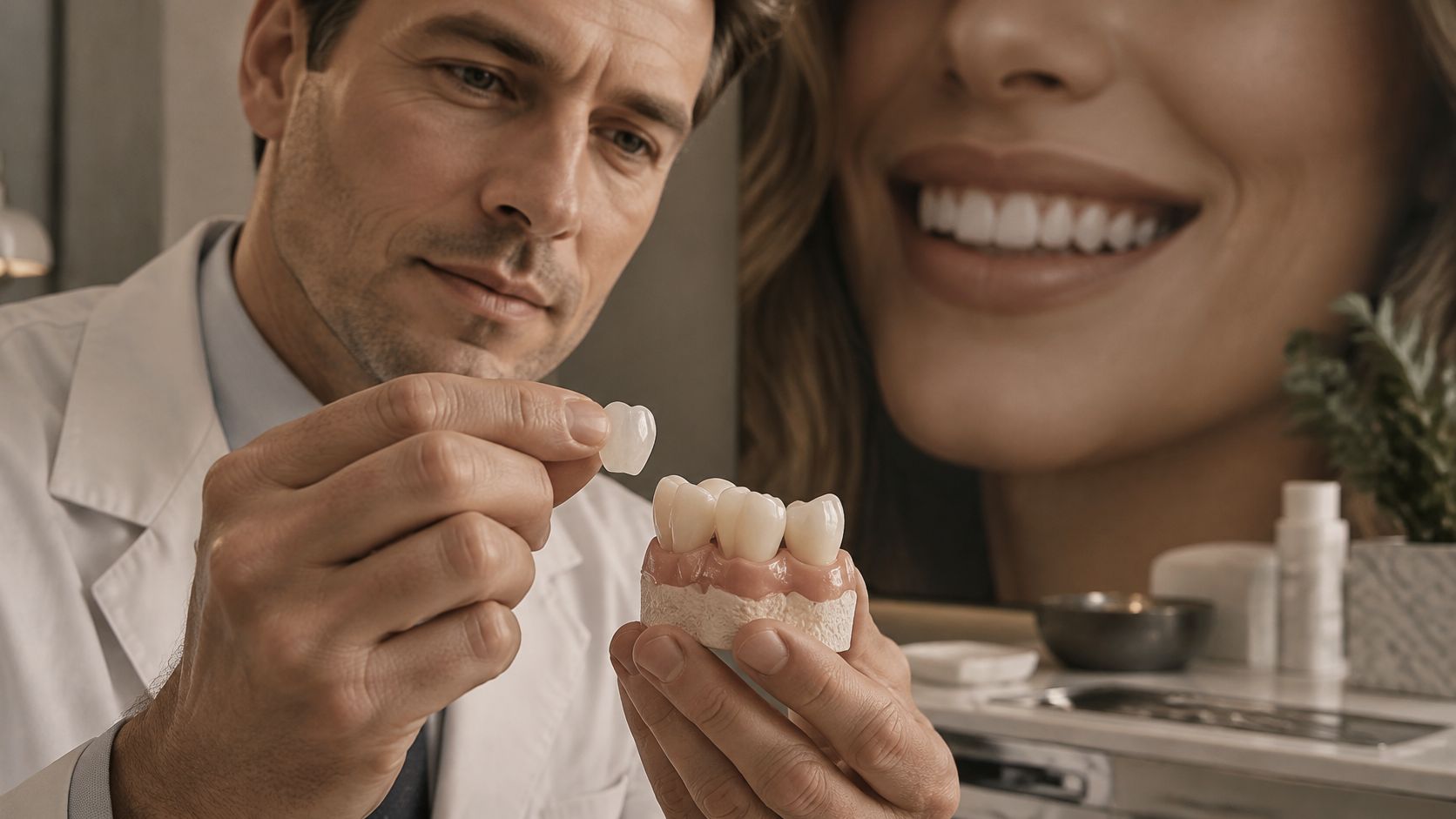
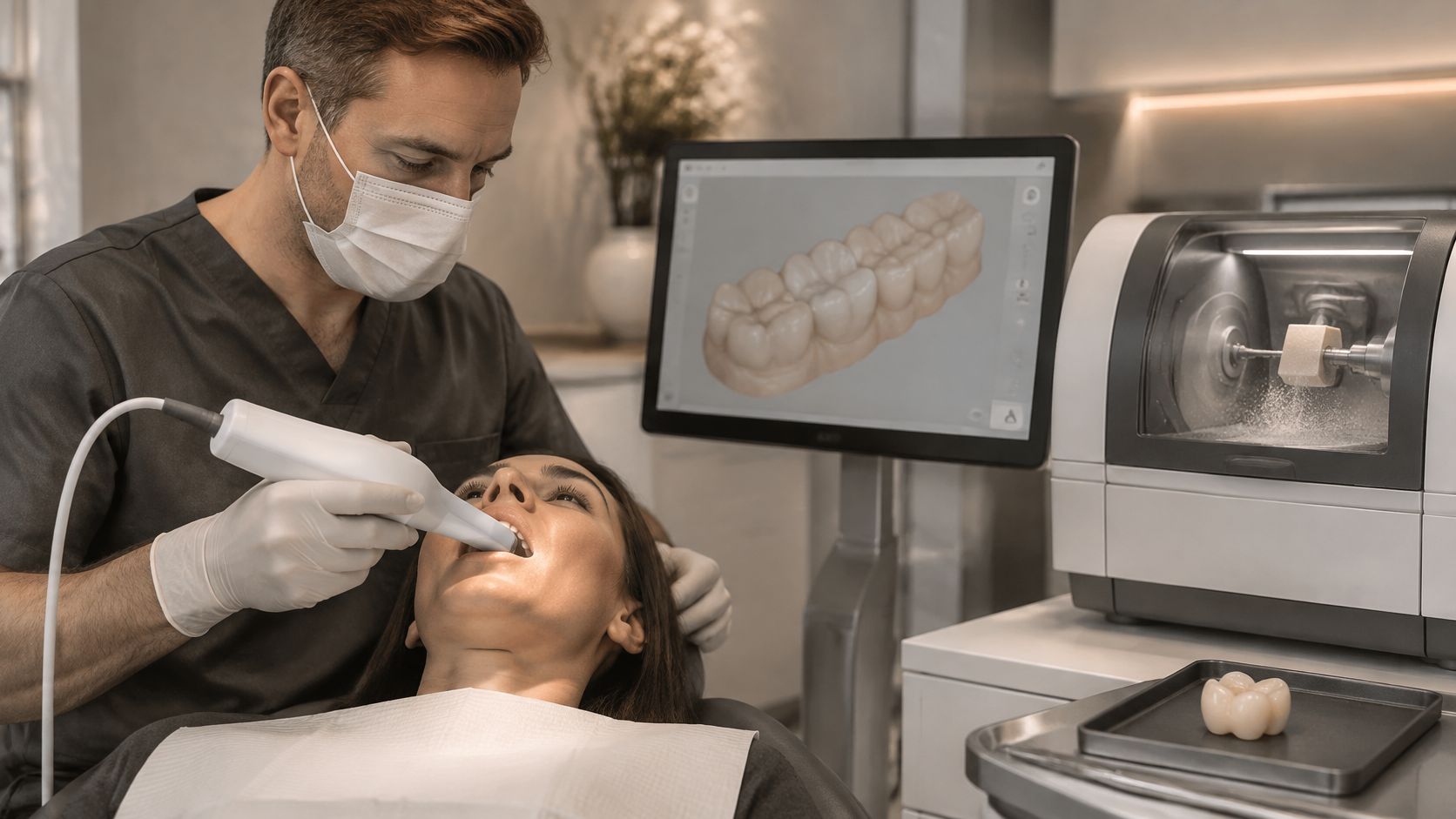
Porcelain takes more behind-the-scenes work. The dentist usually plans the case, prepares the teeth, sends records to a lab, tries in temporaries, and then bonds the final restorations after they come back. That added labor and materials explain part of the jump in price.
A good example of the clinical workflow is outlined in this veneer overview from Winn Smiles, which shows how planning, preparation, and fabrication fit together: how veneers work. The basic point is straightforward. More customization usually means more cost.
Where composite and minimally invasive options fit
Composite can be a smart budget choice when the goal is a smaller cosmetic fix, not a full ceramic transformation. It usually fits patients who want a faster, lower-cost option and can accept less stain resistance and a shorter service life. In Arizona, a benchmark average for minimally invasive veneers is $1,043, which sits below the broader veneer average of $1,710 CareCredit Arizona benchmark.
That gap matters because it tells you what you're buying. If your quote is closer to the lower end, you're probably looking at a more conservative protocol, a simpler case, or a less lab-intensive material.
How to read the price difference
Choose porcelain if you want the most polished finish and are willing to pay for it. Choose composite if your budget matters more than maximum durability. Choose minimally invasive or no-prep veneers only if your teeth already fit that type of plan.
The right choice depends on what you value most, not on the loudest ad you saw online.
The Hidden Line Items That Move a Quote Up or Down
Two Arizona patients can get very different veneer estimates from two offices because the veneer is only part of the bill. The rest comes from the planning, the prep, and the finish work. That is where surprises usually show up.
The items that quietly add cost
A quote can climb because of dental x-rays, exam fees, and records. It can climb again if the dentist recommends gum recontouring, temporary veneers, sedation, or a more detailed lab process. A more experienced cosmetic dentist may also charge more because the planning takes more precision and the finished result is less likely to be a compromise.
Those charges are not random. They reflect a case that has to fit your bite, your gum line, and your smile line. The amount of tooth preparation matters too, and patients should ask directly how the teeth will be shaped before they agree to anything. A clear explanation from a guide like how teeth are prepared for veneers helps you understand why one quote is higher than another.
What to look for on an itemized estimate
If you want to compare quotes fairly, line up the following:
- Records and planning: Ask whether x-rays, photos, or a wax-up are included.
- Tooth preparation: Find out how much reshaping is planned and whether temporaries are billed separately.
- Lab fees: Confirm whether the veneer material is porcelain, composite, or a lower-prep option.
- Bonding and adjustments: Check whether the final seating visit and any minor post-op changes are included.
- Soft-tissue work: Ask whether gum contouring is part of the cosmetic plan.
A quote that leaves those items vague is hard to trust.
The red flags that matter
A same-day decision request is a bad sign. So is a price that looks neat but refuses to explain what is included. If a provider will not spell out the prep depth, lab choice, or follow-up policy, keep asking until the picture is clear.
Straight answer: a quote is only useful when you can tell what's cosmetic, what's restorative, and what's an extra.
If you are comparing loan choices for a medical or dental bill, this guide to Cash Compass medical loan alternatives is a useful place to start because it helps you compare borrowing paths before you commit.
Insurance, Financing, and How Arizona Patients Actually Pay
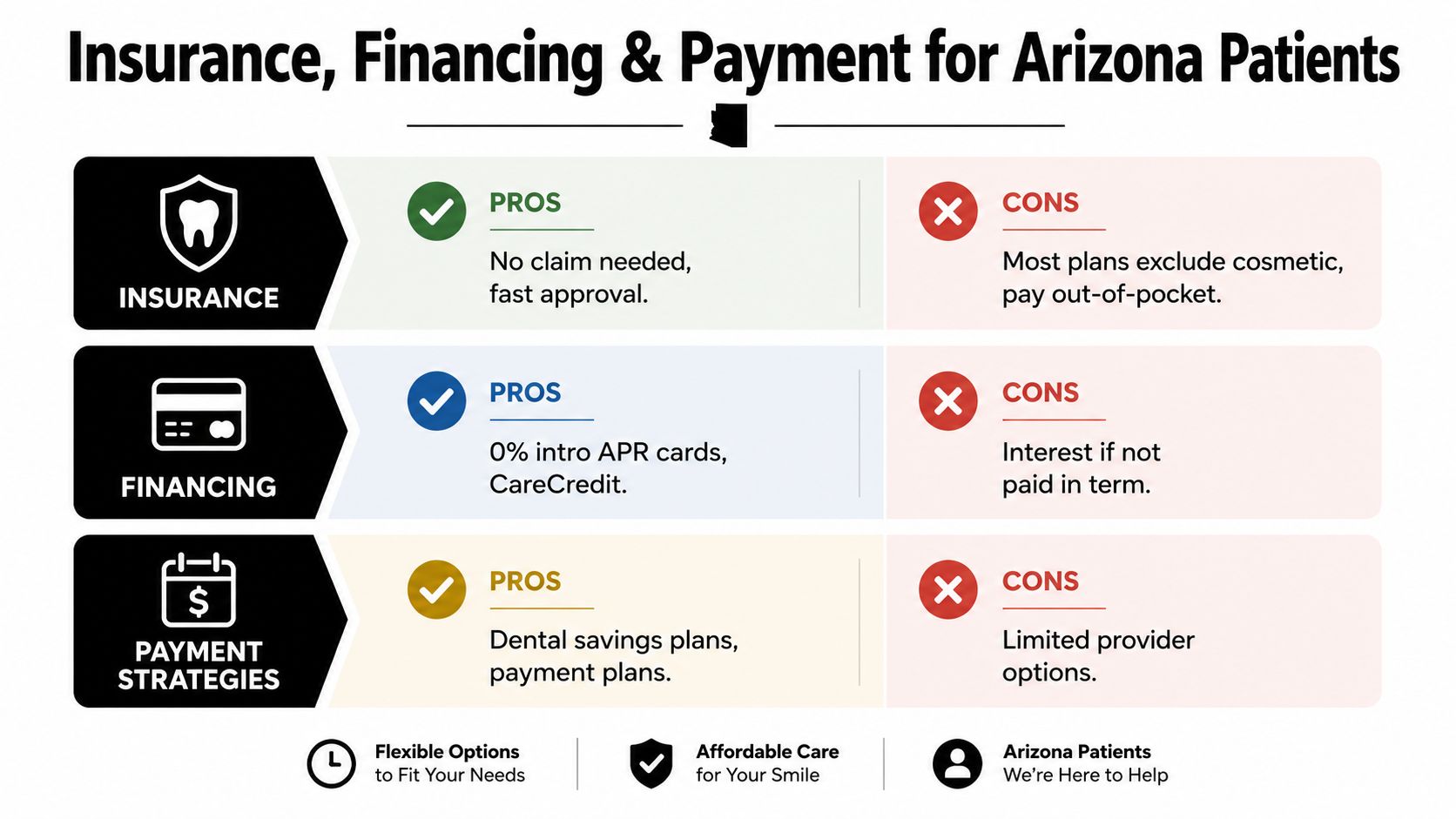
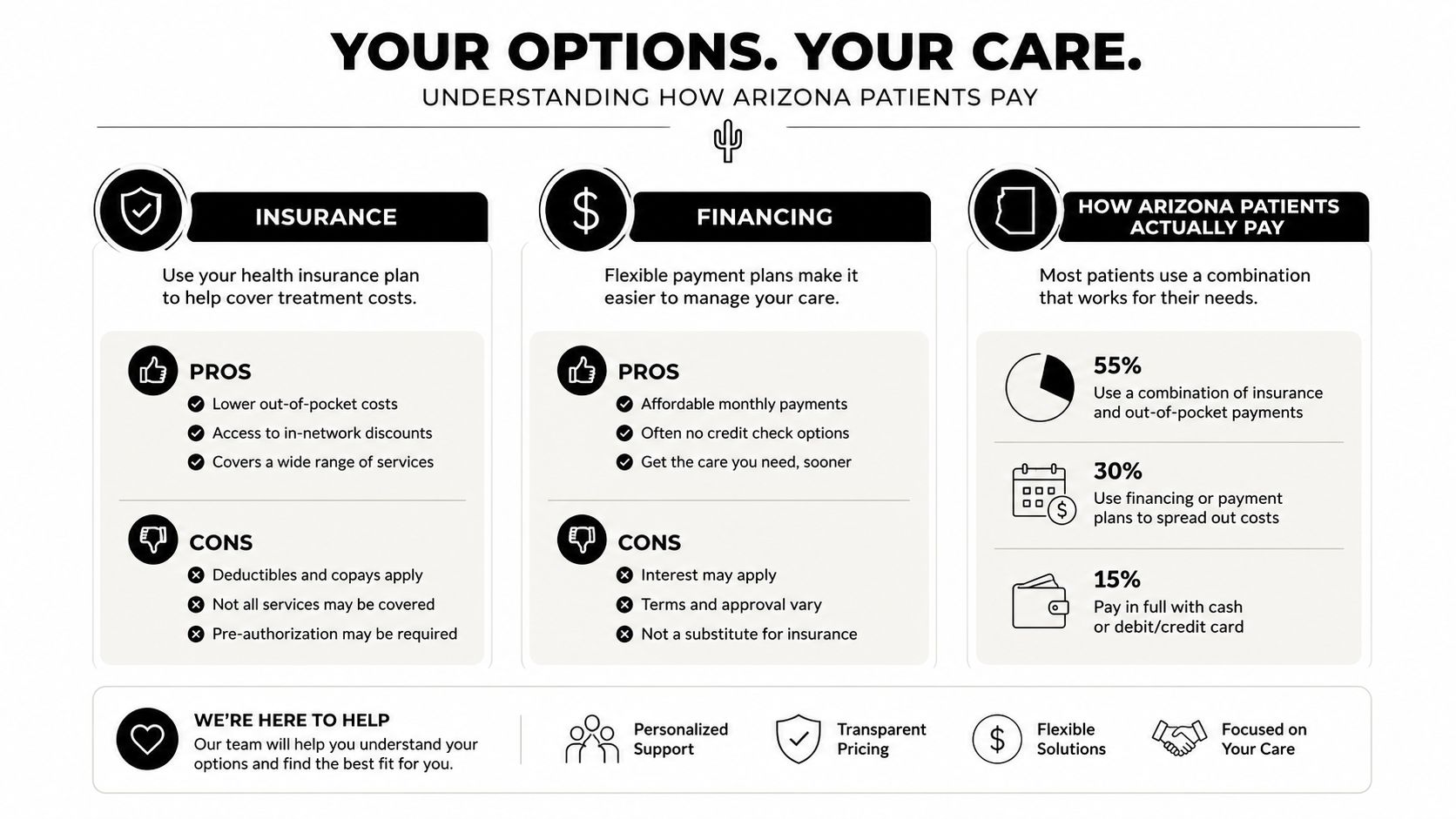
Veneers are usually treated as a cosmetic procedure, which is why dental insurance commonly does not cover them Arizona practice pricing note. That's what most patients need to accept first. After that, the question becomes how to pay without turning a smile upgrade into financial stress.
What usually works
If your plan is cosmetic, expect to pay out of pocket. Many patients use HSAs, FSAs, dental savings plans, or third-party financing to spread the cost over time. Some offices also offer in-house payment plans, which can make a large case easier to handle if you're doing multiple teeth.
If you're comparing loan choices for a medical or dental bill, this guide to Cash Compass medical loan alternatives is a useful place to start because it helps you compare borrowing paths before you commit.
When to ask about benefits review
There are rare situations where veneers may be tied to a medical reason, such as trauma or congenital defects. If that's your situation, ask the office to review the benefits carefully rather than assuming cosmetic rules apply across the board. A written estimate is still the right move.
The financing questions that matter
Ask the coordinator:
- Can I use HSA or FSA dollars here?
- Do you offer staged treatment if I can't do every tooth at once?
- Is there a promotional financing option, and what happens if I miss the payoff window?
- What's due today, and what's due at the bonding visit?
If the answer to every question is clear, the payment plan is probably manageable. If not, slow down.
Questions to Ask Before You Agree to a Veneer Plan
A veneer plan should be specific enough that you can explain it back to someone else. If you can't, the estimate isn't ready. A vague plan usually costs more later because you end up paying to fix assumptions.

Ask about the material and the lab
Start with the basics. What material are you getting, who makes it, and why is that material right for your teeth? If the office can't explain the lab process in plain language, the price is harder to defend.
You should also ask whether the design comes from a wax-up, a digital preview, or a direct mock-up. Those planning tools matter because they reduce surprises when the final restorations go in.
Ask about fit, follow-up, and failures
Use these questions in the room:
- How much enamel will be removed?
- Will I get temporaries?
- What happens if a veneer chips or debonds?
- Is a warranty or replacement policy included?
- What if I don't like the smile mock-up?
A quote that skips these topics is incomplete. A dentist who answers them clearly is doing real planning.
Watch for red flags
Do not rush into a same-day commitment if the office won't give you the estimate in writing. Be cautious if the case isn't itemized or if the plan changes every time you ask a question. That's how patients end up comparing apples to oranges.
Bring a printed list of your questions to the consult. If the office welcomes them, that's a good sign. If they seem annoyed, that's useful information too.
You're not being difficult. You're protecting your budget and your smile.
Why the Cheapest Veneer Quote Can Cost More in the End
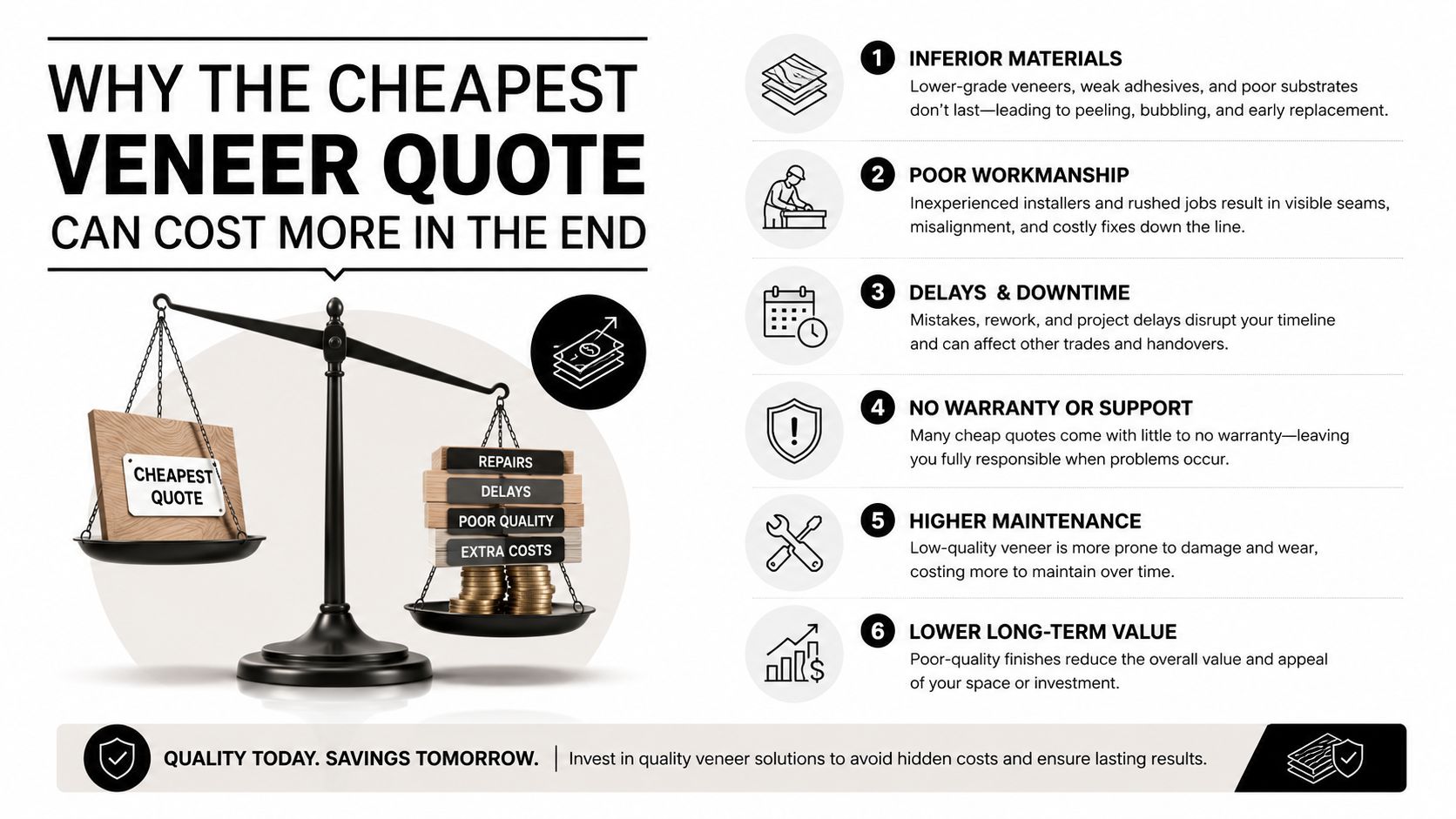
The lowest price on paper can be the most expensive choice over time. A bargain case may save money up front, but if the material looks flat, the margins irritate your gums, or the fit is off, you pay again for repair or replacement. That second bill is where cheap dentistry gets expensive.
What tends to go wrong
Cheap veneers can mean thinner lab work, rushed preparation, or a result that doesn't match your smile design. That raises the odds of shade mismatch, debonding, edge chipping, and repeat appointments. Once a veneer has to be remade, the original savings shrink fast.
The same logic applies to the dentist's plan, not just the material. If the bite isn't considered carefully, the case may need more maintenance than it should.
Think in total cost, not first invoice
The better way to judge a quote is lifetime value. Ask yourself what you are paying for today, how likely the veneer is to hold up, and how much a redo would bother you financially and cosmetically. A well-planned case usually costs more at the start and less over time.
That's the comparison patients should make. Not “cheap versus expensive,” but “what will I still be happy with years from now?”
Your Next Step Toward an Accurate Veneer Estimate
If you're serious about veneers, stop using statewide averages as your final number. They're useful for context, but the only estimate that matters is the one built around your teeth, your bite, and the number of veneers you need.
Ask for a cosmetic consult, a written itemized plan, and a preview of the finished smile before you agree to treatment. Bring the questions from above, and don't leave until you understand every line item.
Winn Smiles offers veneer consultations, cosmetic dentistry, and detailed treatment planning for patients who want a clear answer before committing to treatment. If you're ready to compare options and get a personalized estimate, visit Winn Smiles and schedule a consultation.