You wake up with a sore tooth, notice the chip in your smile before an important event, or avoid certain foods because a missing molar makes chewing uncomfortable. For residents searching for a dentist near me in Cleveland, TN, a dentist in Chattanooga, TN, or an emergency dentist nearby, the right answer often involves more than one procedure. Restorative and cosmetic dentistry work best when your dentist considers comfort, oral health, appearance, timing, and budget together.
Winn Smiles serves Cleveland and Chattanooga with personalized dental care that can bring these pieces into one plan. Whether you need a tooth-colored filling, same-day crown, dental implants, professional whitening, periodontal treatment, or help managing dental anxiety, your consultation should begin with listening. The goal isn't to change how your teeth look. It's to help you eat, speak, smile, and care for your mouth with greater confidence.
Your Local Guide to a Healthier, Brighter Smile in Cleveland and Chattanooga
A Chattanooga teacher may cover a chipped front tooth whenever a camera comes out. A Cleveland grandparent may stop eating corn on the cob after losing a back tooth. Neither concern is superficial. A damaged or missing tooth can affect daily comfort, chewing, speech, and the way you feel in social situations.
Patients often begin with a broad search such as cosmetic dentist near me, dental implants near me, or tooth extraction in Cleveland, TN. Those searches describe a desired service, but they don't always reveal the underlying need. A chipped tooth may require bonding, a veneer, or a crown depending on the amount of remaining structure. A missing tooth may be replaceable with a bridge, an implant, or a larger full-arch plan. Persistent pain may call for urgent evaluation before any cosmetic treatment is considered.
Starting with your situation
At a local dental practice, the first conversation should focus on what has changed in your life. Are you avoiding photographs? Is chewing difficult? Did a restoration break? Are you nervous because a previous dental visit was painful or rushed? These answers help shape the treatment experience as much as the clinical examination does.
Restorative and cosmetic dentistry has become a substantial healthcare category. One industry estimate placed the global market at USD 26.54 billion in 2024 and projected it to reach about USD 59.52 billion by 2034, with a projected compound annual growth rate of 8.53% over that decade, as reported in current cosmetic dentistry market data. Another estimate valued the market at USD 47.63 billion in 2025 and projected USD 141.95 billion by 2034, reinforcing the expanding demand for treatments that support both function and appearance. The same source reports that North America represented 33.93% of global revenue in 2024 in one estimate and exceeded 40% in 2025 in another.
A useful starting point: The best plan isn't automatically the most extensive one. It's the plan that addresses disease or damage, respects healthy tooth structure, and fits your goals.
The sections ahead connect common patient situations with practical treatment choices. You'll see how crowns protect weakened teeth, how implants replace missing roots, how whitening approaches differ, and why gum health and comfort planning matter before a smile makeover begins.
What Restorative and Cosmetic Dentistry Actually Mean
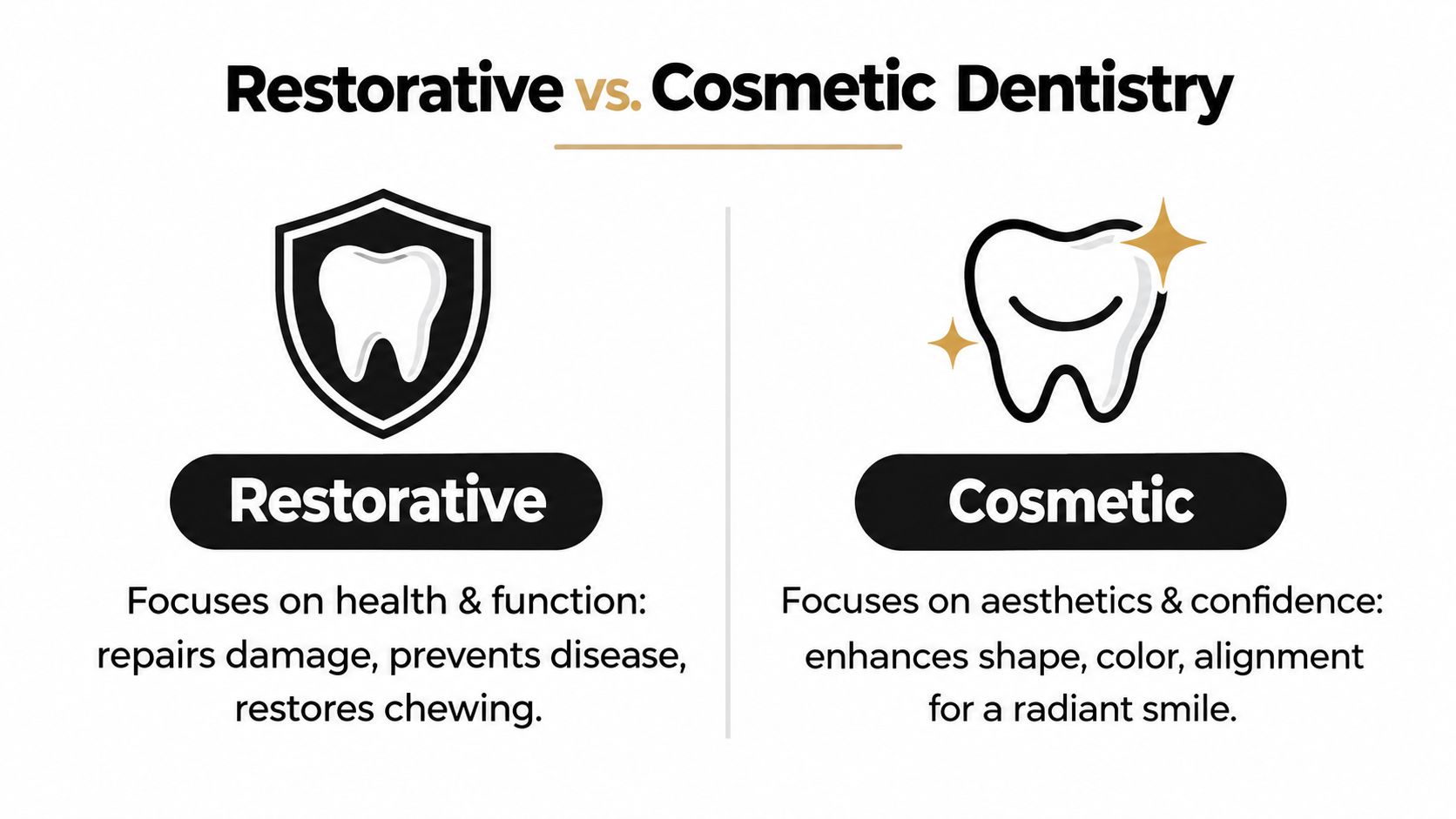
Restorative dentistry repairs or replaces teeth so your mouth can function properly. It may address decay, fractures, infection, worn enamel, missing teeth, gum disease, or an unstable bite. Common services include fillings, crowns, bridges, periodontal care, root canal treatment, dental implants, and full-arch implant solutions.
Cosmetic dentistry changes the visible features of your smile. Veneers, professional teeth whitening, bonding, Invisalign, and aesthetically designed crowns can improve color, shape, spacing, or symmetry. Cosmetic treatment can be the main reason you schedule a visit, but your dentist still needs to confirm that the teeth and gums are healthy enough to support the result.
Where the two categories overlap
A crown illustrates the connection clearly. A cracked tooth may need a crown because it lacks enough strength for normal chewing. The same crown can also improve the tooth's color, contour, and relationship to neighboring teeth. A veneer may improve a worn or discolored front tooth while helping create a more even smile design.
The order matters. A dentist may recommend treating decay, inflammation, gum disease, infection, or a damaged bite before placing veneers or completing whitening. A bright smile can't remain comfortable if the supporting teeth and gums aren't stable.
For a plain-language overview of the restorative side of care, you can review what restorative dentistry involves. Then consider the questions that guide treatment selection:
- What is causing the problem? Pain, decay, gum disease, trauma, tooth loss, and staining require different solutions.
- How much healthy tooth remains? A filling may preserve more structure than a crown when the damage is limited.
- What result do you want? You may care most about chewing, appearance, speed, comfort, or a combination.
- What can your mouth support? Gum health, bite forces, hygiene, and existing restorations affect long-term planning.
A detailed exam turns a service search into a personalized recommendation. That approach helps Cleveland and Chattanooga patients avoid choosing a cosmetic procedure before the underlying problem has been addressed.
Popular Services That Rebuild and Reveal a New Smile
Patients rarely ask for a procedure without a reason. They usually want to solve a specific frustration, such as a stained smile before a wedding, a broken molar that affects chewing, or missing teeth that make conversation uncomfortable. Matching the service to the situation helps prevent over-treatment and clarifies what the process can accomplish.
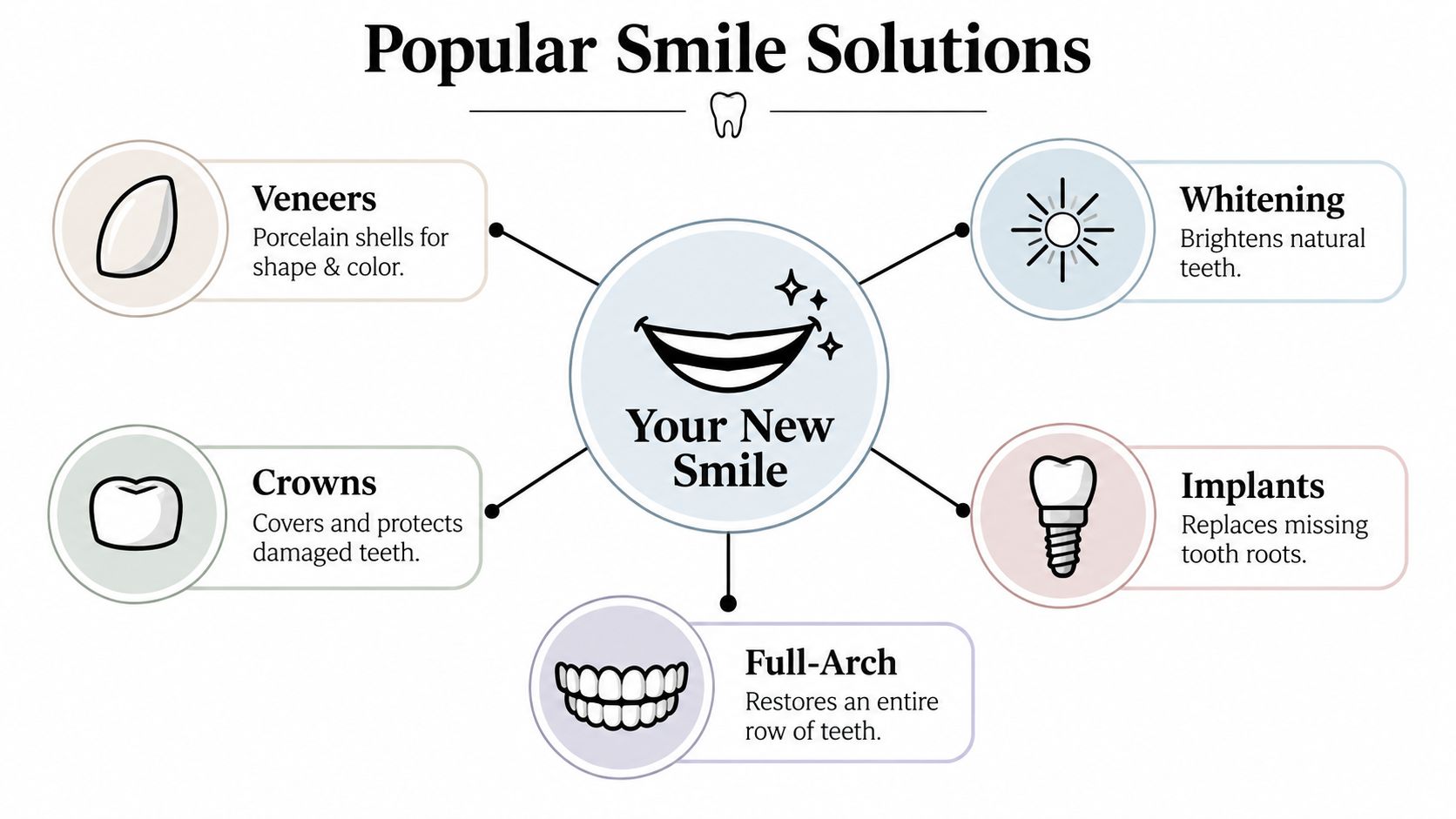
Veneers for visible chips, stains, and uneven shape
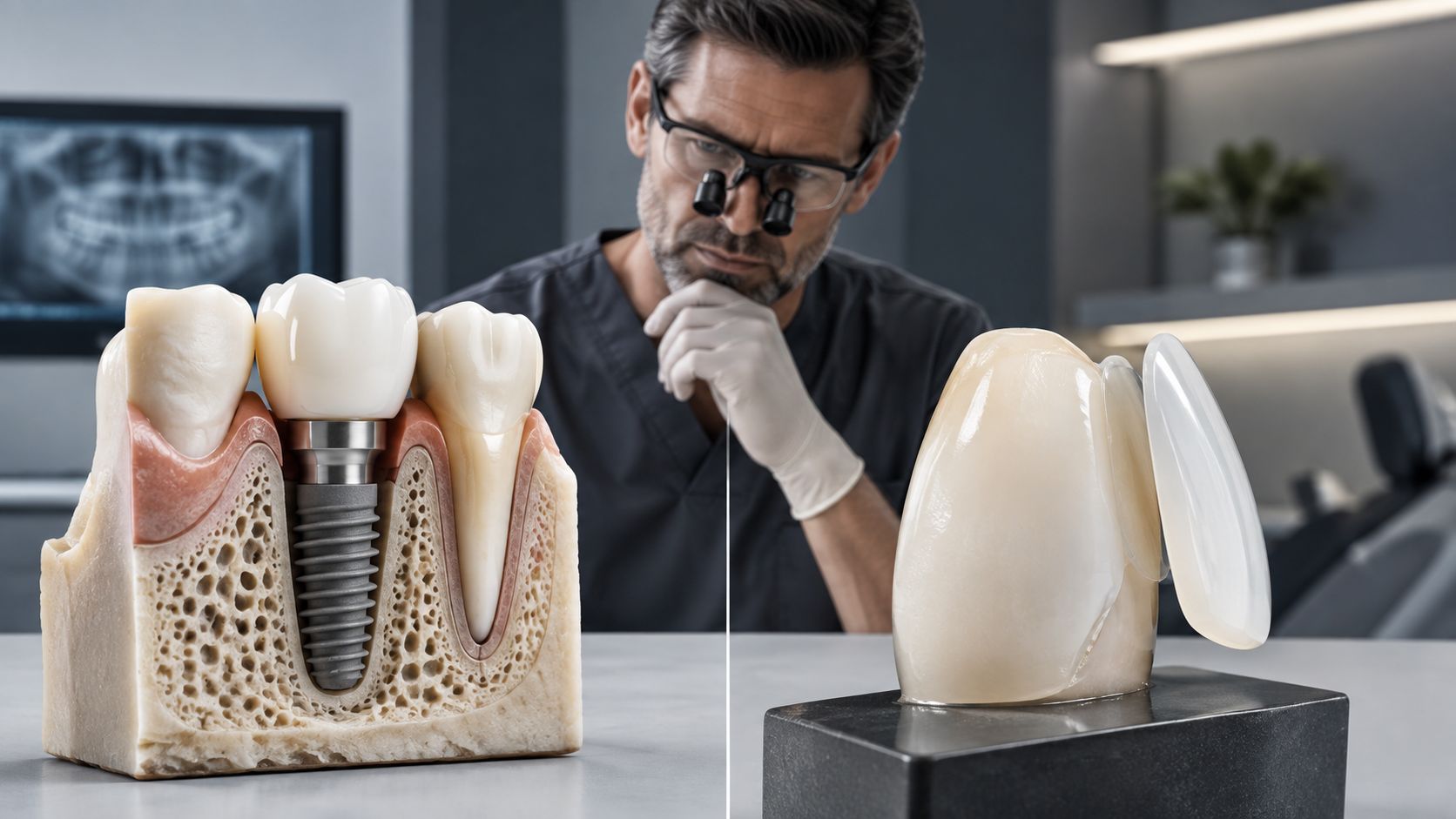
Veneers are thin shells bonded to the front surfaces of selected teeth. Patients may consider them when chips, deep discoloration, small gaps, or uneven contours remain after underlying health concerns have been managed. They can create a more consistent appearance while preserving a natural-looking shape.
Ceramic veneers generally offer stronger long-term esthetic performance than composite veneers. A systematic review reported approximately 90% to 96% survival at 10 to 15 years for ceramic veneers, compared with about 70% to 85% at 5 to 7 years for composite veneers, as detailed in this systematic review of contemporary dental veneers. Ceramic also provides better color stability and stain resistance. Composite can cost less and may be easier to repair, but it tends to experience more wear, discoloration, and marginal breakdown over time.
Whitening for generalized surface discoloration
Professional whitening targets natural tooth structure affected by foods, drinks, tobacco, and age-related color changes. In-office treatment offers controlled application, while custom take-home trays let patients brighten gradually according to a dentist-guided schedule. Neither method changes the color of existing crowns, veneers, fillings, or implants, so your dentist may plan restorations around the shade of your natural teeth.
Crowns for weakened or fractured teeth
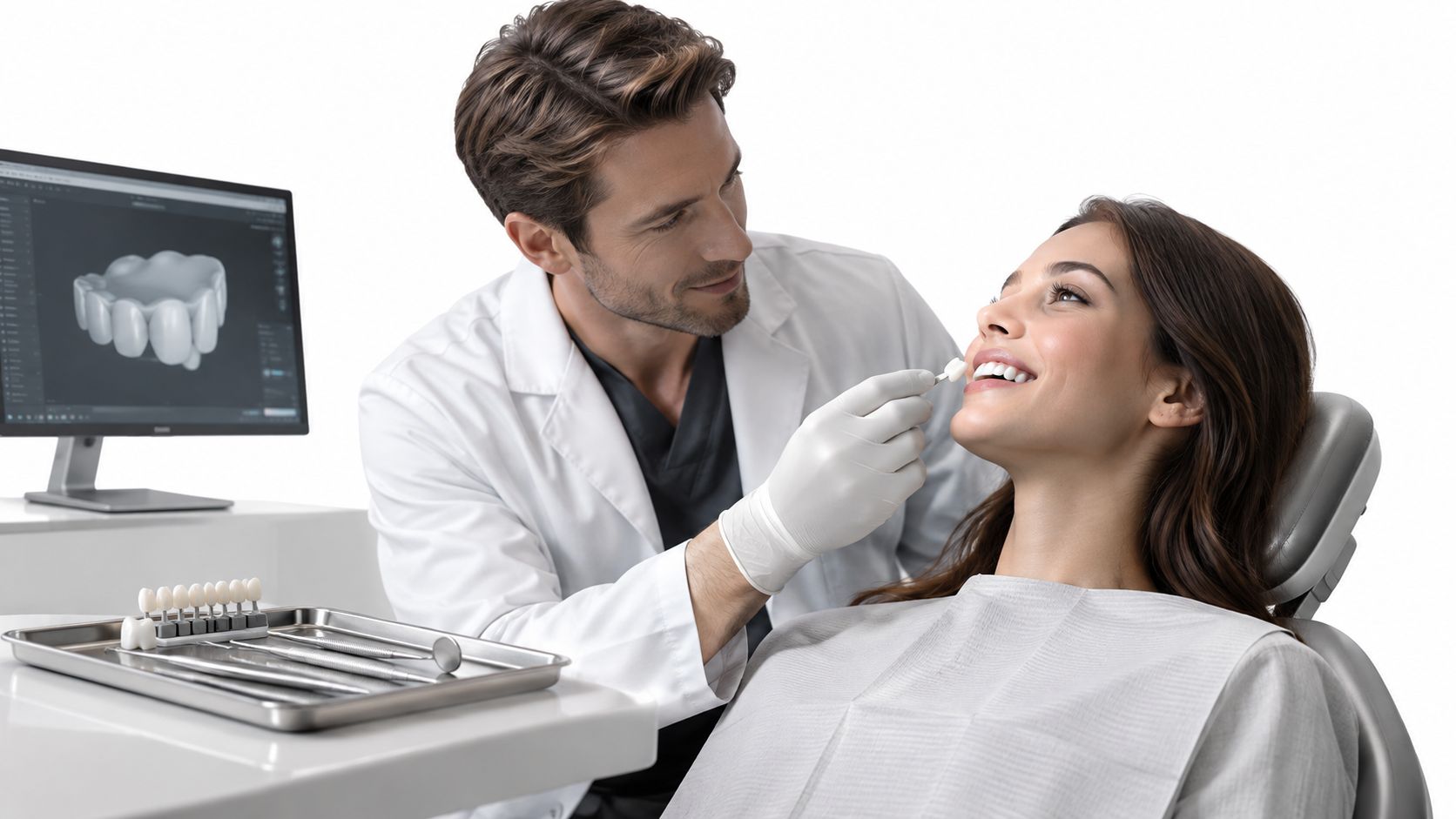
A crown covers and protects a tooth that can't reliably withstand normal forces with a filling alone. Same-day crown technology can use digital scanning and in-office milling to design and create a restoration during one visit, which may reduce the need for a temporary crown and a separate placement appointment.
Implants and full-arch care for tooth loss
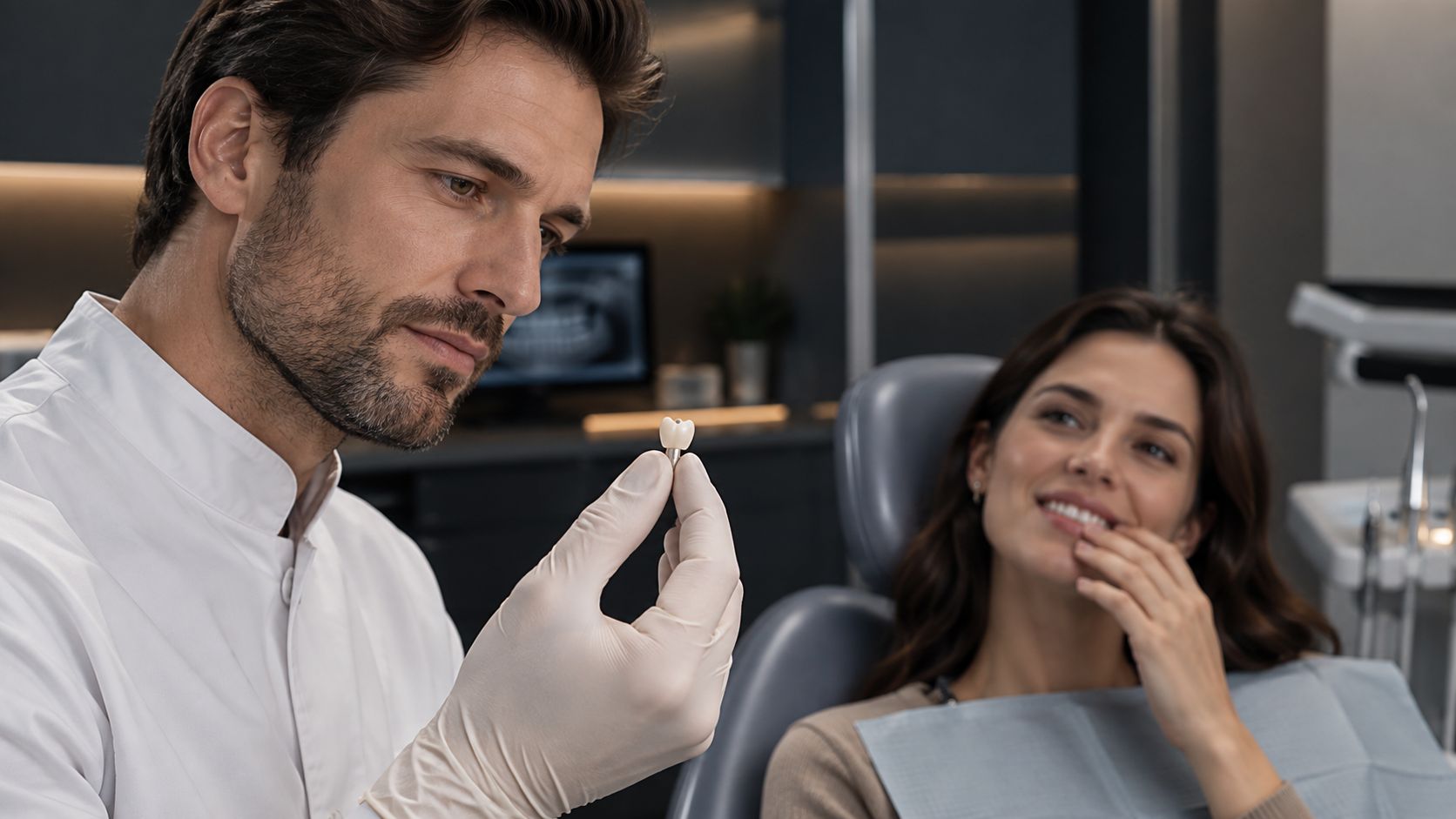
A dental implant replaces the root portion of a missing tooth and supports a custom crown. Full-arch solutions address extensive tooth loss with a fixed prosthesis supported by implants. Patients who struggle with loose dentures or cannot chew comfortably may discuss this option after imaging and a complete evaluation.
Periodontal care and laser dentistry support these services by addressing the foundation around the teeth. Winn Smiles can combine restorative and cosmetic services, comfort-focused sedation, and same-day crown technology into one plan rather than treating each procedure in isolation.
Choosing the Right Materials and Whitening Approach
A patient with stained teeth may want a brighter smile, while someone with chipped edges may want a change in shape as well. The material and whitening plan should match that goal, along with existing crowns, veneers, fillings, bite habits, budget, and treatment timing. A consultation with a cosmetic dentist near me in Cleveland or Chattanooga should compare those factors rather than treat appearance as the only concern.
Ceramic veneers, including lithium disilicate and feldspathic porcelain, resist staining and hold their color well. As noted in the veneer evidence cited earlier, ceramic generally offers longer service than composite, while composite can make sense for someone who values easier repair, a lower initial cost, or a more conservative approach. The right choice also depends on how much tooth structure needs to change and whether the patient clenches or grinds.
Whitening addresses natural tooth structure. It does not change the shade of existing crowns, veneers, fillings, or implants, so the sequence matters when restorations are planned. Professional in-office whitening suits a short timeline and controlled application. Custom take-home trays suit gradual brightening and can be easier to adjust when sensitivity is a concern.
An umbrella review of tooth-whitening methods found that moderate hydrogen peroxide concentrations can produce results comparable to higher concentrations while reducing post-treatment sensitivity. It also found that LED, halogen, and laser activation generally does not improve whitening effectiveness and may increase sensitivity.
| Option | Main advantage | Best fit |
|---|---|---|
| Ceramic veneers | Stable color and durable shape changes | Patients seeking a longer-term cosmetic change |
| Composite veneers | Easier repair and a more conservative approach | Patients prioritizing repairability or lower initial cost |
| In-office whitening | Controlled treatment with faster visible results | Patients working with a short timeline |
| Custom take-home whitening | Gradual results with adjustable use | Patients who prefer control or have sensitivity concerns |
Safety boundaries matter. Consumer whitening products are limited to 0.1% hydrogen peroxide. Products between 0.1% and 6% may be supplied by a registered dentist with supervision at first use, while products above 6% are not considered safe for consumer use, according to the HPRA safety warning. European guidance also states that products should not exceed 3.6% hydrogen peroxide when expressed as 10% carbamide peroxide, as explained in the whitening formulation clarification.
Winn Smiles can coordinate material selection, whitening, sedation, laser dentistry, and same-day crowns around one patient-specific plan. That approach connects each procedure to the problem it is meant to solve, whether the priority is comfort, strength, color, or timing.
Dental Implants and Full-Arch Solutions That Feel Natural
A missing tooth changes more than your smile. It can make chewing uneven, affect speech, and make you cautious about eating with other people. Patients searching for dental implants near me in Cleveland or Chattanooga often want a replacement that feels secure and supports everyday function.
The implant process in everyday terms
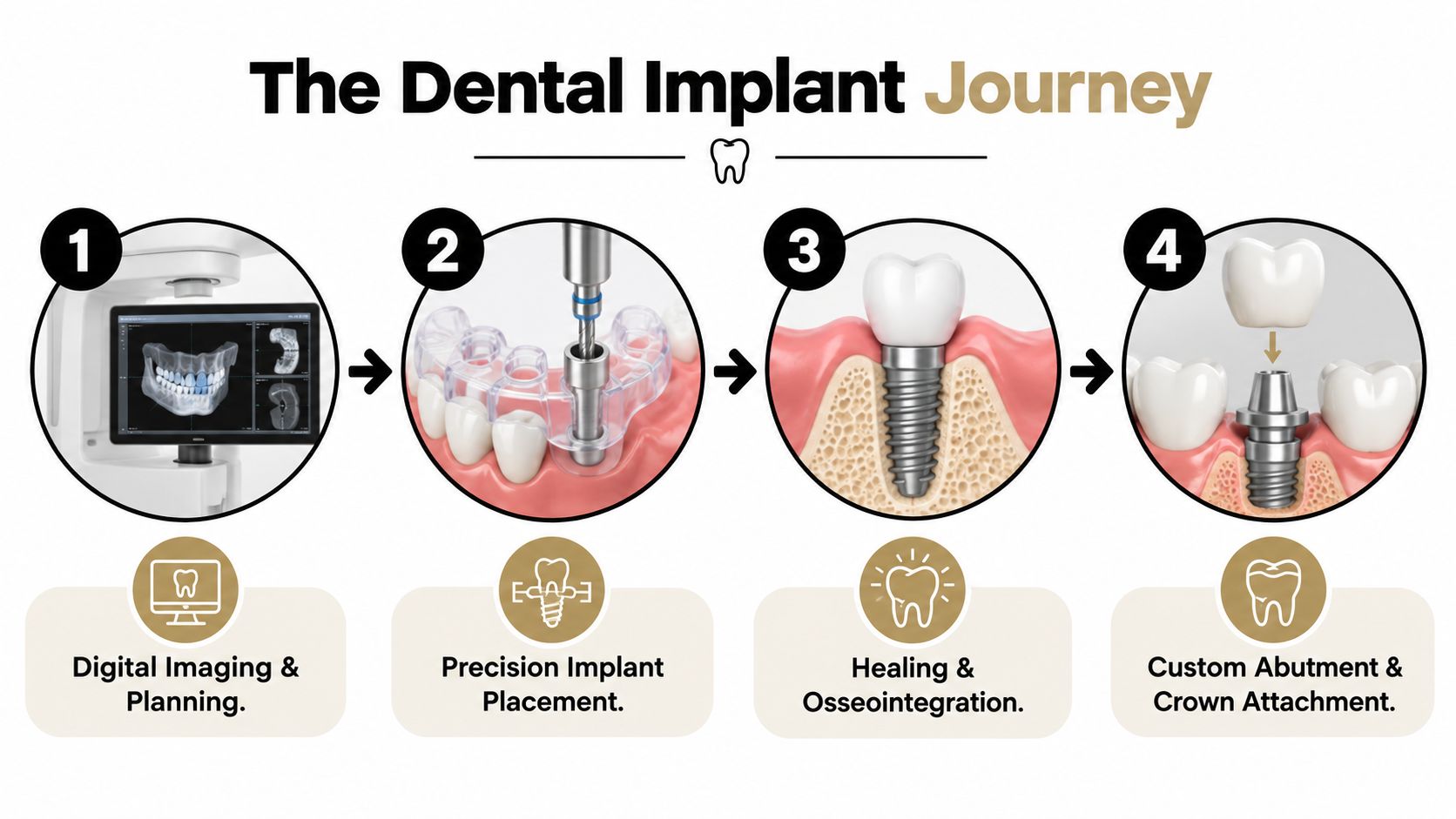
The process usually begins with digital imaging and an examination of the tooth, gums, bone, bite, and medical history. Your dentist uses that information to decide whether an implant can support a single crown or whether you need additional preparation.
During placement, a titanium post is positioned in the jawbone. Over the healing period, the bone bonds with the implant in a process called osseointegration. Healing commonly takes about 3 to 6 months before full functional loading, and an evidence-based overview notes that many healthy patients reach sufficient stability for loading by around 12 weeks, while grafted or medically compromised sites may need more time, according to this implant osseointegration overview.
A temporary restoration may help protect the area and support appearance during treatment. Same-day crown technology can make an interim restoration available promptly in appropriate cases, while the final custom crown is placed after the implant has integrated and the tissues are ready.
When full-arch treatment may make sense
Full-arch implant treatment replaces an entire row of teeth with a fixed prosthesis supported by multiple implants. It may be considered when a patient has extensive tooth loss, severely damaged teeth, or dentures that don't provide sufficient stability. The treatment requires careful planning, and candidacy depends on bone volume, gum health, medical factors, cleaning ability, and expectations.
Patients should also understand maintenance. Implants don't develop cavities in the same way natural teeth do, but the surrounding gums and bone still need daily cleaning and professional monitoring. A detailed discussion of full-arch dental implant costs can help you prepare questions about surgical steps, temporary teeth, final restorations, maintenance, and financing.
Combining Periodontal Care, Sedation, and Whole-Mouth Health
A veneer, crown, or implant depends on the tissues around it. Bleeding gums, active periodontal disease, untreated decay, heavy grinding, or an unstable bite can make an otherwise attractive restoration harder to maintain. That's why a thoughtful plan evaluates the entire mouth before focusing on the visible smile.
Building the foundation first
Periodontal care manages the gums and supporting structures around your teeth. Laser dentistry may be used as part of a treatment approach for gum concerns, with the aim of making certain procedures more precise and comfortable. The appropriate technique depends on the condition being treated, the depth of the problem, and your clinical findings.
Home care remains important between professional visits. For practical ideas that can help you support gum health between visits, focus on consistent brushing, cleaning between teeth, and following the maintenance schedule your dental team recommends.
Making complex care feel manageable
Dental anxiety can cause people to postpone care until a small problem becomes painful or urgent. Sedation options may include nitrous oxide or oral conscious sedation, selected according to your anxiety level, health history, procedure, and safety needs. Sedation doesn't replace communication. You should still know what will happen, how long the visit may take, and what instructions apply afterward.
Sleep apnea evaluation can also belong in a whole-mouth plan. Jaw position, oral structures, nighttime breathing, grinding, and restorative stability may intersect, so a dentist may discuss screening or oral appliance therapy when symptoms suggest an airway concern.
Comfort is part of treatment planning: A plan that you can tolerate and complete is more useful than a technically ideal plan that you keep postponing.
At Winn Smiles, periodontal care, laser dentistry, sedation, cosmetic procedures, and restorative treatment can be coordinated around the condition of your mouth and the way you live. That integrated approach helps protect your investment while keeping comfort and long-term maintenance in view.
What to Expect at Winn Smiles in Cleveland and Chattanooga
Your first appointment should feel like a conversation, not a sales presentation. At a Winn Smiles office in Cleveland or Chattanooga, you can begin with a warm greeting and a comfort menu that may include blankets, pillows, noise-cancelling headphones, and beverage options.
A visit built around your priorities
Before the examination begins, the dentist and team can discuss your goals, medical history, previous dental experiences, concerns about pain, and preferred pace. You might arrive because a crown broke, because you want whiter teeth, or because you're comparing options for missing teeth. Each situation calls for different questions.
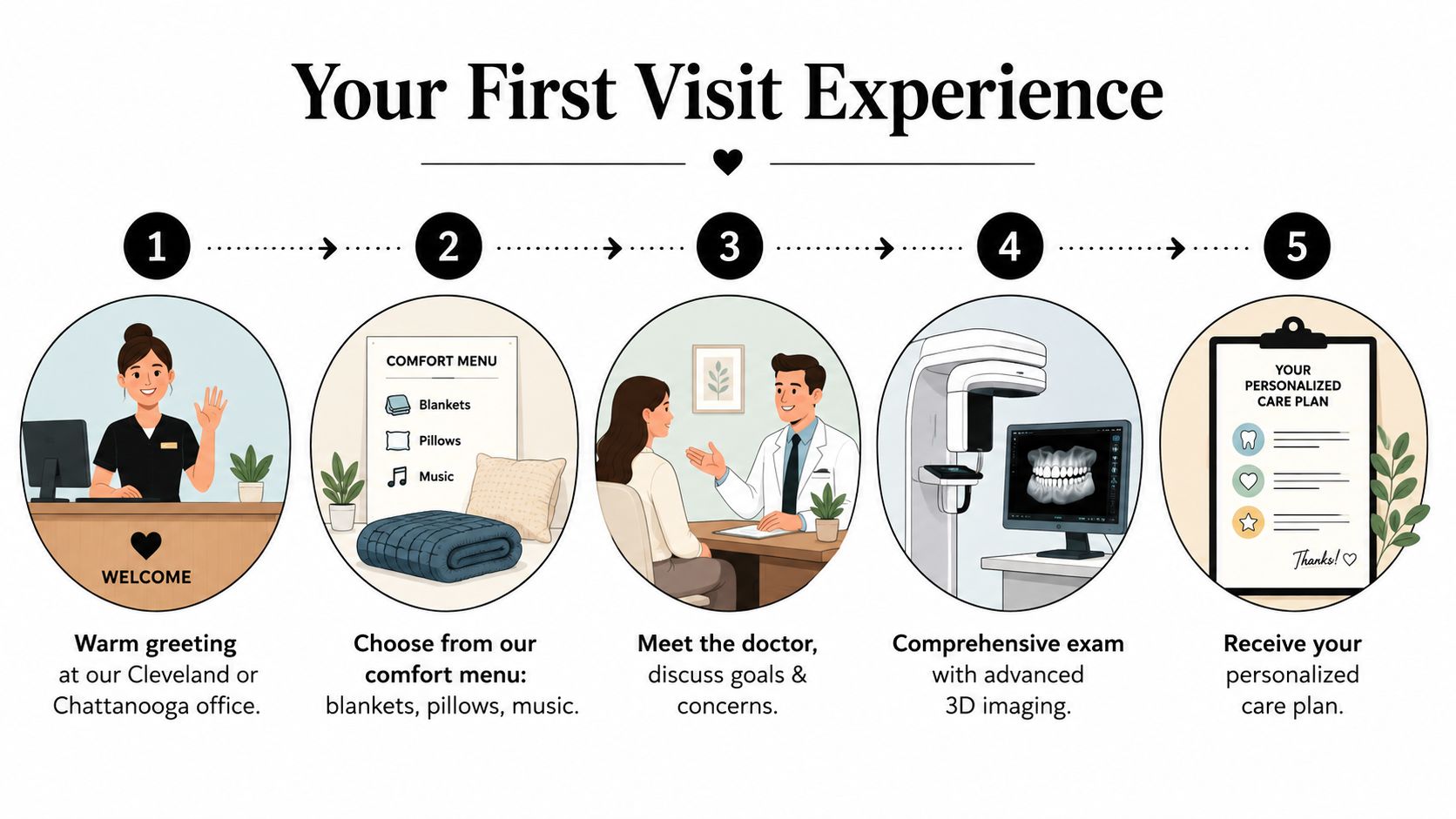
The diagnostic phase may include digital dental X-rays, intraoral photographs, a periodontal screening, and a clinical examination. These tools help the team evaluate areas that aren't easy to judge from a mirror view alone, including hidden decay, root concerns, bone levels, gum health, bite relationships, and the condition of existing restorations.
Clear choices before treatment begins
After gathering information, the dentist can explain the options in plain language. A patient with a damaged tooth might compare a filling, crown, root canal, extraction, or replacement. A patient with cosmetic goals might compare whitening, bonding, veneers, or orthodontic alignment.
Sedation can be matched to the procedure and your comfort needs. Nitrous oxide may help a mildly anxious patient relax, while oral conscious sedation may be discussed for greater anxiety or longer treatment, subject to medical review and appropriate instructions.
Cost conversations should be direct. You can ask what each option includes, how many visits are expected, what maintenance may involve, and which choices can be phased around your budget. Winn Smiles also offers free cosmetic consultations and selected second-opinion appointments, allowing patients to make decisions with more clarity. Same-day crown technology may shorten a typical crown process by completing the design and fabrication in one appointment when the case is suitable.
Follow-up communication keeps the plan practical. Your treatment can be organized around work, family responsibilities, comfort preferences, and the urgency of the dental problem.
Your Next Step Toward a Confident, Healthy Smile
You don't need to know the correct procedure before you call. You only need to explain what has changed, what bothers you, and what you hope to improve. A consultation can clarify whether you need preventive dental care, an emergency evaluation, tooth extraction, a crown, dental implants, periodontal treatment, whitening, veneers, or a combination of restorative and cosmetic services.
A no-pressure consultation at the Cleveland or Chattanooga office gives you space to discuss your goals and concerns. Cosmetic patients can ask about free consultation options, while people comparing treatment plans may request a second opinion when that service applies. Flexible scheduling helps fit dental care into busy Tennessee routines.
Questions worth bringing
- What needs attention first? Ask whether pain, decay, gum disease, infection, or bite concerns should be treated before cosmetic work.
- Which alternatives exist? Find out whether repair, restoration, replacement, or monitoring is reasonable for your tooth.
- How will comfort be managed? Discuss blankets, headphones, nitrous oxide, oral conscious sedation, and breaks.
- What maintenance will I need? Ask how to clean around veneers, crowns, bridges, or implants and how often follow-up visits are recommended.
Good healthcare content should be accurate, understandable, and respectful of patient decision-making. Resources about compliance in healthcare content can provide useful context for why clear explanations and responsible communication matter when people are making treatment choices.
Whether you want a brighter smile, a single implant, or a full-mouth restoration, Winn Smiles can help you connect the pieces. Restorative & cosmetic dentistry, comfort amenities, sedation options, laser technology, periodontal care, and same-day crowns can be considered as parts of one personalized plan. Your smile journey should feel like a partnership, with informed decisions at every stage.
Winn Smiles offers restorative and cosmetic dentistry for Cleveland and Chattanooga patients, including same-day crowns, whitening, veneers, periodontal care, dental implants, full-arch solutions, laser dentistry, sedation, and emergency dental services. Schedule a consultation or second opinion by visiting Winn Smiles, and take the first step toward care built around your health, comfort, and smile goals.