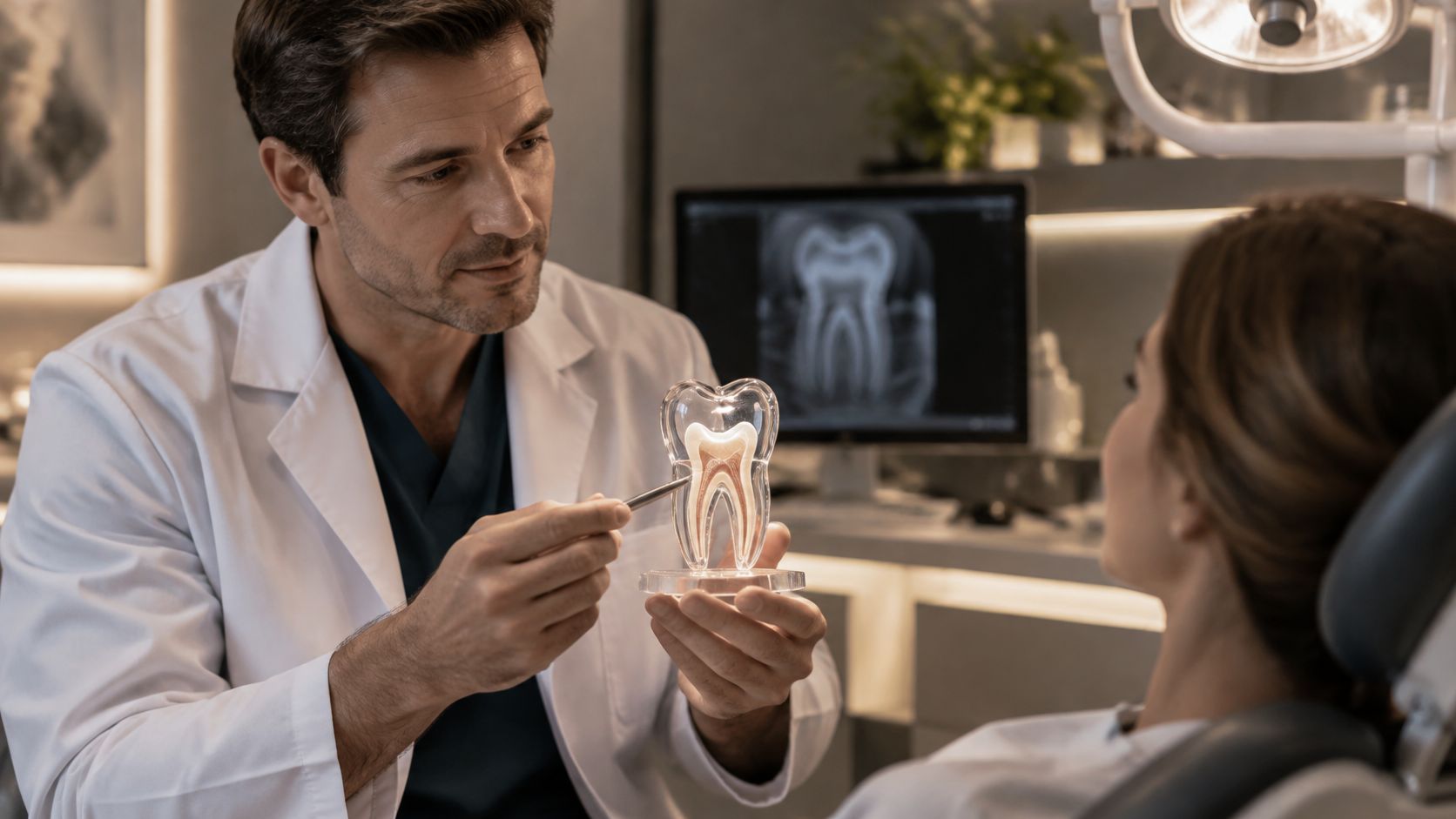
Contrary to viral warnings, a root canal does not poison your body. It removes infected tissue from inside a tooth so the tooth can stay in place and keep working.
Treatment carries risks. Leaving the infection carries risks too. Pain, swelling, bone loss, and spread of infection belong on the same page as any worry about the procedure itself.
A useful decision comes down to three questions. Is the tooth restorable, how severe is the infection, and does enough bone support remain?
For those seeking a dentist near me in Chattanooga or Cleveland, TN for tooth pain, swelling, or conflicting advice, that is where the conversation starts. At Winn Smiles, the first step is an examination and X-rays to assess the damage and plan treatment, followed by a clear discussion of findings and options.
Myths About Root Canals and What the Evidence Shows
The claim that a treated tooth poisons the body comes largely from the early-20th-century focal infection theory, not from current evidence. That theory encouraged the removal of teeth that might otherwise have been saved.
The American Association of Endodontists' root canal safety guidance explains that no valid scientific evidence links root-canal-treated teeth with systemic disease, and contemporary reviews haven't found an increased cancer risk. That doesn't make every treatment successful, but it does distinguish an unsupported health claim from a genuine dental complication.
A clear explanation starts with the tooth itself, not frightening claims about hidden toxins.
Common Root Canal Claims and What the Evidence Shows
| Common claim | What the evidence shows | Verdict |
|---|---|---|
| Root canals cause cancer | No increased cancer risk found in contemporary reviews | Myth |
| Root canals cause heart or systemic disease | No valid scientific evidence links treated teeth to systemic disease | Myth |
| Root canals always hurt | Pain is usually mild and short-lived, and a 2023 systematic review and meta-analysis found no significant difference in postoperative pain between the treatment groups studied | Partly true, discomfort can occur, but not always |
| Root canals always fail | Success depends on how it is measured and on the tooth's condition | Partly true, failure is possible, not inevitable |
| Pulling the tooth is always safer | Extraction brings its own steps and can affect neighboring teeth | Myth |
Real Risks Deserve Specific Explanations
Incomplete healing, missed canals, instrument breakage, perforation, leakage, and later tooth or root fracture are recognized complications. These are problems involving treatment, anatomy, healing, or the remaining tooth structure. They aren't evidence that every treated tooth causes illness elsewhere in the body.
A narrow or curved canal can be difficult to clean completely. A damaged restoration can allow bacteria back into the tooth, while a fracture can make a previously treatable tooth impossible to retain.
Practical rule: Ask what could go wrong with your particular tooth, not whether every root canal is good or bad.
If you've typed “are root canals bad” into a search engine, the useful answer is a qualified one: the procedure isn't harmful, but its suitability depends on an accurate diagnosis. Ongoing symptoms deserve an explanation, not an automatic recommendation to extract.
How Often Root Canals Succeed and Why Results Vary
A root canal does not fail in only one way, and leaving the infection alone carries its own risk. A useful way to judge your options is to look at three questions: can the tooth be rebuilt, is there active infection, and is there enough bone support to keep the tooth stable. The procedure addresses the inside of the tooth. Delay allows bacteria to keep spreading into bone and neighboring structures.
Success also means different things in different studies. A tooth can feel normal and work for chewing while an X-ray still shows incomplete healing around the root. Research that requires full healing on X-ray will report a lower number than research that counts a comfortable, functional tooth as a success.
A systematic review of primary root canal treatment reported pooled success of 92.6% under broad criteria and 82.0% under strict criteria, a difference of 10.6 percentage points. The gap reflects definitions, not disagreement about whether treatment can work.
Root Canal Success Rates by Measure and Tooth Condition
| Measure | Reported success | What it means |
|---|---|---|
| Pooled success, broad criteria | 92.6% | Tooth counted as functional under broader clinical and radiographic criteria |
| Pooled success, strict criteria | 82.0% | Complete healing required on X-ray |
| Vital pulp before treatment | 87.8%, reported in the AAE's discussion of root canal outcomes and myths | Nerve still alive at the start of treatment |
| About 5 years after treatment | About 85%, reported in a long-term root canal cohort study | Long-term treatment success at that follow-up point |
Starting condition changes the outlook. Living pulp tends to heal more predictably than pulp that has already died. A dark area around the root tip can signal bone involvement, which makes healing slower and less certain. The same applies to remaining tooth structure and the quality of the final seal against bacteria and biting force.
Consider two back teeth with the same diagnosis on paper. One has inflamed living tissue, intact walls, and healthy surrounding bone. The other has dead tissue, a shadow around the root, and a cracked cusp that complicates rebuilding. Treatment follows the same steps, but the second tooth faces more barriers to healing. That distinction explains why a pooled average cannot predict one tooth.
Long-term results also depend on whether researchers measure strict healing or continued function. A tooth that stays comfortable and useful for years may still be grouped differently across studies.
Our explanation of root canal success rates reviews these definitions in more detail. Bring your X-ray findings to the visit. Ask whether your tooth is restorable, how extensive the infection is, and what bone support remains.
How a Root Canal Is Done, Step by Step
A root canal treats the space inside the tooth. The goal is to remove diseased tissue, clean the canal system, and close it securely while preserving the outer tooth whenever possible.
The same basic principles apply to front and back teeth, although their shapes and access requirements differ. This overview shows how the appointment progresses.
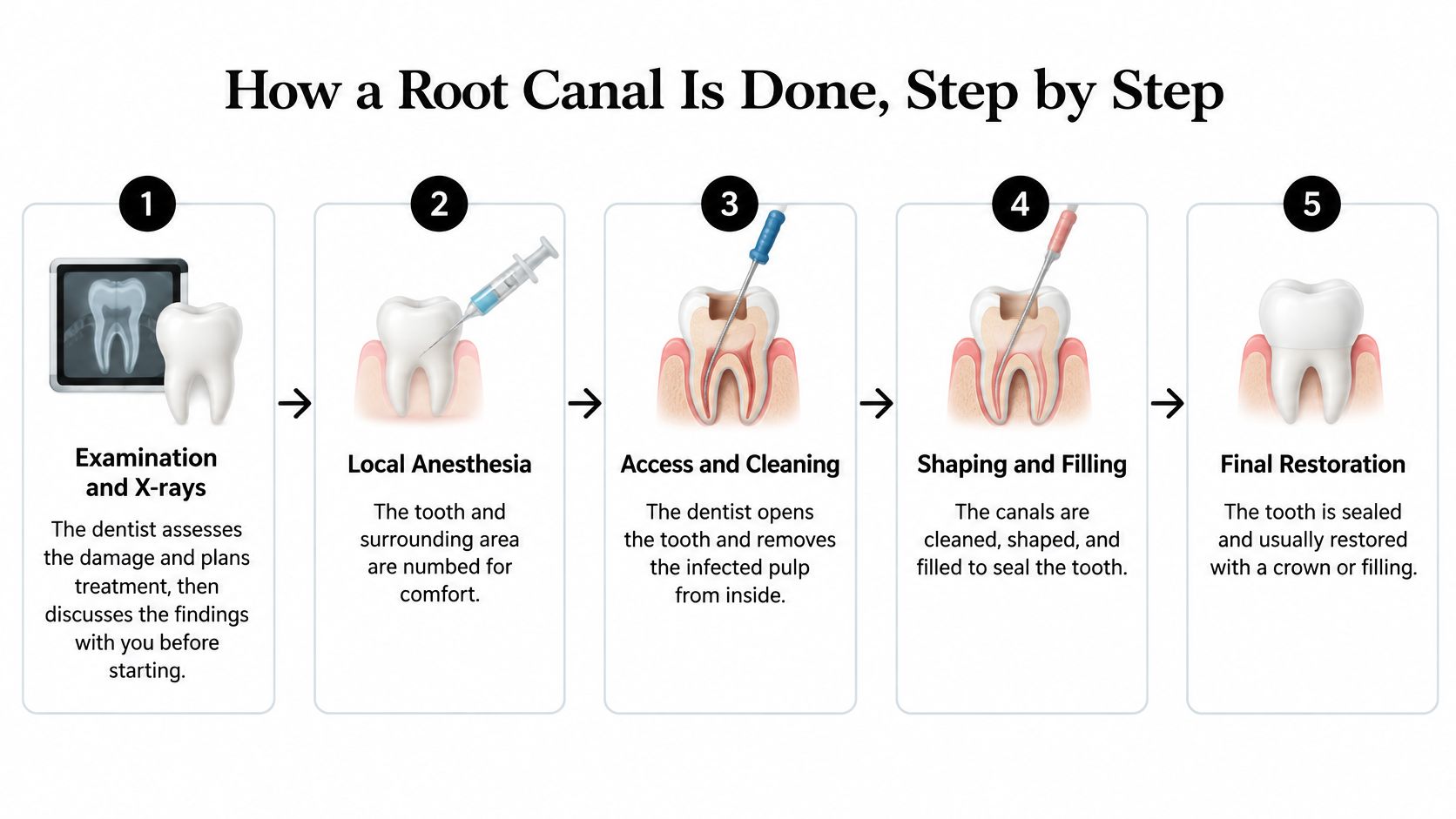
From Examination to Final Protection
Examination and X-rays. At Winn Smiles, we start with a thorough examination and dental X-rays to assess the damage and plan treatment, then discuss our findings with you. This helps establish whether the tooth is suitable for treatment before we begin.
Numbing. We numb the tooth and surrounding area with local anesthetic. Comfort matters throughout the appointment, so tell us if you feel sharp pain rather than pressure.
Access. We make a small opening through the crown, meaning the visible part of the tooth. That opening allows us to reach the pulp chamber and canal entrances without removing the whole tooth.
Cleaning and shaping. We remove infected pulp and damaged tissue, then clean the inner chambers and shape the canals. Preparing these spaces allows the filling material to fit the canal system.
Filling and sealing. We fill the inside with a biocompatible material and seal it to prevent future infection. An unsealed opening would allow bacteria to return, so closing the space matters as much as removing the diseased tissue.
Restoration. A crown or another suitable restoration protects the remaining tooth and restores its biting surface. The choice depends on how much tooth structure remains and the forces the tooth must withstand.
The intended result is a tooth that's cleaned, sealed, and protected for everyday chewing. Finishing the canal treatment without completing the restoration leaves an important part of that plan unfinished.
This video offers another way to understand the procedure before your visit.
What Newer Tools Can and Can't Promise
Technology can help with visualization, access, and workflow, but an equipment list isn't a guarantee of healing. The important question is how a technique addresses the needs of your tooth.
A 2026 systematic review of root canal filling techniques reported 87.1% success at six months and 87.2% at 12 months, without a significant difference among major filling techniques. It also suggested that operator expertise and case selection may matter more than the filling method, while long-term evidence remained uncertain.
Better equipment can support careful treatment. It can't make an unrestorable tooth restorable.
Useful questions concern the actual plan: How will difficult anatomy be assessed? Is a crack suspected? What restoration will protect the tooth afterward? Those answers tell you more than a promise that a particular device makes treatment fail-proof.
Pain, Recovery and What If a Root Canal Still Hurts
Your tooth is numbed before treatment, so you should feel pressure or vibration rather than sharp pain. You don't need to tolerate pain. Agreeing on a signal to pause gives you a straightforward way to communicate during the appointment.
Anxiety also deserves attention. A 2024 prospective cohort study of 100 endodontic patients reported mean pain scores of 3.8 among patients with persistently high anxiety, compared with 2.1 among those whose anxiety decreased. That association doesn't mean pain is imaginary; it means your emotional experience is a legitimate part of planning comfortable care.
What to Expect Before, During and After a Root Canal
Tell us about previous difficult dental visits, trouble getting numb, or worries about the sounds and sensations. Knowing what concerns you allows us to explain the appointment more usefully than saying not to worry.
| Stage | What you may feel | How it is managed |
|---|---|---|
| During treatment | Pressure or vibration, no sharp pain while numb | Local anesthetic numbs the tooth and surrounding area |
| First 24 to 48 hours | Mild soreness or sensitivity to pressure | Over-the-counter pain relievers and soft foods |
| Several days | Tenderness when biting that fades steadily | Avoid chewing hard foods on the treated tooth |
| After about a week | Pain that stays strong or grows | Not expected; call the office for an evaluation |
This is a general recovery guide, not a deadline everyone must meet. The direction of recovery matters: gradually improving tenderness is different from pain that becomes stronger or returns after settling.
At Winn Smiles, patients may have mild discomfort or sensitivity for a few days, usually manageable with over-the-counter pain relievers. Most return to their normal activities the day after treatment, and we provide detailed aftercare instructions.
Managing Soreness Without Masking a Problem
Use pain medication according to the label and your dental team's instructions. Check first if you have a medical condition, take other medications, or have been told to avoid particular pain relievers.
Choose foods that don't require forceful biting, such as eggs, yogurt, or soft pasta. Wait until numbness has worn off before eating so you don't accidentally bite your cheek or tongue.
Keep brushing gently and follow the instructions for cleaning around the treated tooth. Avoid hard chewing until the final restoration is complete, and contact us if a temporary filling or crown loosens.
Call sooner, not later: Increasing swelling, drainage, a bad taste, or a bite that suddenly feels different deserves a call even if you can manage the pain.
An infection flare-up between appointments occurs in approximately 1% to 5% of patients, according to Leeds Teaching Hospitals' endodontic patient guidance. A flare-up may require additional treatment, sometimes including antibiotics, but medication decisions should follow an assessment rather than self-treatment with leftover tablets.
Why a Treated Tooth Might Still Hurt
Removing the pulp doesn't remove sensation from the tissues surrounding the root. Those tissues can remain tender, and pain can also come from a high bite, a neighboring tooth, gum disease, or another source.
Persistent symptoms need a structured examination. The dentist may check:
- Canal anatomy: Whether a canal was missed or couldn't be fully treated.
- Canal filling: Whether the filling adequately reaches and seals the intended space.
- Restoration integrity: Whether leakage has allowed bacteria back inside.
- Tooth structure: Whether a crack or vertical root fracture is present.
- Other causes: Whether periodontal disease or non-dental pain better explains the symptoms.
Imaging can affect what the dentist detects. A review of persistent disease and endodontic outcomes cited post-treatment apical periodontitis in 35% of teeth on conventional radiographs versus 63% on cone-beam CT, which can reveal smaller or hidden lesions. These figures describe detection using different imaging methods, not the likelihood that every patient will experience pain or need another procedure.
Cone-beam CT shouldn't be used indiscriminately. The question is whether additional imaging is likely to clarify a problem and change the treatment decision.
What Happens If Healing Is Incomplete
The next step could involve adjusting the bite, repairing a restoration, retreating the canals, root-tip surgery, or extraction. The appropriate choice follows the diagnosis, not the pain score alone.
A tooth with a repairable seal problem presents a different decision from a tooth with an untreatable root fracture. Before agreeing to another procedure, understand what problem it is intended to solve and whether the remaining tooth can support a durable restoration.
Keep follow-up visits even if the tooth feels better. Symptoms and healing aren't identical, and checking both gives a clearer picture than relying on comfort alone.
Choosing Between a Root Canal, Extraction and Implant
A toothache often forces a choice that feels urgent. Save the tooth, wait and see, or remove it and replace it. The research question is narrower. Can this tooth be restored to stable function, and what happens to infection and bone support under each option.
The NHS guide to root canal treatment explains that untreated infection can spread and the tooth may ultimately require extraction. Temporary relief does not mean the infection has resolved.
Root Canal, Delayed Treatment and Extraction Compared
| Factor | Timely root canal | Delayed treatment | Extraction and implant |
|---|---|---|---|
| Natural tooth kept | Yes | Maybe, if the tooth remains treatable | No, the tooth is removed |
| Typical appointments | One or two at Winn Smiles | Root canal later, possibly plus extraction | Several visits over several months, including healing |
| Restoration needed | Crown usually placed as the final step | Crown after root canal, or implant if extracted | Implant crown placed after healing |
| Effect on neighboring teeth | Neighbors aren't ordinarily altered | Infection can spread beyond the tooth | An unfilled gap can allow nearby teeth to shift |
| Infection control | Removes infected tissue inside the tooth | Infection may spread without treatment | Removes the whole tooth |
| Best suited for | Structurally restorable tooth | Not a substitute for evaluation; may end in extraction | Tooth that cannot be saved or restored |
| Long-term outcome | High success in suitable cases with a complete restoration | No dependable outcome without diagnosis and treatment | Requires healing, maintenance, and individual assessment |
At Winn Smiles, root canal treatment typically involves one or two appointments, depending on the case. In most cases, we place a crown or other restoration as the final step. That restoration plan matters as much as the canal cleaning itself, because a tooth without a sound seal and enough structure remains vulnerable.
Three Questions That Guide the Decision
Is the tooth structurally restorable? Enough sound tooth must remain to support a lasting restoration. A tooth with severe damage or a vertical root fracture may have a poor prognosis even if the canals could be cleaned.
Where is the infection? Examination and imaging need to identify the source and show involvement around the root. Pain alone cannot establish how far the problem extends or whether the cause is endodontic, periodontal, or both.
How much bone support remains? A well cleaned canal will not save a tooth that has lost the gum and bone that hold it. Support, seal, and structure have to line up together.
Our root canal versus extraction guide walks through those trade-offs in more detail, including healing time, maintenance, and replacement needs. If you are comparing extraction and an implant, count the full sequence. Removal, healing, implant placement, restoration, and ongoing care. For readers interested in the engineering behind medical-device development, American Additive Manufacturing's resource on 3D printing partners for medical engineers provides related manufacturing context.
The strongest decision rests on a clear diagnosis, a realistic prognosis, and a complete restoration plan.
Schedule Your Root Canal Consultation in Chattanooga or Cleveland
Looking for a dentist in Chattanooga, TN, or Cleveland, TN, because a tooth hurts or you're unsure about a treatment recommendation? Schedule an examination rather than trying to decide from symptoms or online claims alone.
At Winn Smiles, your first visit includes an examination, dental X-rays, and a discussion of findings and treatment options before treatment begins. We serve patients across Chattanooga, Cleveland, and nearby communities, with time to discuss what matters to you.
Prepare for a Useful Conversation
Bring information that helps us understand both the tooth and your concerns:
- Your symptom history: When the pain started, what triggers it, and whether you've noticed swelling.
- Previous records: Any available dental X-rays and details of treatment on that tooth.
- Your questions: Concerns about preserving the tooth, tooth extraction, implant alternatives, or recovery.
- Health and medication details: Your current medications, relevant conditions, and past anesthesia experiences.
We perform front and back tooth root canal treatments in our office, using 3D imaging and microscope-assisted techniques, and offer sedation options for patients who feel anxious. We'll also discuss costs based on the examination and the restoration your tooth needs.
You don't have to arrive knowing which treatment to choose. Arrive ready to explain what you're feeling and what you want to understand.
If you have severe pain or swelling, call for an emergency dentist evaluation rather than waiting for a routine cleaning and exam. If swelling affects breathing or swallowing, seek emergency medical care immediately.
Winn Smiles offers in-office root canal care, sedation options, and a clear plan for protecting your tooth after treatment. Visit Winn Smiles to request a consultation in Chattanooga or Cleveland, or call the office promptly if pain or swelling needs urgent attention.